So let’s go over my standard format, what is the mission for all of this?
Mission –
To safely store the radio and all components with which to operate the radio.
Requirements & Restrictions –
Case must be sturdy, at least to military specifications.
Case musty protect against dust, dirt, and water impingement.
Case should protect the contents against damage due to reasonable heights and rough handling.
Case should be low profile and not draw attention to them.
Case should be light enough for one person to easily carry.
The case I chose was the SKB i-series 3I-1711–68-C. These cases are waterproof and as sturdy, if not more so, that Pelican cases. And they are cheaper that Pelican cases. They come with “cubed” foam ready to be cut to size for your equipment.
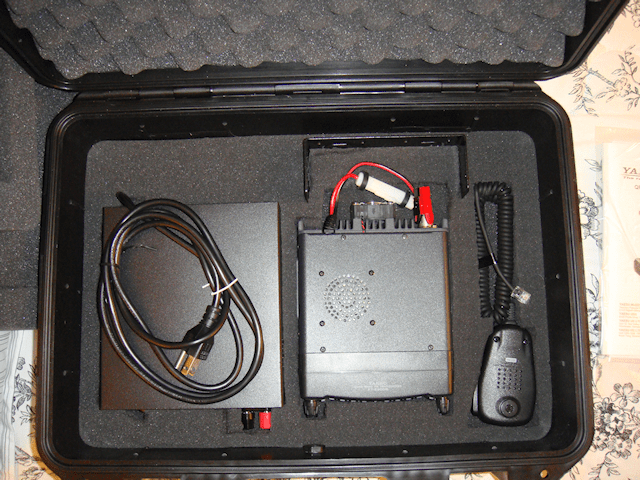
So this is what my case looks like for my Yaesu FT-8900R. The case is clearly labeled for easy identification.
Yaesu FT-8900R Radio Case –
Bottom Level:
1 x Power supply, AC, 19amp
1 x Mounting bracket, radio
1 x Microphone, MH-48
1 x Radio, Yaesu FT-8900R
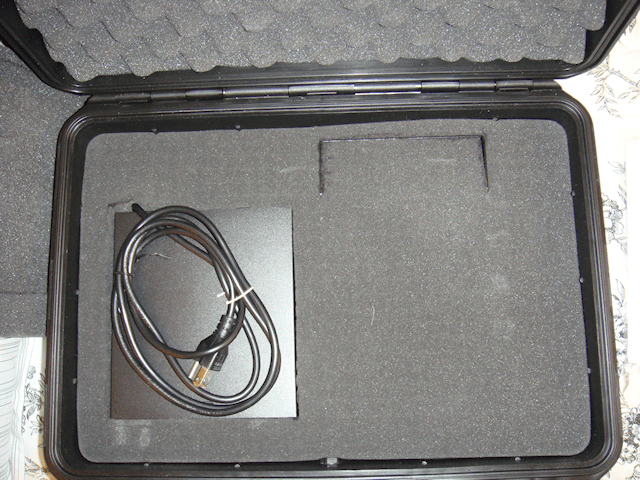
Middle Level:
1 x Power cord, AC
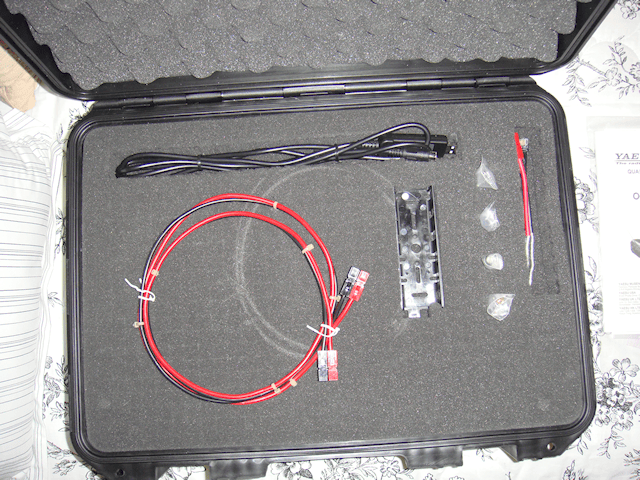
Top Level:
1 x 5′ Power extension cable, Anderson Power Poles on both ends
3 x packages various mounting screws.
1 x Mounting bracket, remote head
1 x RT Systems Programming CD
1 x RT Systems Programming cable
1 x Power cable, Anderson Power Poles to hard soldier connection (AC power supply)
1 x Cable, radio head to radio body
2 x Fuses, 15amp
On top of the radio I place a 8900 user’s manual in a 1-gallon Ziplock bag with the latest copy of the US Amateur Radio Bands chart.
I have given you a list of the equipment needed to run the Yaesu FT-8900R Ham radio. Is it everything you might need? This was meant strictly for the radio equipment itself and the essential equipment to get it going.
Take this list and use it as a starting point for your specific need and mission.