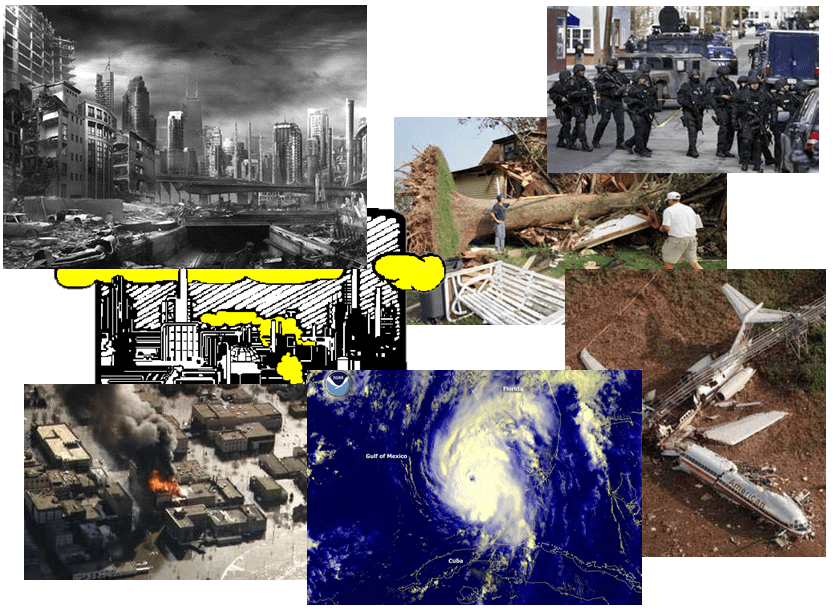
Why do I spend so much time talking about emergency preparedness?
The answer is simple. I care about what happens to my family and my community. I also care about you, your family, and your community. Over the years I have learned just how fragile our modern way of life really is, and I want people to be better prepared for the challenges that life eventually throws at all of us.
Preparedness is not just about preparing for some once-in-a-lifetime catastrophe. Every one of us will face difficult situations during our lifetime. Some will be minor inconveniences, while others may change our lives forever. My goal is to help you prepare before those events occur rather than trying to figure everything out in the middle of a crisis.
After more than forty years in emergency services, I have responded to fatal traffic accidents, house fires, major wildfires, floods, severe storms, medical emergencies, and countless other incidents. One lesson became obvious very early in my career.
Prepared people almost always do better than unprepared people.
That doesn’t mean preparedness eliminates tragedy. It simply gives you a better chance of protecting yourself, your family, and your future.
One of the first principles of preparedness is understanding that not all emergencies are the same.
Far too often I see preparedness discussions that treat every possible event as though the solution is identical. It isn’t.
Before you can prepare properly, you first need to understand what type of event you are preparing for.
From my experience, nearly every event falls into one of three basic categories.
1. Emergencies
These are the events most of us are likely to experience during our lives.
- House fire
- Serious injury
- Influenza or other illness
- Vehicle accident
- Utility outage
- Job loss or retirement
- Death of a family member
- Transportation interruption
- Heart attack
- Earthquake
These situations are usually limited in scope and affect an individual family or a relatively small number of people. Most communities continue functioning normally while emergency responders and public services remain available.
2. Disasters
Disasters affect entire communities or regions and place tremendous demands on emergency services and public resources.
Examples include:
- Wildfires
- Floods
- Hurricanes
- Tornadoes
- Major earthquakes
- Hazardous materials incidents
- Epidemics
In these situations, help may still be coming—but it may not arrive quickly. Families often need to be self-sufficient for days or even weeks.
3. Grid-Down Events
The third category includes widespread events that disrupt large portions of society and critical infrastructure.
Examples might include:
- Pandemic
- Major economic collapse
- Widespread power grid failure
- War
- EMP attack
These are the events that require the greatest level of preparation because many of the systems we depend upon every day may no longer function as expected.
You may choose to categorize some events differently than I do, and that’s perfectly fine.
The important point is not the labels themselves. The important point is learning to think about emergencies in an organized way.
Once you understand what type of event you’re facing, you can begin making realistic decisions about the supplies, skills, and plans needed for that particular situation.
Several years ago I came across an article describing what someone called the perfect “G.O.O.D. Bag”—a Get Out Of Dodge bag. I was genuinely interested, so I started reading.
The farther I got into the list, the more obvious it became that the author had probably never had to evacuate anything in real life. According to the article, you were supposed to gather an incredible amount of equipment and leave within ten to thirty minutes.
The only problem?
You would have needed a large truck, a trailer, and probably a dozen people to load everything before your time expired. That isn’t preparedness…that’s freaking fantasy.
Bad preparedness advice can be worse than no advice at all because it gives people confidence in plans that simply won’t work when they are needed most.
Years ago an instructor made a statement that has stayed with me ever since:
“If you want to learn to be a gunfighter, learn from someone who has been in a gunfight.”
The same principle applies to preparedness.
If you want to learn how to prepare for emergencies, learn from people who have actually responded to emergencies, managed disasters, and lived through difficult situations. Real-world experience matters.
The principles of preparedness are built on practical knowledge, not internet myths or impressive-looking equipment lists.
Everything in this series is based on lessons I learned during more than four decades in emergency services. My hope is that those lessons will help you make better decisions long before you ever need them.
Now you’ve learned one of the most important principles of preparedness:
Before you can prepare for an emergency, you must first understand what kind of emergency you’re preparing for.
In the next article, we’ll build on that foundation by looking at the seven common threats that exist in almost every emergency situation.