
The terms fascism and fascist are very popular today, being thrown back and for like candy at a 4th of July parade. The left-wing media (98% of all American media) loves to use that term when talking about anybody they deem to be right-wing. And to the media anyone who is not radical left is a right-winger. In any event, fascism and fascist are pejoratives…insults and derogatory at best, a designation of utter evil normally.
But with all of this modern day verbal bantering, what exactly is a fascist? Well, here are some characteristics of fascism. Yes, I attempted to take out all of the political bias in the various definitions and to boil it down to a basic set of objective and definitive particulars:
- strong/extreme nationalism/nationalistic feelings
- belief in, build up of, and use of, a powerful military
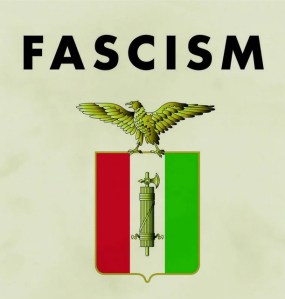
- political rule of elites & cult of personality (autocratic rule)
- belief in the supremacy of the nation over individuals (the greater good)
- the persecution of political enemies
- strong centralized power at the national level
- government exhibits totalitarian/authoritarian tendencies
- severe economic regimentation & direct or indirect control
- strong government control over production through laws and regulations
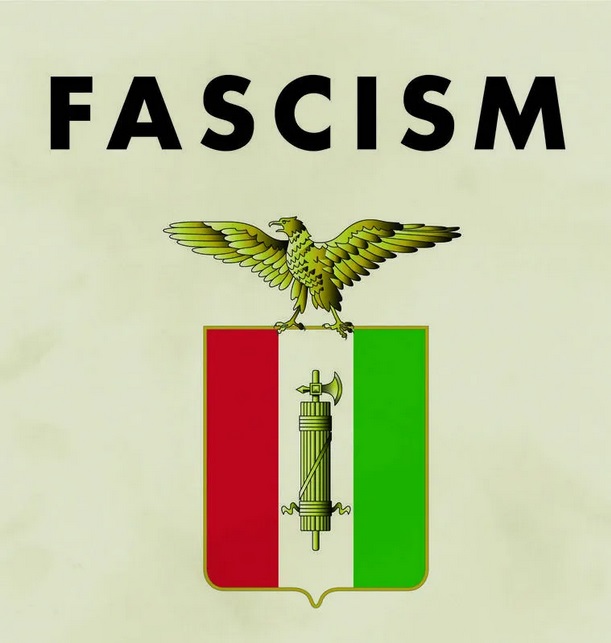
A couple notable, albeit in some cases lesser-known, aspects of fascism that could use a little explanation:
- Anti-Neutralism – Fascists do not believe in seeing ‘both sides’ or staying neutral; you’re either with us or against us.
- Economic Regulation – The government controls most, if not all, economic activity either directly or indirectly. It allows private profit as long as that profit benefits the state. Strong military-industrial complex to support a powerful military.
- Strength – Fascist governments are militaristic, and they use violence and brutality to demonstrate their strength on the world/global stage.
In all fairness I should make mention that a number of sources refer to fascism as laying at the far right of politics. But, as you know by now, I am a ‘principles vs politics’ guy. I believe in looking at the principles of any particular subject vs just labeling a group of principles with a political title. To that end I I reject the ‘far right’ political concept. Further, I decided to look at socialism, Communism and fascism and see what the beliefs/principles overlapped. I found it interesting.
The principles that I see that socialism, Communism and fascism share in common:
- Oppose free-market capitalism
- Authoritarian/totalitarian (government control, strong centralized government)
- Limited individualism & rights, individual subservient to the government for the greater good
- Revolution is justified to establish and used as an early adopter option
Nationalism vs Patriotism –
Since nationalism is a key component to fascism I thought it prudent to briefly touch on this point. There are different definitions of nationalism, none of which are officially canonized anywhere in some all-powerful book of knowledge. Generally speaking though, nationalism can be pretty well substantiated that it includes intense love of, and loyalty to country…more accurately, absolute love of country. That means whatever my country does or is I love it no matter what. And “country” in this respect is represented by government more-so than its people. More plainly…I blindly love my country and support the government.
Interesting, when you track the origins of the patriotism back into its Greek and Roman origins some light is shed providing fascinating insight. It becomes clear that the origins of patriotism are love of the political principles in the conception of a country, associated with the love of the law and the common good. And it also includes a dedication and commitment to resist corruption and tyranny that threatens the law and the citizens it is meant to protect. That infers both belief in principles and requires action to defend/maintain those principles.
So here I find a stimulating dichotomy in terms of the United States of America. Nationalism is the extreme love of country and loyalty to it…a virtual unwillingness to question it or challenge it. Patriotism however means love of the founding principles of the USA (i.e. the Declaration of Independence, the Constitution, and the Bill of Rights), and being dedicated/committed to protecting those founding principles against corruption and tyranny…regardless of the origins of that corruption and tyranny…’both foreign and domestic’ so to speak.
Stopping –
Okay, hang on a minute…I think I won’t go on, or this article becomes a 20-page dissertation that bores everyone to death. What I will do is ask this of you…In many, if not most, aspects, what country does this sound like if you are going to be honest, truthful, and objective?
- strong/extreme nationalism/nationalistic feelings
- belief in, and use of, a powerful military
- rule of elites politically & cult of personality (autocratic rule)
- belief in the supremacy of the nation over individuals (greater good)
- the persecution of political enemies
- strong centralized power at the federal/national level
- government exhibits totalitarian/authoritarian tendencies
- severe economic regimentation through direct or indirect controls
- strong government control over production through laws and regulations
But, I also don’t want you to lose track of these overlapping traits of socialism, Communism, and fascism:
- All oppose free-market capitalism
- All are authoritarian/totalitarian (government control, strong centralized government)
- All limit individualism & rights, making individual subservient to the government for the greater good
- All believe that revolution is an justified as an option to establish their change in government
Alright, one last exercise…What were some of the key/primary founding principles of the United States of America some 250 years ago?
- Patriotism
- Opposition to a standing army; belief in local militias controlled at the state government level

- Limited government controlled by elected representatives
- Individual rights above the need/rights of the government
- Blind and equal system of justice
- Strong decentralized government (states), and a severely limited national/federal government
- Allow for, and encourage, free-market capitalism
- Limited regulation by any level of government
- Revolution only when all other avenues of redress are exhausted

I find this an interesting topic…very interesting. But why would I write this article at all? Oh, my friend…that will come soon enough.
Stay tuned!
 2009 - 2023 Copyright © AHTrimble.com ~ All rights reserved
No reproduction or other use of this content
without expressed written permission from AHTrimble.com
See Content Use Policy for more information.
 A.H. Trimble - Emergency preparedness information for disasters and grid-down
Pingback: Hillsdale College (Imprimis) – My Opinion | A.H. Trimble - Emergency preparedness information for disasters and grid-down
Pingback: Resources & References… | A.H. Trimble - Emergency preparedness information for disasters and grid-down
Pingback: Part #2: the collapse… | A.H. Trimble - Emergency preparedness information for disasters and grid-down