Regarding LDS Home Storage Centers are closing…

There is information circulating that LDS Home Storage Centers are closing their doors after a June 15th sale. Here’s what I know as of 10am MST June 3rd…

Some Facebook posts and Instagram reels say “LDS home storage centers are closing,” but the common follow‑up in those same posts and comments are:

  • Some centers might close locally
  • Others may change operations
  • Not all centers are closing nationwide
  • It is based on the state in which the operation is located

Commenters often assert or speculate without evidence. No one, from what I can see, is citing an official Church notice with specific dates like “June 15th” or language about “when inventory sells out then all operations end.”

No credible official statement supports a sale and closures. The official LDS Church page on Home Storage Centers still describes them as active, serving members and non‑members alike, offering prepackaged long‑term staples like wheat, rice, beans, oats and more.

In the past, the Church has:

  • Updated operations and products
  • Stopped on‑site canning at most locations and reduced bulk or do‑it‑yourself canning

FWIW…Social posts often get reshared without verification…the Instagram Reel I found specifically said…Comments online are asking if all LDS home storage centers are closing down, The answer is no — not all are closing. This aligns with how social media conversation typically spreads rumor before evidence.

A Facebook post indicates that only some, not all, Home Storage Centers are closing due to different states having laws that they must accept cash, debit cards, and credit cards. Maybe the church loses money when they accept debit and credit cards at those locations that are closing. Interesting…the online Home Storage Center also accepts debit and credit cards, but not cash. The only thing I can think of in regards to this is a contractual arrangement with the card payment processor. Possibly, if centralized, the fees are much smaller than through each individual location. But I can’t confirm that myself.

What I do know…the Home Storage Centers would not want to accept cash. Having cash on-hand in the building would then potentially make it a target for robbery and/or violence. And I can’t imagine the Church wanting to place the safety of local workers at risk. Or, vandalism of the buildings for those in search of money thought to be stored there.

I have not seen any source currently, official or unofficial, or an official letter or Church public statement release with:

  • A “June 15th” date
  • A plan to end all food storage sales when inventory sells out
  • A Church announcement of shuttering all Home Storage Centers permanently

All that being said…there is an “unofficial” source circulating information to the effect LDS Home Storage Centers are closing at some point later this year after a “sale” that starts Monday June 15th. I cannot confirm this is true…or not true. The same source indicates it is due to some widespread cost increase or disruption based on current events. Again, there’s no official confirmation of that to be true.

All I can say is there is no official source of any kind that I’ve seen that confirms any this to be true. Sorry, not much help, eh?


 2009 - 2026 Copyright © AHTrimble.com ~ All rights reserved
No reproduction or other use of this content
without expressed written permission from AHTrimble.com
No legal, economic, or financial advice is given, no expertise to be assumed.
See Content Use Policy for more information.</p

Let me tell you a story…

My neighbor was talking to me last fall, he wanted to put an extended roof on two sides of his cabin. It would almost assuredly fix his flooding problem from rain and snow. A pretty substantial project. He asked for my help…of course I would help.

One tidbit of information…he lives 3 hours away in a big city area but this is his weekend cabin, a vacation retreat, and a place of safety for him and his family.

This past weekend we finished putting the metal panels on the roof. Saturday was one of those spring days that reminds you why you live here. Blue sky, light breeze, and temperatures that made working outside a true pleasure…one to be treasured.

Another friend and neighbor also came over to help…a disabled veteran and nice guy, kinda gruffy if you didn’t know he was a big burly guy but a teddy bear. It was amazing having that extra set of hands! And it didn’t hurt any that he had brought along a Diet Coke and a Pepsi…that put a smile on my neighbors face…and a smirk on mine. Teddy bear through and through!

Sunday was another nice day, clear blue skies again…really blue…but much warmer…and windy by lunchtime. But by lunchtime Sunday we had the last of the metal roof panels up and secured. I was glad of it because the panels were getting hot and the wind picking up. I was grateful that both days we were starting at 6am…well before the sun can get a bit intense, even this time of year.

Let me back up a minute…this project started last September when we put in the 4×4 posts and set the 4×6 beams in place. Man, it was hot. Later in the week he texted me that he was in the hospital. He had done something to his leg while he was at his cabin working and developed sepsis…he was really sick. A week later later he was out of the hospital and back at work.

Then a couple months later, when he had some more vacation time, he was back and we put up the rafters and blocking. It was taking shape really nicely. Then the holidays hit. It wasn’t until last month that we put up the purling but had to call it quits when he was just too over the top frustrated and family was coming up to the cabin. Then came this Friday when he texted me that he was at the cabin. And for your information…that means right across the dirt road from our property.

So there we were noon Sunday looking at the roof…amazing! And of course then we had to sit down under that new roof appreciating the shade. Well, and harassing each other like we were serious…which of course we weren’t. But, what the heck…what are friends for if we can’t make fun of each other. We laughed for 45 minutes at each other…a good time for us old timers. Well, I’m the only old timer…they’re in their mid-50’s…kids!

I eventually decided to round up my tools and head home to lunch with my wife. As I turned to get into my truck and leave, I looked back at that finished roof and something occurred to me…people often ask what preparedness looks like.

The funny thing is that this same neighbor leaves his tractor at my place. He lives three hours away, but trusts me to use it whenever I need it. Last week I used that tractor to improve the private roads that serve fifteen families in our area…and have done so for years. And two weeks ago his wife was headed up to join him for the weekend…she was nice enough to haul up a buffet that my wife bought in the big city where they happen to live.

Preparedness isn’t always about what you own. Sometimes it’s about who you know, who you help, and who would show up if you needed a hand.

Let me back up even further, two years ago I had a problem with my wife’s SUV. I just didn’t have the skills to fix it. Well, guess what? That same neighbor came over and did the repair in less than an hour. A local shop wanted $1000 to fix it.

Hang on…last year that same neighbor needed/wanted a new solar system at his cabin but he lacked the skills to design, buy, and install a new system. Yup, you got it…I worked on that project with him. And what happened to his old solar system equipment? Oh you are good…he gave them to me to upgrade my old solar system at my small shop.

Now, let’s talk about the “vet” neighbor that helped us…after my leg surgery two years ago he was the man that came over and carried me up the stairs to get into my house. Oh, and it is his wife that picks up specialty items for my wife from the big city when she goes there on business once a month. Oh, and she is the one that I gave cherry tomato plants to last year and this…she dearly loves cherry tomatoes.

And just one more little item to share…my neighbor from across the road and I helped the “vet” put a roof on his house 3 years ago…took us 8 days. But that same vet goes over to a more severely disabled vet’s place, a mile away, 2 – 3 times a week to help him out. And that severely disabled vet has a small dump truck that he lets us use to haul rock for the roads…that saves us a ton of money vs having it delivered.

Do you see where I’m going with all of this?

Yeah, food storage has its place. Lead and brass have their place too. But preparedness is also about family and community.

How prepared are you if you don’t have people around you that can count on you…and on whom you can count?

The goal of self-reliance isn’t to eliminate dependence on others. The goal is to become capable enough that others can depend on you.

Just something to think about…


 2009 - 2026 Copyright © AHTrimble.com ~ All rights reserved
No reproduction or other use of this content
without expressed written permission from AHTrimble.com
No legal, economic, or financial advice is given, no expertise to be assumed.
See Content Use Policy for more information.</p

Urgent Follow-Up…Please Read!

This is a follow-up to a recent economic series < click here to read that series >

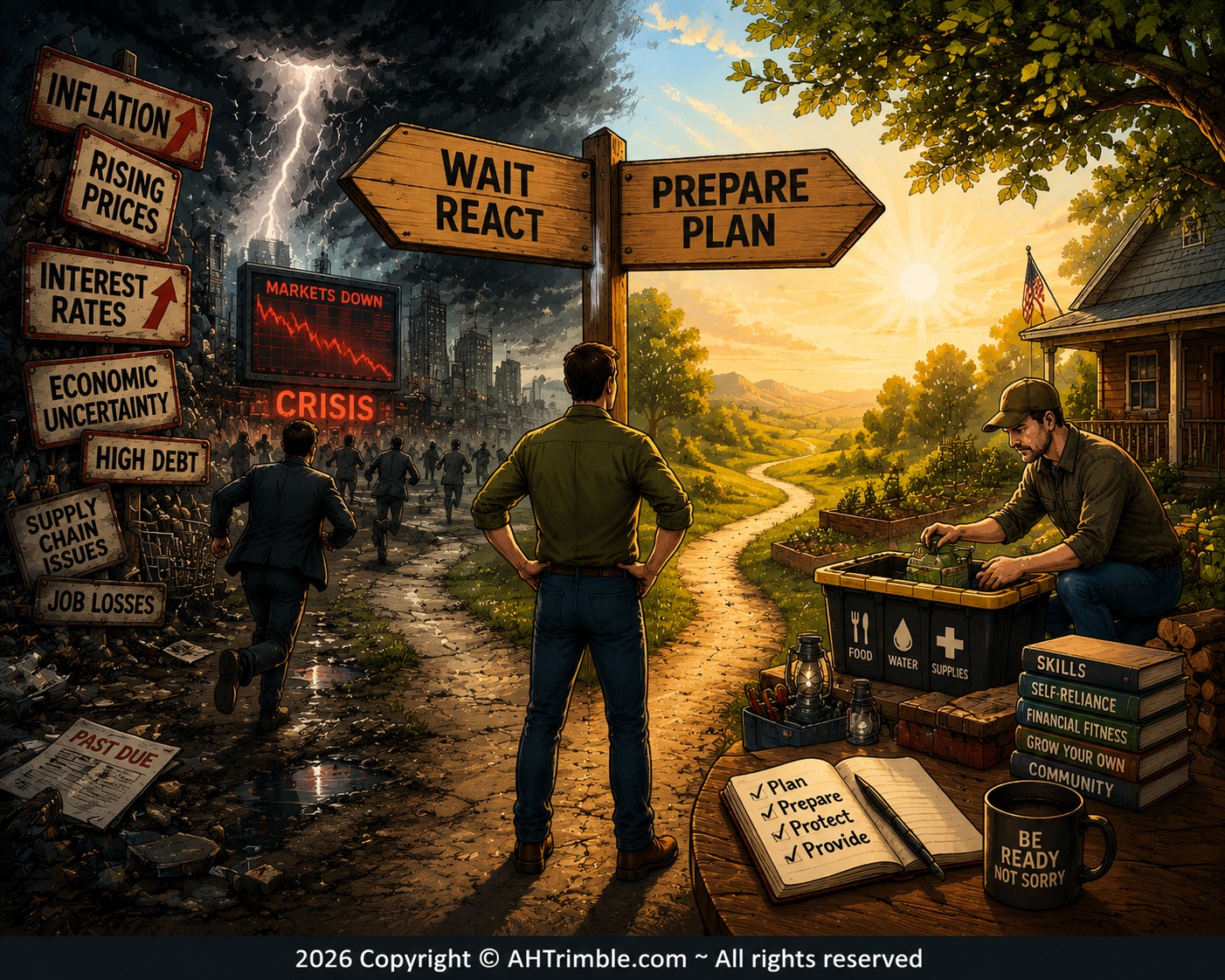
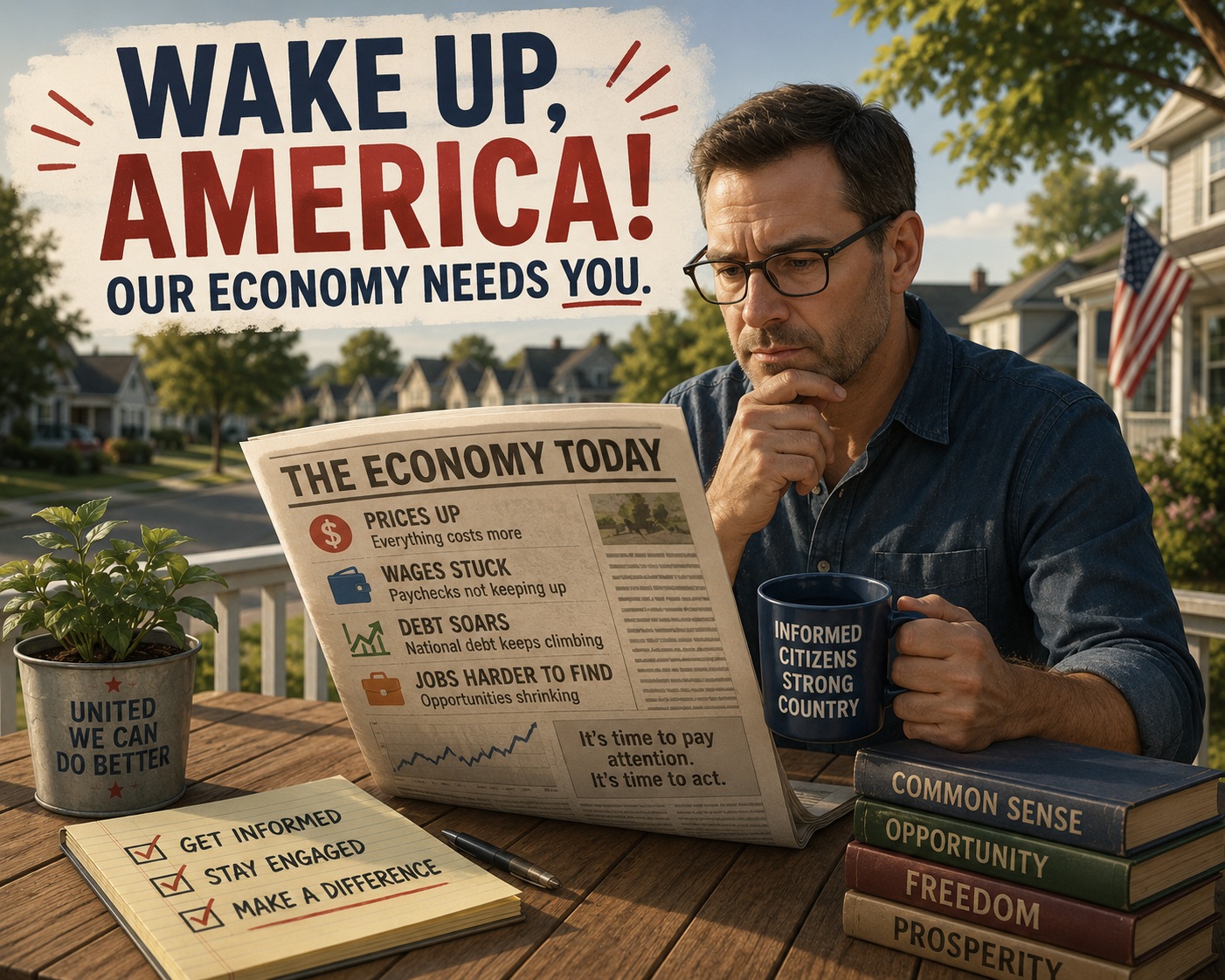
The evidence is piling up; consumer confidence and consumer sentiment have fallen sharply, retailers like Lowe’s, Home Depot, Walmart, and AutoZone are noticing families cutting back, and inflation continues to erode purchasing power by nearly 4% annualized. With Treasury yields recently reaching 5.2% on the 30-year Treasury, their highest level in 19 years, interest costs on our national debt could double household obligations over the next decade, crowding out government spending on essentials like Social Security, Medicare, and defense.

Reduce dependency as soon as possible. Build resilience as quickly as is reasonable.

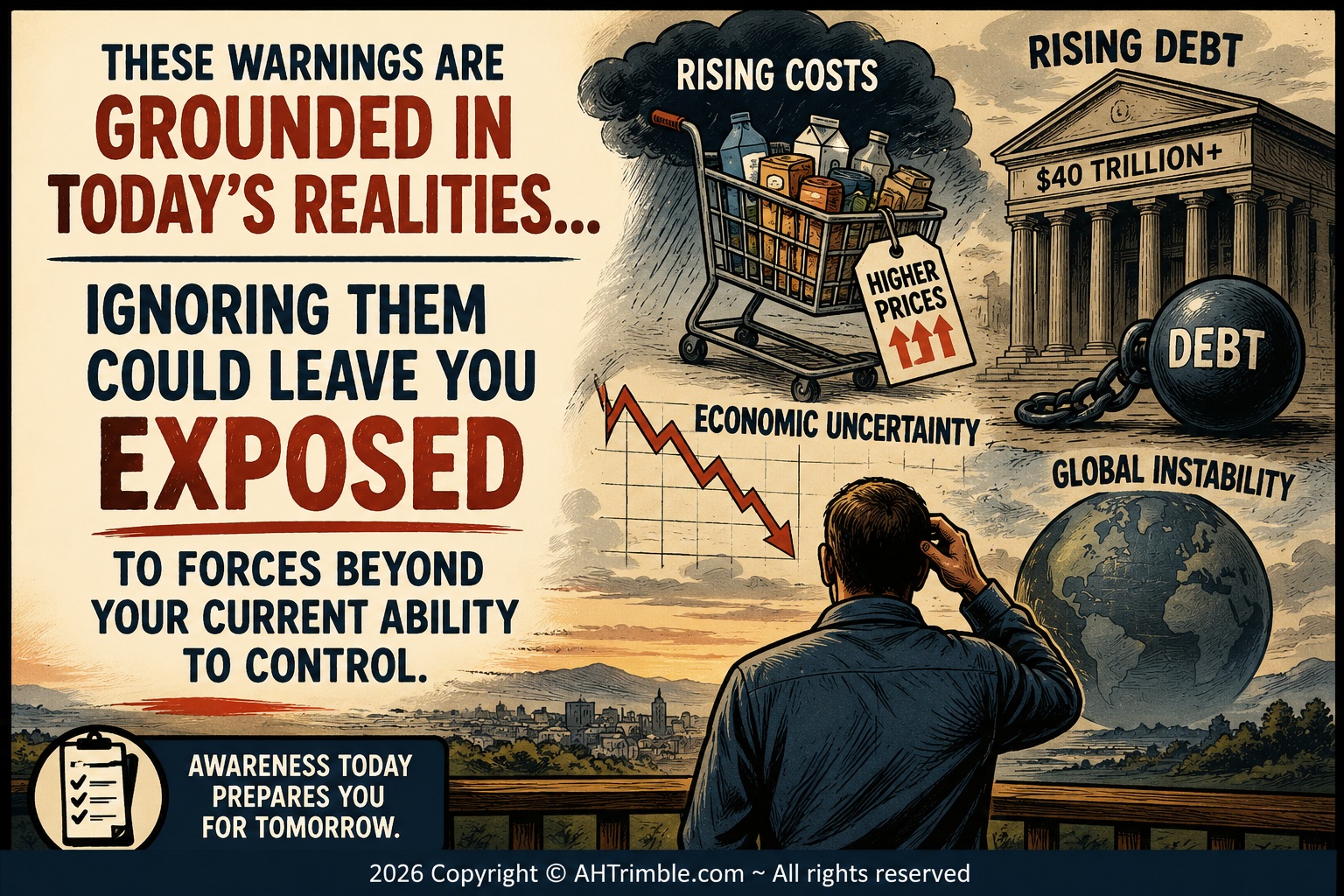
These warnings are grounded in today’s realities…ignoring them could leave you exposed to forces beyond your current ability to control.

What I am saying is…do not delay increasing self-reliance.

Let me explain a few things…

Over the past several weeks I’ve been watching a growing number of economic indicators begin flashing warning signs. Consumer confidence has weakened sharply. Consumer sentiment has dropped to levels that suggest most Americans are increasingly worried about their financial future. Whether those concerns ultimately prove justified or not, the fact remains that millions of people are becoming more cautious with their spending…that is VERY clear.

That caution is beginning to show up in the real world.

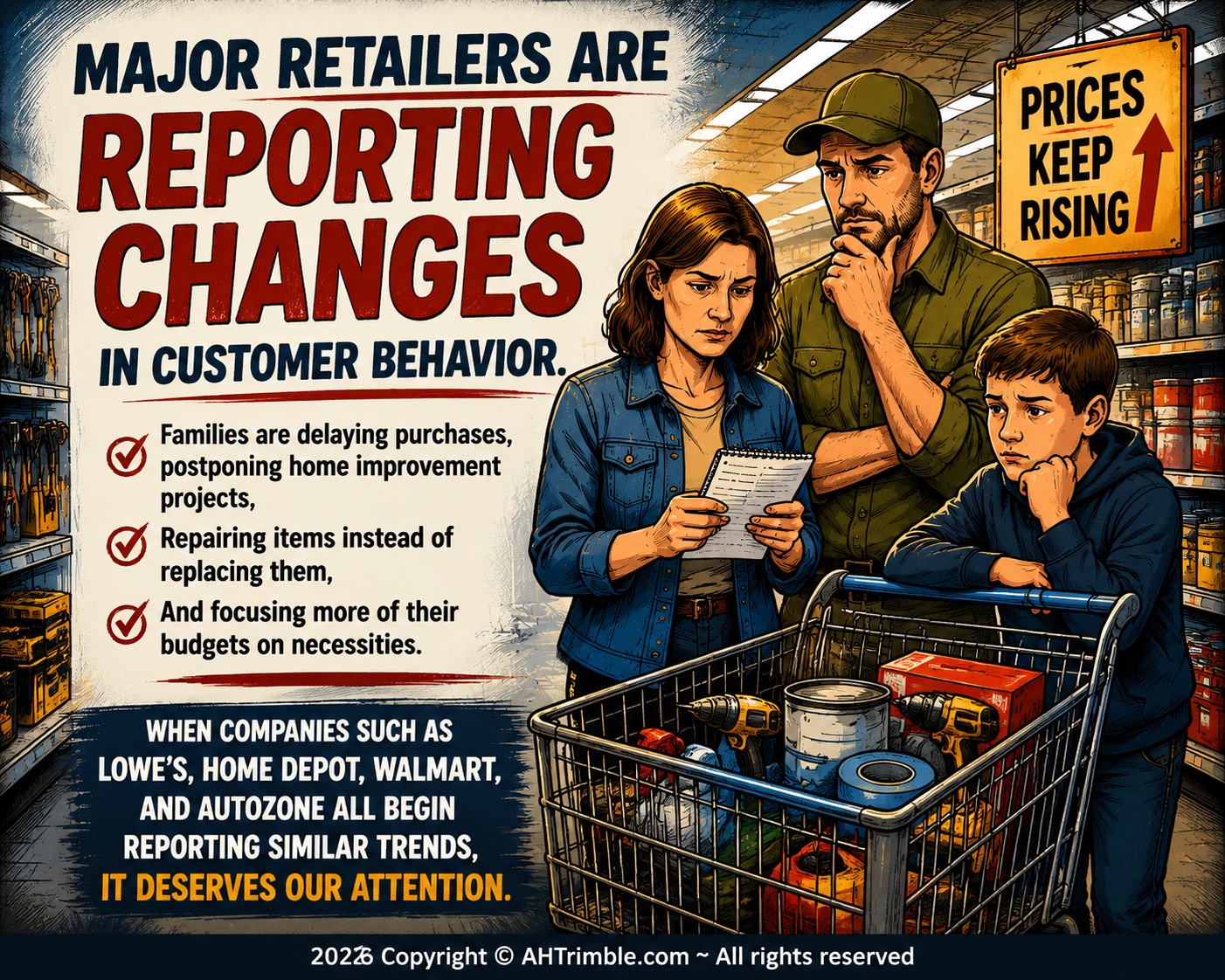
Major retailers are reporting changes in customer behavior. Families are delaying purchases, postponing home improvement projects, repairing items instead of replacing them, and focusing more of their budgets on necessities. When companies such as Lowe’s, Home Depot, Walmart, and AutoZone all begin reporting similar trends, it deserves our attention.

At the same time, inflation continues to pressure household budgets. While the official numbers may show inflation has moderated from its peak during the Biden years, inflation has been rising over the last 1-1/2 years. Many families know from personal experience that groceries, insurance, utilities, property taxes, housing costs, medical expenses, and everyday necessities remain significantly more expensive than they were only a few years ago.

Now another warning light is beginning to flash.

Treasury yields recently climbed to levels not seen since before the 2008 financial crisis. Most Americans never pay attention to Treasury markets, and under normal circumstances there would be little reason to. The problem is that the federal government now carries such a large debt burden that even relatively small increases in borrowing costs can translate into enormous increases in interest expenses.

To put the problem into perspective, on a national debt approaching $40 trillion, every quarter-percent increase in borrowing costs eventually translates into roughly $100 billion in additional annual interest expense.

That’s how little room for error now exists.

Those interest payments do not create new roads, strengthen national defense, improve infrastructure, or provide additional services. They simply service existing debt. Every dollar spent on interest is a dollar that cannot be spent elsewhere or used to pay-down our ballooning national debt.

None of these developments, by themselves, guarantee an economic crisis. But taken together, they paint a picture that deserves serious attention…and there’s a lot of downside risks…we won’t call it a “crisis” yet.

Consumer confidence is weakening. Households are cutting back. Inflation continues to strain budgets. Government debt is becoming more expensive to finance. Financial markets are beginning to take notice.

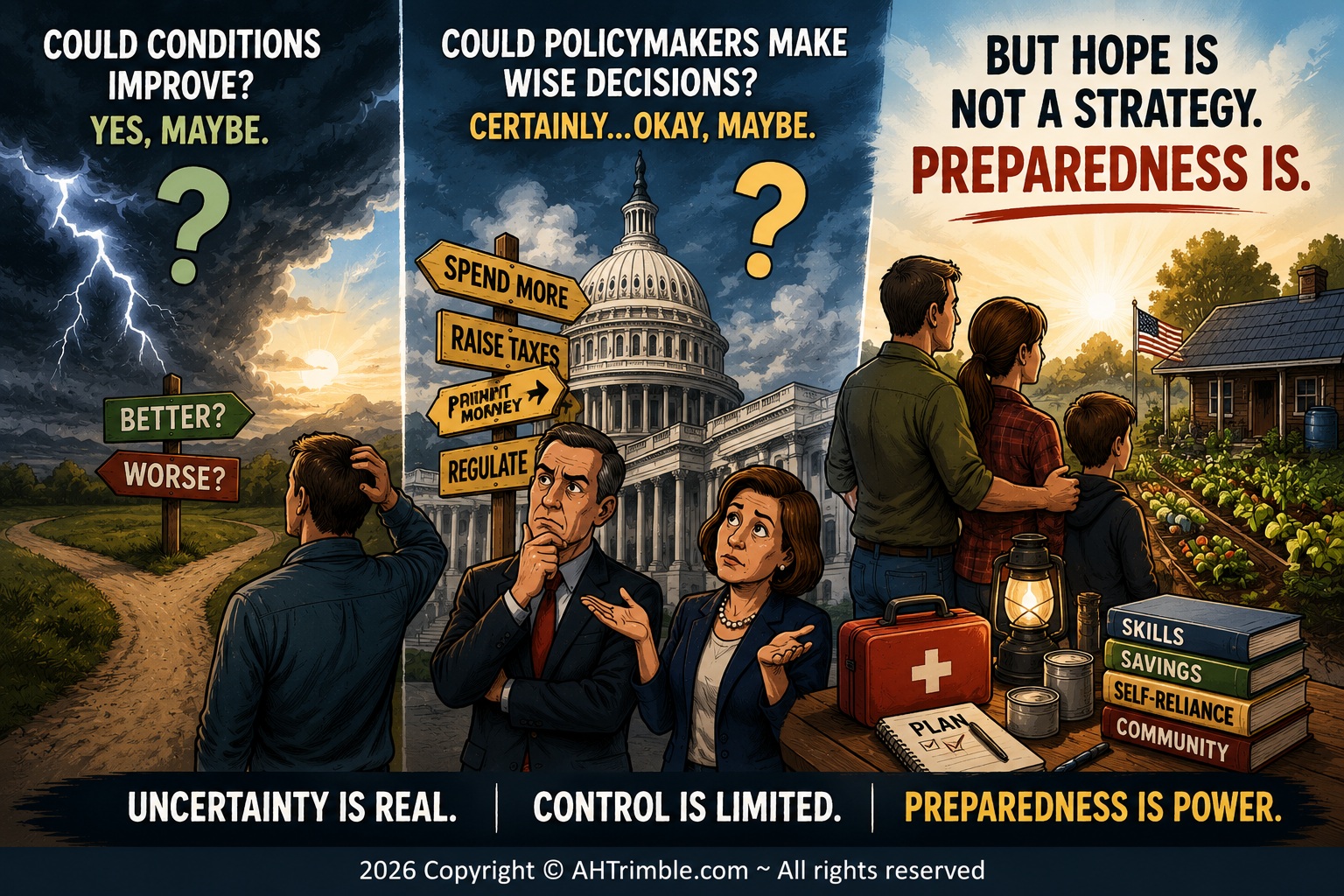
Could conditions improve? Yes, maybe. I am not sure…but my personal outlook isn’t real positive.

Could policymakers make wise decisions that help stabilize the situation? Certainly…okay, maybe. But they don’t have a particularly good track record in wise decision making. I would hope they make wise decisions, but who knows.

But hope is not a strategy. Preparedness is.

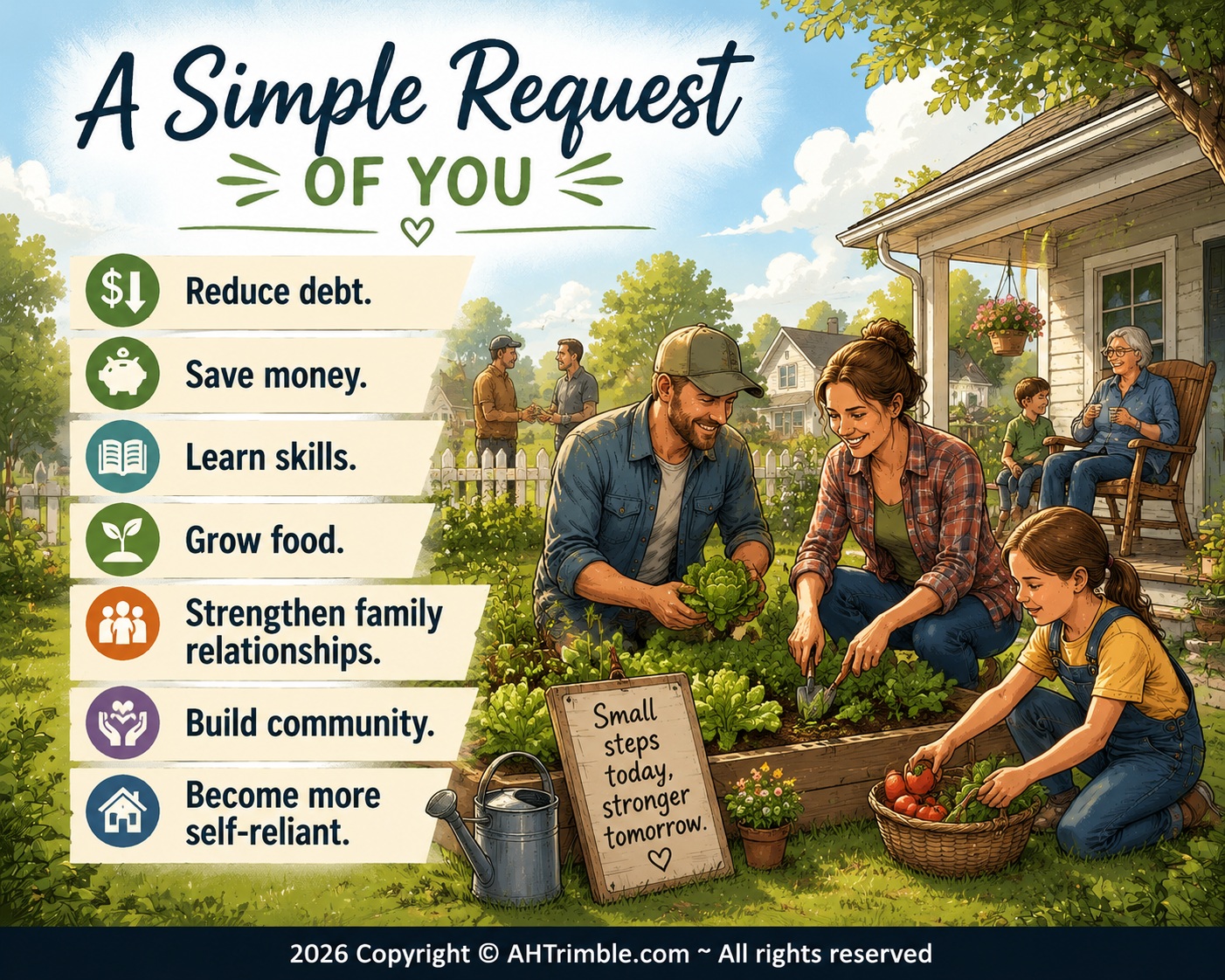
That is why I continue encouraging families, your family, to become more self-reliant. Pay down debt where possible. Build emergency savings. Grow some of your own food. Learn practical skills. Strengthen relationships with family, friends, neighbors, and your community. Reduce unnecessary dependencies wherever you can.

Look, I’m seeing a lot of things moving in the wrong direction all at the same time. Maybe I’m wrong…I hope I’m wrong…I pray I am wrong. But I’m not going to bet my family’s future on me being wrong. And believe me, I don’t think you should bet your family’s future on it either.

None of those actions I am talking about become less valuable if the economy improves.

I’ve been around long enough to watch economic cycles come and go. I’ve watched good times. I’ve watched hard times. I’ve watched people dismiss warning signs because they believed someone else would fix the problem, or because they assumed tomorrow would look a lot like today.

Sometimes it does…sometimes it doesn’t.

When warning signs begin piling up, the people who start preparing early generally have options. The people who wait for absolute proof often find themselves reacting instead of planning.

Maybe conditions improve…I sincerely hope they do.

But if conditions deteriorate, and I believe there is a real chance they will, you’ll be very glad you started preparing before everyone else realized there was a problem.

Pay attention. Increase your self-reliance. Reduce unnecessary dependencies. Build resilience.

Do this not out of fear…not out of panic…but out of love for your family, your community, and the people who depend on you.

This came in after the original article was written, I will make it brief:

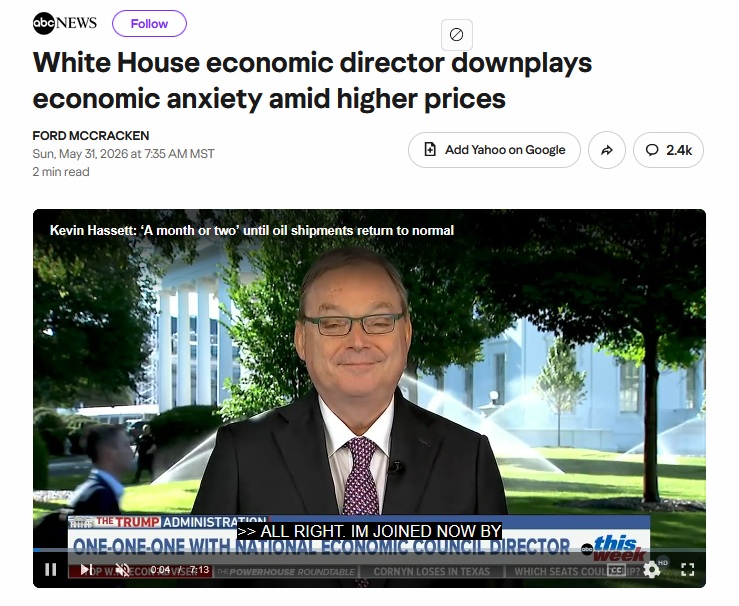
  1. Trump’s National Economic Council Director Kevin Hassett painted a rosy picture of the economy Sunday, downplaying Americans’ growing pessimism about the economy amid high gas prices and rising inflation as the Iran war goes on.

“Look at what’s happening to real wages,” Hassett told ABC News’ “This Week” co-anchor Jonathan Karl, claiming “really positive news” about the economy was being ignored. “On balance, real incomes, real wages are going up.”

Yup, he is 100% correct! But here is was the little weasel liar didn’t say…real wages were up 3.6%…and inflation was up 3.8%. Yeah, that means real wages are FALLING compared to prices going UP.

In real everyday language…your purchasing power is falling…your dollars are buying less and less. Exactly what I’ve been telling you has been going on for the last 56 years. And this is how these lying bastards politicians lie to you every day…they think you are nothing more than a dumb-ass uninformed citizen. But we are NOT! We see their lies and we know they are liars…and they are covering up the truth.

This is what it means in real terms…let’s say last year you made $60,000, with the “increase in real wages” you now make $62,160. But all of life’s essentials now cost $62,280. So you lost ground…you lost purchasing power of $120 from last year. Your paychecks aren’t going as far as they did last year…you are economically more poor.

And this administration jackass calls it really positive news ! ! !   Insanity and lies are now commonplace.

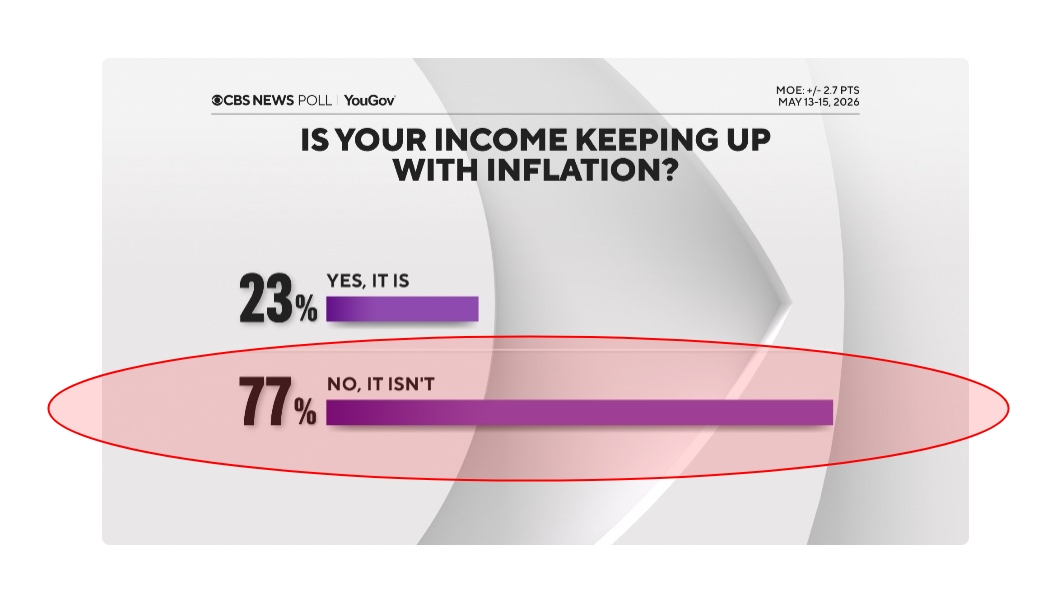
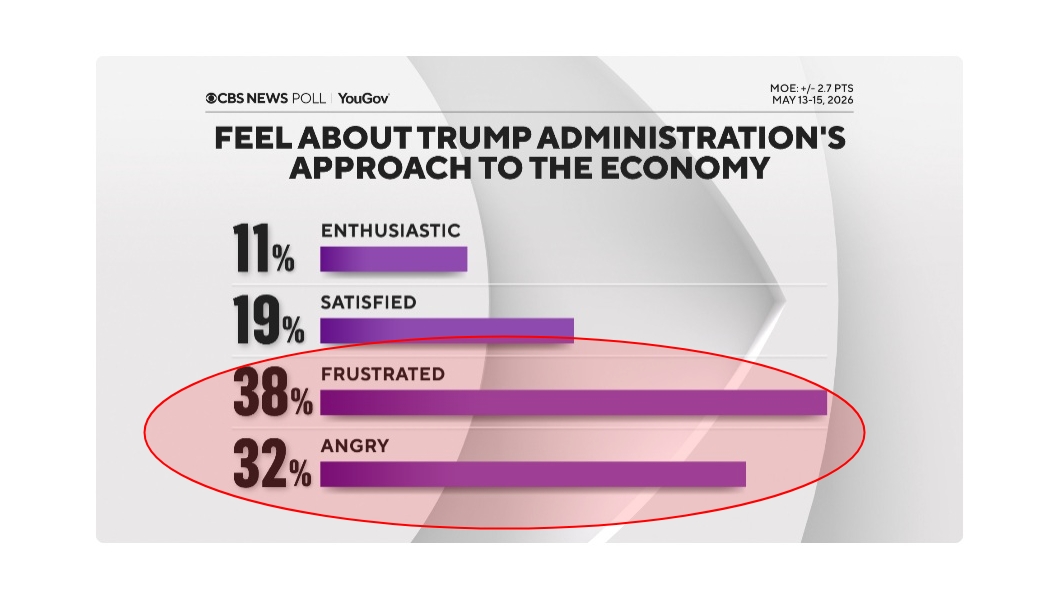
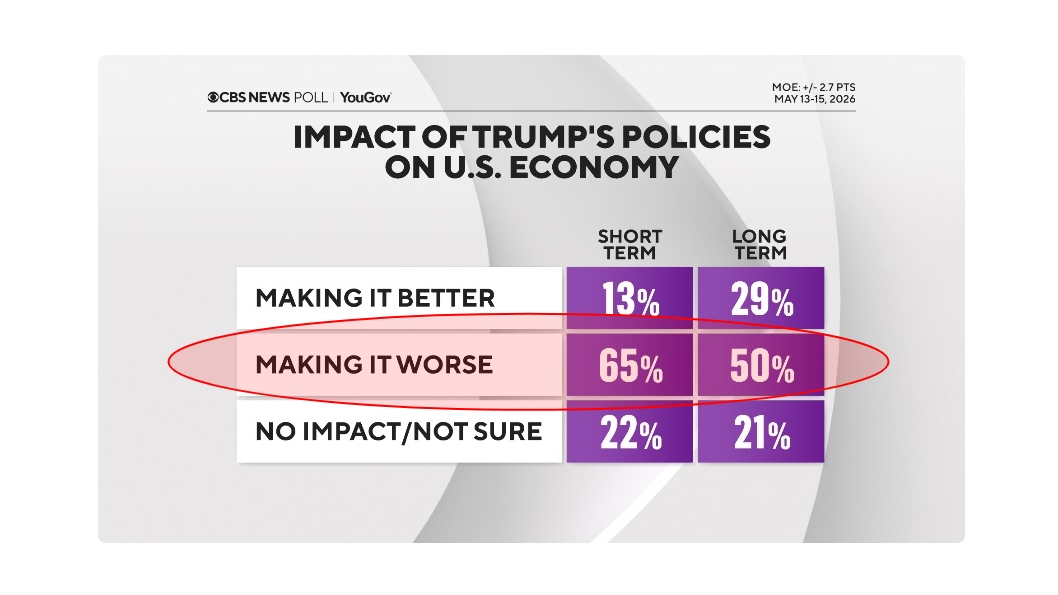
  1. US citizens are placing the US economic problems squarely at the feet of the current administration…as they should, it’s their decisions that are causing the bulk of the real problems.


Related Articles –


References


 2009 - 2026 Copyright © AHTrimble.com ~ All rights reserved
No reproduction or other use of this content
without expressed written permission from AHTrimble.com
No legal, economic, or financial advice is given, no expertise to be assumed.
I may receive compensation from advertised/mentioned products on this website.
See Content Use Policy for more information.
Disclaimer:
The thoughts and opinions expressed in these articles are based on personal observations, experiences, 
and independent research. They are intended for informational and thought-provoking purposes only. 
I am not an economist, financial advisor, attorney, accountant, or licensed professional. 
Nothing contained herein should be considered financial, legal, investment, or tax advice. 
Every family’s situation is different, and readers should do their own research and 
seek qualified professional guidance before making important decisions.

These writings simply reflect one person’s attempt to better understand the challenges facing 
ordinary families and explore practical ideas related to resilience, preparedness, 
personal responsibility, and regaining control over everyday life.

Economics 101 – Part #5 of 5 (closing)

You should probably read the previous four parts before reading further…this post will make much more sense if you do:

< click here to read Part #1 >

< click here to read Part #2 >

< click here to read Part #3 >

< click here to read Part #4 >


For years many Americans have felt like something is off. Not because some expert on TV told them so, but because they live it every day…it’s their life.

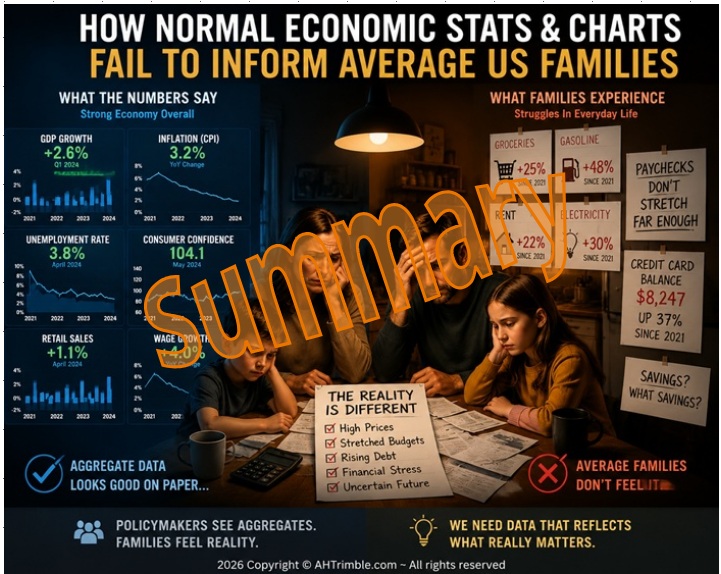
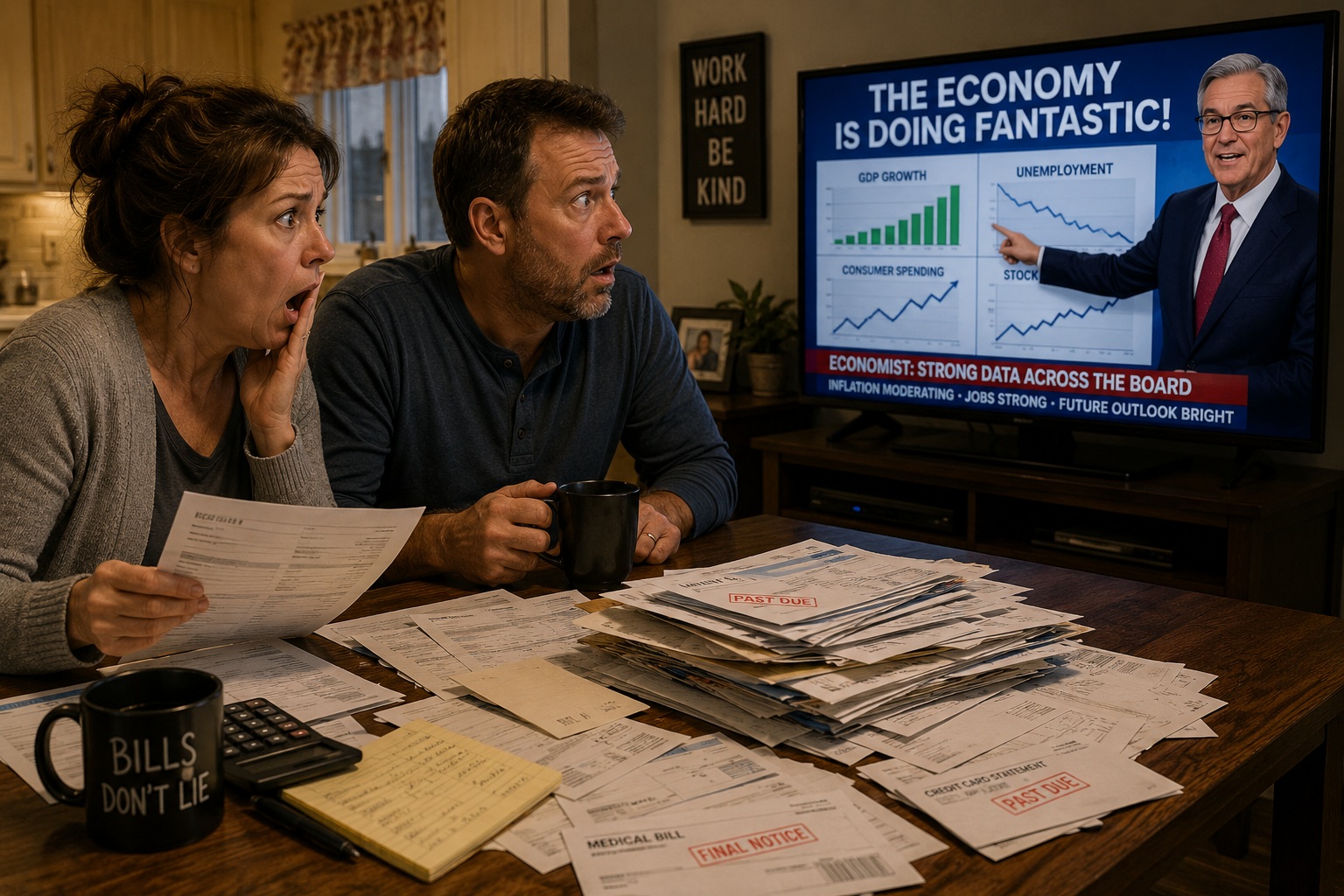
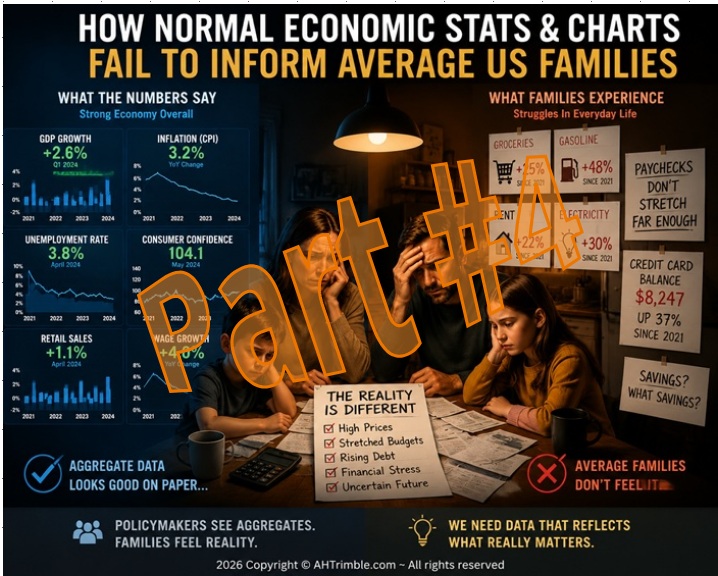
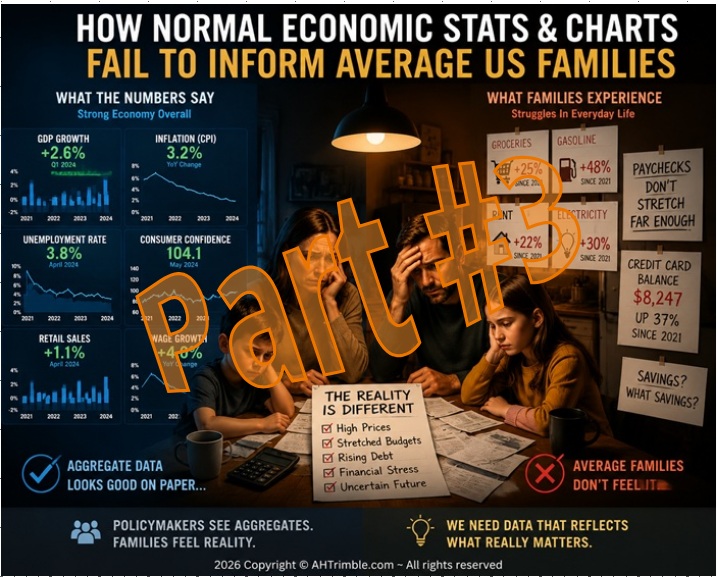
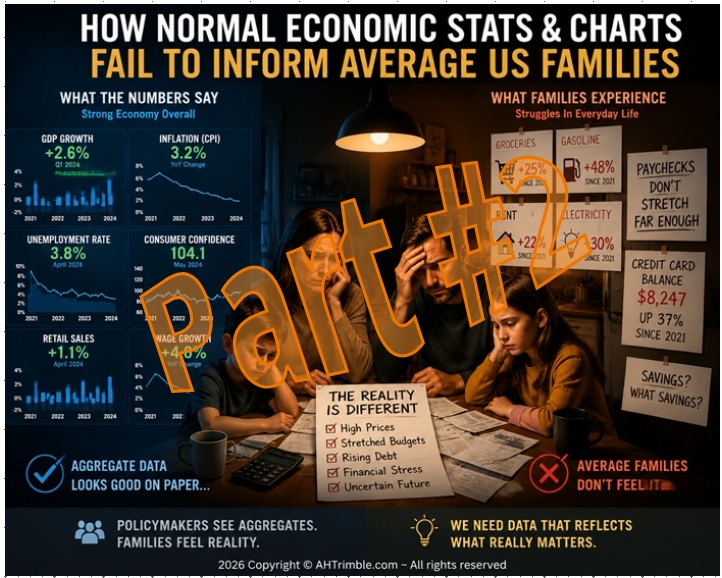
The numbers say the economy is doing great. GDP grows. The stock market hits records. Unemployment stays low. Inflation cools down a little, goes back up a little, and economists point at charts saying things are moving in the right direction. Meanwhile, people sit at the kitchen table staring at bills.

I am a 71 year old man now, I’ve watched America for a long time. I’ve watched factories close and prices rise. I’ve watched technology change the world. I’ve watched neighbors become strangers and strangers become enemies. I’ve witnessed the rise of keyboard warriors. I’ve seen the internet separate us into tribes.

I’ve watched people work harder and somehow feel less secure. And somewhere along the way, many of us started feeling like something wasn’t adding up. The experts showed us charts, the politicians gave speeches, and the media gave us explanations…it didn’t make sense to many of us. And all of us picked up beliefs along the way. I did too.

As I reached the end of this article, something happened that I did not expect. I became overwhelmed with emotion and began to cry. At 71 years old I wasn’t expecting that. Something shifted inside me. What comes next is going to surprise a lot of people…it shocked me when I re-read it. I hope you listen to my heart as you read on.

How many times did I look at a problem and only see it through the lens I had been handed or polished myself? How many times did I argue with someone who was hurting in the same way I was hurting? How many times did we spend more energy fighting each other than asking what was happening to the people around us?

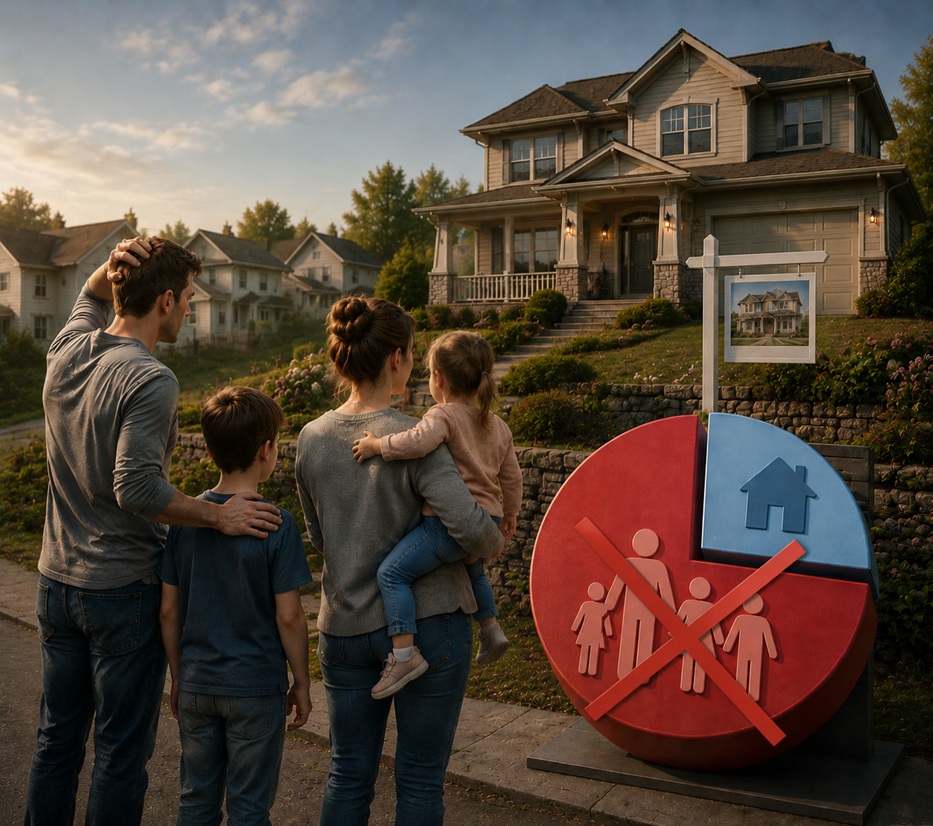
Because now I look around and I don’t see numbers…I see people; I especially see young families wondering if they can ever buy a home. I see parents worrying about their children…I see older people wondering what kind of country they are leaving behind. Mostly, I see people exhausted from running faster and feeling like they are getting nowhere.

Let’s think about what has happened.

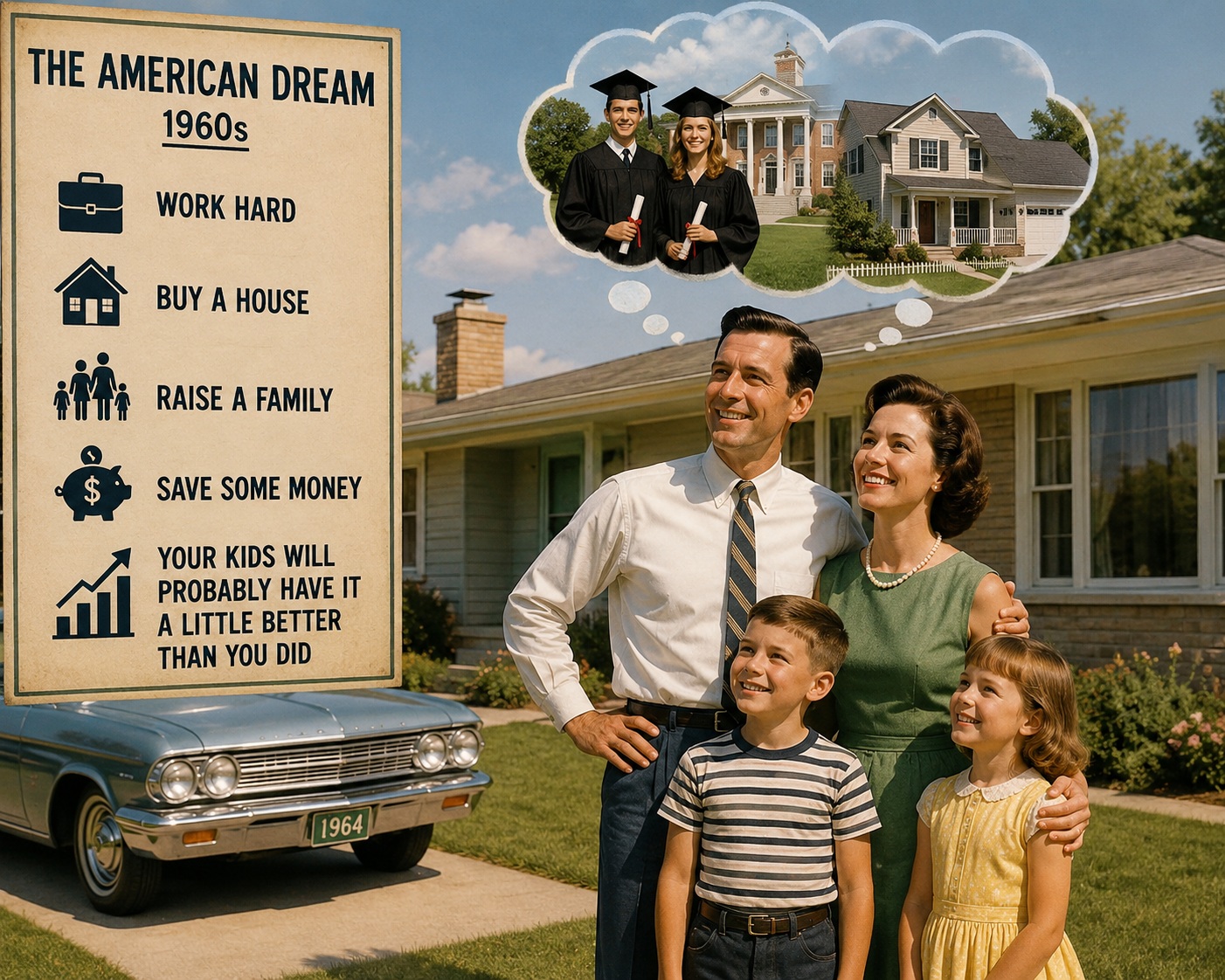
Back around the 1950s through the early 1970s, the average family had a pretty simple expectation: work hard, buy a house, raise a family, save some money, and your kids would have a life a little better than you did.

It wasn’t perfect. Plenty of people were left out. Plenty struggled. But the broad middle-class was growing…and the lower-class was much smaller back then. Then things slowly changed.

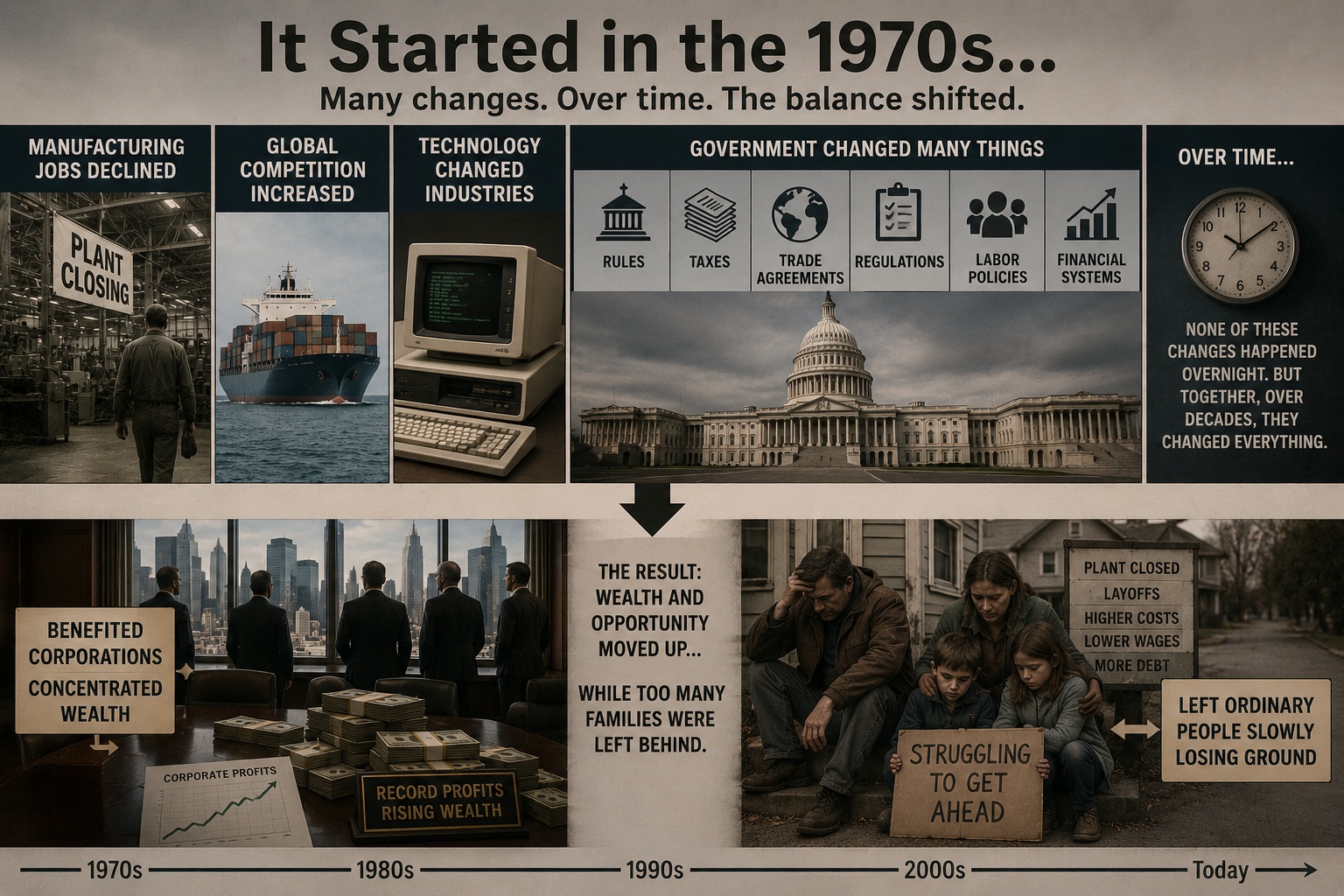
Manufacturing jobs declined. Global competition increased. Technology changed industries. Government changed rules, taxes, trade agreements, regulations, labor policies, and financial systems. Looking back, I cannot help but wonder whether too many of those changes increasingly benefited corporations, concentrated wealth, and left ordinary people slowly losing ground. None of those changes happened overnight.

But over decades, something happened that people could feel long before they could explain it. Productivity kept going up, corporate profits kept going up, stock markets kept going up; but for many ordinary families, the feeling became…

“Why does it seem like I have to run faster just to stay in the same place?”

Then another strange thing happened; people started being told things like: “The economy is strong.” But many folks thought “That may be true. But it doesn’t feel strong here.” Because people don’t judge life by GDP or CPI or S&P. People/families judge life by the answers to questions like:

  • Can I buy a home?
  • Can I save money?
  • Can I survive an emergency?
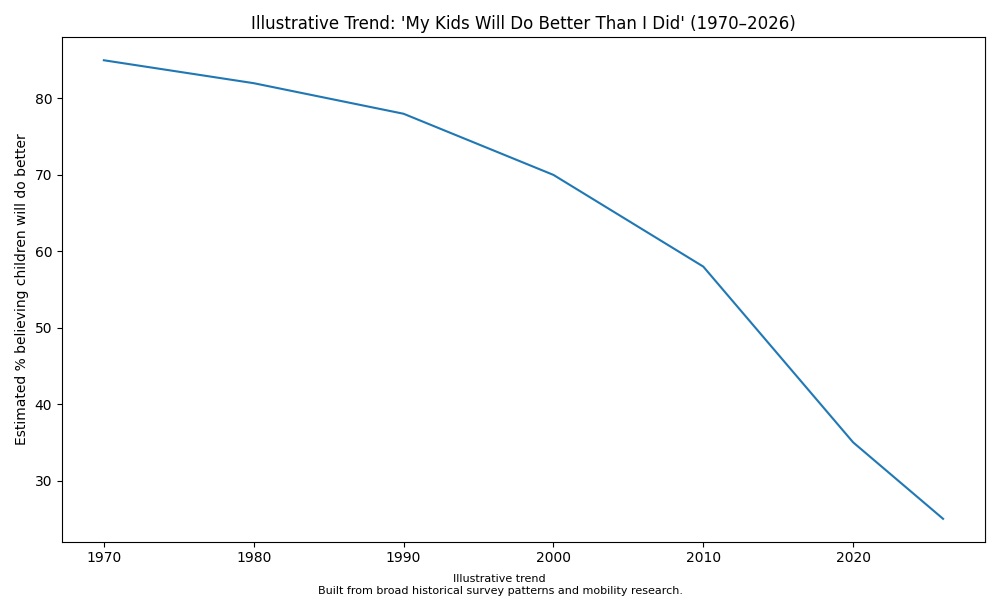
  • Will my kids do better than I did?

And for many people, confidence in those answers weakened…life didn’t match the messaging floating all around them.

Now, before I jump straight to anger and blame, which won’t really solve the problem, let’s think carefully:

  • Corporations did what corporations do: they pursued profit.
  • Governments did what governments do: they made rules, changed rules, and reacted to pressure and campaign contributions.
  • Technology did what technology does: it changed the value of work.

None of these things individually shrank the middle-class and grew the lower-class. But together, over almost sixty years, they slowly changed where the rewards went.

So how do we fix it?

Not by tearing everything down. Not by pretending capitalism failed. Not by pretending government can save us.

The goal isn’t to punish success. The goal is to make sure more people can participate in it. A stronger middle-class doesn’t come from taking away opportunity. It comes from expanding it:

  • More ownership.
  • More affordable housing.
  • More skills.
  • More businesses started.
  • More pathways into solid middle-income work.
  • More ability for ordinary people to build wealth instead of merely survive.

Because at the end of the day, this isn’t really about GDP, stock markets or inflation charts. It’s about whether a kid growing up today can someday look at their own children and say, “You’re going to have a better life than I did.” Because once a society loses faith in that idea, it starts losing something much larger than money. It loses its soul.

Will my kids do better than I did?

Maybe we have spent too much time waiting for politicians, corporations, experts, or someone else to fix things.

Maybe we forgot something simpler…countries are not built from the top down. They are built from millions of ordinary people doing ordinary things like raising children, helping neighbors, teaching what they have learned, building businesses, growing food, and loving our neighbors.

Maybe America was never really started by powerful people…maybe it was started by and always held together by ordinary people who cared about each other. Cared enough about their liberty, rights, and freedom…and willing to fight for those precious blessings.

Here’s what I think…no one is coming to save us but we can serve and save each other…one family at a time. I believe the answers were never waiting for us in Washington or on Wall Street. The truth was never on television or on a computer screen. No expert could ever completely get it right because they never knew our family or the family next door. No rule, no law, no regulation, no board room decision can get it right until they consider who and how it affects. They rarely do.

I’m a 71-year-old man sitting there with tears in my eyes because I still care about families, neighbors, and the next generation and the one after that. And that is not a sign that something is broken inside of me. It may be a sign that something inside me is still very much alive.

If you are moved by any of this 5-part article, if you feel something stirring in your soul…then maybe something inside you is still very much alive too.

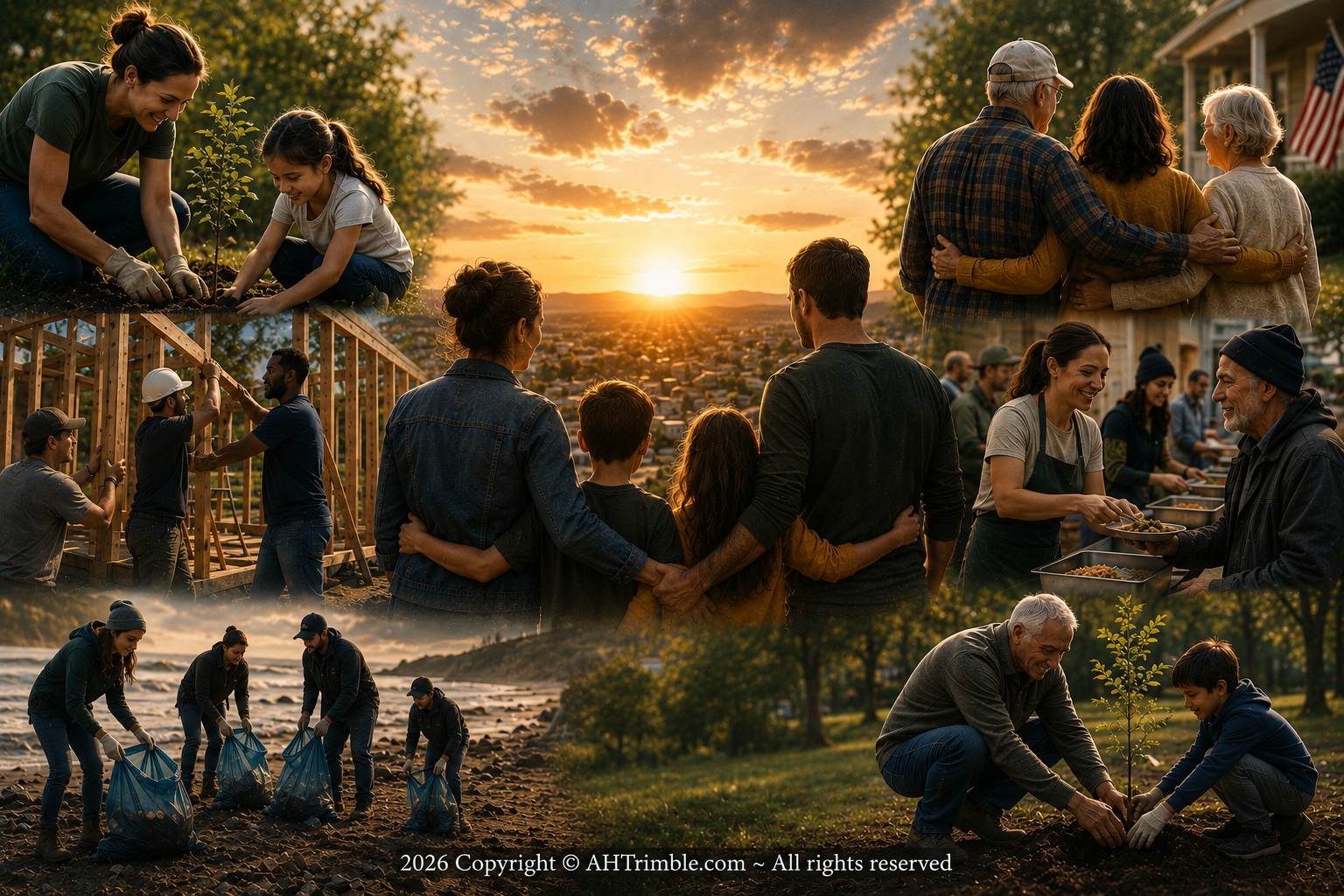
Maybe we have been looking in the wrong direction. Maybe we  -you and I-  are the answer.

Maybe we are and have been the “fix” all along. Not because we are powerful, not because we are wealthy…not because we have all the answers. But because every good thing that has ever held a family together, held a community together, or held a country together started with ordinary people deciding to care. Deciding to help, deciding to love, deciding to become more.

No one is coming to save us…but we can serve and save each other…one life, one family at a time.

← Click here to read Part #4           Click here to read follow-up article →


Articles in this Series –


 2009 - 2026 Copyright © AHTrimble.com ~ All rights reserved
No reproduction or other use of this content
without expressed written permission from AHTrimble.com
No legal, economic, or financial advice is given, no expertise to be assumed.
I may receive compensation from advertised/mentioned products on this website.
See Content Use Policy for more information.
Disclaimer:
The thoughts and opinions expressed in these articles are based on personal observations, experiences, 
and independent research. They are intended for informational and thought-provoking purposes only. 
I am not an economist, financial advisor, attorney, accountant, or licensed professional. 
Nothing contained herein should be considered financial, legal, investment, or tax advice. 
Every family’s situation is different, and readers should do their own research and 
seek qualified professional guidance before making important decisions.

These writings simply reflect one person’s attempt to better understand the challenges facing 
ordinary families and explore practical ideas related to resilience, preparedness, 
personal responsibility, and regaining control over everyday life.

Economics 101 – Part #4 of 5

You should probably read the previous three parts before reading further…this post will make much more sense if you do:

< click here to read Part #1 >

< click here to read Part #2 >

< click here to read Part #3 >


So now lets link inflation to us -our families- in a very personal way over time (the last 56 years).

I included “Home” in this chart for this stunning fact…in 1970 a family only had to work a little over 3000 hours to buy a home with cash they had saved. In 2026 a family has to work close to 8000 hours to buy a home with cash. That means 2.5 times more hours to buy a median priced home in 2026 vs 1970. That is a staggering statistic!

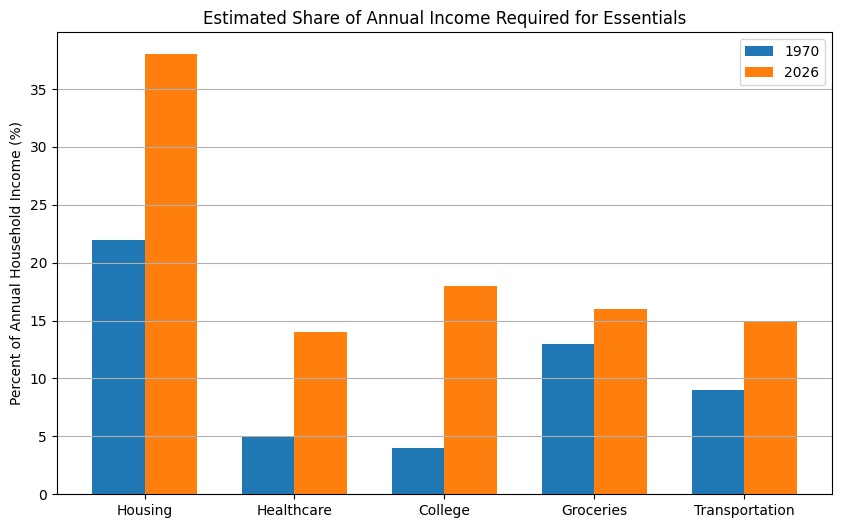
Now let’s look at the annual cost of “essentials” during that same time period…

Here’s what you are looking at…every family essential costs a greater share (percentage) of annual income now vs 1970. That is personalized inflation…less and less money left at the end of the month in your checking account. But hang on you say…our wages are also going up! You wanna bet? Well, granted they are going up but check this out…

Real wage growth is not keeping up with the cost of any family essential!! And again…that is FACT!!

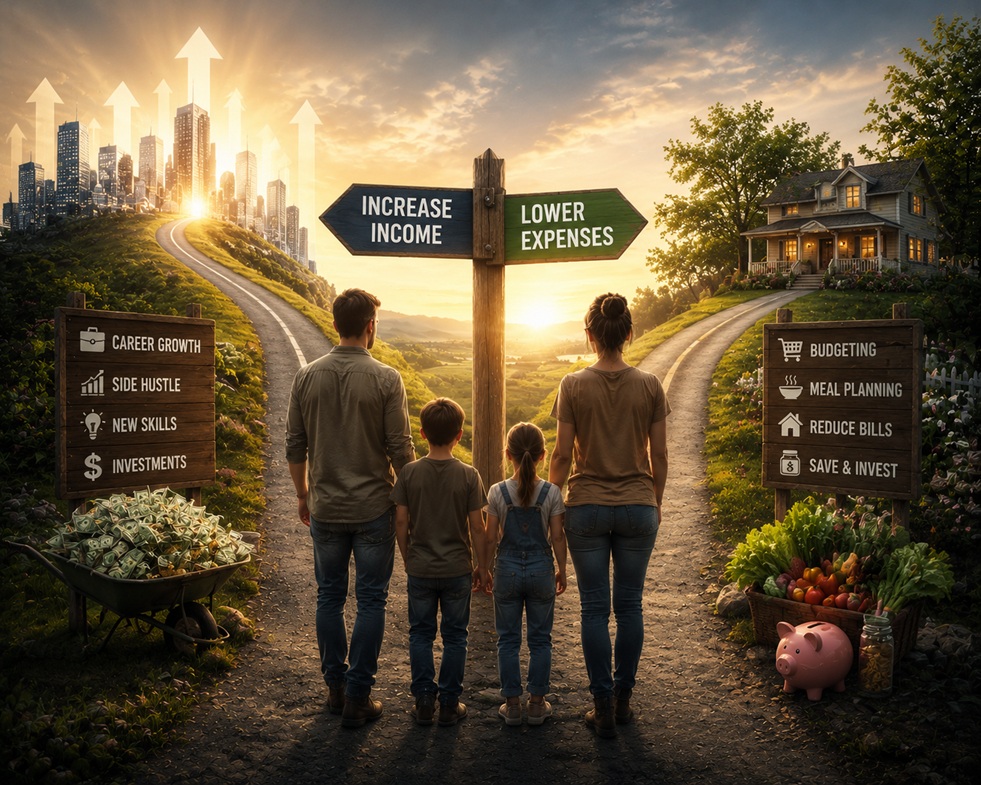
How do you “fix” this problem of wages not keeping up with inflation? Well, I hate to say it, there are only two ways to fix it:

1 – Increase your income.

2 – Lower your family’s expenses.

That’s it…there really isn’t any other way to go about it…it’s painfully simple.

So what is the ultimate answer to our economic situation…our terrible economic situation that is 6 decades old? What is truly at stake in our lives and our family’s lives?

Oddly, it’s not about numbers…it really isn’t.

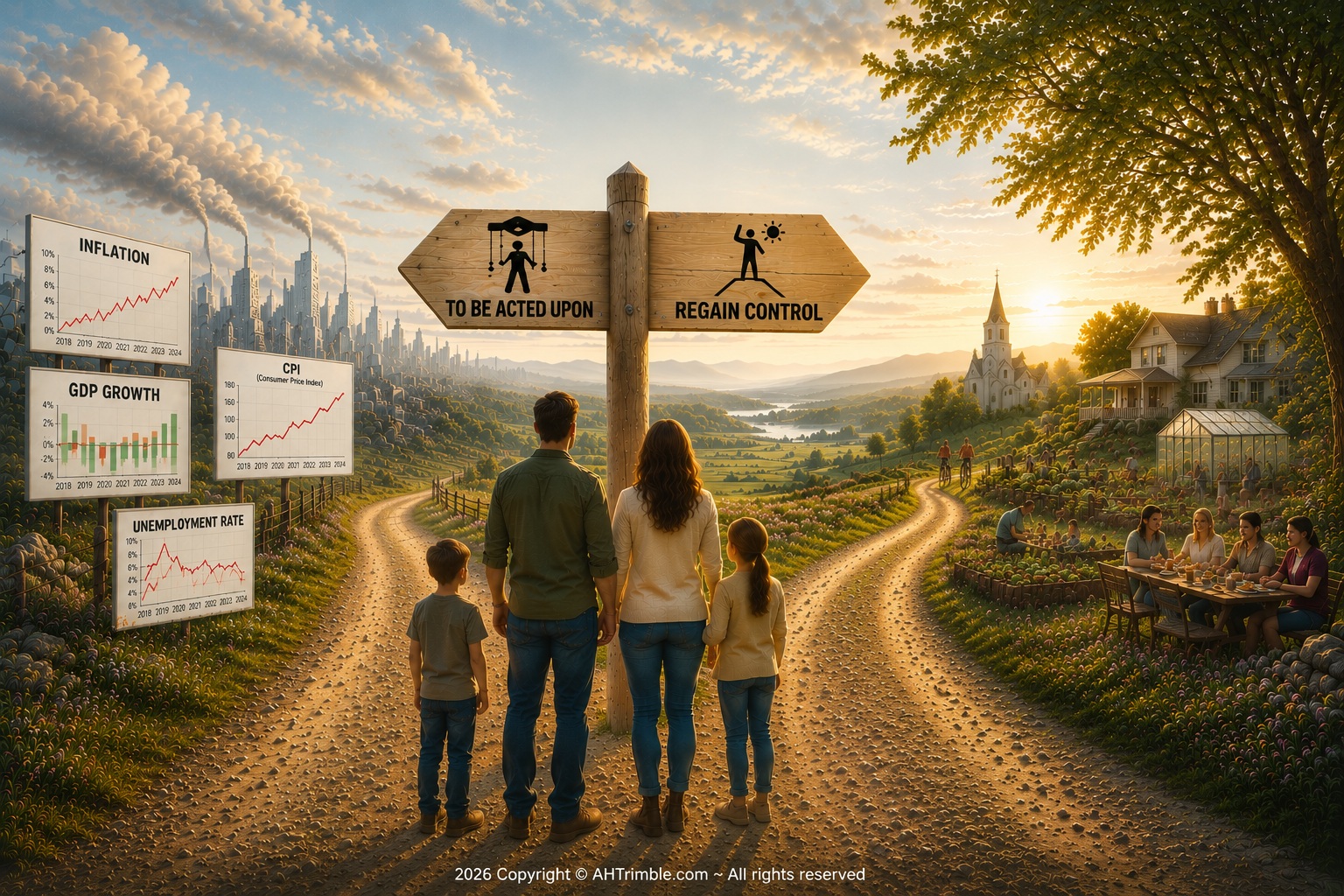
It’s about “regaining control.”

It becomes something deeper, a philosophy of living, a response to instability, a plan for resilience, reclaiming of agency, and maybe even creating a quiet, spiritual moral argument about what actually matters in our life. And trust me…that all takes time to emotionally/spiritually digest and organize into reality.

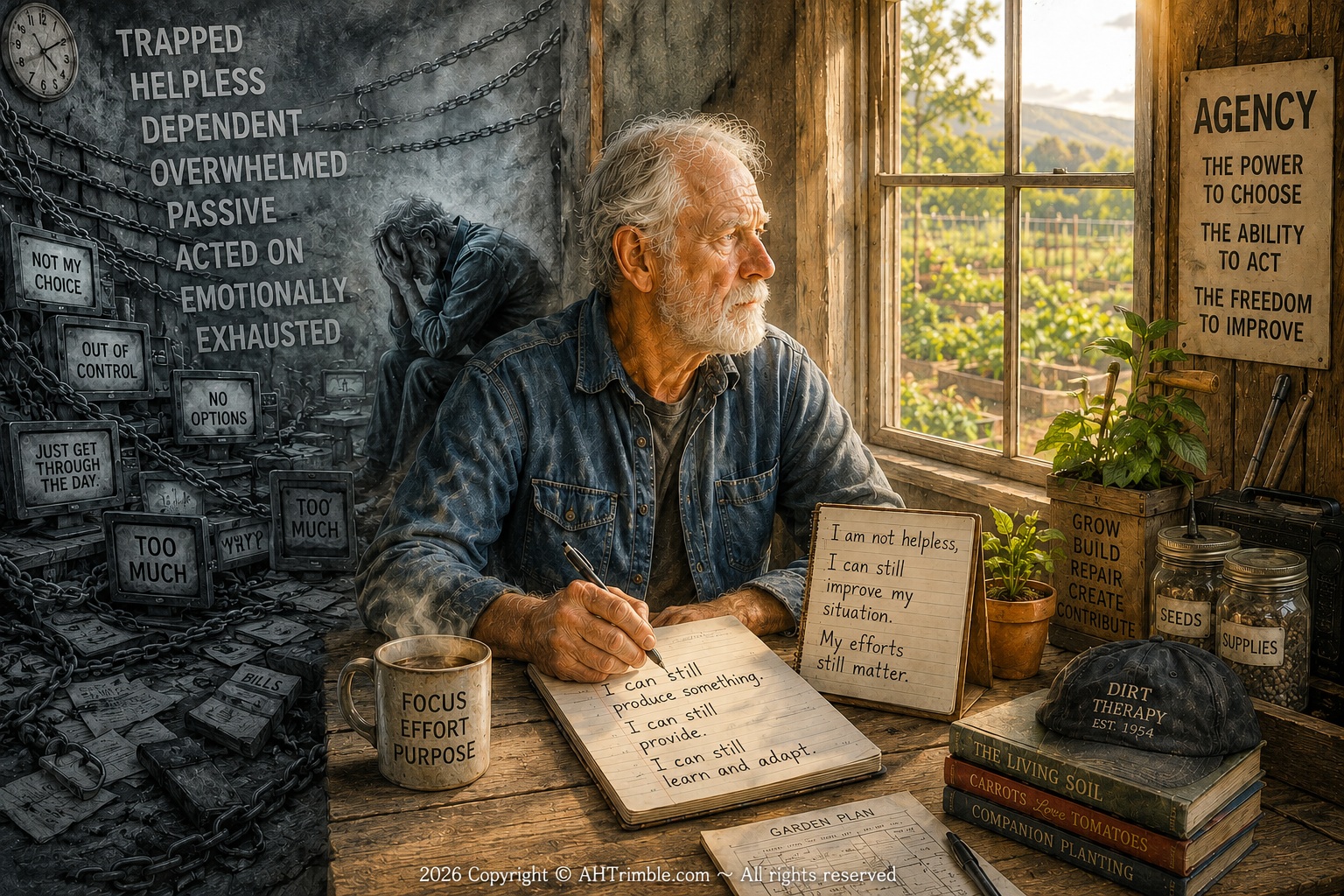
There really is a pivotal word in that paragraph…”agency”…maybe the single most important concept of all. To me “agency” means making choices and the feeling that your actions still matter. It is a sense you can influence your circumstances, adapt, contribute, protect, create, provide, and improve your life and the lives of others…especially your family and community.

When people lose agency (our ability to choose, or our unwillingness to choose), we begin feeling trapped, helpless, dependent, overwhelmed, passive (acted on)…and emotionally exhausted as a result of all that. And I think a huge number of people today quietly feel exactly that way…emotionally and spiritually exhausted. Kinda like “everything important happens to me” vs “I control my own life.”

Here’s my thought…when we restore agency, the ability and the desire to chose, we regain control. We take back control of our own lives, our own destiny…we are no longer acted upon…we act. We regain control.

Strangely enough when I think about gardening I think of statements I’ve said to myself in quiet moments:

  • “I can still produce something.”
  • “I can still provide.”
  • “I can still learn and adapt.”
  • “I am not helpless, I can still improve my situation.”
  • “My efforts still matter.”

Think carefully about the world today, our society…to me it is trying to, or already has, made us consumers, spectators, renters, subscribers, and dependents. And those attributes are in direct contrast to what humans are meant to be…producers, creators, problem-solvers, participants, neighbors, and contributors. Being the former vs the later is a disconnect that can and does create enormous emotional emptiness in our souls.

I think people emotionally and spiritually understand that disconnect in today’s society and many are starving for a “restoration” without realizing what they are missing or even what to restore to. They/we suffer the loss of agency and accept being acted upon…also without realizing it.

  • We feel exhausted every time we can’t pay all the bills.
  • We feel it when we can’t buy fresh produce.
  • We feel it when we can’t take our family on vacation with max’ing out a credit card.
  • We feel it when we can’t share charity with others.
  • We feel it when we can’t provide for our families in the ways we wish.
  • We feel it when we are not in control…when our actions seem powerless against the world.

The answer my friend is taking back control…and when we do, we restore our agency. And when that happens…the exhaustion starts to fade away…and we begin to live life as it was intended.

Forget about the economists. Don’t obsess over the numbers and percentages. Ignore the endless noise from the talking heads.

Just be you…the real you. The “you” you were meant to be from the very beginning!

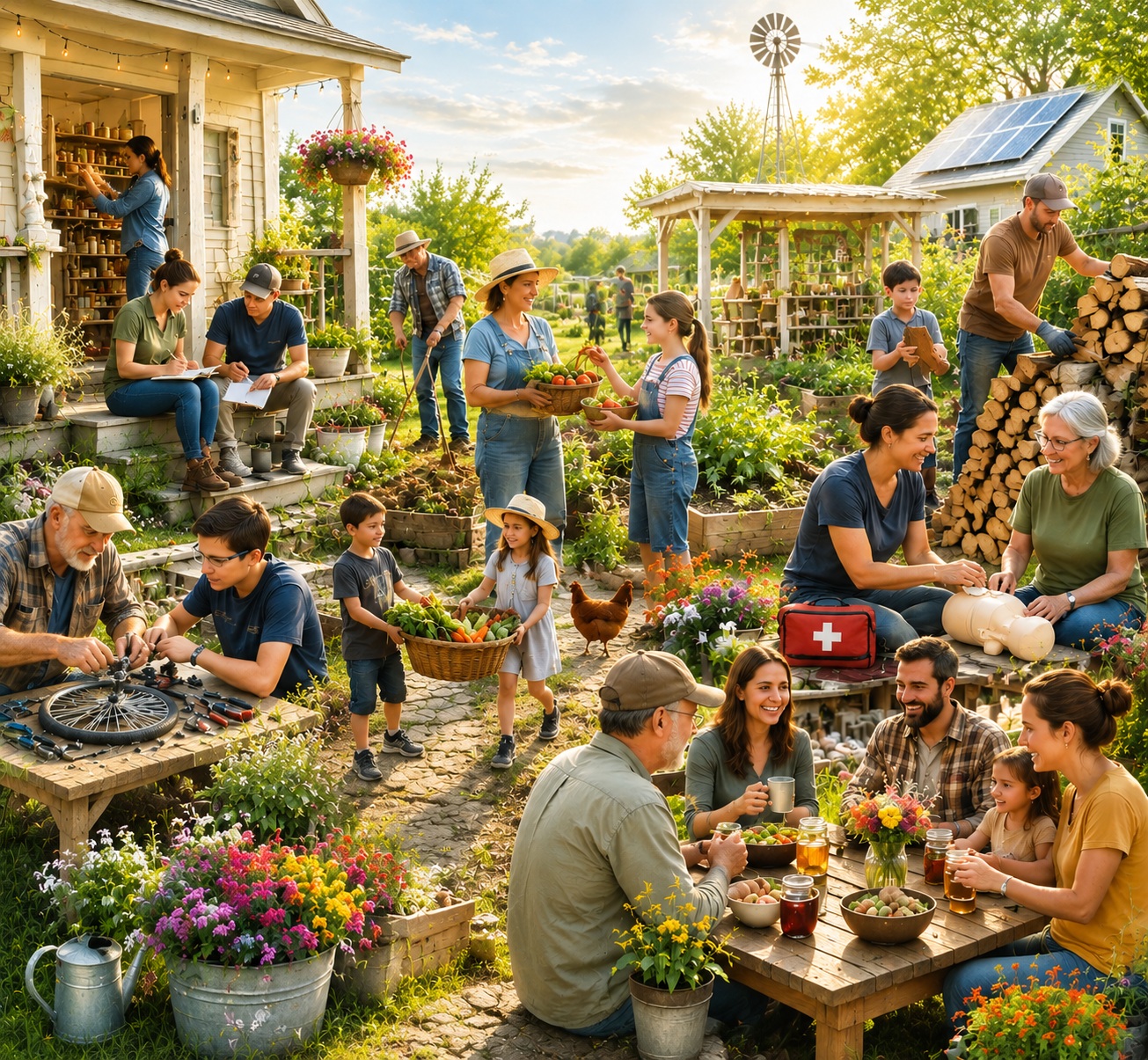
Think carefully about what truly matters…your family, your community, your congregation, your neighbors. Serve them. Help one another. Stand together in good times and in bad.

Become more self-reliant so you can become more useful to others when they need you. Stronger families create stronger communities, and stronger communities create resilient societies.

The truth is, no one is coming to save us…we save each other.

Do the right thing…ALL of the time.

Now more than ever, we need each other to do exactly that.

Tomorrow I wrap this all up, a closing of sorts, sharing my final thoughts. Probably the most important part of this series. I hope you will take time from your busy day to come back and read it.

← Click here to head Part #3          Click here to read Part #5 →


Articles in this Series –
Related Articles –


 2009 - 2026 Copyright © AHTrimble.com ~ All rights reserved
No reproduction or other use of this content
without expressed written permission from AHTrimble.com
No legal, economic, or financial advice is given, no expertise to be assumed.
I may receive compensation from advertised/mentioned products on this website.
See Content Use Policy for more information.
Disclaimer:
The thoughts and opinions expressed in these articles are based on personal observations, experiences, 
and independent research. They are intended for informational and thought-provoking purposes only. 
I am not an economist, financial advisor, attorney, accountant, or licensed professional. 
Nothing contained herein should be considered financial, legal, investment, or tax advice. 
Every family’s situation is different, and readers should do their own research and 
seek qualified professional guidance before making important decisions.

These writings simply reflect one person’s attempt to better understand the challenges facing 
ordinary families and explore practical ideas related to resilience, preparedness, 
personal responsibility, and regaining control over everyday life.

Economics 101 – Part #3 of 5

You should probably read the previous two parts before reading further…it will make much more sense:

< click here to read Part #1 >

< click here to read Part #2 >

So now is the time when I get into the nitty-gritty of this economic stuff…wrap it up in a neat pristine package where everything makes sense and all the world becomes sunshine and butterflies. Well…maybe not.

But, what I will do is share some additional thoughts and then layout some ideas that every family, every person can do to reduce the negative impact of what is happening. Now, you will have to bear with me a bit, it doesn’t come quick.

Let’s start with the obvious…lots of people already feel economically stressed, financially squeezed, uncertain, and distrustful. What many ordinary people lack is constructive and practical direction…simple steps they can begin taking today, tomorrow, and the next day to improve stability and prepare for an uncertain economic future.

There are two camps in the United States today. One screams, “Everything is rigged! Collapse is inevitable! Nothing can stop it!” The other quietly nods, “Everything is basically fine…this is normal…just keep on keeping on.” There there’s Ray Dalio and his extensive research on The Fall of the US Empire <click here to read that article >.

I get why both sides exist, but neither tells the full story. The truth is harsher but slightly more balanced…the system isn’t fine, and it isn’t collapsing tomorrow. The “system” is however, increasingly fragile…financially, socially, and politically speaking. Ordinary households are feeling it, day in and day out. Families are struggling to pay for essentials, buy a home, save for the future, or hold onto stability. This isn’t theory…it’s lived reality. This is our lives…our experience.

And here’s the worst part: most people don’t even see all of this yet…statistics show families are barely scraping by economically, while the system keeps stacking more weight on their shoulders. And while the rich continue to accumulate more wealth and influence, the crushing economic pressures on everyone else keeps growing. People aren’t just losing ground slowly; they’re losing real financial security and have been for 60 years. That’s why paying attention…and taking practical steps…is no longer optional…it’s about survival.

First off…from the heart, I truly believe the U.S. economy, as it is today, is already strained and failing. It hasn’t officially crashed, but it is clearly heading toward serious trouble…which could include a total crash/collapse. I also believe the economic system will have to change…and it will change. What I can’t say for sure is exactly what it will change into.

If I was writing this a year ago it would look like this…

That said, there are three primary broad paths I see for the U.S.:

  1. Slow, painful, incremental change: Tough, uneven adjustments over decades that may slightly improve conditions for lower- and middle-income families. (Roughly 50% probability)
  2. Partial adaptation: The current system is tweaked, becoming somewhat more economically friendly, but ordinary households still face strain and instability. (About 35% probability)
  3. Major constructive restructuring: A broad, coordinated overhaul that stabilizes the middle class and creates real opportunities for the lower class. (Around 15% probability)

Technically, there are two outliers, a fourth and fifth possibility…both are much more extreme forms of changes/collapses that forces major change upon America. I won’t even try to assign a probability to them; there are simply too many variables and potential outcomes to make a meaningful estimate. And if it is too extreme…it could lead to everything getting much worse…almost beyond comprehension.

Outlier #1 – The economic disparity becomes so extreme and the lower & middle-class become so destitute, frustrated, or desperate that there is a revolution of sorts. It would be violent, bloody, and devastating to the United Stares…something that the US might never recover from. And the outcome is unpredictable at best.

Outlier #2 – Artificial Intelligence (AI) could begin to influence the economy in ways that are virtually unknown to us now. Massive job replacement creates unimaginable unemployment which would deform/devolve into an unknown size of residential displacement. Then the whole issue of how to put money into the hands of the massive numbers of newly unemployed so they can buy essentials such as food. One thing for sure…the lower & middle-class would morph into more of a single class of people…something worse than middle-class to be sure…but it is hard to properly and accurately describe at this point in time.

Breaking down the whole AI effect on the economy…AI can boost productivity while simultaneously reshaping jobs and income distribution, creating both opportunities but also challenges for the economy. The economic benefits will disproportionately go to companies and individuals who own AI systems and the company owners who use it…increasing wealth inequality if not “addressed.” Let me think about that one…when was the last time economic problems were “addressed” that benefited the lower & middle-class vs benefiting the upper-class? Well, we’ve seen in the last 60 years the economy has changed a lot…and made the rich WAY richer.

So those two outliers could seriously change the US economy in that would only hurt people not help people. Well, only hurt people who are not wealthy. But, that has been going for 60 years anyways.

Now, writing this today it looks like this…

  1. Rapid, painful and major change: Artificial Intelligence (AI) will begin to influence the economy in ways that are virtually unknown to us at this moment in time. Massive restructuring of employment. Large sectors of employment will shrink rapidly, and that movement has already begun. Large corporations will continue to announce 10’s of thousands of jobs terminated with employees being laid off, retired, or terminated. Smaller companies will follow suit but in a less dramatic fashion. This will greatly burden already strained government assistance programs such as unemployment payments. Other sectors of the economy will be unable to absorb the massive job losses. The removal of salary and wages from the economy due to job terminations will begin to seriously affect consumer spending. Saving and retirement account withdrawals will disrupt stock markets and banking institutions. Federal government bailouts will strain federal budgets even more, federal deficit spending will increase along with the national debt. Companies who own, and to a more limited degree integrate, AI will see significant stock valuation increases and jumps in profitability. Conditions for low & middle-income families will continue the trend of worsening but at a more rapid pace. Wealthy investors in AI and related industries will see significant jumps in wealth and income. We will see the world’s first trillionaire. (50% probability)

  2. Noticeable change: The current system is tweaked in major ways at the federal government level by the Democratic Party in Congress and/or the Presidency, economic conditions become noticeably more economically friendly for ordinary households. But lower & middle-income families will still face growing economic strain and instability. (About 20% probability)
  3. Partial adaptation: The current system is tweaked in minor ways by the federal government, becoming no more economically friendly to lower & middle-income families in any noticeable way. Ordinary households will face increasing financial strain and instability while hearing reports about improving economic conditions. AI’s increasing influence will be slowed relative to #1 above but still steadily gaining influence in the economy. (About 20% probability)
  4. Major, rapid, and unexpected change: The economic disparity becomes so extreme and the lower & middle-class become so destitute, frustrated, or desperate that there is a revolution or civil war of one form or another. Such an event could be violent, bloody, and devastating to the United Stares…something that the US might never recover from. And the outcome is unpredictable at best. (About 10% probability)

That is how much the US economic situation has changed in just the last year.

Let’s touch on a “cousin” to economic problems…

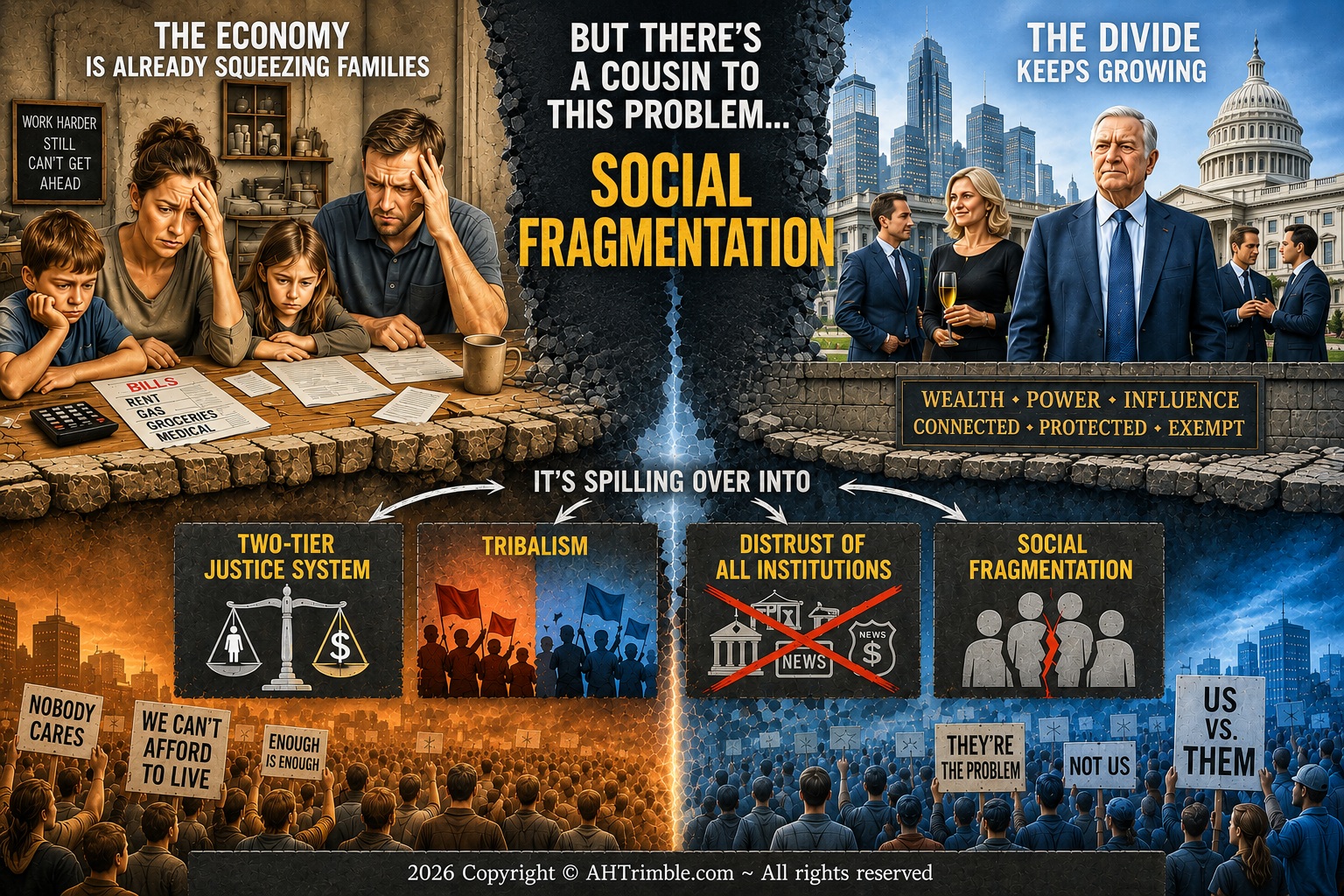
This is a complex issue…The economy is already squeezing families. It’s hitting lower & middle-income households the hardest, and it is increasingly becoming more obvious that it’s spilling over into a “two-tier justice system,” tribalism, and increasing distrust of all institutions. That is roughly combined into what’s called “social fragmentation.”
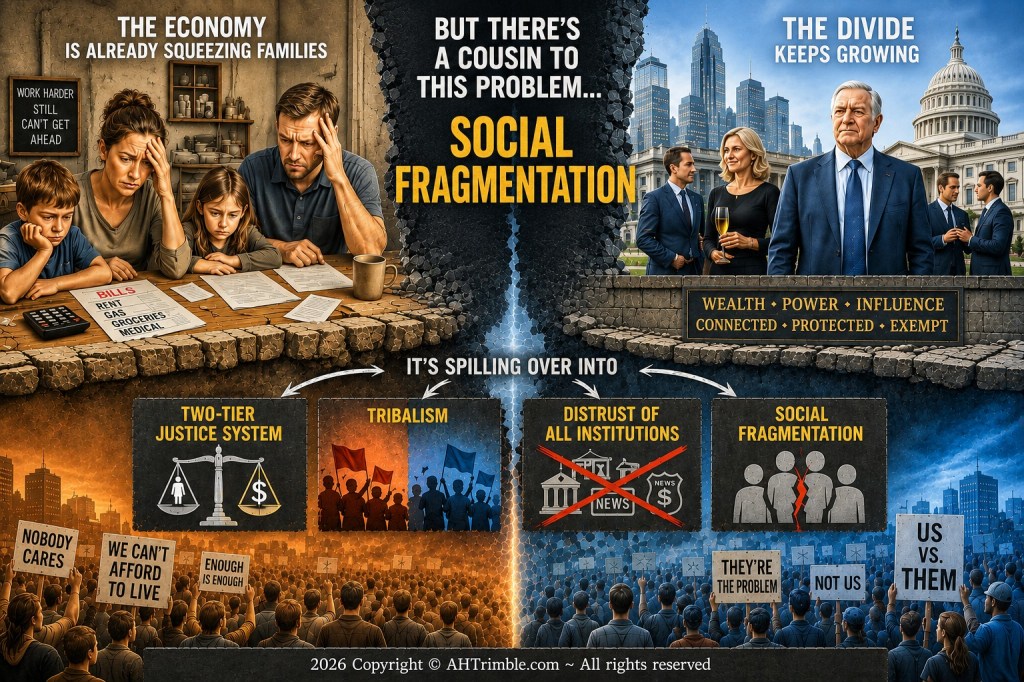
Social fragmentation breeds weaker community bonds, erodes shared identity, creates more loneliness, less civic involvement, and an ever increasing “every person for themselves” mindset. Or it’s uglier sibling, the “us vs them” philosophy. Which is a form of tribalism…just two tribes viewing each other with distrust and disdain. Whatever the case, whichever the term…families and communities are increasingly strained because of debt, housing stress, healthcare costs, rising daily essentials costs, and wealth concentration…on top of that is intensifying political polarization.

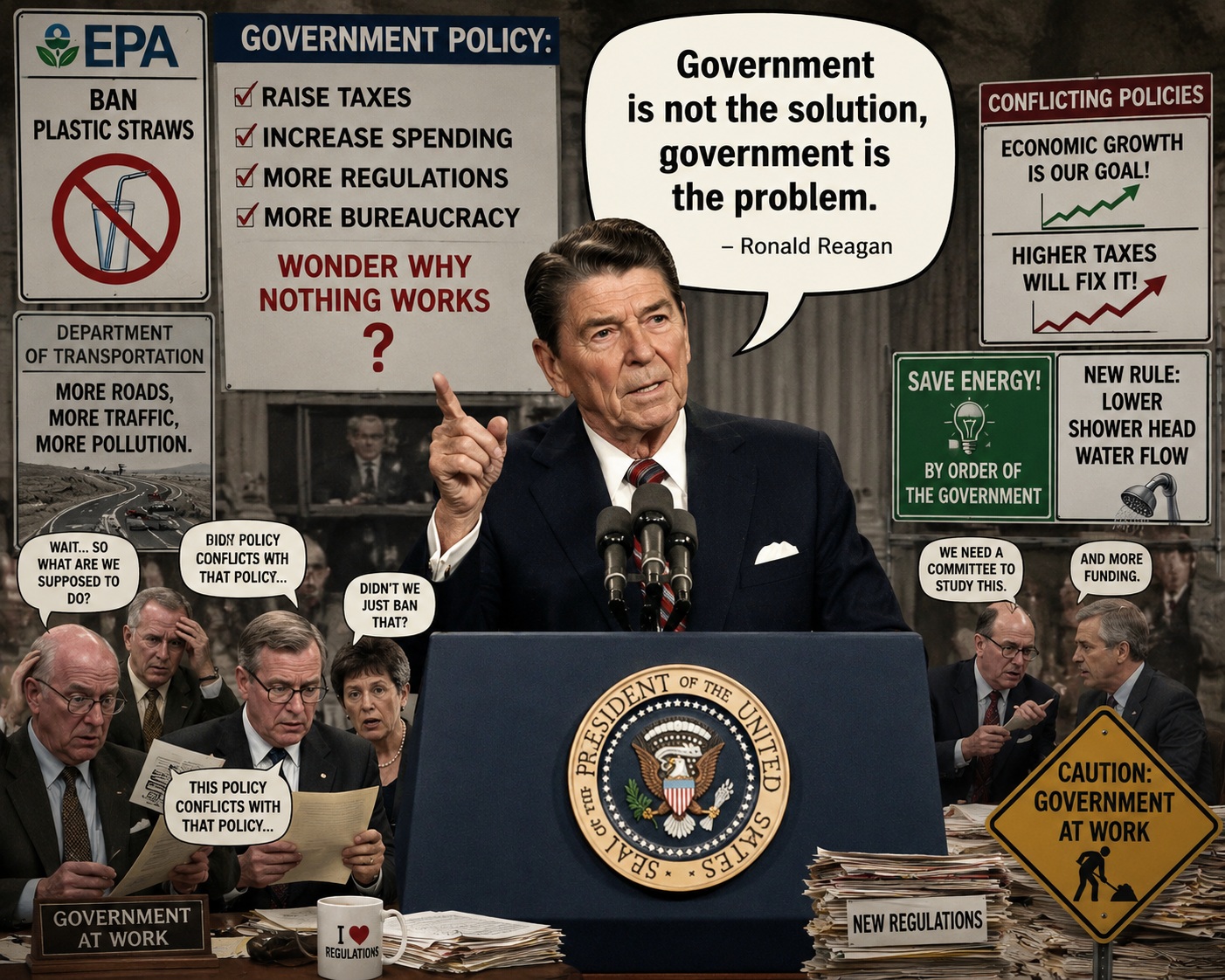
Historically, governments try to “fix” these problems with regulations, tax changes, labor policy tweaks, safety nets, shifts in industrial policy, or other governmental interventions. And yet…how often does government really solve the problems? As Ronald Reagan said perfectly 45 years ago, “Government is not the solution, government is the problem.”
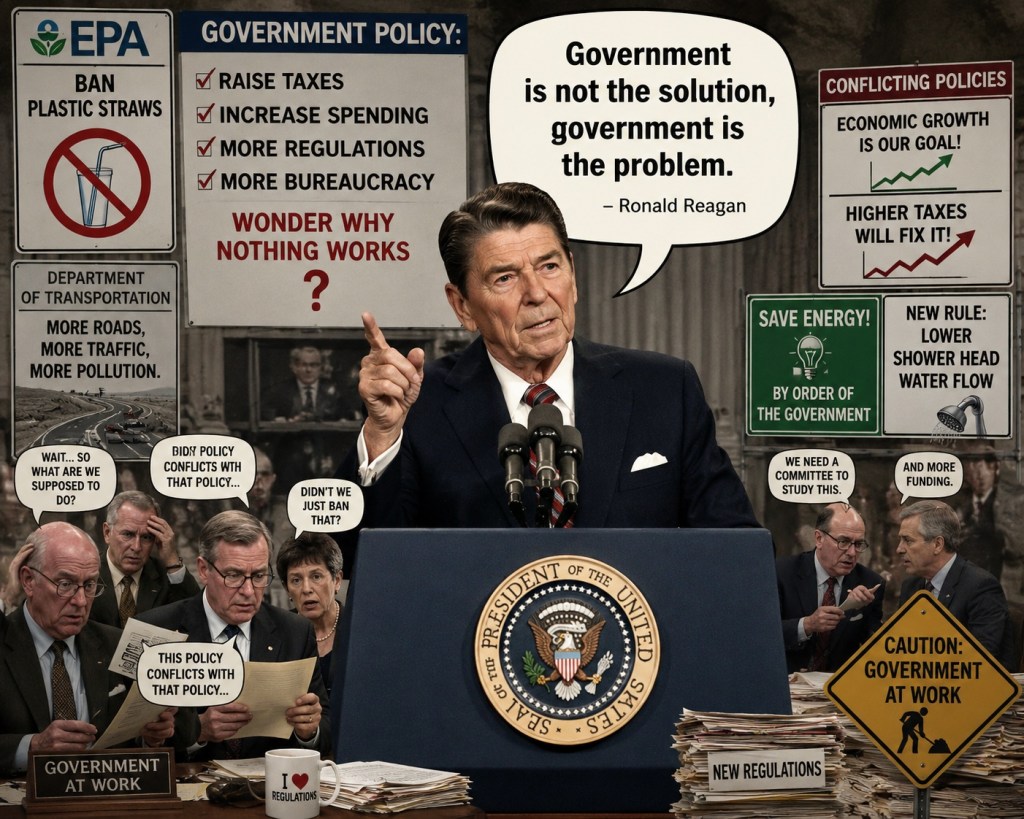
For the sake of your family, I do not believe we can sit back and rely on government, government at any level, to fix this. Too often governments create solutions that bring unintended consequences, and even their best efforts can sometimes make things worse. Maybe we’ve spent decades arguing over which gear in the machine broke while families were standing beside the machine trying to figure out why life felt harder.

So now what? Would you like a few ideas on what to do? You know…some practical steps to take that can help.

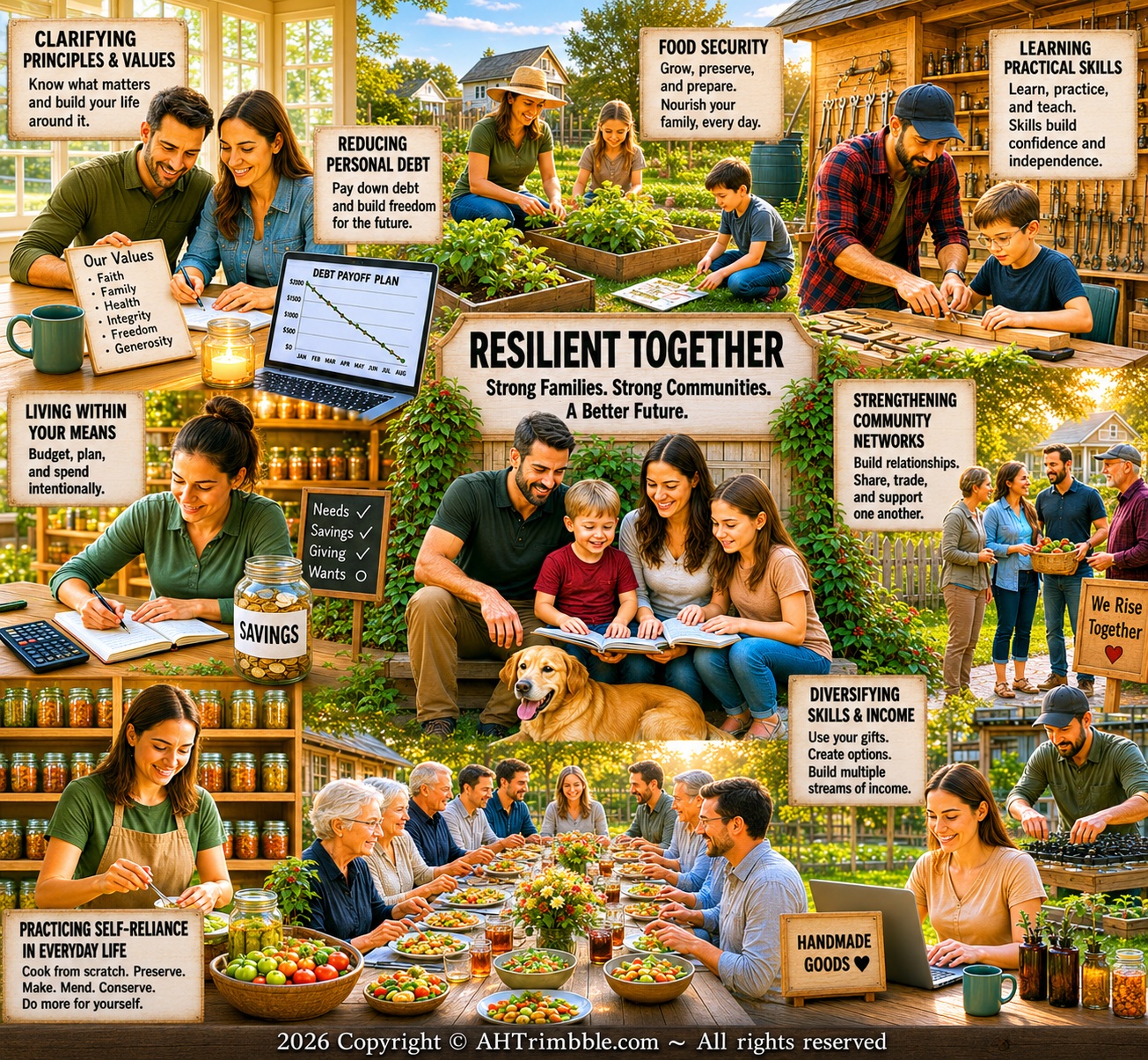
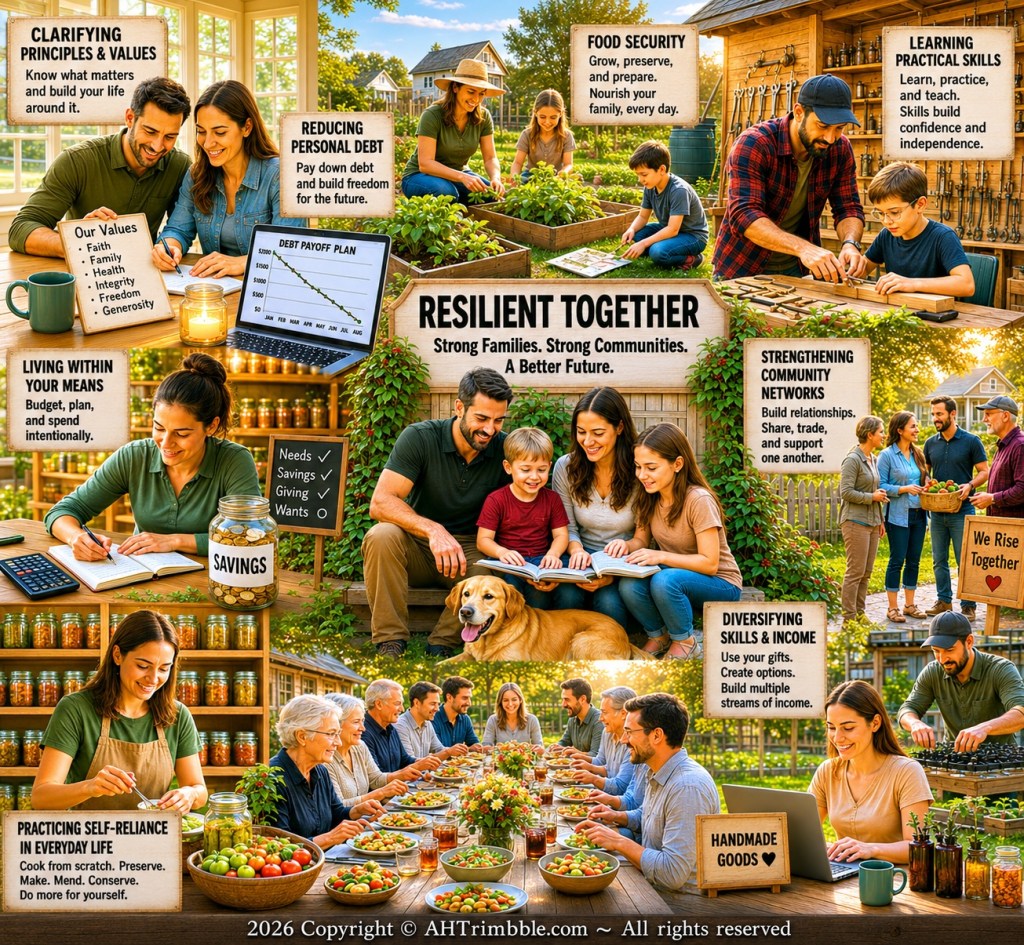
Look at it like a giant buffet…a lot to choose from…some or all of it might apply to your situation. Proceed with those items that apply to you…and do so in a priority order (we’ll talk more about that later). Here are some concrete actions to consider:

  • Clarify your principles and values — make sure your decisions align with what truly matters to your family.
  • Reduce personal debt — pay down what you can, avoid unnecessary borrowing.
  • Live within your means — spend thoughtfully, avoid impulse purchases.
  • Learn practical skills — first aid, basic home defense, trades, DIY projects.
  • Food security — grow a garden, store essential staples, buy locally when possible.
  • Strengthen your community networks — neighbors, churches, clubs, local groups for mutual support.
  • Diversify skills and income — develop multiple ways to provide for yourself and your family.
  • Practice self-reliance in everyday life — repair, build, and maintain what you can instead of relying entirely on outside services.
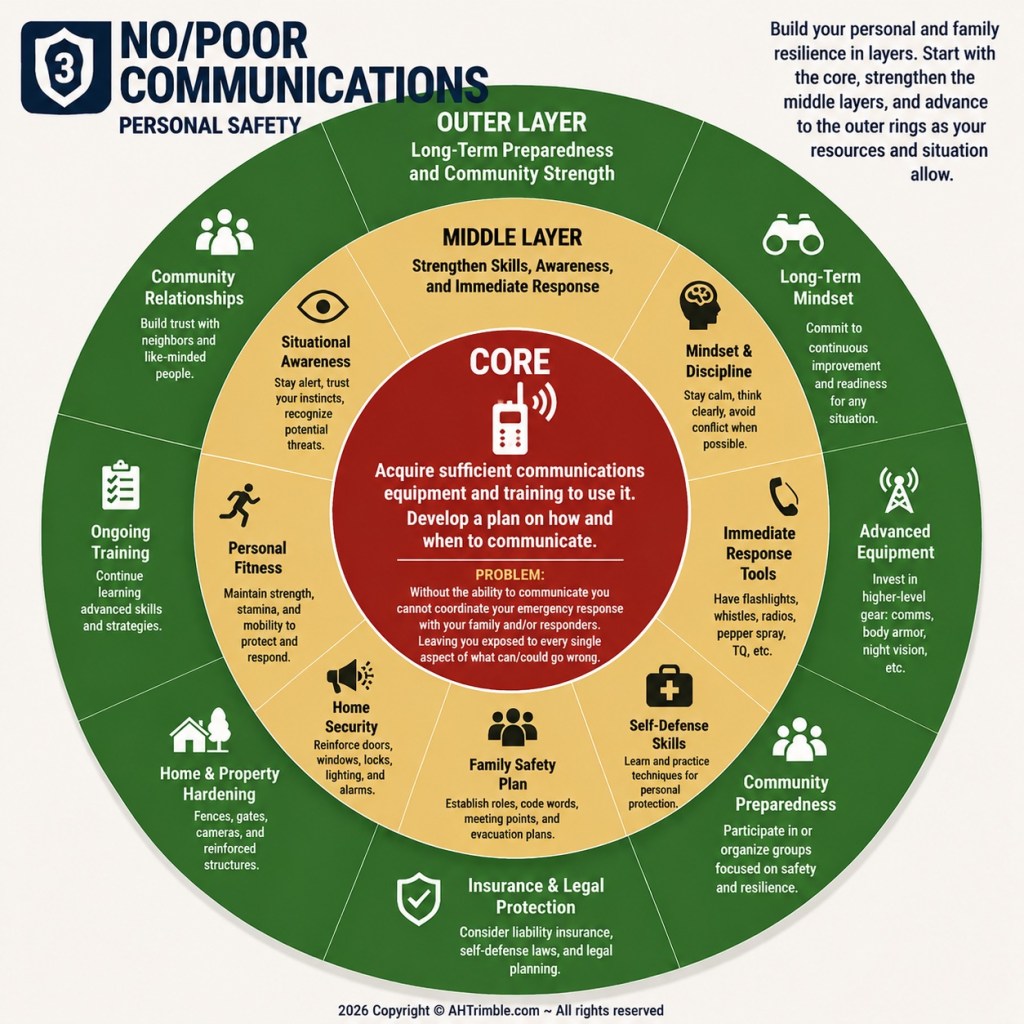
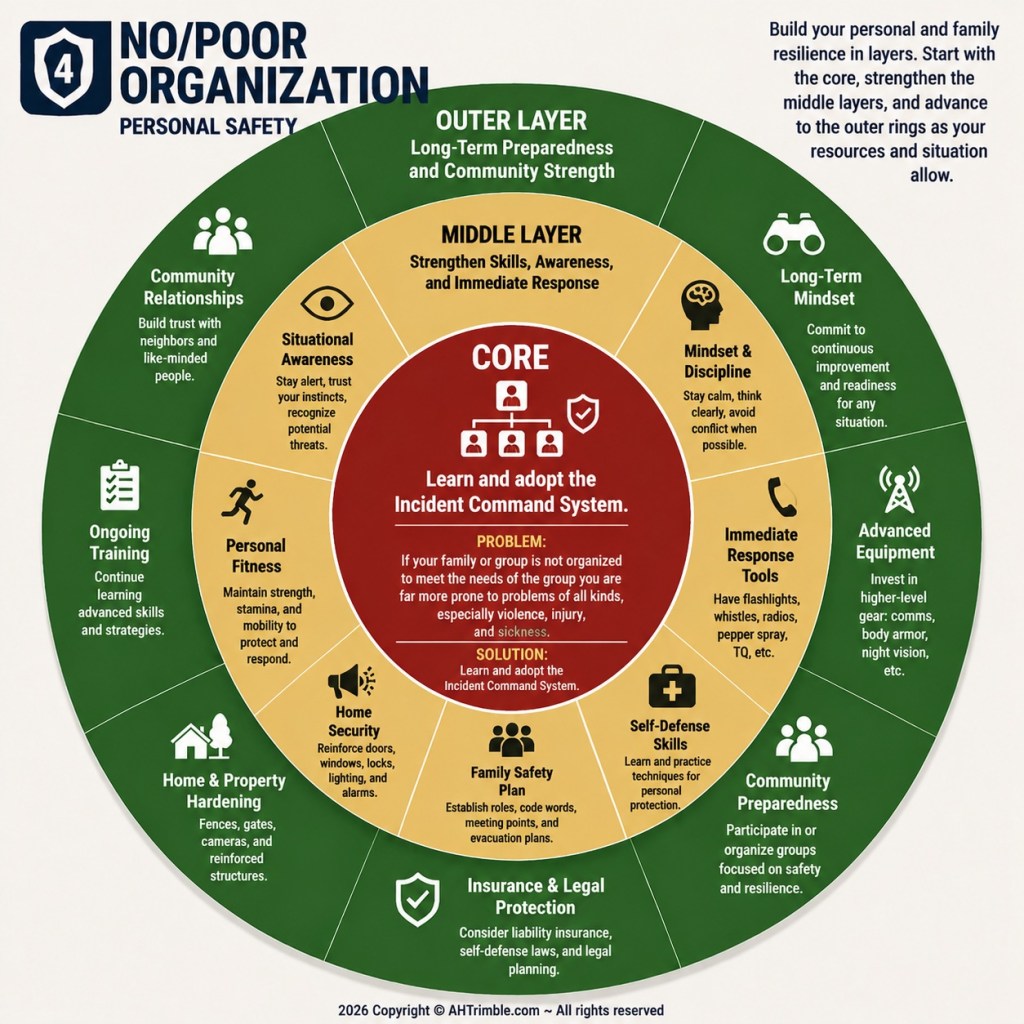
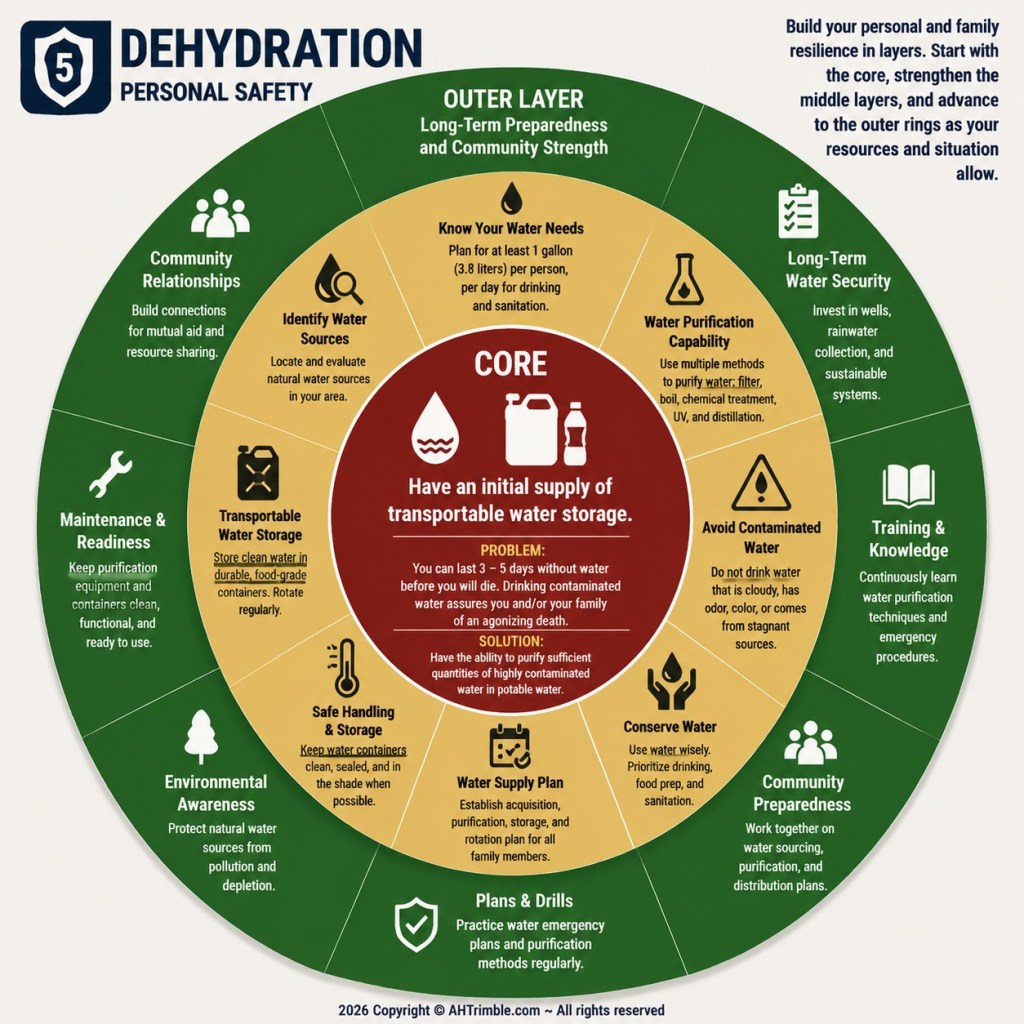
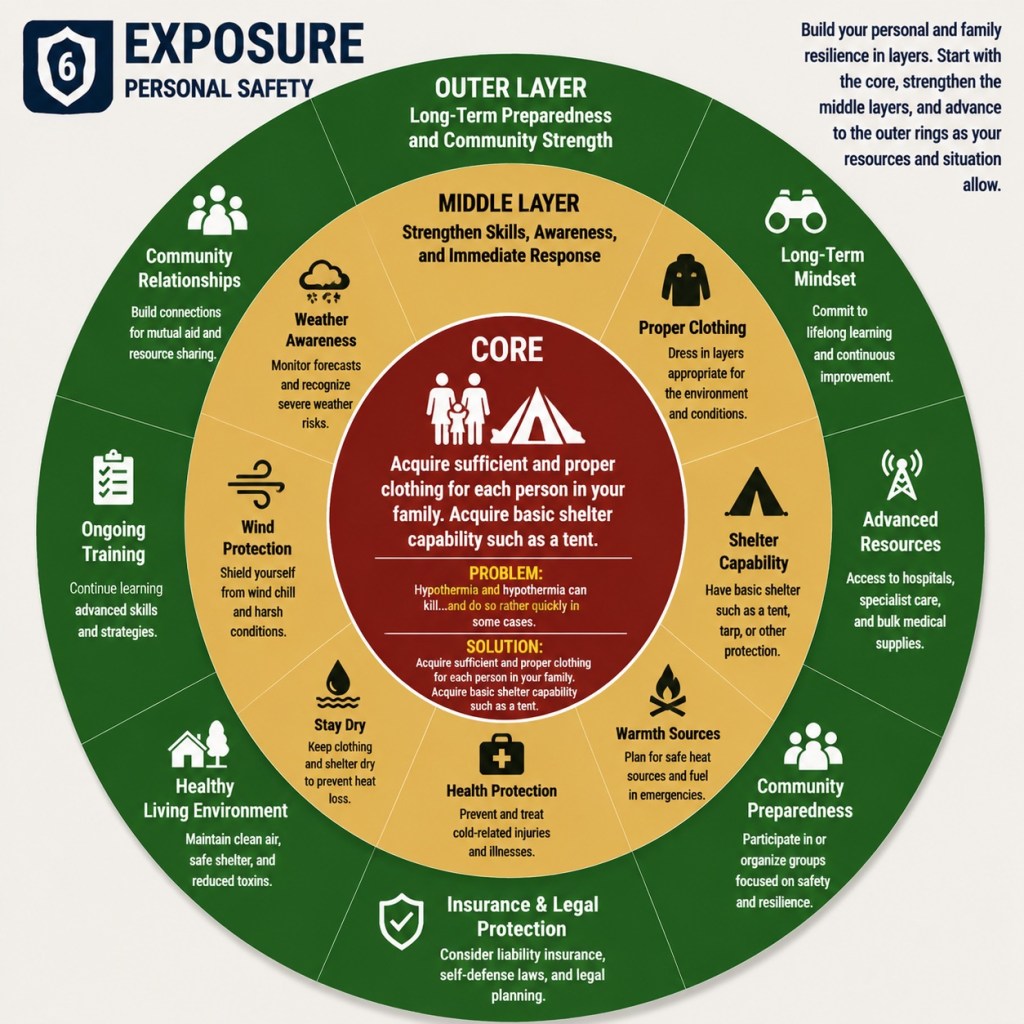
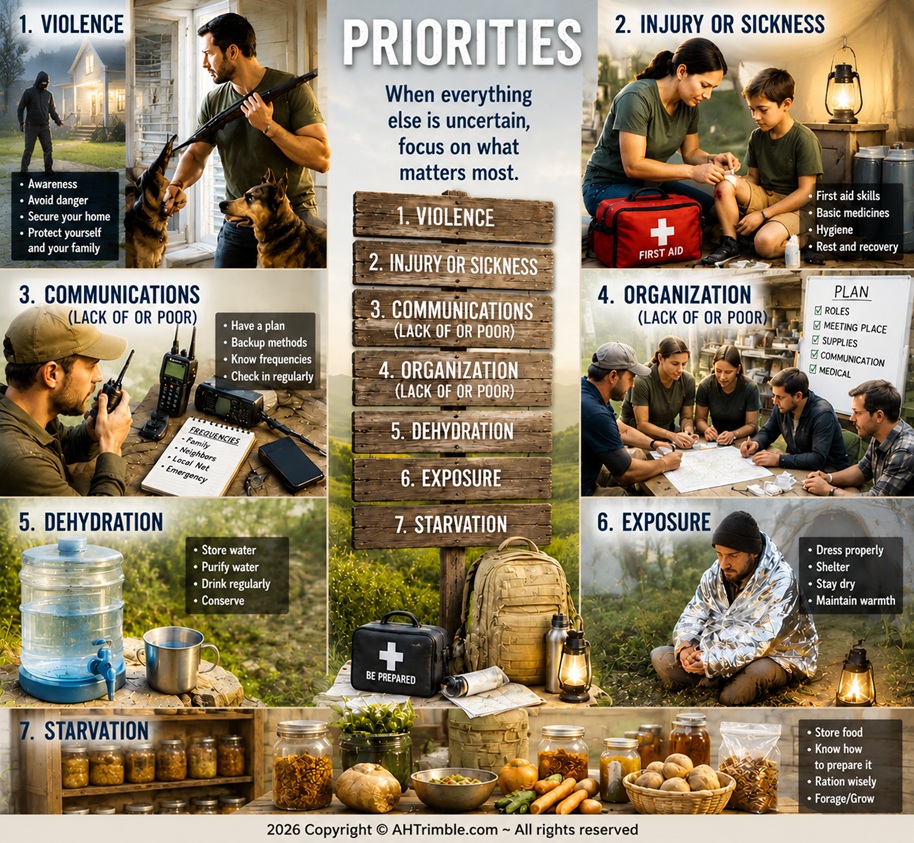
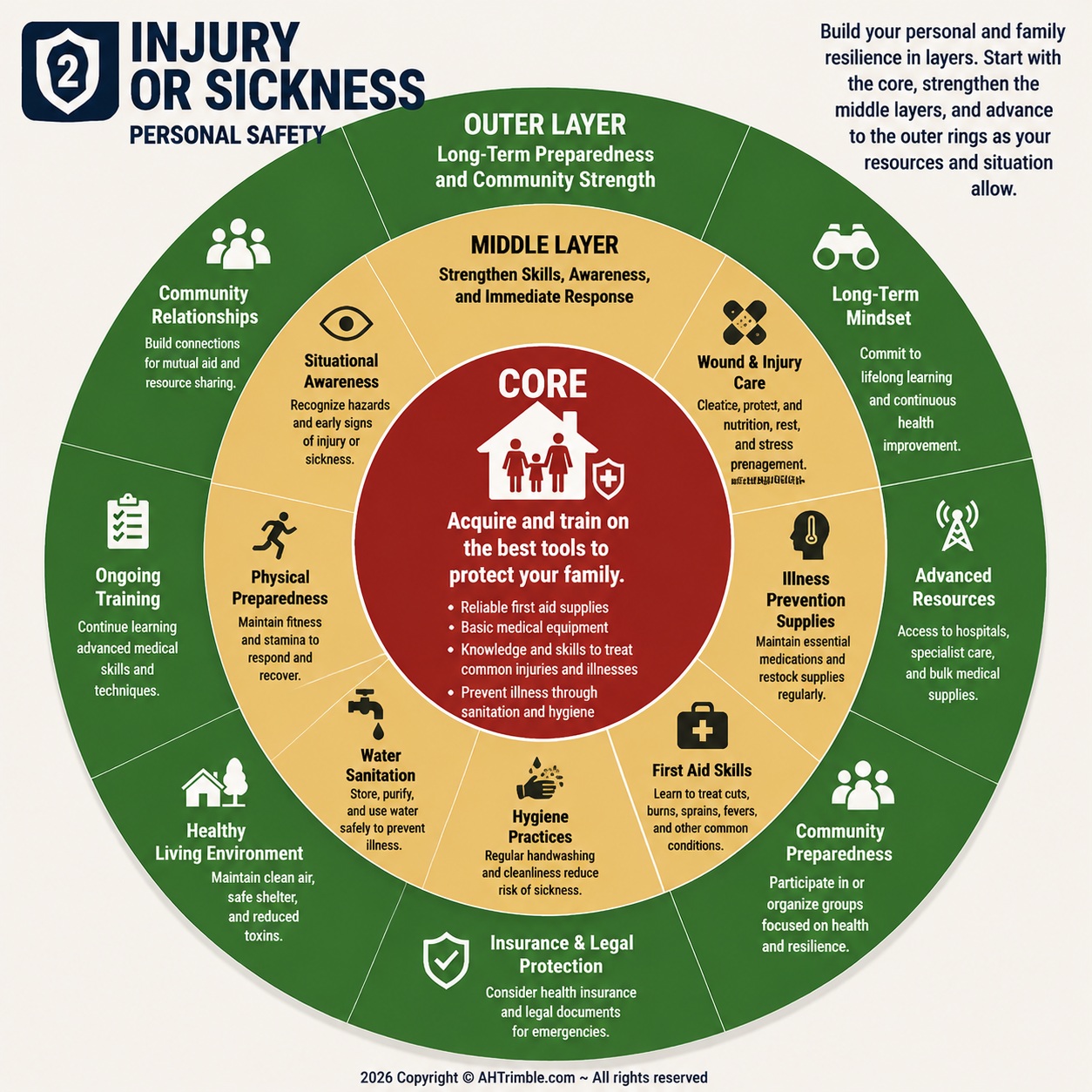
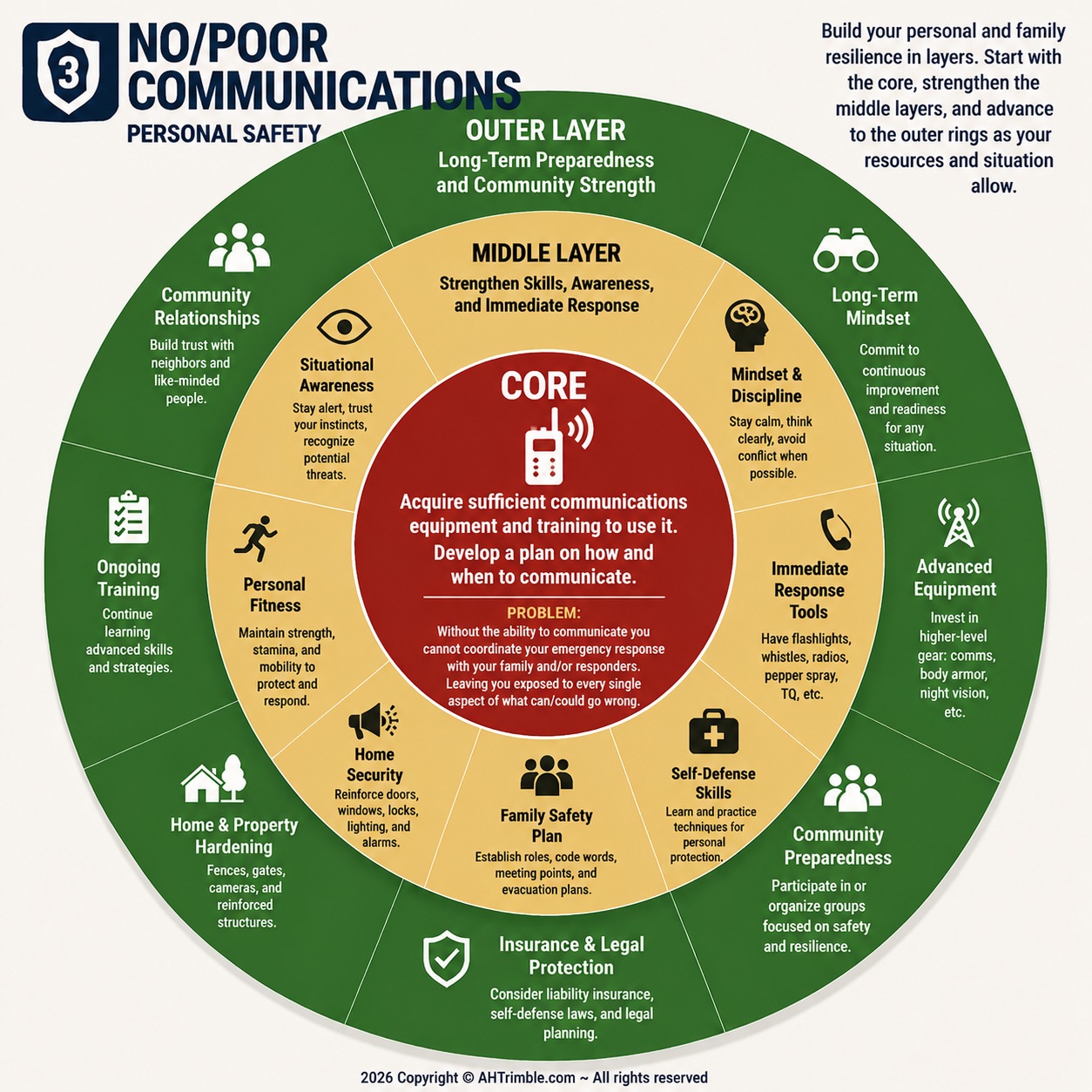
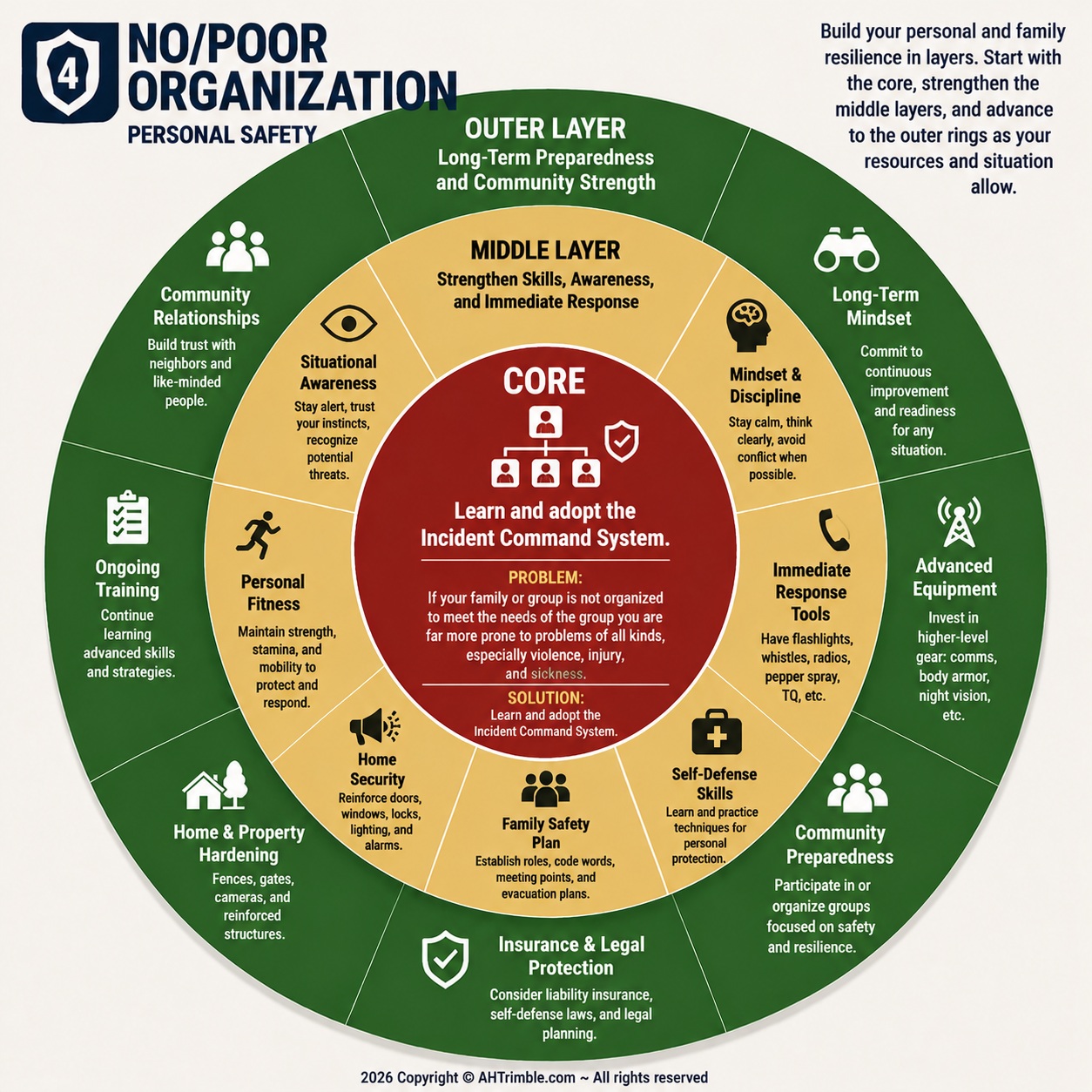
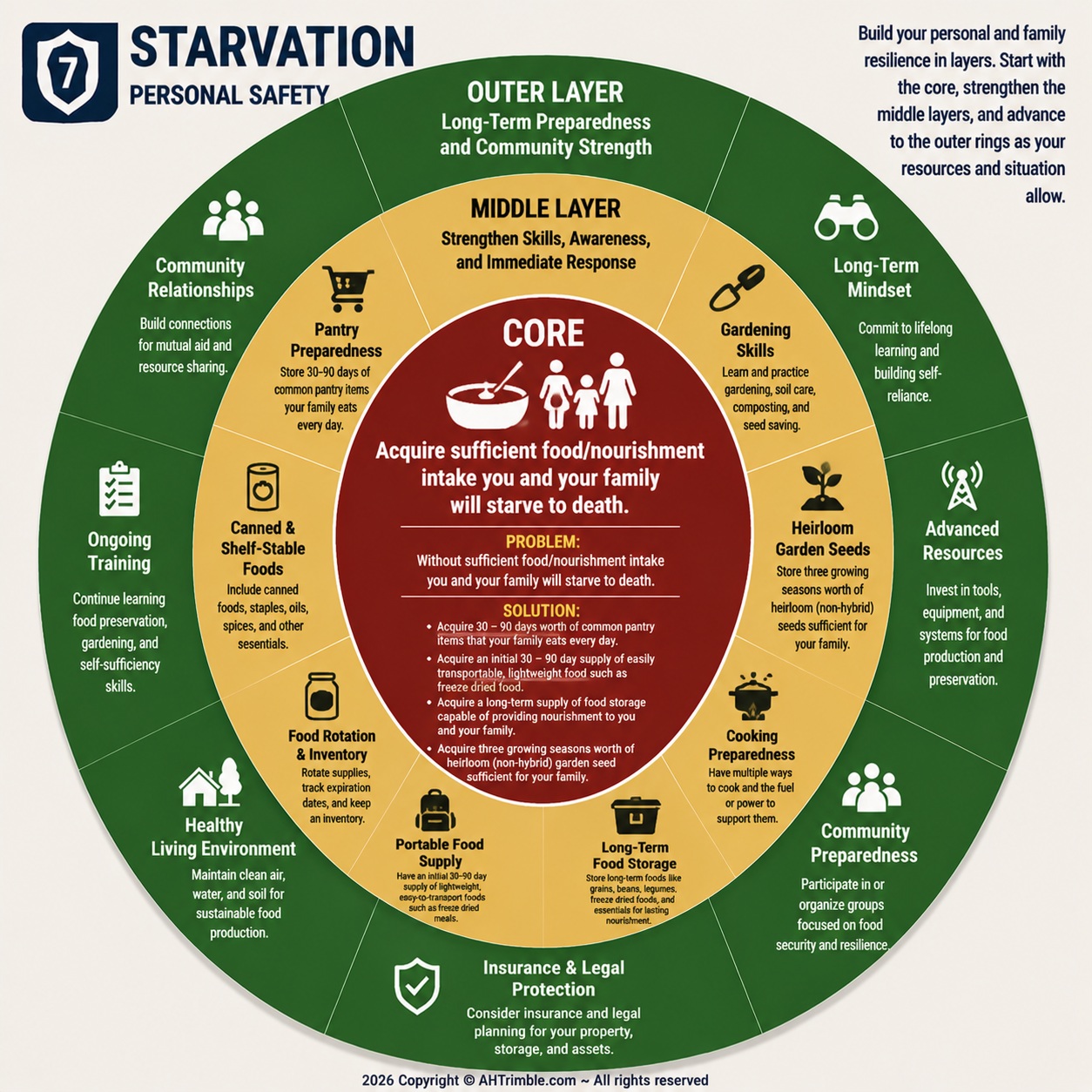
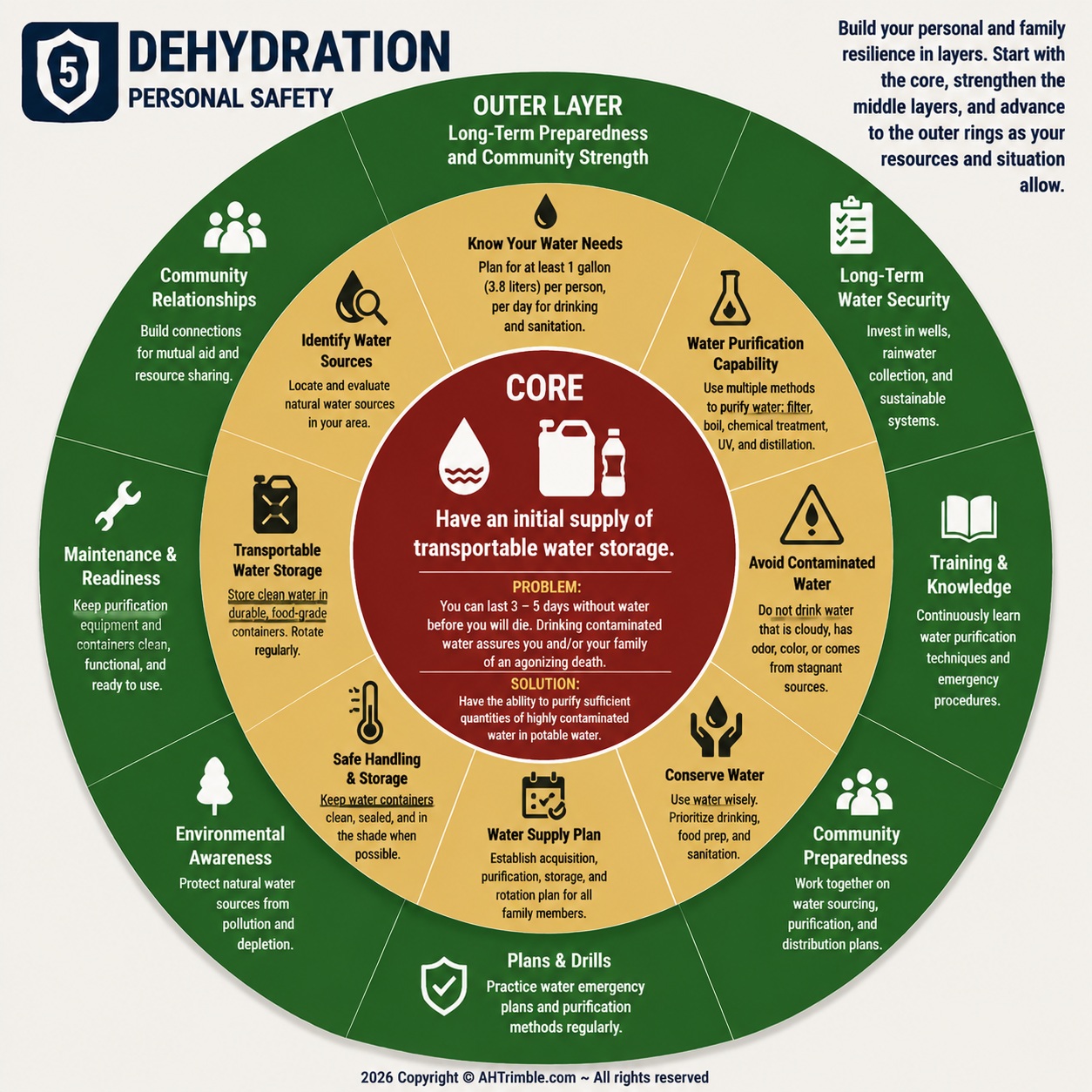
Now…”priorities”…Here is the list of the most common risks/threats to emergency, disaster, and grid-down situations; and they are in priority order.
Consider them for just a minute…

  1. Violence
  2. Injury or Sickness
  3. Communications (lack of or poor)
  4. Organization (lack of or poor)
  5. Dehydration
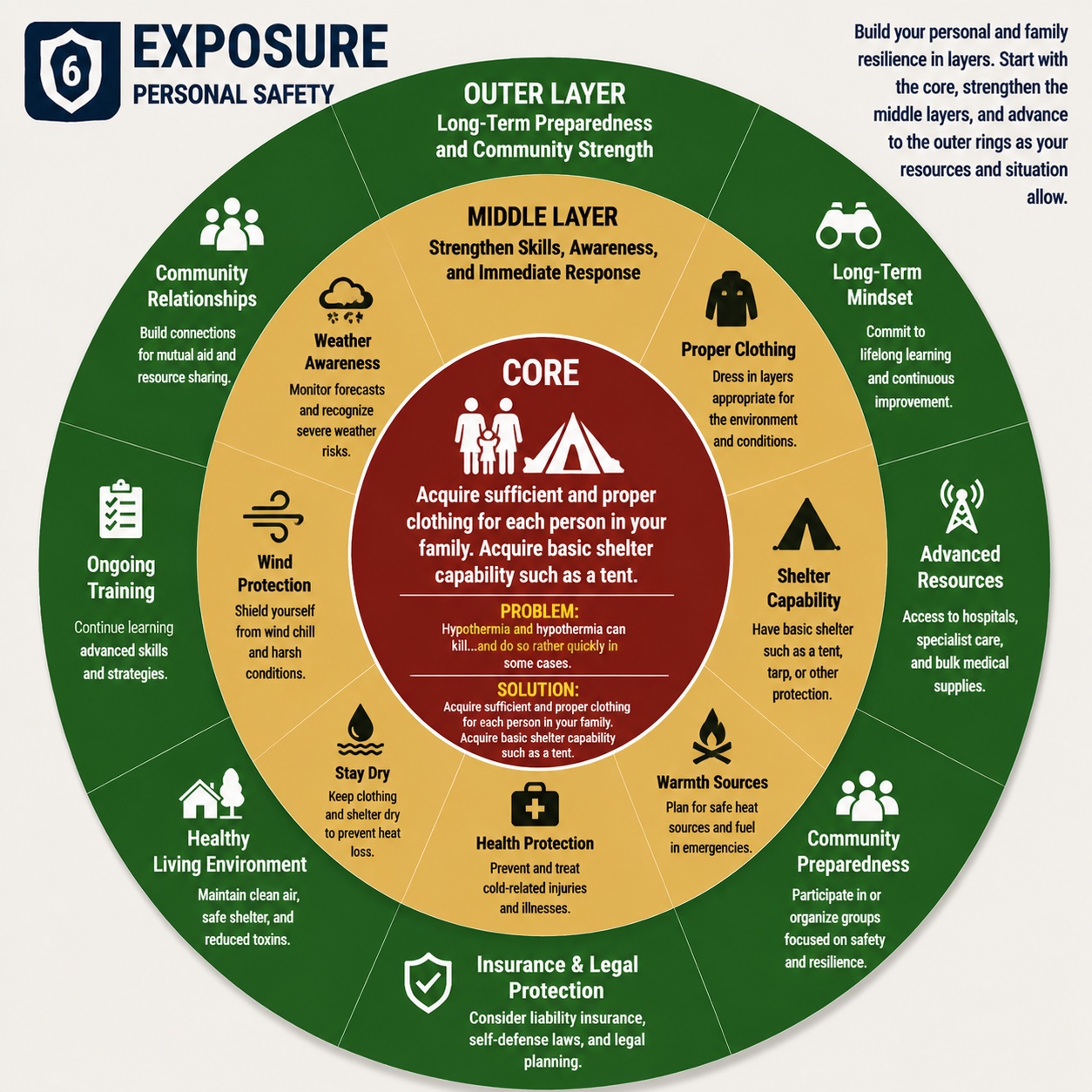
  6. Exposure
  7. Starvation

You can look at today’s economic and overall situation in a similar way…but maybe not the urgency of a true emergency or disaster. Look at it more like a thought process to consider…”What can I work on first that prepares my family for pretty much anything?”

More help may be worth you reading about priority setting…L.I.P.S. < click here > Here’s the short version…
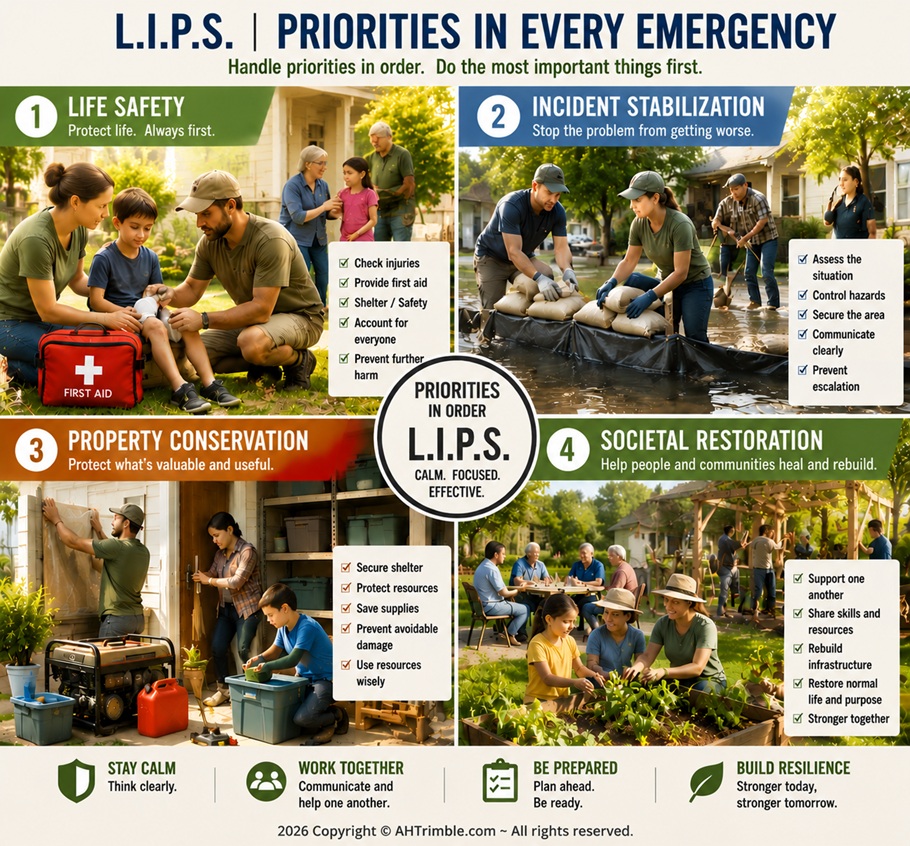
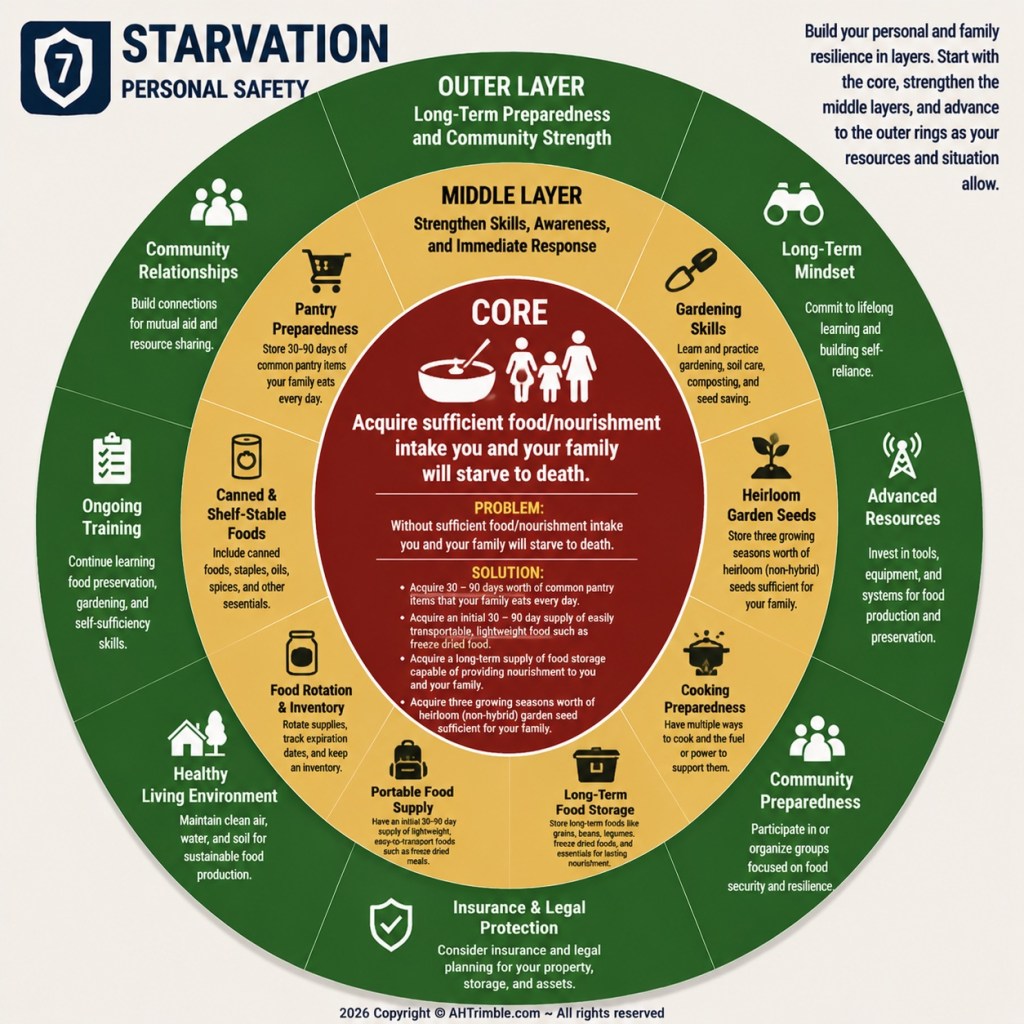
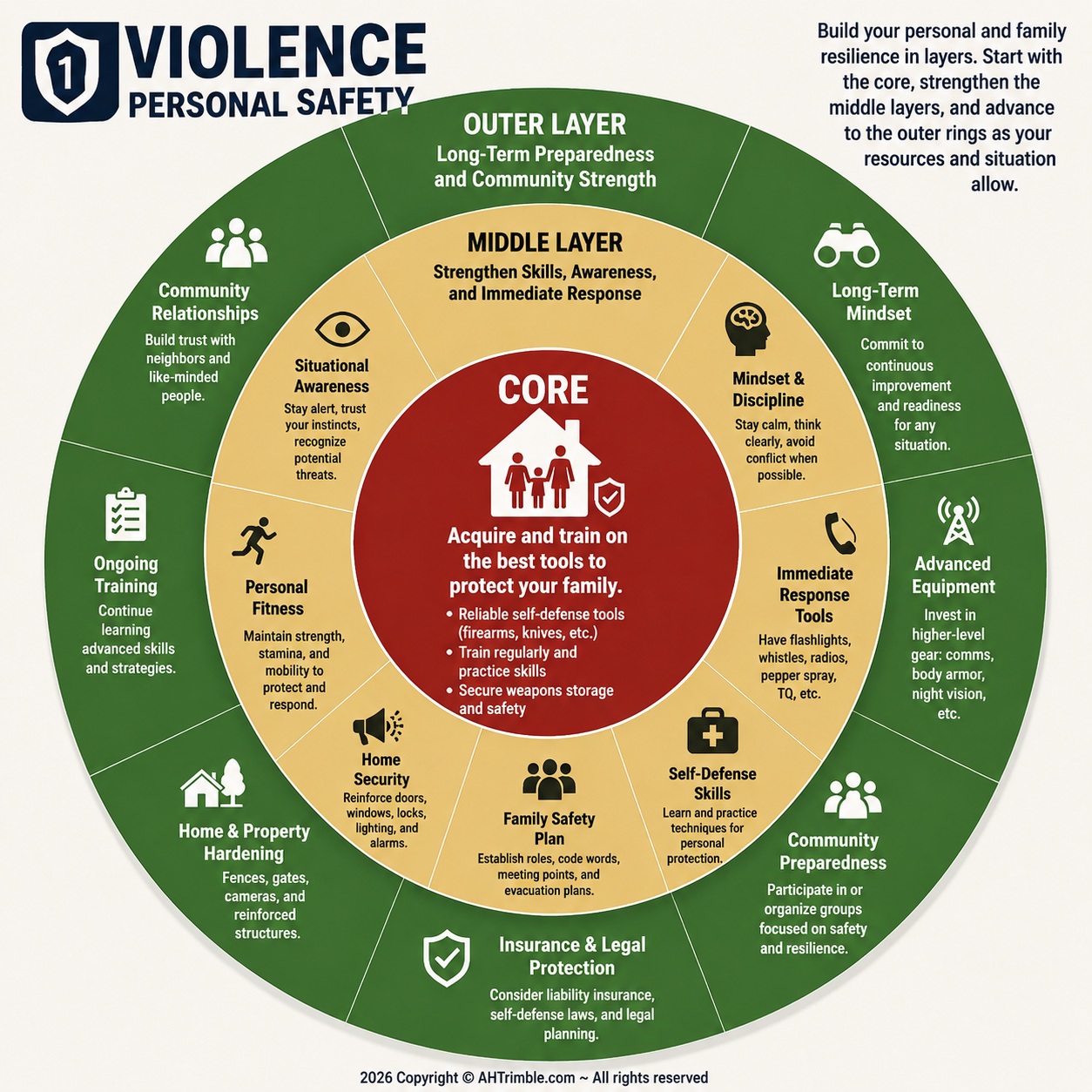
Let’s look at some things to do that can make you and your family more resilient. No long boring rambling text…just some cool info-graphics you can use for reference…
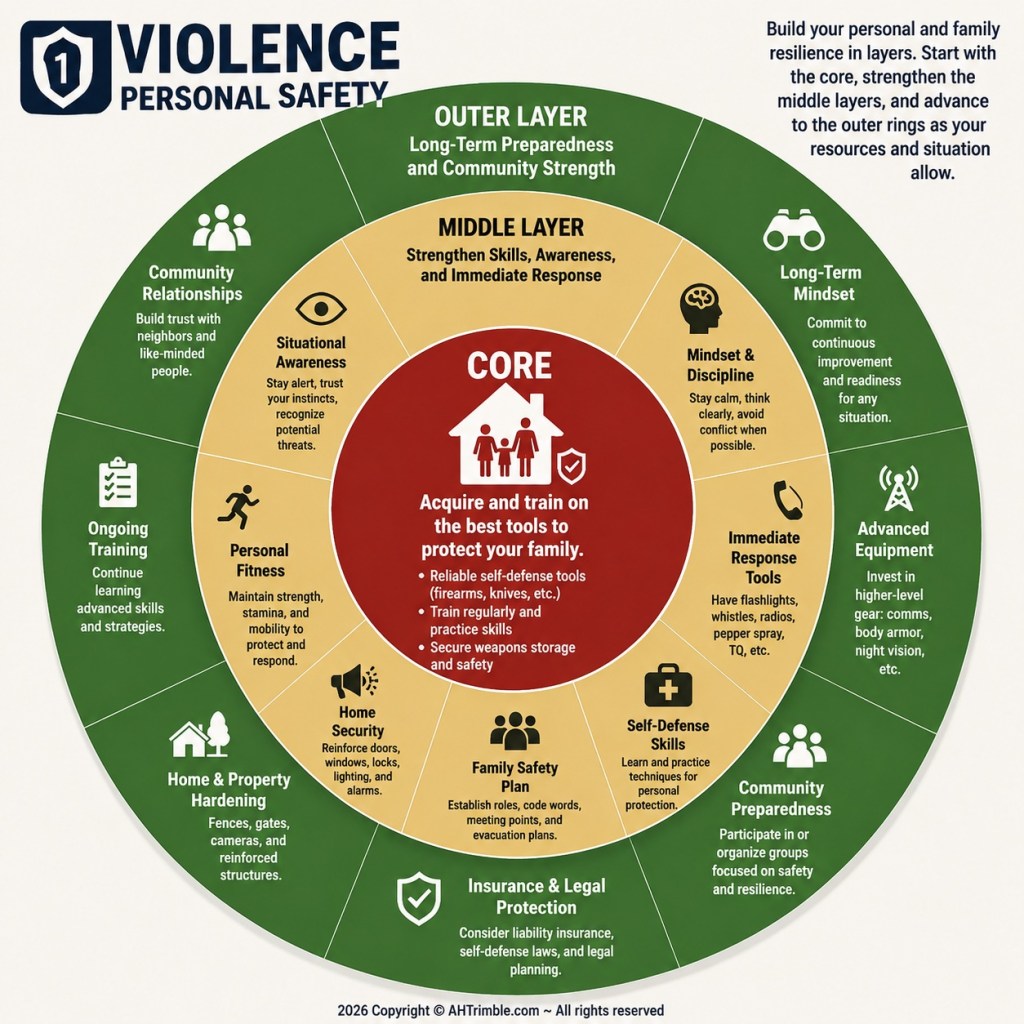
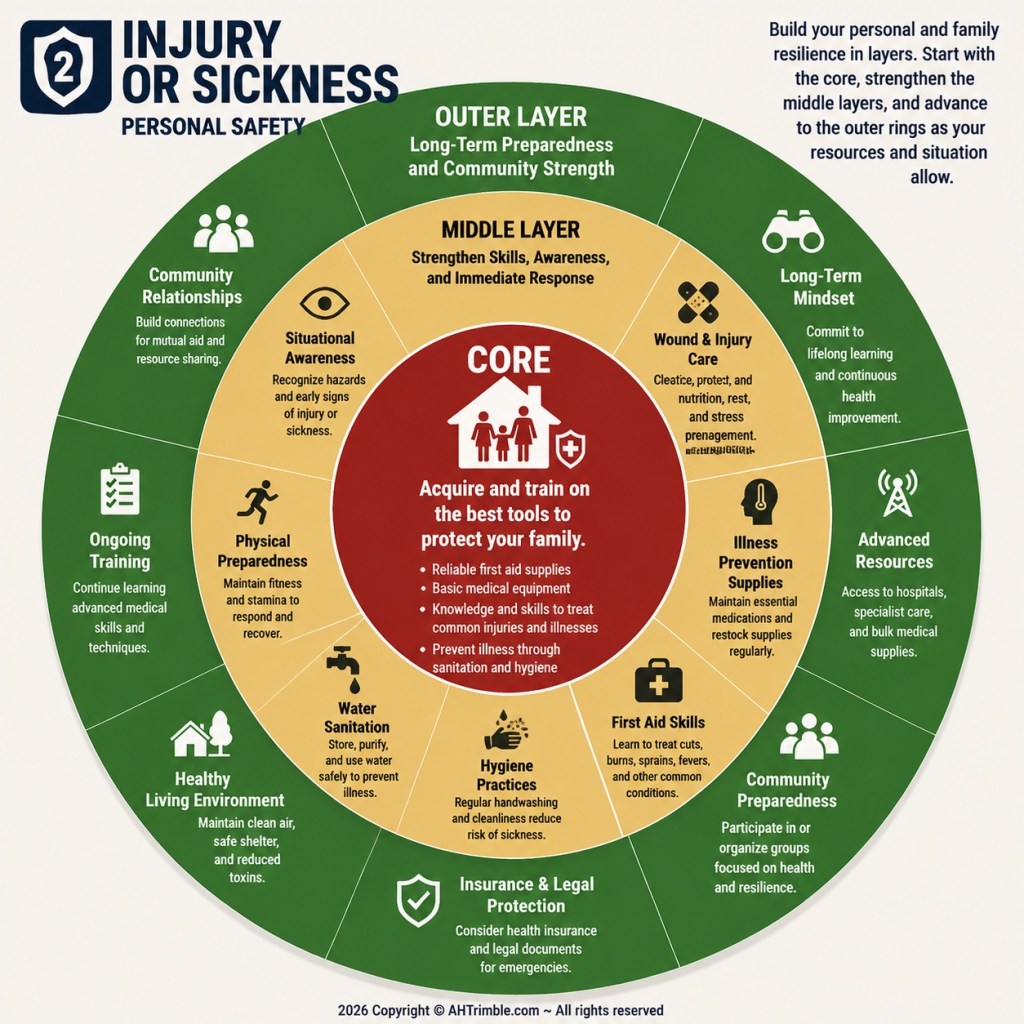
So there are answers to our awful economic situation…most of them start and end with us…as individuals. We, you and I, can take back control. Along with our neighbors, our communities, our congregations…we can once again become what we were made to be.

Tomorrow I’ll talk about regaining control and restoring agency.

← click here to read Part #2             Click here to read Part #4 →


Articles in this Series –


Related Articles –


 2009 - 2026 Copyright © AHTrimble.com ~ All rights reserved
No reproduction or other use of this content
without expressed written permission from AHTrimble.com
No legal, economic, or financial advice is given, no expertise to be assumed.
I may receive compensation from advertised/mentioned products on this website.
See Content Use Policy for more information.
Disclaimer:
The thoughts and opinions expressed in these articles are based on personal observations, experiences, 
and independent research. They are intended for informational and thought-provoking purposes only. 
I am not an economist, financial advisor, attorney, accountant, or licensed professional. 
Nothing contained herein should be considered financial, legal, investment, or tax advice. 
Every family’s situation is different, and readers should do their own research and 
seek qualified professional guidance before making important decisions.

These writings simply reflect one person’s attempt to better understand the challenges facing 
ordinary families and explore practical ideas related to resilience, preparedness, 
personal responsibility, and regaining control over everyday life.

Economics 101 – Part #2 of 5

You should probably read Part #1 before reading further. This post will make more sense if you do.

< click here to read Part #1 >

Now let’s talk about how “wealth” influences any discussion about economics…especially %’s and charts.

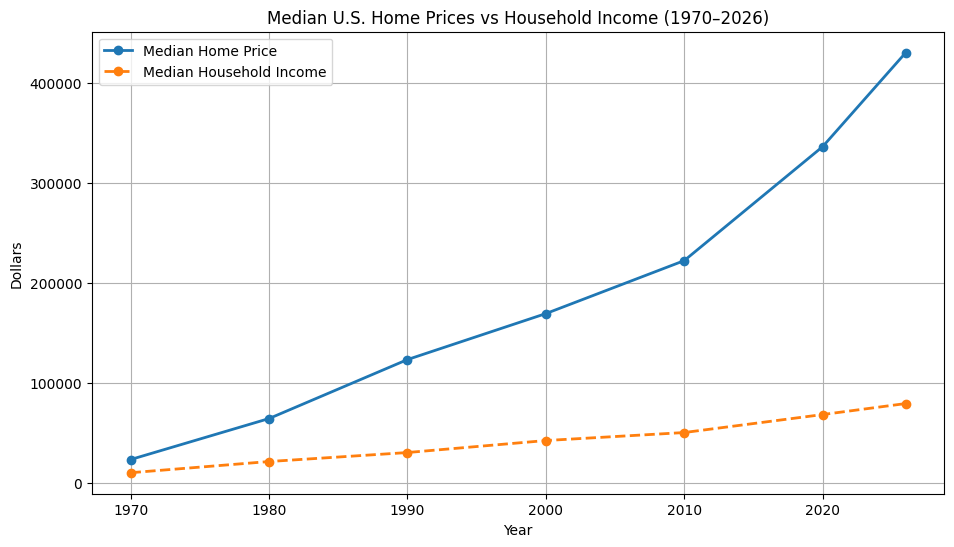
Here’s the really big difference I want to talk about is in how I show numbers…lower & middle-income folks compared to upper-income people. Why? Because the percentage difference in what a rich person pays for life’s essentials out of their income is WAY different than what a lower & middle-income family pays. Let me show you…here is a chart of middle-income family buying a “median priced home” from 1970 to 2026…

Notice how in 1970 an average middle-income family could afford a median priced home with little difficulty…no difficulty actually. By 2026 the price of those homes have risen dramatically…while the income for those middle-income families have gone up very little. Middle-income folks really can’t afford a median priced home anymore.

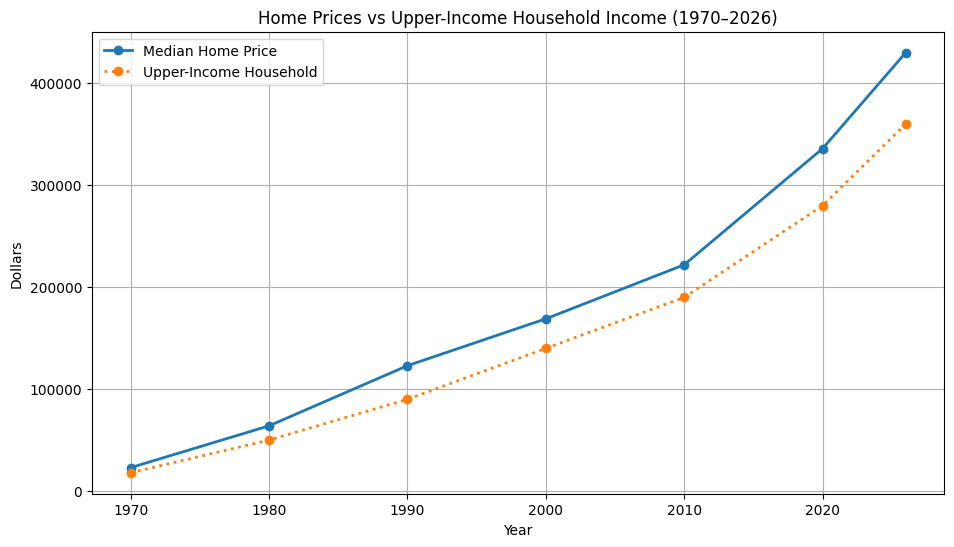
Now, here are the wealthy folks…

Notice how the income of rich families has gone up right along with the price of homes? Yup, they can easily afford those homes. Looks almost planned…if you’re into conspiracy theories.

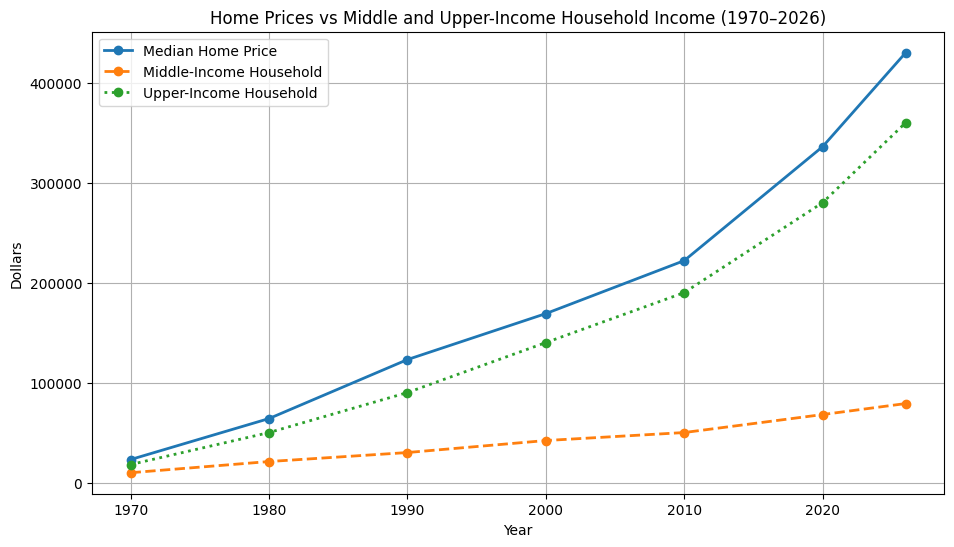
Now, let’s give you a great visual comparison of middle-income vs upper-income families and the price of homes…

This why I separate them out…if you aren’t rich, the economy when it comes to homes has been horrible and devastating over this 56-year time span (1970 – 2026)…and clearly, the FACTS show that to be true.

You can’t deny or debate facts…a person can have a different opinion facts but, they can’t make-up their own facts.

Whoa! You might ask, “Where are the lower-income figures and chart?” Simple, lower-income families can no longer afford a median priced home…if any home at all. That is one of the reasons many, probably most, lower-income families are forced to rent…about 2/3 of those families rent according to official statistics. Of those who do own their own homes; lower-income home ownership is mostly concentrated in rural areas and lower-cost states. They also tend to be inherited properties, multiple generations present, or older homes purchased before home prices soared.

Consider this…

According to the National Association of Home Builders affordability analysis roughly 77% of U.S. households cannot afford a median-priced new home. And households with total incomes below roughly $46k often cannot even qualify for a ~$150k home…even with good credit.

Think about that statistic…

3/4 of all American families can’t afford to buy a new home at today’s prices!

I want you to stop for a minute and consider this:

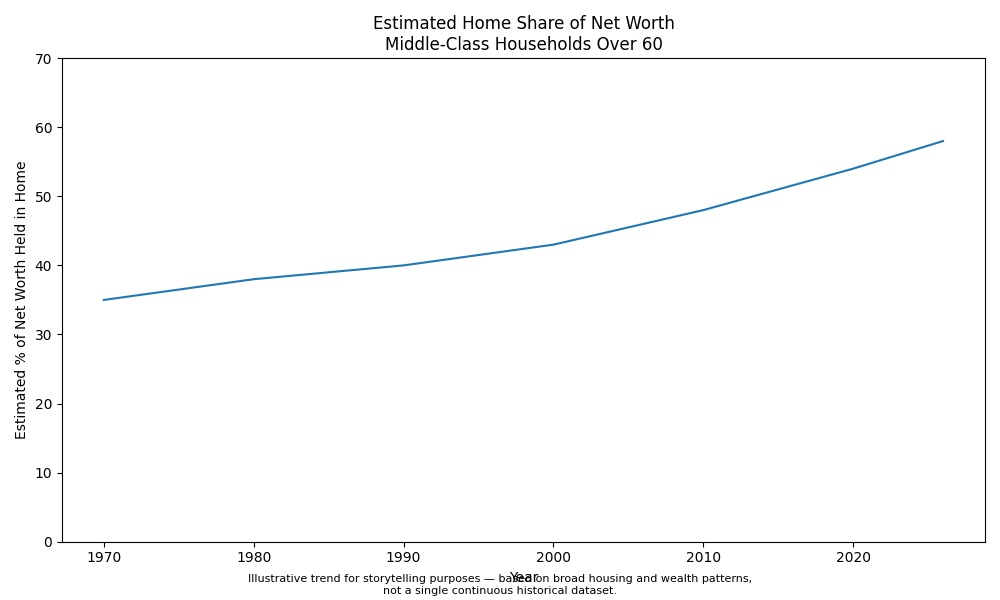
I want you to see what that chart shows:

  • In 1970, for a couple over 60, their home represented 35% of their net worth.
  • By 2026, for a couple over 60, their home represented 58% of their net worth.

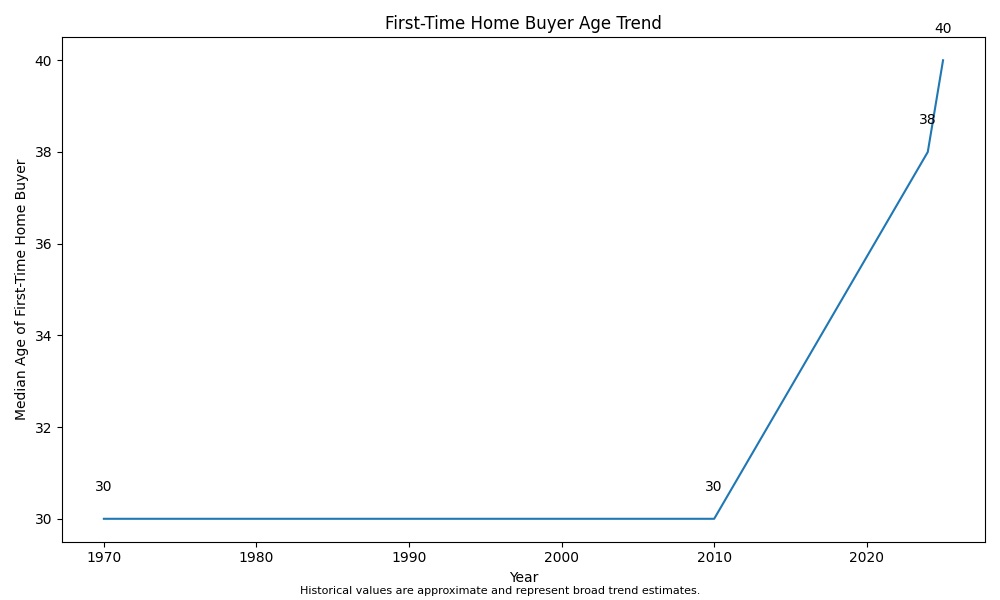
Now, look at this trend:Notice that for 40 years the average age of first time home buyers was just about 30. Then in 2010 it started its  skyrocketing rise to 40 years old. That’s a 33% increase in just 16 years!!! Don’t worry about the “why” for now. Think about this…

Combine the % of net worth that a 60+ couple’s home represents now. Now link that to fewer people buying homes (75% not able to buy a median priced home), and younger people not being able to buy homes until they’re middle-age. What do you get? If the largest wealth-building machine for the middle class becomes less and less accessible, what replaces it?

Instead of many middle-class retirees owning the roof over their heads, more people could reach retirement still making rent payments to someone else…and no longer having the majority of the post-retirement wealth…their home.

My concern isn’t that things could never improve; it’s that I don’t see much evidence that the trends are working in our favor.  Meaning…IMHO…more and more middle-class families risk slowly sliding down towards the lower-class rather than moving upward.

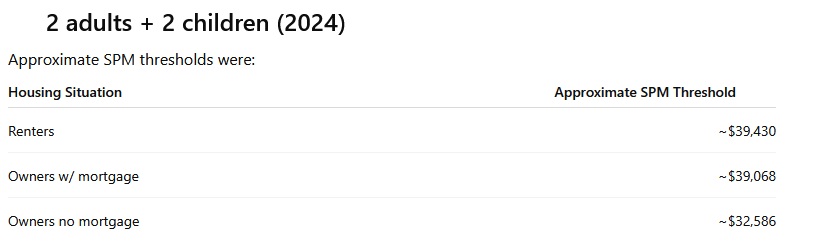
As if that isn’t bad enough…let’s look at the poverty rate (SPM) in the US…

Just to be clear…13% of the US families already live in poverty. Think about this…if you are a family of 4 and own a home, you have to earn at least $20 per hour and work 40 hours per week to stay above the poverty line. $20 per hour and your family is almost in poverty!!!!! That is shameful beyond measure!!

Maybe 13% of the US population living in poverty sounds as if that isn’t too bad…you know, acceptable in the big scheme of things. Oh yeah? Well, try this number then…13% of the US population living is poverty means over 45 million people…that’s more than 14 million families living in poverty!!! That’s acceptable?

Now, is the time for me to throw this out there…do you think the problems in the country are Republican vs Democrat? Or, do you think the problems are liberal vs conservative? How about the problems are big city vs rural America?

No to all of that!!

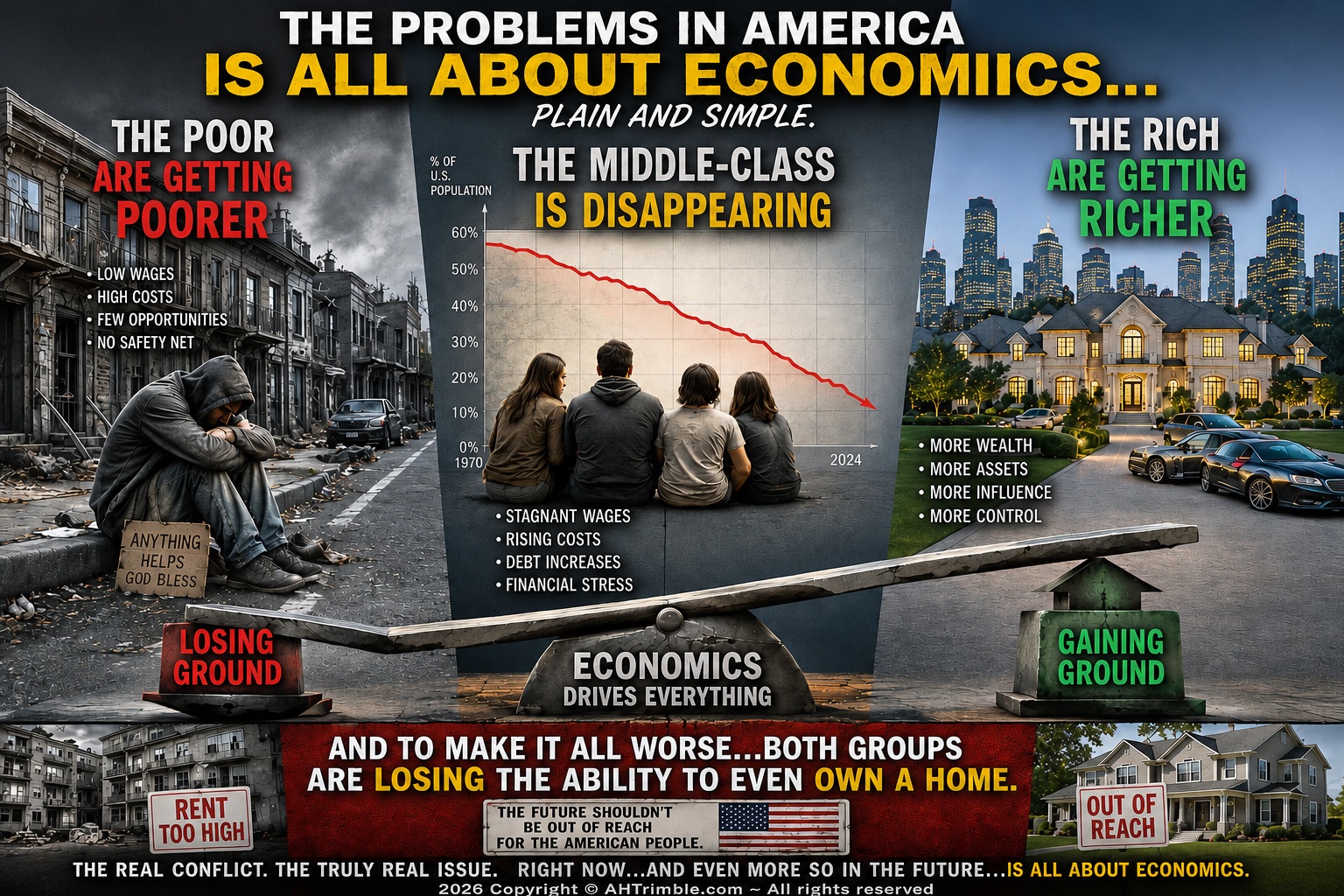
All the other so-called “problems” are only distractions from the real issue…economics.

The problems in America is all about economics…plain and simple. In the United States of America FACTS prove the real problem, the real conflict, the truly real issue facing us right now…and even more so in the future…is all about economics. And as of now…the poor are getting poorer and the middle-class is disappearing. And to make it all worse…both groups are losing the ability to even own a home.

Here’s a statistic for you…in 2025 27% of all home sales went to investment companies. In 2026 that number is now 33%. Yup, 1/3rd of all homes being bought are NOT being bought by families…those homes are being bought up by corporations. One more for ya…in 2000 there were virtually no homes owned by corporations/companies (less than 1%). Today that number is 4%…quadrupled in 26 years…and that number is going exponentially.

Think about these facts/stats:

  • More than 1/3 of all homes sales are now going to corporations.
  • Corporate ownership of homes has quadrupled in the last 26 years.
  • 75% of all Americans can no longer afford to buy a median priced home.

Let that sink in. What does make you think about? How does that make you feel ?

Is this class warfare? Absolutely not. What I am simply trying to do is show how the lower & middle-income folks are falling behind…way behind…and the rich are doing really well…and getting richer.

Let me show you a couple more charts that make this all really clear…

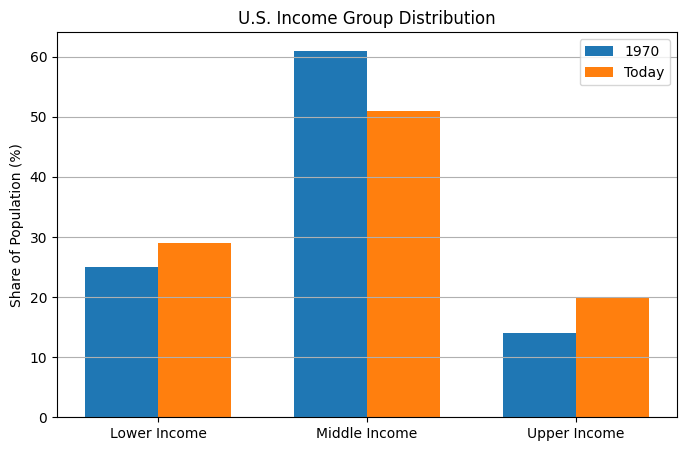
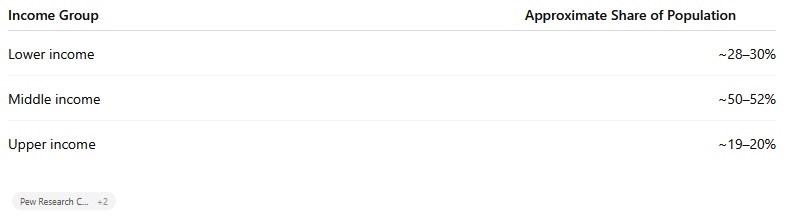
In 1970 the largest income group (actual share of population) was the “middle-income” folks…the middle-class. But that group shrunk a bunch by 2026. And the lower-income group grew by a notable amount. And look at the rich folks’ group…that group grew.

Link that to the sheer number of politicians that have spouted “Protect the middle-class!” or “Strengthen the middle-class!” or “The middle-class makes America strong!” That rhetoric is nothing more than typical political bullshit. No one in Washington is doing anything serious to protect or strengthen the middle-class…and that is FACT!! Hold on second…in actuality virtually EVERYTHING that they have done over the last 60 years has been destroying the middle-class…EVERYTHING!

Don’t believe me? Then way do the facts show the middle-class is steadily disappearing for the last 60 years?

But here is where it gets really interesting and kinda scary…

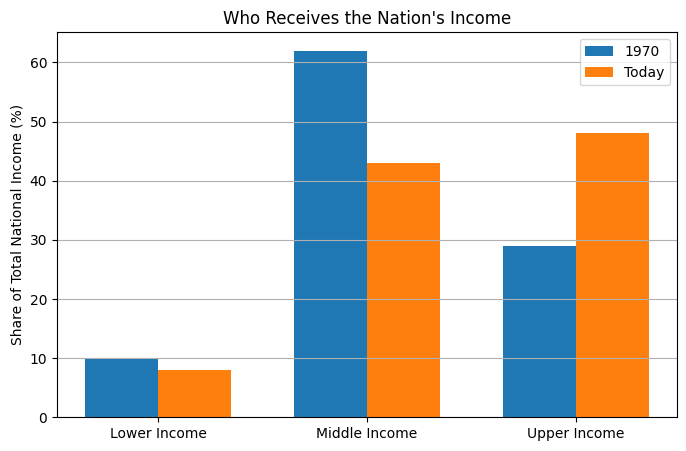
Look closely…the share of income for lower-income folks…down. The share of income for middle-income folks…WAY down. But the upper-income folks…their share of income went WAY up. That really makes the statement “the rich get richer and the poor get poorer” more and more clear.

In today’s world the upper-class are controlling WAY more of all income generated in the USA vs 1970. More and more money is being concentrated in the hands of the wealthy…at the expense of the lower & middle-class people.

So when I am showing you economic numbers I use lower & middle-income groups to make those numbers far more relatable to us average, everyday folks…not the rich & wealthy.

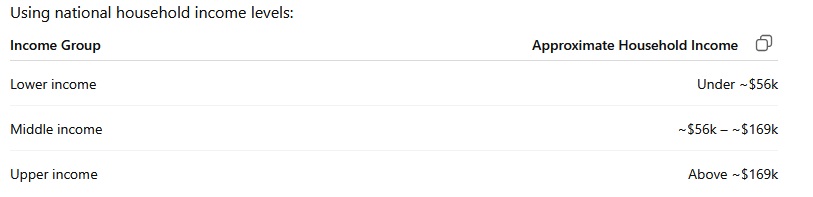
How do you know which group/class you fall into? Here you go…

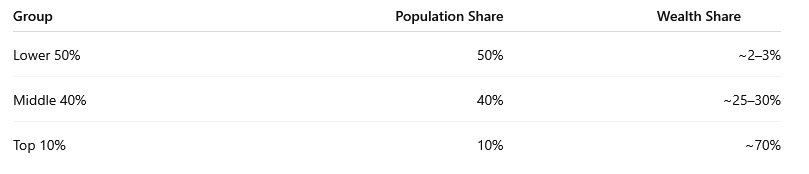
And here is the actual population share breakdown in the USA…

Now get this…if you are in that rich & wealthy group you guys control 75% of all US wealth! Yup, that means the lower & middle-class folks only control 25% of the wealth…commonly referred to as the scraps that fall from the table of the rich.

But hang on…it gets even more interesting…

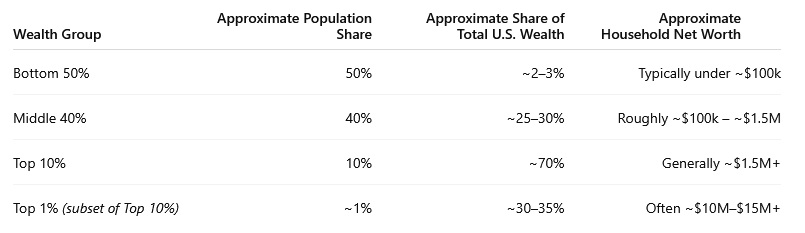
The top 10% of the US population…the really rich…control 70% of the wealth!!! But don’t go anywhere…the top 1%…the ultra-rich…own 1/3 of all the wealth in the US!!! Whoa! Let’s put that in a chart for you to digest…

Let’s make this whole concept of “class” and income/wealth distribution more clear…

What is my point to this wealth, class, & income distinction?

  • When you hear economic numbers tossed around by experts or talking heads…they are very broad numbers that probably have no relationship to your family’s lived reality. When you hear those numbers…they impact the rich far, far differently than the common average person. They barely impact the rich…but the numbers can devastate the average family.
  • The rich folks in the US are controlling more and more wealth and earning a larger and larger share of money. The lower & middle-class are suffering, falling behind economically, and losing purchasing power every month. There are potentially a lot of formal ways to look at this…Plutocracy, Elite Theory, Oligarchy, and Class Conflict Theory. All of them have validity. But the bottom line is reality…as wealth becomes more concentrated, political influence also becomes more concentrated…and social fragmentation/conflict increases.
  • Lastly…income creates day-to-day survival, while wealth creates resilience, leverage, comfort, and power.

So what do you do? Ah, that is held for later…keep reading.

← Click here to read Part #1                Click here to read Part #3 →


Articles in this Series –


Related Articles –


 2009 - 2026 Copyright © AHTrimble.com ~ All rights reserved
No reproduction or other use of this content
without expressed written permission from AHTrimble.com
No legal, economic, or financial advice is given, no expertise to be assumed.
I may receive compensation from advertised/mentioned products on this website.
See Content Use Policy for more information.
Disclaimer:
The thoughts and opinions expressed in these articles are based on personal observations, experiences, 
and independent research. They are intended for informational and thought-provoking purposes only. 
I am not an economist, financial advisor, attorney, accountant, or licensed professional. 
Nothing contained herein should be considered financial, legal, investment, or tax advice. 
Every family’s situation is different, and readers should do their own research and 
seek qualified professional guidance before making important decisions.

These writings simply reflect one person’s attempt to better understand the challenges facing 
ordinary families and explore practical ideas related to resilience, preparedness, 
personal responsibility, and regaining control over everyday life.

Economics 101 – Part #1 of 5


  • From a regular website reader/visitor:

Your garden & bs article helped me to understand the economy more. I didn’t understand it much, still you helped a lot. Can you explain more? More details? < click here to read that original article that started it all >

I sure can! Let’s turn this into a multi-article series and talk down-to-earth economics…nah! Let’s talk about how the economy affects on the United States and our families in real terms…YES !

I will try to be clear and real…and maybe throw in little humor here and there.

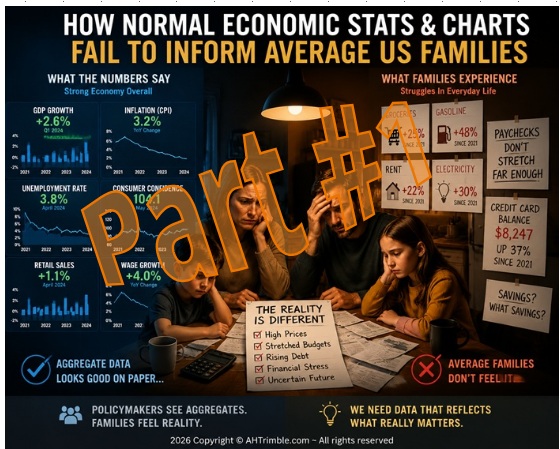
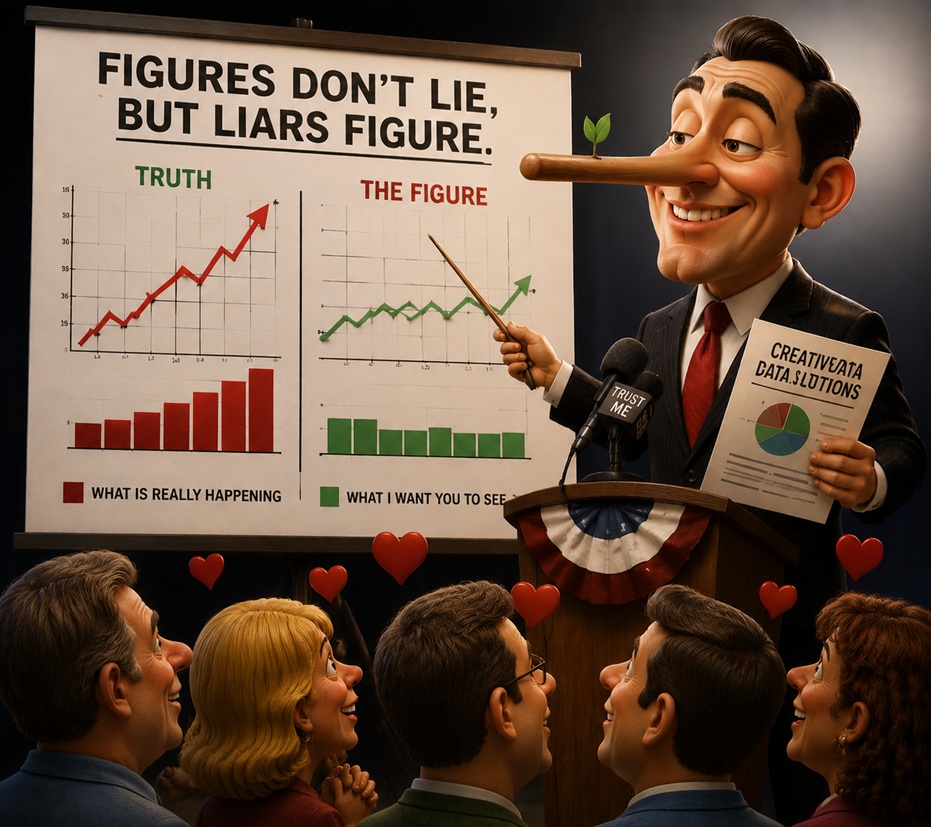
Have you ever heard the saying, “figures don’t lie, but liars figure”? It is incredibly true…and especially so when it comes to explaining or even talking casually about the economy.

Here’s where the “expert” economists fail us mere mortal folks:

  1. They have an agenda (political ideology) and want to frame their statements to reflect that bias.
  2. Most economic numbers, probably all, can be manipulated to support any version of bias.
  3. Economists don’t apply true economic numbers to real-life for average folks…they make their statements theoretical…virtually un-understandable.

What I like to do, and will do here to the best of my ability, is:

  1. Use completely factual economic numbers that are valid, reliable, and defensible.
  2. Apply those numbers to a person’s real life and how it effects their life and family in real terms.
  3. Then show clear and easy to understand facts…especially trends…showing how those trends are killing, and have been killing, America for a long time.
  4. I will also write a pretty decent closing that might really surprise both you and me.

What I hope to accomplish through this multi-part series on economic matters is to help people understand where we’ve been, where we are, and where we may be headed if we fail to change course. And finally, if we cannot change things at the national level, I want to propose practical steps we can take to help prepare ourselves and our families, even our communities, to better endure the worsening economic challenges ahead.

Here is an example of “liars figure”…one night a couple weeks ago, on the way home from a security gig, I was listening to the radio. There was this pair of idiots folks talking about April’s inflation rate coming in at 3.8%. First off…that is a horrible number…a terrible blow to the economy and consumers…a truly bad number for families. But these imbeciles folks talked on and on about how great the economy grew by 3.8% year over year. What??????

First off…that is a totally bogus statement…a bald faced lie actually. It would be good to throw in here at this moment…these two people are rabid, far-right, republican, Trump worshipers…to a point beyond comprehension. But, that being said…their statement is still a lie. Inflation is not a sign of economic growth…not at all!!!

Here is where it could get horribly confusing…but I am not going to do that to you. I will try to be clear and simple…

  • Inflation” is a number that represents the price increase of a “basket” of goods and services. The basket used by experts is a small subset of goods and services that really doesn’t represent an average family’s actual expenses in life.
  • GDP” is the total cost of all goods and services produced in the US without subtracting inflation. It is also called “Nominal GDP”.
  • Real GDP” is GDP minus Inflation. That is supposed to be a percentage representation of the net increase or decrease…the actual growth or shrinkage, of the economy. That is what you normally hear…but that too is a false number.
  • Then there is the true/actual GDP minus GDP Deflator(s). The “deflator(s)” is a better representation of the rise in the prices of goods and services (inflation)…a bit more accurate than an inflation figure. But there is no fixed and reliable definition of “deflator”…it can vary by “expert”. So its validity is also questionable.

Let me give you an example #1…

  • YEAR 1 the economy produces 100 apples @ $1 each. GDP = $100.
  • YEAR 2 the economy only produces 100 apples @ $2 each. GDP = $200.

Did the economy really grow? No. The country did not produce more apples, more food, or increased productivity; only the prices increased (inflation). So GDP would be up 100%, inflation would also be up 100%. But the Real GDP would be 0%…no growth, only a price increase.

Let me give you an example #2…

  • YEAR 3 the economy produces 200 apples @ $3 each. GDP = $600.

Did the economy really grow? Yes. The country did produce more apples (productivity), and the prices increased (inflation). So GDP would be up 200% (some growth came from higher prices and some growth came from producing more apples), while inflation would be up 50%.

So would Real GDP be 150%? No. It turns out economic math is more complicated than simple subtraction. Economists use deflators and ratio formulas rather than straightforward subtraction because GDP growth and inflation compound together mathematically. In this example, Real GDP growth would actually be about 100%, because the economy produced twice as many apples but deflators and ratios have to be taken into account.

See how everything could quickly get screwed up trying to understand their confusing crap talk!

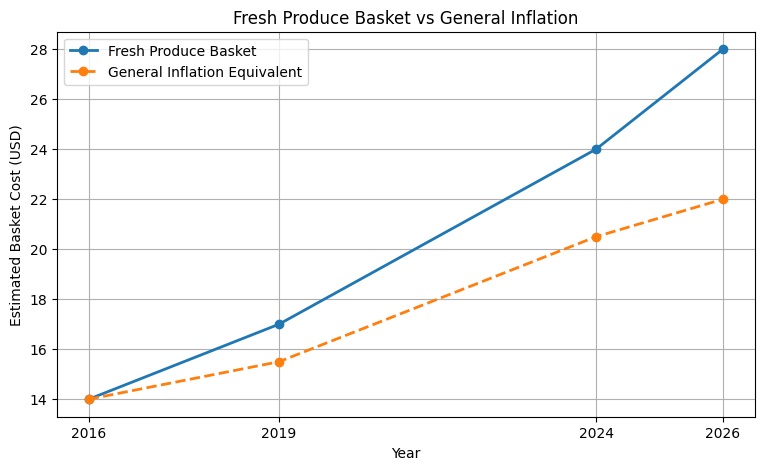
So we have to make it really simple for folks like you and me. Forget inflation, forget GDP…use your eyes and wallet. Remember the produce basket from our previous article < click to read >? Real produce from real stores bought by real people went up 100% (yes, doubled in price) from 2016 to 2026. That is a 7.2% average annual inflation rate. That my friend is a REAL inflation figure!

Here’s another one…gas here locally went from $3.09 to $4.69 in 6 weeks. That is 52% inflation rate over 6 weeks…or 8.6% average inflation rate per week. Whoa!!!!! That is terrible. But last year at this same time is was $3.29 a gallon. Someone could make that sound WAY worse if they tried to promote the 6-week inflation rate figure…and they would be lying to you. See last year at this time the price of gas was $3.29. So the annual inflation rate for gas here locally is only 42%. Ah, only 42%???? Yup, that is horrible enough isn’t it. But, it is more accurate.

So talking about inflation is a weird subject to try and figure out in realistic terms. And for the most part it can turn into an emotional trauma a lot of the time. The only true figure that makes any sense is how much money you have left over at the end of the month…if any. That is why I use “essentials” when I display information about economic matters…because that is what honestly and truly matters when it comes to our finances. And inflation is deeply personal…inflation is how it affects you and your family personally.

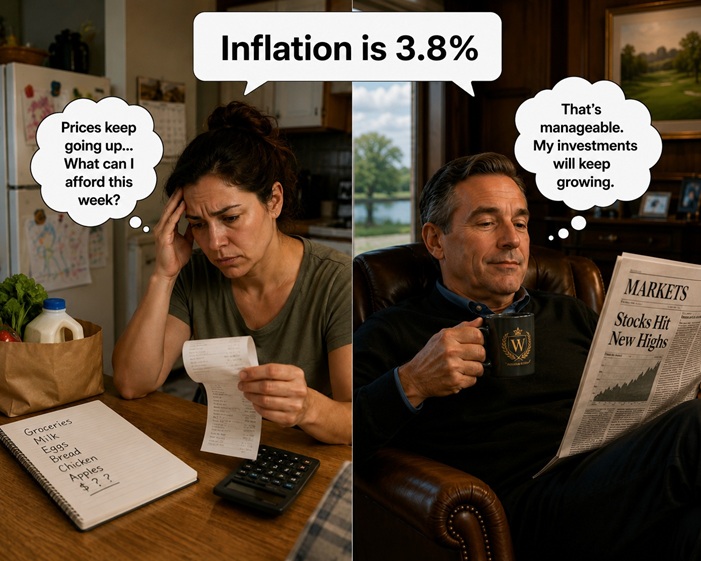
Regardless of inflation or CPI formulas, GDP deflators, Fed policy, academic models, or political spin, people ultimately experience inflation through groceries, rent, fuel, insurance, health care, utilities, and what remains in the checking account afterward. That’s why two people can hear “Inflation is 3.8%” and yet think of it completely differently.

Inflation is so deeply personal it can feel manageable or it can feel crushing…or be comfortably ignored if you are rich. When I talk about inflation it is lived reality not charts and theories presented by economists that the average person seldom understands.

So how does a person understand April’s stats? If you do a deep dive it gets really interesting. Prices rose mostly from the increase in all forms of energy. Consumer spending was up almost exclusively from the upper-income sector. Credit card balances dropped slightly due to lower & middle-income folks paying off some of their existing balance. Consumer sentiment was down…and not just down a little. It deteriorated significantly during Q1 and into April. So why would someone say the economy performed well? For only one reason…the rich folks spent a bunch of money. And that is the “K” economy effect < click here to read about the “K” economy >

Think about this seriously important fact…In April, overall household debt remained at a record high. Q1 2026 total U.S. household debt reached roughly $18.8 trillion, which is an all-time high. The increase was driven mainly by mortgages and some other loan categories, not by credit cards.

Here’s an interesting set of “dots” to connect…the average mortgage amount during that time was nearly $400,000. Well, who can afford that size mortgage? The very, very top of the middle-class and the upper-class. So it wasn’t the average US family getting a mortgage, it was the top 12% of income earners and the top 20% of the wealthy in the US. Once you connect that dot then you start to get a much better picture…The households doing a larger share of spending and buying are increasingly concentrated toward higher earners and the wealthy. And that leaves the lower & middle-class behind…and falling behind each and every month.

Now, let’s touch on GDP for a minute. Earlier I went into detail about what GDP is and how to look at different “versions” of it. Now for the gotcha…GDP is a statistical, model-based, assumption-heavy, number and heavily dependent on various adjustments. GPD isn’t like measuring the exact length of a board with a ruler…it isn’t an exact science. That’s why many folks hear that GDP is growing and/or “good”, yet they feel economically challenged and financially vulnerable.

You can hear the “experts” report strong GDP growth while families simultaneously experience rising housing costs, wealth concentration to the upper-class, healthcare pressure, stagnant wages, and declining affordability when they go to the store or the gas station. So GDP numbers are also highly suspect when using it to gauge how the economy is doing. Once again…whether it’s inflation or GDP…it is all a matter of both being deeply personal to your family situation.

Bottom line:

  • Inflation is your families purchasing power…it goes up or down…you can buy more or less with your paycheck.
  • GDP is pretty much meaningless when viewed in relation to your family’s financial situation. It “can” give you an idea of the country’s economy growing or not…but it seldom (if ever) is an accurate view of reality.

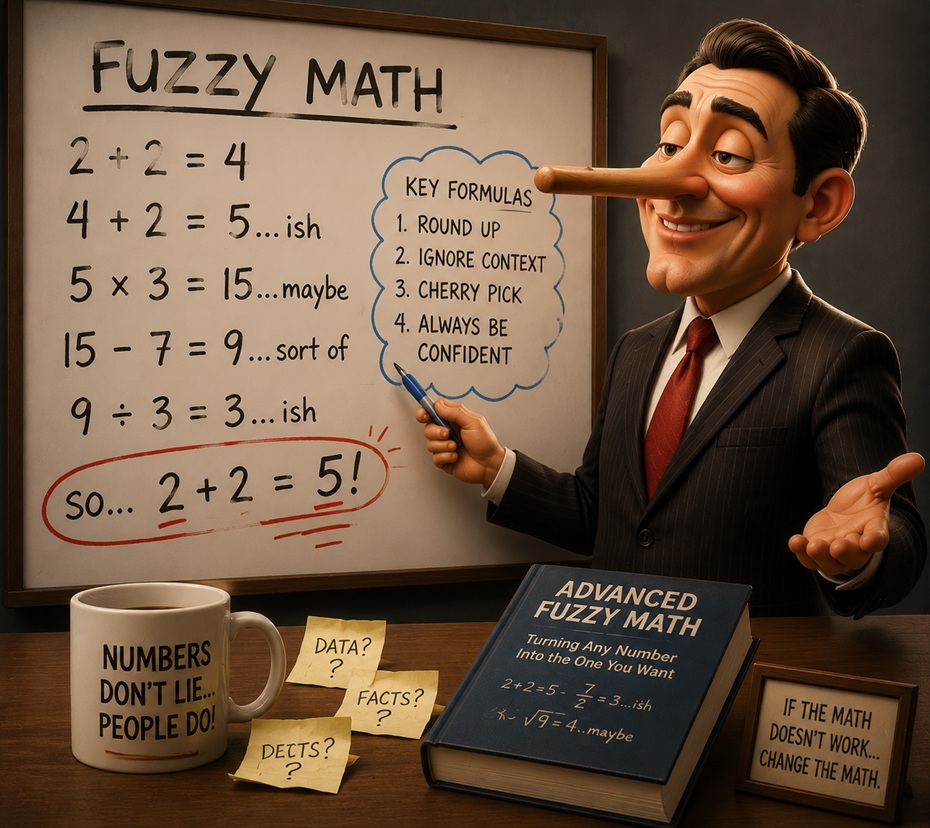
Otherwise, listening to “experts” or “talking head” on cable media is playing with…fuzzy math.

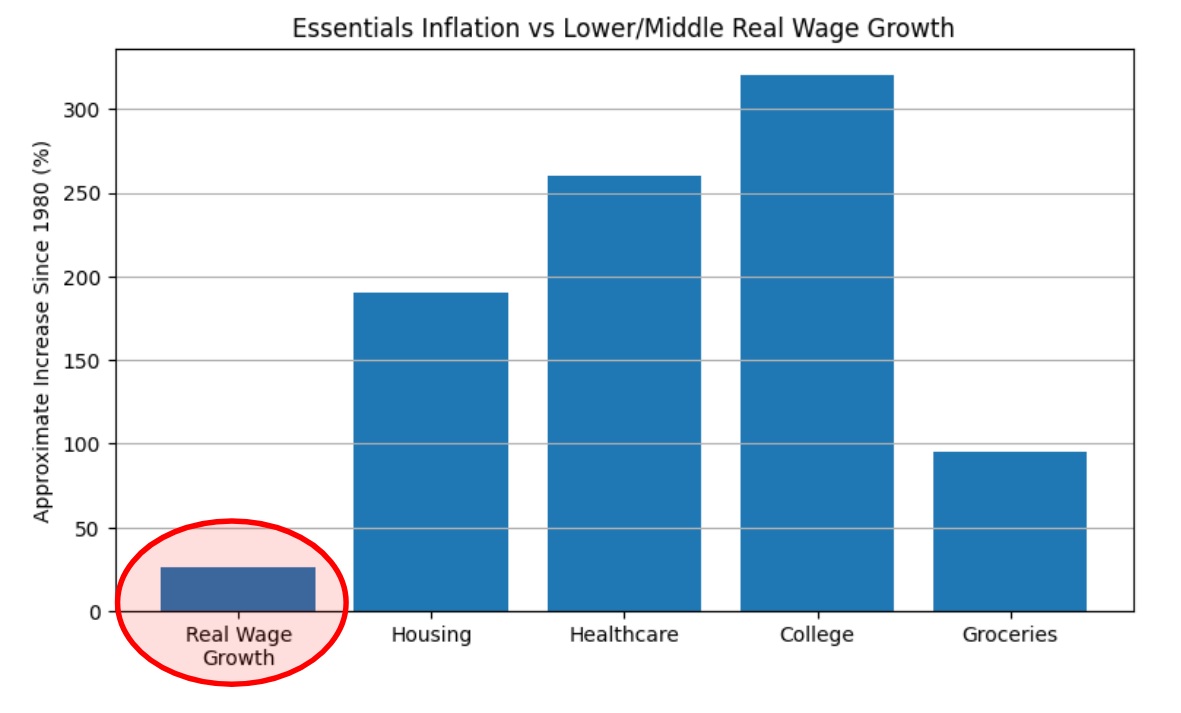
Okay, somebody out there will probably want to debate “real wages” increasing to offset inflation. Really? So you think rising wages offsets inflation (price increases)??? Let’s make this real simple for you…let’s use the comparison of the home prices inflating. Someone might think that wages have kept pace and homes are just as affordable as they were in 1980. Really?

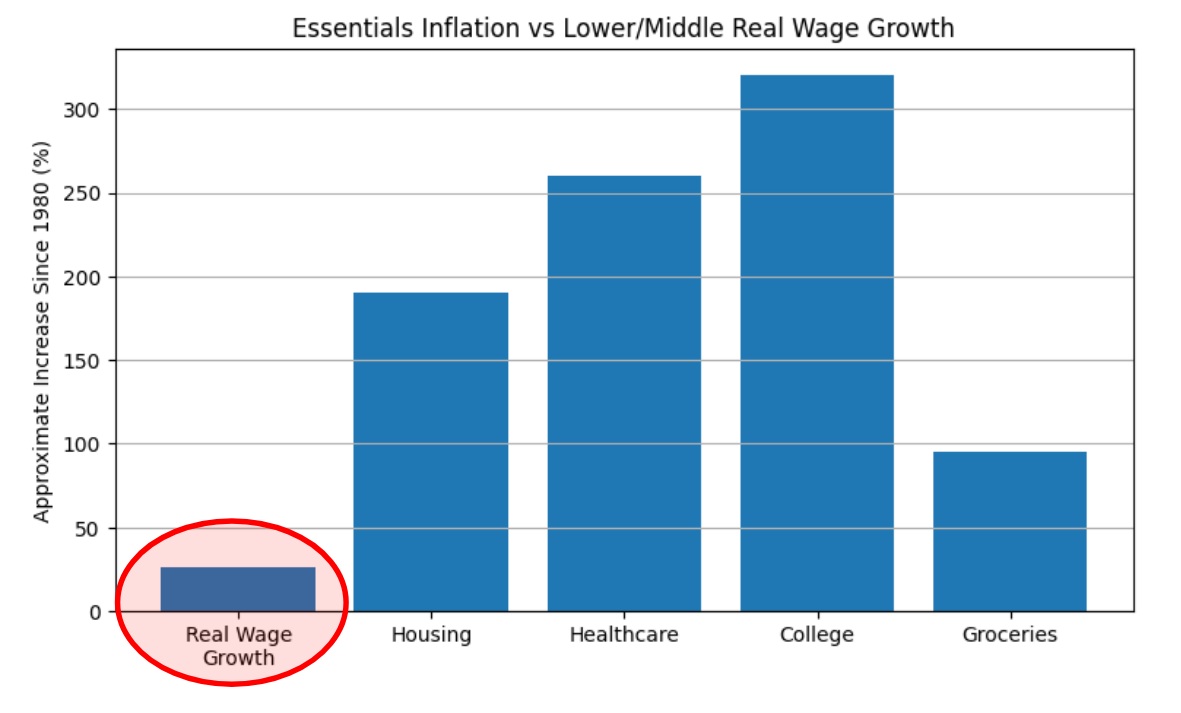
Better yet…let’s compare “real wage” growth vs the price increase of all family essentials since 1980…that should make it really clear…

Can I make it any more clear? Real wage growth is NOT keeping up with inflation…not even close. Lower & middle-income families are falling behind…falling WAY behind.

Next, in Part #2…we’ll talk about wealth and the HUGE difference it makes…as if you didn’t already know. But get ready to be really, really surprised!

Click here to read Part #2 →


Articles in this Series –
Related Articles –


 2009 - 2026 Copyright © AHTrimble.com ~ All rights reserved
No reproduction or other use of this content
without expressed written permission from AHTrimble.com
No legal, economic, or financial advice is given, no expertise to be assumed.
I may receive compensation from advertised/mentioned products on this website.
See Content Use Policy for more information.
Disclaimer:
The thoughts and opinions expressed in these articles are based on personal observations, experiences, 
and independent research. They are intended for informational and thought-provoking purposes only. 
I am not an economist, financial advisor, attorney, accountant, or licensed professional. 
Nothing contained herein should be considered financial, legal, investment, or tax advice. 
Every family’s situation is different, and readers should do their own research and 
seek qualified professional guidance before making important decisions.

These writings simply reflect one person’s attempt to better understand the challenges facing 
ordinary families and explore practical ideas related to resilience, preparedness, 
personal responsibility, and regaining control over everyday life.
GARDEN : My plea to you… (please read!!)

I am writing this from my heart…a sincere, earnest plea. Please, seriously consider what I am asking of you.

Let me begin with this…it is not too late!

I’ve written a whole bunch on gardening this year…far more than in the past. This year I have a serious sense of urgency…almost overwhelming desire to share information. But most of all I am prompted…big time prompted…to ask this of you:


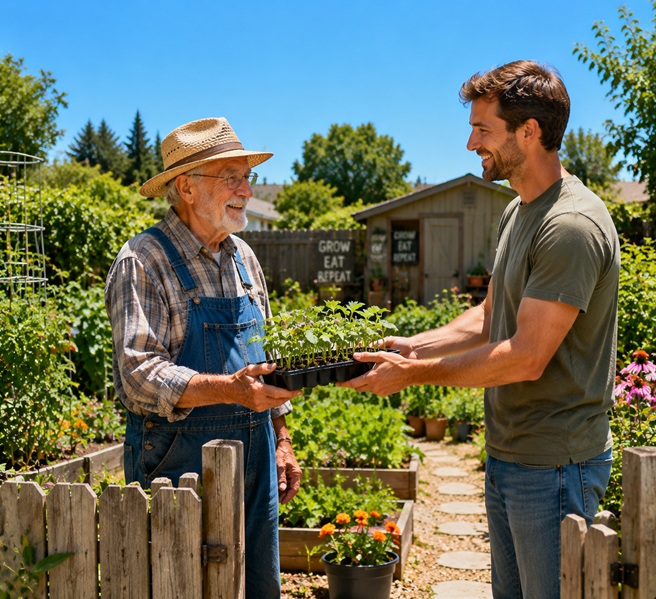
# 1 – You may not have a garden, but if you have the space…even a small corner…that’s enough. If you live in an apartment, put a couple of container plants, or hanging plants on your patio or balcony.

If you live in the city, find a small plot, maybe a building lot, and plant a garden…even if it’s only a couple of plants.

Find a little corner in your yard…put in some strawberries or raspberries.

Size doesn’t matter…just start.


# 2 – If you just can’t have a garden. Here’s an idea…talk to a gardener in your community and ask them if you can buy them some plants or seeds for their garden, maybe offer some organic fertilizer. Offer to help them take care of their garden. Don’t bargain with them…don’t try a “deal” trading your help for produce in return. Just offer to help them expand their garden, let them decide what to do with extra produce.
 

# 3 – If you can’t have a garden but a neighbor has the space but they don’t have a garden. Offer to work them to have a garden on their property. If they can’t help with a garden (i.e. too old, handicapped, etc.) then offer to do all the garden work. Here you can ask for some “share” arrangement of the produce.
# 4 – If you do have a garden. Expand it! Grow more, maybe way more, produce more than you and your family can eat and/or store. When the produce starts coming on…give it away! Find an old couple living on social security…maybe a young family or a single parent family…then give them produce from your garden. Another option, find a food bank or senior center than provides meals…give them all the fresh produce you possibly can. For some of the folks who benefit from your generosity this might be the only fresh produce they get in their diet.

# 5 – Think of other inspired ways to provide for others. Give till it hurts…sacrifice for others. People need that right now…both the givers and receivers.

# 6 – Buy seeds now for future gardens. Seeds, properly stored, will last years, sometimes decades. Put them away for later gardens. You could do the same with organic fertilizer, biochar, worm castings, and other soil amendments.

Look, I have tears in my eyes right now, I am full of emotions with what I see all around. This world is in turmoil right now. There is far too much division, confusion, animosity, even hatred and violence. But…we can take care of each other. We can blot out the static…get rid of the noise around us that is hurting us all. We only need to reach out to others…then give and serve.

Please…I ask this of you sincerely, with real intent. I don’t know exactly why, but I know I must share this plea with you, and ask for your help in serving each other.

We don’t have to wait for the world to change. Each garden we plant, each hand we lend, each fruit we give…that’s the change. Together, through these simple acts, we can heal, nourish, and connect. So today, right now, look around you. A planter on your balcony. A neighbor’s empty yard. A friend who could use a hand. Take one small action. Plant, water, share. Even the tiniest seed of kindness grows.

 2009 - 2026 Copyright © AHTrimble.com ~ All rights reserved
No reproduction or other use of this content
without expressed written permission from AHTrimble.com
No legal, economic, or financial advice is given, no expertise to be assumed.
I may receive compensation from advertised/mentioned products on this website.
See Content Use Policy for more information.