
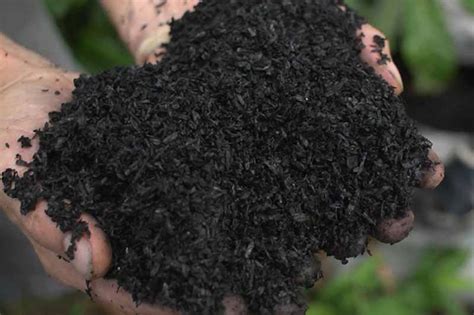
This is the second in the making dirt series. If you haven’t already read Part #1 you might want to <click here to read Part #1>
We are moving on from raised bed soil to soil I make for our fruit trees.
Orchard Soil –
Soil for fruit trees is extremely important…maybe even more important than for vegetable raised beds. Why?
- You only get one shot at the proper soil mix for fruit trees. Once that tree is planted it is over…you got what you got.
- You have to have plenty of moisture for the fruit tree to flourish so the soil has to have the ability retain sufficient moisture for the right length of time for the tree to absorb enough of the water.
- You can’t have the soil retain so much water that it is soggy and the tree’s roots stay abnormally wet. So the soil has to be able to drain properly.
- You have to be able to spread out the water and nutrients far enough away from the tree trunk to encourage roots to spread out…and deepen.
In my particular area…at least on my property…I’ve already mentioned that I have a fine sand soil that is compacted tight, void of organic matter, and it sits on sandstone. There is some clay involved as well but that it normally 1’ – 2’ below the surface. Yeah, great conditions, eh? So the size of the hole that contains the ‘built soil’ is actually just as important as the soil itself. There has to be enough room for support roots, water retention, and drainage…not to mention available nutrients.
Normally I see fruit tree planting instructions talk about the hole should be twice the size of the root ball. Ah, no. Here, for me, I use a completely different guideline. I go for a hole that is a minimum of three times the drip line of the new tree, or a hole is 3’ across at a minimum, and a minimum of 3’ deep…my “3/3 rule”.
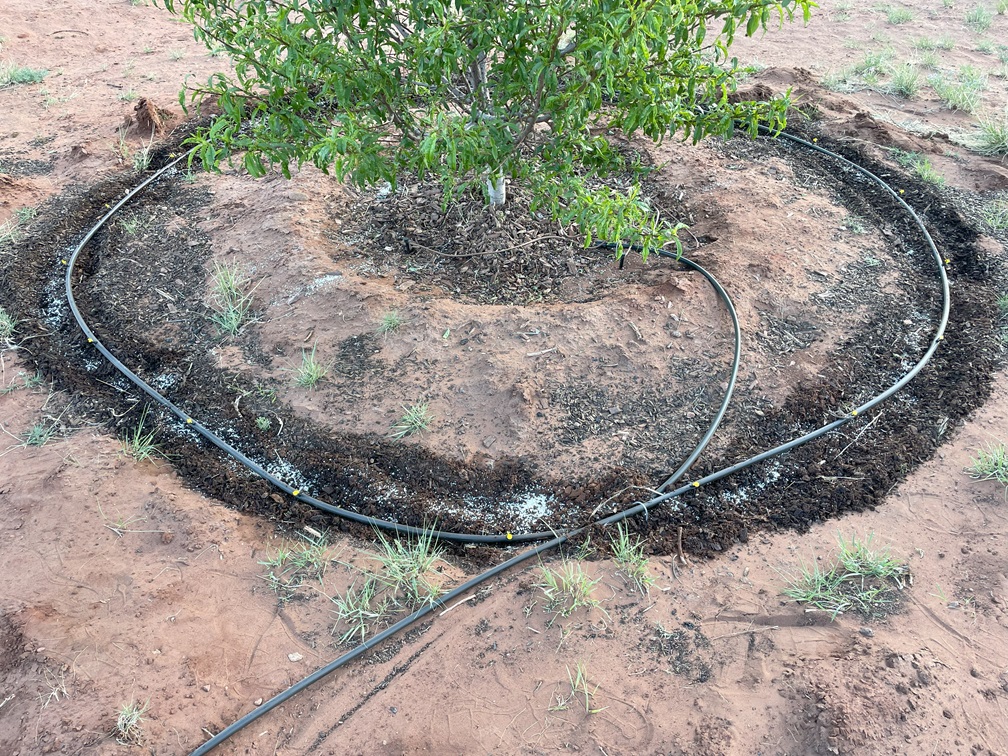
- Note #1: Notice the inner circle…that’s the original 3′ hole for the new bare root peach tree.
- Note #2: Notice the new drip line circle. It extends past the drip line by 18″ (+/-).
The tree’s “drip line” is the area located directly under the outer circumference of the tree’s branches. So, if the new tree’s
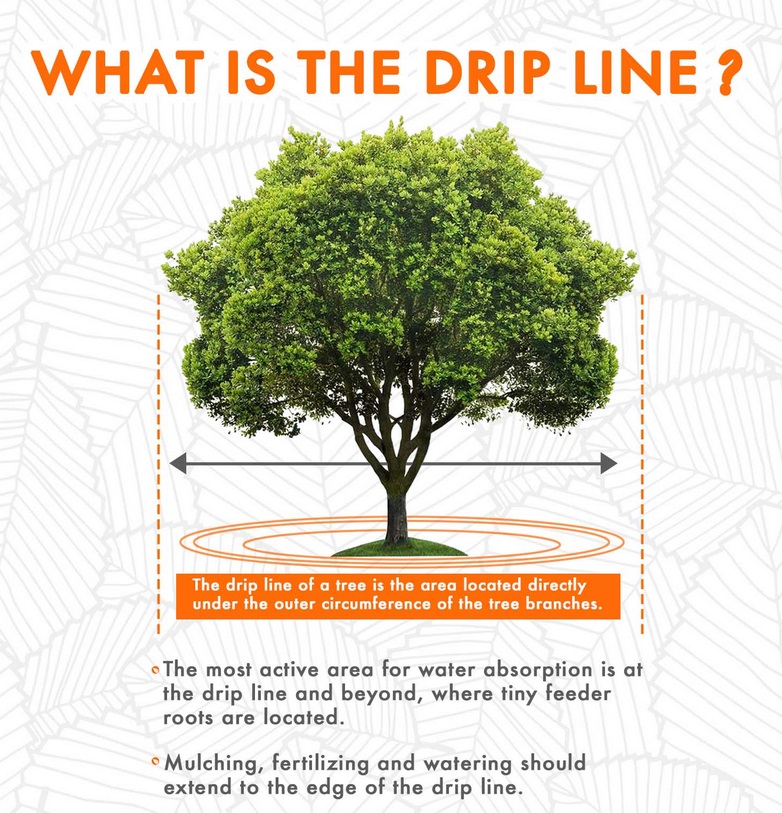
right click to enlarge
branches spread out 6” from the trunk then the drip line is 1’ and the hole will be at least 3’ across. I do this to encourage the support roots to spread out rapidly becoming feeder roots. How/why do those roots spread out? They are seeking the added water and nutrients.
There are times when I actually dig a doughnut for new trees if the new tree is large enough…usually 2′ or more of a drip line. I dig the basic planting hole as described above. Then I dig a trench around that hole. A minimum of 1’ outside of the planting hole, usually 3’. The trench is normally 1 spade wide and 1 spade deep…at a minimum. What’s the purpose of the doughnut trench? Encouragement.
In our dirt here there are two main ingredients missing; 1) water, 2) nutrients. Support roots as well as feeder roots will attempt to migrate where there are both of those ingredients. I explain/show more in the pictures below.
Now, what does the orchard soil consist of? It is a combination of:
- 60 – 70% dirty/unscreened or quality compost
- 20 – 30% native soil
- 5% perlite
- 5% peat moss
I don’t mix it ahead of time, I mix it as I put it in the ground. To ensure that I give the tree the best start possible I thoroughly soak the hole with water. That means before I add the dirt/soil I fill up the hole to ground level at least once (usually 2 – 3 times) and let it leach into the ground. Before I start putting in the soil mix I also dig up the bottom of the hole a bit, place fertilizer at the bottom of the hole, I then put some straight compost on top and then mix it in with my spade. Once that is done I proceed with putting the soil mix in.
What kind of fertilizer?
I add water to the soil mix about every 6” – 12” of added soil and allow it to soak in. This gives the soil a chance to work out all of the air bubbles and it also adds valuable moisture to the soil in the hole to encourage the tree’s roots to grow/migrate to that moisture.
 And yes, I add fertilizer as I go to the hole as well, mixing it in as I go. I am not a fanatic about organic fertilizer for fruit trees. I normally use Arizona’s Best Fruit and Nut Tree

right click to enlarge
synthetic fertilizer for the most part. It is a 13-7-3 mix and contains sulfur, iron and zinc for healthier trees. It is a relatively fast release fertilizer, but it does feed over a 3 month period. Now look, of course during the first year the tree’s roots probably can’t reach the synthetic fertilizer that I just placed in the ground at the 3’ depth or below. But that fertilizer doesn’t go to waste.
As an option I did a test run with Osmocote Smart-Release Plant Food Plus Outdoor &  Indoor (15-9-12) fertilizer. It was recommended to me by a tree nursery.

right click to enlarge
Difference between Arizona’s Best and Osmocote? Arizona’s Best = $1per pound vs Osmocote = $4.38 per pound. Arizona’s Best is also a fast release fertilizer vs Osmocote which is a slow release. And Osmocote has additional nutrients in it as well. It’s your choice but I have had no issues with Arizona’s Best.
Synthetic N (nitrogen) fertilizers in addition to helping the tree grow, it also increases microbial biomass and microbes that produce enzymes that allow access to energy (chemicals) in the ground. The phosphorus (P), and potassium (K), simply leach into the surrounding soil and become available as needed when the roots reach it. Sulfur, iron and zinc also stabilize in the soil (yes, some leaches away) but eventually will be available to the tree.
As a thought…depending on the fertility of your soil, you might benefit from a combination of both fertilizers. The “fast release” for immediate access of the tree right after planting…then the “slow release” for the next six months. But it will depend entirely on your specific situation.
In another post I will talk about fertilizers and how I use them for my fruit trees. Once again, this post is only about building the soil…for the most part.
Mixing the fertilizer throughout the soil depths ensures that there are nutrients for the tree’s roots to access as the roots expand…and that provides energy for the tree to grow over time.
I don’t want to make this a conversation about fertilizer, organic or synthetic, that will be another post. For this post I just want to add that compost does contain fertilizer, about 1-1-1 or so (probably less than 1-1-1) depending on the ingredients used to make the compost and the length it has been ‘cooking’. Compost also increases the number and variety of beneficial bacteria and fungi in the soil, which helps plants to grow. Compost, in my soil, will also increase the soil’s ability to retain water which reduces the need for irrigation. Lastly, compost improves/reduces the compaction of the soil to allow the support roots to grow/spread rapidly…far more so than native soil.
The perlite in the mix does what perlite does…improves water absorption/retention, releases water slowly, and reduces soil compaction. The peat moss introduces fine organic matter into the mix to encourage fine root hair growth and spread.
I will do a more complete post on how I plant fruit trees, hopefully in the next month or so. This post was just about the soil I build for planting the fruit trees in.
Articles in this Series –
- How to make dirt – Part #1 (Introduction & raised bed soil)
- How to make dirt – Part #2 (Soil for fruit trees)
- How to make dirt – Part #3 (Soil for grass/yard/lawns)
- How to make dirt – Part #4 (Soil for woodlands)
- How to make dirt – Part #5 (Extreme dirt build) [not yet available]
Related Articles –
 2009 - 2024 Copyright © AHTrimble.com ~ All rights reserved
No reproduction or other use of this content
without expressed written permission from AHTrimble.com
No legal, economic, or financial advice is given, no expertise to be assumed.
See Content Use Policy for more information.
 A.H. Trimble - Emergency preparedness information for disasters and grid-down
Pingback: How to make dirt…Part #4 | A.H. Trimble - Emergency preparedness information for disasters and grid-down
Pingback: How to make dirt…Part #1 | A.H. Trimble - Emergency preparedness information for disasters and grid-down
Pingback: How to make dirt…Part #3 | A.H. Trimble - Emergency preparedness information for disasters and grid-down