ESEE-3 Knife

ESEE-3note: first appeared October 2015

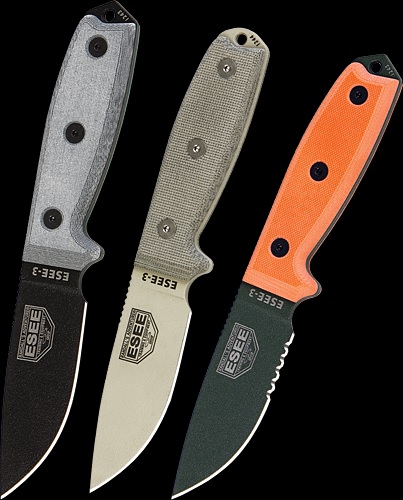
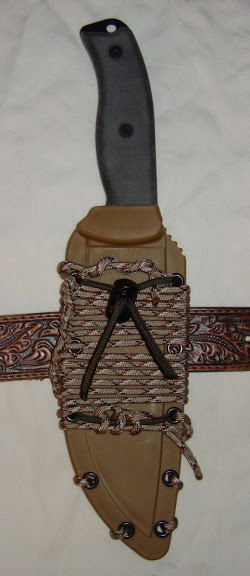
There are times when you know you have a quality knife in your hands. The ESEE-3 is one of those knives…there is absolutely no doubt about it.

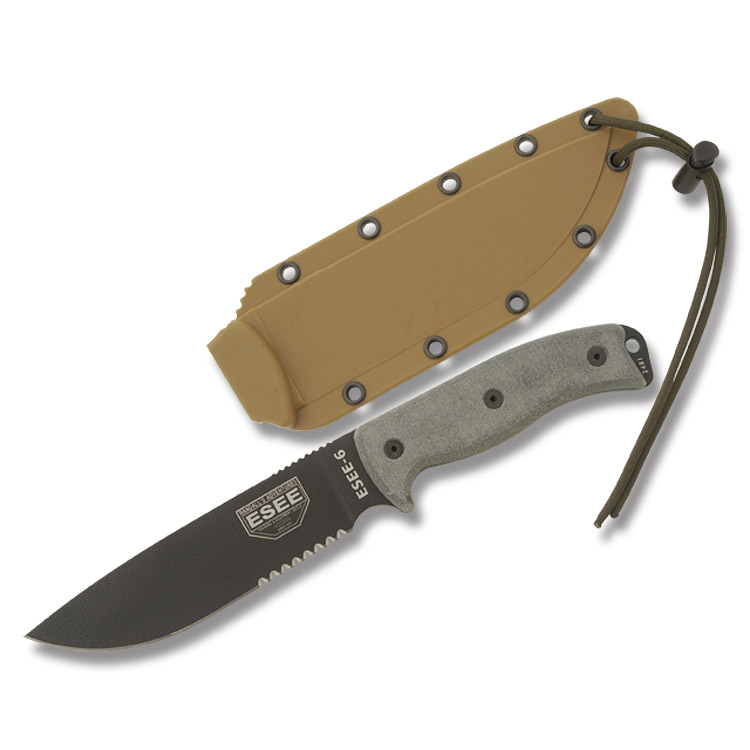
I previously reviewed the ESEE-6 (8/4/2019) and found it to be an amazing knife. The ESEE-3 is no less a knife, it is amazing. You pick up the knife and it immediately “feels” right in your hand. The balance is perfect, the handle is sized right, it just fits.

The 1095 carbon steel is amazingly hard and maintains an edge really well. And just as importantly it takes an edge just as easily. I use a diamond stone and found it to be really easy to touch up a razor sharp edge to the knife. The blade is a full-tang and has a zero tolerance in mating with the handle material. It is matched perfectly to the handle.

Let me backtrack for just a minute. The mission for this knife was compact survival knife that could be easily carried in my “Go Bag”. I wanted a knife that could handle the rigors of a survival situation. And finally, I wanted a self-defense knife that could be easily concealed but yet effective in providing close-in self-defense.

The knife truly excels in being a survival knife, easily concealed, and obviously completely capable of withstanding the rough environment of survival. During testing I pounded on my ESEE knife to split wood. The outcome was just fine!

However, admittedly it is a little weak in the area of self-defense. Ironically, the same traits that make it a great survival knife also limit it from excelling as a self-defense knife. It takes a lot of pressure to push that knife blade directly into meat. Slashing/cutting into meat is not a problem.

Let me touch on a few technical specifications first…

  • Overall Length: 8.31″ (Standard Model)
  • Overall Length: 8.19″ (Modified Pommel)
  • Cutting Edge Length: 3.38″
  • Overall Blade Length: 3.88″
  • Maximum Thickness: .125″
  • 1095 Carbon Steel, 55 – 57 Rc.
  • Weight: 5.2 Ounces (Knife Only)
  • Weight: 9.3 Ounces (Knife w/ Sheath)
  • Sheath: MoldedESEE-3 models

There are different models to the ESEE-3…

  • ESEE-3P (Plain Edge, Black Blade)
  • ESEE-3S (Partially Serrated, Black Blade)
  • ESEE-3PM (Plain Edge, Black Blade, Rounded Pommel)
  • ESEE-3SM (Partially Serrated, Black Blade, Rounded Pommel)

Let me make this perfectly clear…BUY THE KNIFE !

OK, that being cleared up let me address the survival vs. defense comment earlier. To qualify as a great survival knife you want a thick, heavy, sturdy blade. A self-defense knife warrants a razor sharp edged knife that can also penetrate easily. That style blade not be compatible with survival demands.

However, the ESEE-3 does perform adequately when employed as a self-defense knife other than easy ESEE-3penetration into meat. While it might not penetrate as well as a RAT Headhunter, it will get the job done. But the overwhelming quality of its survival traits dwarf any self-defense limitations.

Now here is a bonus…my wife loves her ESEE-3!

When we were looking for our camping/survival knives she liked my ESEE-6 but felt it was too large and too heavy for her. She wanted something more “lady-like” to use. Well OK then! If my wife wants a knife, she gets a knife!

Yup, I am a blessed man!

This is near a perfect piece of gear/equipment as you are going to find in the prepper world. They are not expensive compared to other quality knives. But then again, what is your family’s life worth?

That means spend the money and get this quality knife, you will be glad you did!

ESEE 3 knife


2009 - 2019 Copyright © AHTrimble.com ~ All rights reserved
No reproduction or other use of this content 
without expressed written permission from AHTrimble.com
See Content Use Policy for more information.

Yaesu FT-8800R Ham Radio : Storing and Case

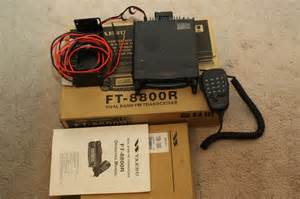
Yaesu FT- 8800R ham radioIn this post I will go over how I store my 8800R and what I store with it.

In two previous articles I went over the Yaesu FT-8800R radio and accessories. Both articles are worth the read.

So let’s go over my standard format, what is the mission for all of this?


Mission –

To safely store the radio and all components with which to operate the radio.

Requirements & Restrictions –
  1. Cases must be sturdy, at least to military specifications.
  2. Cases musty protect against dust, dirt, and water impingement.
  3. Cases should protect the contents against damage due to reasonable heights and rough handling.
  4. Cases should be low profile and not draw attention to them.
  5. Case should be light enough for one person to easily carry.

SKB i-series 3I-1711--68-C.The case I chose was the SKB i-series 3I-1711–68-C. These cases are waterproof and as sturdy, if not more so, that Pelican cases. And they are cheaper that Pelican cases. They come with “cubed” foam ready to be cut to size for your equipment.


SKB iSeries hard case for a yaesu ft-8800r


So this is what my case looks like for my Yaesu FT-8800R.  The case is clearly labeled for easy identification.

SKB i-series 3I-1711--68-C for the Yaesu FT-8900RYaesu FT-8800R Radio Case –

Bottom Level:

  • 1 x Power supply, AC, 19amp
  • 1 x Mounting bracket, radio
  • 1 x Microphone, MH-48
  • 1 x Radio, Yaesu FT-8800R


SKB i-series 3I-1711--68-C for the Yaesu FT-8900RMiddle Level:

  • 1 x Power cord, AC


SKB i-series 3I-1711--68-C for the Yaesu FT-8900RTop Level:

  • 1 x 5′ Power extension cable, Anderson Power Poles on both ends
  • 3 x packages various mounting screws.
  • 1 x Mounting bracket, remote head
  • 1 x RT Systems Programming CD
  • 1 x RT Systems Programming cable
  • 1 x Power cable, Anderson Power Poles to hard soldier connection (AC power supply)
  • 1 x Cable, radio head to radio body
  • 2 x Fuses, 15amp

On top of the radio I place a 8800 user’s manual in a 1-gallon Ziplock bag with the latest copy of the US Amateur Radio Bands chart.

I have given you a list of the equipment needed to run the Yaesu FT-8800R Ham radio. Is it everything you might need?  This was meant strictly for the radio equipment itself and the essential equipment to get it going.

Take this list and use it as a starting point for your specific need and mission.


2009 - 2019 Copyright © AHTrimble.com ~ All rights reserved
No reproduction or other use of this content 
without expressed written permission from AHTrimble.com
See Content Use Policy for more information.

Yaesu FT-8800R Mobile Ham Radio – Part #2

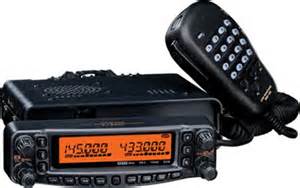
Yaesu FT-8900r Quad-Band Ham RadioAs mentioned in Part #1 of this series, I really love this mobile unit!  The Yaesu FT-8800r is an amazing piece of Ham radio technology wrapped up in a very compact and sturdy package.  It is perfect for the “repeaters” part of its mission.  This thing does it all and matches my mission requirements and then it exceeded my expectations.

In the last post I covered the specifics of the Yaesu FT-8800R itself.  In this post I will go over the accessories, installation info and some other tidbits.


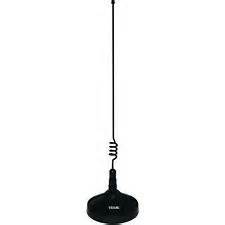
RadioAntennaCarVehicle external antenna for temporary dual band (2m & 70cm) operations : This antenna is a must have for temporary vehicle operations.  It is not a permanent antenna, it is a magnetic mount antenna.  You can move the antenna to other vehicles if needed.  You can also use it in a non-vehicle setting as well by placing the antenna higher than the radio would normally be located. Great option where portability is needed and only dual-band operations are needed. It is also a great option for an antenna when using a repeaters.


Browning BR-180 Amateur Dual-Band Mobile Antenna Vehicle permanent (or semi-permanent) mount external antenna : The Browning BR-180 Amateur Dual Band Mobile Antenna

The BR-180 is 37″ tall and has .4dB gain. Engineered for NMO mounting, this antenna has improved clarity and signal reception. This Browning antenna uses a center load.  Sturdy construction, enough flex in the antenna itself, and normally SWR of 1.5 or below right out of the box.
Specifics –

  •     37″ tall
  •     Frequency: 144-148 MHz/430-450MHz
  •     2.4dB gain UHF
  •     5.5 dB gain VHF mobile antenna
  •     NMO mounting (mount sold separately)
  •     Center load
  •     One Year WarrantyNOTE: Do NOT try a mag mount with this antenna.  It is not intended to be used as such.  The NMO mount is the way to go for a dependable mount to your vehicle.

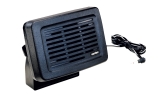
Yaesu MLS100 external speakerExternal Speaker :  I had to go with a Yaesu MLS-100.  You can buy other speakers but I like the idea of a speaker that is matched to the radio by the manufacturer. The Yaesu Vertex MLS-100 external loudspeaker is a high performance communications speaker matching the impedance and output requirements of most Yaesu transceivers. It mounts on a swivel stand that is supplied along with mounting screws and bolts. A 6.5 foot (2m) audio cable that terminates in a 3.5 mm mono mini plug is also supplied. Black plastic cased speaker and black metal mount. Impedance is 4 ohms and the maximum power input is 12 watts. Yes, the FT-8900r has an internal speaker, but for vehicle operations and the associated noise I think an external speaker is really needed.  Dimensions: Height: 3.75 in., Width: 5.5 in., Depth 1.75 in.

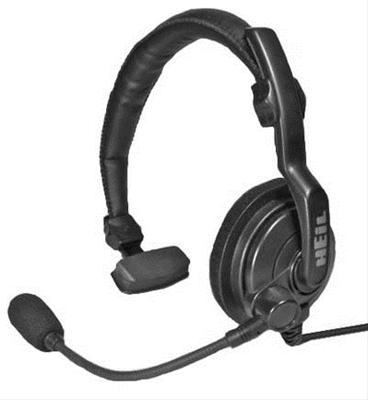
Heil Sound - PMS-6 & Headset Adapter for YaesuHeadset with Boom Mic :  Heil Sound – PMS-6 & Headset Adapter.  Why?  Because I believe that there are times when you want, or need, more privacy or the ability to hear/speak under adverse conditions.  A headset with boom mic is the right answer.  The Pro Micro Single Side is a very unique high performance single sided headset.  This headset is outfitted with the HC-6 element and is designed for commercial broadcast applications, the -3dB points are fixed at 100 Hz and 12 kHz with sensitivity of -57 dB at 600 ohms output impedance (centered at 1 kHz.).  The microphone audio for the Pro Micro series terminates into a 1/8” male plug while the head phone terminates into a 1/8” stereo with adaptor. To adjust the headset simply bend the stainless steel piece that is inside the black padded headband.

Mic Gain
Adjust the mic gain while watching the ALC meter. Adjust so that the audio peaks just fill out the ALC scale and do not go beyond the ALC scale.

Speaker
The 706 speaker works all the time. To turn that off simply plug an empty 1/8” plug into the front headphone jack.

Vox  (voice activated transmission)
Set the Vox gain controls for proper activation.

Carrier Balance
If your rig has carrier balance it acts as a type of mic tone control. It is best to listen to yourself in another receiver as you transmit into a dummy load. You are actually moving the carrier + or – 200 Hz above or below the center of the filter network, which causes your microphone audio to change its tonal quality.  The use of the AD-1 series mic adapters allow simple interface with popular transceiver inputs. The adapter is 6” long and has a 1/8” female input jack for the boomset microphone and a 1/4” female that is for the PTT (push to talk) line for the Heil foot switch or hand switch. The 1/4” stereo plug goes into the headphone jack on the transceiver front panel.  All Heil Pro Micro Boomsets are shipped with foam windscreen that fits over the microphone. The windscreen does not change the frequency response, just the breath blasts directly into the microphone.

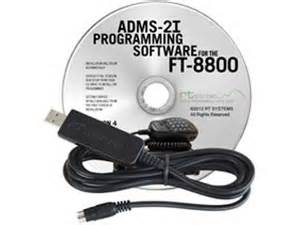
RT Systems FT-8800r programming softwareProgramming Software w/cable :  RT Systems FT-8800r Radio Software.  While the radio is fully programmable from the front panel that is not the way you want to try and program this radio. I tried several different “free” programming software program; had problems with all of them.  RT Systems puts out a superb product that can’t be beat in my opinion. FYI – You can use the files from any of the RT Systems software to transfer to any other radio that you are programming.  So I can use all programming I did for my FT-60r or Yaesu FT-8900r for my Yaesu 8800 radio with a simple click of a software button.

NOTE: I will be posting programming files for different parts of the country as well as different repeater systems.

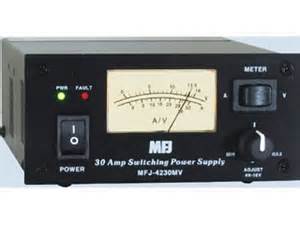
MFJ-4230MV COMPACT SWITCHAC Power Supply : MFJ Enterprises Inc. MFJ-4230MV COMPACT SWITCH (COMPACT SWITCH PS, METER, 4-16V ADJ. 110/220VAC).  This is a great AC power transformer, high quality and very reliable.

This is the world’s most compact switching power supply that also has a meter and adjustable voltage control. Just 5″ W x 2 ½” H x 6″ D, it weighs only 3 lbs. — it is the perfect pack-n-go power supply for field day, DXpeditions, camping, hiking or to pack for your next business trip or vacation to some far away place. MFJ-4230MV gives you 25 Amps continuously or 30 Amps surge at 13.8 VDC. The voltage is front-panel adjustable from 4 to 16 Volts. MFJ-4230MV also has a selectable input voltage: choose from 120 or 240 VAC at 47 – 63 Hz.

A simple front-panel push-button switch lets you choose either Ampmeter or Voltmeter — allows you to select Amps or Volts as you wish to read them. MFJ-4230MV has an excellent 75% efficiency and extra low ripple and noise, < 100 mV. Awhisper-quiet fan cools by convection and forced air cooling. Normal air-flow around the power supply is continuous and a heat sensor increases the fan speed when the temperature rises above 70 degrees Celsius. DC output is five way binding posts on the back of the MFJ-4230MV so you can power your dedicated HF, VHF or UHF transceiver with ease.

Charge Guard CG-MP

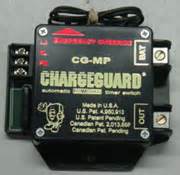
TIP – Battery protection when installed in a vehicle :  I also use Charge Guard CG-MP timer for my truck’s power installation.  This ensures that I won’t inadvertently run my battery dead using my Ham radio without the engine running.  Well worth the $’s.


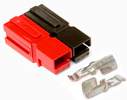
Anderson Power PolesTIP – Power connectors :  I use Anderson Power Poles for all my power connections.  This makes hooking up my power “brainless” and quick.  Plus it gives me the added advantage of using power cables, fuses, etc. for more than one radio.  Basically allows for flexibility.  I chose Anderson Power Poles because there are essentially the standard for Ham radio operators.


Next article that shows up in less than an hour show how I store and transport the radio.


2009 - 2019 Copyright © AHTrimble.com ~ All rights reserved
No reproduction or other use of this content 
without expressed written permission from AHTrimble.com
See Content Use Policy for more information.

Yaesu FT-8800R Mobile Ham Radio – Part #1

Yaesu FT- 8800R ham radioAnyone who has been in the Ham radio arena for 30 minutes or more knows the quality associated with the name Yaesu. The company has been putting out a high quality product for a very long time.  The FT-8800R is no exception. This was the second mobile radio I purchased and I am extremely glad I did.

I will go through my standard outline of reviewing this radio based on its designated mission and requirements.  Let’s get started…


Mission –

Provide reliable clear communications over two specific Ham frequency bands (2m & 70cm) bands for both  emergency/disaster/”grid-down” situation.  To use as the base unit for a cross-band repeater that is compatible with the Yaesu FT-60r and Baofeng UV5r dual-band handheld radios.

Requirements & Limitations –
  1. Must be sturdy, reliable and able to function in harsh environments; including in a off-road truck or as part of a remote location repeater system.
  2. Must be able to run on 12vDC power.
  3. Must have an internal speaker.
  4. Must be easily computer programmable.
  5. Should have a a large number of memory channels (at least 200).
  6. Should move easily from home to vehicle to repeaters system without undue effort.
The Good & Less Good

The Yaesu FT-8800R dual bander operates on 2 meters and 70 centimeters. High power output is featured with 50 watts on 2 meters and 35 watts on 430 MHz. It is like having two radios in one with dedicated Volume and Squelch controls on each side. And that is one of the, if not “the”, best aspect of this radio…you can easily and clearly monitor two frequencies or bands at once as individual radios.  I really can’t say much more about the really good aspects of this radio…it is darn near perfect!

There are some minor, very minor, drawbacks:
  • The buttons are not backlit.  I actually like this for OpSec purposes but for daily use it is a little irritating. When used as part of a repeater unit it really saves valuable battery power.
  • The internal speaker is usable but that s about it.  The quality is acceptable but much better with an external speaker.
  • You really need a computer and software to program this radio.  There are many features and trying to program them, or the frequencies, is more than difficult for me without the software.
The Details – Yaesu Dualband Amateur Ham Radio FT-8800R:Yaesu FT- 8800R ham radio
  • Built in features include: duplexer and CTCSS/DCS Encode/Decode.
  • Over 1000 memories are available. It is WiRES compatible.
  • Full twin Band w/ cross band repeater mode.
  • Features seperate volume & squelch controls, lighted mike, remote mountable faceplate.
  • Hasd ctcss/dcs, Alphanumeric display, 1000ch memories, scan modes.
  • Receives 108-520Mhz & 700-999Mhz (except cellular).
  • Transmits 2 meter band 144-148Mhz & 70cm band 430-450Mhz.
  • ARTS system, detachable Faceplate, cross-band repeat & more!
  • Requires regulated 12-13.8Vdc at 14 Amps or greater for power.Yaesu FT- 8800R ham radio
  • Receives 108-520Mhz & 700-999Mhz (except cellular).
  • Transmits 2 meter band 144-148Mhz & 70cm band 430-450Mhz.
  • ARTS system, detachable Faceplate, cross-band repeat & more!
  • Requires regulated 12-13.8Vdc at 14 Amps or greater for power.
  • Wide Frequency Coverage
  • Independent Two-Channel Operation
  • High Power Output
  • Over 1000 Memory Channels
  • Large, Easy-to-Read Liquid Crystal Display (LCD)
  • Cross-Band Repeat Capability
  • One-Touch Band-Pattern
  • 50-Tone CTCSS/104-Tone DCS (Digital Code Squelch) Tone Systems
  • User-Programmable Microphone Keys
  • Convenient Remote-Head Mounting Capability

Wide Frequency Coverage

The FT-8800R provides extended receiver coverage beyond the Amateur bands, so you can keep informed of communication activities in the public safety, commercial, aircraft, and government communications ranges.

Independent Two-Channel Operation

The FT-8800R operates as two radios in one, with either 144 MHz or 430 MHz as the “Main” TX/RX band, while simultaneously monitoring the other band. Each band has its own Volume and Squelch controls. And, if you like, you can configure your FT-8800R for VHF-VHF or UHF-UHF operation, too!

High Power Output

To get your message through when it counts, the FT-8800R puts out a full 50 Watts of power on the 144 MHz band, and 35 Watts on 430 MHz. A thermal sensor monitors heat sink temperature, engaging the rear panel’s cooling fan only when needed.

Over 1000 Memory Channels

The FT-8800R provides a wide variety of memory resources, including 512 “regular” memories on each band, five “Home” channels for favorite frequencies, ten sets of band-edge memories on each band, and six “Hyper Memories” that store complete sets of transceiver operating status configuration.Yaesu FT- 8800R ham radio

Large, Easy-to-Read Liquid Crystal Display (LCD)

Affording easy viewing from a wide range of viewing angles, the LCD of the FT-8800R features Yaesu’s renowned Omni-Glow™ display illumination, with four illumination levels available for different environments. You’ll marvel at the crystal-clear frequency display and status indicators, whether you’re operating night or day!

Cross-Band Repeat Capability

For emergency work, or to extend the range of a hand-held unit, the FT-8800R includes Cross-Band Repeat capability, similar to that pioneered on our popular FT-8100R Dual Band FM Mobile!

One-Touch Band-Pattern

To save valuable time while operating a transceiver with the capability of the FT-8800R, the “Hyper Memory” feature allows you to store a complete set of configuration data for the two bands on which you’re operating. Besides the usual storage of frequency and tone data, Hyper Memory will store such setup parameters as Automatic Repeater Shift status, Packet parameters, Scanning mode, and VFO tracking configuration.

50-Tone CTCSS/104-Tone DCS (Digital Code Squelch) Tone Systems

Providing excellent performance even under difficult link conditions, Yaesu’s 50-tone sub-audible CTCSS and 104-tone DCS signaling systems ensure that you have full access to repeater and remote-base inputs, and the built-in CTCSS/DCS decoders allow silent listening on busy channels. Plus you get Tone Search Scanning, which will scan for the tone being received on an incoming signal, allowing you to match tones quickly when operating on a new repeater system.

User-Programmable Microphone Keys

Four programmable keys on the microphone allow you one-touch access to your favorite command functions. The commands available from the microphone replicate the corresponding front panel key functions, and include Band Change, VFO/Memory switching, Home Channel access, 1 MHz frequency steps, Power Output selection, Repeater Reverse, and CTCSS/DCS setup. Customize your microphone for your personal operating style!Yaesu FT- 8800R ham radio

Yaesu FT- 8800R ham radioConvenient Remote-Head Mounting Capability

With the FT-8800R and its optional YSK-8900 Separation Kit, mounting your radio is a breeze even in the tightest locations. The YSK-8900 includes a 20-foot (6 m) remote cable and mounting bracket for the front panel.

Coming in Part #2 in about 30 minutes…See more of this radio review and accessories that make it even better; a few tips on installation and antennas, plus software to program it.

I will also be posting an article where I talk about building my remote location cross-band repeater. That article should appear in about 3 days.


This is a “BUY!”


2009 - 2019 Copyright © AHTrimble.com ~ All rights reserved
No reproduction or other use of this content 
without expressed written permission from AHTrimble.com
See Content Use Policy for more information.

ESEE-6 Knife by Rowan

ESEE-6 Rowan Randall knifenote: first appeared in early 2015

I have always loved knives. The fascination began when I was in Scouting and I learned how to safely handle and use a knife in the outdoors. The love affair began when I was in the navy and we had to have a quality knife for our work on deck; our life could well depend on it. My knife of choice then was a folding Buck knife; I think it was a Buck 110 Hunter. But times change and so do needs.  Hence, the knife of choice changed as well.

What I was looking for as I began my search for a knife:

• A dependable survival knife that could be used tactically if needed.
• Very high quality knife that you could bet your life on and win.
• High carbon steel, not stainless steel.
• Easy to sharpen and holds an edge well.
• Sturdy enough to chop on a 3” tree or handy enough sharpen a spear tip.
• Skin an animal or cut through bone.
• A virtually indestructible handle that could be replaced if needed.
• A full tang blade with a handle end (pummel) that could be used as a hammer.
• Partial serration to assist with cutting through thick items.
• A company that offers an “unconditional warranty”.

I researched a whole lot of survival websites and some military related websites. I asked a knife collecting buddy, a hunter buddy, and a survival expert buddy what they thought. As I boiled down my search the name RAT, designed by Jeff Randall and sold by Rat Cutlery, kept rising to the surface. The second knife that got good press was a RAT knife by Ontario Cutlery; also designed by Jeff Randall.

As I read about the issues between RAT Cutlery & Ontario I quickly realized that RAT Cutlery was the better choice as a company.  Also the RAT knife by Rat Cutlery was the superior quality knife to the one offered by Ontario. One problem, there is no Rat Cutlery any more. Thankfully they just changed their name; it is now ESEE. The name change had to do with the business issues between Rat Cutlery and Ontario Cutlery.

Just to clarify the RAT stands for Randall’s Adventure and Training. Jeff Randall is pretty well known trainer/instructor for jungle survival. He even trains Special Forces, foreign and domestic. The manufacturing is done by Rowan Manufacturing located in Idaho Falls, Idaho.ESEE-6 Rowan Randall knife

Back to the knife…Technical specifications of my ESEE-6:

• Overall length: 11.75″
• Cutting Edge Length: 5.75″
• Blade length (end of handle to tip of blade): 6.5″
• Blade Width: 1.56″
• Weight (knife only): 11.8 ounces
• Maximum thickness: .188″
• Drop point blade style, full flat grind
• Available in plain or partially serrated edge
• 1095 Carbon Steel, 57 Rc.
• Removable lined Micarta handle slabs
• Rounded Pommel w/ lanyard hole

Why did I want a knife so large (6”)?  Well, I would have preferred a 4” blade but I bought that size for my wife. Since we are a team I figured we could use a knife that was a bit longer for larger heavier work; so the 6” fit that bill quite nicely. That would give us two solid sizes to cover most survival situational needs.

I ordered my knife (and my wife’s) on a Saturday and it arrived on Thursday straight from eseeknives.com. My first impression was speedy handling and shipping. When I took it out of the box and then out of the plastic wrapper and sheath I wasn’t disappointed. “Solid quality” was my initial impression when I grasped the handle. It just felt very good in my hand, a natural fit. The more I looked at this knife the more I liked it and the better it felt. That led to confidence in it without even having tried it on anything.

ESEE-6 Rowan Randall knifeAs any man would do – I then touched the sharpened blade edge. Yes, it was very sharp right out of the box. No, I didn’t need stitches, an ambulance, or even a band aid. As I looked over the blade I appreciated the textured powder coating that is flat black in color. I am not a “shinny” blade kind of guy; reflections and such are not my cup of tea. The powder coating is applied in such a manner that it resists corrosion and chipping more than the normal powder coating process. And, it is a smooth texture coating, not rough.

I wasn’t crazy about the sheath at first. It is plastic and feels cheap. There was no inherent way to attach the sheath to anything. However I was willing to give them the benefit of the doubt. I read the instructions and tried various options for carrying. When all was said and done I am still not crazy about the sheath but not for the obvious reason of it being made out of plastic.ESEE-6 Rowan Randall knife

The primary drawback to the sheath is its complete inability to attach to MOLLE gear.  Even with the MOLLE locks that are supplied with the knife & sheath it’s still a pain. I will have to find an alternative. But I would not return the knife or cancel a purchase based on the sheath. I tried a number of carry options with the knife and overall I am impressed and pleased with the earlier exception with MOLLE gear. The following pictures show different options that do work.

The sheath is a friction retention system. There is no other way to secure the knife in the sheath other than the friction retention system. This is my first real exposure to this retention system and I was not real crazy about it initially and I am not sure I am sold on it now. But I do find it convenient and no telltale “snap” sound when undoing a conventional retention system, or “tear” sound when undoing a Velcro closure. I feel that it’s a $1 sheath holding a $100 knife, just not right.

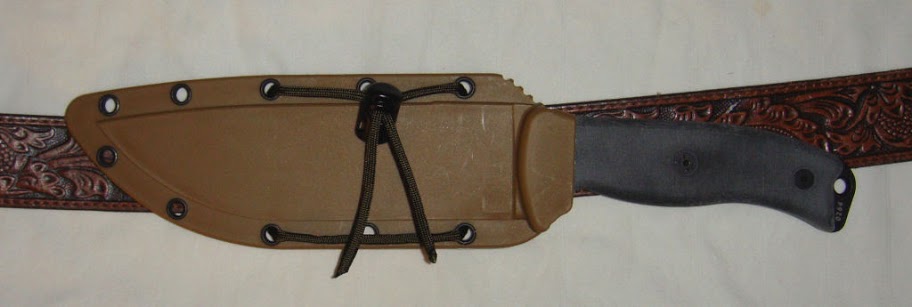
ESEE-6 Rowan Randall knifeThe sheath and lanyard does give a couple basic carry options; the standard vertical carry and the horizontal carry. For those of you that might not recognize a horizontal carry it is sometimes used to carry the knife in the small of the back mounted with the knife handle in the direction of your strong side (i.e. if you are right handed the handle is to the right of your ESEE-6 Rowan Randall knifeback).  I was surprised at how well the knife stayed in place while mounted in either position. But, we will see how it holds up to field testing for a good carry system.

ESEE-6 Rowan Randall knifeI am always thinking about “worst case scenario”. So naturally I tried out the sheath to see how I could add some other functionality to it. I ended up adding 12’ of 550 paracord to the sheath rather easily. Had I taken the time to do a proper wrap I probably could have gotten 15’ or so on it. You never know when you might need 550 paracord. I love the stuff. I also used the desert camo pattern 550 paracord and it did a great job of breaking up the stark outline and color of the sheath.

Overall – I am very pleased with my new knife, it is solid, well styled, and an impressive design. So far I am glad that I spent the money for a high end knife.  I will test it out camping and finish the review.

2 – weeks later:  OK, we spent the weekend up on the Gila National Forest, right on the edge of the wilderness area. We tried a bunch of our gear out, including our new ESEE knives. I tried to figure out the wording for conveying exactly how I feel about my 6″ ESEE.

So I summed it up with one word…WOW !

The knife did everything I asked it to do and then way more. Let’s see – I used it to split 2″ x 6″ wood (using a piece of wood like a mallet on the blade to drive it through the 2×6), I used it to shave very fine slivers of wood, I used it to cut meat, to saw with and to chop with. It performed better than any knife I have ever owned. I did not use it to skin anything on this trip. I would probably use DW’s ESEE-4 for that task.

The knife felt right at home in my hand, comfortable grip, solid, and hefty enough to do tactical work I am sure.ESEE-6 Rowan Randall knife

Just to push the envelope a bit I pried apart 2 pieces of wood that had been nailed together. I used a twisting motion on the blade between the wood.  No problems, very solid, no strain on the blade tip. Then one more interesting note, while splitting some wood I brought with us I accidentally went through a finishing nail. The knife went right on through like it wasn’t even there. The knife is very easy to sharpen and holds an edge extremely well.

This ESEE knife is a sure winner ! ! !

Randall ESEE-6 knife


2009 - 2019 Copyright © AHTrimble.com ~ All rights reserved
No reproduction or other use of this content 
without expressed written permission from AHTrimble.com
See Content Use Policy for more information.

Which Baofeng Radio should I buy??????

Baofeng UV-5r handheld radio


So which radio is right for you…or which radio should you buy?

Well, first thing to do is make sure you have read my reviews on each of the following radios…

I will go through this as if I were doing it for the first time…for myself. You see, we are all different, we all have different situations, needs, issues, missions, restrictions, etc. I can only speak for myself. But, I think going through it will help you, guide you, through the process of figuring it out for yourself.

Background –

Baofeng radios are really the only cost effective and reliable radios that are available. Yup, my opinion. True, Yaesu radios are wonderful! And if you can afford a cache of them and their accessories…great! I can’t. So Yaesu radios are out of the question. Baofeng radios are cost effective, reliable, plenty of accessories, easy to program with software, and flat out…they get the job done.

Assessment –

First thing I would do is figure out exactly what I want to use them for…their mission. For me I want to use them for daily tasks, emergencies, disasters, any security/protection work in my future, and especially for grid-down.

So the radio must be very flexible in its frequency range and ease of use. It also has to be compatible with most public emergency services entities. I run my own repeater so I don’t have a need for a long-range handheld. I have plenty of batteries and recharging capabilities on hand so I am not worried about power consumption.

They need to be tough enough but not military grade. I also need enough of them for let’s say 4 – 8 people to have one. I don’t use, nor intend to use, the 1.25m band. It is a relatively obscure band and not one in general use.

Choices and Why’s –

So here we go…

  • UV-5RA:
    • If I had a limited budget for radios and accessories
    • If I needed a large number of radios (4 or more)
  • UV-5RMHP
    • Out of the running since they are not available retail.
  • BF-F8HP
    • Only if I had a very specific identifiable need for more power for transmission and no worries about ComSec.
  • UV-5X3
    • Only if I had a very specific need for using the 1.25m band.
  • Yaesu FT-60R
    • No budget limitations of any kind.
    • No need for GMRS, FRS, or MURS frequencies.
Summary –

Sorry, I imagine this was a very anti-climatic article for most of you. But, it turned out that it was easy for me to figure out which radio is best for me. The Boafeng UV-5RA is it…hands down. One possible exception. If I had all the hand held radios I needed (UV-5RA), all the accessories that I needed for all of those radios, and I had no mobile radio…I might buy the BF-F8HP just to have the extra wattage available. But, it would not be a field-going radio…it would stay in the ComShack.

If I was starting out from scratch, had no existing radios, I would look that the BF-F8HP as the standard…but only if I was 95% sure that there would be no ComSec issues…and I could buy enough radios, primary and back-ups, PLUS all of the right accessories to cover my needs within my budget.

Anything else…you better post a reply and ask a question…or use the contact form.

And I bet…this could open up a discussion similar to AR vs AK or Sig vs Glock. But hey…bring it on 😉


← Back

Thank you for your response. ✨


2009 - 2019 Copyright © AHTrimble.com ~ All rights reserved
No reproduction or other use of this content 
without expressed written permission from AHTrimble.com
See Content Use Policy for more information.

GOOD – BOB (Get Out Of Dodge – Bug Out Bag)

Bug Out Bag, Get Out Of Doge bag, grid-down

Really?

note: first appeared in January 2015

Let me describe what a GOOD or BOB is before I go on. A “GOOD” bag is a Get Out Of Dodge bag. A “BOB” is a Bug Out Bag. Both represent your last chance at survival in a serious disaster or grid-down situation where all you can carry to survive on is contained therein. Yes, that serious.
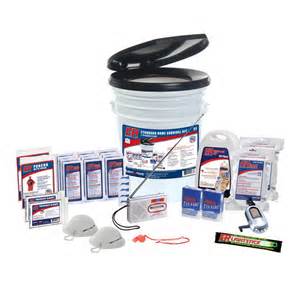
72-hour kit is not a BugOutBag or get out of dodge bag grid-down

72-Hour Kit

The GOOD BOB is not to be confused with “72-hour Kit” or a GHB (Get Home Bag) by any means.

A 72-hour kit is a far more conventional item that a family would use to evacuate their home with to get by for the 72-hours it would take to get more organized and formal emergency efforts into place. 72-hour kit is for the normal emergency and disaster situation where help will come. A GOOD BOB is more along the end-of-the-world scenario stuff.

In my series “Prepper Myth” I take “myths” that have been talked about by other so-called prepper experts and I give my view on the myth and the author’s response. In a previous post “Prepper Myth #6: BOB’s Need to Last 72 Hours” <click here to read more> I responded to a person holding themselves out to be an expert commenting on bug out bags. Their response was so outrageous that it drove me to write this article on GOOD BOB bags sooner than expected. It amazes me just how much bad information is out there. Bad enough that it will get people killed; probably whole families.

First, as always, let’s describe the “mission” for a GOOD or BOB: ahhhhhhhhh, well, ahhhhhh…..preparedness gear equipment must have clear Mission

Yeah, I can’t quite define it. Can you? Let’s drop back and paint a picture of the situation we might ourselves in that would require a GOOD BOB. Then maybe we can define the mission.

The situation would have to be so bad that staying in your home is no longer an option, leaving your home was the only sensible option. Maybe the only remaining option left to you and your family. Otherwise, why would you want to leave your home? Your home, I assume, is where your preparedness gear, equipment, food, and water capabilities would be stored; or at least the bulk of it. So why in the heck would you want to leave! But for now, play the game with me, you have to leave your home.

Ah, so why a GOOD BOB? What I mean is, “Why not a BOV?” Yeah, I come from a government job so I love acronyms. BOV = Bug Out Vehicle.

Yeah, throw your critical gear and food into your Expedition SUV, your Ford pick-up, or whatever else you might have for a quick getaway. Doesn’t that make sense? But, there may be that 1 in 100,000 chance that you can’t use a vehicle to bug out.

Oh, come on! Yes, I know there is the EMP crowd where the entire grid goes down. Then there is the martial law crowd where no one is allowed on the roads. And other special focus crowds where they maintain that no vehicle traffic will be possible. Yes, I too think it might get to that but it will be a gradual shift to it, not a single catastrophic event…more than the earlier odds that I quoted. So for me I say use the truck vs. a GOOD BOB.

Now, does that mean I don’t have a GOOD BOB? Of course I have a GOOD BOB but for entirely different reasons than most. It is part of my “building block” or “modular” system of prepping. But I look at a GOOD BOB as an TEOTWAWKI option.

Let me explain…

During most disasters and emergencies vehicle transportation is possible, as well as preferable. Yes, there are the inevitable traffic jams. But that is your responsibility to avoid. That means have a plan, multiple routes, and leave early. For my GOOD BOB scenario I assume you already have that covered. Besides I am talking more about a hard “grid-down” situation more than a softer situation such as a disaster or emergency.

So my GOOD BOB is designed for one thing:

Sustain life as long as possible.

Okay, so now you want to know what is in my GOOD BOB bag, right? OK, but we have to realize that what I just stated above was the “mission”; Sustain life as long as possible.

One point I want to clearly state, the mission doesn’t include anything along the lines of getting us from point A to point B. That is a whole other story and outside the scope of the GOOD BOB. And I will cover BOL (Bug Out Location) in another post in the near future.

Let’s review for a minute what I feel you would be facing in a situation where a GOOD BOB would be needed. The risks and threats, in priority order, would be:Bug Out Bag get out of dodge violence will be main threat risk
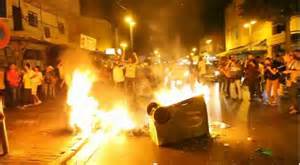
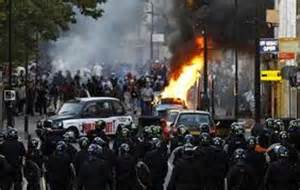
  1. Violence
  2. Lack of medical care
  3. Dehydration
  4. Exposure
  5. Starvation

Your resulting priorities, in priority order, would be:

  1. Safety
  2. Stabilize the situation (don’t make it worse)
  3. Conserve resources and property (don’t destroy anything you don’t have to)
  4. Normalize your situation as much as possible, as soon as possible

<click here to read more about priority setting>

Now that is over with you can begin to appreciate what a GOOD BOB must be able to do. But that being said, I am going to push you away from a GOOD BOB and towards a EOTWB (End Of The World Box). Why? Because I think that is the best option, the best solution for all potential scenarios.

How so?

Because you don’t know what the exact situation will look like when the time comes, so design a solution to meet all the possibilities to the best extent possible.

Safety is always the number one #1 priority in emergencies disasters and grid-downBased on the priorities I outlined above, the number one priority is safety. And the number one threat to that safety is violence against you and your family. Multiple means of protecting your family is the first thing you have to look at. For that I say guns and knives, plus bullets and sharpening stone. But the #1 way to stay safe from violence: avoid it. So I include items for that as well; and that includes communication equipment.

Next is lack of medical care. So mitigate that problem, you are it; and so are your family members. That means everyone carries a IFAK (Individual First Aid Kit) <read about IFAKs by clicking here>. And that means everyone carries an IFAK, even children. If they can walk more than a block they can carry an IFAK. Then you must have at least one TBAK (Team/Family Basic Aid Kit) <read about TBAKs by clicking here>. I would prefer two kits in your family, maybe one for each parent.

Inside that “safety” group I also put dehydration as well. I do so because it can occur quickly enough to affect you and your family in a matter of hours; for sure within a day.

I am itching to start listing exact pieces of gear and equipment but I didn’t clear up the “box” vs. “bag” decision on my part. Rubbermaid 24-gallon Action Packer Bug Out Box for emergencies, disasters and grid-downWell, it is for convenience sake more than anything, but you can judge for yourself. Remember, I think there is about 1 in 100,000 chance of actually carrying your GOOD BOB; I think a vehicle is not only preferable but also almost assuredly possible. So I put my “stuff” in a Rubbermaid 24-gallon ActionPacker container that has a nice tight lid and handles.
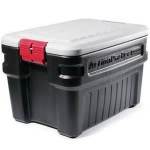
I can walk out to the garage, open the door, grab my box, my wife grabs her box and both go into the truck. I snatch the case of bottled water by the garage door and we drive away. Oopppsss, one step I forgot to mention; I open the gun safe and remove our AR’s and Sign 226’s before doing anything else. But you got the idea. There is no fumbling around for a bag, no gathering anything else, it is all right there.

So what happens if we have to carry all that stuff? Well, a bag is included just folded up nice and neat out of the way. Everything we need to survive is in the box and can be transferred to the bag is needed.

So here goes…

Safety is number one priorty in emergencies disasters and grid-down


SAFETY (this is the absolute #1 priority) –


Retrieved from the gun safe:

1 x AR-15
1 x Sig P226

Stored in Ziplock bags in the box:

8 x 30-round Magpul magazines
205 x 5.56 rounds (M855)
3 x 18-round Mecgar magazines
55 x 9mm rounds (147gr XTP)

1 x Tac Vest that has –

3 x double mag AR pouches
1 x IFAK
1 x Magazine drop pouch
1 x Tactical light pouch
1 x Radio pouch
1 x Survival pouch

1 x Blackhawk pistol belt that has –

1 x Serpa Level III pistol holster
1 x Double pistol magazine pouch
1 x Hard plastic AR-15 magazine holder

1 x Camelbak, 3-liter, 3-color desert
1 x Boonie hat, multicam

Survival Items – Stored in a single Ziplock bag together. These are the essential survival items that will go with me no matter what. They would be moved to the vest or carried on my person.

BOK (Blow Out Kit) – 1 x CAT tourniquet in pouch & 1 x 4”x6” Field dressing
1 x ESEE 6” fixed blade knife
1 x Spyderco Paramilitary2 knife
1 x Gerber model STL 2.0 (black) knife
1 x SOG Micron knife
1 x NDuR survival straw or LifeStraw
1 x 5-color camo point kit
1 x set of 2-part Aqua Tabs
1 x P-58 can opener
1 x Gerber multi-tool “Suspension” model (22-01471) in pouch
1 x Shemagh (desert color/pattern)
1 x Headlamp, Petzl, Tactika
1 x Gloves, tactical

Communication Items – Stored in a Ziplock together.

1 x Motorola T5500 FRS/GMRS radio
1 x Concealment ear piece with lapel mic
1 x charged “rechargeable” Battery pack
1 x 110vAC charger
1 x 12vDC recharger
1 x pouch
1 x Set of instructions

Stabilize the situation, don’t make it worse –

Misc. Items – Stored together in Ziplock bag.

2 x Set of ear plugs
1 x Pair Safety glasses, clear
1 x Pair Safety glasses, tinted
1 x Box Chlor-Floc water purification (30 packets – 8 gallon capacity)
1 x Compass
1 x Bic lighter
1 x Box stormrpoof matches
2 x Boxes waterproof matches
1 x Write in the Rain pen
1 x Write in the Rain tablet (3”x5”)
1 x Tablet paper (2”x4”)
1 x Spork (Vargo Eagle)

Sanitation/Personal Items – Stored together in a Ziplock bag.

1 x partial roll of toilet paper
8 x Germ-X hand sanitizer packets
3 x Sun-X sunscreen packets
4 x Bug-X insect repellant packets
3 x Shower Pill body towels

1 x Pair pants, A-tacs
1 x T-shirt, long sleve, Marpat
1 x Tactical shirt, 5.11 Tactical Series, multicam
1 x BDU top, multicam
1 x Cap, baseball, brown
1 x Helmet, bump, (PT-B Helmets)
1 x AR-15 vertical fore grip, storage for extra bolt, and integrated tactical light

Cold Weather Items – Stored together in a Ziplock Bag.

1 x Socks, Smartwool
1 x Watch cap, fleece, flat earth brown
1 x long underwear, bottom, Minus 33, Merino wool
1 x long underwear, top, Minus 33, Merino wool
1 x Poncho, Survival Systems OPSEC

Misc. Items – Stored in a Ziplock bag together.

2 x Roles of surveyor flagging
2 x Chemlights
2 x Maxpedition carabineers
1 x Grimloc Molle D-ring
1 x Blanket emergency survival (not Mylar style)
2 x Paracord 550, 30’ length
6 x Snares, small animal, wire

Power Items – Stored in a Ziplock bag together.

1 x SolarAid SolPad7 solar battery charger (AA & AAA)
4 x Batteries, AA, Duracell Quantum
4 x Batteries, AA, Energizer, rechargeable
4 x Batteries, AAA, Duracell
4 x Batteries, AAA, Energizer, rechargeable

9 x Meals, freeze dried, Mountain House
1 x GI canteen cup (stainless steel)
1 x Water filter, MSR Sweetwater (plus extra cartridge)
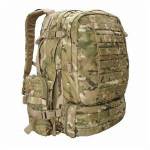
condor 3-day asault bag pack makes a great Bug Out Bag get out of dodge bag

Condor 3-Day Assault Pack

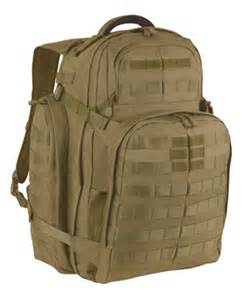
And lastly the pack – I like the Condor 3-day assault pack. It is large, comfortable, lots of compartments, and can snug down tight. In the pack’s side compartments I keep two stainless steel 1-1/2 liter water bottles. In the pack’s bladder compartment I put another 3-liter Camelbak bladder.

Could I carry all of this in the pack along with a full water load, tac-vest and weapons? Absolutely not! It would be way way too heavy for me. But remember the premise from the beginning – I am not planning on carrying it anywhere, it goes into the truck. Carrying the pack is Plan B.

I think in a coming post I will go into more detail about why I carry the different items, or why I choose a specific item over another. But for now you will get the idea what I consider my EOTWB (End Of The World Box).

stupid Prepper experts will get you killed, well-intentioned but ignorant

Well-intentioned but uniformed.

Now a word of caution, there are a lot of wanna-be prepper experts out there pumping out all kinds of information. Most of it is their personal preference or their viewpoint based on their military experience, their deep-woods survival skills, etc.

Very few folks have actually been in a large number of emergencies and disasters to have any kind of first-hand information and experience. And even fewer experts have training in assessing and analyzing information in the perpper world. I really don’t want you to get caught listening to one, accepting their word as gospel, and then you and your family die because the guy didn’t have a clue.

Yes, I want you to challenge my information and guidance as well. That is why I try to share the principles that should guide you.

You’ve heard the saying “Give a man a fish and you feed him for today. Teach him to fish and you feed him for the rest of his life.” I try to teach you to fish. I want you to understand how to figure things out on your own. I give you information such as my go-box list to get you started, a jump start on making your list.

MissionAccomplishedHowever, my list is probably not your list. So use the principles of LIPS and risk/threat assessment and mitigation to guide you through developing your own list. It is important, vitally important. For one day your family may be 100% dependent on these preparedness actions you’ve taken.

Thank you for sharing this time with me and I hope you have found some value in it. Feel free to send me questions and comments about this article, I would appreciate your feedback.


2009 - 2019 Copyright © AHTrimble.com ~ All rights reserved
No reproduction or other use of this content 
without expressed written permission from AHTrimble.com
See Content Use Policy for more information.

4watt vs 5watt vs 8watt Radios

Here is one of those touchy “tech” questions…filled with landmines. But what the heck…let me take a shot at it!

The premise of this article is the debate on handheld radios and how much power should I buy.

And there is no simple answer…but there is an answer…and I will make it as simple as possible. Let’s get going…


Background –

Generally speaking the more power, in terms of watts, that your radio generates, the more distance your signal will go. Antennas also make a big difference in actual transmitting capability than just power alone.

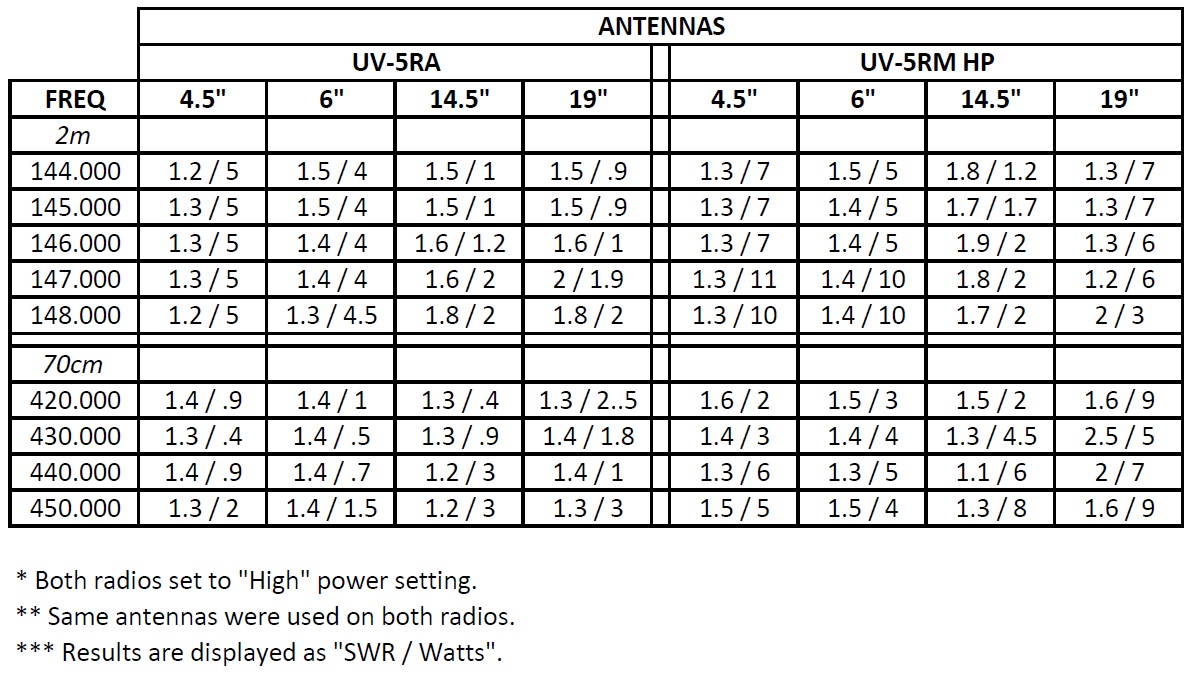
Here is a chart that shows the same radio(s) with different antennas. Notice the differences in “gain” just changing the antenna being used in conjunction with a frequency.

baofeng UV-5RMHP vs UV-5RA antenna resultsBottom line…maybe using a “matched” frequency with the right sized antenna can give you similar power capabilities of a 4w and 8w radios.

Reasonable Options –

For handheld radios you have essentially 3 power settings available to be used…1watt, 4watt, and 8watt.

Very generally speaking an 8watt radio will generate a more powerful transmitting signal. That generally means a transmission that will go further on a 8watt radio vs. a 1watt or 4watt. But, don’t be confused…it won’t be 2times or 8times longer distance signal respectively.

So is more powerful always better?

Yes, No…depends. Don’t you just hate me 🙂

OK, I gotta touch on a critical issue that is the determining factor in handheld power…safety. Yeah, kinda of weird, eh?

In this case I am not going to be referring to daily use, or usage during emergencies or disasters. I am going to specifically speak about “grid-down” and operations during that eventuality. I should probably have mentioned OpSec or ComSec rather than safety.

OpSec = Operational Security. Keeping your operations safe and secure from outside interference. That interference could cover a wide range of options…discovering your location or ambushing you. Having good good OpSec means non-need-to-know people don’t find out what you are doing before or during an operation.

ComSec – Communications Security. Keeping your communications secure from outside interception and/or keeping them from understanding what you are communicating. Having good ComSec mean non-need-to-know people can’t somehow listen in to your communications. Or, if they do, they can’t understand what you are communicating.

Now that I covered that…what does it have to do with the power of your radio?

Let’s say you have a great BugOut location and you have 5 families located there. Your area of operations (AO) covers the immediate 40acres of property that you own and the forest about mile in any direction. You want to be able to communicate with handheld radios within the AO.

You set your radios to 8watts to ensure that you can easily talk to each other. It works great! And one day a group of bad guys is traveling on a highway about 6 miles away. They are scanning the basic UHF/VHF frequencies as well as GMRS and FRS frequencies. They pick up your radio transmissions and hear you talking about the teenage girls are out harvesting apples. Oh, yeah…you are about to get visitors.

Point? Using a much lower transmission power reduces the distance your signal can travel. Hence, the signal may not have reached the badguys had you been using a 1w or 4w radio.

So just use the low or medium power setting on an 8w radio!?!?! Right?

How often so people use the power they have? Albeit, car, truck, radio, tractor, anything? Someone at some point will turn the power to 8watts and jeopardize your ComSec and OpSec.

Now, if you have 100% control over ComSec and people’s actions…feel free to go to an 8watt radio platform.

Summary –

There is one more influencing issue…cost. The 8watt radio that we are talking about is the Baofeng BF-F8HP. FYI, I reviewed it yesterday. It is well more than double the price of the Baofeng UV-5RA. So I would rather spend the money on buying more radios and better accessories than a radio with more wattage that may or may not be more useful to our situation.

If I had no money restrictions and I had confidence in my ComSec (or didn’t care about ComSec) I would buy the Baofeng BF-F8HP..

If I had a specific need for longer distance transmission I would buy the Baofeng BF-F8HP. Or, look at buying a mobile radio with even more wattage. An example of this kind of need would be a repeater. Yes, there might be a repeater located in my AO that I need to reach and only an 8watt handheld could do it.

So, now it is your job to figure out what you need/mission is, what your budget is, what your ComSec is, and then chose which radio is best for you. And I wouold wait until I read my next article i this series coming out tomorrow 🙂


2009 - 2019 Copyright © AHTrimble.com ~ All rights reserved
No reproduction or other use of this content 
without expressed written permission from AHTrimble.com
See Content Use Policy for more information.

Get Home Bag (GHB)

Get Home Bag (GHB)note: first appeared in January 2015

Have you ever considered being at work, school, church, or anywhere other than home – and then wondered if a disaster hit right now, right here…how would I get home?  Especially a situation such as “grid-down” and you couldn’t drive?  Yes, maybe an EMP situation but I am not talking that drastic, I am just saying it was an emergency and you were stuck traveling on foot.GHB to get home after a disaster.

Well, you still have the basic emergency and disaster priorities LIPS <click here>.  So your first thought should be what gear and equipment do you have to work with.  Then what gear and equipment is available to you in your immediate surroundings, and then what can you acquire by scavenging. Wouldn’t it be great to start with a basic gear load to help you get home to your family?

It’s called a Get Home Bag (GHB).  Let’s get talking about what I think is a good basic load for a GHB.  Keep in mind that your GHB may contain items different than the list here.  And your list should be based on your needs vs. mine. But this is a good starting part to get you thinking.

Any project with me has to have a clear, specific mission to make sure I am focused on the “need & solution.”  Here is my mission statement for my GHB:

To provide necessary items required to assist in returning to my home from work or another location. To provide the primary means of survival, including: defense, first aid, communications, water, food, shelter and navigation.

Remember: I am a huge believer in the “space & weight” concept. You can always find lots of stuff to put in your bag.  BUT…Is it really needed just to get home?  That’s all you are trying to do…just get home.  So before you start loading that bag up, consider each piece of gear and decide is it is really needed.  I would rather move lighter and faster vs. carrying the kitchen sink.Fieldline Tactical pack for a get home bag.

PACK – Fieldline Tactical Pack : You can use any pack you wish but I like this particular pack for its compartments, accessibility, and comfort.  It is sturdy and plenty of options to store gear.  There is a good argument to be made to use a civilian pack to lower your profile and blend in more.  Your choice.

DEFENSE –  I carry a separate small bag with me each day that carries my every day carry pistol, extra magazines, tactical light, pepper spray, and holster.  So those items are always with me in my truck.  Additionally, in my GHB kit I have have a ESEE3 knife, extra magazine and 48 rounds of XTP and a double magazine pouch.  There is no folding knife listed because I always have my Spyderco Paramilitary 2 on me .

FIRST AID – Elwyn Field Dressing (carried on my person).  In the pack: 6″ Israeli Trauma Dressing, Mole Skin, Quick Clot, 4-1/2″ role of gauze.NDUR survival straw

WATER- NDuR survival straw or LifeStarw (carried on my person).  In the pack: 2-liter bladder (in the pack’s bladder compartment), 1-1/2 liter aluminum water bottle, and Portable Aqua Tablets.

FOOD – In the pack: 3xFreeze dried food pouch, 1xFreeze dried granola with milk & blueberries, stainless steel GI cup, spork.Baofeng UV-5r handheld radio

COMMUNICATIONS – I have my cell phone but I don’t depend on it for communications.  Baofeng UV-5r handheld radio in pouch (carried on my person).  In the pack: Whistle, signal mirror, and 3″x5″ (Write in the Rain) notebook with pen. Plus, 12vDC charger and a 14.5″ antenna for the radio.

FIRE – 3 lighters; 1 on my person, 2 in the pack. One container of waterproof matches in my pack.Petzel Tactikka XP headlamp

LIGHT – Petzel Tactikka XP headlamp (carried on my person).  In the pack: Gerber Recon LED flashlight (white, red, blue lights) and one extra set of batteries for each.

MISC. – Celestron 10 x 25 monocular, map in a Ziplock bag, toilet paper in a Ziplock bag, hand sanitizer, body wipe towelette, compass, money pouch with $50 in bills and coins, camo poncho, pair of Mechanix brand gloves, and 550 paracord (12′ with Maxpedition carabineer & 18′ with Maxpedition carabineer)

GridDownChaosNOTES:

  1. I consider the Elwyn Field Dressing as my Blow-Out-Kit (BOK) and is carried in a cargo pocket of my pants.

  2. I use Mountain House freeze dried food because it tastes great and is very lightweight.  It can actually be eaten with cold water or simply by itself without water.
  3. Hand sanitizer is critical!  Not keeping your hands clean after bathroom breaks and before eating will make you very sick.
  4. The camo poncho is my choice for its ability to help conceal you on the trip home if needed.  It can also be used as a shelter along with the paracord.  And if all else fails, when it rains it can help keep you dry.
  5. The 550 paracord is in two different lengths so I am less likely to have to cut it.  I use only 550 paracord for its superior strength and durability.  If you haven’t used the Maxpedition carabineers you haven’t lived.  They are fantastic.
  6. The body wipe is in there in case you are out longer than overnight.  Getting crotch rot sucks.  Keep yourself clean to keep yourself on the move.
  7. I chose the ESEE3  vs. my ESEE6 in this situation because the 3 is smaller, lighter weight and easier to conceal.  That little knife is just as sturdy and useful as its 6″ bigger brother.

Get prepared, prepare a bag, get home. You family needs you.


2009 - 2019 Copyright © AHTrimble.com ~ All rights reserved
No reproduction or other use of this content 
without expressed written permission from AHTrimble.com
See Content Use Policy for more information.

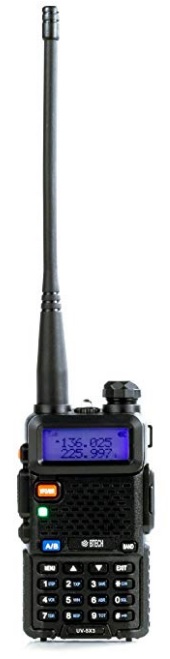
Baofeng/BTECH UV-5X3 Radio

note #5: over the next several days I will be posting a number of articles on handheld radios…specifically Baofeng…and which is the best to buy. Hold off buying any radio until you’ve read all the articles. You will be glad you waited.

So here we go with another radio review…maybe boring to some…tantalizing to others. And you may be disappointed when you are done reading this article. But…oh well….

This is the first substantial improvement in this line of Baofeng line radios. I started out years ago recommending the Baofeng UV-5R radio…I still highly recommend the Baofeng UV-5R radio.

So why am I writing this review? Ah, yeah…you might want this new version of the radio…if you have the need.

Clarification –

Technically the name of this radio is “BTECH UV-5X3” but don’t let that confuse you…it is a Pofung/Baofeng. And made by Fujian Nanan Baofeng Electronic Co in China. Yup, China. Now, that might not be a bad thing…I just wanted you to be aware of it. “BTECH” is just the American distributor of Baofeng radios. Pafung was originally created to be the international arm of Baofeng. So, Pofung, Baofeng, BTECH…all the same radio made in the same manufacturing plant in China.

Background –

You already know I love the Baofeng UVf-RA radio. If you haven’t already read that post <click here>. That article will give you a great background to build on…and allow about 85% of the BTECH UV-5X3 Radio to be understood.

Difference between UV-5R and UV-5X3 –

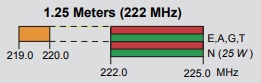
The addition of the 1.25M band and that is the only difference by in large. What is the 1.2M band? It is the 222MHz – 225MHz range of frequencies.

This frequency range is open to even Technician level licensees.

There is also another difference but far more minor. It is called “Sync” display. It allows you to program your radio to show Channel Name and the Frequency on the display. Yes, you lose the ability to display the second channel when you are in Sync mode.

And also, you cannot display three bands at the same time. You can’t monitor three bands at the same time.

Ease of Use –

This radio is every bit as easy to use at the Baofeng UV-5RA radio. And it has a couple extra features as well. I won’t get into them because they are so minor and I don’t use them.

Accessory Compatibility –

All Baofeng UV-5R accessories are supposed to be compatible with this tri-band cousin. However, as I have written about over the years…beware. Some batteries fit, other don’t. If you buy from Amazon then you can easily return anything that doesn’t work or fit right.

Battery Life –

Should be the same, or close to it, as the Baofeng UV-5RA. But, it will be better than the UV-5RMHP or BF-F8HP,,,if you are running those radios on their “high” power setting.

Summary –

OK, down to the basics…Should you buy this radio?

No…and Yes.

No – Unless you have a specific reason for needing the 222MHz – 225MHz range of frequencies this radio is not worth the 150% higher price than the Baofeng UV-5RA radio. So, is there a need or mission for you using the 222MHz – 225MHz range of frequencies? If there isn’t then don’t buy the radio. Buy more Baofeng UV-5RA radios instead…or better or more accessories for the Baofeng UV-5RA radio.

Yes – If you have a specific reason for needing the 222MHz – 225MHz range of frequencies this radio is worth it.

Before you answer the mission/need for the 222MHz – 225MHz range of frequencies…write down that reasoning. Does it make sense? Can you get by on the hundreds and hundreds of other frequencies available on the Baofeng UV-5RA radio?

OK, now that you did that homework…you can make your decision and feel comfortable with it.


2009 - 2019 Copyright © AHTrimble.com ~ All rights reserved
No reproduction or other use of this content 
without expressed written permission from AHTrimble.com
See Content Use Policy for more information.