Out-Of-The-Loop

I am out of the loopnote: I think this is one of the single most valuable pieces of information you will ever read for a grid-down event. When the violence is knocking at your door you better understand this concept or you will get killed. Yes, it is that important and I am that serious.

I am sure everyone has heard the saying “I was out of the loop on that” or some variant. Generally it is meant that a person wasn’t aware of something that was going on. However, the origins of the saying is a fascinating story itself. It goes back to the early Col John Boyd OODA Loop air force jet planes fighterdays of the Air Force and man by the name of John Boyd, a Colonel.
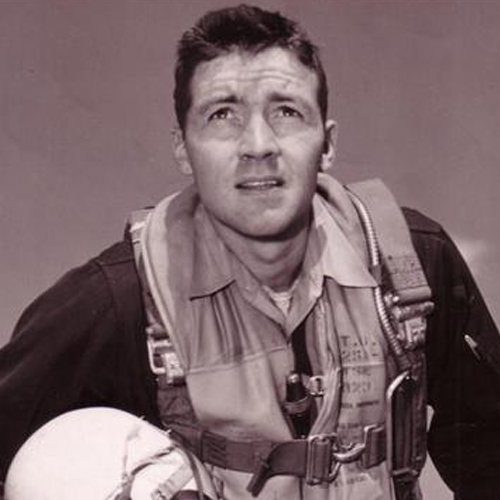
Col. Boyd developed this model to assist the training of military pilots. Dogfights occur at a very high speed in a three-dimensional environment. A pilot must not only have lightning fast physical reflexes, he must be able to out-think his opponent as well. To win a dogfight a pilot must be able to get his plane inside the decision loop of his opponent to line-up a kill shot…and do so without himself being shot down. It is a daunting task in the best of circumstances. And the speeds at which is occurs is unrealistic and unfathomable to most of us mere mortals.

Any high-stress, high-risk environment tends to be high-speed as well, or at least at critical points in time. A person must be able to function in that environment to the point of success. Failure to function successfully in these types of situations can lead to injury or death of yourself or someone else. Boyd developed a system that trains a person Col John Boyd developed the OODA loopon success under stress, in high-risk environments. That system is all about acquiring information, processing that information, making a decision, and then acting on that decision.
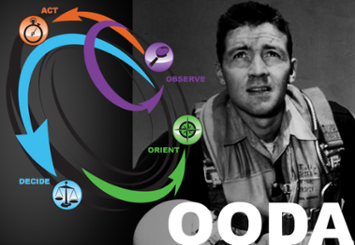
 

The decision making model he developed is called OODA.

That is an acronym for; Observe, Orient, Decide, Act.


Broken down it means –

  • Observation of the raw information on which decisions and actions are based.
  • Orient the information to your situation and environment.
  • Decide a course of action.
  • Act quickly and decisively.

While it would be convenient to allow those brief explanations stand on their own, it is impossible if you want to truly understand how it all works together for success.

One of the best explanations of the complete OODA cycle was by Harry Hillaker –

“The key is to obscure your intentions and make them unpredictable to your opponent while you simultaneously clarify his intentions. That is, operate at a faster tempo to generate rapidly changing conditions that inhibit your opponent from adapting or reacting to those changes and that suppress or destroy his awareness. Thus, a hodgepodge of confusion and disorder occur to cause him to over- or under- react to conditions or activities that appear to be uncertain, ambiguous, or incomprehensible.”

What I am understanding Hillaker to say is fairly simple – Embrace the confusion and use it to your advantage to defeat your enemy. I think I have that understood pretty clearly but that explanation is purely for a military or tactical situation.

What about when there is no person as an enemy?

How do you even describe “enemy” is these terms?

For this discussion I will revert back to our discussion on “objectives” as the enemy. We must “win” in terms of meeting the objective. If we can’t claim a “win” then we “lose.” Losing means that our objective was not met. And success in this arena is based on achieving our objectives, hence “losing” is the enemy.

To review the 2-part series on “objectives and priorities” that appeared on August 8th and 11th.

Based on the foundation I just laid out where there is no person as an enemy, there is no option to turn confusion against our enemy. Confusion in this sense only hurts our team and hinders the successful accomplishment of our objective. However, we can easily state with certainty that seeing through, and/or eliminating, any confusion would make attaining our objective far easier. We can now agree that we only need to go half way on the confusion issue, remove it vs. install it on our non-person enemy.

In retrospect haven’t we already started down the path of confusion elimination?

Back in Objectives and Priorities (Part #2), when we were given Leader’s Intent we can/did ask for clarification to ensure a solid foundation of understanding. On the other hand, if we are the one delivering Leader’s Intent we used the SMART model to clarify the task. So exactly what confusion is left to clear-up?ColJohnBoydOODA-003If you look closely at the OODA Loop you will notice that there is a very close relationship between the “OO” and the Situational Awareness. In plain English the “Observe” and “Orient” matches perfectly with the concept of Situational Awareness (SA). If your SA is good, your OO functioning correctly as well.
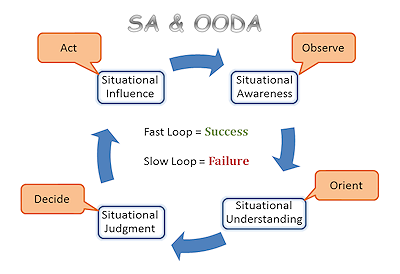
Situational Awareness & OODASo why the need for both?

There is a vital need, the OODA loop outlines the entire process along with explaining the “why.” The “why” being defeating your enemy, or accomplishing your objective(s). I see the OODA loop as a bridge between two more detailed systems –

  1. Situational Awareness
  2. Risk Management

If you go back to Hillaker’s explanation there is a key part “…operate at a faster tempo to generate rapidly changing conditions…” That integrates a true sense of urgency into the overall process. The need to move at a sufficient pace to outperform your enemy. Is it not reasonable to assume that if you outperform your enemy that you win?

Col John Boyd OODA loop jet fightersBut, what about dealing with an objective as the enemy?

When you consider the different aspects of an inanimate foe, the process can be both more difficult, and yet easier. When dealing with a person as a foe you have to assume many things about that person and hope you are right. A smart foe can do things entirely unpredictable which subsequently disrupts your SA and hence, the outcome. However, an inanimate objective can be almost as unpredictable, but it is lacking the ability to purposely be unpredictable. The end result is there are pluses and minuses to both situations, animate vs. inanimate foe. For this discussion we will focus on the inanimate foe, an objective.

Let’s review what the Swiss Cheese model of risk management looks like –
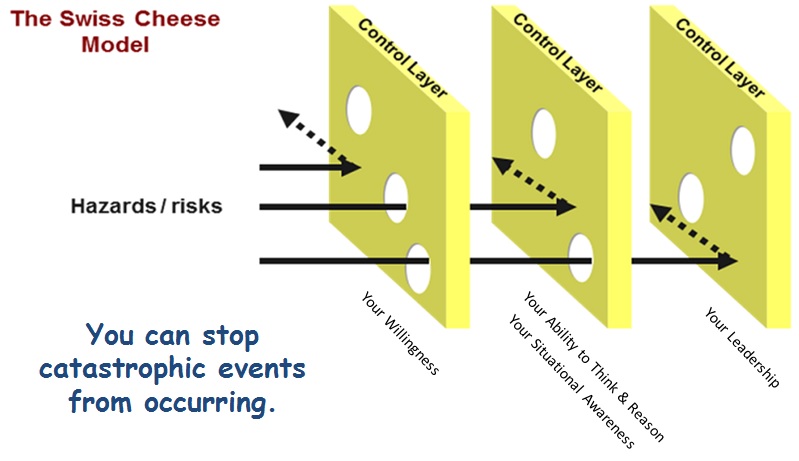
Swiss Cheese Risk Management You have any number of opportunities to stop an incident from occurring. Plugging just a single hole in any slice of cheese prevents the incident from ever occurring.

If you were to chart the OODA Loop process as consisting of a combination of Situational Awareness and Risk Management it would something like this.

Adding in Situational Awareness
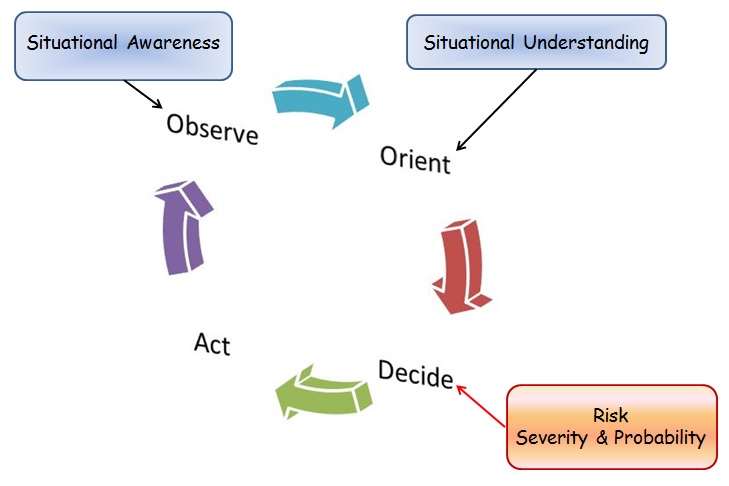
Adding in Situational Awareness

Then adding in calculating the probability & severity aspect of the risk.

Then adding in calculating the probability & severity aspect of the risk.

Here we see the OODA loop link two systems that were previously envisioned as “stand alone.” While both of those systems were valuable and applicable, they did form a complete picture for our purposes. However, there is a third system that is still missing that carries considerable influence, if not total control, over everything – Leader’s Intent.

While some could argue that Leader’s Intent would be one of the “filters” of the SA process I would disagree. I think Leader’s Intent drives all of the systems from the very beginning. Thus I propose the proper graphic representation of the system should look more like this.
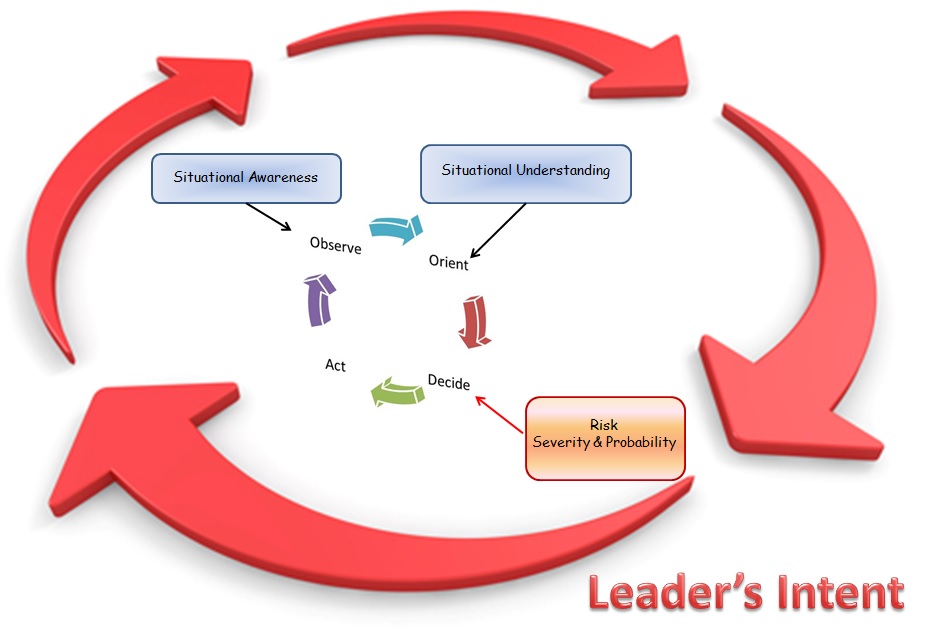
Leaders Intent OODA Situational AwarenessNonetheless I still maintain that the graphic reorientation is still lacking a key piece. No doubt that you would accomplish the object, but in the graphic it is implied, not explicit. And, depending on the situation you may or may not be able to undertake planning process formally, it may have to be done “on the fly” and not in written form. I am of course referring to planning as a key element.

In my way of thinking Situational Awareness is a more complete system/process to define and accomplish the observe and orient of the OODA loop. And, Risk Management encompasses the decide and act aspect of the OODA loop. Clear Leaders’ Intent drives the whole loop in harmony. How does planning work into the process?

Planning is actually a combination of orient and act parts of the OODA loop with a heavy influence of leader’s general eisenhowerintent. Have no doubt that planning will be a key element of any success in accomplishment of an objective. However, General Eisenhower said, 
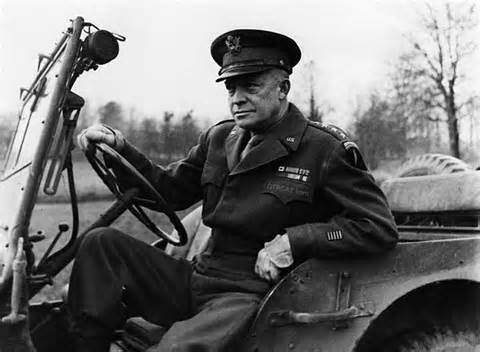
“In preparing for battle I have always found that plans are useless, but planning is indispensable.”

What he was trying to get across through that statement was the fact that though the planning process we find the weaknesses, strengths, and alternatives to the environment in which we will operate. A good example of that is “combat loading” of ships. If you loaded a ship for an invasion such as D-Day the same way you would load a normal cargo ship, you would be doomed to failure.

Why? All the ammo would be loaded together in one area, all the trucks parked in another, tanks in another, Humvees it yet another area, etc.

As the invasion takes place do you need all the Humvees at one time? No. How about needing all the trucks at one time? No. And the same is true for tanks, ammo, medical supplies, etc. The military loads ships in a manner that the supplies come off in the order in which they are needed. You may only need 20 trucks at first, but you need 10 tanks before that, and 15 Humvees along with the tanks and trucks. But a sufficient amount of fuel, ammo, and medical supplies need to off-loaded with the appropriate vehicles. The planning process allows for the discovery of such issues and making the appropriate adjustments.

Another example would be the same situation of the actual invasion. The leader’s intent would be to secure town “x.” While in the planning process it becomes obvious which beach in the best to land on due to any number of factors. But, good planning demands that you have multiple alternatives. The same would be true for routes to get off the beach and to the town you are supposed to secure. Once again, in the planning process you are looking at maps that show the best/fastest way to reach the town. And yet again, you must have multiple alternatives in case your run into resistance or other obstacles with the primary route.

As the invasion unfolds different invading units run into problems getting off the beach for any number of reasons. However, since the planning process revealed multiple routes to the town, the local unit leaders can pick alternative routes as the battle unfolds. And, those choices can be made without running it up the chain of command because the optional routes are already in the plan…and approved. Hence, the local leader on the ground is still operating within the authorization given through leader’s intent.

Had there been no formal planning, the alternative routes would not have been identified ahead of time. The leader on the ground would have to discover the optional routes causing loss of time and jeopardizing successful completion of the objective.

Yet another revision of the entire process would look something like this…
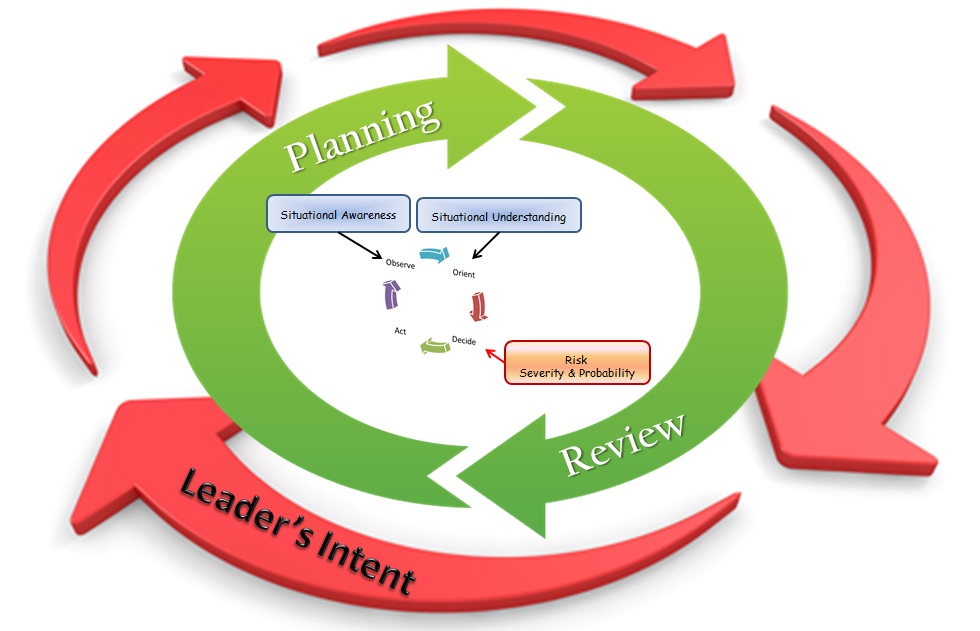
LeadersIntent-004Do I have you confused by now?

How about…do I have your eyes glazed over yet?

That is obviously not my intention or objective.

What I do what you to think about is how to be successful when it comes to surviving after “grid-down” when all your prepping comes into play. But, surviving is a whole lot more than just beans, bullets, and band-aids! It is about how you become a successful prepper to become a successful survivor. And success depends on skills. No, not skill…SKILLS !

And you need to understand how to use systems such as OODA Loop, Situational Awareness, and Risk Management to improve your odds of success. If you can improve your odds of success in a grid-down situation, then it will be much easier for emergencies and disasters as well. But it all takes time, effort, and commitment.


2009 - 2019 Copyright © AHTrimble.com ~ All rights reserved
No reproduction or other use of this content 
without expressed written permission from AHTrimble.com
See Content Use Policy for more information.

Where to stash your survival cache?

Hiding Your Survival Cachenote: first appeared in March 2015

There are lots of good places to hide your cache. There are lots of bad places to hide your cache. The trick is to find the places to hide your cache where no one else will find it. So the cardinal rule is – Don’t hide your cache where someone would expect to find it. The trade-off is, your cache may be harder to find and retrieve when you follow the cardinal rule.

If you haven’t read my posts 3 days ago about Survival Caches, now might be a good time Survival Cache to Stay Alive & Start Over – Part #1 – 3

Here are some basic guidelines for stashing your cache:

  1. You must be able to find it but sufficiently hidden so others can’t find it.
  2. The area must be close enough to get to, but not so close that it can be linked to you.
  3. Cops will investigate your survival cache if they find it.If law enforcement finds it they are probably going to think it is pretty weird and you are going to be questioned about it. How will they know it is yours? Try fingerprints or DNA for starters. Also, if for any reason they think it is tied to a serious crime they will investigate it and do their best to locate you. Be ready to tell whoever finds it a very good reason why you stashed it.
  4. Remember the water, if you have water in the can bury the whole can deep enough that it won’t freeze and burst. In the frigid north you could be looking at 3’ or more to get below the frost line. An alternative could be to bury your water separately, thereby allowing you to bury your original survival cache can more shallow.
  5. I think having at least two ways in/out to the spot is important. And don’t egress the area/spot the same way you entered. Someone may have watched you and just waiting for the opportunity to ambush you as you leave.geocaching can help hide your intentions of stashing your survival cache can.
  6. The spot should be hard enough to get to but it should also not make you stick out should you be seen going there…either when you originally bury it or when you retrieve it. Have a good reason ready if you are seen and/or questioned about it by someone in authority. Remember “Geocaching” is a sport now and could be used as a good excuse.
  7. Observe the area for hours, maybe days, before finalizing a spot. What looks good today might not be good on a holiday.
  8. Don’t put it on someone’s private property, which is called trespassing. And if you put your cache there it becomes theirs by legal definition.
  9. BLM public landsIf you decide on public property it’s a good idea to know that you might be breaking the law doing so (soil & vegetation disturbance).
  10. On public lands one good thing it’s illegal to use a metal detector. Bad thing is that law doesn’t apply to the agency’s folks or law enforcement.
  11. Look the area over very carefully if you are on public lands. Should you bury your cache in an area that has any archeological value you can commit a felony by digging there.
  12. You don’t want your can to potentially be underwater when you need it. So look around for the flood plain and avoid it. Yes, dry stream beds & arroyos are inviting but think about when there is water, and it can be deep at times.
  13. Once you decide on your spot spy on it. Find a good location some distance away and just watch the area where you want to bury the can. See what you notice, see if people come roaring by on dirt bikes, how about hikers or hunters?

If you decide to bury your cache can look carefully at the ground, look really closely before you dig, maybe even take a picture first. When you are done, compare the picture to what the ground looks like in the picture. When you are done then stand back and throw several handfuls of stones, pebbles, dirt, leaves, twigs, etc. on the site from a distance. That will make it appear much more “life-like” or “natural”.

Hiding Your Survival Cache in the city

Urban environment provides a lot of opportunities. Where you might think is a great place to hide it, might be a great place for someone else to look for it if they know what they are doing.

Time to get the job done, go bury your cache can, reset the ground and vegetation around it, and as you leave cover your tracks. Use a branch or bush and wipe your tracks away as you leave the area.

Now, don’t go back and keep checking on it; you will create “tells” by doing so. Other people could get interested and start poking around. They might want to try and find what you found sound interesting in the area.

Hiding Your Survival Cache in a rundown warehouse

An abandoned warehouse is a great area as long as someone doesn’t come scavenging or taking over as their new home.


If  you have two cans to bury, bury them at least 50′ apart.  Better yet, where you can’t easily see one location from the other one. That helps keep one location secure if the other is compromised.

You can also use Google Earth to scout and area without really being there. Now, do yourself a favor, don’t mark it with any software on any mapping program or setting a GPS coordinate on your GPS unit.

Hiding Your Survival Cache in the woods or forest

In heavily wooded area place next to rotted tree trunk and cover with old vegetation and dirt.

If you want to take lat/long coordinates that is OK.  Take your lat/long then write the coordinates on paper, DO NOT mark it on your GPS unit. Store the paper where you can find it and no one else will stumble across it. If you want to take one more step in the paranoia world, try to figure out a cool system to hide the numbers for the lat/long. Put it in a list of phone numbers, substitute a couple of alphabet letters for numbers, mix it all up a bit so someone hopefully won’t even recognize what it is. And if they do recognize it, they won’t have a way to figure it out since it is random based on your unique system.

Hiding Your Survival Cache in the desert

Lot’s of places to hide it in the desert. Finding it again might be tough. Watchout for snakes!

Another way to hide it in plain site is to create an overlay or cut-out out of a heavy sheet of construction paper or something similar. Take a common map, find the spot where your can is located (do not mark it on the map), then lay the piece of paper over the map. Orient the paper to something common with the map (i.e. a side, a corner, a road, etc.). Then make a small mark on the paper. Now, cut a small hole in the paper where the mark was. Write on the paper, punch a couple different holes in it that are different than your cache can hole. Then let the kids do a crayon drawing on it, play tic-tact-toe on it. Now put the paper away and remember where you put it; or post it on the refrigerator door. Leave the map where you normally would keep it.

Hiding Your Survival Cache in the neighborhood

A vacant urban lot is an option but will it be bought and developed exposing your cache?


If I were to give you two final words of advice they would be: Disguise
Distract.


I am sure there are some more ideas that ya’ll can come up with so let’s end it here and let you get to work.

The important thing is…build your cache…and then stash your cache!  Just do it!


2009 - 2019 Copyright © AHTrimble.com ~ All rights reserved
No reproduction or other use of this content 
without expressed written permission from AHTrimble.com
See Content Use Policy for more information.

.                                                     .

Survival Cache to Stay Alive & Start Over – Part #3

Survival Cachenote: first appeared in March 2015

In this article I will cover items in your survival cache that will help you conserve (or at least not destroy) resources associated with the incident you find yourself in. You don’t want to destroy any resource you may need later. The items in this category will help you in that goal. Remember the mission of this survival cache:

“Safely store sufficient essential survival gear and equipment to use as a basis to survive as I acquired additional survival gear and equipment.”

In the previous article in this series, Survival Cache to Stay Alive & Start Over – Part #2, I went into detail on items to satisfy the second LIPS priority which was Incident Stabilization. In other words, I shared with you how to keep a bad situation from getting worse.

This category is the creature comfort area; the luxuries if you will. All joking aside, these are really the items that will make your initial survival period livable. Now let’s get on with category #3 – Property  & Life Conservation :

Survival Cache - Property ConservationMountain House Granola with Milk Bluberries#1 Item – Food. I chose freeze dried food for a number of reasons:

  • Lasts forever (in relative terms).
  • Heavy duty packaging; already resists water impingement.
  • Easy to eat and move at the same time.
  • You don’t need water to eat it.
  • Mountain House is a brand I like; it just tastes good. And –
    • I chose the Granola with milk & blueberries.
    • There are 500 calories in the food pack; lots of fuel.
    • 16 grams of protein to keep you going over a period of time.
    • 19 grams of fat. Great supplement to small game which usually is low-fat meat.
    • 69 grams of carbohydrate gives you instant energy.Plastic spork for survival cache

#2 Item – Spork, yup, a spork! A “spork” is a combination fork & spoon; reduces the number of items needed to eat. For the cache I use a simple plastic spork.

#3 Item – Compass. I chose very basic compass because it is simple to use, inexpensive and will do the job just fine. All you gotta really know is what direction you are going when you are traveling during an emergency. Unless you have a specific detailed route to a specific destination.  And yes, you better have a direction and destination that you need to head; that is called a plan. And don’t think you can just go with the sun and stars, that takes an expert and a clear sky.

#4 Item – Insect repellent. This item might seem a bit silly; but have you ever been afflicted with serious mosquitoes? If Smith's 2-step Edgesport knife sharpener for survival cacheyou are trying to take a nap and the bugs won’t let you sleep, then you run out of energy pretty quickly.

#5 Item – Knife sharpener. I chose the Smith’s 2-step Edgesport. If you are using your knife then it is probably going to get dull. A dull knife is as useless as a Speedo in Alaska in the winter. I chose this particular sharpener because it is simple, easy to use and a no-brainer. You slide the blade through it. Yes, there are plenty of other kinds of sharpeners, chose whatever is best for you.

#6 Item – Backpack. I chose the Outdoor Products Packable Day Pack because it was fairly cheap, small when stored, big enough to carry everything and discreet. Here are some specs on it:simple Back Pack for survival cache

  • Ultra lightweight fabric
  • Compresses to 6 inch ball
  • Expands to 15 liter day pack
  • Great additional piece for long backpacking expeditions
  • Roomy main compartment
  • Small accessory pocket with zipper closure
  • Adjustable webbing shoulder straps

Any backpack will work as long as you can get it in the can. I wouldn’t use camo colored. If someone sees you with a camo colored pack they will go on alert. Yeah I know, if they see you. I feel you must blend in and not draw attention to yourself if you are around people.

#7 Item – Cleansing towelette. Look if you’ve never been in a situation where you didn’t take a shower for multiple days (like 5) you simply haven’t lived! A wash/wipe with this towelette will make make you feel like a new person. I chose this particular kind/size but you can chose whatever you like, just make sure it is “full body size”, in other words it has to be large enough. And remember, it too is saturated with alcohol; another fire starter source. Do not throw the towelette away when you are done, put it in your pocket or in your pack with the fire starter items.

#8 Item – Flashlight & batteries. I chose a small LED flashlight that takes AAA batteries that was about $4.50 to purchase. Make sure you pack the batteries outside of the flashlight or you will get corrosion and run the batteries down faster. Make sure that they are packed so the ends of the batteries are not in contact with each other. Yes, the batteries will eventually go bad, maybe before you ever get to use them. So be creative, go acquire new batteries and rotate them in your cache every 5 – 10 years. Yes, Duracell CopperTop lasts 10 years.

#9 Item – Hand sanitizer. If I need to tell you what this is for there might just be a problem here. Keep your hands clean, use this often, use after every potty break, use before touching your water or food supply. If you want to get stopped dead in your tacks and maybe die from dehydration then get “camp crud”. I use a hand sanitizer that is high in alcohol content. Used in conjunction with your fire starter items like the cotton balls it makes a first rate fire starter.

#10 Item – Multi-tool. I chose the Gerber “Suspension” model (22-01471). It was cost effective (priced right) and it has all the pieces/tools I thought I would need while I try to survive. Notice I chose the “open design”; again, easier to keep clean and reduces weight. Some additional info on the multi-tool:

Gerber Suspension MultiTool Model 22-01471Special Features

  • Spring-loaded pliers
  • Patented Saf.T.Plus
  • Open frame design

Technical Specs

  • Model: 22-01471
  • Overall Length: 6″
  • Closed Length: 3.5″
  • Weight: 9oz.
  • Handle Material: Stainless Steel
  • Sheath Material: Ballistic nylon
  • Pliers Type: Needlenose
  • Handle Color: Titanium grey

Components

  • Needlnose pliers,
  • wire cutter,
  • fine edge knife,
  • serrated edge knife,
  • saw,
  • scissors,
  • crosspoint/phillipshead screwdriver,
  • small and medium flat-blade screwdrivers,
  • can opener,
  • bottle opener,
  • lanyard hole.

I hope I have provided you with motivation to review you situation and the potential need for basic survival items in the event of an emergency, disaster or especially a total “grid-down” event. I think the items I listed is a pretty sound package to get a person going again should the need arise. I could have put so much more in the cache but then again, where would you stop with adding more and more? However, if you find yourself in need of more gear that is no problem. Just make more boxes for you additional stuff.

If you have a family of five, three being children, then make five boxes with appropriate gear in them. Consider two different ideas about stashing them. You can place them all in close proximity, say within 50′ of each other. Or you could bury them 1/4 mile apart reducing the chances of someone accidentally finding all of them.

Whatever you decide is right for your situation I just hope you think it through and then make it happen!

If you would like some ideas on where to hide you cache you can read about it in 3 days when I post that article.


2009 - 2019 Copyright © AHTrimble.com ~ All rights reserved
No reproduction or other use of this content 
without expressed written permission from AHTrimble.com
See Content Use Policy for more information.

Survival Cache to Stay Alive & Start Over – Part #2

Survival Cache note: first appeared in March 2015

In this article I will cover items in your survival cache that will help you stabilize the dire situation you find yourself in.  These items will be the gear and equipment that assists you in keeping a bad situation from getting worse. It won’t solve all of your problems but it will help you and your family from getting yourselves in a deeper hole.  Remember the mission of this survival cache:

“Safely store sufficient essential survival gear and equipment to use as a basis to survive as I acquired additional survival gear and equipment.”

Learn more about LIPSIn the previous article in this series, Survival Cache to Stay Alive &amp; Start Over – Part #1, I went over the basic premise and concept of the survival cache.  I outlined its mission and how to make decisions on what goes in it and why.  I briefly went over the L.I.P.S. <click here to read more> concept of preparedness. And finished up by providing details on items to satisfy the first priority which was Life Preservation / Safety.

Incident StabilizationNow let’s get on with category #2 – Incident Stabilization :

Survival Cache - Incident Stabilization


#1 – #4 Items – Yup, it all has to do with starting a fire. And with that fire you can create warmth, and with warmth you can keep from freezing to death. I have two different types of matches; waterproof and storm-proof. Why two? I never count on only one type/brand to work 100% of the time. It’s the old “Don’t put all your eggs in one basket” concept. Use any type brand of these matches you wish. The ones I chose came out of my storage that I had on hand. I threw the fire sticks in there to assist in getting a fire going. In the desert southwest you can end up in areas that have plenty of dead twigs but no fine fuels such as grass; this just gives me a an edge. I use a magnesium fire starter kit rather than flint and steel in this situation due to the fact that I want every advantage I can get when trying to start a fire. I also threw in four cotton balls; seldom would you use these in a 1st aid situation.  However, removing your make-up could be an issue I guess depending on your situation. But, you take a cotton ball, put some of the hand sanitizer on it and you have a very fast fire starter. Well, only if you have an alcohol based hand sanitizer, and you should for this kit.

#5 & #6 Items – This is the shelter part of meeting you basic survival needs. Yup, the hooded poncho is part of that, and yes you need this, even in the desert. Rain is usually colder than the surrounding air and/or it has a cooling effect on the body. So keep the rain off your body and clothing and you will help prevent your body cooling to an unsafe level. Now, if it is 90+ degrees and it begins to rain it just might feel really nice. I chose a cheap version of a poncho to keep the package small. If you are in a time of year that you don’t expect rain DO NOT throw this away. You can use it to help build a solar still, create a distraction for bad guy pursuers, etc.

The tarp is to create a barrier between you and the elements. It might be something like the 100° sun beating down on you, or a pouring rain storm, or snow coming down quick. In any event, you will probably need some kind of shelter protection. You can get whatever color you wish; I would encourage you to use a color that matches the surroundings in which you will most likely find yourself.

#7 Item – I almost included this in the last group covering shelter, and it would have been appropriate. This item is pretty much for a summer season for all areas of the country and add spring and fall for the desert southwest.  And most of winter as well. No, you don’t want to be working on your tan during a survival situation. Sun stroke is not pleasant and sun burns can be debilitating. You can end up very, very sick from a sunburn; chills, dehydration, pain, etc. If you have no hat with you, and you haven’t created head protection, then remember to use sunscreen on your head as well. Consider using the highest SPF rating you can find. And a “sports” version that resists sweat and water is always a plus. And please, please don’t get a sunscreen that smells like Caribbean beach fruit! If you are trying to hide, that smell will be a dead giveaway to any bad guys in the area.

#8 Item – First, the packet of tuna that I chose has a 3-year “use by” date on it. I chose tuna due to its high protein value. The 6.4 ounce packet I chose has 3 servings, each serving has 25% daily requirement of protein. If you space each serving out over 3 hours or so, you can keep up a fast pace and keep feeding your biological furnace. If you have to hold-up somewhere and you need energy to keep warm, there is another food item in kit for that. And yes, this is one of those items that the spork comes in handy for. If you never rotate your kit contents, no fear! Use the expired tuna for snare bait. But me, I would eat the tuna even a year, two, or three past its “use by” date.

550 Paracord#9 Item – The beloved paracord!! But not just any paracord – 550 paracord. What I want you to use is the full-blown real 550 paracord. It is called that because the “550” part refers to the cord’s break strength pound rating. Commercial paracord can be made in whatever manner the manufacturer wishes and who knows what strength rating it has. I want you to have the best 550 paracord. I chose 20′ because it would meet most of my needs to string up a shelter using the tarp, or setting snares, or getting creative with pursuit dissuading.   I think I will do another thread soon on the different uses of paracord and that might be very informative.  Consider buying a color that matches your environment; I purchased a spool (300’) of desert color (multicolor actually).

#10 Item – Simple cotton balls. These take up very little space and are great for using to assist in starting a fire. Put some alcohol based hand sanitizer on them and voom! Instant fire. I suggest using one at a time and saving the others for when they are needed.Bic disposable lighters to start a fire

Note: My favorite, most sure way of starting a fire is with a Bic lighter. However, I think it is impractical for a cache due to the potential for leaking or otherwise becoming unusable. The methods mentioned above are more stable for a cache situation.

So here ends the second category of your basic survival cache items. Get creative, add some other items, take away those you don’t need. Think it through, make it right for you. Most of all, do something! Your survival kit might not help you every time; but not having one ensures that nothing will help you.

Better to have resources and not need them, than to need resources and not have them.


2009 - 2019 Copyright © AHTrimble.com ~ All rights reserved
No reproduction or other use of this content 
without expressed written permission from AHTrimble.com
See Content Use Policy for more information.

Survival Cache to Stay Alive & Start Over – Part #1

Survival Cachenote: first appeared in March 2015

I have been a “prepper” most of my adult life. I have been a member of fire departments or worked for the federal government in wildland fire most of my adult life. I have learned incredible life-saving skills through my emergency services training as well as some great private training opportunities. I have taught myself a whole bunch over the years as well. So I consider myself, and my family, to be pretty well prepared and skilled. It wasn’t until about 8 or 9 years ago that I became worried about “grid-down” and the associated risks and threats. I wrote this article to address the “grid-down” scenario where I thought I wasn’t as prepared as I felt I should be.

Preparing for grid-down is a special kind of prepping because you must look at a wide range of scenarios. For a number of years I acquired long-term food storage, seeds, and multiple ways to filter/purify water, and other necessities. Then I really put some thought to what might happen if I couldn’t use the prepper items that I have put into storage. That got me a bit worried…OK, more than just a little bit.Build your Survival Skills

The #1 thing that is absolutely critical to surviving any emergency, disaster and especially “grid-down” are skills. I am OK in that area. But without some kind of gear to work with it makes it much, much harder. So that became a focus of my efforts for awhile…acquiring the right gear.

The purpose of my posting this thread is quite simple – provide you with some solid ideas on what you might need to cache solely for “survival”. Yup, SURVIVAL!

Mission –

Safely store sufficient essential survival gear and equipment to use as a basis to survive as I acquire additional survival gear and equipment.

So here is the premise of the situation used to develop the list:SurvivalCache02

  1. You are thrust into a situation where your first priority it simple survival.
  2. You have nothing with you or on you that is of any significant value.
  3. You must provide the basics of life, especially life safety.
  4. This is based on the L.I.P.S. decision and priority setting system.

Why even have a priority setting and decision making system?

Without it, how will you consistently make the best decisions and set the right priorities? L.I.P.S. provides that system; based on decades of emergency, Learn more about LIPSlife threatening, and high stress situations. A recap of the L.I.P.S. system:

  • Life Preservation/Safety
  • Incident Stabilization
  • Property & Life Preservation
  • Societal Restoration

Life Preservation/Safety – These are the priorities that must be set and decisions made to save your life. The most basic of human body needs (i.e. stop bleeding from a wound, protect yourself from an attacker, prevent death from dehydration, etc.)

Incident Stabilization – Don’t let a bad situation get worse; and potentially become a Life Preservation/Safety problem. This meets the next level of needs; examples – don’t starve to death, warmth, shelter, protection from the environment.

Property & Life Preservation – This means don’t destroy resources unnecessarily. Examples – Don’t destroy the edge on your knife trying to sharpen it on a rock, have a knife sharpener. Don’t allow insects to bother you so much that they won’t let you sleep or worse, have insect repellent.

Societal Restoration – This item means that you will restore society (or at least your part of it) back to the condition it was in prior to the event. This category is outside the scope of this discussion and will not be addressed.

So where does this come from?

  1. 40 years of preparedness experience
  2. 25 years of emergency situation experience
  3. 4+ years of military experience
  4. Teaching wilderness survival in the 70’s & 80’s
  5. Spending 4 – 16 weeks a year in some of the most remote areas in the United States
  6. Research from those people with even more experience than myself
  7. Common sense

If you don’t know and understand the L.I.P.S. system you really need to read this article

For now I will just post the list and give you time to look it over and think about it. 50cal ammo can - survival cache

Here is my list. It all fits in a standard .50cal ammo can that the military uses and you can purchase as surplus. They are available for about $12.00 each. I vacuum sealed most of the items for added protection. The total cost for all the items purchased brand new was $195.16

Don’t freak over the cost. Many of these items you may already have sitting around the house, garage, or shop. For now, just look over the list and think through it. And don’t forget to check thrift stores and garage sales when it comes time to acquire your items.

Let’s get started with the first category, but before we do I think we should review a couple things:

  1. We must have a very specific defined “mission” for this kit; otherwise, we will just wander around adding more and more until we need a backhoe to bury a decent sized trailer full of items, including a small refrigerator. So the mission of this kit is to help us survive, period, nothing more. And survive in the term of just that -basic survival- nothing more. That means you must have a plan for what to do after you get your hands on this kit. Example: Make it home, or, get to your retreat, or, meet up with your family, or, get to “______” (fill in the blank). This kit is not to provide you with a camp, to arm you for a battle, to feed your church friends and families. This is just to survive till you can accomplish the next step in your plan.
  2. With the mission defined, the next issue to be resolved is exactly what do you put into this kit. If you don’t have a system by which you make these decisions you may well overlook a life-saving item for a creature comfort item. So I fall back on a simple but highly effective priority setting & decision making system called LIPS that I talked about earlier. Without an effective and proven decision and priority setting system you will struggle to decide what items that must be in there and what items can be in there.  And that is entirely different than what items you would like to have in there.Life Preservation and life safety - survival cache

So let’s move on to the first category of items to place in your kit, “Life Preservation / Safety” :

This category is the most important and the most urgent. The items contained in this category are those items that will save your life.  I’ve listed them in order of priority. Maybe it would be better said, “…in my priority order.” My situation may be far different than yours. My idea of what’s important may be different than yours.  Then again, maybe I am just missing something that you catch and feel is more important for your situation. That is fine with me, just use LIPS to justify and validate what you are doing.

So this category is all about saving your life – period. It is about making it through the next 1 – 8 hours of your dire survival situation. At this point nothing more matters, simply surviving the next 1 – 8 hours.

Survival Cache - Life Preservation

#1 & #2 Items – First Aid items; field dressing and triangular bandage. I come from the old school of first aid…I still remember my Army first aid training back in military school…”STOP THE BLEEDING!” But, I noticed that as I continued to gain additional medical training, including Dressing12" - Medical Care - Squad Trauma Aid KitEMT, it was still pretty much the same. So here is how LIPS comes into play…

If you are bleeding and it doesn’t stop…you are going to die; so stop the bleeding. Hence, field dressings are more important than water. You can live another 10 or 20 hours without water but you can easily finish bleeding to death before you die of thirst. And you will die of thirst before you die of starvation. So you might be thinking, “Yeah, but I am in a full-on firefight and if I don’t have ammunition I will get shot!!”

You might just be right, but this is not a weapons cache, this is a survival cache.

But you might be saying, “Well, if first aid is so important then we need a whole lot more first aid items!!”

You might just be right, but this is not a first aid cache, this is a survival cache.

You see without defining the mission of this cache you could go crazy putting a whole bunch of items in it and having a small trailer full of stuff that you may or may not end up needing. But clearly defining the mission and having a decision making system (LIPS) you can figure out what you need.

Does that mean you don’t need ammo or more first aid items? Of course not. It is just not the mission of this cache to provide it. Can you have more than one container of cached items? Duh, of course you can.  You can do whatever you wish, but we can talk more about that later. For now we will stay on task.

So #1 & #2 are to stop bleeding and assist in setting a splint if needed.

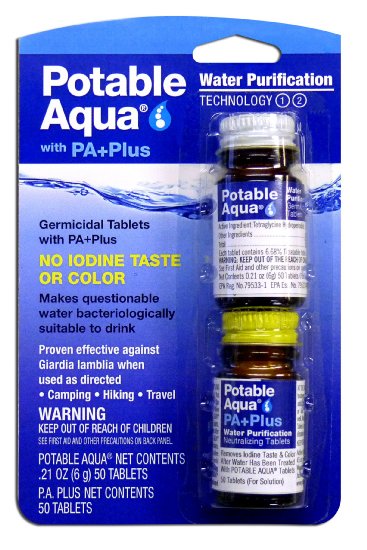
portable aqua water purification tablets#3 & #4 Items – In my part of the country water is scarce and the lack of it will kill you pretty quickly. So I included a bottle of water to have on hand to consume quickly to rehydrate before delusional thinking sets in and/or to prevent imminent death. I chose water purification tablets over any filter, not because they are any better, they are just smaller and they do the job. There is water in our area but you may have to go looking (i.e. hike a couple miles) to find it. That bottle of water will help keep you alive till you find some other water source, even if it is just a cattle tank.

#5, #6 & #7 Items – You have to be able to defend yourself and be able to prepare food; to me, knives are the answer. Why not a gun? Come on, we talked about that already, this is not a weapons cache, it is a survival cache. If you want to make a weapons cache that is fine with me but that is another thread of information, just not this one. So notice the three different sizes of knives; large every day carry (EDC) knife, a smaller pocket knife, and a very small knife. Each has a job, and to me, each is needed.Gerber paraframe knife

EDC knife – this is your work horse knife. It will be used as a primary defensive weapon, then used to assist with food preparation, then other tasks as needed.   I chose a Gerber “paraframe” model. I like the weight and feel of the knife, open to ease cleaning, securely locks open, thumb assist, holds an edge and sharpens easily. And it is only $17.97!! Sure there are lots of better knives, like my EDC which is a Spyderco Paramilitary2, great knife!!! But is costs $130 vs. $18. Remember this little piece of info – YOU MAY NEVER USE YOUR CACHE, YOU MAY NEVER COME BACK TO IT, YOU MAY NEVER FIND IT or SOMEONE MAY STEAL IT. So do you want to lose a $18 knife or a $130 knife? Up to you.

Gerber model STL 2.0 knifePocket knife – this is your back-up knife, the knife that you will use in the event that your EDC is not available. You can designate it as the knife you will use to skin small animals such as squirrels and such. Or you may turn it into the knife that you integrate into a strong stick and make it into a spear. You may use it as part of a snare, trap, etc.; your choice. I chose the Gerber model STL 2.0 (black). This is a great little knife!  I really like it. It doesn’t take up any room to speak of in your pants pocket; it’s flat, strong, great blade, holds an edge and sharpens easily. It locks open very well, no fear of inadvertent closing. But I am not crazy about knives that have the locking mechanism on the cutting edge side of the blade. This knife as well as the Paraframe have such a locking mechanism, nothing is perfect. But this is truly a nice little knife. And it is only $12.97!

SOG Micron knifeMicron knife – yeah, this one may surprise you a bit, it did me the first time I saw it but know I love em and always carry one. The knife is called a micron knife for a reason; it is less that 2” closed and just under 3-1/2” open. It is only about 1/8” thick at the handle. So you wonder what you could use it for? For me it is primarily a back-up weapon. Yup! You read that right. It is small but will cut an artery just fine. But most of all it is easily concealable. I won’t tell you where you can hide it, coz I don’t want to give away my hiding places.  But think it through and get creative. Also, you can integrate it into a decent size stick and you have a great little spear. I chose the SOG Micron based on overall quality and craftsmanship. Yes, it costs $12.88 (9 cents less than the Gerber pocket knife), but it is money well spent when you need a knife the bad guys couldn’t find when they search you. I didn’t seal this in a bag because I want it available to cut open the sealed bags in the can. Yes, I could have left out any of the knives but I chose this one because it is the one that is the least operationally valuable of the three knives. The one I want to lose if I have to lose one.

#8 Item – You might think that in the desert southwest we wouldn’t be in need of something such as a “body warmer”. But truth is, nights here can get cold, even during the summer. When you are exposed to 90’s and 100’s during the day and it drops to 68 at night, that is cold. During the winter it drops to 20’s at times; that is REALLY cold! You die of exposure pretty quickly so be prepared to have a heat source that can be quickly implemented. Yes, you could build a fire. But what if you had no fuel around you right then? What if the bad guys were pursuing you and a fire would give you away? What if you were so cold, it was raining, and your hands were shaking uncontrollably? Yup, a warmer could be put into play immediately. I chose the Grabber Peel n’ Stick Body Warmer because they work, lasts for 12 hours, you can put it where it is needed and they stay there. Oh, and they are less than a $1. If you are in a colder climate you can probably add more to your cache can without using up much space. So why didn’t I place it in a sealed bag? Coz I didn’t want to be shaking uncontrollably from hypothermia and have to deal with my knife to cut open a sealed bag to get to it. Or risk cutting open a hunk of skin instead of the bag.

#9 Item – Yup, you read it right, bobby pins. There are a number of uses for them, do some research on the Internet. But most of all, a little secret, if the bad guys put you in handcuffs a bobby pin is a very good key. Really?

#10 Item – I struggled a bit putting a Pocket Saw in this category but there is a reason that it is in this category vs. the next one. Yes, this saw can be used to create fuel for a small fire but it can also be used as a very effective and silent weapon. Sorry, that may sound a bit gross or heathen-like but we are talking survival here. And you can’t survive if someone can kill you. If you want to know more about using pocket saw as a weapon let’s make that another post or thread; one best related by one of our resident experts.  I choose Coghlan’s based on quality, value and being readily available.

The Original Space Brand Emergency BagThe Original Space Brand Emergency Bag#11 Item – You can die from hypothermia rather quickly. If it is cold enough you could die within a couple hours, maybe less. I chose the Space Bag over the space blanket because it is slightly heavier weight and will completely surround you and stay in place. A blanket can be a bit unwieldy and leave gaps where cold drafts can get to you. Mostly, this is a personal preference…if you like a space blanket, by all means go for it. The point is…it will keep you warm! It will also resist other elements such as wind, rain, snow, etc. Also, if you build a fire you can use it to reflect the heat back at you, warming both your front and back at the same time. And should you have access to a sleeping bag of any kind you could potentially survive some very very cold weather.   I chose the Grabber reflective bag based on availability, quality and price.

#12 Item – Yeah, why the heck would I put camo paint on the list at all, let alone in this critical category?   Well, remember Duck Commander War Paint - cammo paint make-upwhen I was talking about defensive weapons, being able to defend yourself? One of the best defenses is being unnoticed. If the bad guys can’t see you they can’t attack you. I would have put this up the priority list if this had been a “tactical cache” but it isn’t, but it is still important. Want to know how good this can work? In normal street clothes go hide in the environment around where you live, in the woods, in the desert or wherever. Now have someone just stand there and look for you. I bet I know what one of the first things their eye will be drawn to – your face. Now, do the same thing with camo paint on your face. See what the difference is. So one minor note, if you are trying to hide in the big city and are walking around the streets with people around you – ah, you might want to hold off on the camo paint. Just as a thought. I chose Commander War Paint because it was what was on the shelf, it was decent priced and it had a mirror with it. Yup, a mirror was a selling point. One of the important things in an emergency or disaster is communications. You can see a mirror flash for many miles.

So there you go, category #1 is done. I gave you a list of what I consider the basics to survive the first hour to 8 hours. You can add to this list if you have the space, have different priorities or just want to. You can buy the items wherever you wish, just remember to get the best quality for a reasonable price.

Why a reasonable price? You may never use this stuff, you may never find it, you may have it stolen. What you put in here you may never see again. So you don’t want to cry too many tears if you lose it.

Survival Cache to Stay Alive & Start Over – Part #2


2009 - 2019 Copyright © AHTrimble.com ~ All rights reserved
No reproduction or other use of this content 
without expressed written permission from AHTrimble.com
See Content Use Policy for more information.

One Chance To Get It Right!

No Second Chancenote: first appeared in October 2015

I was gone all this last week and had a time to get my head away from all things “prepper” and just focus on my job. However, during one of the meetings on risk management the speaker used the slogan “you get one chance to get it right.” I sat there and it hit me like a lightning bolt.

That applies so much to what we do, or will do, as preppers that it isn’t even funny. Then all this stuff started streaming into my head that I just have to share some of it. Stuff that I think could make a huge difference in living or dying should the grid go down.

I am not talking about less dramatic situations such as disasters and emergencies, although it could apply to those as well. What I am going to talk about is specifically “grid-down” level events. However, it does in-fact apply to lesser events such as disasters and emergencies, just not as dramatically.

So getting back to the point of this post –

You have one chance to get it right.

So here is the backdrop, an event occurs that could cause substantial disruption in the daily life of a large number of all citizens. The event could be an attack from an external threat such as Iran, or it could be an event such as an implementation of martial law due to the reaction from a crackdown on alleged right-wing militia groups. And then there is the run-of-the-mill financial collapse or EMP strike. You get the idea. But remember, this concept can apply to any lesser emergency or disaster as well.

So the event occurs, now what do you do?

You get one chance to get it right. or you get it wrongWhy is that question even important? Because you may only have one chance to get your response to the grid-down event right.

Yes, I am serious, you may have only a single chance to react correctly to the situation. How so? Envision something as mundane as a roadblock. Do you try and successfully navigate the roadblock or do you seek another way home? What about if they are searching vehicles, do you have anything that will give you undo or fatal attention?

What about filling up your SUV’s fuel tank on the way home after the event occurred? That may be the last of the fuel for the foreseeable future. Did you or your wife fill up the bath tub and every other container in the house while the water was still flowing?

There are a thousand questions that I could prompt you with to see if you are making, or going to make, the right decisions when an event occurs. My point is not to make you feel as if you will fail, rather it is meant to prompt you with, “Do you have a plan?” And, “Will you faithfully follow the plan?”

So, when an event occurs will your one chance to get it right find you successful? I am going to say that for the majority of people the answer will be “no.” I am thinking that “no” will be the answer for about 75% of all the people in the United States. So I do pray that the situation will allow us all a second chance to get it right. But that may not be possible.

So what can you do to get it right the first time? Well, honestly you are doing just that right now. You are aware that it might be a failing of yours and you are learning about mitigating the unfortunate reaction of getting it wrong. So awareness and Plan for a dister, emergency or grid-down now.learning are the first two most important things; so, congratulations!

Next I firmly believe you must have a plan. It doesn’t need to be overly complicated but a plan is a necessity.

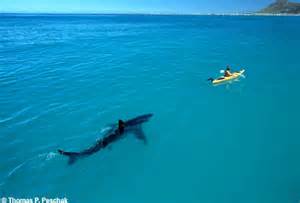
Then it is imperative that you be able to recognize what is happening SharkCanoeBEFORE it goes bad. And it doesn’t have to be a long time before, but just before to some adequate degree. That gives you time to take action while you still can. So Situational Awareness is absolutely needed. <read more about that by clicking here>

Then you must take some kind of action. That might sound kind of silly but I am dead serious. You would be surprised at the number of people that will not act during an emergency, even when their life depends on it. Don’t let that happen to you.

While you are waiting for the trigger event (or emergency/disaster) to occur use your time wisely, get training. Actually I should more accurately say, “Get the right training for the right people.” My wife will never be a sniper or a field medic, but training in first aid and getting her through a tactical carbine class was the “right” training. And please don’t forget the kids! Many kids have saved lives because they knew CPR.

Now let me share a few words on a phenomena that exists in some of the most risky professions in the world today. And that is –

“There are no new ways to screw-up, just new participants.”

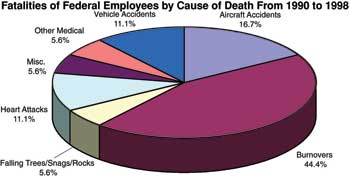
And yes, I realize that could very well apply to life in general. But here I am talking about more fatality prevalent occupations. In the wildland firefighter business we have a few top contenders for the worst screw-ups that lead to fatalities, they are:Wildland Firefighter Deaths Chart

  1. Vehicle accidents
  2. Health/medical conditions
  3. Burn-overs
  4. Trees falling

Those four items account for about 90 – 95% of all wildland firefighter accidents resulting in deaths for the last 80 – 90 years. In the 1970’s we added aircraft accidents to the list but that category swings pretty substantially from year-to-year.

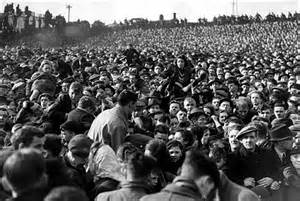
So we don’t really come up with new ways to kill people in my business, we just change participants. The same thing will be true for casualties during emergencies, disasters and especially “grid-down” events. Generally speaking, people will die from:Deaths During Grid-Down

  1. Violence
  2. Lack of medicine or medical care
  3. Inability to communicate
  4. No organization
  5. Dehydration
  6. Exposure (to a much lesser degree)
  7. Starving

Now what do you do? Well, to my simple way of thinking you mitigate the risks associated with each of those casualty inducing events. And that is “risk management” which I have written about. But for now just think, “How can I reduce the probability of those things occurring?” And, “If it does occur, how can I reduce the impact to my family?”do you have an Action Plan for grid-down emergencies disasters family

And that brings me right back to asking you the question, “Do you have a plan?”

Finally I want to touch on an interesting challenge I am going to hit you with, “Do you prepare with blinders on?”

Yeah, kinda of a weird question isn’t it? But it is meant to push you to think about what you are doing in regards to preparing for events that could challenge the safety and Bias can hurt your prepping preparednesswell-being of you and your family. Another way to ask the questions would be, “What bias is affecting your prepping?”

This is going to be a tough one to easily work on. Because as a prepper you have to make some assumptions on what to prepare for and you have your personal “history” affecting your judgement as well. But you must also challenge yourself by asking, “Am I locking myself into a single set of assumptions and missing something total different?”

Example: I know guys that are deep into prepping for EMP events. And they have cool Faraday Cages and such, but, they have neglected to buy and store heirloom seeds for planting a garden when their food storage runs out. Another guy I know has three generators of different sizes for use when the power grid goes out. And he stores one partially full 3-gallon can of gas without stabilizer in it. Then there are the folks who have large stores of food hid away. And not a single weapon to defend it all with.One Chance To Get It Right

So my final challenge to you is to remember that blinders (i.e. bias) can make you miss huge gaps in your prepping and make you screw-up that one chance to get it right.


2009 - 2019 Copyright © AHTrimble.com ~ All rights reserved
No reproduction or other use of this content 
without expressed written permission from AHTrimble.com
See Content Use Policy for more information.

CRKT Hissatsu Knife

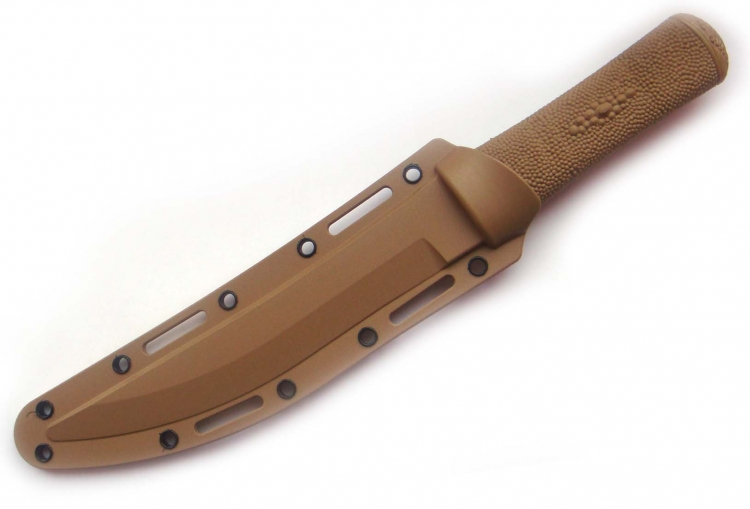
CRKT - Hissatu 2907D flat dark eartSeveral years ago I was seeking a true self-defense, or tactical, knife. A knife that I could defend myself with knowing it would accomplish that task very efficiently and effectively. Since I am no knife-fighter I started asking around of those that possess that particular skill set. My question, “What was the best self-defense knife?”

There really weren’t that many answers that varied a whole lot. What they universally did say, “Knife fighting is ugly and you are going to get hurt?”After a number of discussions I understood what they meant. I decided then to avoid knife fights.

But, I still need to possess a good knife for tactical purposes. The experts helped me narrow it down. But they also pretty much said the same thing pistol experts say when asked what is the best pistol to own. It has to “feel right” in your hand.

Of course there are some standard traits of a good tactical knife:

  • Sturdy blade that won’t break easily
  • Piercing capability
  • Sufficient cutting edge surface
  • Handle that is the right size
  • Handle that maintains grip even when wet

After doing a lot of research, testing a number of knives, and making a couple bad decisions I finally found the right hardcore tactical knife for me. It is a CRKT Hissatsu.

Here are the specs:CRKT-Hissatu-002

  • Open Overall Length:  12.25 inches
  • Blade Length:  7.125 inches
  • Thickness:  0.2 inches
  • Blade Material:  440A
  • Blade-HRC:  55-57
  • Blading Coating: titanium nitride
  • Grind:  Dual
  • Edge:  Plain
  • Handle Material:  Double Injection Glass Filled Nylon/Soft Textured Rubber Grip
  • Carry System:  Glass Filled Nylon Sheath

That knife is amazing! It fits my hand perfectly and I can move it with ease and confidence. That knife can pierce by simply setting it’s tip on something. I tested it’s puncture capability very unscientifically. I placed it on a substance that imitated human flesh. When very little pressure it pierced with ease. Next came slicing meat…again, with ease.

It takes an edge well with my diamond sharpener although I have to work at it. But, it holds an edge incredibly well. The blade is very sturdy and I have not a single concern that it will break being used as it is intended.

Yes, as you can tell, I really like that knife. And it is part of my tactical kit since 2012.

But, it does have one drawback…size. It is over 12” long, the blade is over 7” of that. In a tactical situation that is not a problem at all. You secure it to your tactical vest and you are good to go. But, trying to carry it in a non-tactical (a.k.a. civilian) setting can get you some unwanted attention.

And then there is the situation where you want an easier to access knife for close quarters battle situation. Example: You enter a room, bad guy grabs your AR that is attached to a sling, and you have to get up close and personal. It may be difficult to draw your CKRT knife in close quarters, or take too long. Having a smaller tactical knife readily available might be the logical choice. But that is another article all together.

Here is some information directly from the CRKT website –

James Williams, the designer of the Hissatsu™, is a former Army officer and martial arts practitioner/instructor with over 45 years of experience. He knows cutlery as President of Bugei Trading Company, producer of fine Samurai swords. As one who has trained tactical law enforcement and military forces for the SureFire Institute, he has developed a unique and powerful approach to unarmed combatives. His system of defensive tactics, known as The System of Tactical Strategy, has its origins in the ancient Samurai military systems as well as the Russian military art of Systema.

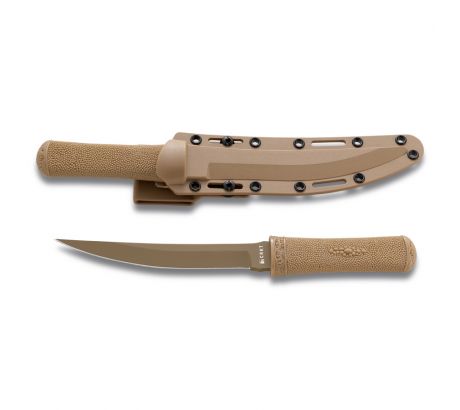
CRKT - Hissatu 2907D flat dark eartA key part of this system is the Hissatsu based on an old Japanese design. The unique shape of the blade, made famous by the legendary Samurai warlord Takeda Shingen, provides enormous penetrating power and superior slashing capability in one blade, which works with the natural motion of the body. James arrived at this modern version as a backup weapon for close-quarters combat. This is a focused single-purpose knife for use in anti-terrorist/close-quarters battle (CQB) environments, either as a primary or a secondary weapon to augment the handgun in the hands of trained professionals.

The Hissatsu’s dual grind Tanto blade is 440A stainless steel, high satin finished. For those who prefer a non-reflective finish, the Hissatsu is available with a black EDP blade or in Desert Tan dress with titanium nitride blade coating.

The handle is in a traditional Japanese pattern, but is Twin-Fused™, double injection-molded with a high-impact polypropylene core, butt and hilt, and a non-slip soft textured rubber grip handle surface. Oyatsubo, the emperor node on the omote (outside/public side) of the tuska (handle), allows you to know which direction the blade is facing, even in compromised lighting conditions, by touch.

The custom injection-molded glass filled nylon sheaths (in matching black, Desert Tan or blue) grip the knife firmly, and have removable belt clips which can be attached high or low, vertical or horizontal with the black two-piece screws provided. There are also holes and slots for carry on belts, webbing or equipment.

The Hissatsu is intended for use only by trained law enforcement and military tactical team professionals. Enormous power in a light, flat package makes for easy carry with many options for placement on tactical gear.

Know that the CKRT Hissatsu is an excellent choice, my choice, for a tactical self-defense fixed blade knife. It is in every way a “BUY!”

Buy It !

OK, so now here is the downside…please don’t hate me…the knife is no longer in production, CRKT discontinued making them. The good news is they are still out there to be bought. If you want a desert sand color you have to go to eBay. They only show up occasionally. For Black you can get them on Amazon.

Amazon - CRKT Hissatu 2709 knifeNow a really cool thing…there is a “training blade” version. These are great to train with. No rubber blade crap, the trainer version is dull aluminum. This trainer blade gives you a great opportunity to train like you will fight.

CRKT - Hissatu 2709 blue training knife

2009 - 2019 Copyright © AHTrimble.com ~ All rights reserved
No reproduction or other use of this content 
without expressed written permission from AHTrimble.com
See Content Use Policy for more information.

Cold Steel Knives: Secret Edge & Brave Heart

Cold Steel KnivesEvery once in a while a product comes along that is so obviously bad that I just can’t contain myself. I am talking about a couple of knives that will probably hurt you more than any potential attacker. But let me digress for a minute…

I have been working on a knife review for some time now. I’ve reviewed ESEE knives already. They are some of the best knives in the world. But, here is why I am so into knives right now. Remember, I took onPointTactical’s Surviving Deadly Contact class in September? < read the article here > In that class I learned about knife fighting. Nothing too in-depth but some great skills, but most of all I learned the value of a good quality tactical knife.

Our instructor had a great knife on him that he used for demonstration purposes. A fantastic little knife…and $500.00!!!!  No, that isn’t a typo…$500 for that little beauty. No way I can afford a knife that expensive. So I started looking for a decent substitute. Cold Steel knives were recommended to me, specifically the Cold Steel Brave Heart model.

While doing the research on it I also came across another model, the Secret Edge that also look promising. I bought both. I am sorry I did. Let me explain.

Cold Steel – Secret Edge:

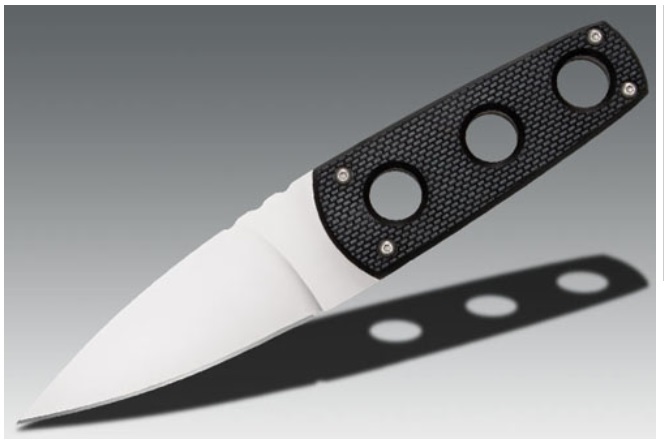
Cold Steel Knife - secret edgeFantastic little Kydex sheath for it. And that is the last of the “pros” for this knife, everything else is a “con”, literally I believe. The steel is a very bright and shinny, and the Japanese AUS 8A stainless steel just doesn’t feel as if it is a good steel for this knife. It was extremely awkward and difficult to get out of the sheath. The size of the handle was extremely small and I could never get anywhere near a decent grip on it. But here is the worst part… Everything I tried my hand wanted to slip onto the blade. And while I might not like the steel it would slice the crap out of my fingers the first time I tried to penetrate anything.

The knife retails for over $40.00 It isn’t even a good deal at $9.99. This knife sucks and will get you hurt!

Specifications –

•   Blade Length: 3 1/2″
•   Overall Length:6 1/2″
•   Steel:Japanese AUS 8A Stainless
•   Weight:2.4 oz
•   Blade Thickness: 2.5 mm
•   Handle:3″ Long. G-10 Griv-Ex™ Style
•   Sheath:Secure-Ex® Neck Sheath

Do not buy this knife!

Cold Steel – Brave Heart:

Once again, nice Kydex sheath! I think Cold Steel should think about just making sheaths for the good knives Cold Steel Knife Brave Heart knifeon the market. The cheap little clip on the back of the sheath would last about 10 minutes under harsh conditions. But the sheath does have some slots for paracord to be used.

Taking the knife out of the sheath was much less awkward than with the Secret Edge, but still not smooth and natural. And while the handle material is better quality and less likely to see your hand slip and slide, there is still protection preventing your hand from slipping forward onto the blade.

And once again, the blade is Japanese AUS 8A stainless steel just doesn’t feel as if it is a good steel. This knife retails for nearly $70.00!  The stitches required after using it will cost you much more.

Specifications –

•   Weight: 2.8 oz.
•    Blade: 4″
•    Thick: 2.8mm
•    Overall: 7 3/4″
•    Handle: Kraton®
•    Sheath: Secure-Ex®
•    Steel: AUS 8A Stainless
•    Made in Japan

Do not buy this knife!

Summary –

Both of these knives really suck and will get you hurt. No, I am not some fancy “know-it-all” knife fighter. And maybe that is the problem. But from everything I tried and everything I saw I don’t like either of these knives.


2009 - 2019 Copyright © AHTrimble.com ~ All rights reserved
No reproduction or other use of this content 
without expressed written permission from AHTrimble.com
See Content Use Policy for more information.

Cross-Band Radio Repeater – Part #2

cross-band repeaternote: first appeared in early 2015

I really saw a need for “repeater” capability when a bunch of individuals got together and all they had was handheld radios.  Distance and Line-of-sight always limited their usefulness.  And when it came to responding to a disaster or emergency situation handheld radios are virtually essential.  But once again, they have limited transmit and receive capability.

When I stumbled upon the Baofeng UV-5R handheld radios <click for more info> a few years ago I knew I had in my hands an invaluable resource for “preparedness”, especially after “grid-down.”  I cannot stress enough what the ability to communicate will mean then or even during less dramatic disaster situations, or even while hunting or camping.  I was aware of “repeater” technology through my government day-job but it was appeared to expensive and complicated.

When I first got my Ham radio license I began my search for the best all-purpose radio that my budget could afford.  That took me to decide the Yaesu FT-8900R <click for more info> was it.  Once I dug into it I realized how easy it was to set it up for cross-band repeater operation, I knew I had the answer in my hands.  However, I decided a used Yaesu FT-8800R was a more economical solution for setting up a field-going repeater.  And that led me to this “build” and documenting it for you in this article.

In Part #1 I covered the first five steps, in this post I will conclude the build and summarize my experience at the end.

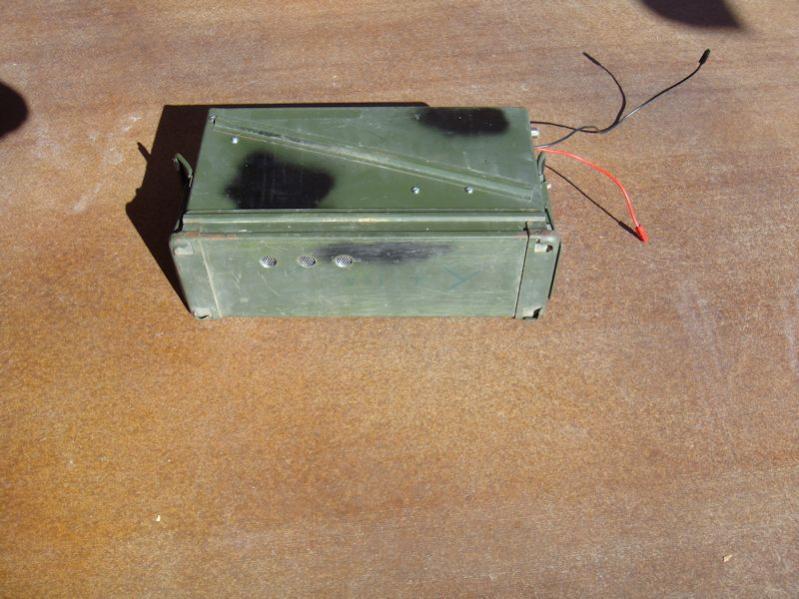
Yaesu FT-8800r based cross-band repeater.

Finished Product – Complete with the Yaesu mounted inside.


Step #6 –

Yaesu FT-8800r based cross-band repeater.I am installing the remote head separate from the radio body.  This is to allow the rear of the radio unit to be accessed from the front of the box.  And it allows the radio to run a bit cooler since the head is separate from the body.  To get the remote head installation bracket properly installed I used a piece of 2″ aluminum angle to give the bracket a solid mounting surface.  All mounting bolts utilized star washers to prevent the nuts from inadvertently spinning off. The remote head is mounted as “dedicated” for the repeater and will not be removed for any other usage needs.

Step #7 –

Yaesu FT-8800r based cross-band repeater.This was the easiest of all brackets to mount.  My only concern here was mounting the microphone bracket where the microphone would easy to grab while keeping it out of the way of the rest of the box contents, including the wiring.


Step #8 –

Yaesu FT-8800r based cross-band repeater.Last came putting it all together as a complete ready-to-go repeater package.  Couple notes:

  1. I had double fuses in the box.  The power cable coming in had a fuse on the positive and negative.  Then the power (+) cable to the radio had a fuse as well.
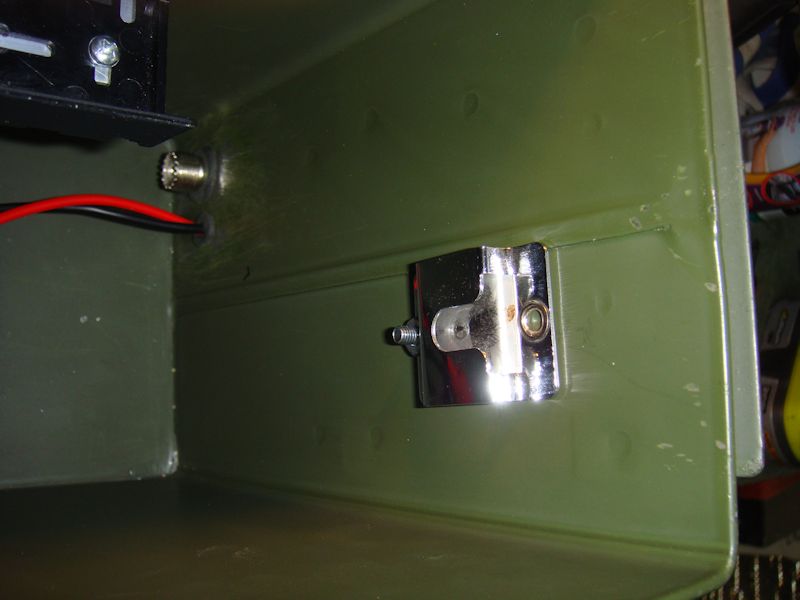
  2. Notice the short antenna coax jumper cable from the “through-the-box” double male 239 to the rear of the radio.  I used an 18″, I could have used a 12″.  Using an 18″ would enable me to remove the radio unit and set it on top of the box for troubleshooting or any other reason.
  3. I built my own remote head cable since all the commercially built cables were really long.  I didn’t want all that cable coiled up in the box so I built my own 6-wire.
  4. All my wire connections are Anderson PowerPole.  I use them for everything and doing so here ensured compatibility now and in the future whatever change might come…including repairs if needed.
General Question & Answers (questions from folks that have seen the repeater) –RadioAntennaCar
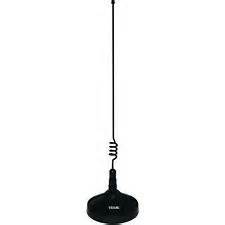
  1. Can a magnetic mount external vehicle dual-band antenna be used with this repeater?  Yes.  Since the antenna connection on the exterior of the box is a standard 239, basically any antenna can be used with this unit.  I slapped a Tram 1185 Amateur Dual-Band Magnet Antenna directly to the metal box and it worked just fine. It gave the repeater a very low profile and hard to spot.
  2. What antenna do you use with this unit?  I built a highly portable antenna for use with this unit whether using it as a repeaters or as a base unit.  I built it to blend in with the desert surroundings here in the desert southwest.  I will post an article about that soon.  But any dual-band antenna will work.  The heart of the antenna was a J-pole designed by Dr. Ed Fong WB6IQN of UC Berkeley, featured in the Feb. 2003 issue of QST.
  3. What do you use to power this unit?  I built it to work with the 12v 105 amp hour Energizer AGM gel battery I purchased through Sam’s Club. I expect the radio would operate about 1 – 2 days without the need for charging. I have two 30w solar panels with a charging unit to hook up to the battery.  A GoalZero charger controller handles regulating the battery charging.  I can run the unit with my Honda EU2000i if need be.
  4. You mentioned “base station”, explain?  If I am not needing a repeater, I can use this unit as a base station. I just leave the lid off and place the box where I don’t have to lay on the ground to use it.  It has everything needed to be able to operate it just fine as a base station.
  5. Do you set it on the ground to use?  No, not really.  I would set it on rocks to get it up off the ground.  I am working on a lightweight aluminum stand with folding legs to keep it about 6″ off the ground.
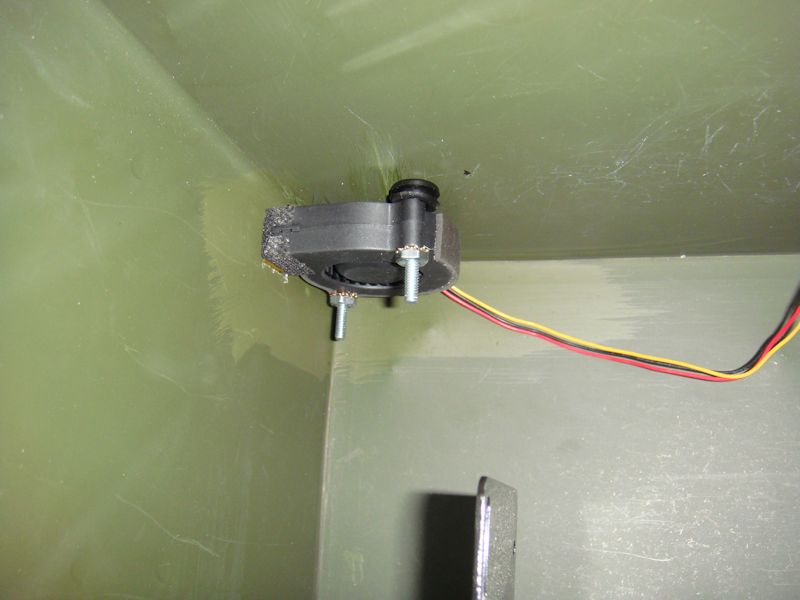
  6. What water-proofing have you done to the box?  Not much.  The box itself is extremely sturdy and the lid has a rubber seal.  All the screw/bolt heads that protrude on the exterior of the box have all have silicone seal on them.  The vent holes are the weak-link; fan and intake.  Not much I can do about that except maybe place a cover over the box that would act like a roof.  I might consider that when building the stand for it.

If you love your handhelds for ease of use, you will love this repeater to extend the range of your beloved handhelds.  Enjoy!


2009 - 2019 Copyright © AHTrimble.com ~ All rights reserved
No reproduction or other use of this content 
without expressed written permission from AHTrimble.com
See Content Use Policy for more information.

Cross-Band Radio Repeater – Part #1

cross-ban repeaternote: first appeared in early 2015

In my day job I use often radios over very long distances.  To accomplish this the government has installed a series of repeaters in various locations around our six county area.  Repeaters make it possible for me to talk to folks hundreds of miles away as if they were sitting around the corner.  I wanted that same capability for any disaster or “grid-down” situation that I might have to personally deal with.  That led me on the journey to come up with my own repeater capable of operating in the field for long periods of time in rough conditions.  Here is that story…

Mission –

Provide the ability of handheld and mobile radios to communicate when line-of-sight was not possible.  Provide a dual band Ham radio unit that was field-going and sturdy/rugged to use when a repeater was not required.

Requirements & Limitations –
  1. Must be capable of repeater operation on 2m and 70cm bands.
  2. Must be a rugged, sturdy radio capable of operating in the field.
  3. Must use 12vDC power.
  4. Must be very conservative on power usage.
  5. Should be easy to program, set-up and use.

Radio of choice – Yaesu FT-8800R (to read more about the radio read the 2-part article posted 3 days ago.).

Box of choice – Army Surplus 40mm ammo box in good shape, seal intact.

Yaesu FT-8800r based cross-band repeater.

Finished Product – Complete with the Yaesu Radio mounted inside.

Notes before staring – I laid out the box contents first.  I kept moving them around until I had what I thought was the perfect location for each component.  I then used a felt-tipped pen to mark the location of mounting screws.  I did this to make sure that all the holes I had to drill made sense in relation to the box itself.

Step #1 –

Yaesu FT-8800r based cross-band repeater.I drilled a hole for the double-male 239 connector to fit in and pass through the box.  This gets the antenna lead from the radio to the outside of the box while making sure the seal stays “burr-free” and actually water tight.  The hole was slightly larger than the 239 barrel diameter.  The rubber grommet was purchased at Lowes.  I won’t put in the sizes of drilled hole, grommet, etc. since your 239 double-male barrel may be a different configuration or size than the one I used.  Take the 239 to Lowes and buy the right size grommet by trying it out right there in the store.  Then you will know the size of hole to drill based on the size of the grommet based on the exact pass-through you are using..

Same thing for the power leads, buy the smallest possible grommet to get the wires through, then drill the appropriate sized hole based on the grommet size.  I wasn’t trying to make it water tight, just “tight enough” to keep dust and rain out.  If I ever make the repeater a semi-permanent installation I will slather silicone seal all over the outside of the grommets.  Based on the “finished product” picture above, I drilled the holes on the back-upper-right-top corner.  It will be approximately the same height as the ventilation holes from the ground when the box is laying on its side for operations.  I drilled the holes from the outside towards the inside to make it easier with the drilling.

Step #2 –

Yaesu FT-8800r based cross-band repeater.I wanted to move some “cooling” air around in the box to keep the radio as cool as possible.  The radio itself has a cooling fan on the rear of the radio integrated with a heat-sink.  But I wanted to move air around and through the box itself to keep the operating temperature as low as possible.  Just in case the radio fan couldn’t handle sufficient air movement on its own, I wanted to give it a little help.  The fan is to draw air out of the box by drawing air from the outside through the three ventilation holes.Yaesu FT-8800r based cross-band repeater.

The fan is a 12vDC fan for computers that I found on Amazon.  I chose this particular fan based on the large intake area of the fan and the “flatness” of its construction.  The fan sits over the radio but to the rear of the box in relation to the radio’s built in heat-sink and fan.  In the event that the fan stops working I was trying to leverage the flow of air coming off the radio unimpeded.  So I drilled the three ventilation holes above the radio’s heat sink just in case.  I was thinking that natural air flow might move the hotter air out through the holes should the fan stop working.

I cut appropriate sized hole in the upper rear corner of the ammo can to match the outlet of the cooling fan. It required a square hole, so I drilled the center, cleaned it up with a saber saw, then finished it off with a flat diamond file.  Then I used another grommet on the squared-off hole before mounting the fan.  I wanted some cushion between the fan and the box to minimize any potential problem from vibration.  If you wanted to reverse the airflow to blow cooler outside air onto the radio heat sink you can reverse the power wires of the fan and it reverses the fan rotation.

Next I drilled the holes for the two screws that holds the cooling fan housing in-place.  But I did a trial run to ensure I knew exactly where the fan housing had to be placed to match up with the square hole for the fan’s square outlet/inlet.  Notice that I used a couple of rubber grommet again on the screws securing the fan housing.  But this time I didn’t worry about putting the grommets into the holes.  I used them as a “stand-off” to properly align the fan housing and absorb vibration from the fan.  But the grommets sealed the holes anyways due to the compression from tightening them.

Step #3 –

Yaesu FT-8800r based cross-band repeater.Yaesu FT-8800r based cross-band repeater.I am concerned about moving air through the box so the radio doesn’t overheat.  But I also don’t want to run down the 12vDC battery that will be powering this repeater either. So I decided to install this temperature controlled rheostat to drive the fan. Since I am using DC to power the unit, the rheostat controller will continually pass on some minimal current to the fan.  So the fan will always be turning a little bit.  However, if the temperature is within the operating limits of the radio I don’t need the fan spinning like crazy, moving hurricane force winds through the box and eating up precious ampere hours from the battery.  So the rheostat will pass on more current as the heat rises and the fan will then spin faster.  Result – the fan doesn’t use any more juice than is needed conserving precious power for actual radio operations.  But as the temperature rises the fan spins faster pulling the hotter air out of the box through the ventilation holes located above the radio heat-sink.

I mounted the controller board close to the fan towards the rear of the box.  A picture a little later in the article will show its position.

To find the rheostat I did my search on Amazon for this little electronic beauty.  But what I noticed is these electronic parts come and go pretty quickly (i.e. what is available today may not be available next month).  So I am not quoting a specific part number of even manufacturer.  Just get online and search for a 12vDC temperature controlled rheostat, there will be plenty out there for you to choose from.  Or contact your favorite electronics site and they can direct you from there.

Step #4 – 

Picture of ventilation holes with metal mesh screening to keep little critters out.

Yaesu FT-8800r based cross-band repeater.Yaesu FT-8800r based cross-band repeater.Next I installed the radio housing bracket on the radio unit and placed it in the box towards the left side of the box.  Don’t crowd the cooling fan and keep the radio as far to the left in the box as possible.  Don’t forget that you will have several sets of wires (antenna & power) coming out of the backside of the radio unit so don’t crowd the front of the box either.  Using a felt-tipped pen mark the holes for the mounting bracket.  Then placing the lid into position mark the center of each ventilation hole; they should be directly in front of and above the radio’s heat-sink and fan.  Drill the holes for ventilation and the mounting bracket.

To pull in fresh (hopefully cooler air) that will pass over the radio’s heat sink then out of the box via the cooling fan, I placed three 7/8″ holes in the box lid above the radio’s heat-sink but on the “side” of the box, not the top.  This would pull air over the radio’s heat-sink across the top of the inside of the box drawing the warmer air outside via the fan.  Should the box’s cooling fan fail, the radio’s own cooling fan should pull air into the ventilation holes from the outside, or push it out, not sure which.  This may create a “positive-pressure” environment inside the box which in-turn moves air naturally out of the box’s cooling fan hole.

To reduce the derbies that might come in the box that I don’t want in there (i.e. dirt, sand, leaves, critters, etc.), I placed a metal screen mesh over the holes. Making a rough calculation on the reduction of air volume due to the screen material I decided on the three entrance holes in relation to the cooling powered exit hole. I might have to drill another hole, maybe two, but I thought this was a good guesstimate. I drilled them 7/8″ to give me enough room to secure the screen to the lid on the inside. I used a metal-to-metal glue to attach the screen material to the box lid.

I may put a thin layer of cotton gauze over the holes in addition to the screening to reduce the amount of fine dirt/sand that can enter the unit.  However, I would drill more holes if I did that to off-set the reduction in airflow from the gauze.

Step #5 –

Yaesu FT-8800r based cross-band repeater.Next comes installing all the various brackets for the radio components itself. First up was the radio housing bracket.  In Step #4 I talked about mounting the radio so the radio’s heat-sink was located next to the ventilation holes in the box’s lid.  This allows for cooling air movement even if the cooling fan fails.  But it leverages the cooling fan’s movement of air when all is functioning normally.

For practicality it is also very convenient to mount the radio with the rear of the radio exposed for access to the antenna, power, and programming ports.  Yes, this means you are doing a “remote head” installation.  And in my opinion works out well as an added bonus.  The radio’s control head is disconnected from the radio and that adds to keeping it just a bit cooler.


Go ahead and take the radio housing bracket off the radio and screw it to the box.

In the next part we will finish up the build.


2009 - 2019 Copyright © AHTrimble.com ~ All rights reserved
No reproduction or other use of this content 
without expressed written permission from AHTrimble.com
See Content Use Policy for more information.