Baofeng UV-5RA : ExpertPower XP-771 Elite 14.5-Inch Dual Band Antenna for the Baofeng UV5 Radio

I am a huge Baofeng UV-5RA handheld radio fan! Yes, it is a Ham Radio, but it is also much, much more and I love the little radio. It is a dynamo! The radio is a great size, packed full of features, reliable, and more than anything else EXTREMELY affordable. You can read more about my review of the Baofeng UV-5R radio here < UV-5RA review >. This post is dedicated to the ExpertPower XP-771 Elite 14.5-Inch Dual Band Antenna Baofeng UV-5R antenna : ExpertPower XP-771 Elite 14.5-Inch Dual Band Antenna (144/430Mhz U/V SMA-F)(144/430Mhz U/V SMA-F).
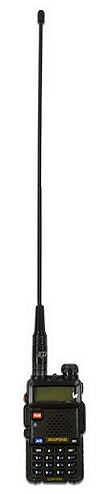
The antenna that comes with the unit is the typical “stubby” but works just fine. It is solid, sturdy and will do the job. However, for the frequency ranges of the UV-5R radio I wanted an appropriate sized antenna for better overall operation (range of reception and transmission). To fit that requirement I chose the ExpertPower® 14.5″ Dual Band Two-way Radio Antenna SMA-Female.

The improved gain performance results are noteworthy for a little handheld: 2.15dBi (144-146 MHz), 3.5dBi (430-440 MHz).

This antenna is very sturdy and works as advertised. And for $8.55 at the time I originally purchased it, it is hard to beat. It will run you about $10 – $12 now up on Amazon. Search hard, you might find a better deal, especially for a “quantity” purchase or group buy.

I will only use the stubby antenna when the longer antenna would get in the way, or when I purposely want very short ranges. Yes, there are times when I would want to keep operational range to a minimum. Think OpSec (Operational Security). Some folks (purists) might correctly refer to that as ComSec (Communications Security).  But when the extra range is needed (reception and transmission) I will use the 14.5” antenna. Also, there is a marked improvement in the quality of reception at any range when using this longer antenna. I am not sure if it is the additional length or simply a better quality antenna, maybe both.

Some Tech Specs:

  • ExpertPower XP-771 Elite 14.5-Inch Dual Band Antenna (144/430Mhz U/V SMA-F) Boafeng UV-5RFrequency Range: 144-146, 430-440 MHz
  • VSWR: less than 1.5
  • Gain: 2.15dBi (144-146 MHz), 3.5dBi (430-440 MHz)
  • Maximum Power Input-watts: 50 W
  • Height: 14.4 inches
  • Connector: SMA-Female


Antenna Flaw –

There is an inherent flaw to this antenna. However, the flaw is not unique to this particular antenna, it is present in all of the 14.5″ antennas I researched. If you look at the picture to the right, see the red arrow? It points to the area Baofeng-UV5R-antenna4where the antenna itself (stick) goes into the antenna base. There is a very small gap around the antenna in that spot. OK, maybe “flaw” is a little excessive, but, there is a problem with all antennas like this that could turn into a larger problem down the line. But, not to worry…I have a fix for it. I will explain how to correct this problem and strengthen the antenna at the same time.
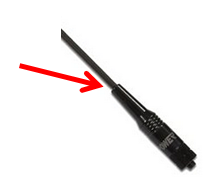
Le t me explain the problem first. If it were raining, rain could roll down the antenna and get into the antenna base and then make its way to the point where the antenna connects to the radio. The moisture itself could enter the radio or just collect in the base itself and eventually corrode the metal potentially causing a connection/operations problem.

But it is a relatively easy fix in my opinion. And there is a “bonus feature” when you are done with with very minor fix, a stronger antenna less prone to fail at that inherent weak point.

To implement the “fix” do the following…Performix Liquid Tape - Electrical
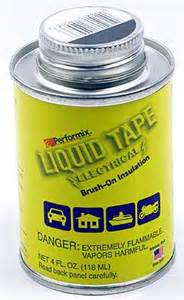
Step #1 – Go to your local hardware store and buy:

  • Performix Liquid Tape – Electrical
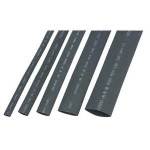
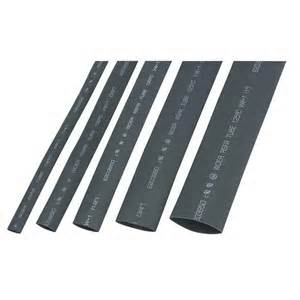
  • 1/2″ electrical shrink wrap, 3″ lengths are fine.shrink wrap for electrical wire
  • 5/8″ electrical shrink wrap, at least 3″ long but preferably 4″ – 5″ in length. Fastenall carries longer lengths of shrink wrap at very good prices.
  • Option, buy only 1/2″ electrical shrink wrap, but in 5″ lengths. This won’t work with a single piece of 5/8″ shrink wrap, it simply won’t shrink down enough.
  • If you don’t already own one, buy a long-handled Bic lighter.
Step #2 – With a toothpick apply a very small amount of liquid tape to the gap between the antenna “stick” and the antenna base. ExpertPower XP-771 Elite 14.5-Inch Dual Band Antenna for the Baofeng UV-5R(see the read arrow in the above picture pointing at that gap.) Use the toothpick to get the liquid tape AntennaFix2from the can and then use it to push a small amount of the liquid into the gap all the way around. You are not trying to fill up the gap all the way to the base. Just put enough to create a “gasket effect” in the gap.
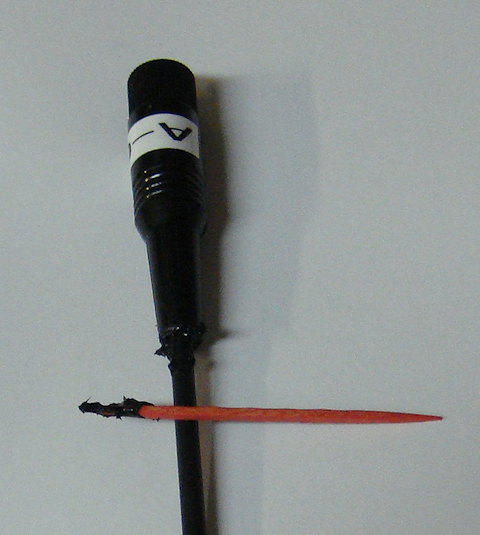
 

Clean up the excess Liquid Tape off the antenna. Only worry about it being “reasonably” cleaned up. This will get covered up with shrink wrap and no one will see it when you’re done.

ExpertPower XP-771 Elite 14.5-Inch Dual Band Antenna for the Baofeng UV-5R


Now, put the antenna down and leave it alone for a day. This will allow it to dry completely. Don’t get impatient, allow it to thoroughly dry. And do yourself a favor…don’t set it where your dog or toddler will find it and chew it to pieces.
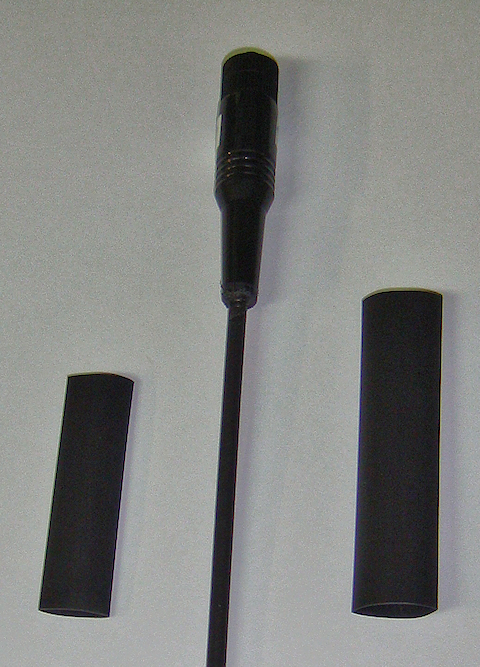
option #2

option #1

Step #3 –You now have two options, choose the one that fits the parts you have on-hand.

Option #1 : While you are waiting for the liquid tape to dry, get your shrink wrap out. Cut one piece of the 1/2″ shrink wrap to a length of 2″ – 2-1/2″. Leave the 5/8″ piece at least 3″ in length.

Option #2 : You will use a single piece of 1/2″ electrical shrink wrap that is 5″ – 6″ in length. You don’t need to do anything to prep this option.


Step #4 – You’ve allowed the liquid tape to dry for a day. You also have prepped your shrink wrap based on your “option” choice and you are ready to go. You kept the Bic lighter out of the hands of your 4-year old, so your house is still standing. You are now ready to put the shrink wrap on.

Step #5 – OPTION #1 :Take the 1/2″ piece of shrink wrap that you cut to 2″ – 2-1/2″ in length and slide it over the ExpertPower XP-771 Elite 14.5-Inch Dual Band Antenna for the Baofeng UV-5Rknob of the antenna. Move it all the way to the base of the antenna. Push it, and work it down, so the shrink wrap goes slightly over the expanding base of the antenna. Using the long handled Bic lighter heat the shrink wrap in-place and allow it to cool. DO NOT OVER HEAT THE SHRINK WRAP! If you do, you can damage the antenna. You want to heat the shrink wrap just enough to shrink it up solidly in contact with the base and the antenna stick itself, especially where the antenna enters the base.

Once the first piece of shrink wrap is cooled down take the longer 5/8″ piece of shrink wrap and ExpertPower XP-771 Elite 14.5-Inch Dual Band Antenna for the Baofeng UV-5Rslide it over the antenna knob as well. When you get to the antenna base keep sliding the shrink wrap over the expanding base until it won’t go any further. It should slide on well past (or lower) than the first piece of shrink wrap that you put on. There are small ridges on the antenna base; you should be able to work the shrink wrap over the first ridge line (see the picture to the right).

You will now heat this piece of shrink wrap as well. But, you may have to hold the shrink wrap in-place with one hand to ensure that it stays as low on the antenna base as possible. Make sure it continues to cover the first piece of shrink wrap while you heat it.You want the double-layer of shrink wrap for bet protection.

Make sure you have a nice “snug” shrink against the antenna stick towards the top of the antenna. DO NOT OVER HEAT THE SHRINK WRAP! If you do, you can damage the antenna. You want to heat the shrink wrap just enough to shrink up solidly in contact with the base and antenna stick.

OPTION #2 : If you are using a single piece of 1/2″ electrical shrink wrap that is 4″ – 5″ in length, you will slide it over the knob of the antenna. Move it all the way to the base of the antenna. Push it, and work it down, so the shrink wrap goes as much over the over the expanding base of the antenna as possible. Using the long-handled Bic lighter heat the shrink wrap in-place and allow it to cool.

DO NOT OVER HEAT THE SHRINK WRAP! If you do, you can damage the antenna. You want to heat the shrink wrap just enough to shrink it up solidly in contact with the base and the antenna itself, especially where the antenna stick enters the base. Pay particular attention to “rolling” the shrink wrap onto the antenna stick to make a really good tight wrap. You don’t want gaps at the top where the shrink wrap ends on the antenna stick. Roll it around while it is hot to ensure it is in solid, gap-free, contact with the antenna stick. (see picture below) Yes, I roll it with my fingers, but it may be too hot for you. Use gloves if you need to.

Step #6 – If the end of the shrink wrap, opposite of the antenna base, still appears a little “loose” allow it to cool completely. Once it is cool, then try applying some more heat to it to finish the shrinking process. But remember DO NOT overheat the shrink wrap or antenna while doing this. I found after doing three antennas, that once the heat shrink is sufficiently heated and close to completely shrunk up against the antenna stick and base, that I roll in between my fingers tightly pressing it to the antenna stick. Yes, it is a little warm but not uncomfortable or painful. Disclaimer: Yes, its hot. So be careful not to burn yourself. Use gloves if you need to protect your fingers.
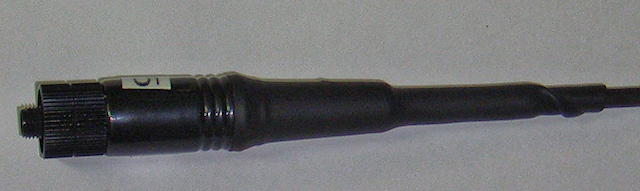
completed option #1 view
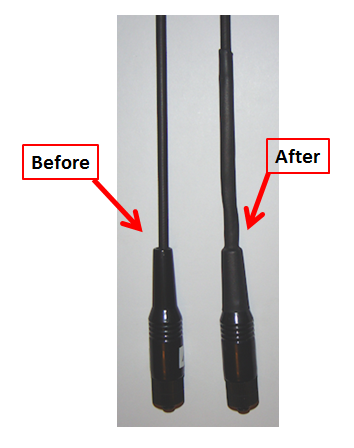
completed option #1 view

completed option 2 view

completed option #2 view


Now that you have completed the “fix” you have a virtually waterproof antenna abse. And remember the “bonus” I spoke of? By adding this fix you also have a much stronger antenna that is far less likely to fail at the point where the antenna stick enters the antenna base. It is at that point where most antennas fail during their lifetime.


2009 - 2020 Copyright © AHTrimble.com ~ All rights reserved
No reproduction or other use of this content 
without expressed written permission from AHTrimble.com
See Content Use Policy for more information.
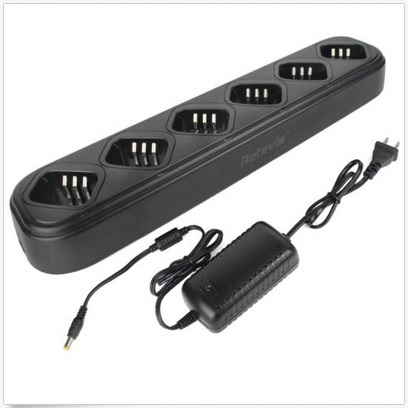
Retevis Universal Rapid Charger

Retevis Universal Charger reviewnote: article first appeared in 2015.

You know me…I can’t ever leave well enough alone. And once again I am going to prove that to be true. But maybe, just maybe, it will be a good thing for you that I let my ADD/ADHD run rampant on this one. I think you will like what you read…if you have Boafeng radios.

Some time ago I told ya’ll that I have a radio cache for my church’s disaster response folks. I have eight radios in total plus two additional radios for leadership personnel for a total of ten radios. If you read the article you would know that each kit has its own charger base, a spare battery as well, plus an 12vDC adapter cable to use the charger base with any 12vDC power outlet. The idea was to make each radio kit a stand-alone kit that was capable of supporting its user independently of the other users…even in rather remote/primitive situations.

But, is that the best idea? Should that be the only idea? Did I sufficiently play out different scenarios that could affect that? Bottom line…is there a better option…or at least another option?

Sorry about that…too many questions to be sure. However, the more experience I gained with the radio cache and as the different scenarios came to light I had to re-evaluate my thinking.

Have you been in an airport lately? One of the things I’ve noticed are all the people congregating around electric power outlets. They have various brands and styles of phones plugged in wall power outlets along with laptops and tablets. They all want their power fix to keep their device up and running. Could there be a similar problem on the horizon with radios during emergencies, disasters, or grid-down? Of course. What if there were only two electric power outlets available but we needed to charge ten radios? What? The only answer could be take your turn!

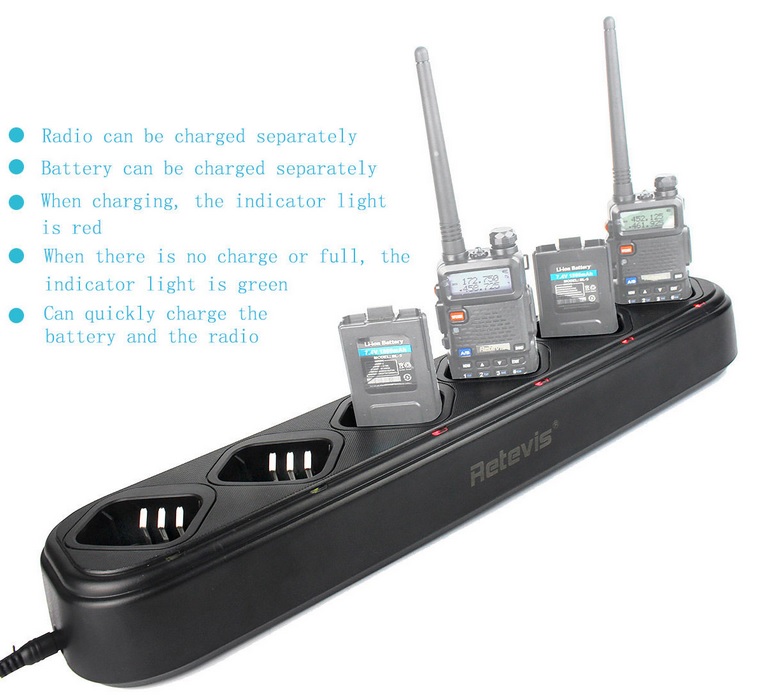
So, a couple of months ago I was doing some general browsing of different kinds of power equipment for radios. Retevis Universal Charger charges baofeng radiosLow and behold I see this picture of the Retevis Universal charger. Bingo! I flashed back to my fire department days and remembered chargers that we had that could charge multiple radios at one time in one charger base. I loved the idea, poured over all the specs, read the reviews, read the questions that had been asked, and I thought this could be a real answer. As a bonus that I will write about in a couple of minutes, was the way this charger connected to its power supply. Many manufactures, especially from China, make their “widget” to run off of an electric power standard such as 13vDC (input). But, they will have that power requirement internal to the “widget” itself. The power supply can be something like 110vAC or 220vAC, and either power supply can be used with the “widget” because the power supply is a separate piece of equipment. When they put the “widget” in the box for shipping, if it goes to America they throw in the 110vAC power supply, if it is going to Europe then they throw in the 220vAC power supply. That saves the manufacturer from making two completely different “widgets” because of different power source availability, they simply make a different power supply unit for each geographic area.

Technical Specs –
  • Weight: 28.29oz(802g)
  • Dimension: 18.89 x 4.34 x 2.56inch(480 x 110 x 66mm)
  • AC/DC Adapter
  • Weight: 6.77oz/192g
  • Input: 100-240V~50/60Hz 0.8A
  • Output: 13.2V-3.0A
  • Input: 12vDC
  • Output(Li-lon 2xCells): 8.7V-500mA
  • Output(Ni-MH 6xCells): 9.4V-500mA
  • Output(Li-lon 1xCells): 4.2V-500mA
  • Heavy duty durable design of poly-carbonate plastic.
  • The charger can be hung on the wall to save space.
  • Capable of controlling the charging process to ensure high efficiency.
  • Securing the charging process with multiple protection solutions.
Retevis Universal Charger dimensionsRetevis Universal Charger charges radios and batteries
My Observations –

I was looking closely at the pictures in the ad. I noticed that the power supply had a label that read “Input: 110v” and “Output: 13.2v” and a thought struck me. I crossed my fingers and pressed “buy.”

RetevisMultiCharger-006aYeah, so here’s the deal…I didn’t have a problem that needed a solution. I was just looking around, saw a solution, and realized that I could have had a problem all along and it just hadn’t manifested itself up to that point. What I am trying to say is this…I don’t have a mission statement for this piece of equipment. I don’t because I didn’t have the problem that I had to develop a solution to “cure.” I just got really lucky and found the solution before I realized I had a problem.

I ordered one of these charger units, it was straight from China. It took about three weeks for it to arrive on my doorstep. No big deal, I was in no hurry, and there was no pressing need. I pulled this bad boy out of the box and was immediately impressed with it. It appeared to be a solid piece of equipment and I liked what I saw. Of course it was immediately time to plug this puppy in.RetevisMultiCharger-006

As I plugged in the power supply I looked at the bottom and sure enough there was that label, big as life, “Input 110vAC – Output 13.2vDC.” I was even more hopeful!

As a side note…I always plug in the power supply to the wall outlet, and then I plug in the power supply to the piece of equipment. Why in that particular order? One day a couple of years ago I plugged in a power supply (yes, from China) and it “popped” really loud and began to smoke. If the equipment had been plugged in at the time, I am sure I would have burned out not just the power supply but the equipment also. So, I try to ere on the side of caution…the power supply gets plugged in to the power source, then the equipment gets connected to the power supply. I don’t want any fried electronic gear if I can help it.

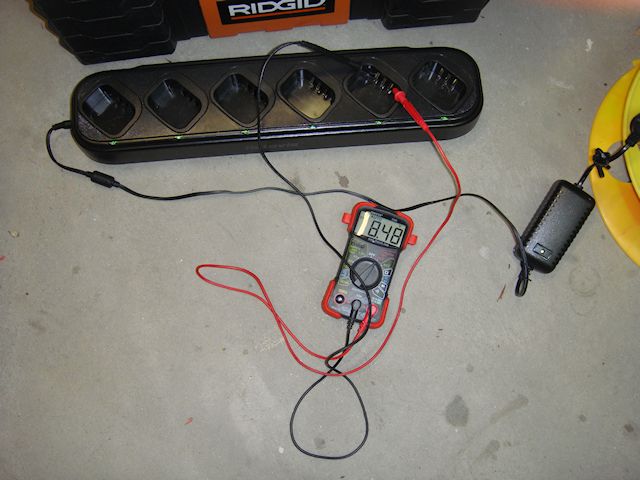
OK, I have the charger unit plugged in and I get out the trusty multi-meter and test the power supply’s output.

Power supply outputting the right voltage.

Power supply output voltage within the acceptable range for the charger unit

Then I tested each set of contacts in each of the charger ports. They test out at the right voltage range and within a couple of hundredths of a volt of each other. Perfect! Now I have a base line for comparison in my brilliant idea.

Charger ports testing out at the correct charging voltage.

Charger ports tested out at the correct charging voltage.

Next I hooked up a power cord to the vehicle power adapter of my portable power box. And it is showing virtually the same voltage as the AC->DC power supply that I just tested.

Power coming from my power box through the adapter cable is right on the money!

Power coming from my power box through the adapter cable is right on the money for the acceptable power range for the charger (13.27vDC). Less than 2/10ths of a volt difference.

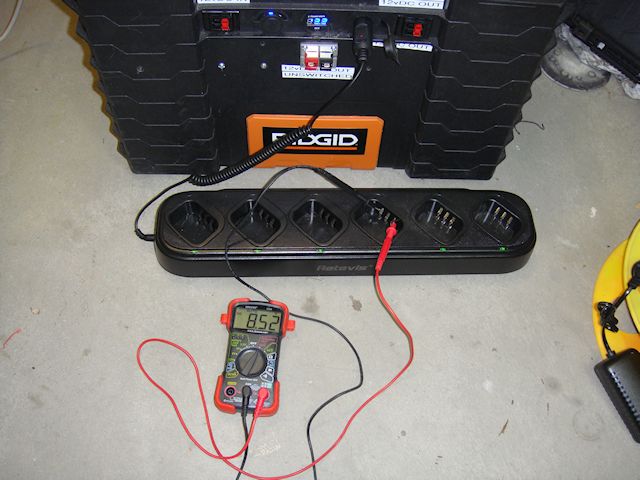
And then came the testing to make sure that the charger ports were throwing the right voltage as well.

Using DC power directly from my power box showing the right voltage coming from the charging ports. Less than 4/100ths of a volt difference.

Using DC power directly from my power box showing the right voltage coming from the charging ports. Less than 4/100ths of a volt difference.

Now the acid test…

Bonus! –

As you can see I was able to use my portable power box to charge my radios using the Retevis Universal multi-charger unit. I wrote about my portable power box a while back. It is basically a 12vDC deep cycle 100Ah battery with various in/out ports and the ability to be charged through standard 110vAC power supply or charged via solar panels with a charge controller.

When I plugged the 12vDC power cable from the portable power box into the charger base. No smoke, no pop, no tripped circuit breakers…it was looking really good. All the lights on the charger base were on just like they were when I was running the charger base off regular house current.

So here is the bonus, maybe the best aspect of this charger, it works off of a 12vDC power source without any problems. Now, instead of having six 12vDC charger/adapter cables spider-webbed off my portable power box I can have a single charging station with a single cable handling all of it. That means you can run this charger unit off any vehicle’s cigarette lighter outlet. Sweet!

Charging batteries and radios from a 12vDC power source using the Retevis Universal Charger.

Charging batteries and radios from a 12vDC power source using the Retevis Universal Charger.

Summary –

If you are running multiple radios for your family, group, church, etc. you might want to take a serious look at the Retivis Universal Charger for Baofeng radios. This is a great solution for the right application. I love it!

Where to buy –


<click here to buy>


2009 - 2020 Copyright © AHTrimble.com ~ All rights reserved
No reproduction or other use of this content
without expressed written permission from AHTrimble.com
See Content Use Policy for more information.

RIGrunner 4005H Power Distribution Unit

note: article first appeared in May 2016

Sometimes you just stumble onto a great piece of equipment. Sometimes you do it completely unaware of you needing that piece of equipment. Sometimes you are pleasantly surprised at the quality of that piece of equipment.

“Yes!” to all three of those when it comes to the West Mountain RIGrunner 4005H.

Over the last year and a half I have been working a whole lot on some great power projects. Correction, sometimes they have been radio projects but those too needed power. Years ago I standardized on Anderson Powerpoles for connecting all things power when it came to my radios. It seemed that every mobile radio I purchased had a different way to connect to a power source. And as you know, I like standardization…a lot.

Why? Because it makes things more inter-operable. And that applies to MOLLE tactical vests and pouches or radio rigs and power supplies. The solution became obvious to me early on that Anderson Powerpoles made the most sense.

Especially considering it makes it virtually impossible to cross-polarize your power. I like “dummy-proof” systems!

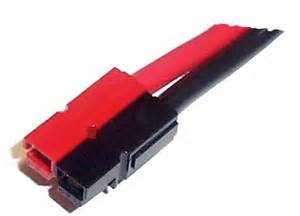
Using Anderson Powerpoles gives me a solid connection every time and makes it clear when connecting positive to positive and negative to negative. Gone! Were the scrambling around to figure out how to connect this or that radio to this or that power? They all had Anderson Powerpoles and naturally connected effortlessly.

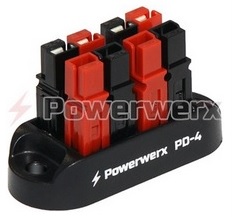
To generically distribute power in my Power-Box project I used a simple Powerwerx PD-4 unit. Any one set of the Anderson Powerpoles going in supplies the power, three sets distribute the power to whatever device needs it.

Two drawbacks –

  1. There are only three outlets for devices to hook to for a power supply.
  2. There are no fuses to protect the devices from any power problems.

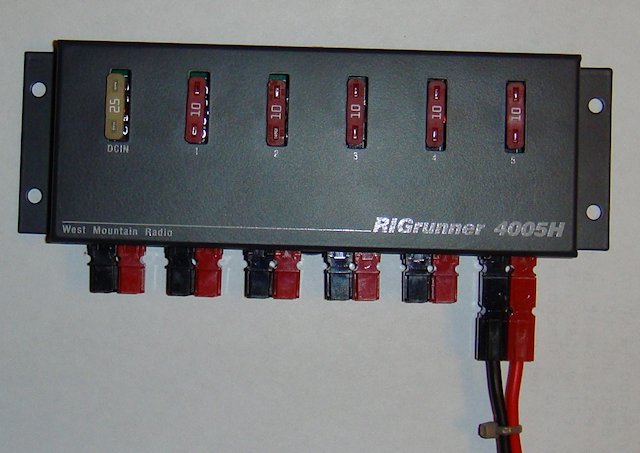
The West Mountain RIGrunner 4005H solves that problem very easily and rather gracefully. Yeah, I just used the term “gracefully” when talking about electronics. But, I am serious, this sweet little unit just matches that terminology to me. It is simple, clean, effective, efficient, and looks great.

But, notice I have yet to state the mission? Almost criminal on my part based on my long-standing advocacy of always having a mission for any piece of gear or equipment. So here it is –

“A cost effective method of distributing fuse protect 12vDC power to a variety of electronic devices using standard Anderson Powerpoles.”

Once again, I did my background research pretty well. I looked at available options, their features, and reputation. It was clear from the get-go that the RIGrunner was the choice.

This is the second product I’ve purchased from West Mountain Radio. I purchased the PWRgate PG40S Auto-Switch previously so I had a good feel for the overall quality of West Mountain Radio products. West Mountain didn’t disappoint me.

Let’s look at some information directly from their website…

Manufacturer Description –

RIGrunner is the most convenient and safest way to connect all of your DC equipment to a power source. It uses the excellent Anderson Powerpole® connectors, standardizing all of your DC connections. This RIGrunner can deliver up to 40 amps total through 5 outlets and is available with side mounted Powerpole® connectors. Side mounted connectors enable horizontal mounting. Works equally well for 6V, 12V, 24V and 48V systems. Operates at 40 amp continuous duty with 5 outlets in operation. 

Specifications –

Overall Dimensions (maximum, w/o cables):  1.4″ H x 7″ W x 3.0″ D
Weight:                                                             6 3/4 oz.
Voltage:                                                            Positive up to 48 VDC
Maximum total current:                                    40 amps
Maximum single individual outlet current:        40 amps (fuse protected)

Construction

  1. Built in USA to IPC-610 commercial manufacturing standards by an ISO9002 facility.
  2. Printed circuit board .062 FR4 material, extra heavy 3oz. copper, with greater than 1″ wide high current traces.
  3. Double sided, plated through holes, solder mask over bare copper, silk screened commercial grade printed circuit board.
  4. Enclosure: .062 aluminum, with attractive and extremely durable powder coat painting and clear silk screen labels.
  5. Power connectors: exclusively Anderson Power Products®Powerpole®.
  6. Connectors are arranged according to the ARES/RACES standard (see our links).
  7. Fuses installed are standard ATC/ATO automotive fuses available in 10 values from 1 to 40 Amps.
  8. Stainless steel hardware with PEM™ threaded mounting standoffs.

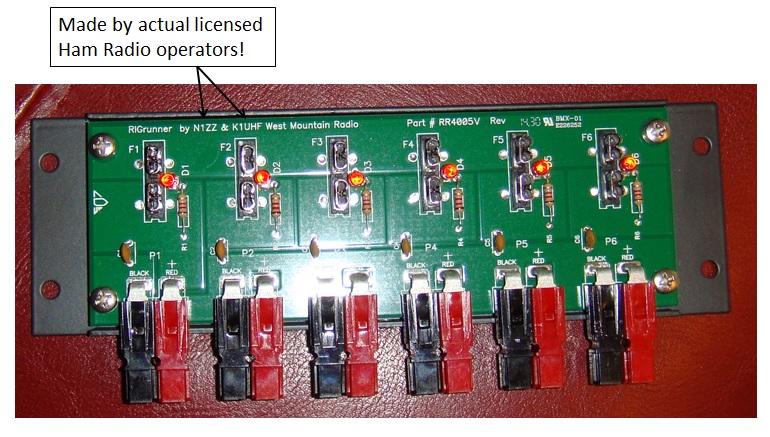
So, since the real meat of this unit is on the inside…naturally I had to open it up.

This puppy was a clean and graceful on the inside as it was on the outside. But, let me give some details –

  1. The case is solid and of a sufficient weight/strength/thickness to protect the sides from damage under any reasonable conditions.
  2. Two screws hold the case in place and can be easily removed to access the inside.
  3. Once inside the first thing I noticed was the quality look to the board. By quality I mean the board was clean, obviously well made, and the solder was first rate.
  4. I started poking around at the various components and they were all tight and securely soldered to the board.
  5. The Anderson Powerpoles themselves were tight and solidly connected to the board.

And then I noticed this…

The folks at West Mountain put their actual call signs on the board to show who it was made by. Now, that may not be a big thing to you, but to me knowing that Hammers were behind the design and manufacture of this unit just gave me a sense that it was done right by people who know.

The unit was easy to put back together and gave me that quality “feel” once again. This unit is made for real-life field operations.

So, was there anything that could be better about this unit? You know…the “Cons” side of things. Yes, two –

  1. The unit is not weather proof, not even weather resistant. This unit must be installed where it is protected from the elements. Rain, dust, snow, etc. can relatively easily enter the case and reach the board. I suppose you could silicone seal around the blade fuses and the Anderson Powerpoles to make it almost weather tight. So that is something to take into consideration. However, my applications do not require “weather-proof” or “weather-resistant” ratings so this is no big deal to me.
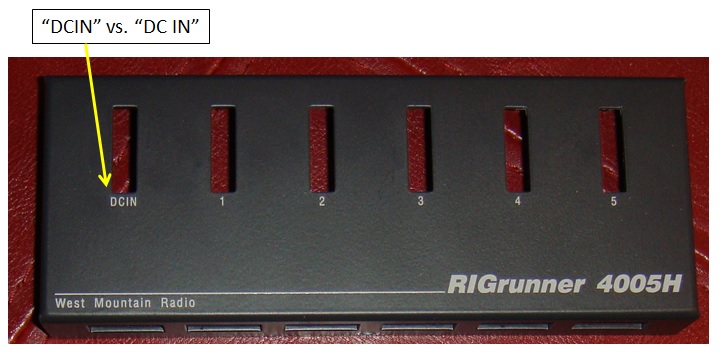
  2. Let me show you how picky I can be. The power outlets are clearly marked “1” – “5” with no problem correlating the fuse to the outlet. But, then I noticed the “DCIN” label. I was not really paying attention and trying to figure out what “DCIN” meant. About a second later, and a darkening red face, I realized that was the DC power inlet fuse. Yeah, sorry, mini-bran fart on my part. So I would rather see “DC IN” vs. “DCIN” and yes, I know it is extremely picky.

Occasional Issue –

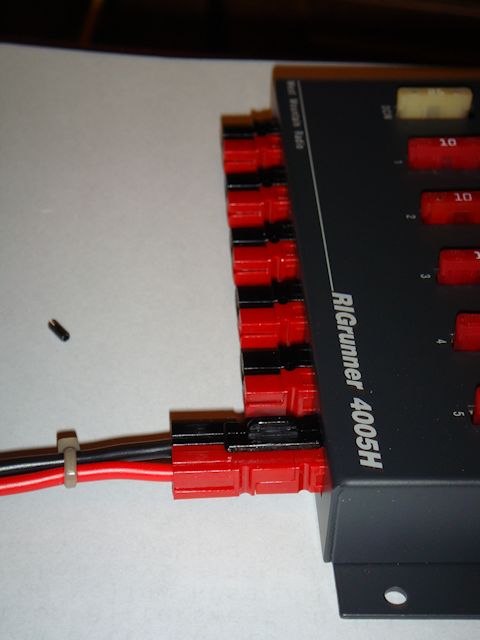
I never have experienced this myself but I did read where a couple of folks made the comment that on the rare occasion the Anderson Powerpoles separated from the unit. Not the ones mounted to the board, but the Powerpole (from the cable) plugged into the unit’s Powerpole seperated from the box connection. I tried like heck to get mine to separate by pulling on them and no success. OK, well that isn’t entirely true. They did separate but only as designed after apply considerable separating force to do so.

However, I wanted to make sure I included a “fix” just in case you might worry about that occurring in your set-up. So step-by-step…

Standard Anderson Powerpole connection example.


Used my punch and removed the roll pin from the connectors.


Got out one of my retention clips to stabilize and reinforce the connection.


The final product with the retention clip securely holding the connectors together.

Now, if you were still really worried about (i.e. obsessed) the connection, you could put a spot of Superglue on the retention clip. That would hold those puppies together through anything! Alternatively, you could wrap a piece of electrical tape around the retention clip a couple of times and that would hold the clip in-place as well. Problem (if there ever was one) solved!

Summary –

This is a great piece of equipment that functions flawlessly. On top of all that, it is solid, and will do the job for you. This product is an unquestioned

                          “BUY!”                              

< click here to go to West Moiuntain website RigRunner page >


Related Articles –

  1. Super PWRgate PG40S Auto-Switch


2009 - 2020 Copyright © AHTrimble.com ~ All rights reserved
No reproduction or other use of this content 
without expressed written permission from AHTrimble.com
See Content Use Policy for more information.
TRAP: Don’t fall for it…

I’ve noticed a rash of Internet articles the last couple of months promoting panic buying. While they don’t use the term “panic buying” that is exactly what they are trying to convince you to do.

Here are a few examples of clickbait article headlines:

  • Top Ten Things That Will Disappear in the Next COVID Wave
  • Top 20 Items to Buy Now
  • Top 15 Food Items That Are Disappearing Fast
  • What you must buy now before it is too late!

Well, that is a pretty limited sample of the article headlines that I am talking about, I could go on. But, you are smart, you get the idea. Here’s the problem…they are promoting panic buying.

So what if pinto beans are in short supply! You should already have your supply of pinto beans…or have a plan to acquire the correct amount of pinto beans. So there is no reason to go out and buy 100pounds of beans…right! Especially if you need medical supplies or ammo as well. You fall back on your priorities…not your panic.

Why use the great pinto bean scare? Several months ago a lot of people got sucked into the pinto bean panic. Meaning, that there was supposedly a shortage of pinto beans and that you better buy them now before they disappeared. So, a lot of people went out and bought pinto beans…thus creating the shortage…an artificial shortage. There never was any abnormal shortage of pinto beans…ever…period. Yes, meaning I checked it out myself…there were plenty on the shelf when supposedly they were all gone.

So when you read headlines…or the body of an article telling you there is some kind of shortage and you better go buy some top ten list…IGNORE IT! It is someone trying to talk you into panic buying.

So what should you do?

  1. Read the series of articles “Layering & the Common 7” <click here to start reading>
  2. Then review where you have the holes in your prepping, list them, then prioritize them.
  3. Then develop a plan to purchase, make, grow, or otherwise acquire those items to plug the holes.
  4. And above all…do not panic. There simply is no reason to and it doesn’t help.

Do not fall victim to the hustlers, hucksters, and wannabes out there.

  1. Get educated.
  2. Assess your needs.
  3. Identify the deficiencies in your preps.
  4. Have a plan to remedy those deficiencies.
  5. Work your plan.

Don’t fall for the calls to panic buy. Panic, like fear, is not your friend.


2009 - 2020 Copyright © AHTrimble.com ~ All rights reserved
No reproduction or other use of this content 
without expressed written permission from AHTrimble.com
See Content Use Policy for more information.

There I was…Green Chile Cheese Grits!

I have been busy as heck lately! The last two days I have been cutting and stacking firewood for this coming winter. Sunday I was spending time with my wife, going to church, baking bread for my neighbor, watered the garden, checked on the solar system, took a walk, talked to my oldest boy, and took a nap. Last week…well, I was busy all week. Actually, I’ve been busy for about the last two years…non-stop. And my website writing has suffered because of it. Maybe I should apologize…but then again…no, I won’t.

You see, if you have been following my website you know I have been building our retirement home / bug out location, building a driveway, build/installing a solar system, laying 700′ of water line, moving, gardening, and all other manner of getting our 40 acres ready for the apocalypse. So no, I don’t think an apology is in order. However, I do feel as if making amends to some degree is needed, required…probably an absolute necessity. So here it goes…

Green Chile Cheese Grits !

What the heck???   Yeah, green chile cheese grits. What better way to make amends than to give you a great recipe for an amazing breakfast dish. And I am telling you “Amazing!”

But first things first…if you are like me growing up as a kid I never heard of grits…I had no idea what the heck they were. If you grew up in the South then you knew what they were and that they could be prepared 1000 different ways…some of them really good. But, let me be clear…plain grits are terrible no matter where you live or how you try to manipulate the whole idea.

Yuck!

But, grits makes a great foundation for some wonderful tasting food…and that is what I am sharing with you today.

Step #1 –

I start out with basic grits. I put 1 cup of water in a microwave safe bowl along with 1/4 cup of grits. We use Quaker Oats Quick 5-Minute variety.


Step #2 –

As soon as the bell rings on the microwave we take it out and mix in 1/4 cup – 1/2 cup of Mexican blend cheese into it. Yeah, the amount varies on how much you like cheese. My wife tends towards the 1/4 cup of cheese…mostly wanting to cut down on calories. I like a lot of cheese. You have to figure out what is right for your taste. If you don’t like cheese…well, get off my website! (just joking)

We tend to buy the Great Value brand from Walmart unless something else is on sale. One thing for sure…we like the finely shredded because it melts faster/easier.

Optionally –

Step #3 –

Mix in Hatch Green Chile Enchilada Sauce. How much? Well, that depends entirely on your taste for, and love of, Mexican food. I like the medium, my wife likes the mild.

Notice the blue band at the bottom with the word “medium” printed on it.

Notice the green band at the bottom with the word “mild” printed on it.

Now, add in just a little of the green chile enchilada sauce at a time until you find the right flavor for you. Once I figured it out I just add until it is the right color.

Step #3 –

Add BACON…the most wonderful food in the world!!!!  Well, a close tie with chocolate 🙂 You add crumbled up bacon to the grits and stir.

Now, how much bacon you add is entirely up to you…I would suggest just a little under a pound. OK, OK…so maybe only 1 – 3 pieces. But, it is a good idea if the bacon is cooked “crisp” because it crumbles easier.

As an option you can use sausage that has been cooked/browned and crumbled. If you use sausage you probably want to use a spicy sausage such as Bob Evans “hot”.

Step #4 –

Eat and enjoy!!!!    Make sure you don’t let them get cold. If your grits get cold…YUCK!!!!  Throw them away and start over…you got to eat them hot for them to taste best.

Options –

First off, grits make a very easy to store long-term food storage item. Leave them in their original package and they are good for a long time. Put them into FoodSaver bags for them to stay good longer. Put them in a bucket with O2 absorbers and them will last through the end times.

For a cheese option I can attest to the Thrive cheese blend freeze dried product. Not quite the Mexican flavor but not bad at all. Thrive does make other cheese products so experiment until you find the right one, or combination, for you.

For meat product options we’ve used Thrive Bacon TVP and Thrive sausage crumbles. The bacon TVP rocks!! The sausage crumbles not so much. I think the sausage crumbles just lack any noticeable flavor.

Also, Thrive makes a freeze dried enchilada sauce, although it is “red” vs “green”. We’ve not tried it but you are welcome to.

This coming harvest season when we have the dehydrator out we are going to try turning Hatch Green Chile Enchilada sauce into a “fruit leather” type of product for long-term storage in FoodSaver bags. I will let you know how that turns out.

Note: You will be banned from this site for eternity if you use any green chile enchilada sauce that isn’t Hatch. Yup! Banned for eternity!!  There are only Hatch green chile products…everything else is an imposter…a cheap, nasty, unforgivable imposter. OK, seriously…Hatch green chile anything is absolutely the best!

Summary –

While this is not a formal apology…an apology is not needed…I think you will find this article a fine “making amends” attempt. I would love to hear how you like the green chile cheese grits…or whateve variations you make to them.


2009 - 2020 Copyright © AHTrimble.com ~ All rights reserved
No reproduction or other use of this content 
without expressed written permission from AHTrimble.com
See Content Use Policy for more information.

Something to think about…

Quotes from George Orwell concerning the truth in society, or the lack of it and men to speak it.


2009 - 2020 Copyright © AHTrimble.com ~ All rights reserved
No reproduction or other use of this content 
without expressed written permission from AHTrimble.com
See Content Use Policy for more information.

Something to think about…


2009 - 2020 Copyright © AHTrimble.com ~ All rights reserved
No reproduction or other use of this content 
without expressed written permission from AHTrimble.com
See Content Use Policy for more information.
Something to think about…

2009 - 2020 Copyright © AHTrimble.com ~ All rights reserved
No reproduction or other use of this content 
without expressed written permission from AHTrimble.com
See Content Use Policy for more information.

Something to think about…


2009 - 2020 Copyright © AHTrimble.com ~ All rights reserved
No reproduction or other use of this content 
without expressed written permission from AHTrimble.com
See Content Use Policy for more information.
Something to think about…


2009 - 2020 Copyright © AHTrimble.com ~ All rights reserved
No reproduction or other use of this content 
without expressed written permission from AHTrimble.com
See Content Use Policy for more information.