How Fast Could You Leave?

note: article first appeared in March 2016

So here’s what I am thinking…Something happens, anything, doesn’t matter really. The question stands…How fast could you leave your house and be prepared to do whatever was required of you?

Yeah, I know, you want to ask me, “Prepared for what?” I am saying, it doesn’t matter. I am asking you, “How long would it take you to leave your house and be prepared to do whatever was required of you?”

Now, if you can’t answer the question, then you aren’t prepared enough…not even close. Yes, it is a fair question, and I believe it is a fair observation to say that if you can’t answer the question, or you have lots of trouble answering it directly, then you aren’t really prepared enough.

Here’s what I am getting at…If I had to leave the house “prepared” I could do it in about 3 – 5 minutes. I could handle all of the top threats/risks associated with emergencies, disasters, and grid-down incidents for 45 – 90 days minimum. Probably a lot more if I knew I had to stretch it out. Yes, I am serious about that!

We have two basic locations for those preparedness items we would take. They are grouped according to “perishable” and “non-perishable” stuff. While the food that is ready is really non-perishable, it is food and it lasts much longer in a more climate controlled environment so it is in the house. The “gear” I consider non-perishable so it is stored in the garage, with the exception of guns.

The food, including heirloom seed packets, is located in the kitchen right next to the door that goes into the garage. The gear that is located in the garage is next to the large double-car garage door. Both locations are easily accessed, nothing restricting access, and can be reached with minimal effort if you know what you are doing.

There are total of four cases of six #10 cans each can are all freeze dried foods, plus two 6gal plastic buckets of freeze dried food pouches. Then a single 2gal plastic bucket of seeds. In the garage there are four large totes and six small totes that make-up my primary GOOD BOB gear. All of that gear mitigates all, yes all, of the threats/risk categories for incidents. And I can have all of that loaded correctly in the bed of my pick-up or my wife’s SUV within a few minutes, 5 mins tops. If I had to just throw it in the vehicles I can do that too, so I could probably reduce it to 2 minutes if I really hustled or had my wife’s help and I wasn’t worried about it being neatly packed.

In the event that I had more time I could then go to my secondary totes and food boxes. And I won’t bore you to death on the details but the secondary totoes would significantly increase my survival time and comfort level.

But, why the heck am I even asking you this question and giving you my example?

Because I want to think about your situation and the time it would take for you to be mobile in a crisis situation.

Yes, of course you could shelter in place if needed and/or it was your only option, we all know that. But I was wanting to prompt you about “having” to leave in a hurry…could you do it and take your basic preps with you?

And this is really not about the time required, the vehicle, or anything along those lines. This “prompt” is about organization more than anything. Are you organized enough to get your food and gear out the door quickly if you needed to?

Here is one of the problems I see with preppers…mostly prepper organization is not properly thought out. Yeah, “properly” being the operative word here. They may be organized, however, the method they use may well not be a practical methodology for many situations.

I have seen incredibly organized preppers while visiting their homes. I have been seriously impressed many times by the sheer volume of food and gear. But, I have seldom, almost never, seen their preps organized in such a fashion to allow for graduated movement of their gear and food using a priority methodology.

Meaning, they can take a limited number of containers and still have a wide variety of what they need. Mostly I see box after box of wheat, then box after box of oats. And that goes on and on, even a whole box full of candles…but not a single match in the box of candles or a can opener in any case of food.

What I want to propose to you is a reorganizing of food and gear. Place a diet balanced variety of food in a couple of boxes or totes or buckets. That provides you with a decent quantity and variety of food…even if you can only grab that one or two boxes before you have to leave. Same is true for gear. Have a few primary containers with gear in each that provides for the most basic of needs should you have to leave your home.

Where I want you to end up, your goal, my leader’s intent, is the ability to leave your home in minimal time, under 10 minutes, and have enough of your food and gear to get by on. Sure, if you have plenty of advanced notice, and a large enough vehicle, you can take it all, and that is the ideal situation. But, emergency incidents are rarely “ideal.”

Please Read: Food Storage Methodology


Related Articles:


2009 - 2020 Copyright © AHTrimble.com ~ All rights reserved
No reproduction or other use of this content
without expressed written permission from AHTrimble.com
See Content Use Policy for more information.
Cloning your Baofeng UV-5RA

note: article first appeared in December 2015

The ability to clone radios is a nice feature and can be very advantageous in the field. While there are benefits, there are some limitations.

But, you may be asking, “Why do you need to clone a radio anyways?”

And that my friend is a good question, maybe even a great one. If you are serious about the UV-5RA radio for your emergency communications you probably already own them and have the RT Systems software to program them. So why not just program a radio vs. clone a radio?

The only response I have to that is, “What if you don’t have a computer available to program a radio?”

Yup, you get together with a neighboring self-reliance group and need to make your radios talk to each other for a mission. You are using the AHTrimble standard channel plan, but the other group is a little backwards and are not using it. They like your plan and want to have the same frequencies and channels as yours. Now what?

We will assume that they are savvy enough to also be using the Baofeng UV-5RA (or compatible), so cloning will be no problem. You simply whip out your cloning cable and “BINGO!” you are ready to go.

Or, you may be in the field with your group. You have to make a programming change in the CommPlan for a tactical reason. Once the change is decided upon everyone can sit down and reprogram their radios to match the new CommPlan. Or, the radio guru (Comm Unit Leader) can change his radio and then clone everyone’s radio within a couple minutes vs. an hour of programming.

Whatever the reason, having the ability to clone radios is a high-value feature.

With the Baofeng UV-5RA radio there are only a couple of limitations to positively ensure cloning compatibility; 1) both radios should be UV-5RA model radios, 2) both radios should have BFB297 firmware or above.

NOTE #1: The UV-5RA and the UV-5MHP are not compatible when it comes to cloning. They will not clone.

NOTE #2: Only channel information will be cloned. The general radio menu options will not transfer to the receiving radio.

The cloning process is pretty simple and straightforward. Making sure you get it right is important.

There are two radios involved; 1) the sending radio (the radio that holds the programming information your wish to send to another radio), 2) the receiving radio (the radio that will receive the programming information and will “look like” the sending radio when the cloning process is over).

In the steps below the sending radio is on the left, the receiving radio is on the right.

So here are the cloning steps:Cloning baofeng UV-5RA Radios

  1. Turn both radios off.


  1. CloningRadios-006With both radios off, plug the cloning cable into the receiving radio’s accessory jack. Ensure that the plug is seated firmly.
  1. With both radios off, plug the other end of the cloning cable into the radio’s accessory jack.


  1. TCloningRadios-007urn on the receiving radio.


Cloning baofeng uv-5ra Radios

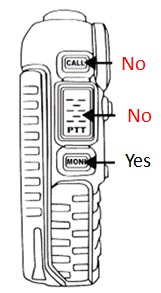
  1. On the sending radio depress the “moni” key and hold. Turn on the sending radio.CloningRadios-005
    • The sending radio will display “coping” on the display screen and the status LED light will flash red.
    • Once the status LED light begins to flash red you no longer have to keep the “moni” key depressed.
    • The receiving radio’s status LED light will flash green.


  1. When the cloning process is complete both radios’ status LED lights will stop flashing and both radios will momentarily turn off and then back on.
  1. Turn both radios off and unplug the cloning cable.

The radios are now ready to be used.

I’ve tested two different cloning cables, both performed 100% perfectly. Why? Because they are the same cable. So, why did I buy two different ones? Well, one was advertised under the name Tenq and the other was an AnyTone cable.

Cloning Cable for Baofeng UV-5R radioNote: The cloning cable sold by Powerwerx is the same cable as well.

When they arrived I looked them over closely and they are the same cable. Both are probably made in China at the same factory and then sold to US suppliers for private label. There was one difference, $9.99 vs. $13.95. The Amazon link to the Tenq cable, $9.99 is below…

Amazon - Tenq boafeng uv-5r Cloning Cable


2009 - 2020 Copyright © AHTrimble.com ~ All rights reserved
No reproduction or other use of this content
without expressed written permission from AHTrimble.com
See Content Use Policy for more information.

Running a Baofeng UV-5RA Radio on AAA & AA Batteries

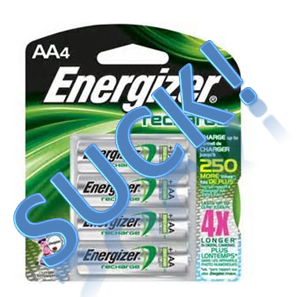
Batteries - Energizer Sucknote: article first appeared September 2015

I’ve never seen anything so conclusive in all my testing of gear. I mean it was crystal freaking clear what the outcome is. Here’s the short of it:

  • Don’t try to run your Baofeng UV-5R on AAA batteries. It just doesn’t work out well whether rechargeable batteries or high-quality alkaline batteries…it just doesn’t work. In three separate tests I never got more than 1.5 hours of radio run-time out of the Energizer 850mAh rechargeable nickle metal hydride batteries. And that meant no heavy transmission time.
  • Batteries - TenergyI got just under 3 hours of run time on Tenergy 1000mAh rechargeable nickle metal hydride batteries.
  • The AAA battery tray works just fine and fits well without any modifications.

So, the bottom line is…only use AAA batteries when you don’t have any other battery option available.

What my testing showed for AAA batteries:

  • AAA batteries just don’t have enough power to keep the radio running for very long. Even with the best of the AAA batteries, 3 – 5 hours of run-time is just not adequate. Well, unless there simply is nothing else available.
  • Rechargeable AAA batteries suck. Energizer AAA rechargeable batteries really, really, suck.
  • Alkaline batteries are marginally better. But only marginally better.

What my testing showed for AA batteries:

  • AA batteries (the big brother to AAA batteries), are exponentially better for radio operations. They lasted 5 – 8 times longer their smaller counterpart.
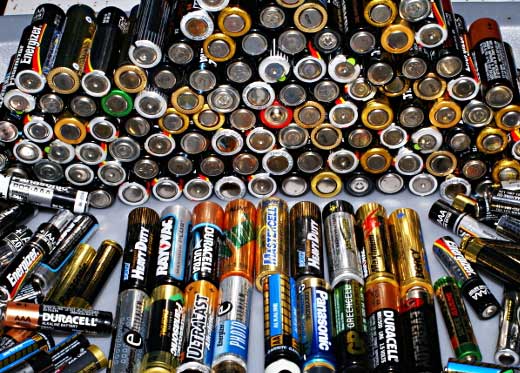
  • Rechargeable AA batteries are also acceptable for using in radios, but only quality Batteries - TenergyAABatteries - Duracelrechargeable batteries such as Tenergy or Duracell. Energizer rechargeable batteries are worthless.
  • Running my UV-5RA on Duracell alkaline batteries (5 to start with and a dummy battery to prevent over voltage) I was able to get 38 hours of operation. When the radio shut down I swapped the dummy battery for a brand new Duracell and got another 1.5 hours of radio operations out of it.

For rechargeable AA & AAA batteries I like Tenergy batteries. Remember, there isn’t a good rechargeable AAA battery for radio operations.Batteries - Energizer SuckAA

I won’t ever depend on Energizer AAA or AA rechargeable batteries. Energizer batteries suck…period.


For alkaline batteries…Duracell. Period!

For alkaline batteries…Duracell. Period!


2009 - 2020 Copyright © AHTrimble.com ~ All rights reserved
No reproduction or other use of this content
without expressed written permission from AHTrimble.com
See Content Use Policy for more information.

Dummy Batteries to Reduce Voltage

Article first appeared August 2015

There are times, especially with electronics, that you want to use AA batteries but to do so would give you and pile of AA Batteries“over UltraCell2voltage” situation that would burnout those sensitive electronics. Well, there is a solution…dummy batteries.

Briefly, these are battery “look-a-likes” but are not actually batteries. They pass current through them but add no voltage themselves.

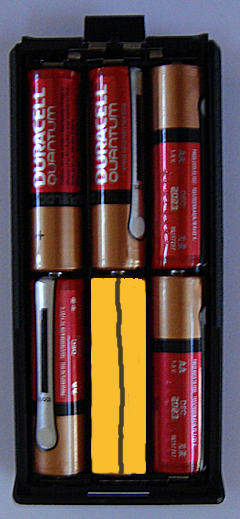
So the first picture below is that of a AA battery tray for a Baofeng UV-5RA radio. This battery tray is part of an aftermarket battery case that allows you to use AA batteries with the UV-5RA radio. < read more about the battery case here >Baofeng UV-5RA AA battery tray

So, this looks all fine and dandy and ready to use with the radio. However, you could burnout the radio using this battery case with these six 1.5 vDC batteries in the battery case.

Why?

The UV-5RA radio is designed to work on a maximum battery voltage of about 8.5 vDC. This battery configuration would give you about 9.1 or 9.2 vDC with brand new decent-quality AA batteries.

Can you say “sizzle!

So why was the case designed this way to begin with?

Baofeng UV-5R AA battery caseIf you swap out the  alkaline 1.5 vDC batteries with the standard 1.2 – 1.3 vDC rechargeable batteries then you get voltage measuring in at 7.2 – 7.9 vDC. And that is well within the operating voltage range of the radio.

But you have another option, an option that can be used with alkaline batteries pumping out 1.5 – 1.6 vDC per battery…dummy batteries that I mentioned earlier.

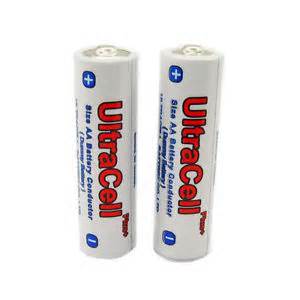
The dummy battery is simply a non-battery in a casing that looks like a battery.  The dummy battery allows current/voltage to flow through while taking up space in the UltraCell dummy battery with battery case battery case and not adding another 1.5 vDC to the current. So now you can put five alkaline batteries in the battery tray along with one dummy battery and have voltage that is within operational voltage range.

Note: Carry the sixth alkaline battery with you. When the electronic device shuts off due to low voltage, swap out the UltraCell dummy battery for the good alkaline battery that you’ve been carrying. You will get a little more life out of the electronic device. Maybe just enough to make a huge difference before the fresh battery is discharged.


2009 - 2020 Copyright © AHTrimble.com ~ All rights reserved
No reproduction or other use of this content
without expressed written permission from AHTrimble.com
See Content Use Policy for more information.
Baofeng UV-5RA : Hypario Battery Case for AA batteries

Article first appeared in June 2015

I am a huge Baofeng UV-5R handheld radio fan! Yes, it is a Ham Radio, but it is also much, much more and I love Baofeng UV-5r handheld radiothe little radio. It is a dynamo! The radio is a great size, packed full of features, reliable, and more than anything else EXTREMELY affordable. You can read more about my review of the Baofeng UV-5R radio here < UV-5RA review >. This post is dedicated to the Hypario AA battery tray for the Baofeng UV-5A radio.Baofeng UV-5RA AA battery case

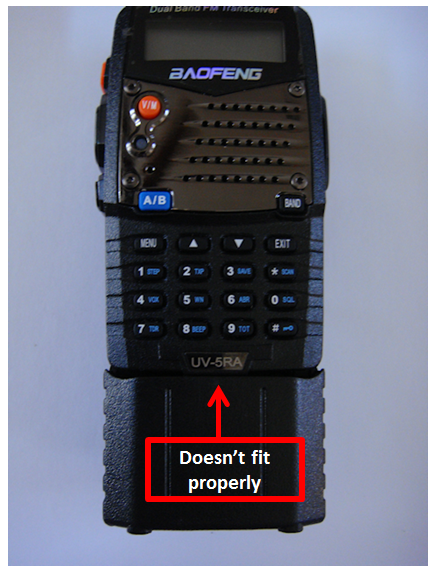
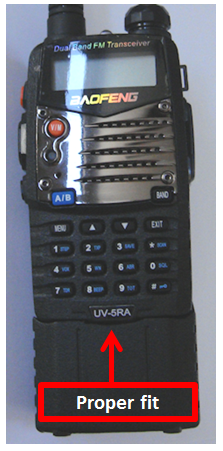
The very first thing I noticed about the battery case was IT DOESN’T FIT !  Yup, the battery case didn’t fit the radio. And the improper fit prevented the battery case from “clicking” into place correctly on the radio. But I had read the reviews and dealt with other Baofeng radio after-market equipment before. I knew what to do.

I got out my diamond files and my pocket knife and proceeded to whittle down the offending plastic. It doesn’t take long to remove a sufficient amount of the plastic that is prevent the proper seating of the battery tray. I suggest you just work at it slowly, taking a little plastic at a time and testing for the “click” often.

Baofeng UV5RA AA battery trayIt took me about 5 minutes of whittling and I was good to go.

Next issue that I noticed was no seal around the two pieces of the battery tray itself. So this battery case is NOT waterproof. I would expect the tray to be moderately water (rain) resistant at best. And from what I can tell, there really isn’t a good way to improve its water resistance. Well, there might be one way…using silicone seal around the whole thing where the two pieces come together. But then the functionality of the unit would drop significantly when it came time to swap-out batteries.

The next step was to test the AA battery fit in the battery tray. I am a big believer in Duracell batteries and not that long ago I bought a bunch of Duracell Quantums that were on sale. So I fetched 6 and they went right in and fit snugly.

Baofeng UV-5RA AA battery trayThe picture of the battery tray with the batteries installed appears to the right. Do you notice anything wrong? Well, you might think the batteries are running the wrong way vs. facing the alternate opposite direction. But, that is not what I am referring to. Look again, and think “operational.” There are six Duracell Quantum AA 1.5vDC batteries in the battery tray to power the Baofeng UV-5RA radio. A radio that runs on 7.4vDC power. You there yet?

Six 1.5vDC batteries delivers 9volts of power. Yup! That is about 22% more voltage than the original Li-ion battery that comes with the radio. Fortunately, the radio didn’t start smoking when I turned it on. The radio’s battery charge indicator did show a full charge. Go figure!

Option 1

Option 1

So the problem is over-voltage to the radio which I confirmed with my multimeter. There are three primary options to overcome this problem. First option, if the grid is down, is to make a “fake” battery that simply passes the current through or around the battery to the other in-line battery without adding any additional voltage. For instance, a wooden or plastic dowel rod cut to size with a wire that makes contact with the battery tray on one end and the battery on the other end. That reduces the number of 1.5v batteries to five batteries providing 7.5 volts, which the UV-5R can run on just fine.

However, I think that option is a bit clunky and could pose other problems in the field but if the grid Baofeng UV-5R -AA battery case UltraCell AA Size Dummy Batteryis down you can make this option. Now, a more commercial option a “dummy battery” that you can buy. I like the UltraCell AA Size Dummy Battery. You just slip one of those into the battery tray in place of a regular alkaline AA battery and you now are only using 5 1.5 vDC AA batteries for 7.5 vDC. Your Baofeng UltraCell dummy battery with battery caseUV-5RA will operate for 3 -4 days of light use with good quality batteries, to 1 – 2 days with heavy use or poor quality batteries.


I think Option #3 is a very viable option and gives a depth of operational capability…use Baofeng UV-5R AA battery casestandard rechargeable AA batteries. Rechargeable batteries have a DC voltage rating of 1.2 – 1.31 vDC. So six of the rechargeable batteries in theory provides 7.2 – 7.86 vDC to your radio. And yes, you are losing approximately .2 – .3volts per battery but I don’t see it being an actual noticeable difference while in the field. But using rechargeable batteries vs. alkaline batteries can result in shorter use time. All things being equal, alkaline batteries will last longer.

I did test the charging cradle that came with the radio. It charges at 8.37 volts when hooked up to the 110vAC wall outlet. The charger cradle information states that its output is 8.4 volts. The .03 difference is absolutely nothing to worry about. The radio can be left on and used while in the cradle and charging. So I am making an educated guess that the upper end of the vDC range is about 8.4 – 8.5 vDC. But I can’t find any actual technical documentation on that.

But DO NOT USE the charging base with a cigarette car adapter powering the charging cradle. Well, you can if you know for a fact that the cigarette car adapter is only outputting 10 vDC maximum. The charging cradle will burnout and maybe burn up with the direct voltage from your vehicle which is 12 – 14 vDC. The vehicle voltage needs to be stepped down to 10 vDC before it goes into the charging cradle. I have ordered an adapter that should work, but I will test it and put a review up when it comes it.

I like, and primarily use, Duracell and Tenergy rechargeable batteries. Nickel–metal hydride rechargeable batteries are made specifically to work with electronic devices. AA batteries are rated in mAh (milli Amp hours), which is a rating of how long the battery will provide power at a certain draw/drain level. Don’t worry about the actual details of how long a UV-5RA radio will last between a 1500 mAh battery and a 2800 mAh battery. Just know that the 2800 mAh battery will last considerably longer. So the higher the mAh rating your rechargeable battery has the longer your radio will stay operating.

I would suggest a minimum rating of 1500 mAh on your rechargeable batteries. My AA Tenergy batteries carry a 2600 mAh rating and have a great price point.

Don’t forget “redundancy” when it comes to rechargeable batteries. “Two is one, one is none, three is a good start.” is a standard rule in my preparedness efforts. To keep my batteries charged I have:

  • Multiple AC wall charges with sensor and conditioner capabilities to prevent over-charging. I use these for normal daily non-grid-down operations.
  • I have two large-quantity AC chargers to “bulk” recharge a number of batteries at one time.
  • I have two SolarAid SolPad7 solar battery chargers.
  • I also have two GoalZero battery charger packs that can hook up to my GoalZero Boulder 30 solar panels.
  • And yes, I have the Honda EU2000i generator to run the AC chargers as well, if an when that might be needed.

Go ahead laugh…I know you want to. But I think that having rechargeable batteries without a way to recharge them is a little silly. And my OCD demands that I have multiple ways to power the chargers…as well as multiple different chargers. OK, so I am snickering a little bit too right about now. But if I am going to preach preparedness and share that information with you, then I better be practicing what I am preaching.

Warning3Now, there is also a warning with this battery tray…DON’T USE THE RADIO’s CHARGING CRADLE! The UV-5RA comes with a charging cradle. But that unit is to be used only with the battery that is supplied with the radio. That unit is not intended to be used to charge rechargeable batteries in a AA battery tray/case like the one in this review. You need to recharge the batteries with chargers that are specifically designed to charge NiMH rechargeable batteries.

Bottom line – Buy this product!

Just remember that you will have to whittle a little bit of plastic to make it fit correctly. But you will be very happy with the added capabilities to use different batteries in your radio. Batteries that can be recharged in a more standard way than the original BL-5 batteries that come with the radio. The BL-5 battery that comes with the radio is not a standard battery that would be easily recharged via solar. And in a situation where standard utility electric power may not be available, it is good to have solar options. Yes, “standard” options that match your other power requirements. Namely, AA and AAA batteries.


2009 - 2020 Copyright © AHTrimble.com ~ All rights reserved
No reproduction or other use of this content
without expressed written permission from AHTrimble.com
See Content Use Policy for more information.

Black Diamond Spot Headlamp

Black Diamond Spot headlampArticle first appeared in March of 2016

As I’ve started each of my reviews on headlamps I just have to tell you that I really love my Petzl Tactika XP headlamp. No, not the “new” Petzl Tactika XP…the old Petzl Tactika XP. If you want to know the difference between the two models of Petzl Tactika XP Petzel Tactikka XP headlampheadlamps then you need to read each review and it will be clear to you. All that being said, the original Petzl Tactika XP headlamp is the standard by which I judge all others.

Let’s get on with the review of the Black Diamond headlamp.

As always…the mission –

“To provide personal lighting capability for night operations in a tactical or camping environment.”

Requirements & Restrictions –

  1. Must be water resistant.
  2. Must be rugged.
  3. Must provide foolproof for “red lens” operations.
  4. Must operate on AAA batteries.
  5. Should be camouflage or flat earth color.
  6. Must have headband operation capability.
  7. Should have helmet mount capability.
  8. Should contain the lamp and batteries in the same housing.

So why am I even looking for a headlamp to begin with when I already have, and like, a Petzl Tactika XP headlamp. Well, because I believe in “two is one, one is none, three is a good start.” Roughly translated that means, have a back-up option to your primary piece of gear or equipment. Then, have another option to have a back-up to all of that. Why? Because your gear or equipment will fail when you least expect it, and least want it to. So you better have a couple of alternatives.

As I mentioned earlier I live my original Petzl, it is everything I want in a headlamp. Solid, water resistant, perfect light pattern, and a failsafe red lens. The band or head strap is a quality piece of expandable material. The headlamp has lasted me two years of usage on a single set of three AAA Duracell copper top batteries. You simply can’t beat that headlamp. The problem is that Petzl decided to take a fantastic product, a true top quality, excellent product…and discontinue making it.

As soon as I opened the package I wasn’t impressed…Energizer batteries vs. Duracell batteries. All the headlamps that I have purchased so far had Duracell batteries…which are the best batteries made. So…strike one!

And the instruction sheet was huge! And in about 150 different languages. The print was so small I had to break out the magnifying glass. Strike two!

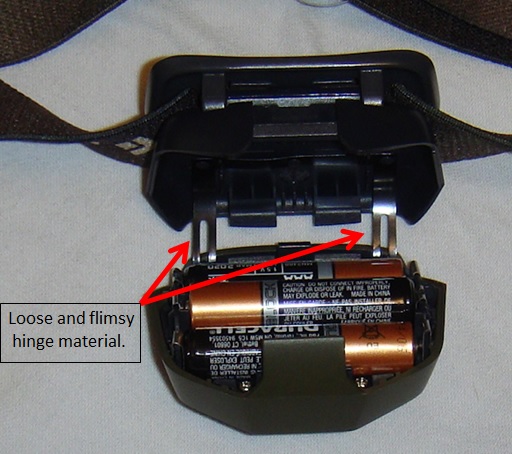
To test it I installed a set of Duracell batteries (to be fair), it wasn’t readily apparent how to open the battery compartment. Inconvenient, but not another “strike.” Then there are these flimsy looking pieces of plastic that act like hinges. Once again, I am not impressed with that idea. But, also another “strike” either.

Black Diamond Spot battery compartmentThere is no gasket material and the housing has no apparent way to keep moisture out. I will have to look into that and get more info on its moisture resistance. Although the unit is rated at IPX4 level and Black Diamond has a great warranty. They must be sure of the water resistance capabilities.

Let’s move on to the brightest of white light settings…it is bright, really bright and plenty bright enough to meet all the basic needs for just about anything you would do. OK, maybe not a spotlight for a Blake Shelton concert, but that kind of spotlight isn’t really appropriate for the needs of the average prepper. I wasn’t crazy about the size of the pattern, seemed large to me.

Black Diamond Spot light patternThere is a really pretty cool features that I thought was pretty cool…and useful is the power level meter. When you turn on the headlamp you have an indicator showing the remaining battery power level. This headlamp is the only unit that I tested that has that feature. It is just kinda nice.

But the operation of the headlamp is really a bit complex.

  1. The headlamp turns on to whatever your last setting was…whether you want it to or not. Unless you hold down the single button, then it switches to whatever is the opposite of the setting you were using that time.
  2. Once you get the light on, holding the button dims it to the setting you want. Yes, “dims it” as in infinite settings of brightness. I can see that being really useful or a royal pain in the butt.
  3. If you have the intensity set on low and you touch the side of the case with your finger it switches to a bright mode. While that may sound convenient, accidently switching to a bright white setting at the wrong time could prove fatal in a tactical situation.
  4. The button is very sensitive. While it was sitting on the desk and I was typing, I reached over to turn it over to look at it from a different angle. Ooopppssss, it came on at it brightest intensity. I didn’t understand that feature at all.

You know I forgot that there is a feature that I like a lot as well. One thing you don’t want to happen is your headlamp to accidentally turn on while it is stored in your pack or pouch. Then you need it and the batteries are dead. Well, this headlamp has a “lockout” that prevents accidentally turning this unit on and killing your batteries. I like it, but I have to ask the question, “Why is the button that sensitive in the first place?”

There is a feature that is also pretty cool. When you are using the headlamp on a dim setting and what a bright boost light right now…well, all you have to do is tap the housing. No, you don’t have to push the button, just tap the headlamp housing on the right and “presto” your headlamp switches into a very bright mode. But, that can also be a double-edged sword.

I also don’t like the red light mode at all. While it has plenty of setting adjustments (0 – infinity), they red light pattern simply sucks. It is not focused at all. Actually, it has a triple overlapping rings of light that is quite annoying.

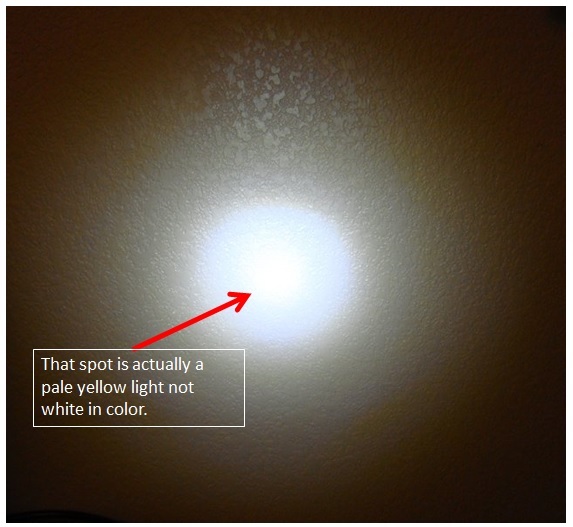
Black Diamond Spot red lens red lightThe white light setting is kinda weird in a way. There is a yellow spot in the middle of the white light pattern. I have no idea why it is there but it kinda creeps me out.

Black Diamond Spot headlamp yellow lightLet me digress back to my old Petzl Tactika XP for a minute. I really liked the feature of the XP turning on in the dimmest mode and then cycling up to the brightest mode. That way it gives you the lowest profile initially but allowing you to get bright light with just another push of the button. However, the Black Diamond starts out with the brightest setting. Granted, for the average user in the average situation there is really no problem. But, if you remember, I want to use this headlamp in any potential tactical situation as well. That means I want to keep a low profile whenever possible. Starting out with 130 lumens of white light is not my idea of low profile.

If you go to their website you will find a plethora of information, including videos, of how to use this headlamp. Seems strange to me that you would need a whole bunch of instructions for something as simple as a headlamp, but in today’s world…information is a good thing. Having it in video format is a nice plus, walks you through the operations step-by-step. But, in my ADD/ADHD world I would like it all to be self-explanatory and just push a button…presto! It all works. But that is just my unrealistic expectations at work.

I really tried to like this headlamp…but, I don’t. I give it a “do not buy” recommendation.


2009 - 2020 Copyright © AHTrimble.com ~ All rights reserved
No reproduction or other use of this content 
without expressed written permission from AHTrimble.com
See Content Use Policy for more information.

ComSec – What is it and how do I use it?

What does “ComSec” mean?

“ComSec” is the term used meaning communications security. Communications security is a system of protocols that protects your communications from interception and being used against you.

.How does ComSec apply to radio signals?

Radio signal interception can be used against you in two primary ways:

  1. If personnel are trained well they can use basic radio gear to “triangulate” your position. Yeah, that means they can find you.
  2. Once intercepted, they can use the information in your radio transmission against you. It is called “intelligence gathering” and can be quite effective as a tool.

The dual threat can be used with devastating results. But, there are some methods to defeat both:

  • Use as low a power setting for transmission as possible. That keeps the radio signals from traveling any further than they absolutely have to. The signal can also be reduced by using smaller/shorter antennas.
  • During very dire times transmit while moving and never from your area of operations (AO) unless it is an emergency.
  • Transmit for only a very short time. I am talking in terms of seconds, the shorter the better. That will make it more difficult for them to pick up your signal.
  • Randomly change the frequency that you are transmitting on.
  • If you are using a dual-band capable radio like the Baofeng UV-5RA split your radio traffic between both bands.
  • Use different radio operators so the voice doesn’t sound the same each time…or in the same transmission.
  • Use coded messages.
  • Substitute letters and numbers for locations. Example: the town of Salem is referred to as “Sierra Tango” meaning “Salem town”.
  • Use numbers as replacements for words. The most simple would be a two-number code for each letter. Example: “no” would be “1415” But that is easy to figure out. So come up with your own.
  • There are other coding systems but this posting is not an article for that subject. However, one method is Communications-Electronics Operating Instructions (CEOI). You might want to look into it.

Always assume the worst…assume someone is always listening to you and what you are saying. And always assume they can figure out the location that you are transmitting from. You should always act accordingly when circumstances require or demand it…especially in dire times.

There is always a cardinal rule, one that should never, ever be broken in terms of ComSec. You never, ever use a name…especially a person’s name, first or last, not even a nickname when talking on the radio.

Also, understanding all the above means you can turn it around and use it to your advantage. You can give out false or misleading information to misdirect those that might wish to do you harm. If it is a matter of life and death you could always draw them to a location through your radio traffic as well. Then deal with the risk/threat accordingly.

What I am trying to accomplish here is pretty straight forward. I want you to be aware of your radio traffic, safeguard your important information, and don’t say inappropriate or damaging things over the radio. It could be a matter of life and death…yours…or your family’s.

There were posters from WWII that tried to convince people not to talk too much or about the wrong subjects. Still applies today.


2009 - 2020 Copyright © AHTrimble.com ~ All rights reserved
No reproduction or other use of this content 
without expressed written permission from AHTrimble.com
See Content Use Policy for more information.

AA Battery Evaluation : Eneloop vs. Tenergy

This article was first published in late 2017 and subsequently lost in the website crash. I was unable to retrieve it, I had to rebuild it from my notes and scattered bits and pieces. This article is the result.

Comparison/Evaluation of Rechargeable AA Batteries – Eneloop vs. Tenergy
Panasonic BK-3MCCA4BA Eneloop AA
  • Ni-MH (Nickel Metal Hydride)
  • 2000mAh
  • 2100 cycles
  • $2.46 (Amazon 4/3/20)
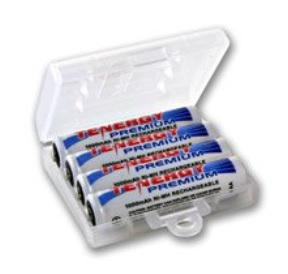
Tenergy Premium AA
  • Ni-MH (Nickel Metal Hydride)
  • 2500mAh
  • 1000 cycles
  • $1.25 (Amazon 4/3/20)
Basic Comparison from product specs and after opening the package:·
  • Eneloop claims more recharging cycles (2100 cycles vs. 1000 cycles)
  • Tenergy claims 25% more storage capacity (2500mAh vs. 2000mAh)
  • Enloop shows more out of the package charge (1.38v vs. 1.35v)
Charging:

I used the same smart charger for both brands. Same charging cycle at the same time. Alternated the batteries in the charger trays. Used “refresh” cycle to drain and charge the batteries equally. Allowed to sit 1-hour after charging cycle before testing:

  • Eneloop 1.38v
  • Tenergy 1.35v
Discharge:

I put them into brand new AA battery flashlights purchased at the same time, same brand & model. Turned em on and let them run. More than 48-hours later the results were startlingly significant.

    • The flashlight with the Eneloop batteries couldn’t keep the light on.
    • The flashlight with the Tenergy batteries was still very bright.

I was surprised to say the least…in practical testing the Tenergy blew away the Eneloop. But, I wanted to see how much more energy the Tenergy battery had left. I put the voltmeter to each battery:

    • The Tenergy batteries had 1.197v left (average).
    • The Eneloop batteries had .869v remaining (average).

Performance wise…the Tenergy batteries absolutely blew away the Eneloop batteries! It was even close! Not only did the Tenergy batteries have over 35% more energy left in them, the Eneloop couldn’t even keep the light on.

Overall conclusion…Tenergy is by far clearly the better priced battery and better performing battery.


2009 - 2020 Copyright © AHTrimble.com ~ All rights reserved
No reproduction or other use of this content 
without expressed written permission from AHTrimble.com
See Content Use Policy for more information.

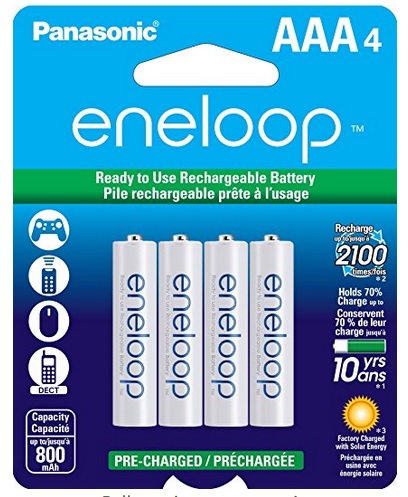
AAA Battery Evaluation : Eneloop vs. Tenergy

This article was first published in late 2017 and subsequently lost in the website crash. I was unable to retrieve it, I had to rebuild it from my notes and scattered bits and pieces. This article is the result.

Comparison/Evaluation of Rechargeable AAA Batteries – Eneloop vs. Tenergy
Panasonic BK-4MCCA4BA Eneloop AAA
Tenergy Premium AAA
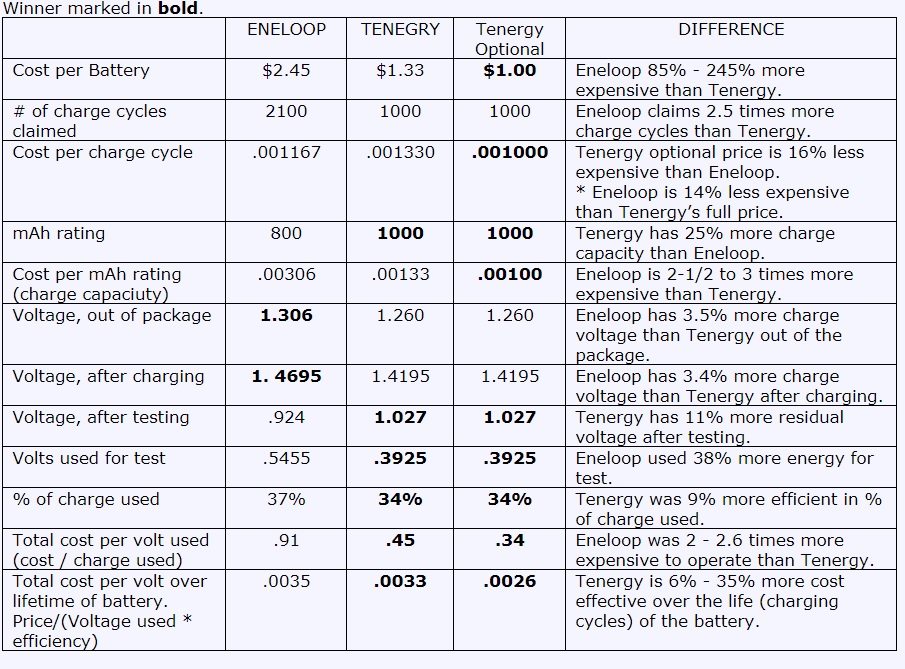
Basic Comparison from product specs and after opening the package:· 
  • Eneloop claims more recharging cycles (2100 cycles vs. 1000 cycles)
  • Tenergy claims 25% more storage capacity (1000mAh vs. 800mAh)
  • Enloop shows more out of the package charge (1.306v vs. 1.260v)
Charging:
  • I used the same smart charger for both brands. Same charging cycle at the same time. Alternated the batteries in the charger trays. Used “refresh” cycle to drain and charge the batteries equally. Allowed to sit 1-hour after charging cycle:
  • Eneloop 1.4695v (average)
  • Tenergy 1.4195v (average)
Discharge:
  • I used a 3-battery tactical flashlight. Each flashlight is the same brand/model. Each flashlight was purchased at the same time. Test lasted 11 hours. Every 2 hours brightness was checked (subjective based on my visual assessment) and then the battery pack was switched to the other flashlight.
  • Remaining voltage –
    • Eneloop .924v (average)
    • Tenergy 1.027v (average)

Outcome Narrative:

Total cost of purchase:

Tenergy is the clear winner by a 85% – 245% margin in price alone.
Tenergy is the clear winner is cost per mAh rating, over 2 to 3 times more cost effective.
Conclusion: The Tenergy battery is significantly less expensive than Eneloop in every purchase aspect.

Total cost of usage:

Tenergy is 6% – 35% more cost effective is actual usage. (total cost of ownership)
Conclusion: The Tenergy battery is more cost effective.

Performance:

Tenergy is 38% more efficient in actual usage.
Tenergy provides 11% more residual voltage.
Conclusion: The Tenergy battery is a better performing battery despite it lower initial and post-charge rating.

Overall Conclusion:

Tenergy is the clear winner in the head-to-head AAA battery category.
The only category where Eneloop is the clear winner is the number of charge cycles.

Assuming that Enelopp’s claim of 2100 charge cycles is correct, but factoring in Tenergy’s 25% better charge capacity, you can buy 2 Tenergy batteries for 1 Eneloop. And you get 19% more charge cycles from the Tengery batteries overall, and you save 20%!

Tenergy is clearly the better buy and the better battery in actual usage tests.

Added Note:

  • Yes, the batteries tested were brand new, purchased at the same time off of Amazon.
  • I also went back and checked my 21 AAA Tenergy batteries that I’ve had stored over 4 years. Results:
    • All still tested out at over 1.23v. Loss of approximately .02v over 4 years.
    • Not a single battery had any sign of “weepage”, leakage, etc.


2009 - 2020 Copyright © AHTrimble.com ~ All rights reserved
No reproduction or other use of this content 
without expressed written permission from AHTrimble.com
See Content Use Policy for more information.
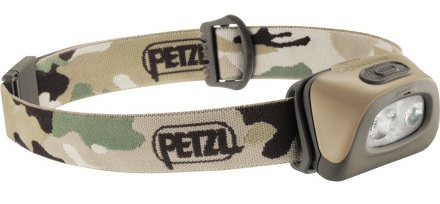
Petzl Tactika XP Headlamp (new model)

Article first appeared in March 2016Petzl Tactika XP New

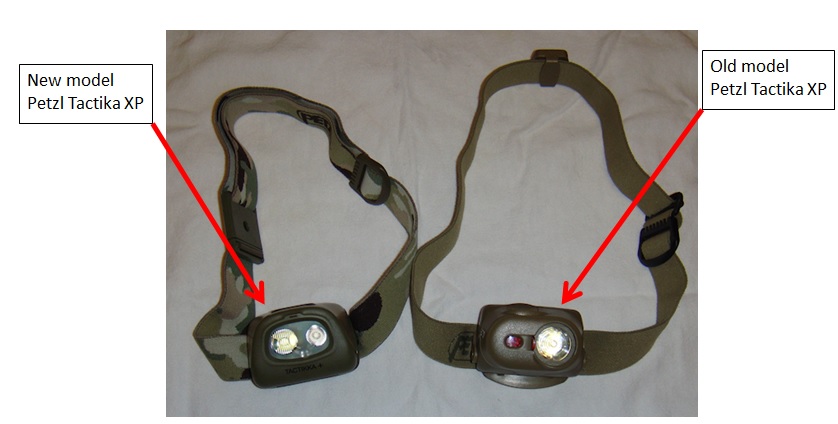
I can’t tell you how much I really love my Petzl Tactika XP headlamp. No, not this Petzl Tactika XP…the old Petzl Tactika XP.

WHAT?

Yeah, there is an old model and a new model of the Petzl Tactika XP headlamp. But, the name is the only similarity…and that is it…period! But, before I go down that road too far let’s go over the basics of the review first.

As always…the mission –

“To provide personal lighting capability for night operations in a tactical or camping environment.”

Requirements & Restrictions –

  1. Must be water resistant.
  2. Must be rugged.
  3. Must provide foolproof for “red lens” operations.
  4. Must operate on AAA batteries.
  5. Should be camouflage or flat earth color.
  6. Must have headband operation capability.
  7. Should have helmet mount capability.
  8. Should contain the lamp and batteries in the same housing.

So, why am I even looking for a headlamp to begin with when I already have, and like, the old model Petzl Tactika XP headlamp? Well, because I believe in “two is one, one is none, three is a good start.” Roughly translated that means, have a back-up option to your primary piece of gear or equipment. Then, have another option as a back-up to all of that. Why? Because your gear and equipment will fail when you least expect it, and least want it to. You better have a couple of options and alternatives.Petzel Tactikka XP headlamp

As I mentioned earlier I live my original Petzl, it is everything I want in a headlamp. Solid, water resistant, perfect light pattern, and a failsafe red lens. The band or head strap is a quality piece of expandable material. The headlamp has lasted me two years of usage on a single set of three AAA Duracell copper top batteries. You simply can’t beat that headlamp. The problem is that Petzl decided to take a fantastic product, a true top quality, excellent product…and discontinue making it.

But, in true corporate mental midgetry they come out with a product that they name the same, claim even better performance, lower the price, and think that the consumer won’t notice the change. Well, maybe a bunch of uninformed consumers will never know the swap of products from a great product to a piece of junk. Yup…you read that right! I called the new Petxl Tactika XP a piece of junk!

Now, maybe you didn’t ever know about the original Tactika XP and hence have no basis of comparison. You might take a look at the new model and you might be perfectly happy with it. I am not! No, not one bit. No how, no way do I like this new model. And I am a little ticked off that they tried some sleazy sleight of hand trying to capitalize on the original model’s great reputation out in the marketplace. I am sorry, that just pisses me off.

Head to head, the two models aren’t even close to comparable. Well, no, that is a misstatement. The two models are comparable…it’s just the new model sucks!

Petzl Tactika XP reviewThe headband material doesn’t have the elasticity, the housing plastic is cheaper and thinner, there is no gasket to keep out moisture. The light pattern is much more diffused, far less focused than he original model. And while the brightest setting is 100% brighter (supposedly), it is not needed.

Original Model Petzl Tactica XP

Original Model Petzl Tactica XP

New Petzl Tactika XP

New Petzl Tactika XP

And, having to cycle through to get the red light to come on is a pain in the butt. The operation requires an idiotic combination of number of presses and length of press to get different light intensities and the red light to come on. It is one of the most cumbersome and absolutely asinine set-ups that I have ever seen.

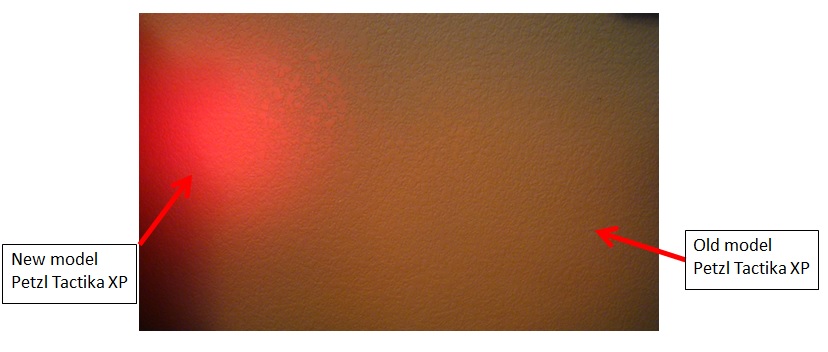
And…another really annoying feature…the intensity of the red light. Remember, the red light is to preserve your night vision. But, the brightness, the intensity, of the light when red is being used is far, far too bright to maintain night vision. I don’t have the ability to measure it scientifically, but the new model appears to be 4 – 6 times brighter than the old model. And that is a serious flaw. When used tactically you want enough red light to see what you are doing but not enough to let everyone see where you are. It is obvious that Petzl had no clue in what they were doing with this red lens feature.

Petzl Tactika XP red lens comparisonFeatures

•  CONSTANT LIGHTING: brightness does not decrease gradually as the batteries are drained
•  Several lighting modes suitable for different situations, from proximity lighting to rapid movement
•  Boost mode for temporary access to maximum brightness
•  Red light combining visual comfort and discretion, red strobe light
•  Automatically switches to reserve mode when batteries are running low and then to red lighting when the batteries are nearly empty

Technical Information

•  Bulb: LED
•  Light Output: Ambient: 5 Lumens; Proximity: 40 Lumens; Rapid Movement: 110 Lumens; Boost: 160 Lumens
•  Run Time: Ambient: 100 Hours; Proximity: 8 Hours; Rapid Movement: 2 Hours; Boost: 10 Seconds
•  Lighting Modes: Ambient, Proximity, Rapid Movement and Boost
•  Switch Type: Push-button
•  Battery: 3AAA/LR03 batteries (included)
•  Headband Type: Adjustable
•  Material: Polymer body/elastic headband
•  Weight: 3 oz

Look, I could go on and on stating a feature or option that I don’t like. I could even make some more rude, maybe even crude, comments on how badly this headlamp sucks. It would be easy to keep saying this headlamp is junk and not even worth $4.99. Just trust me on this one…Do Not Buy!


2009 - 2020 Copyright © AHTrimble.com ~ All rights reserved
No reproduction or other use of this content 
without expressed written permission from AHTrimble.com
See Content Use Policy for more information.