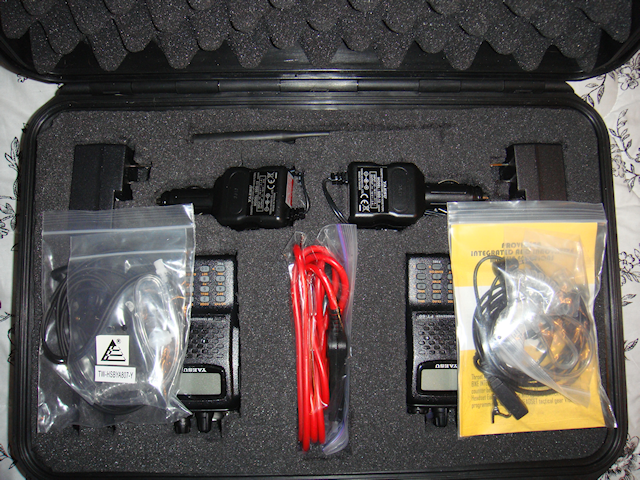
Yaesu FT-8800R Mobile Ham Radio – Part #2

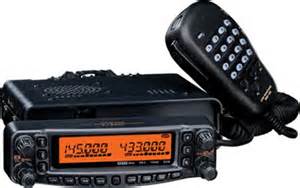
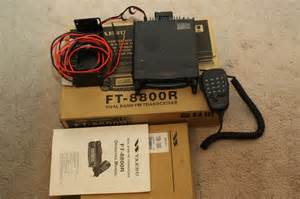
Yaesu FT-8900r Quad-Band Ham RadioAs mentioned in Part #1 of this series, I really love this mobile unit!  The Yaesu FT-8800r is an amazing piece of Ham radio technology wrapped up in a very compact and sturdy package.  It is perfect for the “repeaters” part of its mission.  This thing does it all and matches my mission requirements and then it exceeded my expectations.

In the last post I covered the specifics of the Yaesu FT-8800R itself.  In this post I will go over the accessories, installation info and some other tidbits.
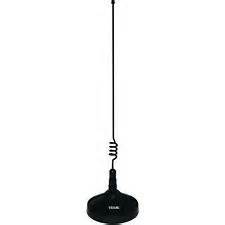
 

RadioAntennaCarVehicle external antenna for temporary dual band (2m & 70cm) operations : This antenna is a must have for temporary vehicle operations.  It is not a permanent antenna, it is a magnetic mount antenna.  You can move the antenna to other vehicles if needed.  You can also use it in a non-vehicle setting as well by placing the antenna higher than the radio would normally be located. Great option where portability is needed and only dual-band operations are needed. It is also a great option for an antenna when using a repeaters.


Browning BR-180 Amateur Dual-Band Mobile Antenna Vehicle permanent (or semi-permanent) mount external antenna : The Browning BR-180 Amateur Dual Band Mobile Antenna

The BR-180 is 37″ tall and has .4dB gain. Engineered for NMO mounting, this antenna has improved clarity and signal reception. This Browning antenna uses a center load.  Sturdy construction, enough flex in the antenna itself, and normally SWR of 1.5 or below right out of the box.
Specifics –

  •     37″ tall
  •     Frequency: 144-148 MHz/430-450MHz
  •     2.4dB gain UHF
  •     5.5 dB gain VHF mobile antenna
  •     NMO mounting (mount sold separately)
  •     Center load
  •     One Year WarrantyNOTE: Do NOT try a mag mount with this antenna.  It is not intended to be used as such.  The NMO mount is the way to go for a dependable mount to your vehicle.
Yaesu MLS100 external speakerExternal Speaker :  I had to go with a Yaesu MLS-100.  You can buy other speakers but I like the idea of a speaker that is matched to the radio by the manufacturer. The Yaesu Vertex MLS-100 external loudspeaker is a high performance communications speaker matching the impedance and output requirements of most Yaesu transceivers. It mounts on a swivel stand that is supplied along with mounting screws and bolts. A 6.5 foot (2m) audio cable that terminates in a 3.5 mm mono mini plug is also supplied. Black plastic cased speaker and black metal mount. Impedance is 4 ohms and the maximum power input is 12 watts. Yes, the FT-8900r has an internal speaker, but for vehicle operations and the associated noise I think an external speaker is really needed.  Dimensions: Height: 3.75 in., Width: 5.5 in., Depth 1.75 in.
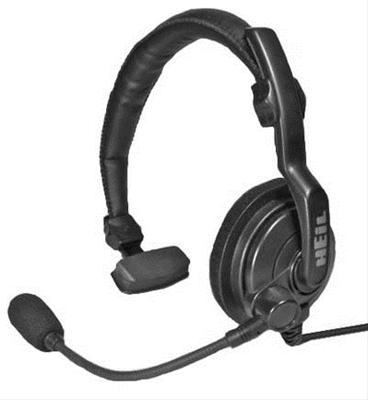
Heil Sound - PMS-6 & Headset Adapter for YaesuHeadset with Boom Mic :  Heil Sound – PMS-6 & Headset Adapter.  Why?  Because I believe that there are times when you want, or need, more privacy or the ability to hear/speak under adverse conditions.  A headset with boom mic is the right answer.  The Pro Micro Single Side is a very unique high performance single sided headset.  This headset is outfitted with the HC-6 element and is designed for commercial broadcast applications, the -3dB points are fixed at 100 Hz and 12 kHz with sensitivity of -57 dB at 600 ohms output impedance (centered at 1 kHz.).  The microphone audio for the Pro Micro series terminates into a 1/8” male plug while the head phone terminates into a 1/8” stereo with adaptor. To adjust the headset simply bend the stainless steel piece that is inside the black padded headband.

Mic Gain
Adjust the mic gain while watching the ALC meter. Adjust so that the audio peaks just fill out the ALC scale and do not go beyond the ALC scale.

Speaker
The 706 speaker works all the time. To turn that off simply plug an empty 1/8” plug into the front headphone jack.

Vox  (voice activated transmission)
Set the Vox gain controls for proper activation.

Carrier Balance
If your rig has carrier balance it acts as a type of mic tone control. It is best to listen to yourself in another receiver as you transmit into a dummy load. You are actually moving the carrier + or – 200 Hz above or below the center of the filter network, which causes your microphone audio to change its tonal quality.  The use of the AD-1 series mic adapters allow simple interface with popular transceiver inputs. The adapter is 6” long and has a 1/8” female input jack for the boomset microphone and a 1/4” female that is for the PTT (push to talk) line for the Heil foot switch or hand switch. The 1/4” stereo plug goes into the headphone jack on the transceiver front panel.  All Heil Pro Micro Boomsets are shipped with foam windscreen that fits over the microphone. The windscreen does not change the frequency response, just the breath blasts directly into the microphone.
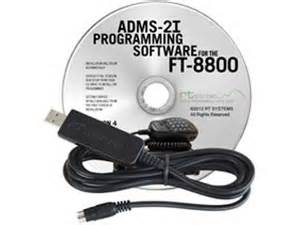
RT Systems FT-8800r programming softwareProgramming Software w/cable :  RT Systems FT-8800r Radio Software.  While the radio is fully programmable from the front panel that is not the way you want to try and program this radio. I tried several different “free” programming software program; had problems with all of them.  RT Systems puts out a superb product that can’t be beat in my opinion. FYI – You can use the files from any of the RT Systems software to transfer to any other radio that you are programming.  So I can use all programming I did for my FT-60r or Yaesu FT-8900r for my Yaesu 8800 radio with a simple click of a software button.

NOTE: I will be posting programming files for different parts of the country as well as different repeater systems.
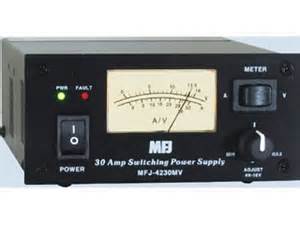
MFJ-4230MV COMPACT SWITCHAC Power Supply : MFJ Enterprises Inc. MFJ-4230MV COMPACT SWITCH (COMPACT SWITCH PS, METER, 4-16V ADJ. 110/220VAC).  This is a great AC power transformer, high quality and very reliable.

This is the world’s most compact switching power supply that also has a meter and adjustable voltage control. Just 5″ W x 2 ½” H x 6″ D, it weighs only 3 lbs. — it is the perfect pack-n-go power supply for field day, DXpeditions, camping, hiking or to pack for your next business trip or vacation to some far away place. MFJ-4230MV gives you 25 Amps continuously or 30 Amps surge at 13.8 VDC. The voltage is front-panel adjustable from 4 to 16 Volts. MFJ-4230MV also has a selectable input voltage: choose from 120 or 240 VAC at 47 – 63 Hz.

A simple front-panel push-button switch lets you choose either Ampmeter or Voltmeter — allows you to select Amps or Volts as you wish to read them. MFJ-4230MV has an excellent 75% efficiency and extra low ripple and noise, < 100 mV. Awhisper-quiet fan cools by convection and forced air cooling. Normal air-flow around the power supply is continuous and a heat sensor increases the fan speed when the temperature rises above 70 degrees Celsius. DC output is five way binding posts on the back of the MFJ-4230MV so you can power your dedicated HF, VHF or UHF transceiver with ease.
Charge Guard CG-MP

TIP – Battery protection when installed in a vehicle :  I also use Charge Guard CG-MP timer for my truck’s power installation.  This ensures that I won’t inadvertently run my battery dead using my Ham radio without the engine running.  Well worth the $’s.
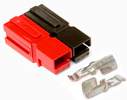


Anderson Power PolesTIP – Power connectors :  I use Anderson Power Poles for all my power connections.  This makes hooking up my power “brainless” and quick.  Plus it gives me the added advantage of using power cables, fuses, etc. for more than one radio.  Basically allows for flexibility.  I chose Anderson Power Poles because there are essentially the standard for Ham radio operators.


Next article that shows up in less than an hour show how I store and transport the radio.


2009 - 2019 Copyright © AHTrimble.com ~ All rights reserved
No reproduction or other use of this content 
without expressed written permission from AHTrimble.com
See Content Use Policy for more information.
Yaesu FT-8800R Mobile Ham Radio – Part #1

Yaesu FT- 8800R ham radioAnyone who has been in the Ham radio arena for 30 minutes or more knows the quality associated with the name Yaesu. The company has been putting out a high quality product for a very long time.  The FT-8800R is no exception. This was the second mobile radio I purchased and I am extremely glad I did.

I will go through my standard outline of reviewing this radio based on its designated mission and requirements.  Let’s get started…


Mission –

Provide reliable clear communications over two specific Ham frequency bands (2m & 70cm) bands for both  emergency/disaster/”grid-down” situation.  To use as the base unit for a cross-band repeater that is compatible with the Yaesu FT-60r and Baofeng UV5r dual-band handheld radios.

Requirements & Limitations –
  1. Must be sturdy, reliable and able to function in harsh environments; including in a off-road truck or as part of a remote location repeater system.
  2. Must be able to run on 12vDC power.
  3. Must have an internal speaker.
  4. Must be easily computer programmable.
  5. Should have a a large number of memory channels (at least 200).
  6. Should move easily from home to vehicle to repeaters system without undue effort.
The Good & Less Good

The Yaesu FT-8800R dual bander operates on 2 meters and 70 centimeters. High power output is featured with 50 watts on 2 meters and 35 watts on 430 MHz. It is like having two radios in one with dedicated Volume and Squelch controls on each side. And that is one of the, if not “the”, best aspect of this radio…you can easily and clearly monitor two frequencies or bands at once as individual radios.  I really can’t say much more about the really good aspects of this radio…it is darn near perfect!

There are some minor, very minor, drawbacks:
  • The buttons are not backlit.  I actually like this for OpSec purposes but for daily use it is a little irritating. When used as part of a repeater unit it really saves valuable battery power.
  • The internal speaker is usable but that s about it.  The quality is acceptable but much better with an external speaker.
  • You really need a computer and software to program this radio.  There are many features and trying to program them, or the frequencies, is more than difficult for me without the software.
The Details – Yaesu Dualband Amateur Ham Radio FT-8800R:Yaesu FT- 8800R ham radio
  • Built in features include: duplexer and CTCSS/DCS Encode/Decode.
  • Over 1000 memories are available. It is WiRES compatible.
  • Full twin Band w/ cross band repeater mode.
  • Features seperate volume & squelch controls, lighted mike, remote mountable faceplate.
  • Hasd ctcss/dcs, Alphanumeric display, 1000ch memories, scan modes.
  • Receives 108-520Mhz & 700-999Mhz (except cellular).
  • Transmits 2 meter band 144-148Mhz & 70cm band 430-450Mhz.
  • ARTS system, detachable Faceplate, cross-band repeat & more!
  • Requires regulated 12-13.8Vdc at 14 Amps or greater for power.Yaesu FT- 8800R ham radio
  • Receives 108-520Mhz & 700-999Mhz (except cellular).
  • Transmits 2 meter band 144-148Mhz & 70cm band 430-450Mhz.
  • ARTS system, detachable Faceplate, cross-band repeat & more!
  • Requires regulated 12-13.8Vdc at 14 Amps or greater for power.
  • Wide Frequency Coverage
  • Independent Two-Channel Operation
  • High Power Output
  • Over 1000 Memory Channels
  • Large, Easy-to-Read Liquid Crystal Display (LCD)
  • Cross-Band Repeat Capability
  • One-Touch Band-Pattern
  • 50-Tone CTCSS/104-Tone DCS (Digital Code Squelch) Tone Systems
  • User-Programmable Microphone Keys
  • Convenient Remote-Head Mounting Capability

Wide Frequency Coverage

The FT-8800R provides extended receiver coverage beyond the Amateur bands, so you can keep informed of communication activities in the public safety, commercial, aircraft, and government communications ranges.

Independent Two-Channel Operation

The FT-8800R operates as two radios in one, with either 144 MHz or 430 MHz as the “Main” TX/RX band, while simultaneously monitoring the other band. Each band has its own Volume and Squelch controls. And, if you like, you can configure your FT-8800R for VHF-VHF or UHF-UHF operation, too!

High Power Output

To get your message through when it counts, the FT-8800R puts out a full 50 Watts of power on the 144 MHz band, and 35 Watts on 430 MHz. A thermal sensor monitors heat sink temperature, engaging the rear panel’s cooling fan only when needed.

Over 1000 Memory Channels

The FT-8800R provides a wide variety of memory resources, including 512 “regular” memories on each band, five “Home” channels for favorite frequencies, ten sets of band-edge memories on each band, and six “Hyper Memories” that store complete sets of transceiver operating status configuration.Yaesu FT- 8800R ham radio

Large, Easy-to-Read Liquid Crystal Display (LCD)

Affording easy viewing from a wide range of viewing angles, the LCD of the FT-8800R features Yaesu’s renowned Omni-Glow™ display illumination, with four illumination levels available for different environments. You’ll marvel at the crystal-clear frequency display and status indicators, whether you’re operating night or day!

Cross-Band Repeat Capability

For emergency work, or to extend the range of a hand-held unit, the FT-8800R includes Cross-Band Repeat capability, similar to that pioneered on our popular FT-8100R Dual Band FM Mobile!

One-Touch Band-Pattern

To save valuable time while operating a transceiver with the capability of the FT-8800R, the “Hyper Memory” feature allows you to store a complete set of configuration data for the two bands on which you’re operating. Besides the usual storage of frequency and tone data, Hyper Memory will store such setup parameters as Automatic Repeater Shift status, Packet parameters, Scanning mode, and VFO tracking configuration.

50-Tone CTCSS/104-Tone DCS (Digital Code Squelch) Tone Systems

Providing excellent performance even under difficult link conditions, Yaesu’s 50-tone sub-audible CTCSS and 104-tone DCS signaling systems ensure that you have full access to repeater and remote-base inputs, and the built-in CTCSS/DCS decoders allow silent listening on busy channels. Plus you get Tone Search Scanning, which will scan for the tone being received on an incoming signal, allowing you to match tones quickly when operating on a new repeater system.

User-Programmable Microphone Keys

Four programmable keys on the microphone allow you one-touch access to your favorite command functions. The commands available from the microphone replicate the corresponding front panel key functions, and include Band Change, VFO/Memory switching, Home Channel access, 1 MHz frequency steps, Power Output selection, Repeater Reverse, and CTCSS/DCS setup. Customize your microphone for your personal operating style!Yaesu FT- 8800R ham radio

Yaesu FT- 8800R ham radioConvenient Remote-Head Mounting Capability

With the FT-8800R and its optional YSK-8900 Separation Kit, mounting your radio is a breeze even in the tightest locations. The YSK-8900 includes a 20-foot (6 m) remote cable and mounting bracket for the front panel.

Coming in Part #2 in about 30 minutes…See more of this radio review and accessories that make it even better; a few tips on installation and antennas, plus software to program it.

I will also be posting an article where I talk about building my remote location cross-band repeater. That article should appear in about 3 days.


This is a “BUY!”


2009 - 2019 Copyright © AHTrimble.com ~ All rights reserved
No reproduction or other use of this content 
without expressed written permission from AHTrimble.com
See Content Use Policy for more information.

Which Baofeng Radio should I buy??????

Baofeng UV-5r handheld radio


So which radio is right for you…or which radio should you buy?

Well, first thing to do is make sure you have read my reviews on each of the following radios…

I will go through this as if I were doing it for the first time…for myself. You see, we are all different, we all have different situations, needs, issues, missions, restrictions, etc. I can only speak for myself. But, I think going through it will help you, guide you, through the process of figuring it out for yourself.

Background –

Baofeng radios are really the only cost effective and reliable radios that are available. Yup, my opinion. True, Yaesu radios are wonderful! And if you can afford a cache of them and their accessories…great! I can’t. So Yaesu radios are out of the question. Baofeng radios are cost effective, reliable, plenty of accessories, easy to program with software, and flat out…they get the job done.

Assessment –

First thing I would do is figure out exactly what I want to use them for…their mission. For me I want to use them for daily tasks, emergencies, disasters, any security/protection work in my future, and especially for grid-down.

So the radio must be very flexible in its frequency range and ease of use. It also has to be compatible with most public emergency services entities. I run my own repeater so I don’t have a need for a long-range handheld. I have plenty of batteries and recharging capabilities on hand so I am not worried about power consumption.

They need to be tough enough but not military grade. I also need enough of them for let’s say 4 – 8 people to have one. I don’t use, nor intend to use, the 1.25m band. It is a relatively obscure band and not one in general use.

Choices and Why’s –

So here we go…

  • UV-5RA:
    • If I had a limited budget for radios and accessories
    • If I needed a large number of radios (4 or more)
  • UV-5RMHP
    • Out of the running since they are not available retail.
  • BF-F8HP
    • Only if I had a very specific identifiable need for more power for transmission and no worries about ComSec.
  • UV-5X3
    • Only if I had a very specific need for using the 1.25m band.
  • Yaesu FT-60R
    • No budget limitations of any kind.
    • No need for GMRS, FRS, or MURS frequencies.
Summary –

Sorry, I imagine this was a very anti-climatic article for most of you. But, it turned out that it was easy for me to figure out which radio is best for me. The Boafeng UV-5RA is it…hands down. One possible exception. If I had all the hand held radios I needed (UV-5RA), all the accessories that I needed for all of those radios, and I had no mobile radio…I might buy the BF-F8HP just to have the extra wattage available. But, it would not be a field-going radio…it would stay in the ComShack.

If I was starting out from scratch, had no existing radios, I would look that the BF-F8HP as the standard…but only if I was 95% sure that there would be no ComSec issues…and I could buy enough radios, primary and back-ups, PLUS all of the right accessories to cover my needs within my budget.

Anything else…you better post a reply and ask a question…or use the contact form.

And I bet…this could open up a discussion similar to AR vs AK or Sig vs Glock. But hey…bring it on 😉


← Back

Thank you for your response. ✨


2009 - 2019 Copyright © AHTrimble.com ~ All rights reserved
No reproduction or other use of this content 
without expressed written permission from AHTrimble.com
See Content Use Policy for more information.

4watt vs 5watt vs 8watt Radios

Here is one of those touchy “tech” questions…filled with landmines. But what the heck…let me take a shot at it!

The premise of this article is the debate on handheld radios and how much power should I buy.

And there is no simple answer…but there is an answer…and I will make it as simple as possible. Let’s get going…


Background –

Generally speaking the more power, in terms of watts, that your radio generates, the more distance your signal will go. Antennas also make a big difference in actual transmitting capability than just power alone.

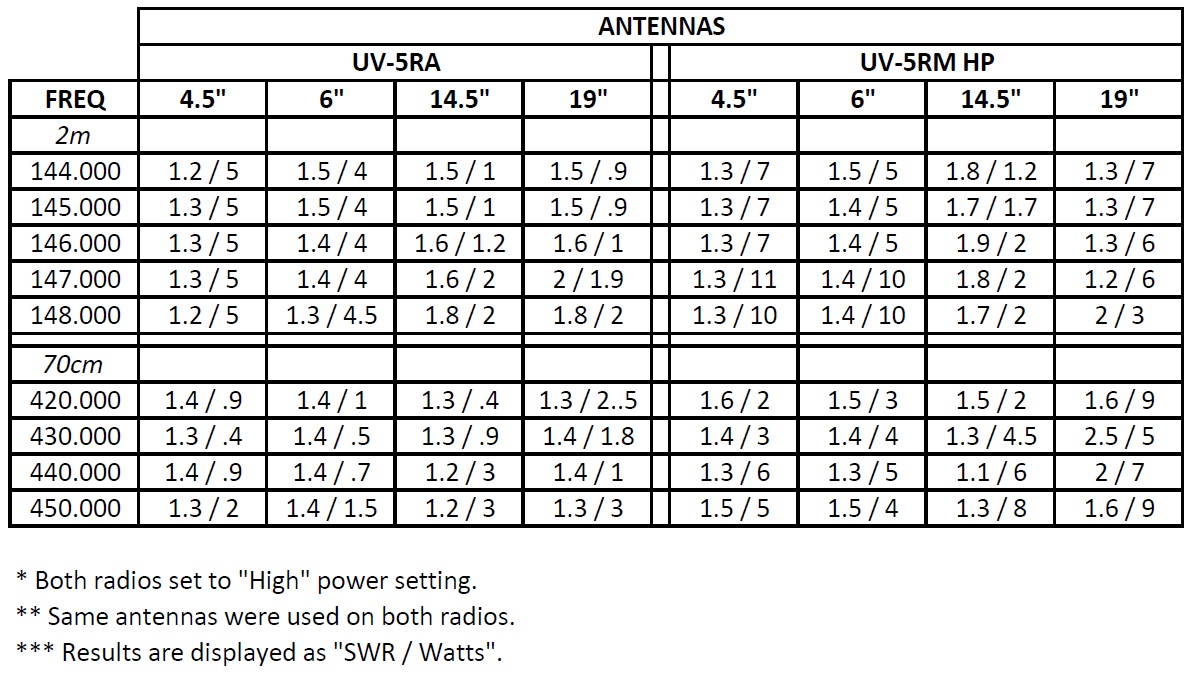
Here is a chart that shows the same radio(s) with different antennas. Notice the differences in “gain” just changing the antenna being used in conjunction with a frequency.

baofeng UV-5RMHP vs UV-5RA antenna resultsBottom line…maybe using a “matched” frequency with the right sized antenna can give you similar power capabilities of a 4w and 8w radios.

Reasonable Options –

For handheld radios you have essentially 3 power settings available to be used…1watt, 4watt, and 8watt.

Very generally speaking an 8watt radio will generate a more powerful transmitting signal. That generally means a transmission that will go further on a 8watt radio vs. a 1watt or 4watt. But, don’t be confused…it won’t be 2times or 8times longer distance signal respectively.

So is more powerful always better?

Yes, No…depends. Don’t you just hate me 🙂

OK, I gotta touch on a critical issue that is the determining factor in handheld power…safety. Yeah, kinda of weird, eh?

In this case I am not going to be referring to daily use, or usage during emergencies or disasters. I am going to specifically speak about “grid-down” and operations during that eventuality. I should probably have mentioned OpSec or ComSec rather than safety.

OpSec = Operational Security. Keeping your operations safe and secure from outside interference. That interference could cover a wide range of options…discovering your location or ambushing you. Having good good OpSec means non-need-to-know people don’t find out what you are doing before or during an operation.

ComSec – Communications Security. Keeping your communications secure from outside interception and/or keeping them from understanding what you are communicating. Having good ComSec mean non-need-to-know people can’t somehow listen in to your communications. Or, if they do, they can’t understand what you are communicating.

Now that I covered that…what does it have to do with the power of your radio?

Let’s say you have a great BugOut location and you have 5 families located there. Your area of operations (AO) covers the immediate 40acres of property that you own and the forest about mile in any direction. You want to be able to communicate with handheld radios within the AO.

You set your radios to 8watts to ensure that you can easily talk to each other. It works great! And one day a group of bad guys is traveling on a highway about 6 miles away. They are scanning the basic UHF/VHF frequencies as well as GMRS and FRS frequencies. They pick up your radio transmissions and hear you talking about the teenage girls are out harvesting apples. Oh, yeah…you are about to get visitors.

Point? Using a much lower transmission power reduces the distance your signal can travel. Hence, the signal may not have reached the badguys had you been using a 1w or 4w radio.

So just use the low or medium power setting on an 8w radio!?!?! Right?

How often so people use the power they have? Albeit, car, truck, radio, tractor, anything? Someone at some point will turn the power to 8watts and jeopardize your ComSec and OpSec.

Now, if you have 100% control over ComSec and people’s actions…feel free to go to an 8watt radio platform.

Summary –

There is one more influencing issue…cost. The 8watt radio that we are talking about is the Baofeng BF-F8HP. FYI, I reviewed it yesterday. It is well more than double the price of the Baofeng UV-5RA. So I would rather spend the money on buying more radios and better accessories than a radio with more wattage that may or may not be more useful to our situation.

If I had no money restrictions and I had confidence in my ComSec (or didn’t care about ComSec) I would buy the Baofeng BF-F8HP..

If I had a specific need for longer distance transmission I would buy the Baofeng BF-F8HP. Or, look at buying a mobile radio with even more wattage. An example of this kind of need would be a repeater. Yes, there might be a repeater located in my AO that I need to reach and only an 8watt handheld could do it.

So, now it is your job to figure out what you need/mission is, what your budget is, what your ComSec is, and then chose which radio is best for you. And I wouold wait until I read my next article i this series coming out tomorrow 🙂


2009 - 2019 Copyright © AHTrimble.com ~ All rights reserved
No reproduction or other use of this content 
without expressed written permission from AHTrimble.com
See Content Use Policy for more information.

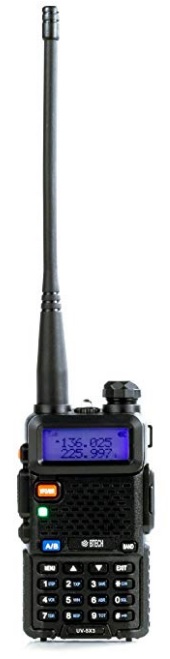
Baofeng/BTECH UV-5X3 Radio

note #5: over the next several days I will be posting a number of articles on handheld radios…specifically Baofeng…and which is the best to buy. Hold off buying any radio until you’ve read all the articles. You will be glad you waited.

So here we go with another radio review…maybe boring to some…tantalizing to others. And you may be disappointed when you are done reading this article. But…oh well….

This is the first substantial improvement in this line of Baofeng line radios. I started out years ago recommending the Baofeng UV-5R radio…I still highly recommend the Baofeng UV-5R radio.

So why am I writing this review? Ah, yeah…you might want this new version of the radio…if you have the need.

Clarification –

Technically the name of this radio is “BTECH UV-5X3” but don’t let that confuse you…it is a Pofung/Baofeng. And made by Fujian Nanan Baofeng Electronic Co in China. Yup, China. Now, that might not be a bad thing…I just wanted you to be aware of it. “BTECH” is just the American distributor of Baofeng radios. Pafung was originally created to be the international arm of Baofeng. So, Pofung, Baofeng, BTECH…all the same radio made in the same manufacturing plant in China.

Background –

You already know I love the Baofeng UVf-RA radio. If you haven’t already read that post <click here>. That article will give you a great background to build on…and allow about 85% of the BTECH UV-5X3 Radio to be understood.

Difference between UV-5R and UV-5X3 –

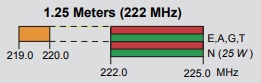
The addition of the 1.25M band and that is the only difference by in large. What is the 1.2M band? It is the 222MHz – 225MHz range of frequencies.

This frequency range is open to even Technician level licensees.

There is also another difference but far more minor. It is called “Sync” display. It allows you to program your radio to show Channel Name and the Frequency on the display. Yes, you lose the ability to display the second channel when you are in Sync mode.

And also, you cannot display three bands at the same time. You can’t monitor three bands at the same time.

Ease of Use –

This radio is every bit as easy to use at the Baofeng UV-5RA radio. And it has a couple extra features as well. I won’t get into them because they are so minor and I don’t use them.

Accessory Compatibility –

All Baofeng UV-5R accessories are supposed to be compatible with this tri-band cousin. However, as I have written about over the years…beware. Some batteries fit, other don’t. If you buy from Amazon then you can easily return anything that doesn’t work or fit right.

Battery Life –

Should be the same, or close to it, as the Baofeng UV-5RA. But, it will be better than the UV-5RMHP or BF-F8HP,,,if you are running those radios on their “high” power setting.

Summary –

OK, down to the basics…Should you buy this radio?

No…and Yes.

No – Unless you have a specific reason for needing the 222MHz – 225MHz range of frequencies this radio is not worth the 150% higher price than the Baofeng UV-5RA radio. So, is there a need or mission for you using the 222MHz – 225MHz range of frequencies? If there isn’t then don’t buy the radio. Buy more Baofeng UV-5RA radios instead…or better or more accessories for the Baofeng UV-5RA radio.

Yes – If you have a specific reason for needing the 222MHz – 225MHz range of frequencies this radio is worth it.

Before you answer the mission/need for the 222MHz – 225MHz range of frequencies…write down that reasoning. Does it make sense? Can you get by on the hundreds and hundreds of other frequencies available on the Baofeng UV-5RA radio?

OK, now that you did that homework…you can make your decision and feel comfortable with it.


2009 - 2019 Copyright © AHTrimble.com ~ All rights reserved
No reproduction or other use of this content 
without expressed written permission from AHTrimble.com
See Content Use Policy for more information.

Baofeng BF-F8HP Radio

note: over the next several days I will be posting a number of articles on handheld radios…specifically Baofeng…and which is the best to buy. Hold off buying any radio until you’ve read all the articles. You will be glad you waited.

OK…more radio stuff…hope you are ready for it.

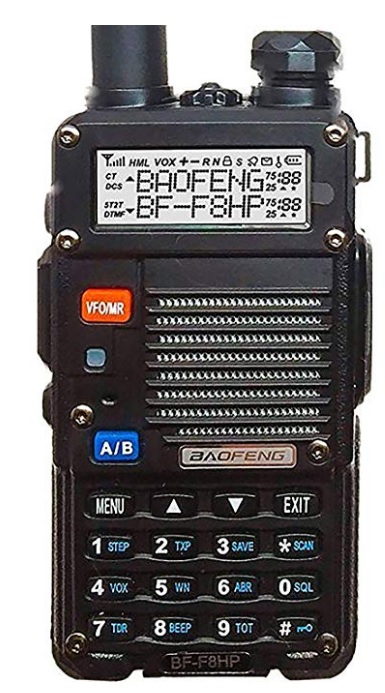
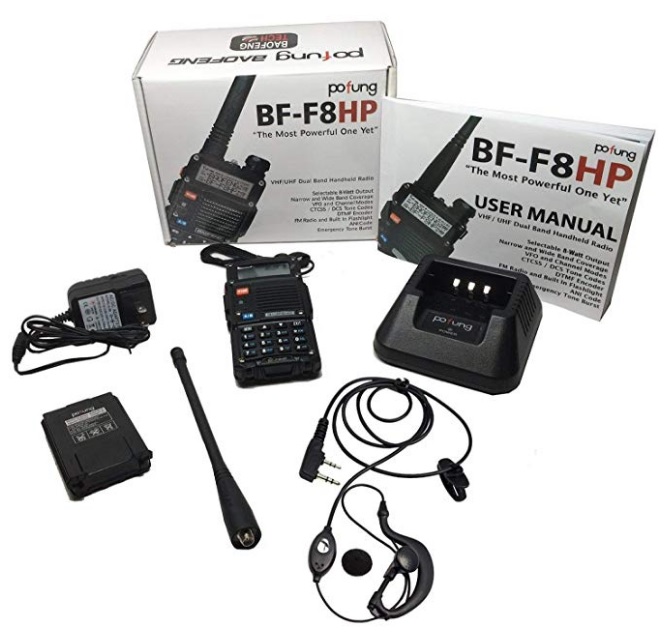
So what about this radio? It is the latest version of its incredible grandfather…the Baofeng UV-5R. With an additional feature or two…and more power. I am not going to make this review painful or long…so here goes…

The primary difference, the only one worth going into detail about is the increase in power.

The original Baofeng work off of high/low power setting (4w/1w). This version has three power settings high/medium/low (8W, 4W, 1W). However, if you rad my review of the Baofeng UV-5RMHP radio that appeared first in 2016 and resurrected yesterday, you see where the antenna makes a huge difference the actual power you get when transmitting. And remember also, “power” doesn’t make a whole lot of difference when receiving…power when transmitting it the key.

Ease of Use –

As I have written about before…the entire Baofeng UV5 family is very easy to use. Well, easy to use if:

  • You have it programmed correctly
  • You use software to program it
  • You use the manual(s) that I have produced
  • You actually take the time to train yourself on the radio
  • You keep familiar with the radio’s operational capability be using it as often as practical.

Bottom line…the radio is easy to use.

Accessory Compatibility –

Well, officially all the accessories that are compatible with the UV5 family are compatible with this radio as well. And just as predictably…some are, some aren’t. As I’ve written about before, sometimes accessories don’t fit exactly right…mostly batteries. Buy the accessory you want, try it, if it doesn’t fit right send it back. That’s why I love doing business at Amazon.

Battery Life –

If you run on high power all the time you will get less life out of this radio’s batteries than previous, lower power, versions of this radio. Batteries are fairly inexpensive so just buy more batteries if you need, and will be operating on, the high power setting.

Summary –

If you don’t currently own a handheld radio this is a radio to seriously consider. It has a great pedigree and plenty of accessories to make it very useful. But, at $63 for the radio…it is well more than double the price of the Baofeng UV-5R radio. For me…if there were four members of my family and I was somewhat limited on funds…I would buy 4 Baofeng UV-5R radios rather than 1-1/2 Baofeng BF-F8HP radios.

That being said, if I $250 available to buy radios for my family of four, I would…Oh, wait…I would still buy the Baofeng UV-5R radio (4 of them) and and use the other $155 for much needed accessories.

All that being said…If I had the money and the NEED for 8wats of transmitting power then I would buy the Baofeng BF-F8HP Radio…but only if there was the need for the higher power capability.


2009 - 2019 Copyright © AHTrimble.com ~ All rights reserved
No reproduction or other use of this content 
without expressed written permission from AHTrimble.com
See Content Use Policy for more information.

Baofeng UV-5RMHP

Baofeng UV-5RMHP vs. Baofeng UV-5RA2019 note #1: article first appeared in April 2016

2019 note $2: the radio is not available from what I can find.

2019 note #3: the radio has been replaced by the BaoFeng BF-F8HP which I will be doing a review on very shortly.

2019 note #4: this article still contains useful information that you may find interesting.

2019 note #5: over the next several days I will be posting a number of articles on handheld radios…specifically Baofeng…and which is the best to buy. Hold off buying any radio until you’ve read all the articles. You will be glad you waited.

Power –

We all want power! If we have some power, we want more power!

No, I am not talking about government, the police state, or our former Dictator-In-Chief Barry, or anything along those lines. I am simply talking about a way cooler subject…radios!

Over and over again I have told you how much I like the Baofeng UV-5RA radio…I think it is simply the best Baofeng UV-5RA Love Itprice/performance handheld radio on the market today. Yes, there are better quality radios Yaesu FT-60r handheld Ham radiosuch as the Yaesu FT-60r but the Yaesu also costs about 6 times as much at the Baofeng. True, if I could only have one handheld radio and the money wasn’t a real factor I would choose the Yaesu. But for many of us mere mortals money is a factor. And, I would rather each family member and all of my close friends have a radio rather than just one or two having a radio. Hence, the Baofeng UV-5RA handhelds are an amazing combination of price and performance.

But, there was always that talk swirling around by other Baofeng users claiming that their radio was a 5watt or an 8 watt, etc.  I began to suffer from “watt envy”!

I have already shown where the UV-5RA radio outperformed both the UV-6 and UV-8 version of the radio in previous Baofeng UV-5RMHP radioreviews. But, the venerable UV-5RA radio has finally met its match. Well actually, the radio that outperformed the UV-5RA is just its bigger brother…the UV-5RMHP.

I acquired an evaluation version of this radio a few months back. I started testing it and really couldn’t find anything wrong with it. Well, that isn’t 100% true. When I tried to program RT systems software for Baofeng UV-5R radioit with my RT Systems software…it failed. I looked to see if CHIRP had a version and NOPE, they didn’t.

I called RT Systems about the programming problem and within two days they had their UV-5 programming software humming along just fine with the new UV-5RMHP radio. Now that is why I like RT Systems software…they respond and they are professional programmers maintaining critical software.

So, I programmed up the UV-5RMHP with my standard channel plan and began the testing for performance. Wow!

I was very pleasantly surprised with the radio. First, it operates exactly like the UV-5RA so that eliminated any learning curve. It also programmed exactly the same with one exception, in the “Tx Power” column there were three choices vs. only two with the UV-5RA. The UV-5RMHP has three settings “L, M, H.” Which translates into 1w, 4w, 7w of power programmable for each channel. SWEET!

Back, to the testing…I looked over the radios to find any differences and couldn’t find a single operational difference other than the key that first locks/unlocks the radio, then is used to switch between “high” and “low” power on the UV-5RA radio. On the UV-5RMHP that key still locks/unlocks the radio, but it now switches the power; “high” “low” “medium.” Which corresponds to the new wattage capability while transmitting.

So naturally I had to test the new wattage with various antennas…

baofeng UV-5RMHP vs UV-5RA antenna resultsIf you look that chart over and you are a tech geek you will see that there is vastly improved power being delivered to the antenna. For all of us non-tech geeks the chart shows 50 – 100% more power to the antenna in some frequency ranges. Not only that but the SWR readings are terrific with only a couple of exceptions. And even then the SWR readings are still well within operational parameters.

Some Technical Specs –
  • FirmWare: 2015
  • Frequency Range: 136-174 / 400-520MHz
  • Dual-Band Display
  • Dual Frequency Display
  • Dual-Standby
  • 7 / 4 / 1 watts of Output Power
  • 128 Memory Channels
  • 50 CTCSS and 104 DCS
  • Built-in VOX Function
  • Burst Tone 1750Hz
  • FM Radio (65MHz-108MHz)
  • LED Flashlight
  • Large LCD Display
  • High/Medium/Low Power Switchable
  • 25KHz/12.5KHz Switchable
  • Emergency Alert
  • Low Battery Alert
  • Battery Saver
  • Time-out Timer
  • Keypad Lock
  • Monitor Channel
  • Channel Steps: 2.5/5/6.25/10/12.5/25KHz
More Info –

Field testing was amazing! But, since my field testing environment is different than your environment I am not going to say I was able to get X more distance with the UV-5RMHP over the UV-5RA. I will just say that I clearly got more distance with the UV-5RMHP.

And now one of the greatest aspects to this new model of the UV-5R radio…the UV-5RMHP uses all of the same accessories as the UV-5RA radio! Every single accessory works on either radio just fine.

UV-5RMHP-003UV-5RMHP-004And another great feature…the RT system programming software of the UV-5R works on both models as well! I just have three options now on the “Tx Power” column when programming a UV-5RMHP vs. two when programming a UV-5RA.

So where are we on the price/performance benchmark? Not bad, not bad at all.

  • The UV-5RA retails right now for about $25. That is $6.25 per watt of output.
  • The UV-5RMHP retails for $40. That is $5.72 per watt of output. (note: radio is not available as of 2019)

But when you consider there are times you can 11watts going out the antenna, then that makes it $3.64 per watt of output. Although, I would stick with the more realistic and consistent $5.72 per output watt performance. That makes the UV-5RMHP a better performance for the price while being only about $15 overall more expensive than the UV-5RA.

So which radio do you buy?

  • If $15 is no big deal, buy the UV-5RMHP !
  • If you need to buy 5 radios for your family the $15 difference comes to $200 vs. $125. With the $75 difference can buy three additional UV-5RA radios. So you might be better off with the UV-5RA radios.
  • If you are not going to be using the radio over longer distances the UV-5RA is just fine.


2009 - 2019 Copyright © AHTrimble.com ~ All rights reserved
No reproduction or other use of this content 
without expressed written permission from AHTrimble.com
See Content Use Policy for more information.
Mini-Communications Center using an FT-60R or Baofeng UV-5

Baofeng UV-5r handheld radioYaesu FT-60r handheld Ham radioWhile I was beefing up my communications capability I was trying how to maximize my Baofeng UV-5 and Yaesu FT60 handheld Ham radios. Both are great radios for different reasons. Read more about each radio rfom the articesl that posted earlier this morning…Yaesu FT-60 and Baofeng UV-5

The radios are called “handhelds” or “handi-talkies” for a reason. They are meant to be lightweight, portable, and carried on your person. However, there are times when transmitting or receiving over greater distances would be preferable, or even needed. So I was trying to figure out how to make them more useful. I had already purchased the mag-mount vehicle antennas with handheld microphones and antenna adapters. Then I decided to go back and write a mission for what I was trying to do.

Mission –

An antenna system to provide longer transmitting/receiving ranges for handheld radios and to create a mini-communications center that is highly portable.

Yup, while I was writing the “mission” for this application I realized that if I did this right I could really use the ability of the handhelds to dual scan the UHF & VHF bands. And if I had a second radio then I could talk on two primary use freqs as well. Then it hit me that I was talking a mini-communications center using two handheld radios if I had the right antenna set-up.

Here is the result:

Mini Communications center with Tram 1600 marine antennasMini Communications center with Tram 1600 marine antennas


I took a 1-1/2″ x 36″ angle aluminum.  then decided I could mount an antenna on either end. I already had a couple of new Tram 1600 1/2 wave marine antennas sitting in the shed for UHF/VFH radios that I wasn’t using.


I drilled out the center hole for mounting on a camera tripod just like had already done for the FT-8900 radio. Then I drilled the holes for the Tram marine antennas and mounted them.

I attached the bracket to the camera tripod using a wingnut purchased at Lowes.

Mini Communications center with two baofeng UV-5r handheld radios

Nest came the big test, hooking up my Baofeng UV-5R handhelds and putting the SWR meter to it.

BINGO!!  My SWR meter readings were well within acceptable limits and no tuning of the antennas were necessary. So now I have a mini-communications center with low-cost handhelds. Or I can hook up my more expensive Yaesu FT-60Rs. My mini-communications center gives me the ability to scan lots of frequencies at one time by a single person. The remote microphones is added comfort. Using headsets can add privacy and security if it is needed as well.

Mini Communications center with two baofeng UV-5r handheld radios

Be creative with what you have! There are solutions out there is you just think through what your need is and correctly defining the mission.

Have fun – create !

Note: The camera tripod has a hook located in the center of the legs that is designed for something, I am not sure what. But for my use it is a perfect place to attach a rope, bungee cord, or some 550 paracrod to hold the tripod to the ground.


2009 - 2019 Copyright © AHTrimble.com ~ All rights reserved
No reproduction or other use of this content 
without expressed written permission from AHTrimble.com
See Content Use Policy for more information.

Baofeng UV-5RA Handheld Radio

Baofeng UV-5r handheld radioUV-5RA radio from Baofeng. I can’t say enough good things about this little radio!  This radio is compact, battery charge lasts a very long time, versatile, and so far it is proving itself to be very durable.  The downside? Yeah, made in China.

FYI…I spent about $130 for the radio and all the accessories to make this radio really work in every aspect for me.  This is a true bargain in every sense of the word. This radio, as I have outfitted it with accessories, goes a very long way towards overcoming communications issues during emergencies and disasters. When it comes to “grid-down” I believe this little beauty will make a life-saving difference.

One of the highest priorities in any emergency or disaster (yes, including “grid-down”) is the ability to Boafeng UV-5r handheld Ham Radiocommunicate.  And this sweet little radio is fully programmable; it is wide open to programming on any of the standards 70cm and 2m frequencies available to Ham operators, plus a whole lot more!  It can also be programmed for all the NOAA, FRS, GMRS and MURS frequencies for use during emergencies.

This is a true dual-band radio as well.  You can monitor 2 frequencies at the same time, even frequencies on different bands.  The LCD screen clearly displays the frequencies or channel names. And switching between the two frequencies is very easy, push one button.

At just $24 per radio it is an unbelievable bargain. Easily affordable for each member of your family or group.

Some standard, web-based information and technical specifications…

The handheld radio is a micro-miniature multi-band FM transceiver with extensive receive frequency coverage, providing local-area two-way amateur communications along with incredible monitoring capability.

Tech Specs:Baofeng UV-5RA

  • Frequency Range: 136-174 / 400-479.995 MHz.
  • Full height two-color LED definition display. The screen has exquisite clarity.
  • Field programmable from keypad.
  • Programmable via computer software.

The Baofeng UV-5RA is a compact F.C.C. Part 90 hand held transceiver providing 4 watts in the frequency range of 136-174 MHz and 400-480 MHz. It is a compact, economical handie-talkie (HT) that includes a special VHF receive band from 65 – 108 MHz which includes the regular FM broadcast band. Dual-monitor and dual-reception is supported. You get up to 128 memories that are programmable from the keypad or via programming software.

Other features include:Baofeng UV-5r handheld radio

  • selectable wide/narrow,
  • battery save function,
  • VOX,
  • DCS/CTCSS encode,
  • keypad lock,
  • built in flashlight.

Selectable frequency steps include:  2.5, 5, 6.25, 10, 12.5 and 25 kHz. RF power may be selected at 1 or 4 watts depending on your field needs and battery life requirements.

This radio comes with:

  • ANT5 SMA-J flexible antenna (rubber ducky),
  • BL-5 Li-ion battery (7.4V 1800 mAh),
  • Ear piece and lapel microphone,
  • belt clip,
  • wrist strap,
  • drop-in charging tray with AC adapter (8.4V 600mA).

I loved this radio as soon as I took it out of the box! There is a “feel” to it that just gives that impression that it is a decent quality little radio. It doesn’t quite compete with my Yaesu FT-60R but my 60R was also SIX TIMES more expensive!

From a fully functional, field utility perspective, the UV-5RA competes just fine with the 60R. And I would rather every member of my family have a UV-5RA than only one member of the family have the better quality, far more expensive, Yaesu FT-60R.

I did some field programming from the keypad and it is OK but would be tedious and challenging to try and do to much of it without a manual right there and plenty of patience. I use the RT Systems software to program the UV-5RA. The RT Systems software works perfectly, easy to use, dependable, and I love the support from RT Systems folks if you ever have a question.

There is a huge bunch of accessories for this little gem. You can add-on to this radio to make it function in just about any role or perform any mission you need it to. Couple things that I did with this radio that might interest you:

  • Turned it into a vehicle based mobile radio with improved range.
  • Made a “mini-communications” center with it with way better antennas for improved range.
  • Increased its battery life by adding a 3800 mAh battery to it.
  • Added a AA battery tray to it making it more versatile with alkaline or rechargeable batteries.
  • Made it independent of internal power with a 12vDC adapter cord.

Here is a list of accessories that I consider a “must buy” to really make the radio fully function for emergency, disaster and “grid-down” usage:

  • 14.5″ dual-band antenna – Significantly improves operational range and quality of reception.
  • Vehicle external antenna & connector/adapter cable – Allows the radio be operated from a vehicle with considerably more transmit and receive range.
  • Speaker Microphone – Makes radio operation in many circumstances way more convenient, especially during vehicle operation in conjunction with the vehicle external antenna & connector/adapter cable.
  • Programming software & cable – This is an absolute must as far as I am concerned to allow this radio to become fully functional for you. It opens up a whole lot of capability and “usability” for you. RT Systems is the only programming software I use or recommend.

Bottom line…

“BUY” this radio and you won’t ever regret it!


Baofeng UV-5RA radio for sale

If you would like to see the best price just for the UV-5RA radio visit Amazon →


The radio is now only $24.00 on amazon!!


2009 - 2019 Copyright © AHTrimble.com ~ All rights reserved
No reproduction or other use of this content 
without expressed written permission from AHTrimble.com
See Content Use Policy for more information.

Yaesu FT-60R Ham Radio : Storing and Transporting Case

Yaesu FT-60r handheld Ham radionote: article first appeared in January 2015

In this post I will go over how I store my 60R, what I store/transport it in, and what I store with it.

In a previous article that was posted about 15 minutes ago I went over the Yaesu FT-60R radio and accessories.

So let’s go over my standard format, what is the mission for all of this?


Mission –

To safely store two radios and all components with which to operate the radios.

Requirements & Restrictions –
  1. Cases must be sturdy, at least to military specifications.
  2. Cases musty protect against dust, dirt, and water impingement.
  3. Cases should protect the contents against damage due to reasonable heights and rough handling.
  4. Cases should be low profile and not draw attention to them.
  5. Case should be light enough for one person to easily carry.

SKB i-series 3I-1711--68-C.The case I chose was the SKB i-series 3I-1610–58-C. These cases are waterproof and as sturdy, if not more so, that Pelican cases. And they are cheaper that Pelican cases. They come with “cubed” foam ready to be cut to size for your equipment.


SKB i-series 3I-1610--58-C for my Yaesu FT-60r handheld radios

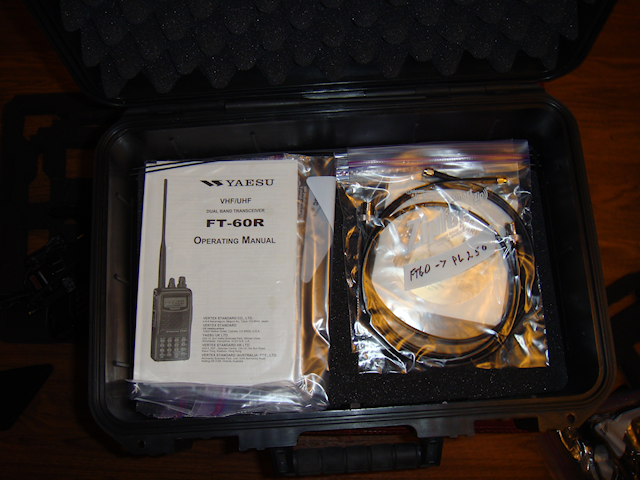
So this is what my case looks like for my two Yaesu FT-60R radios.  The case is clearly labeled for easy identification.
SKB i-series 3I-1610--58-C for my Yaesu FT-60r handheld radiosYaesu FT-60R Radio Case –

Bottom Level:

  • 2 x Antennas, Dual-Band, 14.5″, Comet SMA24
  • 2 x RF coaxial cable SMA female to UHF SO239 PL259 femaleRG58
  • 2 x FT-60R Owner’s manual and US Amateur Bands chart in a Ziplock bag
  • 1 x RT Systems Programming CD

SKB i-series 3I-1610--58-C for my Yaesu FT-60r handheld radiosMiddle Level:

  • 2 x Yaesu-VC-25 VOX Headsets


SKB i-series 3I-1610--58-C for my Yaesu FT-60r handheld radiosTop Level:

  • 2 x Yaesu FT-60R radios
  • 2 x Antenna, 7″ (rubber duck)
  • 2 x Battery packs, rechargeable, L34D
  • 2 x Battery trays, AAA
  • 2 x Chargers, 12vDC (cigarette light style)
  • 2 x Chargers, 120vAC
  • 2 x Surveillance style earpieces with lapel microphones.
  • 1 x RT Systems Programming Cable

I have given you a list of the equipment needed to run the Yaesu FT-60R Ham radio. Is it everything you might need?  This was meant strictly for the radio equipment itself and the essential equipment to get it going.

Take this list and use it as a starting point for your specific need and mission.

Note #1 : I specifically didn’t store batteries (other than the rechargeable pack) because I didn’t want to run into a corrosion issue.
Note #2 : This is a smaller case than the ones I use for the FT-8800, FT-8900, and the FT-897. Why? Because I bought this case first. If I had taken the time to measure everything out first I wold have stuck with the SKB i-series 3I-1711–68-C for all my radios.


2009 - 2019 Copyright © AHTrimble.com ~ All rights reserved
No reproduction or other use of this content 
without expressed written permission from AHTrimble.com
See Content Use Policy for more information.