

Click the above image to be able to print as a regular image. Laminate it to keep with your radio gear.

Click the above image to be able to print as a regular image. Laminate it to keep with your radio gear.
 note: article first appeared in December 2015
In part #1 yesterday I laid out the case for the probability of an EMP strike on America. I started laying out the case for the severity of the impact of such a strike. This article, Part #2, finish up on the impact severity, and end with what you can do to mitigate the EMP threat.
It is probably a good idea to read Part #1 first if you haven’t already done so.
The experts and planners really don’t know for sure just what the extent of and EMP blast effects might be. Yes, there are books written talking about a 90% die-off in the first year. But, they are writers not experts in EMP warfare, they are novel authors.
I had the opportunity to talk to a 40 year expert that worked for Motorola and was a professor of electronics at a major university. We discussed the EMP potential. He explained to me that all their own testing was different than the hype and scare that we hear about in the media and read about in the books.
He was referring to all the post-EMP books hyping pre-computer controlled cars. Granted, vehicles with all the  different computer technology would be far more susceptible to being rendered useless by an EMP strike. So some cars beginning in the mid-70’s began using integrated circuits, actual computer modules were about 3 – 5 years later. Obviously any vehicle without an integrated circuit board or computer module would be far less susceptible to damage from an EMP strike.
He went on to explain that not even the cars with computers that were all “zapped” had died an electronic death. The EMP pulses that they tested with only killed about 60 – 70% of cars with computers. I found that very interesting. He explained that sometimes all they had to do was disconnect a battery and the car would survive just fine. And not all the batteries were automatically destroyed by the pulses either. So the outcome for vehicle transportation may not be as dreadful as some would lead us to believe.
Electronics were a little different in their testing. If electronics weren’t protected they usually got wiped out. But, they also discovered that protecting the delicate electronics wasn’t all that difficult. They found the concept was to direct the energy of the pulse around the electronic gadget not allowing any of the energy to come in contact with the piece of equipment.
When I asked him how difficult it was, he chuckled and said, “Not very.” He told me that placing electronics in a metal box on insulated material should be just fine.
To me the operative word was “should.”
He said there was no way to conclusively say what kind of metal box worked all the time. And the reason is the EMP pulse itself. The energy flows through the air at different frequencies. The key was to block that specific frequency of energy associated with that specific EMP blast. And he also told me that there couldn’t be any gaps in the metal box, a tight metallic seal was paramount.
By then my eyes were kind of glazing over, I was getting lost. Then he said it was pretty simple to test. He said take an FM radio, tune it to a clearly heard station, and turn the volume up. Then place it in your metal box on insulated material. Slowly start to close the lid. If the radio reception died away and you could no longer hear the radio then the box was blocking the energy frequency of most EMP pulses.
He did qualify that by saying that to the best of their knowledge at that time EMP, energy pulse frequencies were roughly that of FM stations. And that is why if you could block the FM reception, you could block the pulse energy. And technically you weren’t blocking the energy pulse. The metal box was moving the energy pulse around the outside of the box not allowing the energy to come into contact with the radio’s antenna.
He also said it would be a good idea to remove the battery and the antenna from the radio. That would further assist in keep the energy out of the radio since both of those items attracted energy. We talked about wrapping the radio in a layer of insulation and he thought it would help if there were no gaps in the wrapping.
We talked about Faraday Cages for awhile, he was not impressed. He thought they were overrated and pretty  much was just a fancy and more expensive version of a metal box. He even mentioned that a garbage can with no holes or cracks, with a tight fitting lid, and lined with a non-conductive material could accomplish the same thing…maybe even far better.
The idea was simply to keep the energy from entering or contacting the piece of electronic gear that you were trying to protect.
A Faraday Cage was simply a fancy metal mesh box, that might not work as well as a metal container such as a garbage can mentioned a minute ago. We again talked about steel garbage cans with a plastic lining (i.e. a plastic garbage can) as an option. He said that would probably be just fine if the garbage can lid was tight fitting and let no gaps in the lid’s seal. We talked a little more and he liked my idea of using crumpled up aluminum foil as a “gasket” to ensure that there was no gap at all between the lid and the garbage can lip.
After thinking it through for awhile I talked with another buddy of mine, a serious and intelligent prepper. And the qualifications to be called such. We talked for awhile about EMP strikes and the potential for damage. Mostly sticking to how to protect radio equipment from damage.
When as was said and done we decided that we would wrap our gear in non-conductive material ensuring that there were no gaps. Then wrap that bundle in aluminum foil without gaps or open seems. So, imagine a bubble-wrap envelope sealed tight with clear shipping tape. Then that bundle is wrapped tightly with aluminum foil with absolutely no gaps in the wrapping.
Then use the non-conducting bubble wrap again, then another foil wrap, and then finish them off with a final layer of non-conducting bubble wrap. When we were all done with that, we placed them in a metal box with a tight fitting lid that left no gaps between the lid and the box.
I thought through that a lot. Basically we would be doing what my expert buddy had talked about. End result…redirecting the energy around the piece of electronic gear you are trying to protect.
“What to do now?” is the big question isn’t it. And honestly, that is up to you. I didn’t say that to be smug or avoid answering the question. It really is up to you.
Here’s how I see it…
No! While the potential for an EMP strike severity could be quite high if we are struck, the probability of being struck is still quite low. So there is no reason to start obsessing over being hit with an EMP.
And honestly, what part of your preps are truly dependent on electronics or batteries? For me it is:
Yup! That’s it for my dependency on electronics and batteries. So I have to ask myself the question, “Could I survive without all of the above?”
“Of course I could!” is the easy and accurate answer. Would it be more convenient with them? Yes. But we could get long without them.
So you really have to ask yourself the same questions –
What preps of your depend on electronics and batteries?
Could I get by without those things?
As far as priorities go I would put EMP-proofing your electronics way, way down the list. I would say look into it after; a year’s worth of food, water, and garden seed. And then after, considerable medical supplies, weapons, and 1000’s of rounds of ammo. Then put in water filtration and purification capability, a good tents, clothing, and quality tactical gear. Then…and only then, would I consider worrying about protecting my gear from an EMP.
This has been a really long article on EMPs, but I thought it prudent to go through it in detail. But, by now you also have a pretty good idea of what you need to be doing about it.
Now…just go do it! “whatever “it” may be.
2009 - 2019 Copyright © AHTrimble.com ~ All rights reserved
No reproduction or other use of this content
without expressed written permission from AHTrimble.com
See Content Use Policy for more information.
 note: article first appeared in December 2015
I’ve pretty much stayed away from the whole EMP subject over the years. I’ve been asked about it a bunch of times but given some pretty vague answers. I guess it is time I get serious and share my real opinions on it.
My EMP opinion has changed over the years. Remember, I worked with intelligence information when I was in the Navy back in the 1970’s. I can tell you that back then during the Cold War there wasn’t any war-based “measured response” option. There also wasn’t any of thought of a weapon to do little damage to conquer the Soviet Union or any East Block country. We were in it to win it! And that meant nuke the crap out of them.
Sure, they knew about EMP effects for nuclear explosions even back then. But that was a distant concern, issue, or topic. What we wanted was to devastate them, their military, their people, their infrastructure, just basically blow em up.
But, as times have changed I have looked at what would Russia want to do to us in terms of war-based destruction. Russia is short of resources, all kinds of resources with the possible exception of fossil fuels. That being the case, I don’t think Russia would want to slick us off like glass with nukes. Well, with one possible exception, if we hit them first. If we would throw our missiles at them first, they would throw everything they had back at us as fast as they could turn keys and push buttons.
If you think about it, why would Russia, or even China, want to turn us into a nuclear wasteland? I simply don’t think  they would.In all reality…they would love to have access to our resources…natural and man-made.
Iran on the other hand has the stupid 12th Imman, end of the world thing as part of their Muslim Shia beliefs. Those crazies would nuke us just to fulfill their desire to expedite the end of the world. But, Iran would hit Israel before they would hit us.
The crazies in North Korea, although crazy, don’t do anything without the approval of China. NK won’t nuke us unless China tells them it’s OK. North Korea really doesn’t want war. They know they would lose. But, they want the attention and associated power that comes with threatening war.
We are China’s biggest customer of the goods they produce. We spend huge amounts of money buying their stuff year in and year out. China loves those dollars! Why would they want to blow-up their best customer?
Well, there actually is a point when China might make a move against us. China has been an empire for 1000’s of years. Yes, China is currently a communist country, but it no less an empire now than it was 500 or 1000 years ago. When it comes to international politics China views everything in a very large context. I am talking in terms of 100’s of years to accomplish something, for sure decades.
Let there be no doubt in your mind, China expects to be a, if not the, world dominating empire. It is only a matter of timing for them. When China decides that the timing is right, they will use all appropriate tools available to them to accomplish their goals. And using nukes against us is seen as a strategy, nuclear weapons are nothing more than tools to them. Albeit maybe not their first or most desired option.
That being said, I do not think that China wants to slick us off either. It just wouldn’t fit their history-based reputation. Sure, they want to beat us, and beat us decisively, but I don’t see them going into “annihilation mode” on us. I think they want to subjugate not eliminate. They like our natural resources and ability to grow lots of food.
You also have Pakistan and Turkey as nuclear armed countries. While they are both supposedly secular governments, they are both Muslim countries. Pakistan has really moved towards being a Islamic government, Turkey is now maybe the most Muslim of both countries. When Pakistan completes its total transition to an Islamic state, then I would move them into a similar category as Iran. Same would be true for Turkey. I think it won’t be long for both of them to finalize that transition.
So what about the EMP thing again?
Remember, I look at “threats” as “risks.” And I then look at all of it in terms of “risk mitigation”. Risk is judgement based on probability and severity of the risk actually occurring. I look at an EMP strike the same way.
I see the risk of us being hit by a nuclear weapon that generates an EMP as low…very low at this time actually. The reason I give it such a low probability is their fear of retaliation. Russia and China have no desire to exchange a nuclear strike with us. Iran would probably love it but they aren’t ready for that yet. Pakistan and Turkey probably aren’t ’t too far behind Iran but they are maintaining a resemblance of normal behaviors. North Korea, well, they are complete nuts jobs in that country, so I don’t expect them to actually launch a nuke at us.
So based on all of that, I see the probability as pretty dang low. However, 20 years ago I would have given it a zero chance. 10 years ago, slightly more than zero. When Iran did the nuke deal with Obozo I believe Iran’s potential use of a nuke against another country went to 100%. Their use of a nuke against us is maybe at 50%. Iran nuking Israel………..just a matter of time. It’s not an “if”……it’s a “when.”
So now I have to rate the probability as on the chart.
Here is where it could get ugly. If anyone launches a nuke at us and it actually detonates on US soil, it will be devastating regardless of where it hits. It will be the blow against us that challenges, and perhaps negates, our super-power status. If we are hit, and we don’t hit back, we will be re-categorized to the group that includes France, England, Italy…maybe worse. If we are hit and we hit back, then we can expect WWIII. And should that happen, an EMP is the least of our problems.
So let’s look at the severity if it is just an EMP. By the way, it would be more along the lines of North Korea going rogue and hitting us with an EMP without China telling them to. However, there is a potential scenario where China would tell them to hit us with an EMP just to weaken us and test out retaliation resolve.
Whatever the reason we were hit, the outcome would be very damaging. The damage would be two-fold. 1) the  actual direct result damage to infrastructure, 2) the economic fallout.
 The economic damage would be far worse than the direct damage. The stock markets would crash, the economy would nose dive. It would be economic Armageddon for awhile. Mostly due to banking being out of business. Yeah, completely out of business. Modern banking is all computer based with that information being transferred between customer and banks, banks and business, etc. entirely by electronics (i.e. the Internet). An EMP would fry most large-scale electronic systems, including the Internet and telecommunications.
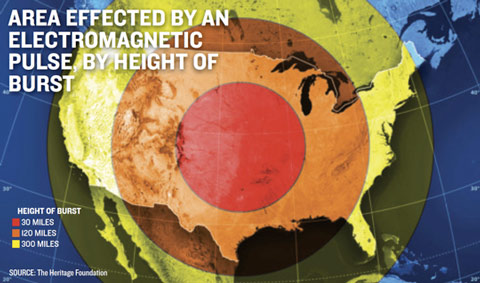 The direct damage is a little less clear. EMP damage is directly related to a few things:
The absolute worse location to be at the time would be directly under the atmospheric blast. As the zone expanded outward, the impact would lessen. But, that would be in direct relation to the size of the detonated weapon. The bigger the weapon, the larger the affected area. However, the further away from the blast you were, the more diminished the impact would be.
Now is when it gets blurry. And I will cover that tomorrow when I finish this 2-part series.

2009 - 2019 Copyright © AHTrimble.com ~ All rights reserved
No reproduction or other use of this content
without expressed written permission from AHTrimble.com
See Content Use Policy for more information.
 note: article first appeared in December of 2015
Yesterday I did a review on a tactical flashlight that I have been using for a number of years now. It is the LED Lenser V2. I absolutely love that flashlight! It has done everything I’ve ever asked of it and then some. It has never failed me, that is saying something.
The V2 was always plenty bright enough, tough as nails, fit my carbine’s vertical grip perfectly and was just an all-round perfect tactical flashlight. It was so good actually that I made it my family’s all-purpose flashlight. Yes, that means we standardized on it.
Then LED Lenser discontinued manufacturing it. But, they supposedly replaced it with a new and improved version. I am always leery of “replacements”, they never seem to be as good. This review is all about the “T Square” replacement version (model # 880229) of the LED Lenser.
The mission:
“A single flashlight that is capable of operating in the most demanding of tactical environments, bright enough to see a minimum of 100 yards, and battery efficient.”
Here were the flashlight restrictions and requirements:
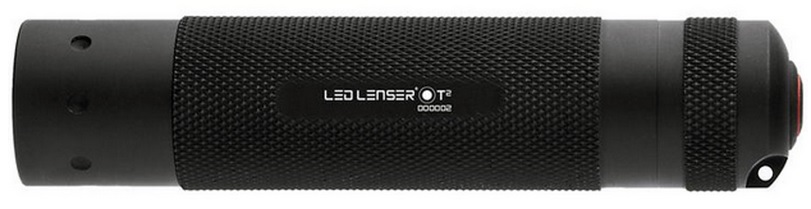 The flashlight specs:
| FEATURE |
V2 (original) | T-Square (new) |
| Lumens | 104 |
|
| Lighting Modes | 1 | (2) High & Low Beam |
| Beam Distance | 180 yards |
|
| Length | 4.5” | 4.5” |
| Diameter | 1” | 1” |
| Weight | 3.6oz | 3.56oz |
| Batteries | 3 x AAA | 3 x AAA |
| Housing | Aluminum | Aluminum |
| Water Submersion Rating | IPX4 | IPX4 |
| Finish | Semi-Gloss Black | Matte Black |
| Burn Time | 4 hrs |
|
| Switch |
|
|
I’ve owned this line of flashlights for a very long time. I think I had one of the first V2’s that hit the market. I really like the way they feel, and how sturdy and dependable they are. The first model had a slick/smooth switch cap in the end of the tube. I am not talking “slick” as in a good thing, I am saying there was no positive grip to it. Then they upgraded to a nice button with checker boarding in the rubber. That really made this flashlight a winner.
So, I open the box, excited as always anytime I get a new product to review, and what do I see? This stupid orange target on the switch button cap. I mean bright orange and it looks just like a clay pigeon. I hate that!
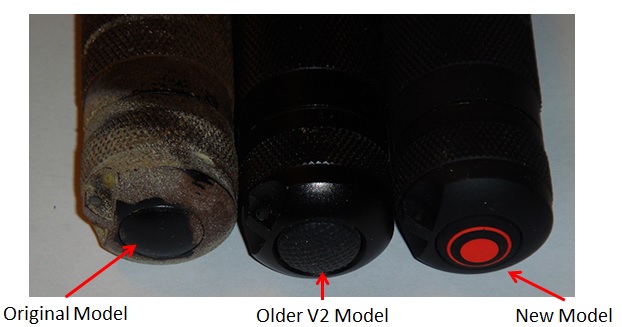 OK, that relieved a little stress. Can anyone in their right mind tell me why a company would go with a bright orange anything on a tactical flashlight? I mean seriously…do they think we can’t find the button without it being bright orange? And another bad thing is the button cap is now back to being “slick” as in slippery.
Well, that is the downside. Everything else about this flashlight rocks!
The finish on the flashlight is better than before, less reflective. I also found that the finish added to my ability to hold onto the tube. This is especially helpful when your hands are wet with body fluids or something similar.
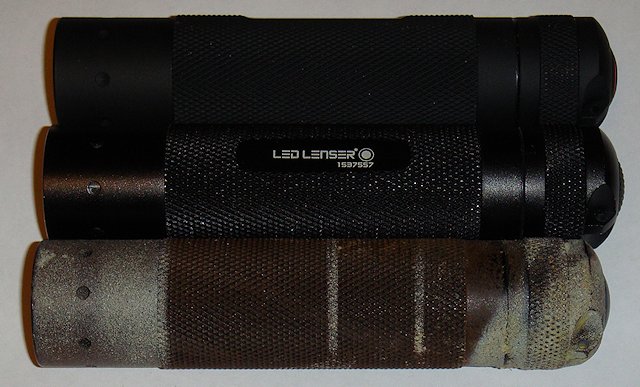 One of the first things I noticed, after the bright orange crap, was a distinctive red band around the inside of then lens right below the flashlight’s lip. I liked the “look” of it but had no idea what the purpose or advantage would be. So I kept looking at it from different angles. Low and behold I figured it out. While it may be unintentional it is interesting. I held a V2 model up to the new model and saw that from the side view the red band inside the lens drastically reduced the amount of light seen from the sides.
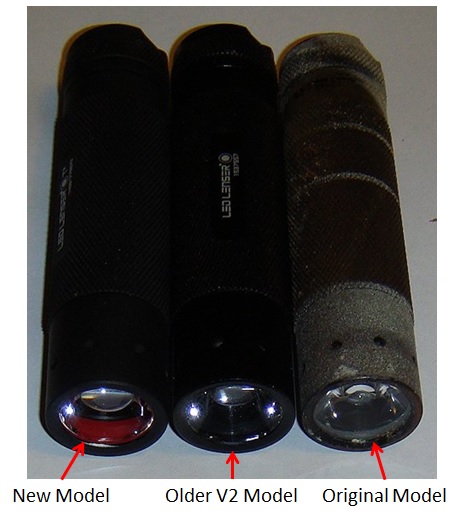 Yeah, think that one through for a minute. If you are trying to reduce your night-time profile you want to use red light. But for most tactical purposes you want to keep your overall location pretty much to yourself, right? So there you are in a warehouse, the middle of the night, using your new 240T on low beam. The red reduces the amount of light seen from the side and reduces the other guy from being able to get a solid “fix” on you. Sure, they can see your beam out in front of you but it is hard to spot the origin of the beam. The red simply helps keep you more covert.
Well, while I was playing around with that idea I tried shining one light on the front of the other light’s front. The light without the red in the lens reflected back brightly. The red lens lights barely reflected at all. So another nice feature at covertness.
Here is the biggest change to the new 240T light…the button switch. There are multiple positions now for the switch. The V2 had a partial depress would give you the beam that would turn off as soon as you let up the pressure on the switch. Fully depress the switch and the beam would stay on until you fully depressed the switch again. The new 240T has a high beam and a low beam light.
You activate the light just as before, but this time when you partially depress it the first time you get the high beam. Next time you partially depress it you get the low beam. Same goes for full depression of the switch for constant on. You have to do the depressing quickly for the switch to go from high to low.
What I mean is it alternates between coming on with the high, then the low beam. But it “resets” after about 5 seconds to come back on with the high beam.
So I have mixed feelings and opinion about the whole high/low beam thing. The low beam keeps your projected light much closer in and significantly increases burn time. And that is a really nice thing. I think the vast majority of my flashlight time is more closely associated with low beam needs than high beam capability.
I wanted to verify that Amazon had them for sale. While I was looking at the product to validate it, I noticed that there was a review with a “one star” rating. So here is the 1-star review, “When i received I saw different than this in the picture, and when I was using did not work.”
Yeah, I don’t put any value to that review whatsoever. It reads like they are from Russia. I think it was a “plant” to run down the product vs. what someone who actually bought and used the flashlight. I have bought a bunch of these flashlights over the years; never, not once, did they arrive broken or misrepresented. Actually, I have yet to break one of these flashlights or even burnout a bulb.
Other than a couple of subtle differences, the newer version flashlight is as rock solid as the V2. And I love the V2!
Final note, the flashlight carries the name “Leatherman” and I believe this is a marketing thing only. I don’t think this is a true Leatherman designed, engineered, and manufactured product. But, that being said, it is still a quality piece of gear.
My recommendation…”BUY!” I did…multiple times.
 2019 NOTE: FYI…the price on Amazon has been reduced to $30…for how long I don’t know.
Tip: The LED Lenser tactical light fits perfectly in a pistol magazine pouch.
2009 - 2019 Copyright © AHTrimble.com ~ All rights reserved
No reproduction or other use of this content
without expressed written permission from AHTrimble.com
See Content Use Policy for more information.
 note: article first appeared January 2015
Let me start this review of the LED Lenser V2 by describing what I was looking for in a flashlight.
The mission was:
“A single flashlight that was compact, lightweight and bright enough to standardize on a single brand & model.”
Here were the flashlight requirements:
To sum it all up – This flashlight does the job in every aspect, excels at each requirement.
So here are the technical details –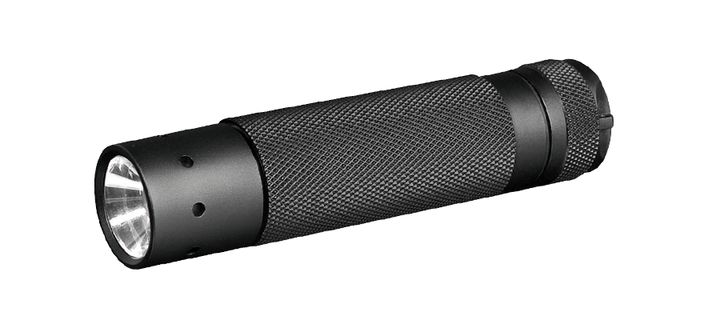
I first started using this brand/model of flashlight over 10 years ago and I’ve never been disappointed. Actually, I’ve been  thrilled with it! It is a great size for my pants pocket and fits any flashlight holder or belt mounted light/magazine holster that I use. I use a Command Arms Accessories Flashlight Holder Grip Adapter on my AR and this light fits it perfectly. The light shines a very bright narrow beam of light that exceeds my expectations of a tactical light. The light is not so bright that it will washout my vision in the dark but plenty bright enough for me to do whatever I need to with it. The distance the beam goes is amazing for such a little unit running on AAA batteries.
My Duracell batteries will last well over two years in the light depending on how much I use it. The battery carrier/cartridge is absolutely high quality, as is the entire housing. I felt the quality and close tolerances as soon as I began to unscrew the battery cartridge. This flashlight is a top-quality piece of equipment.
The checker boarding on the body is substantial but not uncomfortable, they struck a happy medium. It has never slipped in my hand under any conditions, wet or dry. The newer models have a thumb switch that has ‘nubs’ on it as well to ensure that your thumb won’t slip off. And speaking of the switch, it does have the momentary-on capability or the ‘click-on’ for a constant light.
This flashlight has replaced all my other flashlights except my big 4 x D-cell Mag light that I keep under the front seat of the truck. You won’t need another flashlight (other than a ‘tire checker’) once you’ve tried out this keeper.
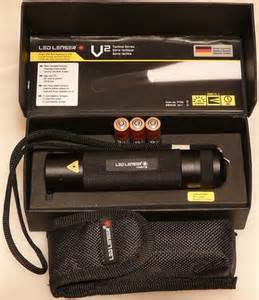 You’ll love it!
Use with absolute confidence.
The price on this can vary from about $28 – $40 out on the Internet so shop around. I’ve bought mine (6 of them now) off of eBay.
Note: If you are going to submerse your tactical light for any length of time you might not want to search elsewhere or waterproof the Lenser yourself. I don’t think it would hold up too long underwater but I haven’t done any conclusive testing on it for that particular mission. Why? I don’t swim underwater with my flashlight.
2019 NOTE: This flashlight is no longer retail available. However, I’ve seen them on eBay. I would not hesitate to buy a sued one as long as it worked and the insides were clear of corrosion.
2009 - 2019 Copyright © AHTrimble.com ~ All rights reserved
No reproduction or other use of this content
without expressed written permission from AHTrimble.com
See Content Use Policy for more information.
 note: article first appeared in November 2015
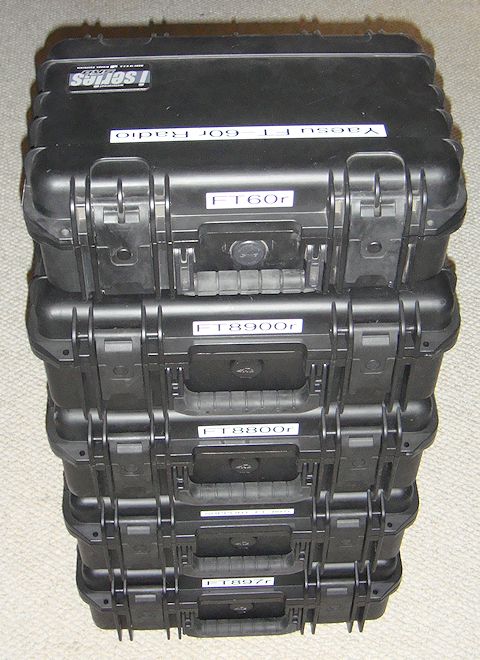
Earlier this year I did a series of posts that showed how I store my radios long-term for safekeeping. I put them in military grade SKB iSeries hardcases. I really like those cases, very sturdy and less expensive than Pelican cases. But what I neglected to show you was how I store my radio antennas. So here you go…
The stated mission for this is –
“The ability to safely store and transport ‘stick’ antennas that match the radio storage and transportation system.”
First thing I did was put all the antennas in one location so I could see what I have. Then I measured each antenna to assess what was the length of the tallest antenna that would be stored in the case. That measurement was over 50″. Next I had to figure out where to find a reasonably priced hardcase solution that would work.
The first place I looked was the SKB cases, then Pelican cases; both of which were out of the question. I kept looking for other conventional options and either couldn’t find the “right” option or they were far too expensive to be realistic. I gave up…or rather took a break of several months.
One day I was working in my storage shed and low and behold, what did I see? Yup, an old plastic gun case. I had picked it up at a garage sale a long time ago and put in the shed for storage. It was in great shape, padded,  lockable, and ready to be used.
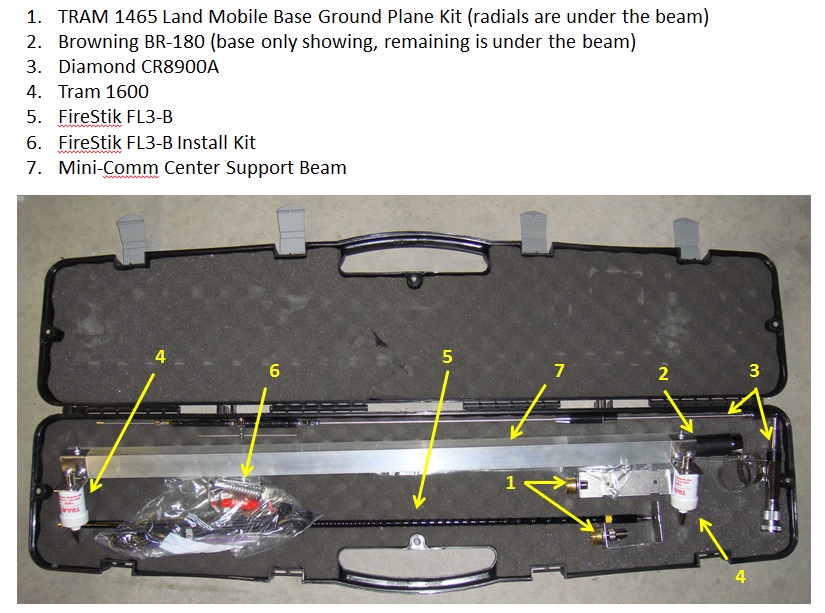
Its interior usable space was 9” x 48” so it was plenty big enough. Too short for the longest antenna, the Diamond CR8900A. But then I remembered that the Diamond CR8900A “breaks” at the base so it can folder over while attached to a vehicle for clearance issues.
Once I folded the Diamond CR8900A at its base…BINGO! It fits just fine. The case is padded to keep everything from being damaged. The padding also kept all the antennas getting jumbled around. Looked like the perfect option. Into the shop it went.
I got all the antennas back out and started arranging them in the gun case. It only took about 15 minutes to get 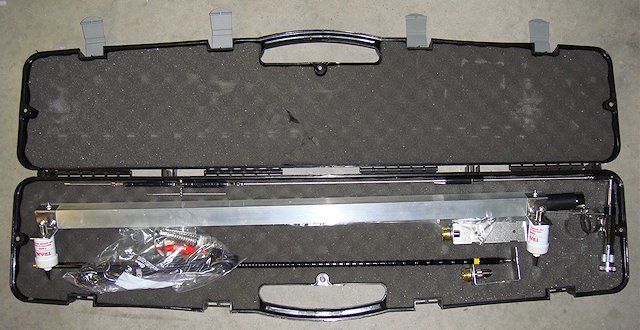 everything in the right place, the lid closed without any binding, and it locked up tight. A perfect solution!
So here is the picture of the gun case with all of the antennas in it. I hope it gets you thinking of a solution for you radio antenna storage and transportation needs. For me, this option will allow me to grab my radio cases and my antenna case and know that I can transport them safely and securely wherever I might be headed.
2009 - 2019 Copyright © AHTrimble.com ~ All rights reserved
No reproduction or other use of this content
without expressed written permission from AHTrimble.com
See Content Use Policy for more information.
 note: article first appeared in October 2015
In the first article of this series I explained how humans “see” things, talked about what stands out, and where humans naturally don’t look. I also went into a couple examples of “narrative” and how that factors into humans’ ability to spot other humans.
If you haven’t read that first article that was posted day before yesterday I would suggest that you do. It will make reading this article easier for you.
In the second article of this series I began to show how different camo clothing really make a man harder to see. No, not invisible or some movie set fantasy land stuff, but real-life staying alive stuff. I ended that article with a picture of the guy from the back. And I pointed out how even a plain strap could draw the eye in to “seeing” something outside of the “narrative.”
If you haven’t read that second article that appeared yesterday I would suggest that you do. It will make reading this article with the continuation of the adding different gear easier to understand.
I am a big fan of the 5.11 Tactical Multicam TDU Rapid Assault Shirt. I will be doing a review on the shirt in the coming weeks so I won’t go into the details here. But I want to show the difference between that shirt and a regular BDU shirt.
Example #1 –
 Example #2 –
 Did you eye pick up on anything? Did your mind say something is different, more noticeable?
 The guy is wearing a 5.11 Tactical Multicam TDU Rapid Assault Shirt. The shirt has a material that helps the torso stay cooler. But there is no camo pattern in that part of the shirt, just a plain dark earth colored material. While it may make the person marginally easier to see, don’t worry about it. That area of the shirt is normally covered up with the tactical vest as seen in the picture below.
 In the next set of pictures there is another very subtle change that took place. Can you spot it? Don’t look too closely. Look away for a second and then look back and allow your eye to quickly assess what it is.


Did your eye pick up on anything? How about the man’s gloves? In the first picture (left) he is wearing black gloves with tan trim. In the second picture (right) he is wearing the same brand of gloves but in a multicam pattern. Every little bit helps.
In the next picture the guy now has an AR-15 slung on his front. I won’t show you a “before” vs. an “after” picture of this. Why? I want you to really understand all the details as to “why.” But first, why do you think it is very hard to see his “black gun” (AR-15) with his camo on?
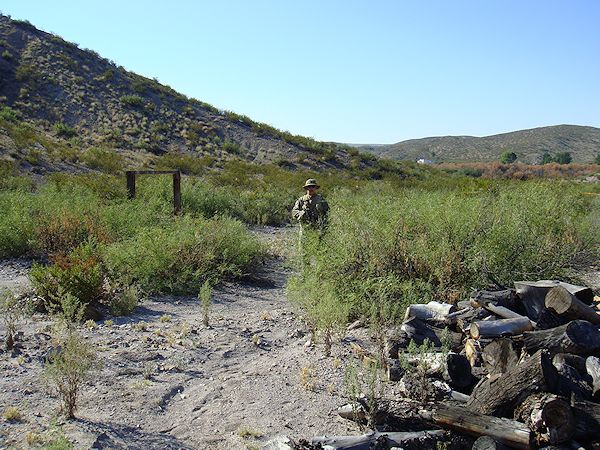 Well, you would know the answer if you had read my article titled “Looks Do Matter” that appeared about a week ago. The article goes into great detail why you don’t want your gun “black.” Take the time to read the article and you will then understand why you don’t see this guys AR-15.
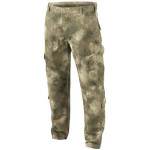
First – The pants. They are A-Tacs (UR). They show no distinct pattern, are lighter colored with plenty of slight variations. They look much like the rocky, sandy ground in the desert.
 Second – The shirt. It is a multicam pattern. Look at the bushes that populate the various pictures. Notice the colors and the shapes of those colors? Does the multicam pattern mimic the environment?
 Third – The hat. It is mutlicam as well. Does it look like the tops of the bushes? Do the colors match the bushes? The shapes of the colors match the bushes as well? Does the shape of the hat change the shape, or profile, of the head?
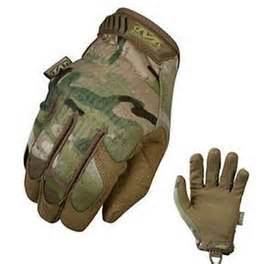
Fourth – The Gloves. Also multicam. In all the cop shows and movies when a cop is trying to arrest a bad guy what do they most often yell? “Show me your hands!” We naturally want to see a person’s hands; it is in a person’s hands that weapons reside.
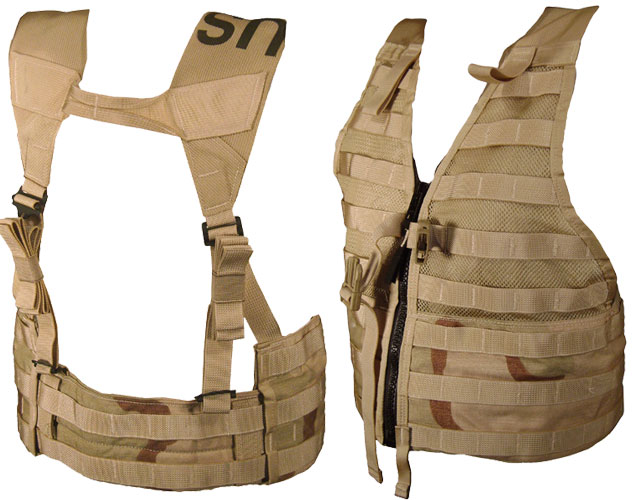 Fifth – Tactical vest. What color do you think it is? If you guessed that it has multiple colors you are right. The basic vest is a 3-color desert pattern. The pouches are varies patterns but mostly multicam. What does that add to the overall situation?

Sixth – The weapon. read more about that…
All the camo clothing you wear and the camo weapon you carry won’t make a bit of difference if you are stupid. And part of being stupid is not knowing how to not be seen. So far we’ve only talked about clothing, then just a little bit on weapon color. In the fist article I did mention shadows. And in the second article I talk about bushes, etc. So let me touch on that just as we are closing out this series of articles so you can see it all coming together.
But let me make it really clear, this is for the grid-down, non-special forces, ordinary guy. If you have any kind of advanced training you will chuckle at this next section. But I am including it to give the average person a potential advantage over the untrained guy.
Where is the man in the picture below?
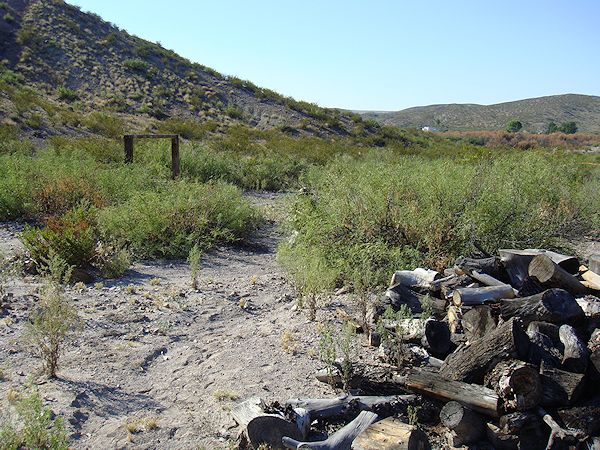 Here he is. All he did was kneel down for the previous picture.
 The idea is to blend in with the environment. The mind’s narrative is seeing a desert environment with sand, rocks, cactus, brush, etc. Great! Your job is to not interrupt that narrative, play into it. You want to give nothing for his “Foveal vision” to pick up on. So you must learn to use your camo clothing and gear combined with the environment.
Even with your mind trying to pick out the bad guy it is hard to do. You are trying to force your mind to spot bad guys. But what is your mind subconsciously trying to do? Your mind is trying its best to create the narrative that you are in the desert southwest, there is sandy soil with occasional rocks present, along with bushes that have green leaves on them.
That being said, quite naturally, anything that blends into the narrative, the mind will try and accept as normal and not a threat.
That is where you want to be if you are the guy in camo clothing trying your hardest to not be seen.
If you are the guy trying to not get ambushed you are trying to force your mind to spot anything, anything at all, that might be out of place that could pose a threat. Even the smallest thing such as shoes.
This is the same guy, same location, but from only 10′ feet away…
 Now, only 5 feet away…
 Now, here is a 15′ view but from different angle, only 45 degrees different.
 Huge difference! But, why?
Now continue to add another 45 degree change in viewing angle…
 Would the people in the cabin in the background be able to spot him?
How about now? Same guy, same location see from about 50 yards away. Can you see the guy at all? He is in the same exact location as the picture above.
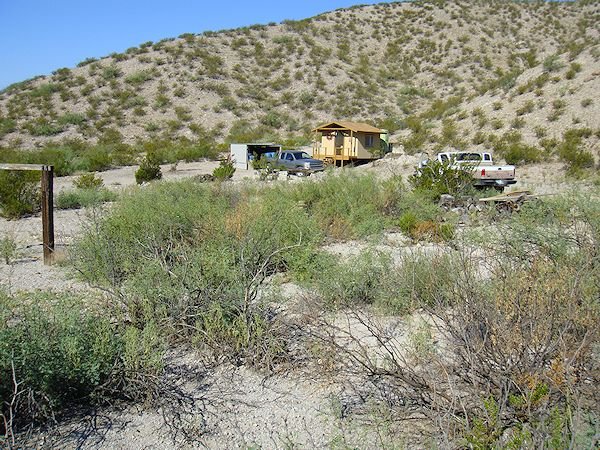 Let me point him out to you…
 Here is another before and after view…


Let’s go back to the original mission of camouflage clothing…
“To stay alive.”
And you stay alive in one of two ways…
OK, now I really want to shift directions on you for a moment. Let’s put you into the position of not wanting to be ambushed by the guy above. Here is a little info that might well save your life.
But I do want to touch on “instinct” as it applies to overcoming camo clothing and ambushes.
Ask anyone who has walked “point” in combat. Ask anyone who has stalked game in the wild. Even ask those that have played airsoft or paintball outdoors. Ask women who had been “hit on” in nightclubs. Ask them about instinct.
Your senses are on full alert, you are walking along watching for an ambush (or game) and you just “feel” something isn’t right. You know that you are being watched, or there is danger nearby. That can be your instinct as work; a “sixth sense” if you will.
Now, I won’t dispute that people can have a sixth sense. I also won’t argue against the existence of that “still small voice.” What I will refer to in this case is your subconscious.
Your subconscious can process information approximately 500,000 times faster than the conscious part of your mind. As you are moving along trying to avoid that ambush the ability of your subconscious mind to gather and process subtle clues can be the most valuable part of SA in a situation like that.
But, since it is the subconscious and you aren’t actually thinking it through, the danger impulse will come through as a “feeling” vs. “knowing”. The feeling will come through much faster than you trying to consciously process visual clues. Your brain won’t tell you, “Hey, there are five guys over there dressed in camo clothing all holding an M4 or AR-15 with 30round mags. And they are all pointing their weapons at you. And if you don’t avoid them they will click off their safeties, apply pressure to the triggers till their weapons fire, and then bullets will enter your body creating sufficient wound channels to terminate your life.”
Instead, you will simply get that prompting, that feeling, that life threatening danger is close by. You will feel like prey. Then it is up to your training as to what comes next. Hopefully your muscle memory will come into play and you will react with sufficient aggression to terminate the threat. Or, if that fails, maybe your “fight or flight” instinct will kick in sufficiently to help you survive by fleeing.
Let your instinct work for you. Train to allow your subconscious to process your incoming SA clues. An advantage by a factor of 500,000 is a pretty good benefit to have on your side.
< click here to read more about Situational Awareness >
Working against you is you “staring” at someone while trying to remain hidden, camo clothing or not.
You can have all the best camo clothing, have a great shadow to hide in, but if you are staring directly as someone you are trying to avoid, chances are they might pick up on that as well. Why?
Go back to the “instinct” advantage I mentioned just a minute ago. And now tie that back into our genetic wiring to avoid being prey. Most predators, just before they pounce, will do what? Stare at their prey to calculate how fast to run, how far to jump, where to bite to make the kill. Same thing in the field…with humans.
If you are laying in an ambush for the guys walking down the trail, you might not want to stare intently right at them. Why? Remember, they too are wired to avoid becoming prey. And, if they are well trained, their subconscious is processing all their incoming SA clues 500,000 times faster than you can think about what you are doing and what you are waiting for them to do.
Their subconscious may pick up on a subtle disturbance in the dirt on the trail. And their eyes may pick up a minor variation in the coloration of a bush, or a leaf pattern. But as they are scanning the area around them, their subconscious may allow their eye to see your eyes staring at them. And that final subconscious clue is all it takes for the red flag to go up, the warning bell to sound, and they counter your ambush. Don’t stare right at people you are trying to avoid.
Ask any woman that has been to a bar, a nightclub, or anywhere; if a guy is staring at her intently (even across a large room) does it set off her “alarm.” That is true even if it is a guy staring at her from behind. And if the guy has a “creep factor” to him, they are doubly aware.
And I am sure you have probably had that feeling as well, of being watched. Ask those that have been in a combat area, they will tell you of similar feelings of being watched.
Listen to that “feeling”, pay attention to your “instinct” and act on it. If you are the person trying to remain invisible, remember what can trip their subconscious into alerting them to your presence. Then don’t do those things!
Under normal every-day life this information is of virtually no worth at all to you. Who is going to be camo’d out like this going around trying to avoid bad guys? And even hunting in most states require you to wear something that is blaze orange. But, when the time comes that the grid goes down and the bad guys are roaming around looking for their next victim…you don’t have to be that victim. You can be this guy..or way better!
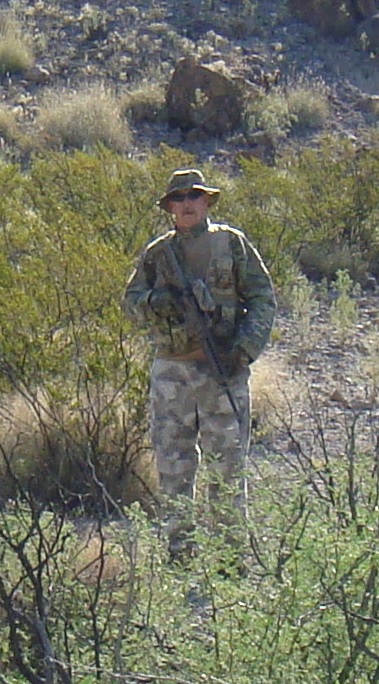
2009 - 2019 Copyright © AHTrimble.com ~ All rights reserved
No reproduction or other use of this content
without expressed written permission from AHTrimble.com
See Content Use Policy for more information.
 note: article first appeared in October 2015
In the first article of this series I explained how humans “see” things, talked about what stands out, and where humans naturally don’t look. I also went into a couple examples of “narrative” and how that factors into humans’ ability to spot other humans.
If you haven’t read that first article from yesterday I would suggest that you do. It will make reading this article easier for you.
I ended the first article with the following pictures and asked a couple of questions. Review time…
So let me use visual examples as reference. Below is an example of the environment around where I live. And there is a man standing in that environment about 30 yards away from the camera.He is wearing a typical t-shirt.
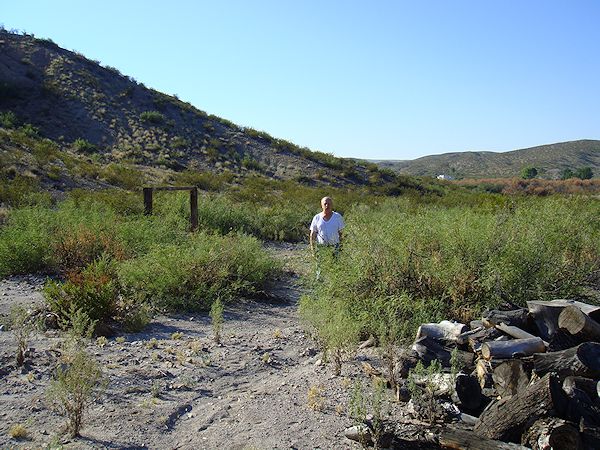 Where do your eyes naturally go to? Where does your gaze come to rest almost immediately?
Based on what I talked about in the last article, why does you gaze come to rest in that location?
If you are like the vast majority of people your eyes came to rest on the white t-shirt or the glare of white spot just above and to the right of the man. What didn’t hold your gaze at all?
Now he is dressed in rather normal street clothes with a baseball cap. How does that work out for him?
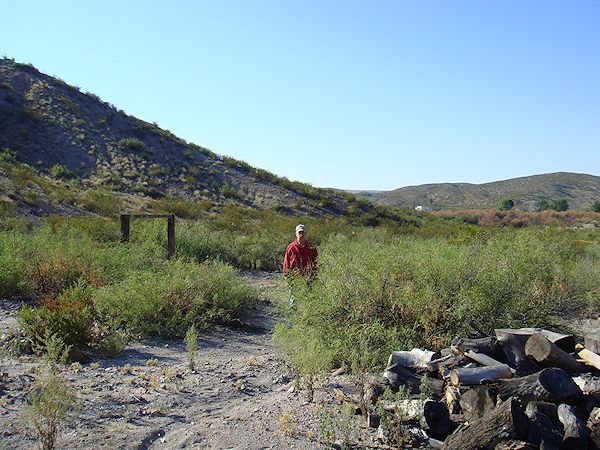
Given the surrounding environment in the picture, what did you mind expect to see? In which picture was the man easier to see and why?
Remember what I said earlier about narrative and bright areas?
Your mind is trying to create a story about what the desert southwest should look like. And along comes a guy in a red shirt in the desert. Your mind immediately senses the situation and identifies him. In a grid-down this would be called “threat recognition.”
Is the guy truly a threat? Who knows. But until everyone is proven to not be a threat, anyone is considered a threat.
Now let’s put a plain neutral shade of green Columbia PFG short sleeve shirt on him…
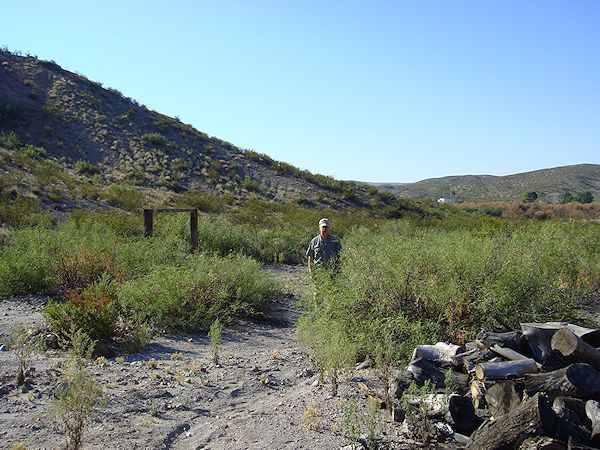 So why does he blend in more now with the simple addition of a green shirt?
Now, we put a CADPAT-AR long-sleeve shirt on him. And you think?
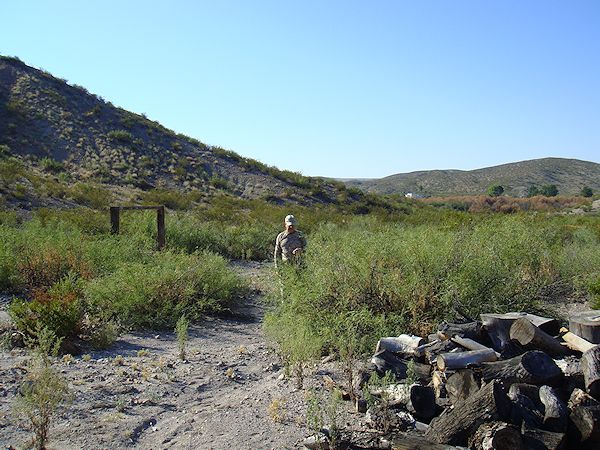 Notice he is now looking down, does that make any difference?
What sticks out the most on him now? Why?
Now we change the color of his hat, same style hat, just a different color…
 Any difference?
Now we put a multicam BDU shirt on him with the Mandarin collar up.
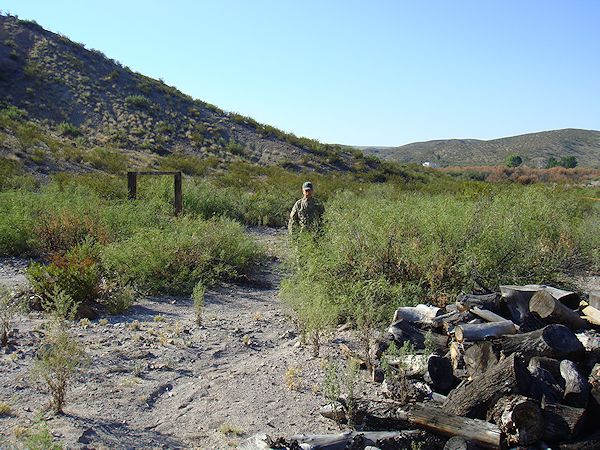 So now what sticks out the most and catches your eye in the picture above?
Did you focus on his head…were your eyes drawn to his head? Why?
In the next picture all we did was change the style of hat. We put a multicam “boonie” hat on him. Look closely at the picture and identify what changed in your mind.
Notice how changing the style of the hat breaks up the shape of the head? Humans are genetically predisposed to noticing the shape of a human head, eyes as well. It is a defensive response to avoid becoming prey of a human predator.
Remember what I had written in the last article about “shadows” and the affect it had on how humans see things? So what is the major problem here?
Yup, the sun is glaring on one side of the man. And that creates a shadow on one side…it is unbalanced and out of place, plus it creates definition.
So, now we are ready to put some “battle rattle” on the man. Let’s see what affect that has.
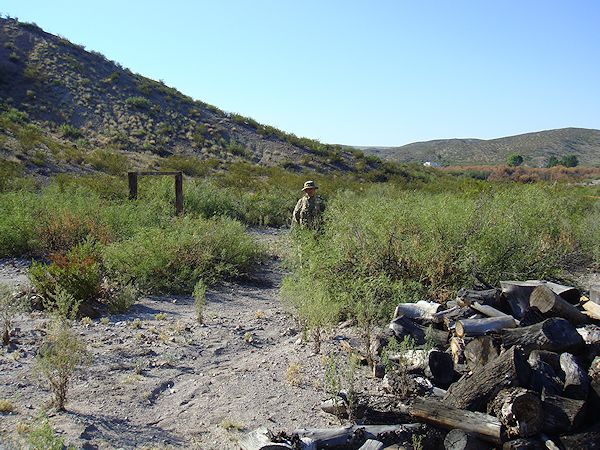 Did all of that equipment, pouches, etc. make a big difference in how easy it is to see the man?
Let me give you a closer-up view for you to review…
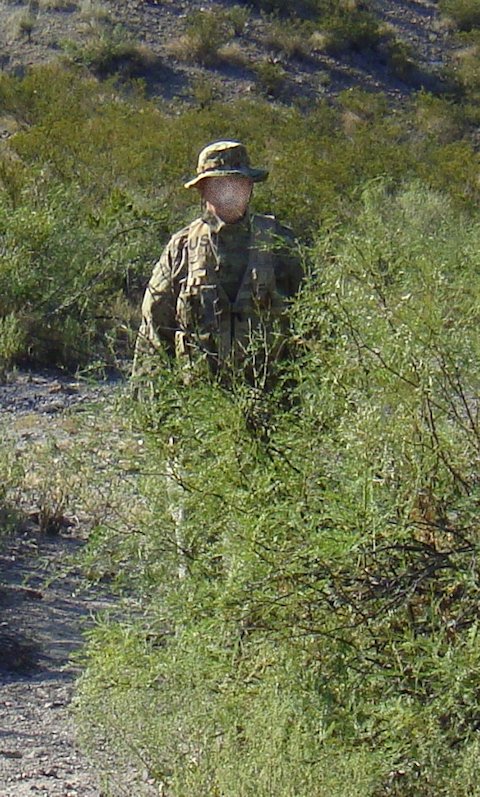 If you want to know more about why his vest blends in so well you can read my article on Tactical Vests. < click here to read the tactical vest article >
How easily can you see his legs? Any thoughts to why?
They are A-TACS pants in the AU “Organic” pattern.
 So why not use the same camo pattern for shirt and pants? Well, look at the pants in the environment that they were designed for. Now, look at the shirt. Pretty impressive, yes?
 But, does the environment in the above picture look like the same as the environment that I am using for my example? No. The desert environment that I am using has brush, some trees, cactus with green foliage on it. That foliage is more conducive to multicam. However, there is still the various shades of tan for the desert floor. That is conducive to the A-TACS AU Organic pattern. One camo pattern might be best for pants, another pattern for the shirt. It all depends on the environment you expect to operate in.
We’ve seen the front of our camo’d man, how does he look from the back?
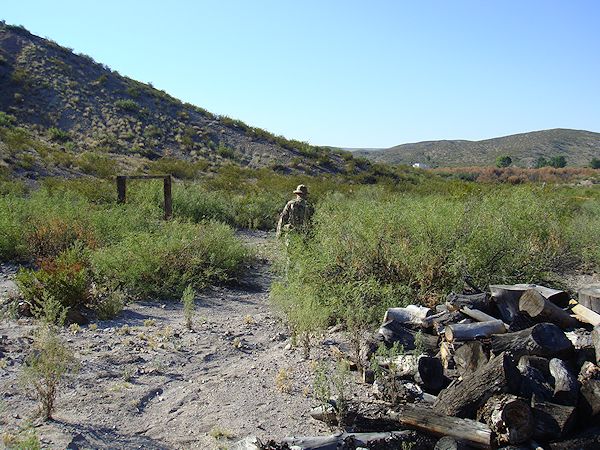 Still appears to be blending it quite well. But, let’s take a closer look at his gear…
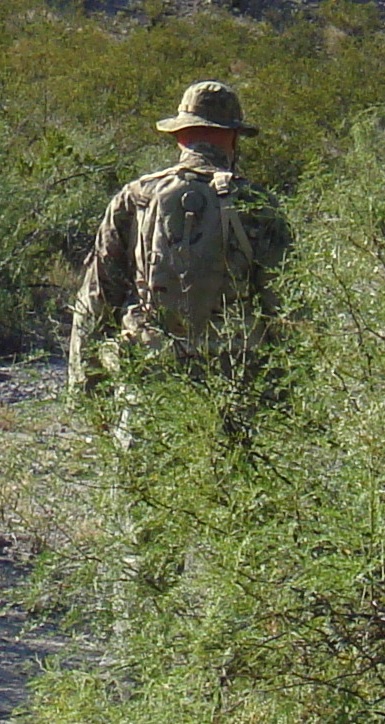 The man is now wearing a hydration back with his tactical vest. The hydration pack is a Desert 3-color pattern. Does it work as camo? Does it blend in?
So why did I go with a Desert 3-color and not multicam for a hydration pack? Practicality is the only answer I have for you. The surplus 3-color hydration pack costs less than half of a new multicam hydration pack. The 3-color works just fine…for less money
Note: Look at the picture above again. What stands out the most? Don’t look too long, don’t over analyze it. Most people says the plan khaki colored straps stick out the most. If that is the case, what could you do to reduce the prominence of those straps?
In the next post I will continue working on this guy’s camouflage clothing to see just how effective it can be. Patience…tomorrow will come soon enough.
2009 - 2019 Copyright © AHTrimble.com ~ All rights reserved
No reproduction or other use of this content
without expressed written permission from AHTrimble.com
See Content Use Policy for more information.
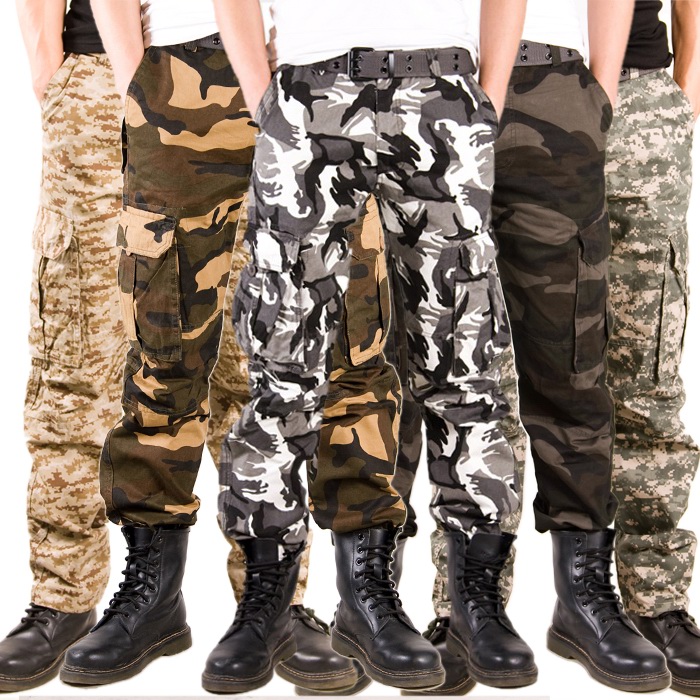 note: article first appeared in October 2015
I have read many purposes and definitions of camouflage, but I think they miss the mark, the “real” mission. Obviously you can tell the various explanations for camouflage were written by some very intelligent folks, a few PhDs in there for sure. And undoubtedly more than a couple generals made their contributions to the official definitions. But I don’t agree with any of them.
So here is my mission for camouflage –
“To stay alive.”
Sorry if that is a bit let down to you, but I am sincere in that mission statement. Now, in all fairness, let me explain the next part of that. There are only two functions that come out of that mission statement.
Yup, no other reason or purpose for camo than that. Right?
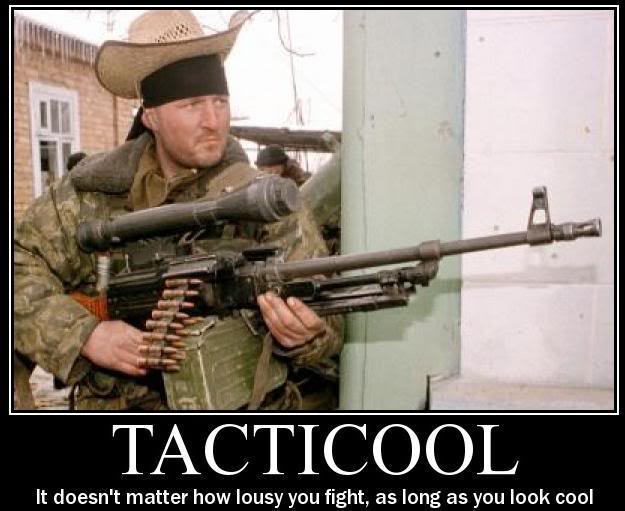
OK, maybe one other reason…”tacti-cool.” Yeah, you want to look really cool so you wear a camo hat, t-shirt, or your truck is painted camo. Hence, now you are a cool kid if any of that applies to you…tacti-cool.
But, back to a more serious note…what is the true purpose of camouflage? It is to keep you alive. If the animals can’t see you, they probably can’t kill you.
Oh, “animals” can apply to whatever you wish to define it as. I am talking about bad guys being animals. You may wish to modify that to whatever makes you happy and your situation applicable, 2-legged or 4-legged.
There is a whole lot of information available to how camo works and how it applies to humans. But let me boil it down for you to make it a lot easier to understand.
 Humans are both prey and predator in the animal kingdom. We both hunt and we are hunted. Over the generational history of humans we have experienced gene perfection as both prey and predator. One obvious sign is the placement of our eyes, facing forward. Simple eye placement gives us the ability to have depth perception. Don’t discount our peripheral vision though, it’s pretty dang good as well.
There have been studies done that test how our brains “look” at scenes. Basically, humans search for bright colors and movement. We also have built into our genes a predisposition to recognize certain shapes. Not surprisingly, the shapes that catch our attention the most are those associate with other predators. And at the top of that short list of predators are the shapes associated with humans. Yes, that means that humans are the most common predator of other humans.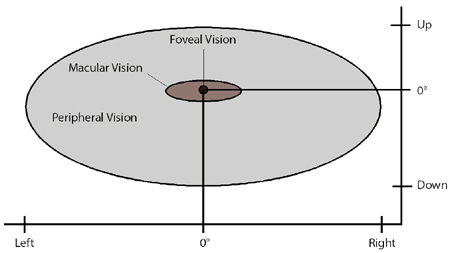
“Foveal vision” is the human eye looking for fine details. That process occurs in the center of our gaze. Details get lost in our peripheral vision the further away from the center of our gaze. Our gaze jumps around more than you think. And eventually is drawn to the most detail-rich areas within our field of vision. That occurs because it is simply the most interesting area to look at. But our eyes will scan the areas that attempt to put together a “story” of what is happening. We’re instinctively looking for a narrative.
Sound a little like Situational Awareness (SA) stuff?
Let’s put that to the test for a moment –
Example #1 – We are in downtown New York City, Wall Street to be exact. It is 8:30am on a Tuesday. What would  you expect to see?
Now, you are told to look for threats. Would you be able to “see” every man and woman walking the streets around 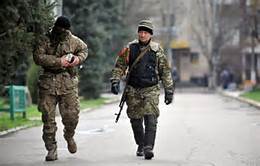 you?
you?
Now, what if you saw a man dressed head to toe in camouflage clothing carrying a back M-16 rifle? Would they stand out? Would your eye be drawn to him pretty quickly? What if he were standing in a crowd of say 50 people waiting to cross a street?
Why would he stand out? I mean, come on, he’s dressed in camo, right…when everyone else is dressed in civilian clothes. He would be the most “interesting” to gaze upon.
Example #2 – We are out in the forest in Colorado. It is 8:30am on a Tuesday. What would you expect to see?
Now, you are told to look for threats. Would you be able to see every hunter in the forest? Now, what if you saw a man dressed head to toe in a $1,000 suit, white shirt, yellow tie and carrying a black M-16 rifle? Would they stand out? Would your eye be drawn to him pretty quickly? What if he were standing in a crowd of say 50 people waiting to cross a stream? Why?
Think “narrative.” In NYC you expect to see people dressed for business. In the forest you expect to see people dressed for hunting. Your mind will try to create a story based on where you are and what you expect.
So how do you defeat, or more appropriately, overcome, how a person commonly  “sees”?
Well, before we get to that let me mention one more thing…shadows. In testing associated with how people view pictures, art, and scenes around them, it is pretty conclusive that people look in shadows last and not for very long. Why? It is boring. Yup, it’s not very detail-rich so the human eye tends to simply skip those areas.
OK, so back to how we defeat being spotted. Remember, in our scenario being spotted is also dying.
Yeah, I forgot to tell you, I am talking today about the most extreme of examples…grid-down.
So, how do we avoid being spotted?
It goes back to Situational Awareness (SA) and the OODA Loop (Observer-Orient-Decide-Act). Having good SA and staying inside of your opponent’s OODA Loop is how you win (i.e. you don’t die). < click here to read more about Situational Awareness >
Here is the set-up…
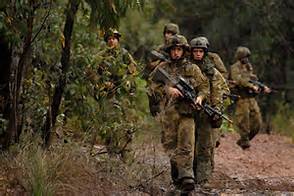 You hear people coming. You are sure that they haven’t seen you yet.
How do you do that?
You use the principles of camouflage and how people “see” what is around them.
That being the case, their narrative (their mission/task) is to:
You apply the principles you’ve learned so far to stay outside of their narrative. Your narrative (your mission/task) is:
So, now that you have that part under control, what are some more things to do, or not to do?
 As slowly as possible, meld into shadows as much as possible.
And the whole no “fine details” thing is where camouflage clothing comes into play. So what does camo clothing accomplish?
Right about now you should be thinking that wearing the appropriate camo clothing should be a pretty high priority. And you would be 100% right in thinking that. But make sure we are talking the same thing…I am talking real camo clothing.
What is “real” camo clothing? Or more entertainingly, what is “fake” camo clothing?
I am going to take the easy way out and tell you, “It is whatever camo clothing that is appropriate and applicable to your situation and environment.”
Yeah, a cop-out to be sure, right? Well, maybe not.
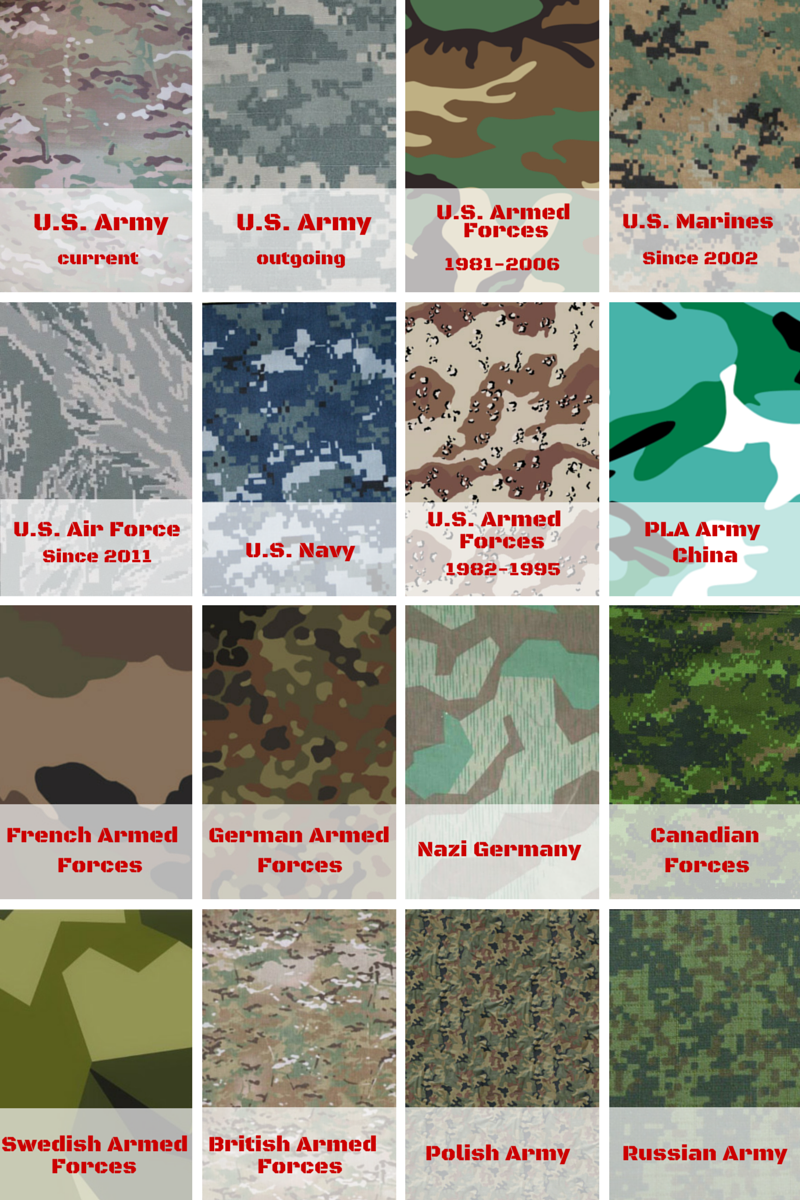
Here are some of the most popular camo patterns…
Military –
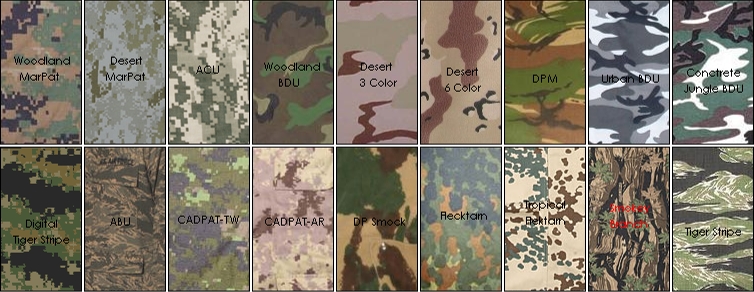 Hunting patterns…
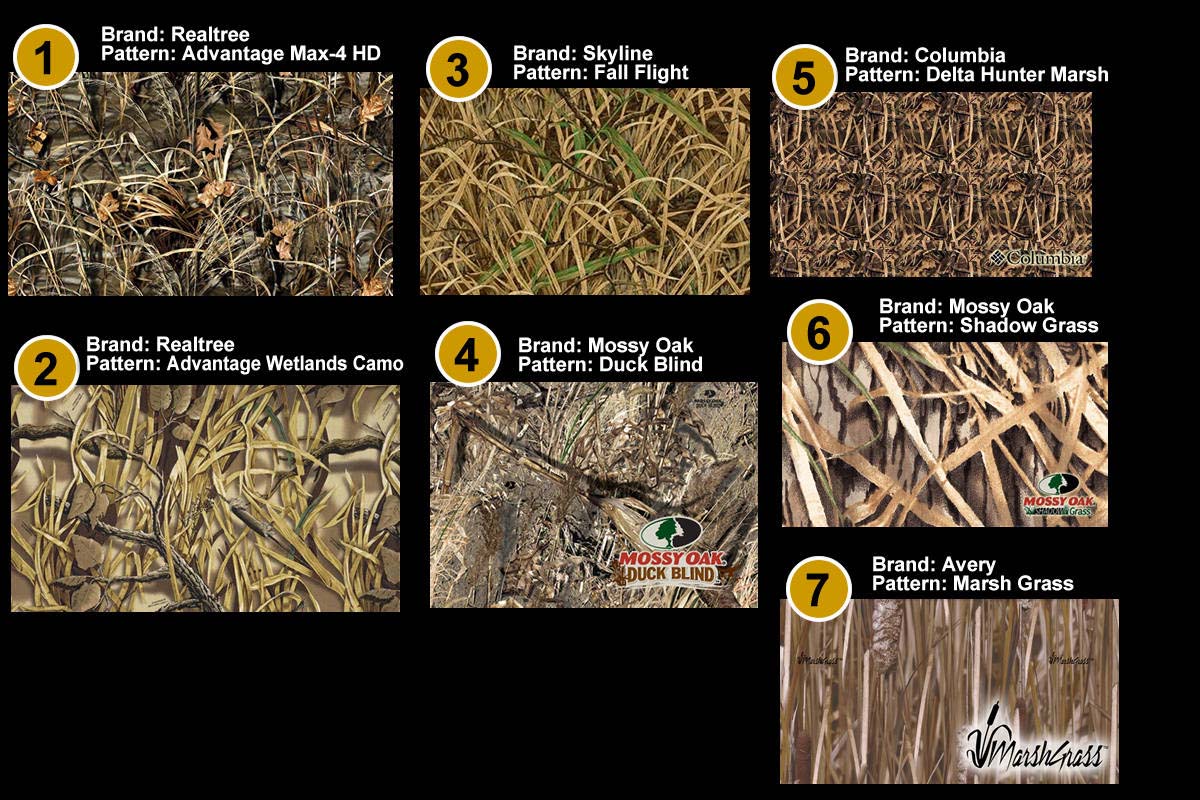
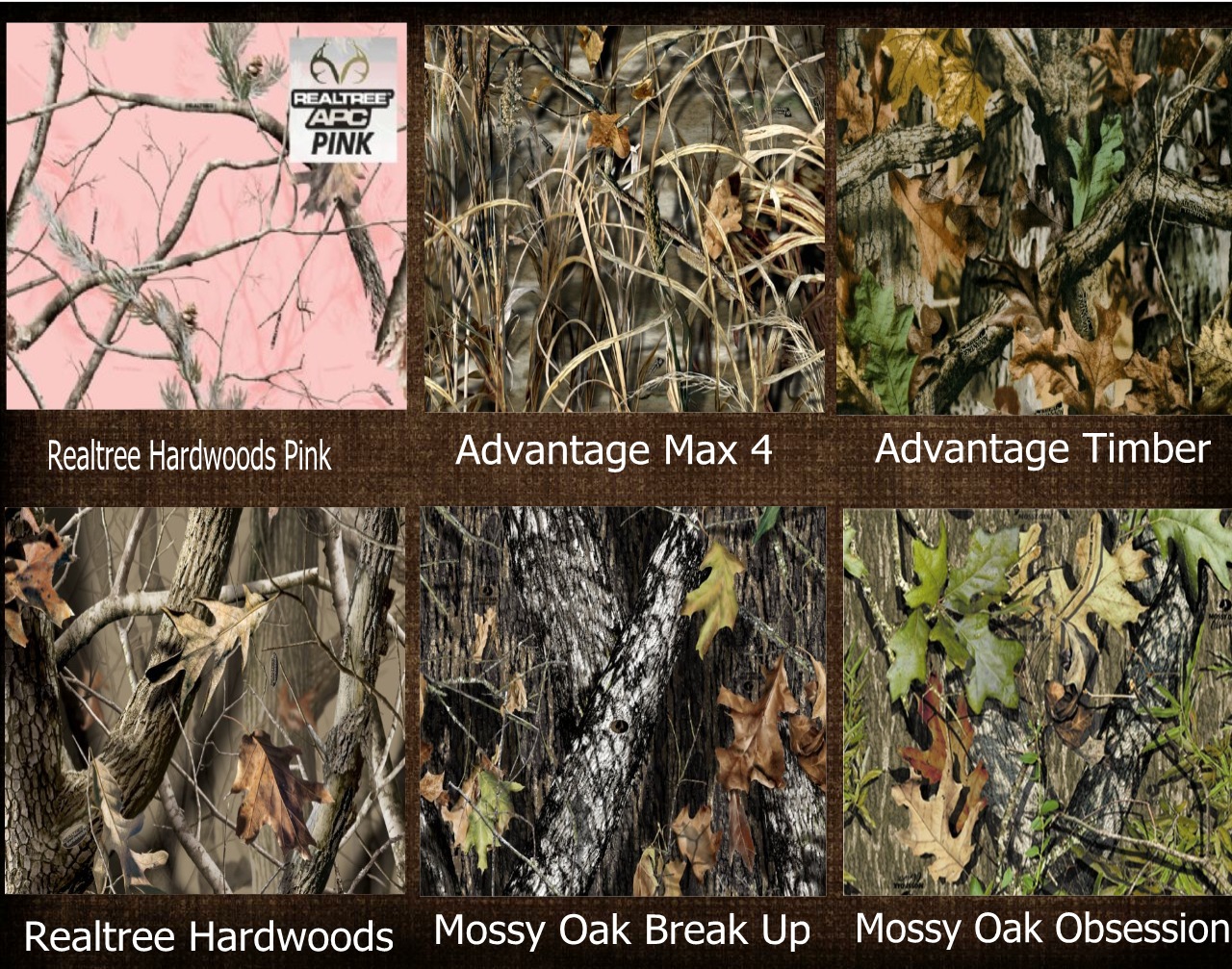
What I can do is go through the process that I used for choosing the right camo clothing for my situation and my environment. When you are done reading, and if I have done my job correctly, you will know how to figure out what is the right camo clothing for your situation/environment. You will have learned the assessment process.
So let me use visual examples as reference. Below is an example of the environment around where I live. And there is a man standing in that environment about 30 yards away from the camera. He is dressed in rather normal street clothes. How does that work out for him?
How about with the typical t-shirt?
Given the surrounding environment in the picture, what did you mind expect to see?
Now, why is the man so easy to spot?
Tomorrow I will go into detail on how to turn this man from easy-to-spot prey into………
2009 - 2019 Copyright © AHTrimble.com ~ All rights reserved
No reproduction or other use of this content
without expressed written permission from AHTrimble.com
See Content Use Policy for more information.
 vs.
vs. 
note: articel first appeared in June 2015
Yeah…try to figure this one out with the two pictures…and make the connection with prepping…
Several years ago I built my first AR. I used a BCM upper because I didn’t want to screw-up seating the barrel, shoulder  spacing, etc. Besides, BCM makes one of the, if not the, best uppers on the market today. Everything else, each individual part, that went into the build was bought for a specific reason – quality.
It was a great experience and I really learned so much during that build, it truly helped me understand my weapon better. And the end product was an amazing pair of AR’s, one for my wife and the other for me. But it didn’t stop there.
Whenever people see my AR in the field they always kinda look it over pretty closely. Most can tell that the parts and pieces are high-quality, but others look a little astonished at the mixing of colors of my carbine. I don’t own one of those “black” guns.
The colors on my carbine are black, flat dark earth and a dull flat darkish bronze kinda color. And my two-point sling is a padded BlueForce multicam. So the weapon looks a bit like a weaponized quilt.
So why no cool “back gun” look for me?
Well, look at the picture below…
 A black gun pretty much stands out like a sore thumb doesn’t it. There is no mistaking it for anything other than a military grade weapon. And I don’t like that. Nope, I don’t like that one little bit. So when I built our AR’s I wanted something that blended in to the background a bit more.
Why?
Oh come on now, you know why. If they can’t see you, they probably won’t shoot you. You don’t always have the safety of “cover” so I will take its ugly, distant cousin “concealment” if I have to.
The human eye is genetically trained to pick up certain shapes and such. We are wired that way to help us stay alive from lurking predators that would eat us for dinner, or shoot us to take our stuff. The key is to trick the predator’s eye into by-passing us if we happen to be exposed (i.e. not behind cover). Changing up how your carbine looks is one of the tricks.
So here is a mix-color AR in the same setting. Is it a bit harder to see?
 But notice the black upper and the black magazine “complete” a picture for your mind to associate with a “danger” signal and you can recognize it as a gun. The black shadow also gives it away. What could you do to reduce the shadow and the black mag visually?
The next coupe of pictures show the same gun with a variety of magazines…

OD color magazine

Flat dark earth color magazine.

Cammo paint job on magazine.
Notice how just using the right color magazine can dramatically reduce the gun’s signature profile?
Now I want you to look at this AR that I had painted (Duracoat) to match the environment it is meant to be carried in. Notice the difference?

Painted gun with black magazine.
Notice how the AR blends in but the black magazine makes it stand out again and makes the weapon recognizable. The Black magazine draws your eye to it and then your mind pulls the rest of the gun into focus to make it recognizable…complete the narrative.
But let me swap out a magazine. Now what do you think?
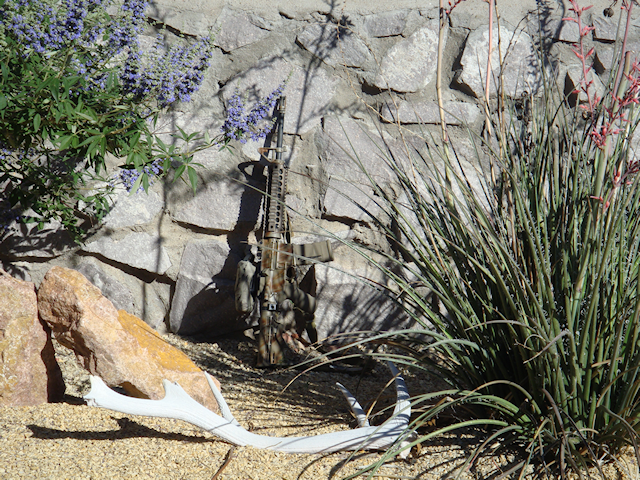
Cammo’d gun with flat dark earth magazine.
Notice that just swapping a magazine now allows the whole gun to fade into the background because it gives nothing for your eye to be drawn to.
A little bit of changing up can make a big difference, a difference that could save your life. But let’s take it the next step further. Here is a fully cammo pained (Duracoat) carbine. What do you think?

Cammo’d gun with cammo painted magazine.
With the cammo painted magazine the gun fades even more into the background and it is hard to see the magazine at all. But slap a black magazine into the weapon and all of the sudden you can stat seeing the gun again even with the entire gun cammo painted.
 So here is what the Duracoat painted carbine looks like with a cammo painted magazine in it and laying in the environment that is was meant to be used in. The profile is very low, with a hard to see signature. It is called an “advantage.”
 I hope by now you can see the value in keeping your profile and signature as low possible. Remember, they won’t shoot you if they don’t see you. And when times are tough I would think you would want every possible advantage you can get.
You might be asking me about now, “What do I do if I already own a black gun?”
Great question! Several answers come to mind:
2009 - 2019 Copyright © AHTrimble.com ~ All rights reserved
No reproduction or other use of this content
without expressed written permission from AHTrimble.com
See Content Use Policy for more information.
 A.H. Trimble - Emergency preparedness information for disasters and grid-down