Cold Steel Knives: Secret Edge & Brave Heart

Cold Steel KnivesEvery once in a while a product comes along that is so obviously bad that I just can’t contain myself. I am talking about a couple of knives that will probably hurt you more than any potential attacker. But let me digress for a minute…

I have been working on a knife review for some time now. I’ve reviewed ESEE knives already. They are some of the best knives in the world. But, here is why I am so into knives right now. Remember, I took onPointTactical’s Surviving Deadly Contact class in September? < read the article here > In that class I learned about knife fighting. Nothing too in-depth but some great skills, but most of all I learned the value of a good quality tactical knife.

Our instructor had a great knife on him that he used for demonstration purposes. A fantastic little knife…and $500.00!!!!  No, that isn’t a typo…$500 for that little beauty. No way I can afford a knife that expensive. So I started looking for a decent substitute. Cold Steel knives were recommended to me, specifically the Cold Steel Brave Heart model.

While doing the research on it I also came across another model, the Secret Edge that also look promising. I bought both. I am sorry I did. Let me explain.

Cold Steel – Secret Edge:

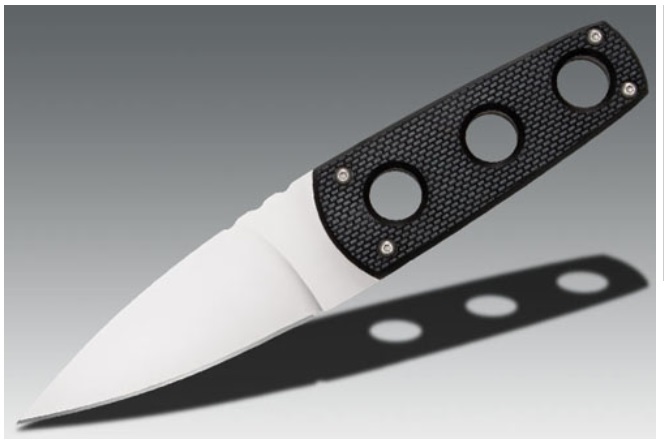
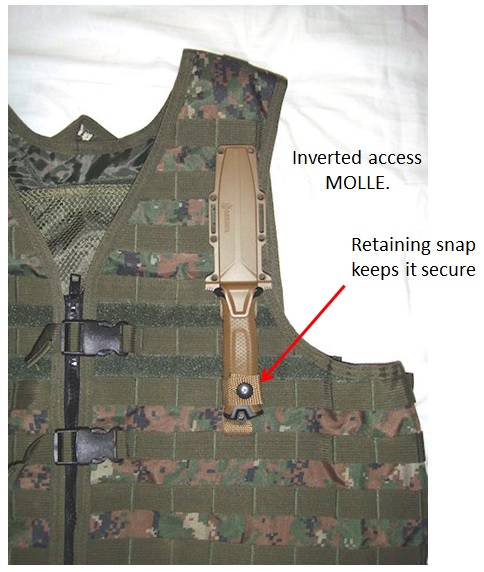
Cold Steel Knife - secret edgeFantastic little Kydex sheath for it. And that is the last of the “pros” for this knife, everything else is a “con”, literally I believe. The steel is a very bright and shinny, and the Japanese AUS 8A stainless steel just doesn’t feel as if it is a good steel for this knife. It was extremely awkward and difficult to get out of the sheath. The size of the handle was extremely small and I could never get anywhere near a decent grip on it. But here is the worst part… Everything I tried my hand wanted to slip onto the blade. And while I might not like the steel it would slice the crap out of my fingers the first time I tried to penetrate anything.

The knife retails for over $40.00 It isn’t even a good deal at $9.99. This knife sucks and will get you hurt!

Specifications –

•   Blade Length: 3 1/2″
•   Overall Length:6 1/2″
•   Steel:Japanese AUS 8A Stainless
•   Weight:2.4 oz
•   Blade Thickness: 2.5 mm
•   Handle:3″ Long. G-10 Griv-Ex™ Style
•   Sheath:Secure-Ex® Neck Sheath

Do not buy this knife!

Cold Steel – Brave Heart:

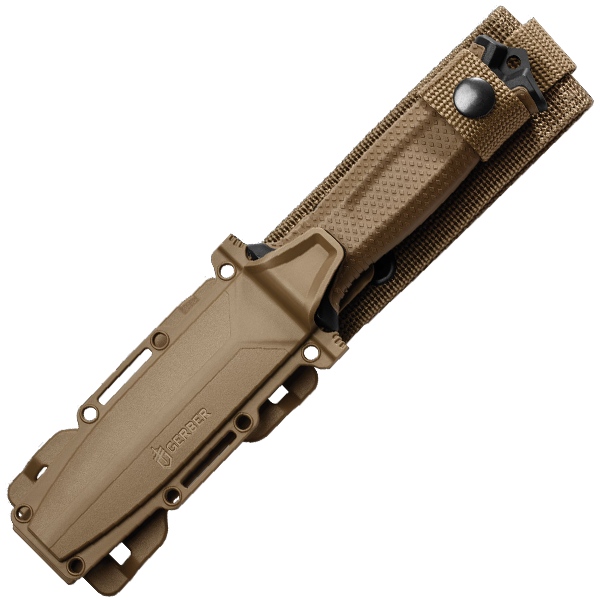
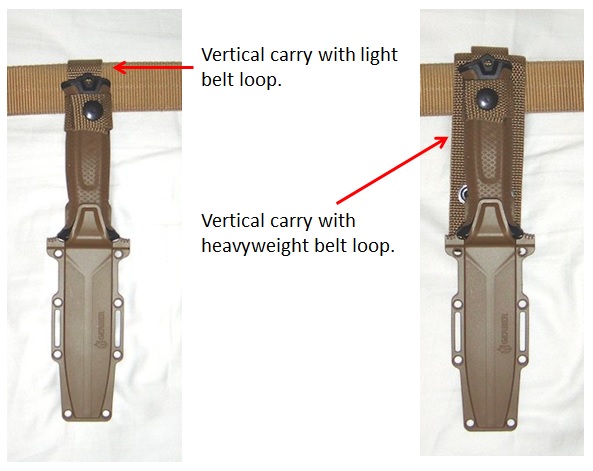
Once again, nice Kydex sheath! I think Cold Steel should think about just making sheaths for the good knives Cold Steel Knife Brave Heart knifeon the market. The cheap little clip on the back of the sheath would last about 10 minutes under harsh conditions. But the sheath does have some slots for paracord to be used.

Taking the knife out of the sheath was much less awkward than with the Secret Edge, but still not smooth and natural. And while the handle material is better quality and less likely to see your hand slip and slide, there is still protection preventing your hand from slipping forward onto the blade.

And once again, the blade is Japanese AUS 8A stainless steel just doesn’t feel as if it is a good steel. This knife retails for nearly $70.00!  The stitches required after using it will cost you much more.

Specifications –

•   Weight: 2.8 oz.
•    Blade: 4″
•    Thick: 2.8mm
•    Overall: 7 3/4″
•    Handle: Kraton®
•    Sheath: Secure-Ex®
•    Steel: AUS 8A Stainless
•    Made in Japan

Do not buy this knife!

Summary –

Both of these knives really suck and will get you hurt. No, I am not some fancy “know-it-all” knife fighter. And maybe that is the problem. But from everything I tried and everything I saw I don’t like either of these knives.


2009 - 2019 Copyright © AHTrimble.com ~ All rights reserved
No reproduction or other use of this content 
without expressed written permission from AHTrimble.com
See Content Use Policy for more information.

Cross-Band Radio Repeater – Part #2

cross-band repeaternote: first appeared in early 2015

I really saw a need for “repeater” capability when a bunch of individuals got together and all they had was handheld radios.  Distance and Line-of-sight always limited their usefulness.  And when it came to responding to a disaster or emergency situation handheld radios are virtually essential.  But once again, they have limited transmit and receive capability.

When I stumbled upon the Baofeng UV-5R handheld radios <click for more info> a few years ago I knew I had in my hands an invaluable resource for “preparedness”, especially after “grid-down.”  I cannot stress enough what the ability to communicate will mean then or even during less dramatic disaster situations, or even while hunting or camping.  I was aware of “repeater” technology through my government day-job but it was appeared to expensive and complicated.

When I first got my Ham radio license I began my search for the best all-purpose radio that my budget could afford.  That took me to decide the Yaesu FT-8900R <click for more info> was it.  Once I dug into it I realized how easy it was to set it up for cross-band repeater operation, I knew I had the answer in my hands.  However, I decided a used Yaesu FT-8800R was a more economical solution for setting up a field-going repeater.  And that led me to this “build” and documenting it for you in this article.

In Part #1 I covered the first five steps, in this post I will conclude the build and summarize my experience at the end.

Yaesu FT-8800r based cross-band repeater.

Finished Product – Complete with the Yaesu mounted inside.


Step #6 –

Yaesu FT-8800r based cross-band repeater.I am installing the remote head separate from the radio body.  This is to allow the rear of the radio unit to be accessed from the front of the box.  And it allows the radio to run a bit cooler since the head is separate from the body.  To get the remote head installation bracket properly installed I used a piece of 2″ aluminum angle to give the bracket a solid mounting surface.  All mounting bolts utilized star washers to prevent the nuts from inadvertently spinning off. The remote head is mounted as “dedicated” for the repeater and will not be removed for any other usage needs.

Step #7 –

Yaesu FT-8800r based cross-band repeater.This was the easiest of all brackets to mount.  My only concern here was mounting the microphone bracket where the microphone would easy to grab while keeping it out of the way of the rest of the box contents, including the wiring.


Step #8 –

Yaesu FT-8800r based cross-band repeater.Last came putting it all together as a complete ready-to-go repeater package.  Couple notes:

  1. I had double fuses in the box.  The power cable coming in had a fuse on the positive and negative.  Then the power (+) cable to the radio had a fuse as well.
  2. Notice the short antenna coax jumper cable from the “through-the-box” double male 239 to the rear of the radio.  I used an 18″, I could have used a 12″.  Using an 18″ would enable me to remove the radio unit and set it on top of the box for troubleshooting or any other reason.
  3. I built my own remote head cable since all the commercially built cables were really long.  I didn’t want all that cable coiled up in the box so I built my own 6-wire.
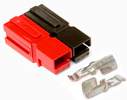
  4. All my wire connections are Anderson PowerPole.  I use them for everything and doing so here ensured compatibility now and in the future whatever change might come…including repairs if needed.
General Question & Answers (questions from folks that have seen the repeater) –RadioAntennaCar
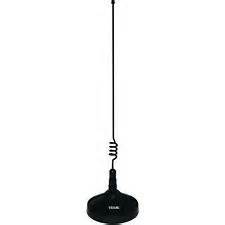
  1. Can a magnetic mount external vehicle dual-band antenna be used with this repeater?  Yes.  Since the antenna connection on the exterior of the box is a standard 239, basically any antenna can be used with this unit.  I slapped a Tram 1185 Amateur Dual-Band Magnet Antenna directly to the metal box and it worked just fine. It gave the repeater a very low profile and hard to spot.
  2. What antenna do you use with this unit?  I built a highly portable antenna for use with this unit whether using it as a repeaters or as a base unit.  I built it to blend in with the desert surroundings here in the desert southwest.  I will post an article about that soon.  But any dual-band antenna will work.  The heart of the antenna was a J-pole designed by Dr. Ed Fong WB6IQN of UC Berkeley, featured in the Feb. 2003 issue of QST.
  3. What do you use to power this unit?  I built it to work with the 12v 105 amp hour Energizer AGM gel battery I purchased through Sam’s Club. I expect the radio would operate about 1 – 2 days without the need for charging. I have two 30w solar panels with a charging unit to hook up to the battery.  A GoalZero charger controller handles regulating the battery charging.  I can run the unit with my Honda EU2000i if need be.
  4. You mentioned “base station”, explain?  If I am not needing a repeater, I can use this unit as a base station. I just leave the lid off and place the box where I don’t have to lay on the ground to use it.  It has everything needed to be able to operate it just fine as a base station.
  5. Do you set it on the ground to use?  No, not really.  I would set it on rocks to get it up off the ground.  I am working on a lightweight aluminum stand with folding legs to keep it about 6″ off the ground.
  6. What water-proofing have you done to the box?  Not much.  The box itself is extremely sturdy and the lid has a rubber seal.  All the screw/bolt heads that protrude on the exterior of the box have all have silicone seal on them.  The vent holes are the weak-link; fan and intake.  Not much I can do about that except maybe place a cover over the box that would act like a roof.  I might consider that when building the stand for it.

If you love your handhelds for ease of use, you will love this repeater to extend the range of your beloved handhelds.  Enjoy!


2009 - 2019 Copyright © AHTrimble.com ~ All rights reserved
No reproduction or other use of this content 
without expressed written permission from AHTrimble.com
See Content Use Policy for more information.

Cross-Band Radio Repeater – Part #1

cross-ban repeaternote: first appeared in early 2015

In my day job I use often radios over very long distances.  To accomplish this the government has installed a series of repeaters in various locations around our six county area.  Repeaters make it possible for me to talk to folks hundreds of miles away as if they were sitting around the corner.  I wanted that same capability for any disaster or “grid-down” situation that I might have to personally deal with.  That led me on the journey to come up with my own repeater capable of operating in the field for long periods of time in rough conditions.  Here is that story…

Mission –

Provide the ability of handheld and mobile radios to communicate when line-of-sight was not possible.  Provide a dual band Ham radio unit that was field-going and sturdy/rugged to use when a repeater was not required.

Requirements & Limitations –
  1. Must be capable of repeater operation on 2m and 70cm bands.
  2. Must be a rugged, sturdy radio capable of operating in the field.
  3. Must use 12vDC power.
  4. Must be very conservative on power usage.
  5. Should be easy to program, set-up and use.

Radio of choice – Yaesu FT-8800R (to read more about the radio read the 2-part article posted 3 days ago.).

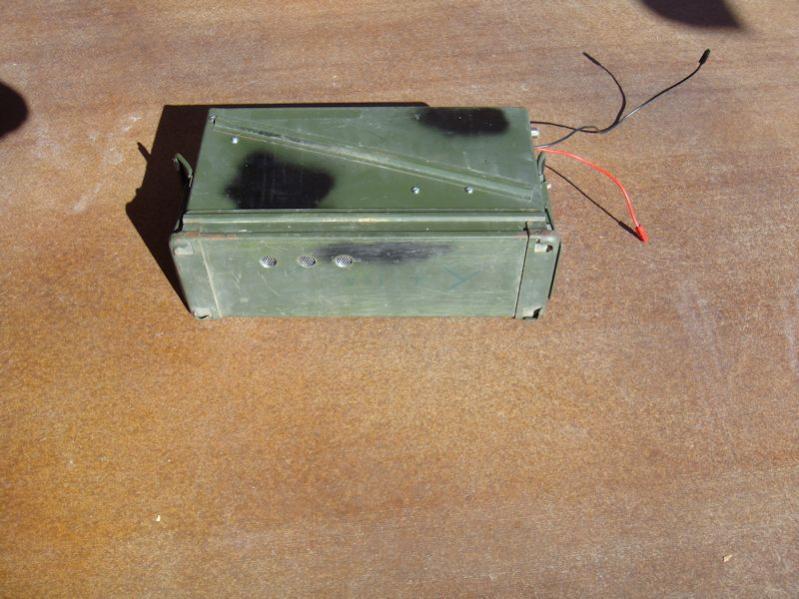
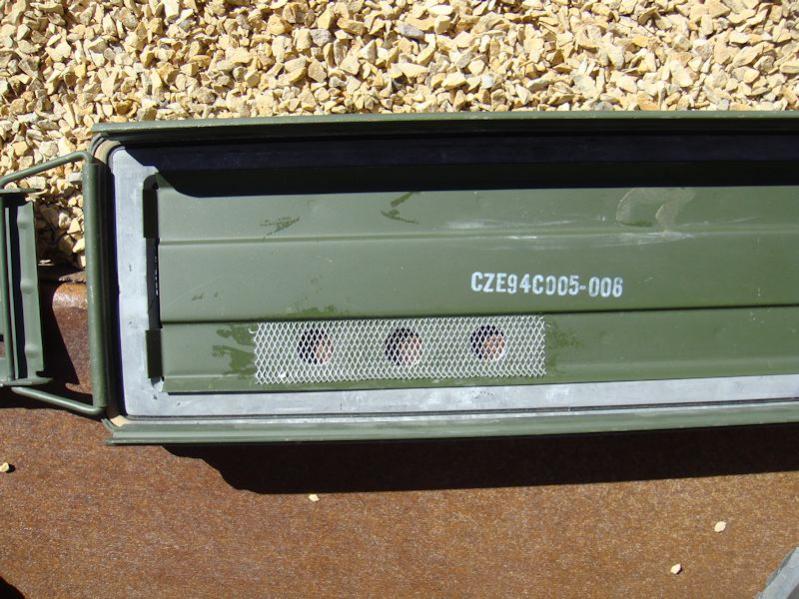
Box of choice – Army Surplus 40mm ammo box in good shape, seal intact.

Yaesu FT-8800r based cross-band repeater.

Finished Product – Complete with the Yaesu Radio mounted inside.

Notes before staring – I laid out the box contents first.  I kept moving them around until I had what I thought was the perfect location for each component.  I then used a felt-tipped pen to mark the location of mounting screws.  I did this to make sure that all the holes I had to drill made sense in relation to the box itself.

Step #1 –

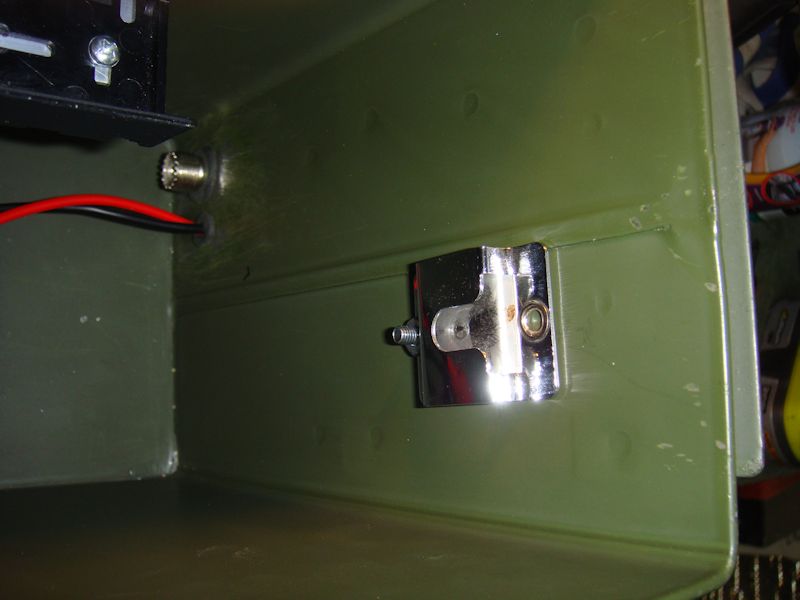
Yaesu FT-8800r based cross-band repeater.I drilled a hole for the double-male 239 connector to fit in and pass through the box.  This gets the antenna lead from the radio to the outside of the box while making sure the seal stays “burr-free” and actually water tight.  The hole was slightly larger than the 239 barrel diameter.  The rubber grommet was purchased at Lowes.  I won’t put in the sizes of drilled hole, grommet, etc. since your 239 double-male barrel may be a different configuration or size than the one I used.  Take the 239 to Lowes and buy the right size grommet by trying it out right there in the store.  Then you will know the size of hole to drill based on the size of the grommet based on the exact pass-through you are using..

Same thing for the power leads, buy the smallest possible grommet to get the wires through, then drill the appropriate sized hole based on the grommet size.  I wasn’t trying to make it water tight, just “tight enough” to keep dust and rain out.  If I ever make the repeater a semi-permanent installation I will slather silicone seal all over the outside of the grommets.  Based on the “finished product” picture above, I drilled the holes on the back-upper-right-top corner.  It will be approximately the same height as the ventilation holes from the ground when the box is laying on its side for operations.  I drilled the holes from the outside towards the inside to make it easier with the drilling.

Step #2 –

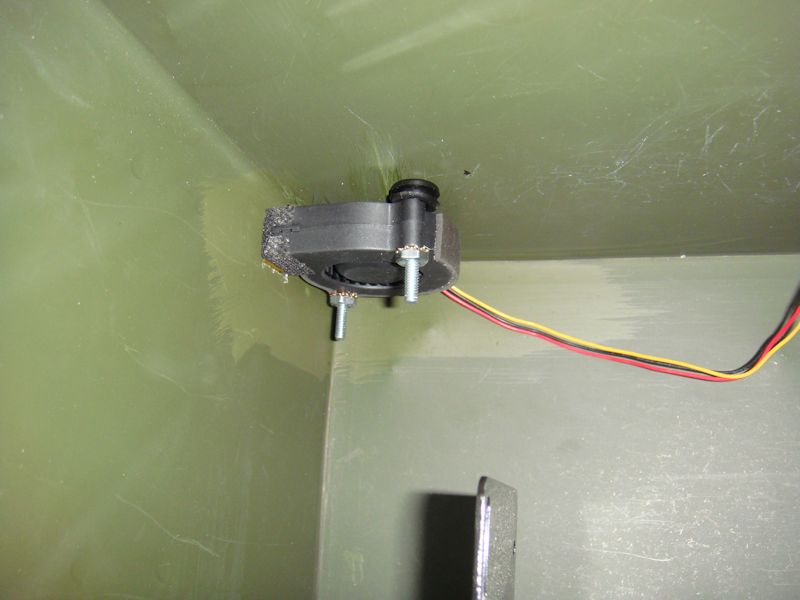
Yaesu FT-8800r based cross-band repeater.I wanted to move some “cooling” air around in the box to keep the radio as cool as possible.  The radio itself has a cooling fan on the rear of the radio integrated with a heat-sink.  But I wanted to move air around and through the box itself to keep the operating temperature as low as possible.  Just in case the radio fan couldn’t handle sufficient air movement on its own, I wanted to give it a little help.  The fan is to draw air out of the box by drawing air from the outside through the three ventilation holes.Yaesu FT-8800r based cross-band repeater.

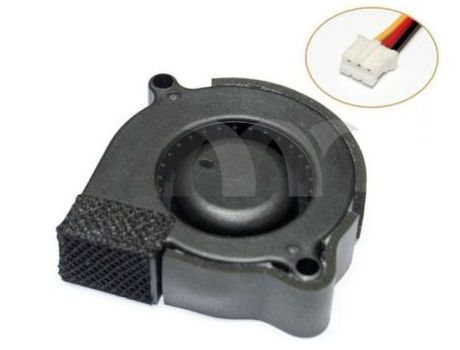
The fan is a 12vDC fan for computers that I found on Amazon.  I chose this particular fan based on the large intake area of the fan and the “flatness” of its construction.  The fan sits over the radio but to the rear of the box in relation to the radio’s built in heat-sink and fan.  In the event that the fan stops working I was trying to leverage the flow of air coming off the radio unimpeded.  So I drilled the three ventilation holes above the radio’s heat sink just in case.  I was thinking that natural air flow might move the hotter air out through the holes should the fan stop working.

I cut appropriate sized hole in the upper rear corner of the ammo can to match the outlet of the cooling fan. It required a square hole, so I drilled the center, cleaned it up with a saber saw, then finished it off with a flat diamond file.  Then I used another grommet on the squared-off hole before mounting the fan.  I wanted some cushion between the fan and the box to minimize any potential problem from vibration.  If you wanted to reverse the airflow to blow cooler outside air onto the radio heat sink you can reverse the power wires of the fan and it reverses the fan rotation.

Next I drilled the holes for the two screws that holds the cooling fan housing in-place.  But I did a trial run to ensure I knew exactly where the fan housing had to be placed to match up with the square hole for the fan’s square outlet/inlet.  Notice that I used a couple of rubber grommet again on the screws securing the fan housing.  But this time I didn’t worry about putting the grommets into the holes.  I used them as a “stand-off” to properly align the fan housing and absorb vibration from the fan.  But the grommets sealed the holes anyways due to the compression from tightening them.

Step #3 –

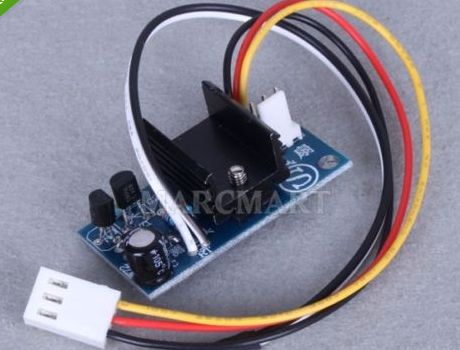
Yaesu FT-8800r based cross-band repeater.Yaesu FT-8800r based cross-band repeater.I am concerned about moving air through the box so the radio doesn’t overheat.  But I also don’t want to run down the 12vDC battery that will be powering this repeater either. So I decided to install this temperature controlled rheostat to drive the fan. Since I am using DC to power the unit, the rheostat controller will continually pass on some minimal current to the fan.  So the fan will always be turning a little bit.  However, if the temperature is within the operating limits of the radio I don’t need the fan spinning like crazy, moving hurricane force winds through the box and eating up precious ampere hours from the battery.  So the rheostat will pass on more current as the heat rises and the fan will then spin faster.  Result – the fan doesn’t use any more juice than is needed conserving precious power for actual radio operations.  But as the temperature rises the fan spins faster pulling the hotter air out of the box through the ventilation holes located above the radio heat-sink.

I mounted the controller board close to the fan towards the rear of the box.  A picture a little later in the article will show its position.

To find the rheostat I did my search on Amazon for this little electronic beauty.  But what I noticed is these electronic parts come and go pretty quickly (i.e. what is available today may not be available next month).  So I am not quoting a specific part number of even manufacturer.  Just get online and search for a 12vDC temperature controlled rheostat, there will be plenty out there for you to choose from.  Or contact your favorite electronics site and they can direct you from there.

Step #4 – 

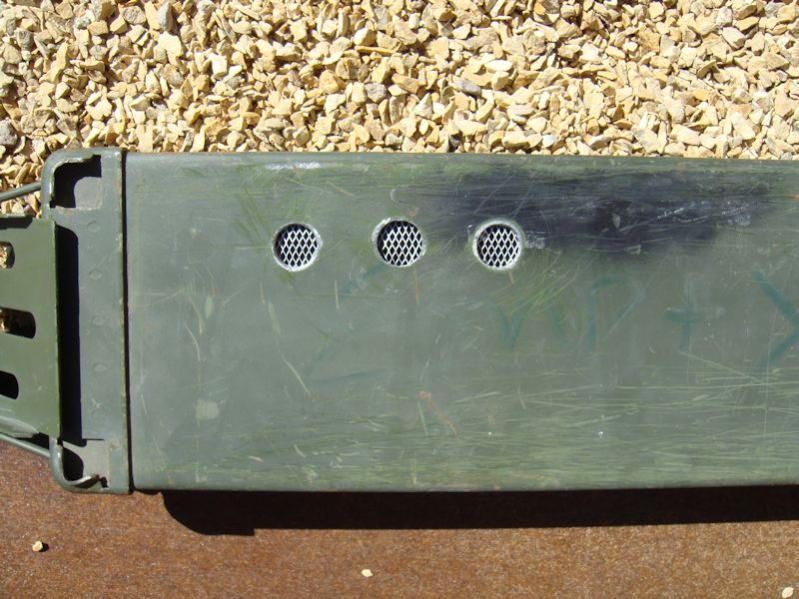
Picture of ventilation holes with metal mesh screening to keep little critters out.

Yaesu FT-8800r based cross-band repeater.Yaesu FT-8800r based cross-band repeater.Next I installed the radio housing bracket on the radio unit and placed it in the box towards the left side of the box.  Don’t crowd the cooling fan and keep the radio as far to the left in the box as possible.  Don’t forget that you will have several sets of wires (antenna & power) coming out of the backside of the radio unit so don’t crowd the front of the box either.  Using a felt-tipped pen mark the holes for the mounting bracket.  Then placing the lid into position mark the center of each ventilation hole; they should be directly in front of and above the radio’s heat-sink and fan.  Drill the holes for ventilation and the mounting bracket.

To pull in fresh (hopefully cooler air) that will pass over the radio’s heat sink then out of the box via the cooling fan, I placed three 7/8″ holes in the box lid above the radio’s heat-sink but on the “side” of the box, not the top.  This would pull air over the radio’s heat-sink across the top of the inside of the box drawing the warmer air outside via the fan.  Should the box’s cooling fan fail, the radio’s own cooling fan should pull air into the ventilation holes from the outside, or push it out, not sure which.  This may create a “positive-pressure” environment inside the box which in-turn moves air naturally out of the box’s cooling fan hole.

To reduce the derbies that might come in the box that I don’t want in there (i.e. dirt, sand, leaves, critters, etc.), I placed a metal screen mesh over the holes. Making a rough calculation on the reduction of air volume due to the screen material I decided on the three entrance holes in relation to the cooling powered exit hole. I might have to drill another hole, maybe two, but I thought this was a good guesstimate. I drilled them 7/8″ to give me enough room to secure the screen to the lid on the inside. I used a metal-to-metal glue to attach the screen material to the box lid.

I may put a thin layer of cotton gauze over the holes in addition to the screening to reduce the amount of fine dirt/sand that can enter the unit.  However, I would drill more holes if I did that to off-set the reduction in airflow from the gauze.

Step #5 –

Yaesu FT-8800r based cross-band repeater.Next comes installing all the various brackets for the radio components itself. First up was the radio housing bracket.  In Step #4 I talked about mounting the radio so the radio’s heat-sink was located next to the ventilation holes in the box’s lid.  This allows for cooling air movement even if the cooling fan fails.  But it leverages the cooling fan’s movement of air when all is functioning normally.

For practicality it is also very convenient to mount the radio with the rear of the radio exposed for access to the antenna, power, and programming ports.  Yes, this means you are doing a “remote head” installation.  And in my opinion works out well as an added bonus.  The radio’s control head is disconnected from the radio and that adds to keeping it just a bit cooler.

Go ahead and take the radio housing bracket off the radio and screw it to the box.

In the next part we will finish up the build.


2009 - 2019 Copyright © AHTrimble.com ~ All rights reserved
No reproduction or other use of this content 
without expressed written permission from AHTrimble.com
See Content Use Policy for more information.

Objectives and Priorities (Part #2)

Three days ago in Part #1 in this two-part series of articles I went into detail about Leader’s Intent and how to set SMART objectives. And yes, I explained why this subject was relevant. But, it will be up to you to decide how it applies to your prepping.

I can imagine some folks started reading the article a few days ago and became disinterested quickly. Or after a few paragraphs of reading some people may have become bored. And that is OK, this subject may not be for everyone. Or, some people may already know the material well enough. But, the information contained in the previous article coupled with today’s information is extremely valuable for group/team operations.

It is nice to have some cans of food stored, a gun or two, plenty of ammo, and other prepping gear. But, do you know how to bring a group together to accomplish life-saving goals or how to set priorities correctly?

Can you do so in a high-stress environment of an emergency, disaster, or grid-down? No fear! I explain how you can do just that…with confidence in your process and your decisions.

If you haven’t read the previous article three days ago you should before reading this one because today’s article builds on that one.

Recapping Part #1 –
  • A leader must be clear in stating the “intent” of all missions/tasks.
  • All mission and tasks must be realistic.
  • When setting objectives use the SMART system.

Now let’s move on…

Setting Priorities –

There is a significant need for being able to set correct priorities in high-stress situations – which most emergencies, disasters, and grid-down events are…high stress. Without being able to set priorities consistently and correctly, a mission or group is doomed to failure. Priorities are also based on a mutual belief foundation that the entire team has agreed to.

While possibly stating the obvious, different cultures do have different beliefs…hence, different priorities. The need for the team to share a common set of beliefs and priorities is paramount.

Without an agreed upon set of beliefs and priorities I propose that any team would struggle to make good decisions. And I propose that is especially true when it comes to high-stress, high-value decisions.

Upon what basis would/could/should common priorities be set?

Without a common set of priorities, how easy would it be to make decisions? I suggest it would be increasing difficult to make decisions that would be acceptable to everyone as the stress increases. Conflict would ensue, splits would emerge, and finally the fracturing of a group or team.

Now, we could get into a whole discussion of “morals” as it relates to beliefs and priorities but that is best left for a conversation around a campfire in your own camp. For the purposes of this article I will stick to a non-religious, non-cultural based concept that has proven to work in emergencies and disasters. Over my decades in emergency services I have seen a system that works every time, in every situation. Yup, it works every single time…it is that good of a system. It is called L.I.P.S.

Back in 2005 I was at the National Fire Academy in Fredricksberg, Maryland attending a week-long course to be an instructor of instructors for all levels of ICS (100 – 402). ICS was relatively new to the structure fire department world and I was there to acquire national certification to teach ICS to students and to be able to certify other instructors. During that class the head of the national ICS course development team asked us to peer review the new ICS training materials for FEMA/DHS. Now that was interesting!

One of the areas we spent a lot of time on was the L.I.P.S. system of priority setting. It was something new to just about every aspect of emergency services at the local level. Our class developed the “S” part. But it was too late to get it into the materials. Fortunately I have my notes from that review process.

The goal was to develop and refine a decision making system that would be consistent across every emergency situation that first responders would find themselves in. It had to be applicable to hurricanes, structure fires, HazMat scenes, wildfires, floods, building collapses, plane accidents, train wrecks, vehicle accidents, bridge collapses, etc. It had to be universally applicable in every conceivable emergency situation. The outcome was L.I.P.S.Learn more about LIPS

L.I.P.S.. stand for –

  • Life Safety
  • Incident Stabilization
  • Property Conservation
  • Societal Restoration

Life Safety – The physical safety of people is always paramount. Stated again…People’s safety is always the number one priority. There are two areas of thought on this and they vary rather widely. I refer to them as; 1) traditional, 2) New Age.

The traditional view of “life safety” puts the safety of the person being served as the most important. The person’s life doing the act of service is secondary. Example…In my structure firefighting world we would risk our life to save the life of a person trapped in a house fire. No, we wouldn’t do it stupidly, but in the traditional view, the other person’s life (the victim) had great value and was worth taking a significant risk. Even to our own potential peril.

The New Age view of life safety says the value of the person providing the service (responder) carries far more value than the person needing the service (victim). The “risk” threshold was much lower, “reasonable risk.” In other words, the rescuer would take far less risk trying to save someone, placing a much higher value on their own life then that of the victim. The new fad of thought manifested itself when I saw the newer firefighters being hired (mid-1990’s) making statements such as, “Hey, I have go home at the end of the day.” Or, “My life is more important to me than theirs.” The New Age folks also use the justification that “If we get killed or injured doing our job, then who will take care of the victims?”

There is a middle-ground…mitigating risks. There is always risk in any high-stress dangerous situation such as emergencies and disasters. Actually, even the “stress” itself carries risk to a person’s health. So the key is mitigating the high-risk actions down to “reasonable” or “acceptable” risk categories. And that is a decision, a standard, that each team must set for themselves.

Let me be clear, all emergencies, disasters, and grid-down events will have high-risk elements to them. It is impossible to avoid risk but a smart person will mitigate those risks. But, sometimes risks simply must be taken. Which ones? Well, how about rescuing your child from your burning house and risking your own life? How about saving your wife from an outlaw gang and risking your own life? Is that worth the risk, almost certainty that you might die trying?

That is the decision you must make…Is the act worth the risk?

Whichever philosophy you adhere to, traditional or new age, the common ground is life safety is the number one priority whether it be life safety or the person you are trying to save or yourself, the rescuer.

Incident Stabilization – This principle is pretty easy to understand when you realize that when an emergency or disaster has occurred, people are having a bad day. One of your primary goals is to ensure that you don’t make it worse. In other words…you want to stabilize what is happening so it doesn’t continue to escalate in terms of loss of life and property.

A good way to view this is through an example –

Incident Stabilization!
Notice how they stabilized the vehicle from rolling over while they worked he accident.

As a firefighting crew we would respond to a house fire. It was important that we arrive on scene as quickly as possible. Upon arrival we could then attempt to rescue people inside the structure or begin firefighting operations if no victim’s lives were at risk. However, none of that would be possible if the fire engine driver drove recklessly and had an accident on the way to the fire. If an accident occurred there could be multiple injuries, fatalities, property damage, and then tying up more emergency personnel that would need to respond to the accident vs. the house fire. In this situation…don’t make a bad day (house fire) worse by having an accident and not being able to get the fire engine and crew to the fire.

Another example would be a wildfire burning in industrial area with woods on three sides. On the fourth side was a large number of propane tanks in close proximity to a gas station. Where should the firefighters focus their actions? Of course, prevent the fire from affecting the propane tanks and gas station. If the wildfire spread to that facility the wildfire would transition to a structure fire and a HazMat situation, potentially on a large scale.

Your actions should help remedy a bad situation, not make it worse.

Property Conservation – This particular principle changed into “property/environment conservation” not long after the course material was released. I personally would rather it state “resource conservation” but LIRS wouldn’t sound as cool as LIPS. Regardless, the principle is…while responding to a problem don’t destroy anything you don’t have to.

The reasoning behind it is fairly straight forward. Everything has value; don’t destroy anything if you don’t have to. I will add to that, because you may need it later. Bottom line, don’t tear stuff up unless there is a really good reason to.

The perfect example of this comes to mind taking me back once again to my structure firefighting days. One of the early methods of fighting a house fire was to enter a house with the water flowing from the nozzle as you searched for the fire itself. The concept was to push the heat and smoke away from the firefighters. However, it also put thousands of gallons of water in the home doing tremendous damage.

That tactic was changed to not flowing water till you found the base of the fire. Then you put only enough water on the base of the fire to extinguish it. That saved 10’s of thousands of dollars of damage to the home. I remember clearly one day my crew rolled up on a house fire, the fire was located in the kitchen. My nozzleman and another firefighter pulled the 1-3/4” attack hose and headed for the kitchen. Before they could spray any water, and flood the kitchen, I had the driver run the 5 gallon pressurized water extinguisher to us. I used about 3 gallons of water/foam mixture from the portable extinguisher to put out the fire. Attacking the fire with the large hose would have probably dumped 500 – 750 gallons of water into that same kitchen. But, we put out the fire with only 3gals of water. Which tactic did less damage?

Don’t destroy or damage any resource you don’t need to, you may need it later.

Societal Restoration – This is a somewhat nebulous principle, even for emergency responders. Naturally, emergency personnel are trained to come into a bad situation and stop that situation from getting worse and not doing further damage. Once the immediate threat has been resolved the responders normally pack up and leave. But, what about the victims? Their problem is only half resolved, maybe the easiest half.

Once again take the example of the house fire. Firefighters come in and extinguish the flames, get the smoke out of the house, and even remove some of the water that they used to put out the fire. But they also did what’s called “overhaul” to ensure there is no more fire, so some of the walls and ceilings now have large holes in them. The last of the fire trucks drive away. Is the nightmare over?

Maybe the imminent threat to life and property is, but is that family immediately back to a normal life? Hardly!

The family now has to secure the home, find a place to live, contact the insurance company, deal with the adjuster, find home repair contractors, have the home repaired, replace damaged personal possessions, and try to salvage family treasures. The fire may have taken a couple of hours, or a couple of minutes, to put out…but it may take months for that family to live in their home again.

Now, take that same concept and expand it to an entire community, town, or state. The idea is to return society, family, or community, to the same condition it was before the incident occurred.

Now let’s restate LIPS this way –Learn more about LIPS

  • The #1 priority is to protect people from death and injury.
  • The #2 priority is to not make a bad situation worse.
  • The #3 priority is not to destroy resources you don’t have to.
  • The #4 priority is to restore the situation back to normal, or better.

Let’s go back to the wildfire jeopardizing the propane tanks and gas station. You are the Captain of the first fire engine to arrive on the scene. What are your priorities?

Here are my suggestions according to LIPS:

  1. Make sure that my crew and fire engine aren’t going to be blown up.
  2. Evacuate anyone from the gas station and propane tank area.
  3. Take action to prevent the wildfire from reaching the propane tanks and the gas station infrastructure.

Notice I took care of my crew, we have to be functional to be effective, and there were no other lives as risk so I didn’t have to put my crew in jeopardy trying to save someone else. Next we had to ensure that no one would be hurt if the fire reached the gas station or propane tanks so we just had them leave the area. Then we got to work stopping the fire.

Does that priority-based action make sense? I protected life, then attempted to stabilize the incident by not letting the fire turn into a major explosion.

Let me do a little hypothetical to make my next point, please indulge me. I have a fence between my engine and the fire. To effectively suppress the fire mentioned above I have to get to the other side of the fire…with the fence preventing free movement. There are a few options –

  1. I could drive the engine across the field and right through the fence. Although doing so would destroy the section of the fence and potentially do an unknown amount of damage to the fire engine. We might even get stuck.
  2. I could drive down the dirt road to the gate about 100 yards away and cut the lock. The gate access would take me about 3 additional minutes during which the fire would spread.

Which is the better decision? I hope you picked #2.

OK, we just pulled up to the fence, it’s locked. We could –

  1. Drive through the gate without opening it, the fire engine could easily do that.
  2. Hook a chain to the gate and the front tow hooks on the engine, then back up the fire engine pulling the gate off.
  3. The nozzleman can get off the engine, retrieve the large bolt cutters, cut the lock, open the gate while we drive through. It will take more time than Option #1, about the same amount of time as Option #2.

Which is the better decision? I hope you picked #3.

Assuming we are cutting the lock on the gate…where do you cut it? Don’t worry, that is a trick question. You actually don’t cut the lock, you cut the link of chain right next to the lock. What you have left over is a lock that still works and a chain that is probably still long enough to secure the gate.

So far, we protected the safety of the civilians in the gas station, and didn’t destroy the fence, the gate, or the lock; and we haven’t damaged the fire engine. Now we can go about the business of preventing the fire from creating an explosion at the propane tanks and gas station.

Next step in our scenario…We’ve been fighting the fire for 5 minutes and have made no headway, the fire is growing and we haven’t had much success in stopping the movement of the fire towards the propane tanks. We are almost out of water, maybe another minute or two of waster is all we have left. The next fire engine is 5 minutes away. What do we do?

But, before you answer that, let’s review LIPS one more time –Learn more about LIPS

  • Life Safety
  • Incident Stabilization
  • Property Conservation
  • Societal Restoration

OK, now go ahead, what do we do?

There could be a number of right answers, but I hope you were thinking that we needed to load up the crew and drive to a safety zone. Since we weren’t being effective in stopping the fire and we were running out of water, it was too much of a risk to the crew and potential damage to the fire engine as well. We had little choice but to leave.

I hope these examples have helped show you how to use LIPS to set priorities and then make decisions based on those priorities. But how does that tie SMART and LIPS together?

Using the same wildfire approaching the propane tanks and gas station scenario, knowing that he only has about 20 minutes before the fire reaches the gas station and propane tanks, the leader does this…

Using SMART he made the decision on what actions to take:

  1. LIFE SAFETY – Evacuate all civilians in the vicinity of immediate danger before the fire can cause an explosion.
    • SEvacuate all civilians in the vicinity of immediate danger within 10 minutes.
    • MEvacuate all civilians in the vicinity of immediate within 10 minutes.
    • AEvacuate all civilians in the vicinity of immediate danger within 10 minutes.
    • REvacuate all civilians in the vicinity of immediate danger within 10 minutes. (The fire won’t reach the area for 20 minutes. All things being equal, this is “realistic” and evacuation is “relevant.”)
    • TEvacuate all civilians in the vicinity of immediate danger within 10 minutes.
  2. STABILIZE THE INCIDENT – Stop the fire from reaching the propane tanks and gas station.
    • SSuppress the fire on the other side of the fence, closest to the fire, before it can reach the propane tanks.
    • MSuppress the fire on the other side of the fence, closest to the fire, before it can reach the propane tanks.
    • ASuppress the fire on the other side of the fence, closest to the fire, before it can reach the propane tanks.
    • RSuppress the fire on the other side of the fence, closest to the fire, before it can reach the propane tanks. (This would be based on the Captain evaluating the probability of success based on his resources.)
    • TSuppress the fire on the other side of the fence, closest to the fire, before it can reach the propane tanks.
  3. PROPERTY CONSERVATION –Don’t damage the fence, the gate, the lock, or the fire truck while approaching the fire..
    • SWhile approaching the fire on the other side of the fence don’t cause damage to the fence, the gate, the lock, or the fire truck.
    • MWhile approaching the fire on the other side of the fence don’t cause damage to the fence, the gate, the lock, or the fire truck.
    • AWhile approaching the fire on the other side of the fence don’t cause damage to the fence, the gate, the lock, or the fire truck.
    • RWhile approaching the fire on the other side of the fence don’t cause damage to the fence, the gate, the lock, or the fire truck. (It is realistic to not cause damage by following fire department policy.)
    • T – While approaching the fire on the other side of the fence don’t cause damage to the fence, the gate, the lock, or the fire truck.

You can see that following the LIPS priority guidance and implementing SMART objectives you can accomplish quite a bit, even in a high-risk, high-stress environment.

Let’s see you put LIPS into action. Answer the following questions –

  • Would you fight fire first, prior to evacuating the civilians in the immediate area? Why?
  • Would you have your firefighters climb over the chain link fence and hand them the hose to fight the fire instead of going through the gate? Why?
  • Would you leave the area and not worry about the fire because it was close to the propane tanks and the gas station? Why?
  • Would you take the time to write down each objective using the SMART template? Why?

Since this is a time-sensitive operation the Captain wouldn’t lead the crew through writing down, discussing/reviewing, and then implementing the plan according to SMART. However, the Captain and his crew would surely be making decisions on what will be done using the SMART principles of objective setting. But they would be doing rather informally and quickly. When time is less critical you can use the full formal SMART process and actually write everything down, documenting each step and task.

As leaders develop and grow into the LIPS and SMART systems to priority setting, decision making and objective setting become second nature and virtually automatic. But, it takes learning, training, and practice to acquire those skills to be able to do that. You can learn it now, or you can learn in when the high-stress, high-risk emergency or disaster hits. Your choice.

I hope I have helped you learn a proven way to set priorities and make decisions on what actions to take. When you experience an emergency, disaster, or grid-down the ability to set priorities and make decisions quickly in high-stress and high-risk environments will be common place. I hope and pray you are a little more ready now.

<- Part #1 


2009 - 2019 Copyright © AHTrimble.com ~ All rights reserved
No reproduction or other use of this content 
without expressed written permission from AHTrimble.com
See Content Use Policy for more information.

ESEE-3 Knife

ESEE-3note: first appeared October 2015

There are times when you know you have a quality knife in your hands. The ESEE-3 is one of those knives…there is absolutely no doubt about it.

I previously reviewed the ESEE-6 (8/4/2019) and found it to be an amazing knife. The ESEE-3 is no less a knife, it is amazing. You pick up the knife and it immediately “feels” right in your hand. The balance is perfect, the handle is sized right, it just fits.

The 1095 carbon steel is amazingly hard and maintains an edge really well. And just as importantly it takes an edge just as easily. I use a diamond stone and found it to be really easy to touch up a razor sharp edge to the knife. The blade is a full-tang and has a zero tolerance in mating with the handle material. It is matched perfectly to the handle.

Let me backtrack for just a minute. The mission for this knife was compact survival knife that could be easily carried in my “Go Bag”. I wanted a knife that could handle the rigors of a survival situation. And finally, I wanted a self-defense knife that could be easily concealed but yet effective in providing close-in self-defense.

The knife truly excels in being a survival knife, easily concealed, and obviously completely capable of withstanding the rough environment of survival. During testing I pounded on my ESEE knife to split wood. The outcome was just fine!

However, admittedly it is a little weak in the area of self-defense. Ironically, the same traits that make it a great survival knife also limit it from excelling as a self-defense knife. It takes a lot of pressure to push that knife blade directly into meat. Slashing/cutting into meat is not a problem.

Let me touch on a few technical specifications first…

  • Overall Length: 8.31″ (Standard Model)
  • Overall Length: 8.19″ (Modified Pommel)
  • Cutting Edge Length: 3.38″
  • Overall Blade Length: 3.88″
  • Maximum Thickness: .125″
  • 1095 Carbon Steel, 55 – 57 Rc.
  • Weight: 5.2 Ounces (Knife Only)
  • Weight: 9.3 Ounces (Knife w/ Sheath)
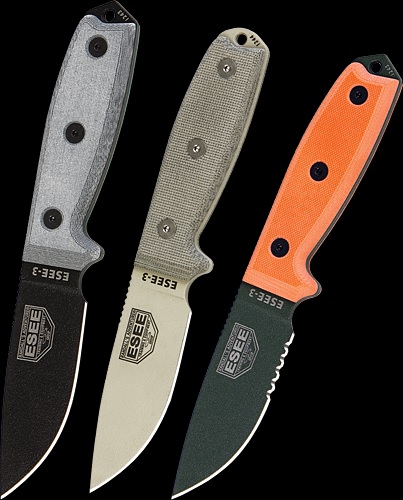
  • Sheath: MoldedESEE-3 models

There are different models to the ESEE-3…

  • ESEE-3P (Plain Edge, Black Blade)
  • ESEE-3S (Partially Serrated, Black Blade)
  • ESEE-3PM (Plain Edge, Black Blade, Rounded Pommel)
  • ESEE-3SM (Partially Serrated, Black Blade, Rounded Pommel)

Let me make this perfectly clear…BUY THE KNIFE !

OK, that being cleared up let me address the survival vs. defense comment earlier. To qualify as a great survival knife you want a thick, heavy, sturdy blade. A self-defense knife warrants a razor sharp edged knife that can also penetrate easily. That style blade not be compatible with survival demands.

However, the ESEE-3 does perform adequately when employed as a self-defense knife other than easy ESEE-3penetration into meat. While it might not penetrate as well as a RAT Headhunter, it will get the job done. But the overwhelming quality of its survival traits dwarf any self-defense limitations.

Now here is a bonus…my wife loves her ESEE-3!

When we were looking for our camping/survival knives she liked my ESEE-6 but felt it was too large and too heavy for her. She wanted something more “lady-like” to use. Well OK then! If my wife wants a knife, she gets a knife!

Yup, I am a blessed man!

This is near a perfect piece of gear/equipment as you are going to find in the prepper world. They are not expensive compared to other quality knives. But then again, what is your family’s life worth?

That means spend the money and get this quality knife, you will be glad you did!

ESEE 3 knife


2009 - 2019 Copyright © AHTrimble.com ~ All rights reserved
No reproduction or other use of this content 
without expressed written permission from AHTrimble.com
See Content Use Policy for more information.

Objectives and Priorities (Part #1)

how to set Priorities ObjectivesHave you ever wondered, “What do I do next?” Or, “Where do I start?

Have you ever asked either question about any project that loomed in front of you?

Well, this article is all about answering those questions with a rock-solid, bullet-proof system. And there is only one logical place to start – Leader’s Intent.

An easy way to understand what Leander’s Intent means is to ask this question, “What does success look like?” Yup, that easy. When we are done, and we are successful…what does that success look like?

Now, just for the record…this is no light reading! This is not a short article to dump some little tip out there. It is not some tidbit of info on radios or how to harvest onion seeds. This article is a heavy-duty, in-depth article that will take a lot of reading and thinking. Some of you may not be in the mood for it, I understand that. But the information contained in this article is rock solid information on how to get things done. And in emergencies, disasters, and especially during a grid-down…you better know how to operate effectively as a group to get things done. Failure will not be an option!

Here you go…

Under most circumstances a single leader will define that “intent” for the group. They will outline what the Leadership during emergencies, disasters and grid-down teotwawkisuccessful outcome will be, or what it will look like. Yes, a good leader will also take input from all team members and allow everyone the opportunity to participate in defining that outcome. If they are a good leader they won’t, or shouldn’t, get into the details, they should only set the “goal” or the “vision.” The details are left to the individual experts that will be assigned tasks (objectives) within the project.

Whomever the leader is must be very clear and specific about what the “success” actually looks like. This is sometimes referred to as “end-state.” While latitude in accomplishing objectives is encouraged for team members, the leader must make their intent, or end-state, very plain so everyone fully understands it. This will also allow subject matter experts (SME) a significant opportunity to provide appropriate and valuable input during the planning process…and virtually a free hand during the implementation stage.

Once the team understands the end-state, they can work on individual objectives for the team. Sometimes this might be limited to a core of individuals who will be ultimately carrying out the action or mission. Other members of the team may only be responsible for providing support, so their participation in the primary planning would be limited. Their input/participation would come later in a meeting where it was determined if the whole team could “support the plan.”

Here is an example of Leader’s Intent –

“We will plant a garden large enough to provide at least 50% of all our vegetable needs the first year and 75% of all our vegetable needs the second year.”

From that statement there should be no confusion concerning the “end-state” or what “success looks like.” If there is confusion there are two options; 1) the leader continues to share their vision and information until all team members come to a full understanding, 2) Leader’s Intent is modified to meet the capabilities of the team.

Technically there could be a third option as well. If there is a single team member that is not comprehending the end-state, that person could be replaced with someone that does. I would caution against that option. Let me explain why.

The members of the team are there for a reason, hopefully due to their expertise in one or more areas of Team Membersgardening. If that knowledge is sufficient in breadth and depth, then they could/should be considered subject matter experts (SME). While the end-state is being discussed an SME raised concerns or confusion, the leader would be well-served to reevaluate their end-state vision. The leader may need to look at the realistic expectation of the end-state. If an end-state is unrealistic, an SME will usually raise that question. A leader or team ignores those SME concerns at their own peril.

Realistic End-State –

How do you determine if an end-state is realistic? To answer that question you fallback to a time tested set of parameters, “who, what, where, when.” Go back to the leader’s intent statement, or end-state. With that statement in mind, formulate the question –

“With the people we have and with what resources we have, can we accomplish that goal within the time and location we have been given?”

If the answer is anything but a resounding “Yes!” you might want to seriously review the leader’s intent as being realistic…or not. That is not to say that the team may not have to stretch their capabilities, or expand their own personal vision a little, but the question still stands…Is the end-state realistic?

If it is deemed not realistic then the immediate goal now becomes to find out why not. It may be a simple matter of the team lacking confidence in itself. Or, it may be there are just not enough resources to accomplish the task. And therein lies one of the keys to this issue, lack of resources. Customarily, the only reason a team cannot accomplish the desired end-state is due to a lack of resources. The “lack of” may be perceived or real. By that I mean that there is actually a lack of available resources to accomplish the end-state, or the team simply thinks that there is a lack of resources. That is a leader’s conundrum that the leader is responsible for deciding and should have both the ability and wherewithal to do so.

If a team member, preferably an SME, raises the Who-What-When-Where-How-and-Why-001question of the end-state being unrealistic, go down the list of questions: – Is the end-state realistic with:

  • who, the people we have to work with?
  • what, the resources that we can use?
  • where, in the location(s) in which we will work on the mission?
  • when, in the time-frame we’ve been given?
  • how, did we choose the right way to do this task?

It is important to do this formally and systematically to specifically identify where the team is lacking. Without addressing each of the questions above, the team will simply flounder in project failure.

Project – “Move 125 trees from the logging area to the cabin area to complete the structures before the snow falls this weekend.”

Example:

  • Who – We have 10 people, adults of varying age.
  • What – We 125 trees that average 80′ in length and we have 1 truck and 1 SUV (both are 2-wheel drive).
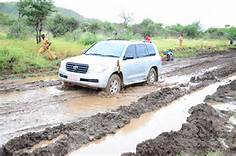
  • Where – We must haul them over muddy roads that have been exposed to rain for two weeks..
  • When – We have to have the trees moved in 5 days.
  • How – We must drag the trees with truck & SUV.

Problem raised:MUddyRoad-001

  • The roads are already muddy and the vehicles are only 2-wheel drive. The trucks will probably get stuck trying to drag the trees up the mountain from the logging site to the cabin site.

To problem solve this the team must start brainstorming the four “W” areas mentioned. And, you go about it in the exact same order as outlined above.

  1. With two vehicles that wouldn’t get stuck, could we do it with enough people?
  2. If we had more vehicles could we get this done?
  3. If we had vehicles that could operate off-road could we get this done?
  4. If we had more time could we get this done?

Since it is not just mission accomplishment we are looking for, we are also looking for safety, effectiveness, and efficiency.

Example #1: Yes, we could get this done if we just used people to carry the logs and not use vehicles. And we would have to find 150 more people. Obviously not efficient and probably not very effective. So, the number of people becomes the problem. The initial “yes” becomes a “no” because we can’t find the people and even if we could, it wouldn’t be efficient.

Example #2: No, simply having more vehicles won’t help us accomplish this mission unless they are 4-wheel drive and large enough. Once again, we can spot that the option of more vehicles won’t help unless they are a specific type. The option of simply more vehicles lends itself to being ineffective.

Example #3: Yes, if we could accomplish the if one of two conditions could change; 1) we can accomplish the mission in another location where 2-wheel drive vehicles can operate successfully, 2) we could use 4-wheel drive vehicles that are large enough. And for this conversation let’s say that moving the location isn’t feasible.

Example #4: No, we don’t have more time to accomplish the mission, it must be accomplished within the time-frame set down because the snow will expose the families to the incoming deadly weather.

You have probably already mentally resolved the problem in your head but let me ask the obvious…What-001

“What is the solution?”

Since you can’t change the location of the mission you must acquire 4-wheel drive vehicles that are large enough for the task. And since you can’t change the time-frame, you have to ensure that you acquire enough vehicles to get the job done. But no more than 10 vehicles, because you only have 10 people; assuming each person could drive a vehicle.

Let’s return to the end-state’s “realistic” question, the answer would be “no” unless the team could acquire the 4-wheel drive vehicles first. Without those 4-wheel drive vehicles, the end-state is completely unrealistic. That being the case a whole new end-state, or mission, must be decided on.

Setting Objectives –

Let’s continue the discussion above and assume that the end-state must be met, that the time-frame is fixed, and you only have the people already on-hand to work with. What is your first objective?

It should be to acquire 4-wheel drive vehicles. If you can accomplish that acquisition then the rest of the mission is within the team’s realm of capabilities. But how do you go about setting that objective? The same way you go about setting any objective – S.M.A.R.T.

The SMART system of defining objectives has been around a long time. The general SMART system is attributed to Peter Drucker, and first appears in print is Management Review by George T. Doran as he was discussing “management by objectives.” The SMART system has been contorted over the years to meet personal opinion and specific situations, I will do the same here.

As I will use the term, SMART means –

  • SpecificSMART objectives
  • Measurable
  • Action
  • Realistic/Relevant
  • Time-frame

Let me break down each one in detail:

Specific – The end result must be very specific in nature. There can be no room for error in what must be accomplished. The clarity must be understood and agreed to by all parties; the person making the assignments and the people that will carry out those assignments.

Measurable – You must be able to clearly determine that the result has been achieved, or not. It must be easily and readily apparent when the result has been accomplished. And the measurement system must be known by those involved. An objective without a way to measure the success can potentially result in a “completed” assignment that is not successful.

Action – An action must be present. The person(s) given the assignment must be responsible for carrying out some kind of act in the accomplishment of the objective. If the objective doesn’t contain an action, then the people assigned that objective have little to no control over its success or failure.

Realistic/Relevant – The objective being assigned must be realistic within the scope of training, experience, and skills, of the assigned resources. Consideration must be given to the objective vs. the person(s) assigned the objective and their potential for success in that assignment. The action that the people will carry out must be 100% relevant to the accomplishment of the mission.

Time-frame – The action for successful accomplishment of the objective must have enough time in which to complete it. The time allotted for the successful accomplishment of the objective must be sufficient in length, clearly stated, and realistic.

Here would be an example of a poor objective:

“We will plant a garden because we need the fresh food. Let’s go get that done.”

Here would be an example of a properly formed objective preceded by clear leader’s intent:

“We are short on fresh food, a garden can solve that problem. We will plant a garden that is two acres in size, consisting of a variety of foods to meet our dietary needs. We must have the garden soil ready for planting in 10 days, seeds planted within 5 days after that. Individual families will be assigned rows to keep them free of weeds. Those same families will keep plants watered on a daily basis or as needed.”

The “intent” is clear – Planting a garden will provide fresh vegetables.Garden for teotwawki

The objective(s) meet the SMART criteria using clear tasks, time-frames, and relating each action to be taken to the overall intent of the project.

Of course, once this have been laid out specific tasks would be assigned to meet each major objective of; soil readiness, seeds planted, watering, and weeding.

The process for setting objectives must be clear and used by all team members. The leader is responsible for laying out clear “intent” and overall “objective(s).” Subordinates are responsible for developing the tasks (also objectives) to meet that intent based on priorities.

And tomorrow I will finish up this article by going over “setting priorities” and how that fits with SMART objective setting.

Yeah, originally I was going to have this just be a single article…but it just grew too large for a single post. I hope you are getting something out of this…it has taken me 30+ years of incident management experience and training to learn all of this.

Part #2 ->


2009 - 2019 Copyright © AHTrimble.com ~ All rights reserved
No reproduction or other use of this content 
without expressed written permission from AHTrimble.com
See Content Use Policy for more information.

Yaesu FT-8800R Ham Radio : Storing and Case

Yaesu FT- 8800R ham radioIn this post I will go over how I store my 8800R and what I store with it.

In two previous articles I went over the Yaesu FT-8800R radio and accessories. Both articles are worth the read.

So let’s go over my standard format, what is the mission for all of this?


Mission –

To safely store the radio and all components with which to operate the radio.

Requirements & Restrictions –
  1. Cases must be sturdy, at least to military specifications.
  2. Cases musty protect against dust, dirt, and water impingement.
  3. Cases should protect the contents against damage due to reasonable heights and rough handling.
  4. Cases should be low profile and not draw attention to them.
  5. Case should be light enough for one person to easily carry.

SKB i-series 3I-1711--68-C.The case I chose was the SKB i-series 3I-1711–68-C. These cases are waterproof and as sturdy, if not more so, that Pelican cases. And they are cheaper that Pelican cases. They come with “cubed” foam ready to be cut to size for your equipment.


SKB iSeries hard case for a yaesu ft-8800r


So this is what my case looks like for my Yaesu FT-8800R.  The case is clearly labeled for easy identification.

SKB i-series 3I-1711--68-C for the Yaesu FT-8900RYaesu FT-8800R Radio Case –

Bottom Level:

  • 1 x Power supply, AC, 19amp
  • 1 x Mounting bracket, radio
  • 1 x Microphone, MH-48
  • 1 x Radio, Yaesu FT-8800R


SKB i-series 3I-1711--68-C for the Yaesu FT-8900RMiddle Level:

  • 1 x Power cord, AC


SKB i-series 3I-1711--68-C for the Yaesu FT-8900RTop Level:

  • 1 x 5′ Power extension cable, Anderson Power Poles on both ends
  • 3 x packages various mounting screws.
  • 1 x Mounting bracket, remote head
  • 1 x RT Systems Programming CD
  • 1 x RT Systems Programming cable
  • 1 x Power cable, Anderson Power Poles to hard soldier connection (AC power supply)
  • 1 x Cable, radio head to radio body
  • 2 x Fuses, 15amp

On top of the radio I place a 8800 user’s manual in a 1-gallon Ziplock bag with the latest copy of the US Amateur Radio Bands chart.

I have given you a list of the equipment needed to run the Yaesu FT-8800R Ham radio. Is it everything you might need?  This was meant strictly for the radio equipment itself and the essential equipment to get it going.

Take this list and use it as a starting point for your specific need and mission.


2009 - 2019 Copyright © AHTrimble.com ~ All rights reserved
No reproduction or other use of this content 
without expressed written permission from AHTrimble.com
See Content Use Policy for more information.

Yaesu FT-8800R Mobile Ham Radio – Part #2

Yaesu FT-8900r Quad-Band Ham RadioAs mentioned in Part #1 of this series, I really love this mobile unit!  The Yaesu FT-8800r is an amazing piece of Ham radio technology wrapped up in a very compact and sturdy package.  It is perfect for the “repeaters” part of its mission.  This thing does it all and matches my mission requirements and then it exceeded my expectations.

In the last post I covered the specifics of the Yaesu FT-8800R itself.  In this post I will go over the accessories, installation info and some other tidbits.


RadioAntennaCarVehicle external antenna for temporary dual band (2m & 70cm) operations : This antenna is a must have for temporary vehicle operations.  It is not a permanent antenna, it is a magnetic mount antenna.  You can move the antenna to other vehicles if needed.  You can also use it in a non-vehicle setting as well by placing the antenna higher than the radio would normally be located. Great option where portability is needed and only dual-band operations are needed. It is also a great option for an antenna when using a repeaters.


Browning BR-180 Amateur Dual-Band Mobile Antenna Vehicle permanent (or semi-permanent) mount external antenna : The Browning BR-180 Amateur Dual Band Mobile Antenna

The BR-180 is 37″ tall and has .4dB gain. Engineered for NMO mounting, this antenna has improved clarity and signal reception. This Browning antenna uses a center load.  Sturdy construction, enough flex in the antenna itself, and normally SWR of 1.5 or below right out of the box.
Specifics –

  •     37″ tall
  •     Frequency: 144-148 MHz/430-450MHz
  •     2.4dB gain UHF
  •     5.5 dB gain VHF mobile antenna
  •     NMO mounting (mount sold separately)
  •     Center load
  •     One Year WarrantyNOTE: Do NOT try a mag mount with this antenna.  It is not intended to be used as such.  The NMO mount is the way to go for a dependable mount to your vehicle.

Yaesu MLS100 external speakerExternal Speaker :  I had to go with a Yaesu MLS-100.  You can buy other speakers but I like the idea of a speaker that is matched to the radio by the manufacturer. The Yaesu Vertex MLS-100 external loudspeaker is a high performance communications speaker matching the impedance and output requirements of most Yaesu transceivers. It mounts on a swivel stand that is supplied along with mounting screws and bolts. A 6.5 foot (2m) audio cable that terminates in a 3.5 mm mono mini plug is also supplied. Black plastic cased speaker and black metal mount. Impedance is 4 ohms and the maximum power input is 12 watts. Yes, the FT-8900r has an internal speaker, but for vehicle operations and the associated noise I think an external speaker is really needed.  Dimensions: Height: 3.75 in., Width: 5.5 in., Depth 1.75 in.

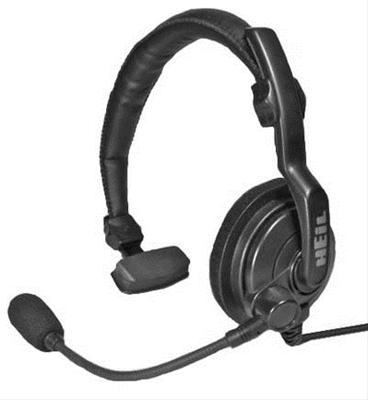
Heil Sound - PMS-6 & Headset Adapter for YaesuHeadset with Boom Mic :  Heil Sound – PMS-6 & Headset Adapter.  Why?  Because I believe that there are times when you want, or need, more privacy or the ability to hear/speak under adverse conditions.  A headset with boom mic is the right answer.  The Pro Micro Single Side is a very unique high performance single sided headset.  This headset is outfitted with the HC-6 element and is designed for commercial broadcast applications, the -3dB points are fixed at 100 Hz and 12 kHz with sensitivity of -57 dB at 600 ohms output impedance (centered at 1 kHz.).  The microphone audio for the Pro Micro series terminates into a 1/8” male plug while the head phone terminates into a 1/8” stereo with adaptor. To adjust the headset simply bend the stainless steel piece that is inside the black padded headband.

Mic Gain
Adjust the mic gain while watching the ALC meter. Adjust so that the audio peaks just fill out the ALC scale and do not go beyond the ALC scale.

Speaker
The 706 speaker works all the time. To turn that off simply plug an empty 1/8” plug into the front headphone jack.

Vox  (voice activated transmission)
Set the Vox gain controls for proper activation.

Carrier Balance
If your rig has carrier balance it acts as a type of mic tone control. It is best to listen to yourself in another receiver as you transmit into a dummy load. You are actually moving the carrier + or – 200 Hz above or below the center of the filter network, which causes your microphone audio to change its tonal quality.  The use of the AD-1 series mic adapters allow simple interface with popular transceiver inputs. The adapter is 6” long and has a 1/8” female input jack for the boomset microphone and a 1/4” female that is for the PTT (push to talk) line for the Heil foot switch or hand switch. The 1/4” stereo plug goes into the headphone jack on the transceiver front panel.  All Heil Pro Micro Boomsets are shipped with foam windscreen that fits over the microphone. The windscreen does not change the frequency response, just the breath blasts directly into the microphone.

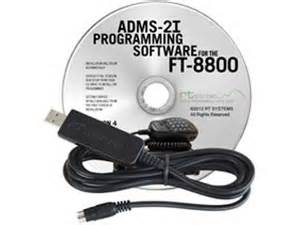
RT Systems FT-8800r programming softwareProgramming Software w/cable :  RT Systems FT-8800r Radio Software.  While the radio is fully programmable from the front panel that is not the way you want to try and program this radio. I tried several different “free” programming software program; had problems with all of them.  RT Systems puts out a superb product that can’t be beat in my opinion. FYI – You can use the files from any of the RT Systems software to transfer to any other radio that you are programming.  So I can use all programming I did for my FT-60r or Yaesu FT-8900r for my Yaesu 8800 radio with a simple click of a software button.

NOTE: I will be posting programming files for different parts of the country as well as different repeater systems.

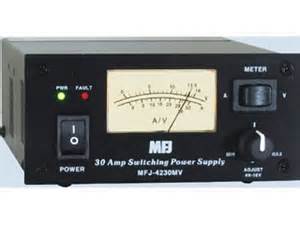
MFJ-4230MV COMPACT SWITCHAC Power Supply : MFJ Enterprises Inc. MFJ-4230MV COMPACT SWITCH (COMPACT SWITCH PS, METER, 4-16V ADJ. 110/220VAC).  This is a great AC power transformer, high quality and very reliable.

This is the world’s most compact switching power supply that also has a meter and adjustable voltage control. Just 5″ W x 2 ½” H x 6″ D, it weighs only 3 lbs. — it is the perfect pack-n-go power supply for field day, DXpeditions, camping, hiking or to pack for your next business trip or vacation to some far away place. MFJ-4230MV gives you 25 Amps continuously or 30 Amps surge at 13.8 VDC. The voltage is front-panel adjustable from 4 to 16 Volts. MFJ-4230MV also has a selectable input voltage: choose from 120 or 240 VAC at 47 – 63 Hz.

A simple front-panel push-button switch lets you choose either Ampmeter or Voltmeter — allows you to select Amps or Volts as you wish to read them. MFJ-4230MV has an excellent 75% efficiency and extra low ripple and noise, < 100 mV. Awhisper-quiet fan cools by convection and forced air cooling. Normal air-flow around the power supply is continuous and a heat sensor increases the fan speed when the temperature rises above 70 degrees Celsius. DC output is five way binding posts on the back of the MFJ-4230MV so you can power your dedicated HF, VHF or UHF transceiver with ease.

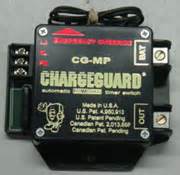
Charge Guard CG-MP

TIP – Battery protection when installed in a vehicle :  I also use Charge Guard CG-MP timer for my truck’s power installation.  This ensures that I won’t inadvertently run my battery dead using my Ham radio without the engine running.  Well worth the $’s.


Anderson Power PolesTIP – Power connectors :  I use Anderson Power Poles for all my power connections.  This makes hooking up my power “brainless” and quick.  Plus it gives me the added advantage of using power cables, fuses, etc. for more than one radio.  Basically allows for flexibility.  I chose Anderson Power Poles because there are essentially the standard for Ham radio operators.


Next article that shows up in less than an hour show how I store and transport the radio.


2009 - 2019 Copyright © AHTrimble.com ~ All rights reserved
No reproduction or other use of this content 
without expressed written permission from AHTrimble.com
See Content Use Policy for more information.

Yaesu FT-8800R Mobile Ham Radio – Part #1

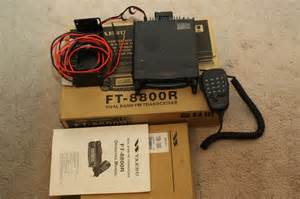
Yaesu FT- 8800R ham radioAnyone who has been in the Ham radio arena for 30 minutes or more knows the quality associated with the name Yaesu. The company has been putting out a high quality product for a very long time.  The FT-8800R is no exception. This was the second mobile radio I purchased and I am extremely glad I did.

I will go through my standard outline of reviewing this radio based on its designated mission and requirements.  Let’s get started…


Mission –

Provide reliable clear communications over two specific Ham frequency bands (2m & 70cm) bands for both  emergency/disaster/”grid-down” situation.  To use as the base unit for a cross-band repeater that is compatible with the Yaesu FT-60r and Baofeng UV5r dual-band handheld radios.

Requirements & Limitations –
  1. Must be sturdy, reliable and able to function in harsh environments; including in a off-road truck or as part of a remote location repeater system.
  2. Must be able to run on 12vDC power.
  3. Must have an internal speaker.
  4. Must be easily computer programmable.
  5. Should have a a large number of memory channels (at least 200).
  6. Should move easily from home to vehicle to repeaters system without undue effort.
The Good & Less Good

The Yaesu FT-8800R dual bander operates on 2 meters and 70 centimeters. High power output is featured with 50 watts on 2 meters and 35 watts on 430 MHz. It is like having two radios in one with dedicated Volume and Squelch controls on each side. And that is one of the, if not “the”, best aspect of this radio…you can easily and clearly monitor two frequencies or bands at once as individual radios.  I really can’t say much more about the really good aspects of this radio…it is darn near perfect!

There are some minor, very minor, drawbacks:
  • The buttons are not backlit.  I actually like this for OpSec purposes but for daily use it is a little irritating. When used as part of a repeater unit it really saves valuable battery power.
  • The internal speaker is usable but that s about it.  The quality is acceptable but much better with an external speaker.
  • You really need a computer and software to program this radio.  There are many features and trying to program them, or the frequencies, is more than difficult for me without the software.
The Details – Yaesu Dualband Amateur Ham Radio FT-8800R:Yaesu FT- 8800R ham radio
  • Built in features include: duplexer and CTCSS/DCS Encode/Decode.
  • Over 1000 memories are available. It is WiRES compatible.
  • Full twin Band w/ cross band repeater mode.
  • Features seperate volume & squelch controls, lighted mike, remote mountable faceplate.
  • Hasd ctcss/dcs, Alphanumeric display, 1000ch memories, scan modes.
  • Receives 108-520Mhz & 700-999Mhz (except cellular).
  • Transmits 2 meter band 144-148Mhz & 70cm band 430-450Mhz.
  • ARTS system, detachable Faceplate, cross-band repeat & more!
  • Requires regulated 12-13.8Vdc at 14 Amps or greater for power.Yaesu FT- 8800R ham radio
  • Receives 108-520Mhz & 700-999Mhz (except cellular).
  • Transmits 2 meter band 144-148Mhz & 70cm band 430-450Mhz.
  • ARTS system, detachable Faceplate, cross-band repeat & more!
  • Requires regulated 12-13.8Vdc at 14 Amps or greater for power.
  • Wide Frequency Coverage
  • Independent Two-Channel Operation
  • High Power Output
  • Over 1000 Memory Channels
  • Large, Easy-to-Read Liquid Crystal Display (LCD)
  • Cross-Band Repeat Capability
  • One-Touch Band-Pattern
  • 50-Tone CTCSS/104-Tone DCS (Digital Code Squelch) Tone Systems
  • User-Programmable Microphone Keys
  • Convenient Remote-Head Mounting Capability

Wide Frequency Coverage

The FT-8800R provides extended receiver coverage beyond the Amateur bands, so you can keep informed of communication activities in the public safety, commercial, aircraft, and government communications ranges.

Independent Two-Channel Operation

The FT-8800R operates as two radios in one, with either 144 MHz or 430 MHz as the “Main” TX/RX band, while simultaneously monitoring the other band. Each band has its own Volume and Squelch controls. And, if you like, you can configure your FT-8800R for VHF-VHF or UHF-UHF operation, too!

High Power Output

To get your message through when it counts, the FT-8800R puts out a full 50 Watts of power on the 144 MHz band, and 35 Watts on 430 MHz. A thermal sensor monitors heat sink temperature, engaging the rear panel’s cooling fan only when needed.

Over 1000 Memory Channels

The FT-8800R provides a wide variety of memory resources, including 512 “regular” memories on each band, five “Home” channels for favorite frequencies, ten sets of band-edge memories on each band, and six “Hyper Memories” that store complete sets of transceiver operating status configuration.Yaesu FT- 8800R ham radio

Large, Easy-to-Read Liquid Crystal Display (LCD)

Affording easy viewing from a wide range of viewing angles, the LCD of the FT-8800R features Yaesu’s renowned Omni-Glow™ display illumination, with four illumination levels available for different environments. You’ll marvel at the crystal-clear frequency display and status indicators, whether you’re operating night or day!

Cross-Band Repeat Capability

For emergency work, or to extend the range of a hand-held unit, the FT-8800R includes Cross-Band Repeat capability, similar to that pioneered on our popular FT-8100R Dual Band FM Mobile!

One-Touch Band-Pattern

To save valuable time while operating a transceiver with the capability of the FT-8800R, the “Hyper Memory” feature allows you to store a complete set of configuration data for the two bands on which you’re operating. Besides the usual storage of frequency and tone data, Hyper Memory will store such setup parameters as Automatic Repeater Shift status, Packet parameters, Scanning mode, and VFO tracking configuration.

50-Tone CTCSS/104-Tone DCS (Digital Code Squelch) Tone Systems

Providing excellent performance even under difficult link conditions, Yaesu’s 50-tone sub-audible CTCSS and 104-tone DCS signaling systems ensure that you have full access to repeater and remote-base inputs, and the built-in CTCSS/DCS decoders allow silent listening on busy channels. Plus you get Tone Search Scanning, which will scan for the tone being received on an incoming signal, allowing you to match tones quickly when operating on a new repeater system.

User-Programmable Microphone Keys

Four programmable keys on the microphone allow you one-touch access to your favorite command functions. The commands available from the microphone replicate the corresponding front panel key functions, and include Band Change, VFO/Memory switching, Home Channel access, 1 MHz frequency steps, Power Output selection, Repeater Reverse, and CTCSS/DCS setup. Customize your microphone for your personal operating style!Yaesu FT- 8800R ham radio

Yaesu FT- 8800R ham radioConvenient Remote-Head Mounting Capability

With the FT-8800R and its optional YSK-8900 Separation Kit, mounting your radio is a breeze even in the tightest locations. The YSK-8900 includes a 20-foot (6 m) remote cable and mounting bracket for the front panel.

Coming in Part #2 in about 30 minutes…See more of this radio review and accessories that make it even better; a few tips on installation and antennas, plus software to program it.

I will also be posting an article where I talk about building my remote location cross-band repeater. That article should appear in about 3 days.


This is a “BUY!”


2009 - 2019 Copyright © AHTrimble.com ~ All rights reserved
No reproduction or other use of this content 
without expressed written permission from AHTrimble.com
See Content Use Policy for more information.

Gerber StrongArm Knife

Gerber StrongArmIt isn’t often that I am kinda giddy taking something out of the box, but it does happen. And what did it happen with? A Gerber StrongArm Knife.

This knife, sitting there in the box, is just downright impressive. Right away I loved the sheath and the looks of the knife handle. But once it was out of the box and in my hand I just loved the way it felt. The balance to it was near perfect. The blade is plenty heavy enough but it was balanced out by the handle and full tine.

The handle is just simply built right. It is made out of diamond-texture rubber. The little nubs all over it make it a sure grip in your hand. The little indents in the handle on each side also just seemed to make it fit even better. All-round…it was an awesome “feel” in my hand.

Let me share the technical specs with you first, then back to the review.

  • Blade material: 420HCGerber StrongArm
  • Handle material: glass-filled nylon with rubber overmold
  • Blade length: 4.8” (12.2 cm)
  • Overall length: 9.8” (24.8 cm)
  • Knife weight: 7.2 oz (204 g)
  • Overall weight: 10.9 oz (309 g)
  • Fine edge, full tang 420HC steel blade
  • Ceramic blade coating
  • Rubberized diamond-texture grip
  • Striking pommel
  • Nylon webbing for drop-leg carry and secondary retention
  • Detachable belt hoops for horizontal belt carry
  • Snap-in MOLLE strap
  • Made in USA

There was a little confusion as I was looking over the sheath. It was kind of complicated to me at first. I kept trying to figure out how the heck the sheath would attach to something. I mean, it was pretty obvious how it would fit on a Gerber Strong Arm knife reviewbelt, but the rest wasn’t not self-evident. And then there were these two plastic pieces as well that were just laying there. So I did the commonsense thing…I got out the instructions.

Whoever designed the sheath system for this knife is a freaking genius! Once I laid it all out and read the instructions it was amazing to me how many different ways this sheath could attach to pretty much anything tactical, or just a belt. I fell even deeper in love it. Yeah, kinda creepy…sorry.

Back to the knife…I looked closely at the blade, it is one hunk of solid steel. This isn’t some thin fighting knife blade. This blade is heavy-duty enough to split wood with no problem. I did it. Yet, there is enough of a sharp point to easily penetrate whatever you needed to, especially an enemy at close range. And that opens another door.

I grasped the knife in a number of fighting grips and made a few moves with it, then a few more. The knife was effortless to move, well-balanced, had the feel of a top tier fighting knife. I would not hesitate to put my life in its hands.

The blade came out of the box razor sharp and with a light coating of oil. That is a mark of a good knife maker…sharp and oiled. The oil on the blade applied by the knife maker will ensure that the knife blade, especially the cutting edge, won’t rust while it sits in a warehouse somewhere waiting for a good home.

I really hesitated to take this knife outside to the fire pit, but I had to test it. I started with splitting wood, and it did just fine. I felt a little strange banging on it to drive it through the wood. But hey, how else are you going to figure out if the knife is any good or not.

I worked the edge against some wood for a bit longer, and then tested it for sharpness. It was still as sharp as I started, I was very pleased. FYI…The blade takes an edge well and isn’t difficult to sharpen.
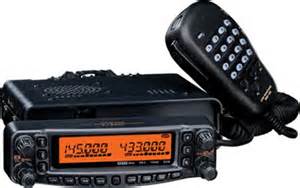
I went back inside the house and for about 2 hours while I watched some football I just handled the knife. Man, it just kept getting better and better. The feel to this knife is awesome!

I would say this knife isn’t a true fighting blade like the CRKT Hissatsu. But the blade is plenty pointed enough for piercing and the edge will cut just fine. However, the blade is also wide and thick enough to be used around camp or for survival. So I would call this blade a “hybrid” of combat, fighting, hunting, and survival. Probably best to describe it as a solid military-style knife.A great all-pupose, well-rounded knife. This knife will make it onto my tactical vest real soon.

Here are some of the carry methods with the Gerber StrongArm sheath system –

This is what I started with...

This is what I started with…

Gerber Strong Arm horizontal carry optionGerber Strong Arm vertical carry optionsGerber StrongArm MOLEE upright carry optionGerber StrongArm MOLLE inverted carry optionI would have no problem carrying this knife into the wilderness camp or in a grid-down survival & combat situation. The knife is just that good!

Combat knife:  A
Survival knife:  A-
Hunting knife:  A+
Fighting knife:  B+
Sheath & Carry System:  A++

No questions…a very, very solid “Buy!


2009 - 2019 Copyright © AHTrimble.com ~ All rights reserved
No reproduction or other use of this content 
without expressed written permission from AHTrimble.com
See Content Use Policy for more information.