 note: first appeared in May 2015
Pretty much my whole life has been figuring out scenarios and then planning and preparing for them. I was in military school during high school and then on to the military at the tail end of Vietnam. My professional life as a firefighter means a lot of my planning and preparing involved the potential for life & death. My side-line, security work, was a lot the same way to some degree. But whatever I’ve been doing for the last 40+ years has to do with the “what if” kinda of stuff. This reviewing and revamping of our food storage was no different.
Background –
Quite a while back I looked at our food storage and realized that I needed to have the ability to “grab & go” if the situation  demanded it. So I developed a series of scenarios that would cover a quick departure:
- If time was very very short, just a minute or less, I would grab our two buckets of freeze dried food that we bought at Sam’s Club.
- And if there is another two minutes to spare I would grab the 3 cases of MREs and a large case of Mountain House pouches.
- If I have another two minutes on top of that I would grab the Mountain House 45-day supply that is in four cases of #10 cans.
But then what?
Well, we had several stacks of food storage in #10 cans packed 6 cans to a case. They were all neatly stacked and grouped with similar items (wheat, rice, beans, etc.) in the same location. Looked great, nicely organized, but what happens if I have 10 – 15 minutes to load some more food? What would I take and how would I get to it easily? Or would I even know what to take?
The Problem –
I mean I could start grabbing boxes but I might end up with two cases of veggies and no milk; or five cases of wheat but no meat. And that made absolutely no sense to me at all. There had to be an answer, there had to be some kind of answer to resolve my grab & go problem.. So I did what makes the most sense, I forgot all about it and went back to daily issue and challenges…life set in.
Yeah, that worked for about two weeks; I just felt that I had to correct this situation and very, very soon. Then my wife started talking to me about it so I knew it was time to really do something and stop putting it off. For about two weeks we worked on a new method of food storage. A couple Family Home Evenings, some heart felt prayers, lots of discussion, pondering…well, you get the idea…Poof! We had a new food storage methodology.
The Solution –
The three scenarios I listed above haven’t changed at all, that is our “quick reaction” food storage. But we now have a new plan that builds on that old plan. And here it is:
We now have a “3-case month.” That means three cases of food are grouped together to make up a meal plan for two people for one month. The food is balanced, nutritional and meets a minimum calorie diet.
Each case in the group falls into one of three categories; A, B, or C. Also, each case of food is also “stand-alone” and can be used individually if needed. In other words…each case has a balanced set of contents.
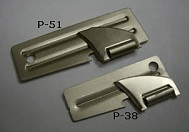 All the “A” cases have the high value food that we would take first. Then the “B” cases have the next most high-value food. Then the “C” cases of food the lowest valued food (but still plenty good, it is just relative). All the cans in each case have their own plastic lid. Each case has a P-51 can opener in the case.
So that addresses the main concern – What food do we take first?
How we did it –
We made up a total of 12 “grab & go” groups of three case sets for a total of 36 cases We figured that would be a decent, well-balanced, nutritionally correct diet for a year.
Each “A Case” Contents –
ITEM SERVINGS CALORIES per SERVING TOTAL CALORIES
Meat 48 110 5280
Vegetable 50 110 5500
Fruit 42 25 1050
Rice 54 160 8640
Wheat 58 140 8120
Spices
TOTALS 252 28,590
Each “B Case” Contents –
ITEM SERVINGS CALORIES per SERVING TOTAL CALORIES
TVP 47 80 3760
Potato 41 35 1435
Cheese 44 140 6160
Milk 69 100 6900
Pasta 27 200 5400
Bean 55 150 8250
TOTALS 283 31,905
Each “C Case” Contents –
ITEM SERVINGS CALORIES per SERVING TOTAL CALORIES
Drink 94 80 7520
Grits 61 130 7930
Biscuit Mix 30 210 6300
Peanut Butter 81 60 4860
Apple Slices 16 110 1760
TVP 43 100 4300
TOTALS 325 32,670
 Our “3-Case Set” provides us with 860 servings of food and a total of 93,165 calories. How does that stack up against our nutritional needs? We get a little over 3,100 calories of energy between the two of us each day. That means we are looking at a “minimal” diet. A woman my wife’s age will need about 1,200 – 1,300 calories a day with a “normal life-style.” That leaves me with about 1,800 calories a day. That is barely enough for a man my size, age, and life-style. If we have to accomplish hard work we would have to double that caloric intake to stay healthy.
Now, how to extend what you have in your 3-Case Sets can be a bit tricky, maybe confusing. But, I will take a stab at it. Remember that a 3-Case Set is designed to be food for two people for one month. But it is barely enough for a man and women as far as calories go. Now, it would be easy to increase calories by simply adding beans, wheat, rice or oats; and it would be very cost effective as well. But you could end up suffering from food fatigue if you aren’t careful. To avoid that situation and boost calories…there are a number of ways to accomplish that. You put together a case of “caloric extenders” while adding a little “taste” as well. Here are some ideas for both: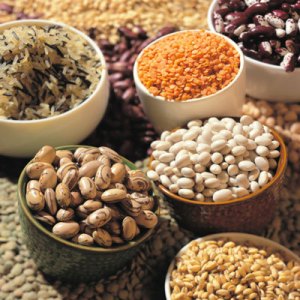
Caloric extender foods:
Wheat
Rice
Beans, pinto/black/white/refried
Oatmeal
Pasta
Potatoes, mashed
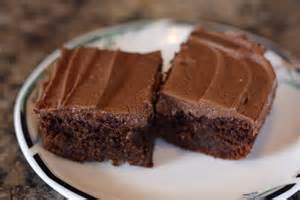 Taste enhancer:
Sugar
Brownie mix
Yogurt bits
Cheese
Butter
You can mix and match them in any combination that you wish to get the desired foods, taste, caloric intake, bulk and nutritional content. And you can do all of that while keeping food fatigue away. Now, don’t think you have to run out and spend a fortune on freeze dried food or a long list of fancy canned food. If you have the extra money fine, then do so if it fits your budget. But if you are like most of us you don’t have that kind of money just sitting around. No problem, just add a single #10 can each payday if that is all you can do. Steady progress is what it is all about. This is a marathon not a sprint.
Summary –
All-in-all, we are really grateful that we undertook this change in food storage methodology. It was eye-opening to say the least. We both feel we are far better prepared now to meet the challenges that will come our way when we face a disaster, emergency or a “grid-down” event in the future.
Here are some specific Lessons Learned from this significant change in the way we stored our food storage:
- We didn’t know before exactly how long our food would last. Now we have a firm estimate. Makes a big difference for planning purposes.
- Putting a can opener in each box really gives us a feeling of comfort. Talk about redundancy!!
- We found the bottom seams of many of the boxes (especially shipped boxes) had tape that no longer functioned. We took the time to re-tape each of the 3 seams on ALL the box bottoms; two shorter edges and the one long seam in the middle.
- With our computer printed, easy-to-read labels, we marked each box with the exact contents and the servings and calories.
- We rearranged how we physically stacked and placed it in the storage area. We can now easily see what we need to round-out our food storage. But more importantly, which cases of food should be loaded first in the event we need to bug-out.
- We feel confident, that should we be able to take it all, we will have well balanced and tasty meals. With well-balanced cases of food it will help ease the problem(s) that caused us grab & go our food storage to begin with.
- We realized that if we are to take all our food storage we will need a larger, sturdier truck. But, we’ve identified the most important 36 cases of food in case that is all we can take.
- If the grid goes down and we have to leave in a hurry we will very likely not be able to take all our food storage with us. But we will easily know what to take, and we will be able to do it quickly and efficiently.
- We really liked the idea that we put plastic lids on every can in the A/B/C and Support (caloric & tastes extender) cases. Once the food is used out of those cans, the cans will have more value because they will all have a lid.
Now…what kinda ofr methodology do you use for your “grab & go” food storage?
2009 - 2019 Copyright © AHTrimble.com ~ All rights reserved
No reproduction or other use of this content
without expressed written permission from AHTrimble.com
See Content Use Policy for more information.


 Food
Food 






 A.H. Trimble - Emergency preparedness information for disasters and grid-down