Interesting Events in US History – Part #3 (1934-1942)


YEAR EVENT DESCRIPTION
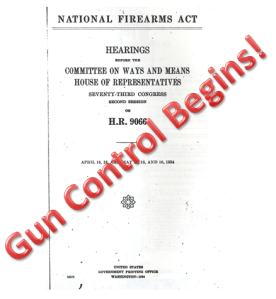
1934 Gun Control Begins with the passage of The National Firearms Act of 1934US citizen rights under the 2nd Amendment (right to bear arms) began eroding via The National Firearms Act of 1934. The act was passed by a very liberal, almost socialist, Democrat run Congress and signed into law by Democrat President Franklin D. Roosevelt, a socialist and Progressive extremist.the NRA supported Gun Control Begins with the passage of The National Firearms Act of 1934
1934 The Federal Communications Commission (FCC) was created to control all forms of wire and wireless communication. This brought the US half-way into compliance with the Communist Manifesto’s 6th plank; “Centralisation of the means of CensorshipBeginscommunication and transport in the hands of the State.”
1935 The FBI was created by Democrat President Franklin D. Roosevelt (socialist and Progressive extremist) and J. Edgar Hoover was placed in charge of this newly formed, all powerful, law enforcement agency.   The FBI was well known for its outright murdering of opponents and criminals. They are most notoriously known their assault on the Davidian religious group that resulted in 78 men, women and child burning to death when their compound was attacked by the FBI. The FBI is well-known to be a tool of Presidents against political opponents and Hoover blackmailed many politicians himself from material he illegally gathered with FBI personnel. Hoover was also known as a sexual pervert and deviant, and a black cloud of suspicion and fear has lingered over the FBI from its very beginning.
1935 The beginning of the system now known as Social Security. This program was implemented by Democrat President Franklin D. Roosevelt, a socialist and Progressive extremist. The design of the SS program matches perfectly with a criminal enterprise call a Ponzi Scheme. In 2010 the SS program began paying out more than it was taking in. All funds are expected to be expended by 2035 and the program will be completely broke. SS has at least $15,000,000,000,000 of unfunded liabilities as of 2011. The SS payments were never kept in trust as the law required. The federal government spent the money on other purposes as the monies came in. In other words it was used as general operating funds with government IOUs placed in the SS Trust Fund. The US Government is now directly in debt by $22trillion with unfunded liabilities well over $120trillion dollars.
1935 H.G. Wells comment on The New DealThe second New Deal wave of programs were adopted including the government endorsement of socialist and Communist backed unions. This brought the US into partial compliance with the Communist Manifesto’s 8th plank; “Equal liability of all to labour. Establishment of industrial armies, especially for agriculture.”
1937 The Progressive/socialist stacked Supreme Court gives the federal government virtually 100% control of all commerce in the US under the Commerce Clause. This is done in direct opposition to the original intent of the Constitution of limited federal authority in such matters. But the Constitution and the Founding Father’s intent is ignored by the radical leftist Supreme Court Justices.
1939 Police departments, under Democrat President Franklin D. Roosevelt, a socialist and Progressive extremist, begin purchasing armored vehicles.
1941 The War Powers Act of 1941 was passed at the demand of Democrat President Franklin D. Roosevelt, a socialist and Progressive extremist. This act gave the President vast authority to act without the approval of Congress. This newly assumed authority by President Roosevelt had been, and still is, limited by the Constitution but ignored by presidents since FDR, especially Democrat Presidents.
1942 Democrat President Franklin D. Roosevelt, a socialist and Progressive extremist Peral Harborenters the United States into World War II.
1942 The Supreme Court (stacked with radical Progressives) under the direction of Democrat President Franklin D. Roosevelt, a socialist and Progressive extremist, ruled that the federal government could dictate to farmers what crops they could grow and how much. This move was made by Democrat President Franklin D. Roosevelt, to control the price of wheat, driving the price up and making food products more expensive while removing money from the farmers who grew it.   This brought the US into full compliance with the Communist Manifesto’s 9th plank; “Combination of agriculture with manufacturing industries”

Related Articles –


2009 - 2020 Copyright © AHTrimble.com ~ All rights reserved
No reproduction or other use of this content 
without expressed written permission from AHTrimble.com
See Content Use Policy for more information.

Initiative ’17 – Part #3: Prepared to Lead

note: This article was originally published in May 2017, then lost in the site crash. I thought it appropriate and timely to reconstruct it for re-publication now. I took the liberty of some limited editing to improve grammar, readability, spelling, and content.

This is the third article in this series, you might want to go read Part #1 & Part #2 before proceeding.

I just completed the rough draft of my fourth article in this series. I was sitting there thinking to myself that I didn’t really have a clearly defined “mission” to this initiative. Those of you that have been visiting the site for a while know I am a big believer in defining the mission of anything, especially when it comes to gear & equipment. But, the same mission identification should, and normally does, apply to every article I put up on this site. But, such was not the case with the Initiative ’17 series. I apologize. And, I’ve corrected that with this article, Part #3.

As I was saying…I was reviewing in my mind the two articles in this series that I had written so far and it hit me like a bolt of lightning. I was essentially writing articles that would make you a leader when there were emergencies, disasters, or a grid-down event.

There will be people who have some food storage, maybe a gun or two and some ammo, and there might even be some folks with radios and solar charging capability. But, who will know how to assign people to cover the four basic areas of organization of an incident? Who will know what the proper priorities are for any emergency, disaster, or a grid-down event? Who is going to know how to spot folks who pose as threats, or are prospective assets? Who are going to be the people who understand Situational Awareness, Tunnel Vision, Complacency, Normalcy Bias, etc.?

Well, that answer is you! Yup, plain and simple…you will be that person.

Why not someone else? Well, maybe. But, if not you, who? And why not you?

What if your church, neighborhood, or community already has leadership? Really!?! What qualifies a person to be a leader?

What does your neighborhood leader do for a living? What training, knowledge or experience does that person have that you would suddenly trust them when the world falls apart?

“Ah, my church leadership will run everything!” Really? And exactly how will they do that?

“They are called of God and I will follow Him!” Really? What if God tells them to organize their congregation to deal with whatever the calamity is? Will you be prepared to lead one of those areas of effort if asked? What if your church leader needs to maintain his position of spiritual leadership and turn over the more temporal needs (operations) to someone else…who would that leader be? Would you be prepared to be that leader?

I remember a pretty good leader, a man of God, led by God…and he still used a lot of folks around him to help. We know him as Moses.

So my point is, I want to make sure I am providing tools for you, to enable you to step up and be a leader at any level regardless of your situation.

What makes me qualified to do that? Well, my professional background of well over 30 years providing emergency services and leadership all over the US and even internationally. Or, my 1000’s upon 1000’s of hours of formal training during that same 30+ years. Or my 1000’s of hours of research in these subjects outside of all of that training. Then again…maybe it is just my desire to sound like a know-it-all…my own personal delusion of grandeur.

Whatever the case is, you may well find some valuable information that will help you be that leader that people will need with it hits the fan.

What is Leadership?

Ah, there is a problem here. If you look online you will find hundreds of different definitions of leadership. And then you will find 1000’s of articles about what makes a good leader. And, for the most part all of it sucks. Yup, they aren’t good enough. So now what?

Have you ever experienced a good leader? How about dealing with a bad leader?

So after contemplating that for a minute are you starting to see a picture of what makes a good leader and what makes a bad leader?

So, now define “leadership” if you please…

I worked on that task for quite a while…and for the most part I came up empty handed. But, then I started thinking…what if people don’t see a need for a leader? Wow! That hadn’t dawned on me, that there wasn’t an actual need for a leader. So imagine this, a group of 20 people standing around knowing that something needs to be done. OK, now imagine that picture with no one stepping up and making something happen..to lead the effort..

Yeah, pretty ugly picture. So, for this part of the conversation we will imagine an emergency, disaster, or a grid-down event has taken place and there is a group of 20 folks meeting in the neighborhood. And someone says, “Well, what do we do now?” That establishes the need for a leader.

Back to defining “leadership”, have you come up with anything yet?

Mine was simple, overly simple actually, but spot on if you ask me…

The act of leading a group of people.

Notice I didn’t define a leader, just the term (verb) leadership.

But, now that we have the foundation of what leadership is, we can move on to defining the traits of a good leader. However, I want to work backwards. What are the traits of a bad leader? Of course we are working in the context of emergencies, disasters, or a grid-down event.

Here are some of the traits of a bad leader that I have personally seen in my military and firefighting careers:

  • Someone who doesn’t know what they are talking about; either stupid or ignorant.
  • A person who is disengaged. They show up, tell you to do something, and then disappears until the next visitation and order.
  • A person who makes decisions in a vacuum, or from the top, and doesn’t understand conditions on the ground.
  • A person who won’t actually listen to or take advice from peers or subordinates.
  • A “pretty boy”, “politician”, or a “good talker”.
  • A person that always “one-ups” you in a conversation or always has to have the last word.
  • A micro-manager.
  • Almost worst of all…someone who won’t make a decision.
  • Worst of all…someone who won’t back their people, even when those people make a mistake.

Now, what I have seen in good leaders:

  • Someone who listens to his people and takes their advice.
  • A person who trusts his subordinates and empowers them to make decisions and then act.
  • A person who always passes the credit to his people.
  • A person who accepts the blame when things goes wrong.
  • Someone who looks out for the benefit and welfare of the people they lead.
  • Someone who is willing to make a decision and stand by it.
  • A person who knows what they are doing and what they are talking about…”been there, done that” experience.

What does your list look like when you are posed with the questions; 1) What does a bad leader look like? 2) What does a good leader look like?

I was having a discussion with my peer at work the other day, we were talking about our boss. We are amazingly together in our view of our boss. Basically…he sucks as a leader. Nice guy, but he is a terrible leader. What makes him so?

  1. He is disengaged with our department and the people in it.
  2. He is all about himself and his advancement, he just wants us to do our job.
  3. He is gone most of the time.
  4. He doesn’t ever (or very rarely) express appreciation to his folks for what they do, even when it is above and beyond what is normally expected of them.
  5. He is a “black hole” of communication…communications go to him, and nothing rarely comes out. He sees information as power…and doesn’t like to share it until it is needed.
  6. Anytime a suggestion or solution is offered by one of the guys, he then relates that is exactly what he was thinking, or that is what he was going to suggest but was waiting to see if anyone else would come up with it.

And so, what exactly is the end result of such poor leadership on his part?

The folks in our department don’t respect him. They don’t trust him. They see him as someone only out for themselves. And how do you think that affects the people and morale in the department?

Are you a leader? Might you be called to be a leader? Might you be the only logical choice to be a leader when an emergency, disaster, or grid-down event hits?

Personally, I think you would be the logical leader, the most qualified leader, the most prepared to lead. Why? Because you are taking the time to learn, to become informed, engaged, you care.

Summary –

Initiative ’17 now has a mission…Preparing you to lead when an emergency, disaster, or grid-down event hits.

Here is what I will ask of you…do not judge yourself at this point. Let’s get through these articles and absorb the information that I will present. Learn whatever you can from each article. Let each one sink in to your mind and allow your mind to form pictures of what may happen and how you would react to it…if you were the leader.

YOU can do this! When the world falls apart, and I’ve seen that happen hundreds of times, people are capable of amazing acts of courage and bravery. I have seen people do almost unbelievable things to help each other out. I have seen the absolute best of people committing acts of amazing compassion and service. What I have also seen every single time…people wanting, even begging, for leadership. People are willing to march into hell itself with buckets of water if the right person will lead them.

Now, let me go religious on you for just a short minute. I thought of a man, a simple man, plainly dressed, humble family origins, little education, no worldly means, no fancy job or profession. That person established the largest religious organization the world has ever seen. And it has lasted, actually grown and flourished, for 2000 years. His name was Jesus Christ. And how did he do it?

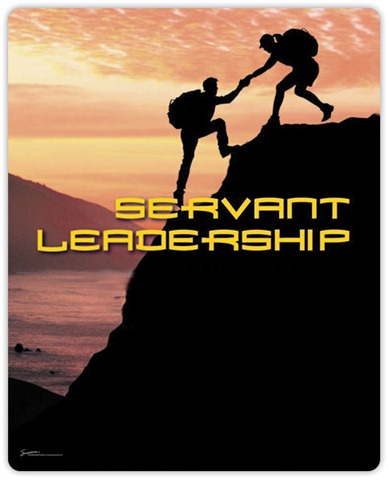
You could give many answers to that question, but I think one reason that rates right up at the top is His desire and ability to serve others. He healed people. He fed people. He taught people, He listened to people. He washed people’s feet. He comforted people when they needed it. He served.

Sure, a cynical man might say…Yeah, but they killed him and his 11 best friends. Yes, that they did. But, I ask you this, would you say Christ succeeded as a leader, or failed?

For me, I say He was/is an unqualified success. And He did it by serving. And the more I think of it, the more I realize a great leader is one who serves his people with sincerity. Is that the only attribute a person needs? Of course not! A good leader has many attributes that we listed earlier. A great leader has all those traits…and then serves his people through humility, love, and sincerity.

Let’s work together over the coming weeks to develop in ourselves…Prepared to Lead.


Related Articles:
2009 - 2020 Copyright © AHTrimble.com ~ All rights reserved
No reproduction or other use of this content
without expressed written permission from AHTrimble.com
See Content Use Policy for more information.

Interesting Events in US History – Part #2 (1913-1934)

YEAR
EVENT DESCRIPTION
1913 – The Federal Reserve takes over the us currency and economy.The Federal Reserve was created by Progressive President Wilson. The control of the country’s currency no longer was with the US Treasury Department; the country’s currency was now controlled by a cartel of private banks with no direct oversight, auditing, or control by the US government. Their booking keeping was secret, not even US government personnel had the right to see the books. This brought the banking and currency system into strict compliance with the Communist Manifesto’s 5th plank“Centralization of credit in the hands of the State, by means of a national bank with State capital and an exclusive monopoly.”
1913 – The 17th Amendment to the Constitution was ratified placing the election of Senators in the hands of the populace. This removed the last check and balance of power of the federal government by the states. The federal government could now grow to mammoth proportions with no safeguards to stop it. William Jennings Bryan (Leftist, Progressive, fiat money advocate) led the push for the 17th Amendment. States are now, virtually, powerless against the overwhelming dictatorial power of the federal government.
1914 – President Wilson pushes us into world war 1 WWIProgressive President Wilson pushes the United States into World War I.
1916 – The modern day Estate Tax was established.   This tax was put into pace by President Wilson, a staunch radical Progressive. This brought the US tax system more into compliance with the Communist Manifesto’s 3rd plank; “Abolition of all right of inheritance.”
1917 – The Council of Foreign Relations (CFR) is informally established by President Council on Foreign Relations CFRWilson, radical Progressive, to influence foreign policy decisions of the US government. The CFR is a private organization of ruling elites that now direct and influence all United States foreign policy decisions.
1917 – President Woodrow Wilson, Democrat and radical leftist, has thousands of German born US citizens arrested and interned at prison camps. Wilson was a radical Progressive and war monger, as well as a racist. J. Edger Hoover headed the internment project for Wilson. It was J. Edger Hoover that later became the first director of the infamous Federal Bureau of Investigation and was accused of blackmail, intimidation, and being a political hack through the mis-use of FBI resources and organization. United States citizens were denied judicial due process by J. Edger Hover at the direction of President Wilson.
1921 – The Council of Foreign Relations (CFR) is formally founded, to influence foreign policy decisions of the US government.   The CFR endorsed the predecessor to the United Nations, the League of Nations. Many constitutional experts refer to the League of Nations and the United nations as the beginnings of a “one-world government.” The CFR was supportive of liberalism, Progressivism and globalism.   However, President Harding a conservative and Wilson’s successor, spurned the League of Nations going against the CFR and the Progressive movement. Shortly thereafter President Harding died unexpectedly in 1923 of poisoning.
1931 – Democrat President Franklin D. Roosevelt, Progressive and socialist, issues an Executive order outlawing the owning of gold and silver. He further, without rule of law or Constitutional due process, orders gold and silver confiscated from US Citizens at 1/6th of its true value.
1933 – Democrat President Franklin D. Roosevelt, Progressive and socialist, takes the US dollar off the gold standard and declares a bank holiday to prevent a run on banks. The move effectively places zero value on the US dollar and allows the Federal Reserve, a private banking entity, the ability to create and print money with no backing of any tangible value. The US dollar becomes a fiat currency manipulated by private banking interests.
1933 – Democrat President Franklin D. Roosevelt, Progressive and socialist, creates The New Deal welfare programs, and establishes a permanent welfare class in the US.
1933 – Democrat President Franklin D. Roosevelt, Progressive and socialist, created the Works Progress Administration (WPA) and the Civilian Conservation Corp (CCC). These federal gov’t work programs created a huge army of federal workers. This brought the US into further compliance with the Communist Manifesto’s 8th plank; “Equal liability of all to labour. Establishment of industrial armies, especially for agriculture.”
1934 – Democrat President Franklin D. Roosevelt, Progressive and socialist, forces the passage of The Gold Reserve Act outlawing the private ownership of gold.


2009 - 2020 Copyright © AHTrimble.com ~ All rights reserved
No reproduction or other use of this content 
without expressed written permission from AHTrimble.com
See Content Use Policy for more information.

Initiative ’17 – Part #2: Training, Experience, Knowledge, and Wisdom

note: This article was originally published in May 2017, then lost in the site crash. I thought it appropriate and timely to reconstruct it for re-publication now. I took the liberty of some limited editing to improve grammar, readability, spelling, and content.

This is the second article in a series called Initiative ’17, Part #1 appeared yesterday (click here to read it). This initiative is designed to provide you some of, what I consider to be, the most valuable information a prepper could learn. It includes the “mentality” of surviving emergencies, disasters, and grid-down events. Most of life’s challenges are mainly mental. If we have properly prepared our minds we can survive just about anything that life throws at us. Or, at the very least, make it just a little easier to deal with.

I can’t tell you, or even predict, what you might get out of this article…or the whole series. But, I believe there are some very valuable nuggets of knowledge laying around in every paragraph. I will leave it up to you which ones you seize and which ones you leave behind.


Not that many years ago I was in a heated discussion with an individual in the fire service. He was challenging a decision that was made. Rather than make a cohesive and informed argument against the decision he simply used the “I have almost 30 years’ experience and I know what I am talking about!” The problem is…the guy is a moron…his lack of competent decision making is well known. My response to him, in front of the group, “Yup, one year of screwing up, repeated 29 more times.”

Yeah, I can be the life of the party. But, the point I was making then, and the same I am making now, is that experience doesn’t equal competence. In actuality, experience at times can truly work against us being successful. Falling back on your experience alone can induce both complacency and tunnel vision. In can also drag us down into delusions of grandeur.

So what are we looking for?

We are looking for balance once again. We need all the pieces of this pie; training, experience, knowledge, and wisdom.

Years ago a highly respected SpecOps trainer said “Training matters!” and he has also maintained, “Training trumps gear.” Of course he was right on both accounts. And, I believe him to have nailed the #1 priority of all preppers. Without training no fancy gear or food storage will make a difference…a person will still be too stupid to survive. Yeah, kind of harsh, I know. But, I am right.

There are times when I hear that experience means more than training. Really? German soldiers were some of the most experienced men to ever enter the battle field in the 19th and 20th centuries. Yet, Germany was twice defeated…rather badly each time.  And a case could be made that they were some of the best trained soldiers in the world…and they still got beat. So then it boils down to knowledge and wisdom. In both of those areas the German leadership and their military really sucked! They lacked accurate knowledge of the capability of the USA and our ability to mobilize massive amounts of men and material. They also lacked the wisdom in going against virtually the rest of the world, including an emerging super-power.

So where is that balance I spoke of?

I am not 100% sure. The more I research it and then ponder it, I think that balance is different for each person. Each person is in a different place in their life, in a different prep situation, different prepper mission, etc. Hence, each person has their own balance of those four pie pieces. But, let’s not have that relatively minor point hold up the discussion of each piece.

Introduction –

For our conversation training is defined as “the process of acquiring knowledge and skills.”

Does that appear to be an oversimplification? Does it appear to be inaccurate? Why is “process” mentioned?

Defining training as a simple action is appropriate because it is simply an acquisition process. And the process does combine the acquisition of both knowledge and skills. Turn it around…without a valid and reliable process you can follow, how can you obtain quality knowledge and skills? By osmosis?

So let’s agree that…

Training is a process by which you obtain knowledge and skills.

That implies that training is important, virtually vital, as a prepper. Agreed? We will come back to that in a minute. Let’s move on to the next item…knowledge.

You want to have an interesting experience…go look up all the different definitions of “knowledge.” The various definitions are all over the place. None of them really meet what I think the definition should be in the context of this article. That being the case, I will make up my own definition that I believe is just a valid as any of the “official “versions.

Knowledge is the information that is gathered through training and/or experience.

My first mother-in-law, a truly wonderful and spiritual person, taught me one day a very valuable lesson. She told me “You can learn two things from every experience and person…what to do and what not to do.” I swear by that simple, but meaningful, statement! The point is, you can learn from anything and anybody…some of it good, some of it bad…but you can learn.

Next up is experience. Once again I find all the main stream definitions somewhat lacking in any meaningful context to prepping and this article. It is very frustrating to not find a single existing and appropriate definition. So here goes my version…

Experience is an event where actions reinforce what you know or expose what you don’t know.

In other words, experience can reinforce your knowledge or expose your lack thereof. But, then it can become a learning opportunity to acquire knowledge that you didn’t previously have. And just for clarification, I am not talking about good experiences or bad experiences. I am simply referring to all experiences.

Now let’s touch on wisdom.

The standard definitions really do a pretty decent job of defining wisdom, I was impressed. I liked several but I wanted to ensure that I related something plain, simple, accurate, and applicable to our discussion here. Here is the result… 

Wisdom is the ability to make good judgements.

What I noticed about that definition once I pondered it for a little while the term “good” which could be highly subjective. What might be good for one person, might be horrible for another. So that begs me to define good. And brother…do I really think I am capable of that!?!? But, I felt I had to define it anyway. So I decided to define the term “good” out there for you in light of prepping.

Good is; minimally, not harming a person that you are responsible for, and ultimately not violating any basic tenant of the Judeo-Christian value system.

But, a judgement is a judgement…and they will have to be made in any type of post-event relating to prepping.

Example: Is killing another person a good judgement call? No, not according to the Judea-Christian value system. However, there are instances where it is acceptable to take another person’s life. The right of self-defense is a God-given right (a.k.a. Unalienable Right). So a “good” judgement would be to use fatal force to stop a person from killing your family. A bad judgement would be to kill someone just because they approach your property and you don’t know why they are doing so.

So I don’t start to belabor the “good” point and get side tracked, let’s move on and work at seeing how training, experience, knowledge, and wisdom work together for the prepper.

Training & Knowledge –

What do you need training in?

I have no idea!

How’s that for a revelation?

But, you can answer that question because it applies to you, not me, not your neighbor, just you. Once again you have to establish some foundation before you can even pose that question. That foundation must be a way to prioritize what is really important and what is not. For that you must have a priority system of prepper needs. And that is an easy one.

There are a wide variety, almost an endless list, of emergencies, disasters and grid-down possibilities. But amazingly, they all fundamentally present virtually the same threats in relatively the same priority order:

  1. Violence
  2. Sickness/Injury
  3. Lack of, or Poor, Communication
  4. Lack of, or Poor, Organization
  5. Dehydration
  6. Hyper/Hypothermia (clothing & shelter)
  7. Starvation

Using the threats/risks in the priority order that they appear, answer the question…What area do you have the least knowledge in?

OK, great! Now go find some training in that area. Yes, it’s that simple. You can find that training on-line on a website such as this one or you can go take a tactical carbine course at the gun range or Frontsight in Nevada, or go take a wilderness first aid class at the local community college. But, take the training!

Caution: What is the quality level of the training you are planning on taking? Yeah, better ask yourself that question. There are a lot of so-called expert preppers out there. I’ve read many of their articles, taken some of their training. They are no experts! And the training they are giving through those articles are likely to get you killed. Whomever you take training from, make sure they are qualified to be providing that training. 

Experience –

It is hard, if not impossible, to gain much actual experience in emergencies, disasters, and grid-down events. Well, unless you are blessed to be in the emergency services profession. The better “in-person” training will give you scenarios to work out in real time. Another area is to volunteer whenever you can to provide service in emergency and disaster situations with a quality response organization.

You can also “war game” situations. In your mind develop a scenario such as a power outage. Now, go step-by-step in your mind what you would do. Once you have done that, write it down. Now that you’ve completed that, take your list and walk through it doing each step (as much as possible) just as you would in the actual event. Do the same thing with your family. Do it again with your prepper group.

While actual real-life experience may be hard to come by, thankfully, you can acquire experience in creative ways. The more you do this the better your mind will be able to handle the actual, or similar, event when it does occur.

Wisdom –

This is an almost impossible topic to give you information on or train you in. I firmly believe that “wisdom” is acquired over time, through experience, with a solid foundation of knowledge that has been acquired from high-quality sources. In some cases, such as the Ten Commandments, you can utilize this great guide. In other cases wisdom is an intangible that just has to be figured out one painful event at a time. But, one thing wisdom requires -in my opinion- is a set of principles that have proven to be reliable, fair and just.

In my mind that already exists, so I ask the question, “Why reinvent the wheel?”

I am speaking of the Judeo-Christian value system. Listen, when properly applied, it works. And it work every single time. It has proven to work for the last 2000 years. Yes, yes, there are plenty of examples where Christians and Jews have made horrific decisions that were anything but wise. However, when you look at those decisions and the outcomes you will clearly see they didn’t stick to the actual values themselves. They took on the mantle of those values but were almost universally narcissistic and making decisions for their own gain and profit.

Whatever your value system, ensure that is will allow you to learn and apply good judgements when emergencies, disasters, or grid down events occur.

Summary –

The best gear in the world won’t help you if you don’t know how to use it. When the horde is headed towards your house…your fancy tricked out AR-15 and 10,000 rounds of ammo won’t mean a thing unless you’ve acquired the knowledge and skills to employ the right tactics. When you are faced with a person that tried to steal your food will you know how to treat them? Wisdom better let you consider that maybe they are just trying to keep their wife and three kids from starving to death.

This isn’t a tough subject to figure out. You probably already know what you need training in, where your knowledge it lacking. Go fix it!

Gain experience, gain wisdom. When the times get really tough you are going to be faced with decisions that could easily overwhelm you. But, that doesn’t have to be the case…no, not at all. If you have taken the right training from the right people, gained experience through training and real-life, you should be able to survive. If you can throw wisdom into the mix you and your family can thrive!

The last element of this article is motivation. But, it doesn’t get its own section, just a simple short paragraph.

Motivation is something I can’t give you. Motivation is something you either have or you don’t. But, the good thing is, if you don’t have it, you can get it. Motivation can start as easily as looking up a class in your local area on first aid or tactical carbine, or read a couple good prepper articles online. Go have some fun with it, and then more motivation will come.

Prepping will not fail you! We can do this! We will do this!

Our families will survive and thrive because you can, and will, do your part!


Related Articles:


2009 - 2020 Copyright © AHTrimble.com ~ All rights reserved
No reproduction or other use of this content
without expressed written permission from AHTrimble.com
See Content Use Policy for more information.

Interesting Events in US History – Part #1 (1848-1913)

YEAR
EVENT DESCRIPTION
1848 – Communism is bornThe Communist Manifesto (originally titled Manifesto of the Communist Party) was written by Communists/Socialists Karl Marx and Friedrich Engels.
1862 – The first US income tax was adopted and the IRS was created under President Lincoln to fund the war. The progressive income tax rates were in compliance with the 14-year old Communist Manifesto’s second plank“A heavy progressive or graduated income tax.”
1862 – The United States Department of Agriculture (USDA) was established by President Lincoln. Lincoln himself referred to it as the “people’s department” and the new “department” was charged with, among many other missions, to improve farming techniques including soil management. The FDA’s mandates were in compliance with the 14-year old Communist Manifesto’s seventh plank“the improvement of the soil generally in accordance with a common plan.”
1880 – The Progressive Movement started. They advocated for unions in conjunction with socialism, work against business through extreme regulations in cooperation with government agencies, they argued against electing officials and advocated for lifetime IEIUSH-02career bureaucrats. They argued for the reduction of private land ownership and for vast public land holdings. They advocated for the socialist form of public education through John Dewey, who was a socialist extremist.
1890 – Public education system (a.k.a. Progressive Education Movement) was founded by John Dewey. Dewey was a life-long socialist, globalist, liberal and Progressive. The 10th “plank” of the Communist Manifesto calls for “Free education for all children in public schools. Abolition of children’s factory labor in its present form and combination of education with industrial production.” In other words, educate children to become workers for factories controlled by the government via regulation, private/public cooperation, or outright government ownership.
1892 – President Cleveland, Democrat, orders the overthrow of the Kingdom of Hawaii.
1893 – On January 17th, 1893 an American led coup d’état overthrows the Kingdom of Hawaii.
1897 – Although the Constitution specifically limited the federal government’s ability to own and control public lands, the Supreme Court overruled the Constitution and gave the federal government unlimited control to seize and own land as well as exercise police powers over adjacent non-owned lands. This began a long decline in private property rights bringing the government in closer compliance to the Communist Manifesto’s 1st plank“Abolition of property in land and application of all rents of land to public purposes.”
1898 – American participates in the overthrow of the Spanish government in Cuba.
1903 – Massachusetts and Missouri became the first states to require a drivers license.
1906 – The legislation forming The Food and Drug Administration (FDA) was signed into law under President Teddy Roosevelt (radical Progressive). This brought the American government in closer compliance to the Communist Manifesto’s 9th plank“Combination of agriculture with manufacturing industries.”
1910 – President Teddy Roosevelt, radical Progressive, advocates for the New Nationalism. This program calls for a massive federal government, social justice, overbearing business regulation via the President, worker’s complete freedom to strike, massive estate tax, progressive income tax, and promoted that people are entitled to wealth only if they used it to benefit the community as a whole. All of his proposals complied with radical socialist principles.
1911 – Woodrow Wilson proposes his New Freedom agenda. Items such as farm cooperatives, a long list of farm regulations, far-reaching labor regulations (extreme pro-worker and heavily anti-business), establishment of a massive federal welfare state, wide-spread environmental regulations and restrictions, and the permanent removal of business access to huge tracts of federal lands.
1913 – The 16th Amendment to the Constitution was ratified giving the federal government the right to progressively tax income in the country. This was in compliance with the IEIUSH-03Communist Manifesto’s 2nd plank; “A heavy progressive or graduated income tax.”

Related Articles –


2009 - 2020 Copyright © AHTrimble.com ~ All rights reserved
No reproduction or other use of this content 
without expressed written permission from AHTrimble.com
See Content Use Policy for more information.

Initiative ’17 – Part #1: Complacency vs. Tunnel Vision

note: This article was originally published in May 2017, then lost in the site crash. I thought it appropriate and timely to reconstruct it for re-publication now. I took the liberty of some limited editing to improve grammar, readability, spelling, and content.

Initiative ’17 –

Of course like anyone with an exaggerated view of who they are, I had to come up with a catchy name for the project I am going to share with you. I wanted to make it sound cool, meaningful, and something that would stick in your mind. I hope that Initiative ’17 is just that.

Opening

I had to consider where to start Initiative ’17. I could be like every other prepper website and start talking about food storage, the top 10 ways to dry venison, how to feed a family of 12 from a 5-gallon bucket garden, what is the best…AR-15 or AK-47, or a thousand other topics. But, I didn’t like any of those options. I wanted something better, something that was directly related to making a real impact in lives. So I felt “mentality” was the best place to start.

As I gathered my initial thoughts I quickly realized that I was outlining two distinct areas; 1) balance in your life right now, 2) balance in your life in a post-event situation. And that is exactly what I wanted to accomplish…an impact now that is useful and an impact when survival may be your #1 priority.

Having a proper mindset during emergencies, disasters, and grid-down can be a tough thing to do. We all want to be able to focus our attention, skills, knowledge, and training into fixing problems and saving the day. But, are we too focused on a single problem or a single task to the point of tunnel vision (i.e. exclusion of everything else)?

At the other end of the spectrum we have complacency. Have we seen this all before, “this looks like and matches what happened two years ago”, “this mimics a training scenario we went through last year”, or “this is just another power outage.” So with a complacent mindset we just simply go through the motions or attacking the apparent problem and ignore the important aspects of what is actually happening around us.

All of that leads to proposing the solution to the “complacency vs. tunnel vision” contradiction. But first, we have to truly understand what we in-fact are talking about regarding complacency and tunnel vision.

Complacency –

There are multiple definitions of complacency, none of which are particularly complete/appropriate for this application. For this conversation let’s go with, complacency is the “state of satisfaction while being unaware of actual dangers.” Applying that to our prepper situation is relatively easy…we’re just fine with not understanding the dangers involved in what is actually happening around us. Notice I use the term “not understanding.” I am not referring to a person ignoring what they do see around them, which would imply a sense of willfulness (albeit stupidity). The difference is “awareness.” Complacency means you are not aware of the dangers vs. ignoring the dangers you do perceive.

Actual complacency is not seeing the dangers rising up around you. And it matters not why you don’t see them, they are just as dangerous, and just as potentially fatal.

Seeing the dangers and choosing to ignore them, willfully not taking action, is just plain stupidity. When it comes to stupidity I lose patience with people and for the most part I feel they get what they deserve. Yes, I know…not a very charitable outlook…I am trying to change that. Unfortunately, those same people all too often spread the hazardous fallout to those around them…innocents. At that point they are guilty of malevolence as well as incompetence.

So exactly how can you spot complacency? Ah, that can be tougher than it might seem at first glance. Confidence, swagger, and self-assurance can all be danger signs of complacency. But, those same attributes can also be a manifestation of a good leader to a degree. So how can you tell the difference? Humility.

Humility is the ability and willingness to be taught. So a good leader can possess those same three attributes that I just mentioned but they will also be open to external input from the situation and/or from people around them. And no, the people around them giving that input don’t necessarily have to be experts to gain the required audience with said leader. Actually, some of the best leaders I’ve ever known were able to seek out and listen to the youngest, newest, least experienced folks in their organization…and at times learn from them.

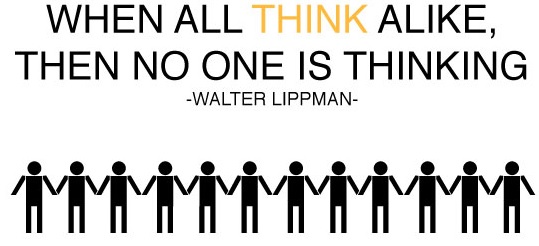
So what about the more experienced and well trained people providing input to a leader as well? There shouldn’t be any barrier to that either; the leader must be accessible both physically and emotionally. However, I’ve seen the absolute worst case scenario – a crowd of experts all agreeing with one another…and with their leader. Yeah, commonly referred to as “group think.” Here you usually have a strong leader, maybe even a competent leader. Then that leader has folks around them who they depend on to know what is happening. However, those that should be working diligently finding flaws in the leader’s plan and thinking or solutions, will agree with –or at least not object to– whatever the leader is proposing. Those advisors will then intentionally or unintentionally form a group opinion that agrees with the leader’s proposal.

Any plan that has an initial unanimous voice is probably not a plan that has been well thought out, and that plan will normally have a low probability of success.

Overcoming Complacency –

Without continuing to bore you to tears…how do you avoid complacency and group think? Free yourself from bias. And I am talking about bias in all its forms. And how do you best relieve yourself of bias? Situational Awareness (SA).

SA is best explained as… the acquisition of, the processing of, a state of, and taking action on knowledge. That knowledge comes from the environment around you…and your awareness of it.

 Tunnel Vision –

Once again I could spend 5000 words on defining tunnel vision, but to save you that pain let’s go with, “an extreme narrowness of view resulting in a focus on a single objective.”

Wow! You say that sounds great…we can focus on doing one thing and doing it well. However, it never works out that way. Why? Because the environment that we work in, or will find ourselves in during an emergency, disaster or grid-down, is commonly dynamic and hugely multi-faceted.

By limiting our vision of all the activity taking place in our setting we lose perspective, we lose awareness…we become ignorant. And, that ignorance is a void/vacuum.  Aristotle once said “nature abhors a vacuum.” The same can be applied to this situation…if we too highly focus on a single objective we leave a vacuum in the entire area outside of our immediate focus. Since nature will find a way to fill that vacuum, failure will creep in to fill that void, normally before we ever realize it.

As I mentioned, the environment in which we will operate will be dynamic and complex. By narrowly focusing our actions we intentionally or unintentionally disregard all other areas. And those other areas are not benign.

Example: we are so highly focused on acquiring water that we ignore the threat of violence. And as we overly focus on acquiring water, the pressing threat of violence is ignored…much to our detriment. But once again, we don’t operate in this environment as a single entity. Therefore, those that become the victims of our exclusionary vision may be our closest loved ones or fellow preppers.

Overcoming Tunnel Vision –

As it applies to our disaster-free current environment, how do we avoid tunnel vision? Balance.

Among the various definitions of balance is, “a means of judging or deciding.” Kind of like a cheat sheet if you will. A guide to assist us in making both judgements of the situation and deciding on how to act in response. Who could object to that!?!

In our situation we can view it in two ways; pre-event and post-event. Event being the initial second that some action has occurred or at least started.

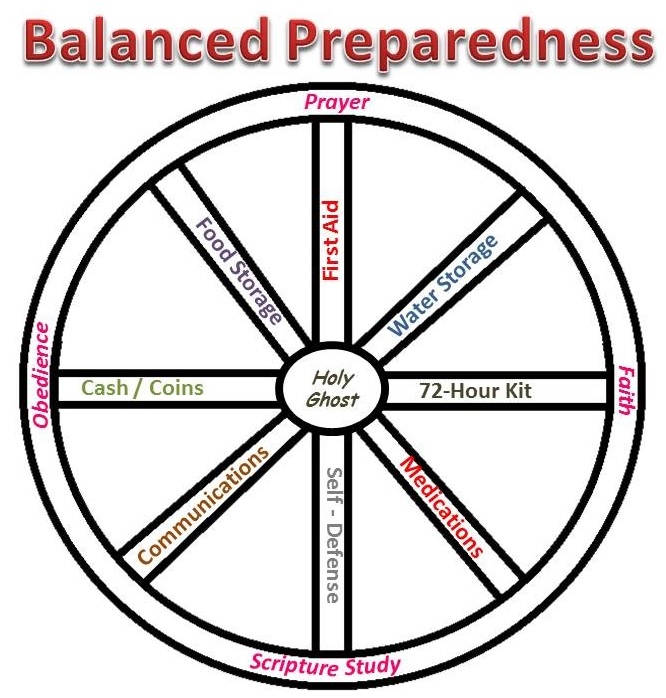
Pre-event balance can be best described with a visual aid…

Post-event balance is similar, a visual aid is the best method to convey the concept…


Summary –

If you are complacent you will not be able to make informed and timely decisions. If you have tunnel vision you will not be able to know what is happening around you other than what you are intensely focused on. That lack of knowledge from either will preclude you from being able to make timely and intelligent decisions. Both complacency and tunnel vision can kill you…or those around you.

If you can maintain reasonably decent Situational Awareness you have a great chance of understanding your environment and making decisions that will go a long ways towards survival, if not actual thriving. If you can balance your judgements and decisions both pre- and post-event then your actions will most likely be appropriate for the situation and you will be less likely to miss important events/activity around you. But, for that balance to be correct for any given situation, then the tool(s) you use as the basis of judgments and decisions must be high-quality. No, the tool(s) need not be perfect…just good enough.

You don’t need to be perfect during an emergency, disaster, or grid-down event…just good enough. To be “good enough” you have to avoid complacency and you have to avoid tunnel vision.

Can you?


Related Articles:


2009 - 2020 Copyright © AHTrimble.com ~ All rights reserved
No reproduction or other use of this content
without expressed written permission from AHTrimble.com
See Content Use Policy for more information.

Evaluating Consumer Products: Facts, Fraud & Opinion

Article first appeared in May 2018. I had to do some editing for content, clarity, and grammar…and practically rebuild it from scratch when the site crashed..


WARNING!!! This article is written by a cranky, frustrated, crotchety old man that would rather be working on his cabin or house. Reading further is at your own risk.  And there is a lot to read…WAY too much. But, I think I am important and feel people want to know what I have to say. And yes, I suffer from delusions of grandeur 🙂

I read some posts from other websites over the last few weeks that have really gotten under my skin. And that continued this morning. It just kept gnawing away at me till I had to say something. And rather than cause contention referring to any particular website or on any particular article/thread on any of those websites, I thought I would write my own article on my own website. That way I could focus on a positive subject that could be more generally applied to the aforementioned subject and more useful too. So here goes…

Background –

I spent over 30 years in emergency services as a firefighter; over 20 as a structure firefighter, over 10 as a wildland firefighter. Great experience! Through my career I’ve worked with some fantastic people, and some real idiots. I have had some incredibly memorable experiences like saving an infant that was only a few days old. I have had some terrible experiences…getting blown up one time in a house fire, and another having to pronounce a daughter dead. I’ve worked on-scene by myself in Florida, and on a team of nearly 5000 people in Oregon. I have fought fire in 20 or so states, onboard three different ships, and on two continents. All of that experience has helped me with a couple of things; 1) understand the difference between quality gear and junk, 2) given me a wide and deep frame of reference, 3) forced me to develop a keen “BS meter” when dealing with people, 4) learning the utmost lesson of “define the mission” when it comes to gear and equipment. Of course there are other aspects of life I’ve learned via my career but that is another conversation for another day…hopefully when I am less cranky.

While I wasn’t on-shift fighting fire I became a computer programmer and database administrator. I started back in the 80’s on the original Apple IIc and Intel 8086 platform…I even did some programming on an TRS-80 Model II. And of course we won’t talk about learning to program using IBM punch cards. All of that programming experience taught me to use logic, be extremely accurate and precise in my work when it was needed. One mistake and it didn’t run right. As that side of my career developed I learned “process engineering”. And that was an amazing set of skills to acquire that helped me in everything I did later in life.

For prepping…what this website is all about…I started prepping in the late 70’s, and really cranked it up to a whole new level about 15 years ago. How “cranked up”? Well, let’s just say my DW and I don’t have much to worry about for years and year and years if the grid falls apart.

Now, marry up all of the above and I feel confident in my ability to evaluate gear and equipment. Further, there is always an overarching principle to testing…valid and reliable. I won’t go into all of that but it just ensures that how you are testing/evaluating something is actually honest and true and accurate.

And yup…that is where the title of the thread came from. Too much, the majority actually, of evaluation of prepper gear comes from fraud and opinion and not enough from fact. So I figured I would write this article and maybe help some folks muddle through what gear to buy and what to avoid.

Why is that important? Because someday your decisions on what gear you bought might make the difference between life and death…your life or the lives of your family. So it is important to me…if I can help even in the smallest way.

And here comes the most valuable piece of information and fact of this whole article…all of this that I write today is MY OPINION. Yup…my opinion and my opinion completely and entirely. It is simply my viewpoint…worth exactly what you are paying me for it.

Facts –

Are facts actually “facts”? Ah, yes…and no. Sorry. Facts are fickle creatures. What can be true under one set of circumstances may not be true under another set of circumstances. Manufactures of products, including prepper gear, will only do testing, who’s results are released to the public, that shine well on their product. If their product doesn’t look good in one test environment, it is common for them to change the environment to show favorable results. So, that means I never, ever trust manufacture’s claims without independent, unbiased validation/verification. Doesn’t mean they lied as such, just means they have a vested interest (money) in placing their product in the best light possible.

Same goes for business owners who sell products. Actually, they have an even more vested interest in making sure the product sound good. If not, they and their families suffer financially…big time. So, any claims by a salesman or retailer I automatically dismiss.

Example: Years ago I wanted to buy life insurance. I bought a whole life policy from a reputable company and a really nice salesman. Happy! Well, some years later I wanted more life insurance. And found that it would be too expensive for me to afford at the time. A friend of ours talked to me about options other than whole life. He showed me a bunch of facts that made whole life look like nothing more than a scam. I did my independent research and he was right…whole life is a terrible, terrible product for life insurance. It only benefits the insurance company to any real degree and the salesmen financially…vs being in the best interests of the consumer. I bought a different product, term life insurance, cashed in my whole life policy, and was way ahead of the game financially and life protection wise for my family were I to die. Does that mean the salesman was dishonest (i.e. a criminal)? Not necessarily. But, the company surely was. And maybe the company sold the salesman a line of BS when they trained him and offered him a fat commission check to sell a vastly inferior and expensive product.

My point…while the company and salesman provided “facts”…they were only facts in the exact situation that they explained…when that was only about .000000001% of reality. So they weren’t true/honest facts in a way. They were very deceptive facts. But, yes…facts.

When you hear some folks talk about testing something, beware! I’ve done a lot of testing in my day. And depending on the test environment and the test process, they could be showing you only what they want you to hear.

I did some battery testing over the years. I took great pains to do “field testing” vs “laboratory” or “theoretical” testing. And there is a huge difference! I always dismiss theoretical testing. There is absolutely no relation to real life usage at all. Laboratory testing is often extremely accurate and very factual. But, to get those results, the testing only can be conducted in a laboratory. Those results can’t be replicated in the field. That leaves field testing, real-life testing. For me, that is the only true means of testing something…especially prepper gear/equipment.

Back when I was programming I learned quickly that I could get my code to work as required. But, the testing personnel would get a hold of it and it would fail. After this happened a few times I got together with them and had them show me how they tested the code/program/system. I was amazed! I remember saying “Why would you do that? That’s ridiculous!” And come to find out…that is how end-users would actually do something. Oooppppssss…my bad! Once I began testing my own code that way, real-life scenarios, did my code become top tier. So field testing as real-life end-users is the only way to really test something accurately and competently.

Misdirection is deception. This is a little more subtle…and yes, factual…although it can be very, very deceptive. Let me explain…let’s say you are looking to buy a widget. And you know what you want that widget to do. You find a widget that appears to be exactly what you want. But, then a salesman or company says…”Wait! Our widget will do XXXX! So it is a far better product.” That pitch might be enticing…might be, but probably just a slick sales pitch. To determine if it is actually a better product you have to decide if the so-called enhanced feature is actually something that makes a difference to you and to you defined mission for that equipment.

Example: Low self-discharge (LSD) batteries are the latest fad. If you are talking a non-rechargeable alkaline/lithium style battery you want a long shelf-life. Duracell is an excellent example of a 10year guaranteed shelf-life battery. But, LSD batteries refer to rechargeable batteries. You might be tempted to buy LSD batteries because it sounds cool. But, does the salesman or company explain that LSD batteries are inferior to a similar capacity non-LSD battery? Probably not. An LSD battery will not have the same capacity as a non-LSD battery that is rated the same mAh. Why? The same design that slows the discharge of the battery while it sits on the shelf also impedes the discharge of the battery when you are using it…thus, the battery is inferior. Is the company or salesman not telling the truth? Actually, they are probably telling you the truth but not telling you all of the facts. And then again, maybe they don’t always know all of the facts to tell you. So I look at this particular issue this way…I want the best performing battery when I am using it. I could care less about its performance while it sits on the shelf…that shelf-life thing means nothing to me. I want the battery to perform its best when it is in my tactical light or running my night vision. That is the priority…the mission. Not only does that mean LSD batteries have zero advantage to me…but are a huge disadvantage to me.

And here is the primary point in my case for “facts”…

You have to be able define the mission for the gear you are researching.

That means being able to clearly and competently say “I want this piece of gear to do X under conditions Y & Z.” If you can’t define the mission you can never identify the important facts that relate to the piece of gear you are considering purchasing.

Summary for this “fact” section:

  1. Clearly identify the equipment’s mission. Know exactly what you want it to do before you start to research it.
  2. Don’t believe anything a manufacturer, company, or salesman tells you until you can verify through an independent and unbiased source. A source that isn’t just repeating material that originates from the manufacturer, company, or salesman.
  3. Don’t trust anything but field testing by reliable, unbiased sources that you trust.
  4. Don’t be afraid to research something yourself and become educated.
Fraud –

I consider there to be two kinds of fraud…intentional and unintentional. The first comes from a scumbag, dirtbag, ne’er-do-well, criminal, piece of crap. They only care about their own interests…and that interest is almost always money. In my opinion these guys need quality time with a baseball bat…and I am not talking a softball game. The latter kind of fraud , unintentional, normally comes from someone who is well intentioned but uninformed. They have been taught, or learned, information that just isn’t true. They pass that along and they aren’t really concerned about what is best for the consumer (you). They are not willing to take the time to properly research what they are, talking about selling, or they may lack the intelligence to understand what they are saying is wrong, or at least not the whole truth.

Unintentional fraud normally comes in two flavors; outrageously false or not the entire truth. Both can be just as devastating to the consumer. Beware of both!

I won’t spend any time on the “outrageously false” scenario…you can figure that out. I will talk to the “not the entire truth” aspect of fraud and how it can be just a harmful.

Let’s say I want to buy a truck. I have defined the mission, rugged off-road use in rough terrain, under a load. I have a number of choices. Yup, the three major brands will claim they can operate in those environments. All of those claims are true. But, are they true to what you need to meet the mission for your truck? Having run a fleet of trucks for 20 years that require exactly the mission I stated there is only one logical choice. One brand has a great motor, probably the best, but the frame is light-weight and doesn’t hold up to rugged off-road. Undercarriage, including suspension, is very prone to failure in those kinds of conditions. Another is a fantastic road truck, smooth riding, comfortable, loaded with luxury options. And it falls apart under rugged off-road usage. The third option doesn’t have the best engine, but plenty good enough. Has a great transmission, but probably not the best, but good enough. It isn’t the most comfortable or the most luxurious vehicle, but good enough. Where this brand I am referring to excels is in its ability to hold up far, far better to hard rugged off-road use while hauling or towing a load. It meets the mission extremely well, far better than the other two.

So where is the fraud? No intentional fraud in my opinion. But, talk to a salesmen and their brand of truck is the best…always. Their job is to sell their trucks. They won’t focus on your mission needs…they focus on their paycheck and use their training to do so.

Another unintentional fraud example: let’s say you want to buy a water filter. You have clearly defined what you want. You are looking at several models. You decide between two for your final decision. Manufacturer “A” talks about all their testing and what it does and how great it is. It sounds really great! But, unknown to you, or the vendor you are thinking of using, the testing that “A” has done is all in the lab and not under real field conditions. Although they can produce lab results that speak glowingly of their product…the results come from the lab they paid to test it. However, manufacturer “B” has tested their unit in the muddy waters of Africa where it is used extensively…and they publish those results. And two independent competent testing organizations have tested it…unpaid…and prove the claims of the manufacturer. So which do you buy? Especially if “A” is the media-hyped and more popular brand of water filter! Is there fraud involved?

Summary of this “fraud” section:

  1. There are two types of fraud, intentional and unintentional. Both can ruin your purchase.
  2. Don’t believe manufacturers or vendors or salesmen…without quality, independent, unbiased verification of claims.
Opinion –

Dang!! This is the touchy part…but oh so important part.

Everything is opinion! There are no facts when it comes to evaluating prepper gear. Why? All testing is subjective. That means the person interpreting the results of the tests, or performing the tests, can sway all/any of it to meet whatever they want to promote. Not everyone nefarious of course, but many do, and all can.

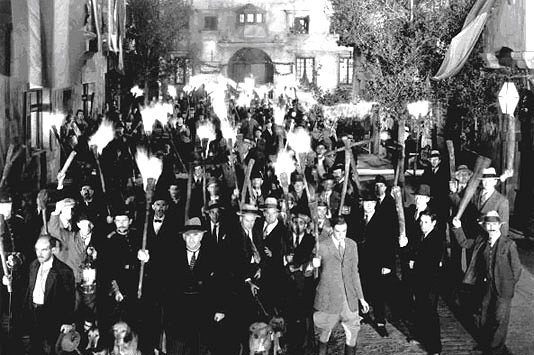
The worst “opinion” is “group think”. That is where a whole group of folks feels the same way about something…and it isn’t necessarily true/accurate. You see it on prepper websites a whole lot. Someone starts it by saying “X is great!” Then someone else says, “yes, X is incredible!” then another and another and another…till everyone is saying “X is the best of the best and the only real option!” Than then some poor shmuck comes along and says, “Hey, I looked into it and X isn’t the best, Z is much better and less expensive”…Boom! …hammer time!
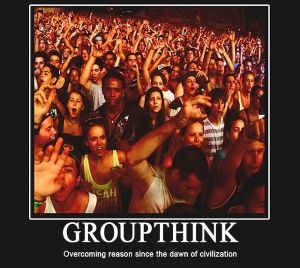
So, just because a whole group says something is the best or right, doesn’t mean that it is. I remember a saying somewhere that when you have truth on your side you are never outnumbered.

This “group think” hazard is particularly true in organizations such as the military and other hierarchical organizations. If the top of the organization says something is true, then everyone else normally wants to fall in line, be loved, not draw undue attention to themselves, not rock the boat, etc. I can’t tell you the number of times I have talked to firefighting peers and they feel “Y” about something. We go into a briefing and the boss promotes “X”. And my buddies never raise a question or objects or utter a voice of concern. Why? Human nature.

My dad told me more than once…If everyone is falling off the cliff, don’t follow them.

Here is the trap I fell into recently…

I wanted to buy a generator. I already own a Honda EU2000i. A fantastic machine, best on the market, everyone who owns one loves them…including me. So naturally I wanted to buy another Honda. Makes sense, right?

Unfortunately to meet my other mission requirements I simply couldn’t afford the Honda unit that would meet those needs. And not afford it by a wide, very wide margin. So, I looked around, read reviews, researched according to sound principles. And found a unit. Ran it buy a few folks on another website. Many disagreed with my decision and urged me to buy a Honda regardless of the cost. However, one gave me a reality check. Dang him! Don’t you just hate it when someone bursts your bubble and talks sense? So, back to doing research…thankfully. I ended up buying a Champion meeting enough of my mission requirements and extremely well priced. Good thing or bad thing?

Well, it meets my wattage power needs. It meets my “clean power” needs. It is capable of running on propane although I have to add the kit to it. But, it didn’t have electric start…FAIL! But, I bought it anyway. Why was it a fail? Because my Honda is a one-pull engine…every time. And everyone knows that only Hondas are one-pull engines. Right!?!

So I get my Champion…for a fraction of the price of a Honda. I fill it will oil, add some Lucas zinc additive, put some TruFuel in it, set the choke…and I am ready to pull it 4 – 6 times to start it. I mean after all, it isn’t a Honda…right?

First pull, brand new, first time with gas in it, first time with oil in it…BINGO!!!! It fires right up. Amazing…a fluke to be sure…yeah, right.

This is the break-in period so I am following their protocol exactly. About an hour into the process it shuts down. Dang! It’s not a Honda and here come the problems. Ah, it ran out of gas. So I gas it back up expecting it to take a couple of pulls to get it going again but hoping for one pull. Pull, nothing. Pull, nothing. Pull, nothing. And I am now convinced I am a loser and bought a substandard piece of loser machine. I am kicking myself. And then I look down…oh, turn the on/off switch to the “on” position. Pull, start…purring along just fine. 5+ hours later the machine is running perfectly under load.

Oh, but the Honda freaks out there are…”Yeah, but the Honda will last 2 – 3 times longer than the Champion!” Maybe, probably, perhaps. But I can buy 6 Champion generators for the price of the equivalent Honda. So did I do OK buying a non-Honda? Or not buying an electric start?

Avoid “group think” like the plague in everything…but especially when it comes to prepper gear!

But, there is a responsibility that comes with that…you must be able to think on your own. Yeah, again, sorry. And it helps to be able to employ “critical thinking” skills as well.

Should you become a “non-group thinker” and have a mind of your own…that means become an independent thinker.  The only problem is…be prepared to suffer at the hands of the “group”…you may find yourself not being liked, appreciated, or loved. You may be subject to immediate shunning or worse. And heaven forbid you cross the leader of the group. Then hell-fire will rain down on your head…you challenged their precious opinion and position…whether you are right or not will make no difference. But one fringe benefit…you will discover there are other independent thinkers out there…and they can be some pretty cool people…and they won’t be sheeple.
But don’t despair at all…every once in a while someone might thank you for advice or information you gave them. It will make you all warm and fuzzy inside and let you know life is worth living…even though you have walked through hell-fire.

Summary of “opinion” section –

  1. All evaluation of prepper gear is ultimately only opinion. Because the tester can manipulate the testing environment and outcomes, or simply cherry pick facts to match the narrative they wish to deliver.
  2. Think for yourself, and that means do your own research.
  3. Avoid “group think” like it is Satan’s fan club.
Summary –

I’ve been truly blessed in my life in many ways. One of those ways is folks sending me cool gear to test. They hope that my review will be positive and they will sell more widgets. After having written three prepper novels they think that the accompanying, albeit very limited, notoriety will somehow make them money. How sad they think that way. I have no horse in any race (or dog in the fight) when it comes to doing reviews. I simply want quality real-life information out there for my fellow preppers. Unfortunately, not everyone comes from, or agrees with, that perspective.

Use your discernment…A number of years ago I was testing a certain type of equipment. I kept producing and posting my results, and someone kept throwing a different product out there, ranting on about how their product was so much better. I say “their product” because that is the line they sold. Not only didn’t any of my testing validate anything they were saying, it was just the opposite. I found their product to be very, very expensive compared to other options. And top if off, their product was at least 1 – 2 technology generations behind the much less expensive alternatives. But their brand was all the rage in popularity due to group think.

Shortening the story…they sent me the product for free. I tested it and the testing validated all my previous results…it was an inferior product. That isn’t the point really. They gave me the product free of charge to keep for personal use after testing. Now, did they think that giving me the product would “buy me” into promoting their product? I don’t know. But, as I was finishing up the article on it, I had this rush of feeling to pay them for the product. It was the weirdest feeling…and ugly…the only time I ever got that feeling in reviewing products that had been given to me. I knew that I couldn’t trust them, I knew they were putting out false and misleading information, I knew that…well, they were not someone I wanted to “owe”. I sent them the full asking price of the product the next day in cash…the dark feeling went away.

What the heck? What does that have to do with anything? It means this…1) listen to your instinct, 2) listen to that still small voice, 3) act on those feelings. But, remember…normally those kinds of feelings come only after you have researched and pondered on the issue for yourself.

The summary of the “summary” section –

  1. You can figure out stuff on your own if you are willing to do the work.
  2. Listen to your instinct.
  3. Be wary of others (manufacturers, vendors, salesmen), they may not have your interests as a priority.
  4. Don’t believe anything I just told you. Figure it out on your own.

And, now…two and a half hours later I want to go back to working on the blueprints of the extension of the cabin that I will be staying in while I build our house that we will retire in. Well, technically I am already retired…but my wife isn’t. And technically, the “cabin” is also our “bug-out property”. And technically, I love doing any of that kind of work vs writing articles like this. But, I felt this was important enough to write about…and well worth the loss of the time in my life.

And since I am such an amazing self-sacrificing individual to do such a humble ministering thing…I am now going to reward myself with a warm gooey cinnamon bun covered in icing and butter with a huge class of ice-cold whole milk. Yum!!!!!

One final though…this is all my opinion on “Facts, Fraud, & Opinions” when it comes to evaluation and reviewing prepper gear. Take it with a grain of salt.

OKAY…one final, final thought…it is pure fact…100% fact…not opinion…that a warm gooey cinnamon bun covered in icing and butter with a huge class of ice-cold whole milk absolutely rocks!!!


2009 - 2020 Copyright © AHTrimble.com ~ All rights reserved
No reproduction or other use of this content 
without expressed written permission from AHTrimble.com
See Content Use Policy for more information.


Something to think about…Stanford Medical Professors: The Projections are “Deeply Flawed”

I though this article was worth publishing in its entirety. Refreshing to see some very intelligent experts apply reason, logic, and facts to the COVID-19 panic…


Stanford medical professors: COVID-19 death toll estimates may be ‘orders of magnitude’ too high

They believe the projections are ‘deeply flawed’

The Blaze | March 26, 2020

A pair of public health experts from Stanford, Drs. Eran Bendavid and Jay Bhattacharya, warn Americans in a Wall Street Journal editorial that the current estimates about the coronavirus’ fatality rate may be too high by “orders of magnitude.”

According to Bendavid and Bhattacharya, both of whom are medical doctors, while they are supportive of social distancing guidelines and efforts to contain the disease, they fear that orders to shut down the entire economy may be based on shoddy research data.

Death toll projections may be ‘orders of magnitude too high’

“If it’s true that the novel coronavirus would kill millions without shelter-in-place orders and quarantines, then the extraordinary measures being carried out in cities and states around the country are surely justified,” they wrote. “But,” and what a big one it is, they add, “there’s little evidence to confirm that premise — and projections of the death toll could plausibly be orders of magnitude too high.”

The two submit that because the United States and other countries largely focus their testing on symptomatic patients, the number of people who are infected with COVID-19 is likely much larger than the number of confirmed cases being reported by public health agencies throughout the country, which means the virus’ mortality rate is likely significantly lower.

“Fear of Covid-19 is based on its high estimated case fatality rate — 2% to 4% of people with confirmed Covid-19 have died, according to the World Health Organization and others,” wrote Bendavid and Bhattacharya. “So if 100 million Americans ultimately get the disease, 2 million to 4 million could die. We believe that estimate is deeply flawed. The true fatality rate is the portion of those infected who die, not the deaths from identified positive cases.”

How did they predict this?

The two professors argue that the best evidence of the coronavirus death rate being significantly lower than what is being reported may lie in the Italian town of Vò. On March 6, the town’s 3,300 residents were tested. Of these, 90 tests came back positive, indicating a prevalence of 2.7% of the population having the virus.

If one were to apply this to the entire province where the town is located, which has a population of 955,000, it would mean there were actually 26,000 infections at the time, and not just the 198 that were officially confirmed. This would be 130 times greater than the number of reported cases. Since Italy’s case fatality rate of 8% is estimated using the confirmed cases, Bendavid and Bhattacharya write, “the real fatality rate [of the virus] could in fact be closer to 0.06%.”

A ’cause for optimism’?

The two Stanford Health Policy experts even said the virus’ mortality rate might be on par with that of the seasonal flu:

Existing evidence suggests that the virus is highly transmissible and that the number of infections doubles roughly every three days. An epidemic seed on Jan. 1 implies that by March 9 about six million people in the U.S. would have been infected. As of March 23, according to the Centers for Disease Control and Prevention, there were 499 Covid-19 deaths in the U.S. If our surmise of six million cases is accurate, that’s a mortality rate of 0.01%, assuming a two week lag between infection and death. This is one-tenth of the flu mortality rate of 0.1%. Such a low death rate would be cause for optimism.

A universal lockdown ‘may not be worth the costs’

Bendavid and Bhattacharya say that if they are right about the lower lethality of the epidemic, public policy experts should focus their measures on protecting the elderly and expanding medical capacity.

“Hospital resources will need to be reallocated to care for the critically ill patients. Triage will need to improve. And policy makers will need to focus on reducing risks for older adults and people with underlying medical conditions.”

The pair conclude that if their estimates are right, then the universal quarantine measures “may not be worth the costs it imposes on the economy, community, and individual mental and physical health.”

“We should undertake immediate steps to evaluate the empirical basis of the current lockdowns,” they added.

I have a request of you…

First Comment under the picture: What a sad commentary on our behavior. Can you imagine how this thin veneer of civilization would disappear in the face of a real catastrophe?

When I saw this I had a true reality check.  It is as if all of my emotions, feelings, thoughts, etc. about the COVID-19 panic came to the surface…I could see them all at the same time. And I was deeply saddened. Reading the caption and the first comment cemented that I was not the only person disappointed in what is happening.

We’ve read the stories, seen the videos or pictures of the two women fighting over a package of toilette paper, the little girl who was injured by being run over when people rushed to get the food off the nearly empty Walmart shelves, the senior citizen woman who had a gallon of milk stolen (last one from the milk case) from her cart by a young woman, the young mother who went to buy some diapers and they were all sold out due to panic buying hoarders…and there are more stories…all sad commentary on who we are as a people.

For the last couple of weeks I’ve been talking about all those pushing the panic over COVID-19…those disgusting purveyors of hysteria. The picture and stories coming out drove home to me just how malicious their disgusting hype-hustling actions are. And those actions, their influence, is now taking a toll…a human toll on the innocent…on us all.

Night before last my wife and I had a long conversation about the state of affairs in the US. Neither of us is scared, or even worried, about what is happening in regards to the virus itself. We are taking the necessary precautions to build our immune systems and other safety measures to help prevent contracting COVID-19. But, we are not becoming hermits and we are not panic buying, and we have resolved to be part of the solution, not part of the problem.

Yesterday we started implementing our plan…in the morning my wife took the better part of a meal to a local family who just experienced a tragedy in their lives. They were very grateful and she felt a great sense of satisfaction in reaching out to others in need. Yesterday afternoon I went over to a neighbor’s place, he needed some tractor work done, and no tractor himself. Couple hours later as I was leaving he was thanking me profusely. And about an hour later he brought over some Mexican blend cheese, homemade tortillas, and some of the best refried beans we ever tasted. We added some diced beef, some salsa, and the three of us ate burritos together. Then about an hour sitting around our firepit enjoying some good conversation and friendship.

Today though the plan takes on a new phase…a much broader action…we are going to get the directory for our church congregation and begin making phone calls. A couple of families live close to us so we will start with them. Then we will call single older women and single mothers, and then on to older couples. We are just going to chat a minute and then ask them if there is anything they need, is there anything we can do for them. We have no idea, or expectations, of what folks may say…but we are determined to help where and when needed.

You can drown yourself mentally in reading all the crap out there about COVID-19. There is an endless stream of media releases, public statements, closure announcements, political speeches, TV talking heads bloviating, medical advice, doomsday projections, people telling of melodramatic dreams and visions, people reporting shortages of this or that, etc. You could spend all day reading that junk…and it is junk!

Sure I want you to have great Situational Awareness…no doubt about that! But, there comes a point when enough is enough. And I am telling you this straight up…we’ve hit that point! Maybe even a week or two or three ago.

We all have our opinions of how deadly, or not, the virus is. We all know how we have bare shelves and people are still panic buying. We all know that schools, restaurants, businesses, and some government offices are closed or soon will close. We all know about washing our hands, social distancing, etc. We all have heard over and over to boost our immune systems. So what more do you need? How much more information is actually needed? Does hearing about some state hundreds or thousands of miles away announcing their restaurants will be closed help you be more of a genius?

I would propose the answer is “no”.

What I am seeing, and have been seeing, are previously intelligent and decent people become weird whack jobs. They focus on the virus, they surround themselves with others doing the same. They spend hours every day on prepper websites or social media sites soaking up the latest informational tidbit…whether it is true or not. And they have become fearful, panicked, and miserable…and they are spreading that misery faster that any virus ever could produce a single sneeze.

So what am I suggesting?

That my friend is simple…STOP!  Yup, stop with all the craziness, stop with all the virus tunnel vision…just STOP! Get off the extremist prepper websites, slow down your social media, avoid the panic pushers. Sure, gather a limited amount of quality news each day…maybe 10 – 15 minutes tops. Then go about your life. Or better yet…step outside of your life.

Here are some suggestions:

  • Call an elderly couple and ask them if you could do their shopping for them.
  • Take some diapers over to a single mom’s home.
  • Give a couple of rolls of toilet paper to the largest family you know.
  • Take a meal to an elderly woman’s home.
  • Call your friends and ask them how they are doing and if they need anything.
  • Take a big container of soup to your neighbor’s house for dinner.
  • Get on Skype and read books to your grandchildren.
  • Ask your church’s congregation leadership if a family could use your help.
  • Identify some older couple in your neighborhood and call them each day to see how they are doing.
  • Take a gallon of milk to a needy family with kids.
  • Bake a loaf of bread for your Pastor/Minister/Bishop.
  • Post positive stories and messages on your social media account.
  • Text friends telling them you are thinking of them and hope things are going well with them.
  • If you are shopping take only what you need, and don’t take the last item…look around for someone who needs it more…especially if they are elderly…take it over to them and offer it to them.
  • If you are shopping and you see an elderly person shopping by themselves…help them…or at least make eye contact and smile at them.

And that is just the start…you are more creative than I am with your own situation, talents, and community needs. Brainstorm with your spouse, children, and friends on what ya’ll can do to ease the lives of others.

Get off your butts and be part of the solution not part of the problem!

OK, sorry…I wasn’t yelling at you…well, not too much. I wasn’t trying to be mean or trying to bully you. I was trying to motivate you in my own weird humor-attempted way. But, you get my point.

Please, I implore you to shake off this panic and fear, and especially get rid of the sources feeding the hysteria that has gripped the country. We are better than this…we can do better that this…we can do more…we can be more!

I would love to hear your experiences and stories of you living outside of your own bubble and helping others. Right now we need positive examples of how good we are. We need to know about good leaders and how they are leading. Right now…we need more good!


Send Me Your Experiences & Stories…

← Back

Thank you for your response. ✨


2009 - 2020 Copyright © AHTrimble.com ~ All rights reserved
No reproduction or other use of this content
without expressed written permission from AHTrimble.com
See Content Use Policy for more information.

The Coronavirus Hoax by Ron Paul, Ron Paul Institute, March 17, 2020

I don’t remember having reprinted an entire article from anyone ever before but, I thought this very important and timely to do so.

Before you read this article remember this…Ron Paul is considered a leading Constitutional expert, liberty advocate, former Congressman, for US Air Force flight surgeon, and medical doctor (obstetrician-gynecologist specialist). So the man has some serious credentials! A man well grounded in the Constitution, a Libertarian, a man who has dedicated his life to serving his country, defending the Constitution, and advocating for rights, freedoms, and liberties.


The Coronavirus Hoax
By Ron Paul, Ron Paul Institute, March 17, 2020

Governments love crises because when the people are fearful they are more willing to give up freedoms for promises that the government will take care of them. After 9/11, for example, Americans accepted the near-total destruction of their civil liberties in the PATRIOT Act’s hollow promises of security.

It is ironic to see the same Democrats who tried to impeach President Trump last month for abuse of power demanding that the Administration grab more power and authority in the name of fighting a virus that thus far has killed less than 100 Americans.

Declaring a pandemic emergency on Friday, President Trump now claims the power to quarantine individuals suspected of being infected by the virus and, as Politico writes, “stop and seize any plane, train or automobile to stymie the spread of contagious disease.” He can even call out the military to cordon off a US city or state.

State and local authoritarians love panic as well. The mayor of Champaign, Illinois, signed an executive order declaring the power to ban the sale of guns and alcohol and cut off gas, water, or electricity to any citizen. The governor of Ohio just essentially closed his entire state.

The chief fearmonger of the Trump Administration is without a doubt Anthony Fauci, head of the National Institute of Allergy and Infectious Diseases at the National Institutes of Health. Fauci is all over the media, serving up outright falsehoods to stir up even more panic. He testified to Congress that the death rate for the coronavirus is ten times that of the seasonal flu, a claim without any scientific basis.

On Face the Nation, Fauci did his best to further damage an already tanking economy by stating, “Right now, personally, myself, I wouldn’t go to a restaurant.” He has pushed for closing the entire country down for 14 days.

Over what? A virus that has thus far killed just over 5,000 worldwide and less than 100 in the United States? By contrast, tuberculosis, an old disease not much discussed these days, killed nearly 1.6 million people in 2017. Where’s the panic over this?

If anything, what people like Fauci and the other fearmongers are demanding will likely make the disease worse. The martial law they dream about will leave people hunkered down inside their homes instead of going outdoors or to the beach where the sunshine and fresh air would help boost immunity. The panic produced by these fearmongers is likely helping spread the disease, as massive crowds rush into Walmart and Costco for that last roll of toilet paper.

he madness over the coronavirus is not limited to politicians and the medical community. The head of the neoconservative Atlantic Council wrote an editorial this week urging NATO to pass an Article 5 declaration of war against the COVID-19 virus! Are they going to send in tanks and drones to wipe out these microscopic enemies?

People should ask themselves whether this coronavirus “pandemic” could be a big hoax, with the actual danger of the disease massively exaggerated by those who seek to profit – financially or politically – from the ensuing panic.

That is not to say the disease is harmless. Without question people will die from coronavirus. Those in vulnerable categories should take precautions to limit their risk of exposure. But we have seen this movie before. Government over-hypes a threat as an excuse to grab more of our freedoms. When the “threat” is over, however, they never give us our freedoms back.