
I am going to try something really different…a standard article of mine and also a video from the same article.
Why? I really don’t know. I just wanted to try something different.
I will post the video link first, then the regular article will appear below that.
Article…
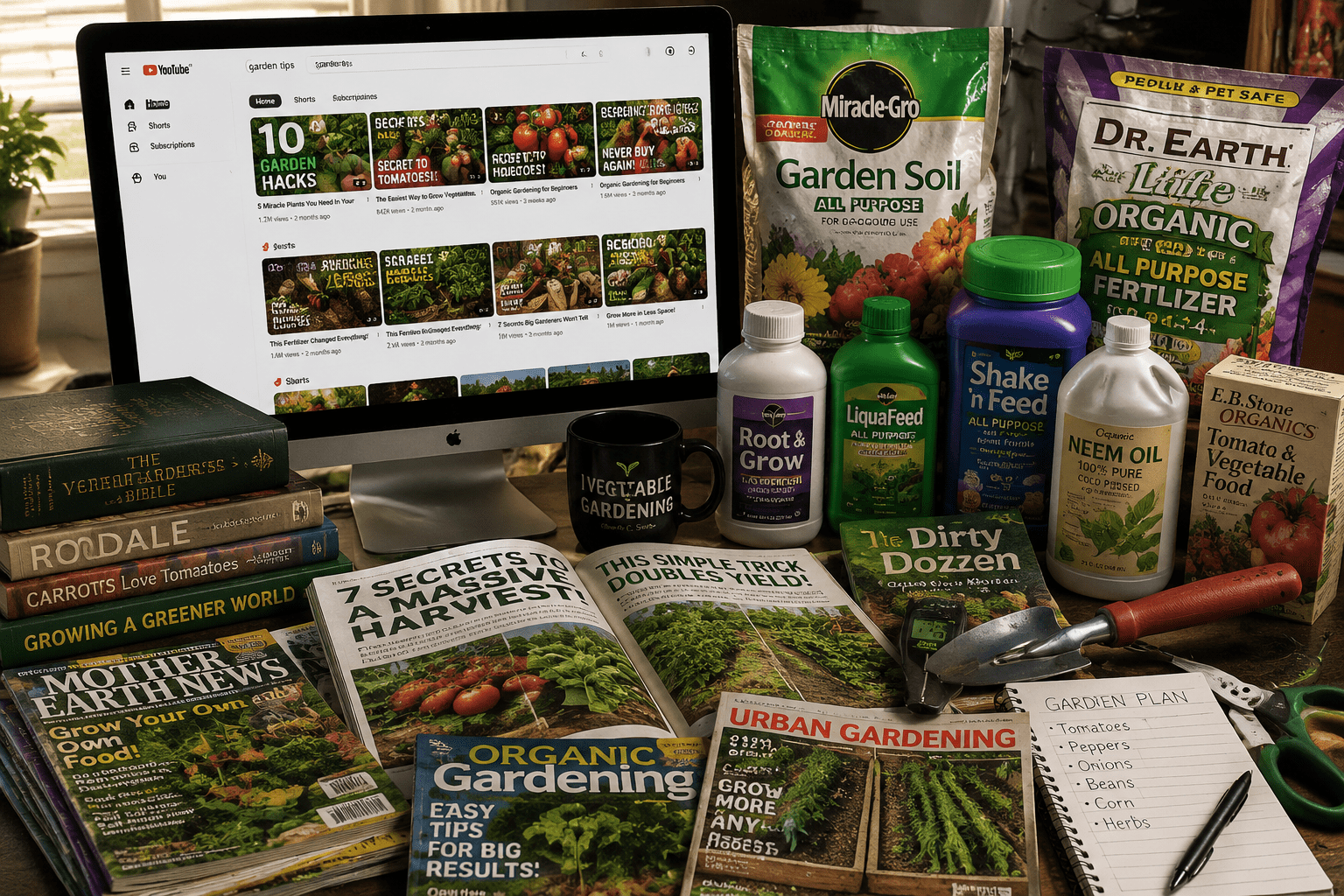
There’s a huge amount of gardening noise out there on the Internet. Miracle products, trendy methods, secret hacks, endless debates, and people insisting their way is the only right way to garden.
This is not one of those articles.
This is a practical, down-to-earth look at what it really takes to grow a healthy and productive garden.
What makes me an “expert”? Well, honestly…I’m not. I’ve had more than my share of gardening failures over the years…mostly here in the desert southwest. This environment and climate can be tough to garden in unless you learn the “how-to” art of it.


Growing up, we always had a garden. Dad had a green thumb with vegetables, and Mom always had a flower garden. Dad had a David Brown walk-behind tractor that he used to plow and till with; even a trailer of sorts that us neighbor kids could take a ride in. I remember sitting in the sweet cherry tree eating cherries until I was busting. Then there were the half-rotten apples that had fallen from the tree that I was responsible for picking up before Dad mowed.
So I pretty much grew up gardening whether I wanted to or not. And for the most part, it was the same for most families in our community. I think it was a holdover from the WWII “Victory Garden” era. Plenty of canned fruits and vegetables lined our basement shelves every year.
As an adult living in the Midwest, I enjoyed plenty of gardening success. Honestly, with that soil and rainfall, it was virtually impossible to fail.
The problems started with our move to the desert southwest…oh boy. With the intense sun, sandy — pretty much dead — soil, and dry climate, I quickly realized I was out of my element. Gardening here was completely different.
Now, 20 years later…I think I finally got it. Well, let’s put it this way: for the last couple of years we’ve produced far more than we can consume or preserve, so friends, family, and neighbors have enjoyed plenty from our garden too. That’s a nice feeling, to be sure.

So here I am…no expert…but successful at growing a very productive garden. Now it’s time for me to share some of the basics I’ve learned along the way.
Healthy soil –

Good soil is the foundation of it all. If you are lucky enough to live in parts of the US you really don’t have to worry about this too much…that rich aroma from dark black soil soothes the soul. Here is the sandy dead soil of the desert southwest you gotta bring it alive again.
Let me get just a bit technical for a minute…Soil structure, biology, organic matter, drainage, aeration, and microbial life all matter…A LOT! Healthy soil acts like the plant’s digestive system and water reservoir. Kinda like a person’s digestive system pumping nutrients and water into the plants veins.
Soil is a living ecosystem. Sure, soil has dirt, compost, nutrients, and kind of texture to it. But there is more, so much more…stuff like bacteria, fungi, worms, microbes, organic matter, and all kinds of life underground. All of this turns into a functioning ecosystem.
Some of that “functioning” part is:
- microbes break down organic matter
- fungi transport nutrients and water
- bacteria convert nutrients into plant-available forms
- worms improve structure and aeration
- microbes help suppress disease organisms

So you gotta build the soil if you aren’t already blessed with it.
Quality seeds & starter plants –
Even perfect soil cannot fully compensate for weak plants or poor quality seeds. Even more important is the right “variety” of plant. That is a lesson I learned the hard way! I hit on the:
- wrong strawberry
- wrong tomato
- wrong cucumber
- wrong bean
- list could go on…
What I did learn…there are varieties of plants that can handle harsh conditions such as intense UV sunlight, wind, watering issues, etc. Beefsteak tomatoes are my perfect example. My wife loves that tomato…makes fantastic tomato sandwiches. But DANG…they are hard to grow here. Well, more appropriately…to start here. Once going they do okay as long as the weather is decent.
Strawberries were another “learning experience” for me. I started with Sequoia…ah, wrong! They are popular here…at the higher & cooler elevations. At our elevation, wind, etc…they suck! I tried for several years with no luck other than great looking plants…and not a berry to be found. A little research later and now I have 5 raised beds with Albion and Eversweet strawberries doing well and now they are producing berries like crazy in their second year.
Bottom line…pick the right varieties, buy quality plants and seeds. Here’s why:
- some plants handle heat better
- some tolerate drought
- some handle intense UV
- some need cooler nights
- some are bred for commercial shipping instead of flavor
- some simply aren’t adapted to certain climates

There is little more disappointing to trying your best to have a productive garden just to fail because you are trying to grow the wrong plants for your area.
Correct nutrients at the right time –
Plants are not powered by hope and garden-center marketing. Plants need actual nutrients to build stems, leaves, roots, flowers, and fruit. Many gardeners think fertilizer itself magically grows plants. Wrong! Fertilizer is really nutrients which are plant food ingredients, not magic.

Timing and amount examples:
- right amount of nitrogen = right-sized plants
- too much nitrogen early = huge plants
- too much nitrogen late = fewer fruit
- right amount of phosphorus matters more during rooting/flowering
- right amount of potassium helps vigor and fruiting
- overfeeding can hurt production

Here is something to consider…seriously consider…organic matter is fantastic, compost is important, and healthy soil biology certainly matters. At the same time nutrient deficiencies are real and sometimes plants need help with nutrition. Remember this…growing and producing plants remove nutrients from your garden soil.
Think about this…what would happen to you is you quit eating and kept up your daily activity? You would slowly starve to death…and be miserable along the way. Same thing with plants…they need food. Healthy soil help move nutrients to the plants. A plant can no more grow healthy without nutrients than a person can live healthy on water alone. The plants need fed…and that means fertilizer in usable forms.

Okay, come on…you wanna debate me on organic vs synthetic fertilizer. Ah, no. I am a huge fan of organics, but I am not above using synthetics when & where needed.
Over-Fertilizing…Many beginning gardeners think if a little fertilizer is good, then a lot must be better. Wrong! Too much fertilizer can burn roots, create huge leafy plants with poor fruit production, and throw the entire nutrient balance of the plant out of whack. Over-feeding plants can sometimes create more problems than it solves. Plants need balanced nutrition, not a nonstop fertilizer buffet. Think o fit this way…fertilizer misuse causes problems.
Water –

This issue is a pain in the butt for me. On our glamstead we have no municipal water supply…thankfully. If we did, well, we wouldn’t have an orchard, little (if any) yard, and a much smaller garden. Thankfully we have our own well drilled into a very large and high-quality aquifer. No, the water isn’t free. It costs to drill a well. It costs to put in a pump and storage tanks. It costs to maintain a well. But…it is amazing to have your own water supply.
Here’s what I’m not going to do…I am not going to drift into “water paranoia” territory. Okay?
Back to our well…it isn’t the best water for gardens. What water is? You probably already guessed it…rain. If you let it sit around too long in barrels…well, it could start having issues such as bacteria growth. Rain water…collect it, use it. If you are going to store it a cistern is probably the best way to go.
Well water is almost always fine unless it contains high mineral content and/or salts, or the pH is way off. Luckily, that can be dealt with but at a cost since you are probably talking “volume”. Fortunately for us our well water is really excellent! I do have a 50 micron filter just to handle any scale that might come into the system.
Look at it this way…millions of productive gardens use municipal water successfully. Why? Compost and organic matter buffer a lot of problems. Inconsistent watering is usually a much bigger issue than any treated water itself. In other words…the bigger issue is usually not municipal water itself…it’s poor watering practices. For our climate mulch, deep watering, consistent moisture, and soil organic really helps watering our garden correctly.

Having enough water consistently available is the key for all gardens.
And that brings us to the debate on what time of day is best for watering. Generally speaking:
- early morning is usually best (deep morning watering)
- evening is usually second best (second watering in addition to morning, often necessary in hot climates like ours)
- midday watering is not ideal, but not the disaster people sometimes claim
Now, let’s touch on mid-day watering for a minute…the main downside risk to watering during intense heat is less efficient because of evaporation. Heat-stressed plants may actually benefit from emergency watering during mid-day. And to dispel a common Internet myth…in real-world outdoor gardening ordinary water droplets do not “magnify sunlight” enough to burn plant leaves.
Appropriate sunshine –

Sunlight is plant energy. No sunlight = no garden. It really is that simple. Through photosynthesis plants convert sunlight into the energy needed to grow stems, leaves, roots, flowers, and fruit.
Most vegetables and fruit-producing plants generally want “full sun”. That usually means around 6-8 hours of direct sunlight per day. Some plants want even more.
Now, here in the desert southwest there is another issue…too much intense sun and heat. Garden books written for other parts of the country often don’t really prepare you for what intense high-desert sunlight can do to plants. Sunscald, heat stress, leaf burn, bolting, and rapid drying can become very real problems.
I learned pretty quickly that some plants absolutely love our intense sunlight and heat…while others struggle badly once summer temperatures start climbing. Some problems that show up:
- tomatoes often love the intense sunlight, but extreme heat can reduce pollination and fruit set
- lettuce usually bolts quickly once heat arrives
- strawberries can struggle in extreme afternoon heat
And, for the most part, plants will usually tell you pretty clearly when they are unhappy:
- wilted leaves
- leaf curl
- sunscald
- slowed growth
- blossom drop
- bitter greens
- bolting
On a good note…our chili peppers generally tolerate heat pretty well; and, melons and squash often thrive in hot sunny conditions. We have plenty of both.
In our climate afternoon shade can sometimes help certain plants more than people realize. Shade cloth can also make a huge difference during periods of extreme heat. I found that to be true last year when I used shade cloth over strawberries and tomatoes. A little awkward to implement but worth it.

Bottom line…plants need sunlight, but they also need balance. More sun is not always better. The goal is healthy productive plants…not seeing how much punishment they can survive. Treat your plants well and they will produce amazing fruit for you!
Summary –
Build healthy soil, pick the right plants, give them the right food at the right time, give them right amount of water at the right time, and let them bask in the right amount of sunshine. You do that and your plants will do their part…bless you with some of the best tasting food you’ve ever eaten.

Related Articles –
- GARDEN: Fertilizer N-P-K Numbers and What It Means…
- GARDEN : Seedling & Potting Soil
- GARDEN : Soil Amendments…Better & Healthier Soil & Plants!
- GARDEN : Replenishing Raised Beds
- GARDEN : Let’s talk mulch…ah, compost…