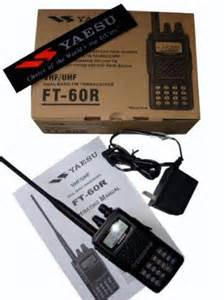
Yaesu FT-60R Handheld Radio

Yaesu FT-60r handheld Ham radionote: article first appeared in January 2015

As you soon as you pick up this radio you know you are holding a high-quality piece of electronic gear.  It has that “feel” to it, and you won’t be disappointed. The sound quality is excellent, 1000 programmable channels for all your favorite frequencies, and it can handle water! While I wouldn’t try submersing it, this radio can handle a pounding rain storm.

Generally I am seeing the radio last about 4 days on a full charge 1400mAH battery.  The dang radio is built solid and can take some abuse and drops; but please don’t.  The 60R is pricier that the Boafeng but it is also a whole lot higher quality radio.

If I was going to only have one Ham radio this would be the one I would buy.  Period!  End of story.

The Yaesu FT-60R dual-band 2 meter/440 MHz HT boasts 5 watts output on both bands. It also features wideband receive from 108-520 and 700-999.990 MHz (less cellular). Two programmable keys are provided for your convenience. There is even a password feature to prevent unauthorized use of your radio. Radio to radio cloning is possible with the optional CT-27A cable.

Other refinements include: One touch NOAA weather, nine DTMF auto dialer memories, die-cast weather resistant case, ARTS Auto-range transponder system. There is also a Mono-band and Memory-only operating mode.Yaesu FT-60r handheld Ham radio

Features –

  • Over 1000 Memories
  • 5 Watts RF Output
  • Backlit Keypad
  • Alphanumeric Display
  • NOAA Weather Alert
  • PL Encode/Decode
  • DCS Encode/Decode
  • Emergency Auto ID System
  • ARTS System


Dual Band VHF/UHF 2 Meter & 70cm Amateur Radio. CTCSS/DCS (PL & DPL), DTMF, AlphaNumeric Display, Lighted Keypad, Scan modes. Receives 108-520Mhz and 700-999.99Mhz (less cell), Transmits 144-148Mhz & 430-470Mhz, Locking mode prevents accidental changes of frequency. One Thousand memory Channels, NOAA Weather Alert, Receives Emergency channels in 800-900Mhz, RF Power Output: 5W (High) / 2W (Middle) / 5W (Low). Basic set-up includes 1400mA Battery, Charger, antenna & belt clip.

Note:  Don’t leave the radio charging in the charging cradle. Once its charged, take it out.

Here is a list of the options I would purchase along with the radio to give you a whole lot of flexibility and capability –

Yaesu FT-60r handheld Ham radioComet SMA24 DualBand Amateur Radio & Scanner SMA Antenna For Handhelds – 2M/440
This antenna is actually the correct antenna length for the Yaesu radio.  The short antenna that comes with the radio (rubber ducky) is good but this antenna will get you better performance.  This antenna is more suited for the 2m and 70cm frequencies.  The only downside, as with all longer handheld antennas, is the spot where the antenna whip enters the antenna base.  I used a piece of “heat shrink wrap” to reinforce that point and assist in keeping any contaminants out.Yaesu FT-60r handheld Ham radio

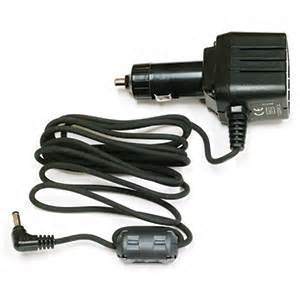
Yaesu Standard 12V DC Adapter For Handheld Tranceivers SDD-13 E-DC-5B
You have to be prepared to run off of 12vDC power during any disaster or emergency.  This charger will replace the AC charger that comes with the radio and allows you to recharge your radio’s battery of any 12vDC power source (i.e. your car battery).


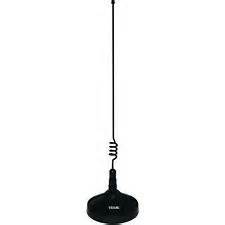
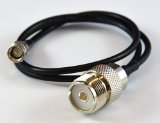
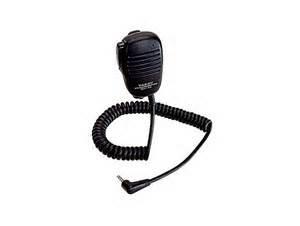
RadioAntennaCarYaesu FT-60r handheld Ham radioVehicle external antenna & Connector cable plus speaker/microphone : This three-part accessory is a must have for vehicle operations.  Operating a handheld radio inside your vehicle will reduce its power to reach out longer distances due to the metal shell of your vehicle.  It may also interfere with the quality of transmission as well; making your message sound distorted at the other end.  You overcome this by mounting an antenna on the roof of your vehicle.  Not a permanent antenna, a magnetic mount antenna; you can move the antenna to other vehicles if needed.  You can also use it in a non-vehicle setting as well by placing the antenna higher than the radio would normally be located.  You must use the adapter cable to connect the radio to the antenna cable.  Using the separate speaker/mic prevents wearing out the connection between the adapter cable and the radio.  You don’t have to hold the radio and move it around, you simply use the speaker/mic and leave teh radio sitting in one place.

Accessories to buy for this three-pack –Yaesu FT-60r handheld Ham radio

  • Tram 1185 Amateur Dual-Band Magnet Antenna
  • RF coaxial cable SMA female to UHF SO239 PL259 femaleRG58
  • Yaesu Vertex MH-34B4B Speaker Microphone


Yaesu FT-60r handheld Ham radio

Yaesu-VC-25 VOX Headset : This headset allows you to have a whole lot more privacy while using your 60R as more of a base station.  Which you can do by the way by adding a better antenna.  But this headset is top-quality unlike a lot of  the knock off aftermarket stuff.


Yaesu FT-60r handheld Ham radio

Battery Tray :  The Yaesu FBA-25A battery tray is a great option to leverage your AA rechargeable batteries. I found that some of the rechargeable AA batteries on the market are a little large of diameter to fit in the tray correctly.  I use Energizers and have no problem.

Yaesu FT-60r headset

Headset : If you want to go “undercover” and look like a secret agent or be discreet about having a radio under your coat you can use the IXRadio TW-HSBYA807-Y.  This is sometimes referred to as a FBI headset.  It is discreet and low-profile.


Yaesu FT-60r handheld Ham radio

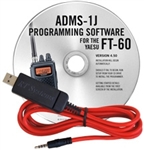
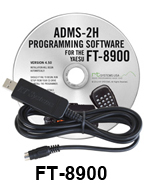
Programming Software w/cable :  RT Systems FT-60r Radio Software.  While the radio is fully programmable from the keypad that is not the way you want to try and program this puppy. I tried several different “free” programming software program; had problems with all of them.  RT Systems puts out a superb product that can’t be beat in my opinion. FYI – You can use the files from any of the RT Systems software to transfer to any other radio that you are programming.  So I can use all programming I did for my FT-60r for my Yaesu 8900 radio as well with a simple click of a software button.


2009 - 2019 Copyright © AHTrimble.com ~ All rights reserved
No reproduction or other use of this content 
without expressed written permission from AHTrimble.com
See Content Use Policy for more information.

Yaesu FT-8900R Go Box & Power Box Together

note: first appeared in late 2015

As you know I’ve been working on a series of highly portable, field going Ham radio boxes and the portable power boxes to juice them with. This article is branching off to renewing the power to keep your Ham radio outfit up and running far beyond simply a day or two. This article is about solar power. Specifically, I will share some information about solar power from a Glowtech60 foldable solar kit.

I have already covered solar power and the recharging of small batteries powering a small radio. I did a review of a SolPad7 and Nomad7 solar recharging kits for AA and AAA batteries as well as how those little solar pads can directly charge your Baofeng UV-5RA. Those batteries of course would be powering your Baofeng UV-5RA handheld radio. But that was all about small, now is time to look at larger radios, larger power needs, and larger solutions.

Going back to the original mission that started all of this was the need for radio communications capability in the field. That mission is outlined as…

“Compact and portable radio equipment providing the ability to communicate over standard radio frequencies among family and group members.”

Once the need was identified and a mission defined, then came the power to keep it going. Yes, the portable radio go box has a battery and I also wrote a very brief article about using a Nomad7 or Boulder30 solar kit to recharge that battery. But you know me…one is none, two is one, and three is a good start. The next logical step would be an auxiliary power source to keep the radio operational for a longer period of time. That means a larger battery. Since the space is limited in the radio box, that means a box that holds that larger auxiliary battery.

OK, now we are getting somewhere. That lead to my design of the auxiliary power box. It more than tripled the overall amount of time that the radio would stay operational.

But, as I mentioned in the beginning of the article, it all ties together to form an integrated “system.”

Here are the system’s parts:

It is way easier to stay on the same page while explaining this system to you if I show you the pictures as we go. So here is the first picture…

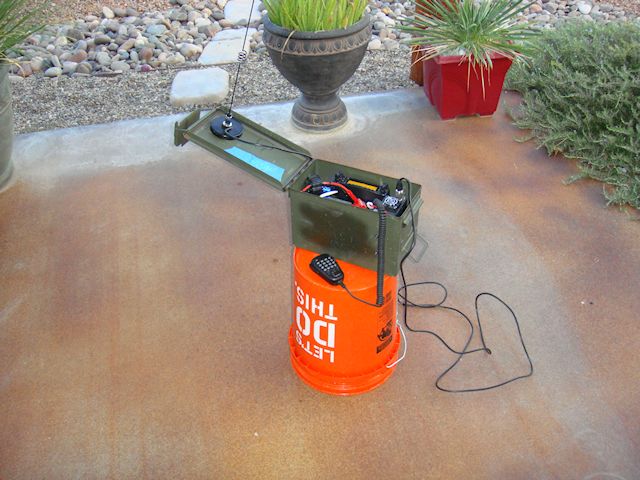
This is the portable Ham-In-The-Box that I built for emergencies, disasters, and grid-down. The unit is wholly self-contained, including its own 14Ah rechargeable AGM battery. The radio itself will shut down at about 10vDC protecting the battery from becoming completely discharged. The next step was to build a portable power box to give the radio more operational time. The radio box is not designed to be operated sealed up. Duh! You gotta be able to access the radio. So no need to get fancy with “through-the-box” connections.

Part of the “guts” of the radio box build was a Powerwerx Red-Dee-2 4-way connector. I wanted flexibility to plug-in what I wanted and needed. The connector handles the radio, the voltage meter, and the battery. That leaves a connection open…and therein is the flexibility that I will show you.

The portable radio box is completely stand alone from an operational perspective. Open the box, connect the antenna, and plug the battery into the power distribution gadget. Then just turn on the radio and you are ready to go to work.

Note: The blue tape is holding a spare fuse that is protecting the battery. There is also a spare fuse that protects the radio. I carry a spare of each with the radio just in case.

The next step is to plug in the Boulder30 solar kit to recharge the battery. Well, technically, plugging the Boulder30 into the open connection on the power distribution block will provide power to the system and excess power will charge the battery continuously. Well, continuously as long as there is sun shinning.

We now have the stand-alone portable radio box up and running, plus a charging system in-place to keep it running. But we are somewhat limited in the amount of time that the radio can be operational. That operational time is directly related to the depth of charge, power reserve, which the small-ish internal battery has. That leaves us with the task of increasing the operational time, meaning that we need a larger battery, which then also means we need more charging capability. And that means the “portable power box.”

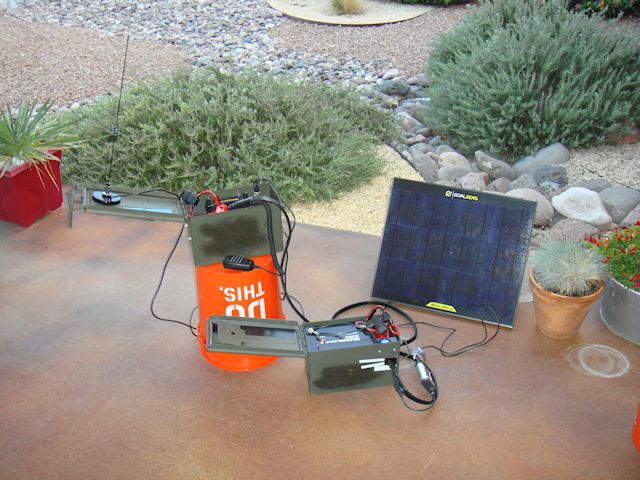
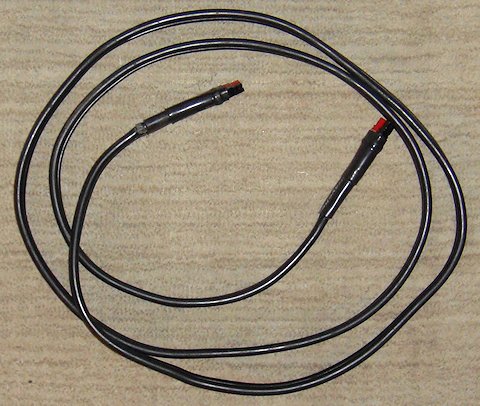
So the next picture shows that system hooked into the portable radio box. Notice the power cable connecting the two boxes? It is still just 10guage wire but it is heavily insulated by a durable cover that is resistant to the effects of the outdoors. It is a great choice in areas whose environment will not be kind to your equipment while ensuring it get the most power from the battery to the portable radio. Yes, it has Anderson Powerpoles on each end to ensure it connects to all my radio and power equipment.

This power box has a 35Ah rechargeable AGM battery. To protect the battery from over discharge it also has a built in Low Voltage Disconnect. Notice the power box can be completely sealed up and cables can be plugged in from the external Anderson Powerpole chassis mount.

The GoalZero Boulder30 with Guardian charge controller is now charging the power box’s 35Ah battery in the power box. However, since I have a second GoalZero Boulder30 system I can now hook up that additional system directly to the radio box rechargeable battery. Since the battery is not being used to power the radio it will come back up to full charge rather quickly given adequate sun.

Here is a picture of just the heavy power cable. For the information on how I built the heavy power cable from a set of jumper cables you can < click here to read the article >

All right, we now have hooked up the portable radio to the portable power. You have the Boulder30 charging the portable radio box’s battery. Here is a suggestion and the reasoning behind the suggestion. I suggest you run the portable radio from the portable power box. You can be charging both batteries as you normally would. But, by not using the battery in the portable radio box it allows the Boulder30 to concentrate on recharging the battery in the portable radio box.

Why is that important? Because you never know when you might have to “run” and you might have to leave some equipment behind due to time constraints. By keeping the portable radio box’s battery fully charged you know you will have several hours of radio operating time even if you had to leave the portable power box and solar kits behind.

But don’t worry about connecting all the solar kits and the boxes, just follow this guide:

  1. Set-up the portable power box and plug in the solar charging kit into the “input” side of the portable power box. You should see the voltage meter reading a combination of the battery charge and the solar panel voltage input. As long as that voltage doesn’t start dropping you are charging the battery or at least staying even with the charging vs. usage.
  2. Set-up the portable radio box like you normally would. But, this time don’t plug in the radio to the Red-Dee-2. Set-up your solar charging system and plug that solar system into the open connector on the Red-Dee-2. You should see the voltage meter reading a combination of the battery charge and the solar panel voltage input.
  3. Now, take your heavy power cable and plug it into the portable power box. Take the other end and plug it into the radio connector in the portable radio box. You radio should be ready-to-go while running the radio off the portable power box battery.

The next picture will now show how to keep the portable power box’s battery charged up with a larger solar system, the Glowtech60 solar kit plugged into it. The Glowtech60 power cable connects to the power box via the chassis mount connection block on the side of the portable power box. The Glowtech60 system has double the charging wattage that the GoalZero Boulder 30 system has. This will allow you to keep the power box up and running far more easily.

And there is one last benefit from using the Glowtech60 system to charge the power box…I freed up the second GoalZero Boulder30 panel and charge controller. I can use it to daisy chain to the radio battery giving it 60w total charging capability. Or, I can use the second Boulder30 on another battery that is in need of charging.

NOTE #1: Yes, the portable power box “input” connections can also take the standard AC battery charger. I designed a special set-up to allow your battery charger to recharge the battery directly without taking the battery out of the portable power box. Please make sure you are using a high-quality battery charger designed to work with a AGM battery. Not all battery charges are designed to do so. I would suggest NOT using your AC battery charger while the power box is hooked up to and running the radio.

You may choose to have a system that you have designed, or maybe someone else’s design. But I hope this article has given you plenty to think about and put a thought or two into your head concerning what solar/power/battery capability and options are right for your needs.

Remember, communications is one of the primary faults that exists in virtually any disastrous incident where people are injured or killed while working in emergency and disaster situations. You have the power to overcome all, or at least part, of those communications issues rather simply and cost effectively should you so choose. I hope you  choose to.


2009 - 2019 Copyright © AHTrimble.com ~ All rights reserved
No reproduction or other use of this content 
without expressed written permission from AHTrimble.com
See Content Use Policy for more information.

Yaesu FT-8900R Go Box – Part #2

Part 2 - truly portable ham in the boxnote: first appeared late 2015

In the first article published about 30 minutes ago I described what I was trying to accomplish and then I defined the specific mission. Once all that was done I was able to list the individual components that would go into the box and the specifics for each.

This article will give you a step-by-step description of exactly how I built the final rig. I have even included some notes with pointers and suggestions.

I really hope this shows you how simple this stuff can be. And I also hope it motivates you to get some decent communications gear and capability ready for emergencies, disasters and grid-down.

Let’s get on with it…

The Build

My main concern was the limited space and heat generation. I wasn’t worried about the battery orientation because it is a sealed battery and won’t (shouldn’t) leak. Since the box will spend most of its life sitting upright in storage like a normal ammo can, I decided to orient the battery installation to be upright when the ammo box was in its normal upright position. When the radio unit is operational the ammo box will be sitting on its side and so will the battery. That shouldn’t pose any problem at all.

But, exactly how to secure the battery so it wouldn’t move around was the single biggest challenge. Before I tackled that issue I did have to get the radio positioned, but that proved to be really easy. It would be oriented vertically when in operation, horizontally when stored. Also, this would call for a remote head installation.

Step #1 – The Radio.

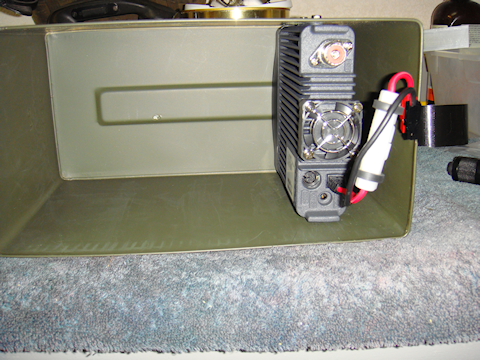
No matter how I looked at it I could only see one reasonable way to mount the radio, and that would require four holes drilled through the box to properly secure the radio. I also wanted to leave a little room so the remote head extension cable can be connected without rubbing against the bottom of the metal box. To protect the cable, the radio will sit 1/2” off the bottom of the ammo box.

I also wanted to mount the radio so the speaker orientation was facing up, directly toward the box side, so the sound would bounce off the box giving the volume a little boost. That would place the built in fan pointing out helping with air Yaesu -FT-8900R mounting hole widthflow. The fan starts up when a transmission is initiated.

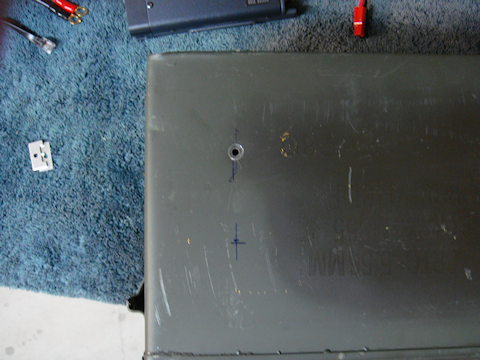
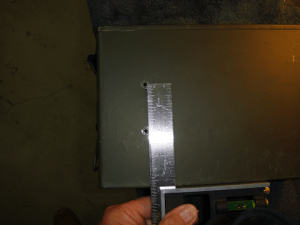
I made measurements approximating where the first radio body hole would be drilled through the box. I used my square to keep all the measurements exact and consistent. I laid out the first hole, punched the starter “dent” and drilled the hole. I was using the standard Yaesu installation screws so I sized the hole appropriately; the mounting screw barely went through the hole.

Once I drilled the first hole I tested the hole in relation to the radio and it was a good match. The radio would end up exactly where I wanted it inside the box.Yaesu -FT-8900R mounting hole width


Once that was done I then used the measurement between holes on the radio to verify the earlier mark for the second hole on the same side of the box. I punched the starter “dent” and drilled the hole.


Ham-11

Couple notes…

Note #1 – I used a really good “punch” to start the hole I would drill. If you don’t punch a starter dent your drill bit will tend to “walk around” and your measurements go right out the window.

Note #2 – I marked an “X” across each hole in the radio. It would Ham-10make lining them up easier once the radio was inside the box. You can see each “X” through the hole in the box as it passes by.
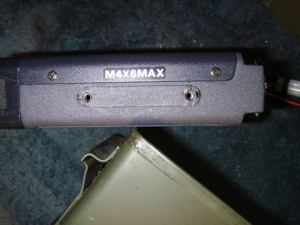
Note #3 – I have a really decent little set of diamond files. I bought them at Harbor Freight. They were only a few bucks and I have used them more than any other set of files I have. I use the little rat-tail file to clean up the inside of the drilled holes.

Note #4 – After you have drilled each hole you need to follow Note #3. Once that is done use a flat file for ammo box metal and clean up the inside of the box where the hole went through the side of the box. There will be sharp jagged edges unless you file them flush with the box.

Note #5 – After I drill each hole I test it for alignment with the radio chassis. I actually install the mounting screw but only part way. Only “part way” allows for some wiggle room when testing the other holes’ alignment.Yaesu ft-8900r go-box

Both holes on side one lined up perfectly. I took the radio back out and then measured the holes’ placement with the square. If, on the other side of the box, I use these measurements exactly then they should line up perfectly. Notice how I measured in from the sides and bottom and top (3-way) measurements to ensure proper placement of the new holes.

Next came measuring and drilling the opposite side of the box for the mounting holes. I measured from the top, bottom and end using my square. Transferring the measurements from the other side should place these holes in the correct location. I punched the starter dent for hole #3, drilled it, cleaned it up, tested the alignment and bingo! It came out exactly right. Then on to hole #4. I verified the measurement against hole #3 to verify that it would be right. It came out with a slightly different placement, i made the adjust and went on.

I punched the starter dent for hole #4, drilled it, cleaned it up, tested the alignment and bingo! It came out slightly off. I got out the rat-tail diamond file and enlarged it slightly correcting the alignment. I was off by less that the depth of the screw’s thread. I had it corrected in less than a minute of filing. That diamond file is really sweet.Yaesu ft-8900r mounted in my go-box

I then tested the alignment with all four mounting screws and it came out right on the money.

Step #2 – The Battery.

Next I had to resolve the issue of securing the battery, this was going to be no easy task. I spent a whole bunch of time looking at different mounting options. Finally I came up with something I thought would work well.

I knew that no matter what, I had to secure one end of the battery really well. So I put the permanent mounting bracket in the most natural spot that I could, the hinge end of the ammo can. Then it seemed only right that I put a piece of angle aluminum across the whole end to secure the battery no matter its exact side-to-side alignment.

I placed the battery in the can and measured from the top of the ammo box to the top of the battery and I drew a line on the metal can across the top of the battery on the end of the ammo box metal. I double measured the line from the top of the box. I added a very small additional space allotment during this process. The thickness of Gorilla Tape to be exact. Once this was done I transferred that line to the outside of the ammo can.

Note #6 – I decided to use pop-rivets to secure this bracket to the back of the ammo can. I didn’t see myself ever needing to take this piece off so I decided that riveting it would be just fine.

I drilled my first hole through the angle aluminum 1″ from the first side. I would do the same on the other side of the aluminum angle as Ham-20well. I lined up the angle aluminum piece, now with the holes in it, and marked my first hole on the ammo can. I “punched” it, drilled, and cleaned up that hole. I placed the angle bracket piece on the can lining it up with the newly drilled hole and the drawn alignment line. I placed a rivet in the hole to stabilize it and give me a sure spot for hole #2. It did and I marked hole #2 on the ammo can. I “punched” it, drilled, and cleaned up that hole.Ham-21

I moved the securing angle aluminum bracket to the inside of the box, verified the hole alignment and riveted it in-place. I placed the rivet on the inside of the can, pushed it through the box placed a Ham-23rivet washer on it and finished the riveting process.

Note #7 – I used rivet washers to make sure I had a good strong fit of the bracket to the ammo can. The washer goes on the outside of the box over the end of the rivet prior to finishing the riveting process.Ham-23


I finished it off with two layers of Gorilla Tape to protect contact with Ham-25the battery case. I inserted the battery and everything fit snug. Just like it was supposed to.
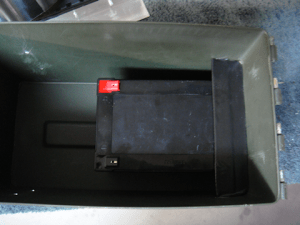


Now it was time to figure out the next step in securing the battery. But after about an hour of looking it over I gave up. Well, I should say I took a break to give my mind a rest and pray for a new idea or two.

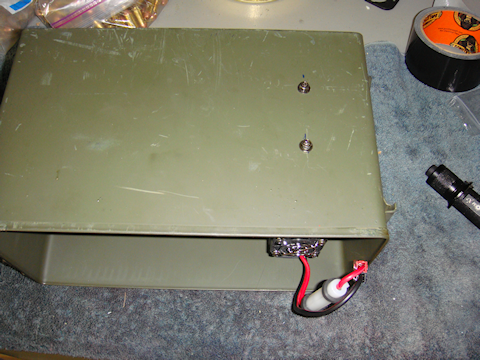
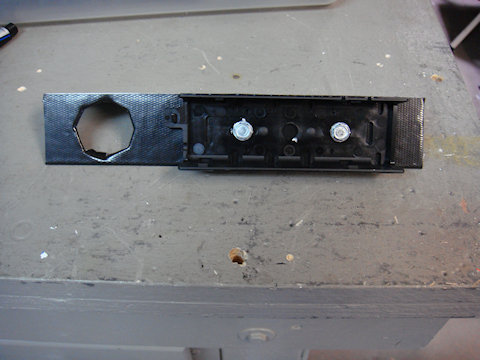
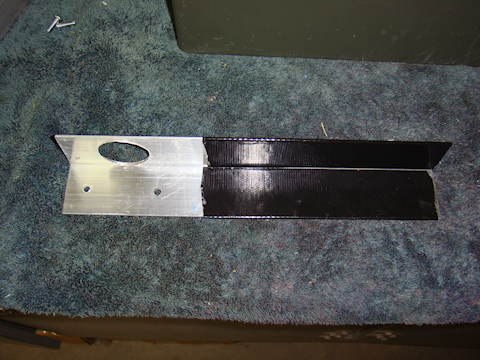
In the meantime I figured I could go ahead and fabricate the bracket that would hold the remote radio head bracket and the volt meter. I took an 8″ long piece of 1-1/2″ angle aluminum, laid out the location for the volt meter hole first, then ensured that the remote head bracket would leave enough space from radio chassis. I decide that I wanted the remote head in the center of the box to give it the most protection from damage. Also, I wanted it shaded the most from the sun and other light as well. So the volt meter would get mounted on the end of the bracket closest to Ham-26the hinged end of the ammo can.

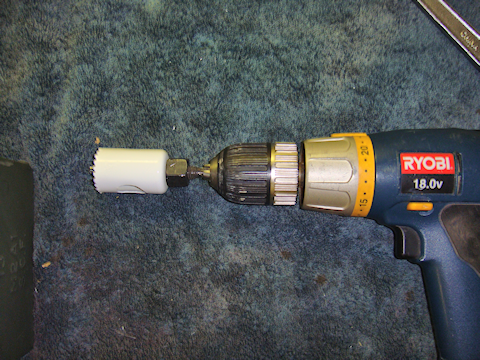
I used 1-1/2″ sock to give me enough room for the 1-1/4″ hole I would have to drill for the volt meter. Now, let me tell you right up front…use a good quality hole saw. If you use a cheap hole saw you may get Ham-27enough “wiggle” or “wobble” in the hole saw that your hole ends up too large. My old one was shot so I went out and bought a  Lennox Bi-Metal hole saws and I am real happy with them.
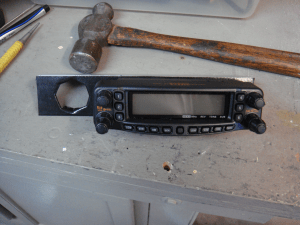
Once the hole for the volt meter was cut, I Gorilla taped the face of the bracket and tech crewed the remote head bracket into place.  Yes, the hammer is there to make the “fine” adjustments that might be needed 😉

I attached this mounting bracket to the side of the ammo can using the previously installed hinge-side battery bracket to hold it in place. While I was lining up the bracket to drill another hole in the ammo can to secure it, I “saw” the solution to finish securing the battery in-place. It is hard to describe to you so let me just show you the pictures.
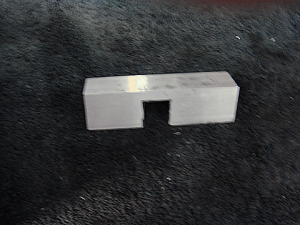
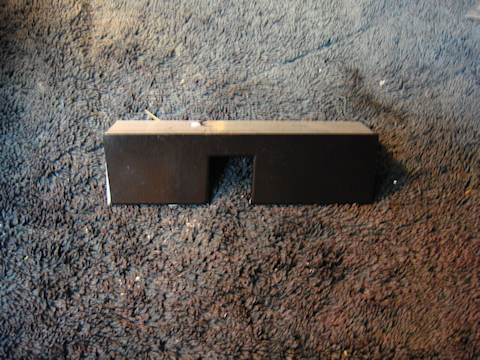
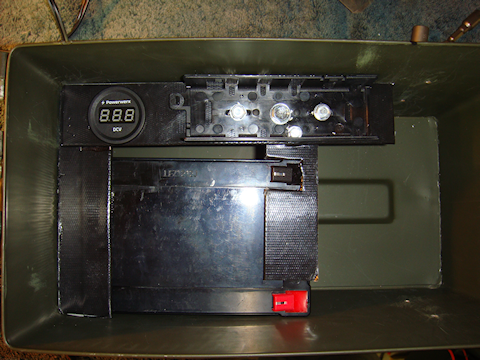
Ham-28Ham-29I cut a 4-1/2″ piece of 1-1/2″ angle aluminum to it would fall just shy of the positive terminal of the battery by about 3/4″ of an inch. Then I cut a notch to match where the negative terminal sits on the battery. I Gorilla taped it to protect the battery case from the edges between the battery and the aluminum.

Now I just had to figure out the last little question of keeping the battery from moving side-to-side.

The answer was to drill a hole and place a bolt through the angle aluminum. I didn’t want the battery case exposed Ham-30to the bolts threads so I installed nuts on the bolt. I topped it off with a lock-nut at the end. Then I put two layers of heat shrink over the nuts.

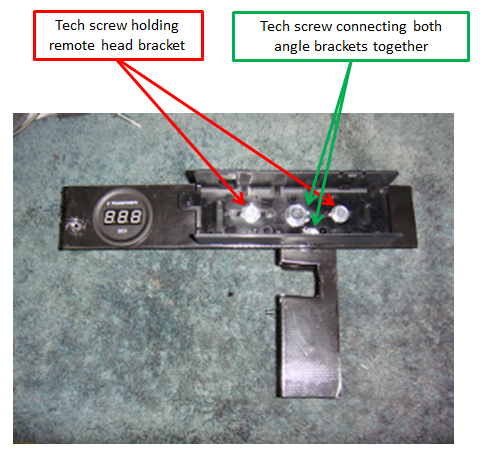
Then I figured out how to permanently attach that bracket to the 8″ Ham-100piece holding the remote head bracket and the volt meter. I used a large tech screw in the center of the remote head bracket and a smaller tech screw to the bottom right of the large one. In the picture to the right the “large tech screw” is the one in the middle of the remote head bracket. In the picture to the right – red are the tech screws that hold the remote head bracket is held to the angle aluminum, green are the tech screws that hold the two pieces of angle aluminum together.

I installed the volt meter and tested for fit and alignment. Ooppppsss!

I hadn’t accounted for the volt meter protruding through the bracket, it ran square into the riveted bracket that is holding the battery in-place. So I had to drill out the rivets and notch that battery hold-down bracket to make room for the volt meter. Ham-33Time…10 minutes and I was back in operation with a perfect fit.
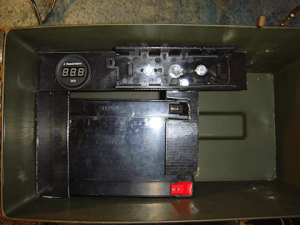
Now it was time to start wiring some stuff. First up was my battery Powerwerx ATC Style Fuse Holders with F-Type Connectors and Powerpolesconnections. The battery has “F” style terminals. The right piece of equipment to make this happen is a Powerwerx ATC Style Fuse Holders with F-Type Connectors and Powerpoles to make the connection.

——-Side note – But I wanted to be creative and challenge myself a little. I wanted to “adapt” something to see what I could come up with. Powerwerx ATC Style Fuse Holders with Powerpoles (Gauge: 10, Amps: 40) Read more: http://www.powerwerx.com/fuses-circuit-protection/atc-inline-fuse-holders-powerpoles-10-gauge.html#ixzz3fcpBUACKI had a Powerwerx ATC Style Fuse Holder connector with Powerpoles on both ends siting in my electronics kit. I figured I would just cut off the Powerpoles on one end and put a couple “F” connectors on the ends. But then I started thinking, would that match my “flexibility” intent? Nope! So I made a converter. I put “F” type connectors on one end and Powerpoles on the other end. Now I would hook that up to the battery and then plug the fuse holder connector onto Ham-43the converter.
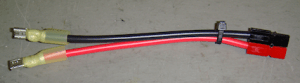
But I would would have bare metal connectors on the battery terminals and that is a recipe for disaster…spark, sizzle & smoke.
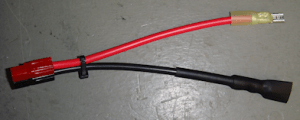
Ham-44So I got out some 5/8″ shrink wrap, cut to size, and heated that stuff up to form my own protected “F” style connectors. Yes, I did it to both connectors. I just wanted to show you a before and after picture.

Note #8 – Notice the zip-tie on the wire? That it sued to keep the tension off the Anderson Powerpole connector. The zip-tie stabilizes Ham-45the wire to each other taking the tension off the Powerpoles.

Bingo! Adapt and overcome! used what I had on hand to make it happen while not destroying an existing resource. Wow! That sounds like the #3 rule of L.I.P.S. “Don’t destroy anything you don’t have to.”

——-End of side note——-

Once I had completed that exercise in creativity I installed the pre-made “F” type ATC fuse connector that I purchased from Powerwerx.Powerwerx red-dee-2 (old style) 4-way power distribution

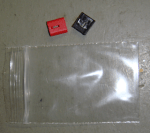
Tip – When you remove the terminal protectors from the new battery…save them. Put them in a little plastic bag and place them in your electronics kit. You never know when save your f-type battery terminal protectors from your new battery.you might need to put them back on the terminals for protection when the ATC connectors have been removed.
I fabricated the wiring to connect the volt meter to the power distribution hub. For this “build” I am using a Powerwerx Red-Dee-2 (old style) 4-way power distributor.

Notice there is no power switch. To remove power from everything you disconnect the ATC fused line from the Red-Dee-2 power distributor.

I went through my standard “start-up test” procedure –

  1. Test the battery with the multimeter first. That gives me a baseline reading.
  2. Test everything with a multimetter as you go.Hook-up the fused connector, test with multimeter.
  3. Hook-up the 4-way power distribution Popwerwerx Red-Dee-2, test each outlet with multimeter.
  4. Hook-up the volt meter, test with multimeter.
  5. Hook-up the radio after checking it’s dedicated fuse. Test with multimeter before turning on the radio.
  6. Turn on the radio and pray there is no sizzle, sparks & smoke!

It all turned out really well. There was a .04v variance between the volt meter and the multimeter but the volt meter rounds to the nearest 1/10th volt. So it was all good. Yes, I hooked up an antenna before I turned on the radio.

Next came the field test. Everything worked as designed, as built and as tested. Yea!!!!

Next came the field test. Everything worked as designed, as built and as tested. Yea!!!!


Looking down into the box.
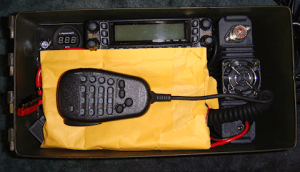
Looking down into the box.


Microphone gets stored in padded envelope. Protects the mic and cushions everything else.
Microphone gets stored in padded envelope. Protects the mic and cushions everything else.


View #1 - from front-right corner of the secured ammo can.

View #1 – from front-right corner of the secured ammo can.


View #2 - from rear-left corner of the secured ammo can.

View #2 – from rear-left corner of the secured ammo can.

The weight of the box came in at a total of 19 pounds, that is everything, including the battery. This came out to a very compact radio “go-box” that can be taken anywhere.  You can also just throw it in a backpack and head up the mountain.

The solar recharging capability is a serious bonus. This gives you a renewable energy source that you don’t have to scrounge up or steal from something else like gas for a generator.

Remember…this was built for a Yeasu FT-8900R. But a Yeasu FT-8800R also fits it. Both of those radios have built-in cross-band repeater feature. You open up, the box, plug in the solar, turn it on, set-up the frequency package and you are ready to operate. You are in business if you use it as a regular Ham radio for communications or let it run remotely as a repeater.

I hope you enjoyed reading about this “build” as much as I enjoyed making it. But I sure would like you to take this information and put it to use meeting your own radio needs. If you have any questions or need help with your build just “reply” here let’s tart talking.


2009 - 2019 Copyright © AHTrimble.com ~ All rights reserved
No reproduction or other use of this content 
without expressed written permission from AHTrimble.com
See Content Use Policy for more information.

Yaesu FT-8900R Go Box – Part #1

note: first appeared late 2015

I decided to build this really cool solar rechargeable battery powered Portable Power Box. The Power Box was to provide battery-based power in the event the AC power went out.

So I went back to the basics of a Power Box…supply power to a Radio Go Box solution in that build. As I went through that process it became clear to me that I had two distinct missions for Ham radio operations. Dual mission needs…

One mission was the “emergency preparedness response” and the other was more along the lines of “grid-down” or field-going type of missions. And they have somewhat different operating environments. But either way, my Go Box had to be stand alone. That threw me into coming up with a very small self-contained, stand-alone Go Box. But I wanted this box to be geared towards the “grid-down” and field-going missions.

The Go Box has to be a completely self-contained unit that enables a person to use a mobile Ham radio without external power. I chose the “mobile” aspect to provide for as much transmitting power as reasonable, given the field portability aspect.

The unit will also have a battery in the box to provide power for itself independent of any other power source. Obviously the battery can’t be very large so the ampere hour capacity will be relatively small. But the design will provide the unit with the capability to connect a solar panel for power to run the radio and to recharge the battery whenever there is sufficient current from the solar panels.

Additionally, I am toying with the idea of being able to “daisy chain” Power Boxes together to increase ampere hours capacity (operational time).  GoalZero Boulder 30

NOTE#1 : For solar recharging the Go Box I currently have GoalZero Boulder30 solar panels with a GoalZero Guardian charge controllers. However, I am researching and will soon begin field testing a dual 30w (60w total) system that is showing a lot of promise and GoalZero 12V Charge Controller 14002has a lot of potential. I am also trying out a couple of other charger controllers to improve overall charging efficiency.

NOTE #2 : I also am looking into low voltage disconnect units (LVD) to protect the battery from over-discharging. All of this is going to take some pretty tricky engineering to get it right. At any point if you are seeing something that isn’t making sense, or is a potential problem, please say to me something right then and there.

So back to the Go Box project…

I have outlined some of the basics and the mission for the unit. Now let me start outlining the components:

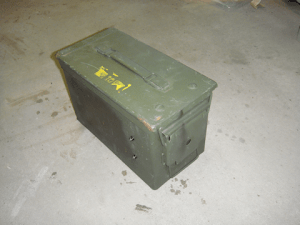
protable radio in a box, go-box in a .50cal ammo canContainer. I have decided on the .50cal ammo can as the container for the Go Box. There are a whole list of reasons but here are few primary ones –

  • They are extremely sturdy.
  • They are water and airtight.
  • They are a very convenient size.
  • They are also my choice of container for Portable Power Boxes.
  • They have a nice, sturdy, collapsible carrying handle.
  • I have several in my shed that need using.

Once I decided on the container I struggled on keeping the integrity of the box in-tact. In other words, do I drill any holes through the box for mounting purposes? I worked at it for a couple of hours laying it out. The only really feasible method to mount much of the guts was to drill holes through the box, thus, breaking the container’s integrity. But I think it is worth it and won’t significantly reduce the container’s overall usability for this project in the intended environment.

Next I had to decide exactly what would go into the box. That may sound kind of silly but I wanted to keep the component list to a minimum. I wanted to keep costs low, reduce the amount of heat generated, keep it as lightweight as possible and I didn’t want it all jammed up. So here is the component list I came up with:Yaesu FT-8900r Quad-Band Ham Radio

Radio. Yaesu FT-8900R. That is the best all-round radio for emergency work. It has the two main freq bands 70cm and 2m. Plus it has a small section of HF band as well. The radio is amazingly rugged and reliable. And the bonus was…it was the perfect width for the width of the box.

Optionally, I can use the Yaesu FT-8800R as well. It has the same case dimension as the Yeasu FT-8900R. So yes, that means I could turn this into a portable repeater as well.

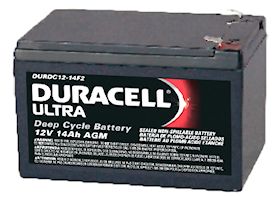
Duracell deep cycle 12v SLA sealed lead Acide AGM 14 aHBattery. Duracell Deep Cycle SLA, 14Ah. The choice of battery was due more to available space than anything else. It was simply a matter of what was the highest ampere hour battery I could get into the box and not interfere with the other components’ installation.

Technical Specs –

  • Item Number: WKDC12-14F2
  • Brand: Duracell Ultra
  • Voltage: 12
  • Lead Acid Type: Deep Cycle
  • Capacity: 14AH
  • Chemistry: Lead Acid
  • Lead Acid Design: AGM
  • Terminal Type: F2, T2, Faston .250
  • Weight: 9.2 lbs

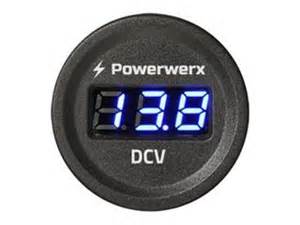
Volt Meter. I have started obsessing over the life span of AGM batteries. AGM batteries are expensive, but they are also really good for Ham radio operations. But they are expensive. Over discharging AGM batteries really reduces their life span. Did I mention that AGM batteries are expensive? Monitoring a volt meter and ensuring that you don’t drop below the safe SOC level keeps your battery in good shape. To track the battery voltage condition I went with the Powerwerx Panel Mount Digital Volt Meter. It has a nice blue display and I’ve used them before. Again, available through Powerwerx.com PowerWerx.com supplier of Anderson PowerpolesNice little high-quality units. But this volt meter will be mounted inside of the box not mounted on the exterior.


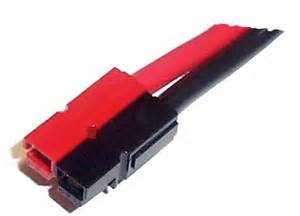
Ham In The Box - Anderson PowerpoleFlexibility. By itself this is not a single component but rather a design methodology. I want to ensure that the parts in all my radio and power boxes are interchangeable. That means using Powerwerx red-dee-2 (old style) 4-way power distributionAnderson Powerpoles for connections. And I also threw in a 4-way connector to eliminate splicing of wire.


2009 - 2019 Copyright © AHTrimble.com ~ All rights reserved
No reproduction or other use of this content 
without expressed written permission from AHTrimble.com
See Content Use Policy for more information.

Portable Power Box – Part #2 (update)

note: article originally appeared in October 2015

Last July I wrote about a “power box” project that I felt added a lot of capability and versatility to by Ham Radio operations. And I expanded it to give me great capabilities in other areas of prepping as well. Well, here are couple of those ideas for you to consider.

If you haven’t read the original 2-port article I would suggest you do. It will give you the background of w the power box can do and how it was designed and built.

I started with the basic “truly portable power box” and decided to test it on what has become a primary use…charging my portable handheld radios.

I hadn’t considered it for that purpose originally. I planned on using the larger power box for that mission. However, I thought I might this much smaller box out to see if it could do the mission for just two handhelds. Recharging two handhelds would really be a big help for a limited “need” event. Why two? One for me and one for my wife. Or, one for me and one for my camping buddy. The result was extremely good!

First thing I did was top off the power box battery charge to 13.2v. Then I hooked up a dual cigarette adapter cable to the box.

Then I hooked in the 12vDC vehicle adapter for the Baofeng UV-5R charging cradle. Next I hooked the charging cradles up to the adapter. Everything was looking good, nothing burning up, no blown fuses.

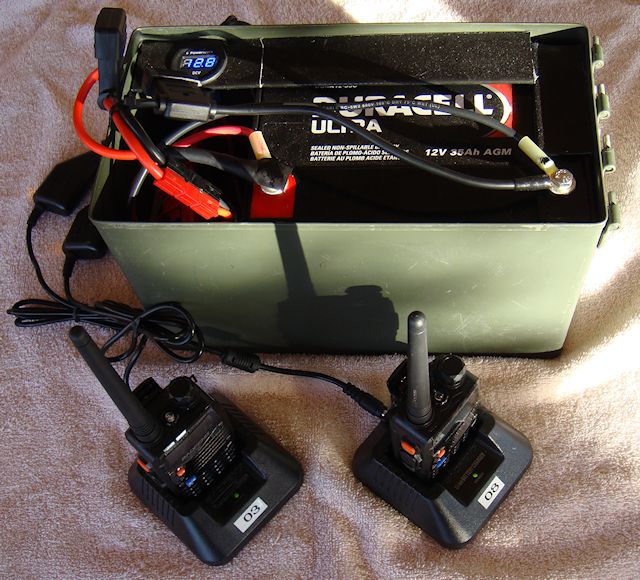
I had earlier completely discharged two 1800mAH radio batteries to give it a fair test. So I went ahead and popped the radios in the chargers. Three hours later I had two completely charged handheld radio batteries. Considering that in testing the same batteries took 2 – 3 hours charging on AC power, I felt like it was a complete success. Now I have proven that I can charge my handhelds from my truly portable power box giving me more flexibility in my radio operations. And, I only brought the charge on the batter from 13.2v down to 12.7v.

Well, then it came time to bring the battery charge back up to full. I already had my Glowtech60 set-up from some previous testing, I figured I would just hook it up and top off the battery. But then I started thinking…

I love flexibility and multiple options for everything, it’s called redundancy. Some might call it OCD 🙂

So I tried to figure out all the different ways I could charge up that power box using my solar options. And one stuck out to me that I hadn’t actually tried and tested . No time like the present!

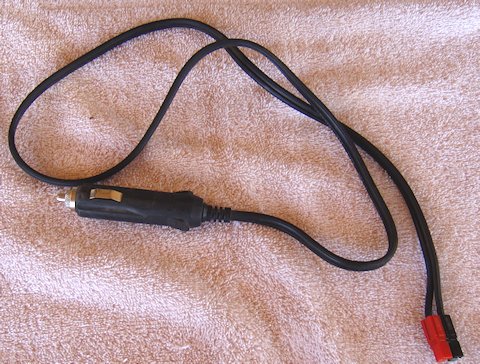
So I gathered up my SolPad7 solar charger.My SolPad7 has a 12vDC outlet to the charge controller. It also came with a cigarette style adapter/outlet. Then I made a quick cigarette adapter cable and started connecting the equipment.

At this point all that was left to do was plug the SolPad7 into the power box and see what happens.

I took a reading on the power box, 12.7v. I plugged in the SolPad7 in a sunny location and recorded the time, 11:00am.

I went back later, 1:00pm, and it was showing 12.8v.

Yo might be saying that it only went up .1v (1/10th of a volt) but that is OK with me. Notice the size of the SolPad? A mere 7″ x 10″ area, 70 square inches. And a maximum of 7w. I’ll take it!

Why? Because it gives me that much more flexibility that I didn’t have before.


2009 - 2019 Copyright © AHTrimble.com ~ All rights reserved
No reproduction or other use of this content 
without expressed written permission from AHTrimble.com
See Content Use Policy for more information.

Portable Power Box – Part #2

Portable Power Box solar Ham radio - part #2note: this article originally appeared in July 2015

In Part # 1 of this series I outlined the mission for this portable power box. Here it is to refresh your memory –

“Provide sufficient power to allow the limited use of a radio for at least 15% of any given 24-hour period. During which transmission power usage will be approximately 40% of that time period.”

In that article I also laid out the different parts that would make up the “guts” of this project plus the two options of solar recharging. < click here to read Part #1 >

In this article I will go over step-by-step of this build. I hope that this gives you the motivation to consider a project such as this. It can be invaluable when you need your radio during emergencies, disasters or especially during a “grid-down” event. Let’s get started…

Step #1 – Securing the battery.

MiniMe-01It is of paramount importance that the battery be secured. Not that this is going to be rolled down a hill or placed upside down, but the battery shouldn’t move around too much. I also didn’t want to put a massive amount of weight or content inside the box either. On top of all of that, I wanted to make sure that it was relatively easy to swap out the battery. So therein lays the challenges.

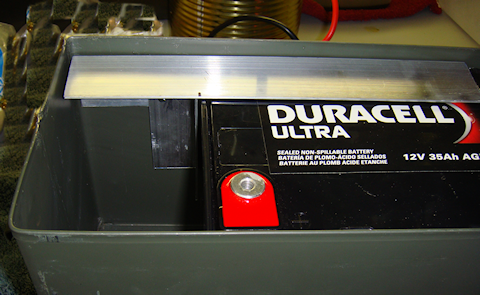
So I kept looking at it trying to figure out what would be most MiniMe-02economical of material and weight. I had to secure it from moving up towards the lid and shifting lengthwise as well. First thing I did was secure one end of the battery that restricts its MiniMe-03movement towards the lid. I used a piece of 1-1/4” angle aluminum. I secure it to the box with pop rivets since this piece will not be removed from the box. Notice I used Gorilla Tape later to “pad” the piece of aluminum and to make it a bit more “sticky” helping to keep the battery from excessive movement.

Note #1: The pop rivets do not stick out further than the boxes hinge so I don’t see any problems with the pop rivets protruding a little bit.

Next I wanted to secure the whole length of the battery from moving towards the lid to prevent the battery from MiniMe-04being damaged, and especially to protect it from shorting out across the terminals. That led me to the long support. But I still had the sliding lengthwise movement to be concerned about. And I wanted to make sure I didn’t restrict the volt meter installation. Once again, notice I used Gorilla MiniMe-05Tape to “pad” the piece of aluminum and to make it a pit more “sticky” helping to keep the battery from excessive movement.

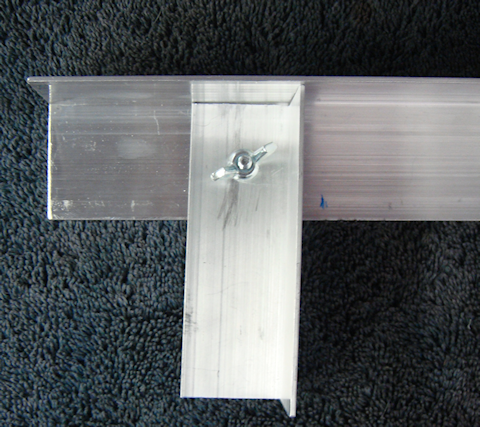
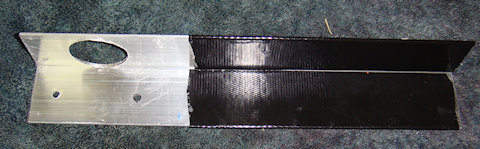
I decided all that was needed was a single, albeit tall, piece of angle aluminum to keep it from sliding lengthwise. And then I realized I could attach it to the long support to minimize the number of holes through the box. And to top it off I would drill my volt meter installation hole through the 1-1/2” angle aluminum so I wouldn’t have to fabricate an instrument panel like I MiniMe-06had originally intended.

I used Gorilla Tape to “pad” the piece of aluminum. Again, to make it a bit more “sticky” helping to keep the battery from excessive movement, but I also liked the more professional “look” it gave the overall fabrication.

The combination of the long horizontal retaining piece and the shorter vertical retaining piece are all held into place MiniMe-05by two #8 x 3/4” bolts. And those are secured with star washers and wingnuts. The wingnuts make it a whole lot easier to remove when, or if, it comes time to swap out the battery.

Step #2 – Installing the Powerwerx Panel Mount Digital Volt Meter.

I had originally was going to fabricate an instrument/control panel for inside the box. I was going to mount the volt meter to it and have  MiniMe-41a little room left over in case I needed to install something else. But after looking at the set-up I had fabricated so far I decided to mount the volt meter directly to the long horizontal support piece (1-1/2″ angle aluminum). I used a 1-1/4” hole saw and had the hole done in a couple of minutes, filed MiniMe-40smoothed and Gorilla taped for looks but the tape also to help hold the volt meter in place.

Note #2: Make sure you leave enough room for the volt meter retaining washer that will fit on the back of the angle aluminum. If you get it to close to the angle itself then the washer won’t have enough room to fit.

Note #3: My hole saw had a real “wobble” to it. It is not the best quality hole saw, so you get what you pay for. I used the Gorilla Tape to clean up the hole and make it look more professional but I almost got the hole too close to the angle. I had to finesse it a little to get it tightened up. Measure the whole thing out really well before you start to drill the hole.

Step #3 -Installing the LVD (low voltage disconnect)

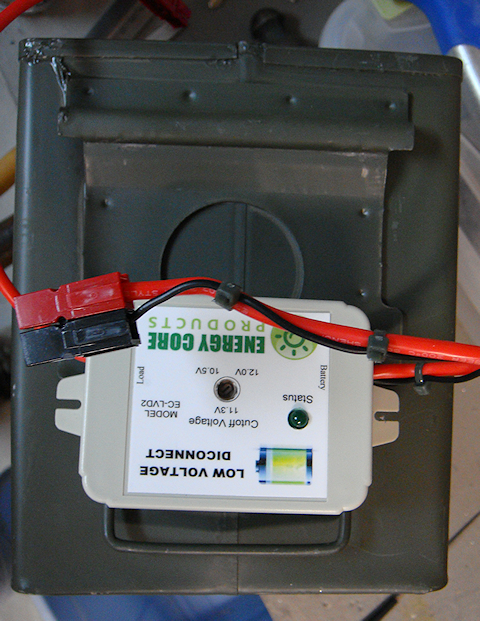
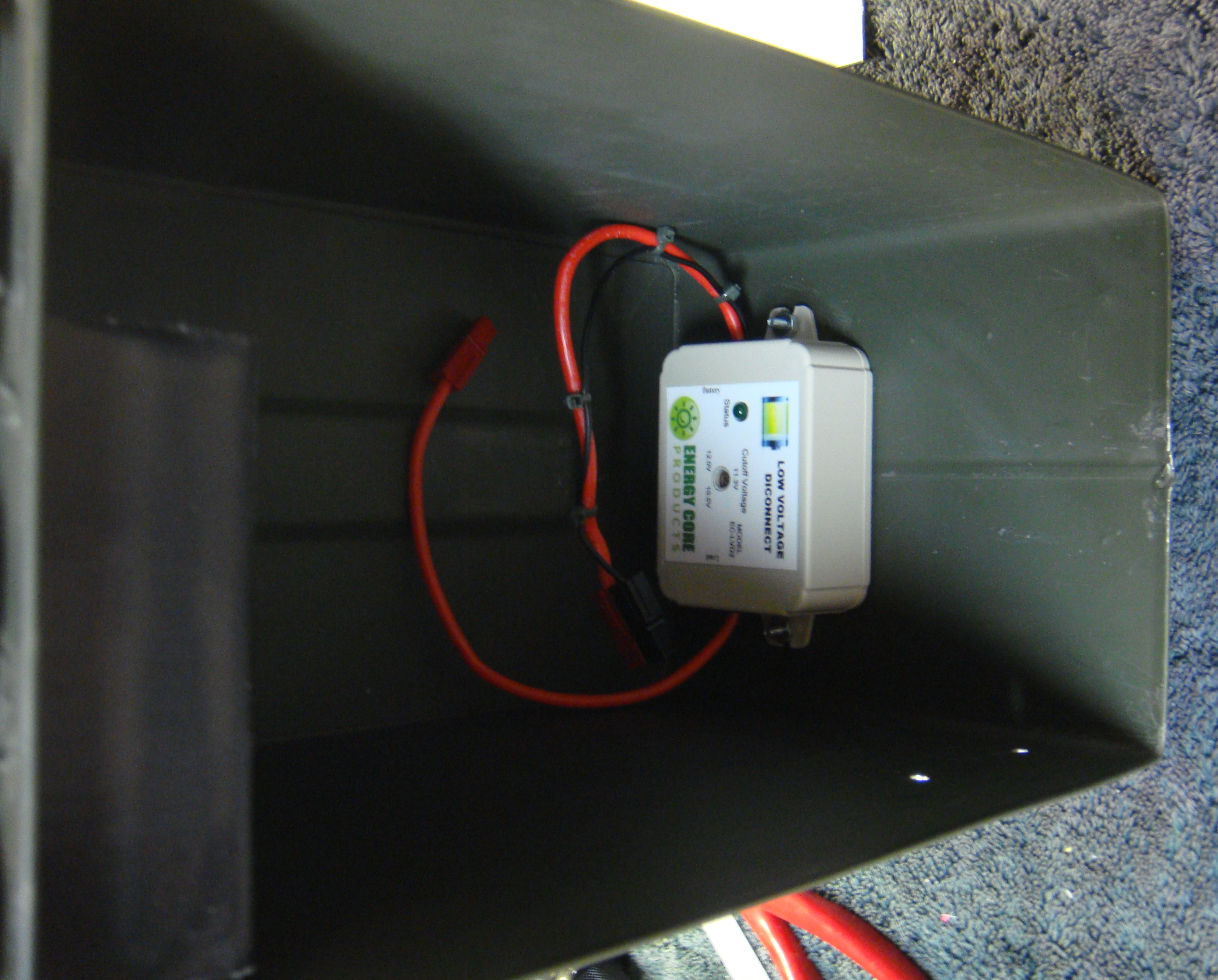
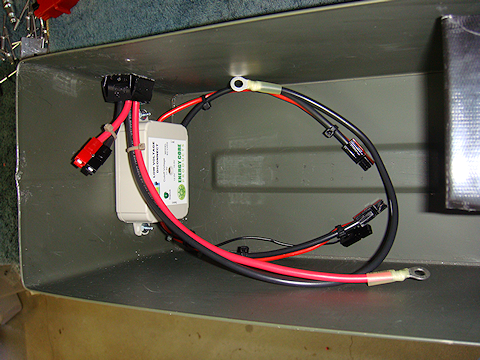
I had thought long and hard about installing an LVD in each radio box, but realized the proper location is the power box itself. I am using the Energy Core EC-LVD2. However, there is no temperature sensing by the LVD unit. So I will have to see how true to the voltage the cut-out point is. Also, I adjusted the “disconnect point” on the LVD to the highest setting it has to protect the battery, 12v. I did the adjustment outside in hot weather. Why? Because that is the most probable environmental condition that I will be operating the power pack in.

MiniMe-07Next was to wire up the LVD with Anderson Powerpoles.The LVD only has a positive (red) wire to install in the circuit. The black wire is only to ground the unit itself. The heavy black wire you see in the picture to the left is simply to keep the whole wiring project organized and easy to understand.

I connected the black wire to the LVD’s red wire via zip ties. I didn’t have to. But this keeps the wiring straight and reduces the chances of confusion later if the box needs some electrical or wiring work done on it. Notice the small black wire by itself? That gets connected to the Red-Dee-2 block and grounds the LVD unit itself.MiniMe-08

The next step was to properly place the LVD in the box. I placed it on the outside of the box to clearly see where it was to be installed and how it would look in relation to the entire installation. I marked, punched and drilled the holes based on the positioning on the outside. Verified that is fit on the inside that it was good to go. Perfect MiniMe-09placement and fit.


Step #4 – Installing the Anderson Powerpole Chassis Mount.Anderson Powerpole Chassis Mount for 2 Powerpoles Sets (4 conductors)

I am mounting the chassis mount on the opposite side from the volt meter to make sure I have enough room to get everything in the box without it being too jumbled up. The square hole that is required is slightly larger than 1″. I located the correct MiniMe-10position for the chassis mount to go through the box wall. I marked it really clearly, including the center of the square that was to be cut out.MiniMe-11

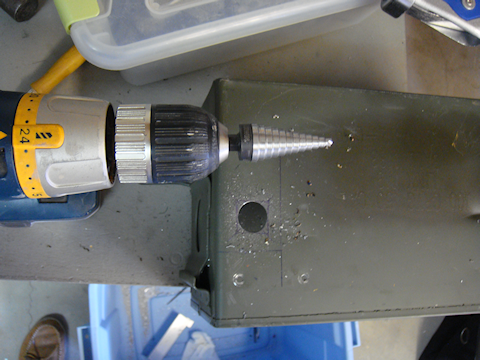
I have a 1″ metal hole saw that works really well through tougher metal and figured why not use that to remove the majority of the metal from the hole.

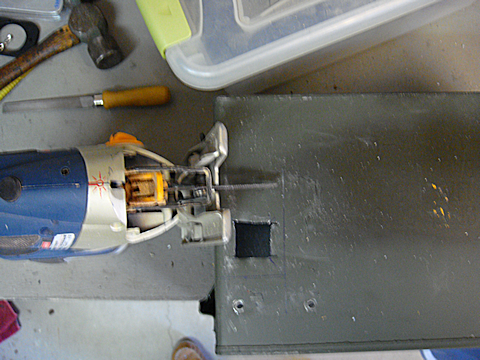
MiniMe-12Once I had drilled out the majority of the hole I got out the saber saw with a good metal blade and squared off the hole easily. I used my flat file to clean up the edges.

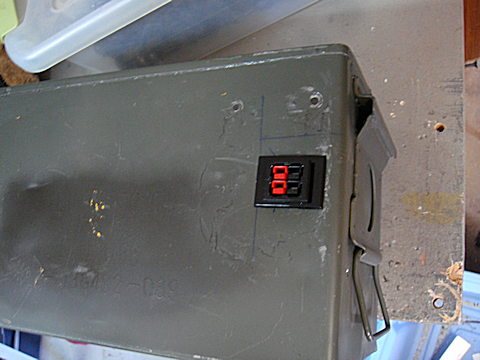
MiniMe-13The chassis mount slipped into place exactly like it was designed to.


Step #5 – Wiring up the system.

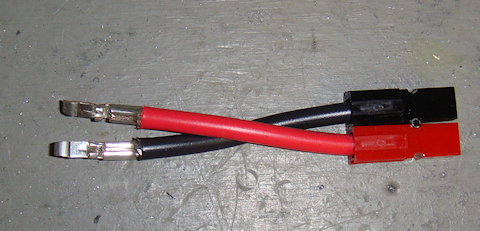
Portable power box wiring diagramThe first step was to wire the chassis mount’s pre-installed Anderson Powerpole connections. I could have done a longer straight MiniMe-15run to the LVD connection. However, I am absolutely committed to MiniMe-14keeping everything modular and interchangeable. That being the case I used this short pair to connect the “power out” pair on the chassis mount to the Powerwerx Red-Dee-2 power splitter. See wiring diagram for more information.

The “power out” wires are wired to the top pair of the Powerwerx Red-Dee-2 for power box power distributionchassis mount. The lower pair in the chassis mount is for “power in” purposes. Those “power in” purposes? The solar charger, 12vDC direct charger, or to allow the power box to be hooked in parallel to its brother power box creating a 70 Ah power source.

MiniMe-42


I wired the “power in” wire pair directly to the battery with ring terminals and Anderson Powerpole connectors directly into the chassis mount. I wanted any “power in” to be connected directly to the battery to reduce current loss since it would be for charging the battery or running a parallel operation.

The wiring in pretty cramped and crammed in the box, but I was going for the smallest possible and practical box I could get everything into. It doesn’t have to look pretty, it just has to have quality parts and workmanship.  Oh, and it also has to work.MiniMe-50

Tip #1 – Notice I am using zip ties? That reduces the tension on the wires and takes the strain off the Powerpole connectors.

Step #6 – Testing the system

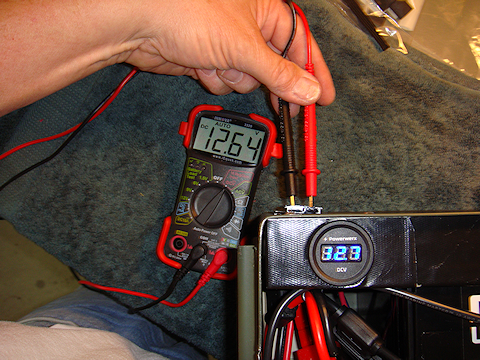
MiniMe-31As always, before putting the power box into operation I had to test the entire system. I test it one component at a time as I hook each piece up. I get a volt reading directly from the battery that becomes my baseline. Then a reading through the ATC fuse connection. Then hook that to the Powerwerx Red-Dee-2 power splitter and test each outlet of the splitter.

Then I hook up the volt meter and verify that it is getting the same reading my multimeter is getting. There was a .06 voltage difference. And that is only because the voltmeter only displays 10ths of a volt, whereas the multimeter displays in 100ths. Then finally I checked the connections in the chassis mount. All were good.

Step #7 – Protect the positive terminal.

There is a very minor issue that I felt I wanted to take proper precautions for. The positive terminal of the battery does not make contact with the box’s metal lid when the box is closed. But only by a small fraction of an inch. So I wanted to further reduce any chance of shorting the positive terminal to the box lid.

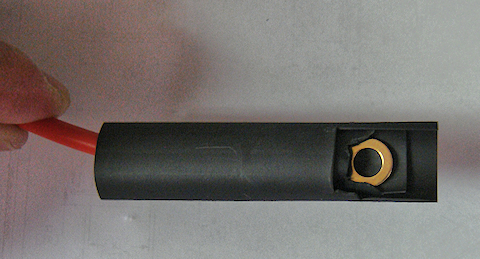
The way I did that was to cut two pieces of shrink wrap. One about 2″ long, the second slightly longer. I cut a notch out in the end of the first piece of shrink wrap to create a small “flap” that will cover the head of the bolt that is the positive terminal.

I then took the slightly longer piece of shrink wrap and did the same thing but made the notch larger to create a larger “flap” that covers more then just bolt head. So now I have two flaps of rubber that cover the head of the bolt that is the positive terminal of the battery. But I wanted to take it one step further. I took piece of my Gorilla Tape and ran it along the underside of the box. If the bolt head were to make contact with the lid, this is where ti would happen. So the layer of Gorilla Tape acts as an additional insulating layer.

MiniMe-23     MiniMe-22

bolt head battery terminal is covered with two layers of shrink wrap

bolt head (battery terminal) is covered with two layers of shrink wrap


Final Product !

Looking at the box from the right rear corner

Looking at the box from the right rear corner


looking at the box from the left front corner

looking at the box from the left front corner

Final Note : Yes, I put the labels on there at an angle on purpose. It was a little flair, some dramatic license, to differentiate the purposes for the two sets of Anderson Powerpole connections.


2009 - 2019 Copyright © AHTrimble.com ~ All rights reserved
No reproduction or other use of this content 
without expressed written permission from AHTrimble.com
See Content Use Policy for more information.

Portable Power Box – Part #1

note: first appeared in July 2015

I am not a Ham radio “geek” but I do have a couple Ham radios and I like using them. One thing for certain, when an emergency, disaster, or “grid-down” strikes…radios will be essential. I mean “essential” not because they are a radio, but because communications will be absolutely necessary in those situations.

Along with the actual radio you have to have a quality antenna for your rig, that should go without saying. But what about power?


As with all my equipment I define a mission. The mission for this project is:

“Provide sufficient power to allow the limited use of a radio for at least 15% of any given 24-hour period. During which transmission power usage will be approximately 40% of that time period.”

Notice that the time period required to keep the radio operational is less than four hours of actual run-time. That may not sound like a lot but it could be significant when available power is at a premium. Stated in a little more “plain English” I want to be able to run my radio about 3.5 hours per day. And of that run-time I want to be able to transmit almost 1.5 hours. Based on the calculations stated in the mission, I need a 34 ampere hour capacity battery and the capability to recharge it.

And while I may have generator capability available to recharge the unit, I want it to be solar rechargeable. But, I don’t want it “tied” to a solar panel set-up. I want to be able to interchange whatever solar system I have or can come across to recharge the unit.

I also don’t want it overly complicated and not “multiple-mission” capable. This unit is strictly for powering a Ham radio and the ability to recharge it via generator or solar. Can it do other things? Of course. But those are side-benefits.

Here goes with the components –portable Power Box in a .50cal ammo can

For the storage box that will house everything I am going with a military surplus .50cal ammo can. It is a good size, very sturdy, and air/water tight. But most importantly it just seems to be the right size.

Once I picked out the box itself I was able to start looking into batteries. Obviously I wanted a “deep cycle” battery vs. a “cranking amps” battery. And the best/cost effective deep cycle batteries on the market right now are AGM style batteries in terms of how long they will keep a charge up. I won’t go into AGM details or why it is better; that’s way too technical for the scope of this article. That will be the focus of a later article just on that subject. But for now just know that I went with a deep cycle AGM battery. I wanted as many ampere hours as I could possibly get, but the box space was my limiting factor.

I spent probably 10 hours online looking at different battery manufacturers reading about the dimensions of different batteries and other details. I thought I had a battery identified correctly and ordered two. They arrived quickly, appeared to be solid, quality batteries. And of course, as you might guess, they didn’t fit.

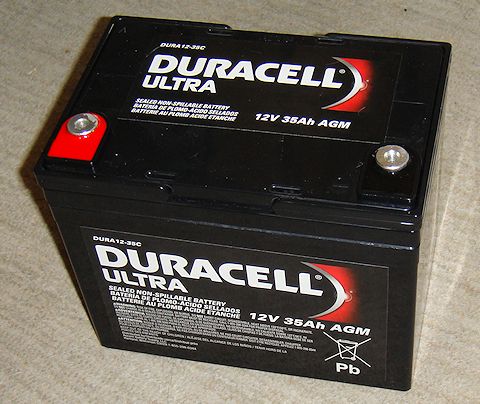
I had rounded up the width measurement of the box, and the batteries had a very small lip on them that was not included in the technical information of the battery stating the actual width. Combine the two very small variances and the batteries would not fit side-by-side in the box I had planned. Fortunately, they were the same batteries that I had identified for another project so all was not lost. So, hours more searching online till I finally gave up. Good news is we have a Duracell Ultra battery 12v 35Ah AGM, model # DURA12-35CBatteriesPlus store in town so I grabbed the box and headed to the store. Ten minutes later I was walking out the door with a great battery, the Duracell Ultra 12v 35Ah AGM, model # DURA12-35C.

I was pleasantly surprised to have 35Ah capacity in such a small package. And remember that, based on my usage requirements, I needed a 34Ah battery or larger. You never know when the extra 3% capacity will be the one transmission you get out before the battery dies. Yeah, sorry a little melodramatic but you get my point.


So here are some technical facts on the DURA12-35C:

  • AGM technology (absorbed glass matt)
  • 12vDC SLA (Sealed Lead Acid) Battery Battery
  • 35Ah
  • U1 Group Size battery
  • Handles offer easy lift & carrying
  • Speedy connection with 6mm female threaded terminals
  • Size: 7-3/4″ L x 5-1/8″ W x 6-1/2″ H

Now here is a point of the box design that I struggled with just a little bit. I wanted to keep the integrity of the box intact. In other words I don’t want anything going through the box walls. That will keep it water and air tight. But I need to be able to have a set of Anderson Powerpoles to hook up a line to the radio and I need a set of Anderson Powerpoles to connect the solar charging unit to the box to keep the batteries charged up. And I want a voltmeter to keep track of the battery.

I have seen over the years that the more points you have that are vulnerable, the more likely you are to have a failure. So every breach of the boxes integrity is a potential failure point. But there is also the convenience factor as well; the box has to be easy to use.

Anderson Powerpole Chassis Mount for 2 Powerpoles Sets (4 conductors)This is where compromise and trade-offs come into play. I decided to go with the Anderson Powerpole Chassis Mount. This gives me a sturdy mounting system for two sets of Anderson Powerpole PowerWerx.com supplier of Anderson Powerpolesconnections (power out, charging in). The Anderson Powerpole Chassis Mount is available through Powerwerx.com

While the box is no longer water or air tight, I think it will fall into that category of “good enough.” While it won’t keep water out, it will resist rain. And while it isn’t airtight, it will keep most of the dirt and dust out. I am thinking that when I complete the install I will look for ways to seal it up on the inside to make it more resistant to rain and blowing dirt/sand.

To track the battery voltage condition I went with the Powerwerx Panel Mount Digital Volt Meter. It has a nice blue Powerwerx Panel Mount Digital Blue Volt Meter for 12/24V Systemsdisplay and I’ve used them before. Again, available through Powerwerx.com PowerWerx.com supplier of Anderson PowerpolesNice little high-quality units. But this volt meter will be mounted inside of the box not mounted on the exterior. To do that I would have to drill a 1-1/2” hole through the box sidewall and I am just not ready to make that size failure point.

I will have to fabricate a couple of “hold-downs” to keep the battery in-place. I will also have to fabricate a panel on which to mount the volt meter. I will integrate them just to make everything sturdier. And I will probably have to do a “bolt-through” or two to make it all stable. But I will try to keep those integrity breaches to a minimum.ATC Style Fuse Holder 10ga with 1/4" Ring Terminals and Anderson Powerpoles

To protect the electrical circuit I will use a Powerwerx ATC Style Fuse Holder 10ga with 1/4″ Ring Terminals and Anderson Powerpoles. The fuses are common, readily available and I can even pinch them from a vehicle if I need to.

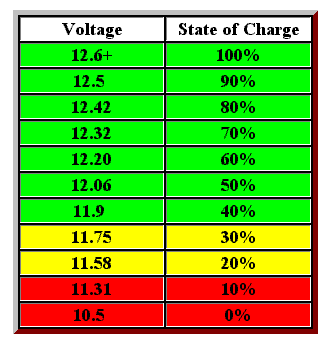
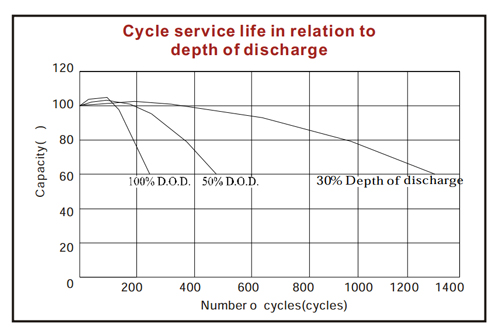
There is a wildcard as far as interior components are concerned, LVD (low voltage disconnect). Overly discharging an AGM battery seriously reduces its life span (number of charging cycles). So you only want to draw it down to a certain voltage level. Based on the voltage stats of the Yaesu FT-8900R radio, the radio can operate down to about 10 volts before it shuts off. However, that is too much battery discharge under normal conditions for an AGM battery. Refer to the chart to see how the “depth of discharge” can serious reduce the number of times you can recharge the battery.

AGM battery discharge volts state of chargeAGM battery depth of discharge cycle chartNow, I can do one of two things to overcome that challenge:

1) Monitor the volt meter for a reasonable discharge depth, say 12.32 volts. And when the battery hits that level I manually turn off the radio till the battery is recharged.

2) Use a LVD unit that will automatically turn off the radio when a pre-set voltage level is reached. And it will also turn the power back on to the radio when it reaches a safe charge level once again. I am evaluating several different LVD units; one reasonably priced, the other is considerably more expensive. You can guess which one is probably better suited for this application. But I will provide more when my testing is done and I’ve made a final decision.

So that is it, no more guts for the power box than what I have outlined above other than the wiring. I will be using all Ham In The Box - Anderson Powerpole10g wire to ensure that the maximum current can be carried throughout the system. And, I want to make sure that I don’t overheat anything and burn it all up. As for connecting the wire to components I will once again be using Anderson Powerpole connectors for everything. This gives me a whole lot of options and flexibility. And most of all, when things get bad I can pull different pieces of my projects out to repair other more critical equipment. And I can do it with a minimal of effort, damage, and installation effort.

Solar Power –

I have already decided on two solar charging options:

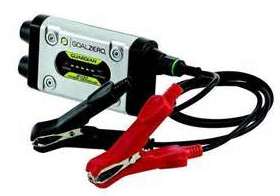
Option #1 – A single panel system from GoalZero, Boulder 30 panel with the Guardian 12v charge controller. Goal Zero guardian 12v charge controllerThe charge controller has a built-in PWM Lead-Acid and supports up to 90W solar panels. It also has LED Status lights for the charging status and battery. Some technical specs on the panel –

Rated Power: 30WGoalZero Boulder 30
Open Circuit Voltage: 18-20V
Cell Type: Monocrystalline
Weight: 6.5 lbs
Dimensions: 21″ x 18″ x 1″
Optimal Operating Temp: 32-104 F
Certs: CE, FCC

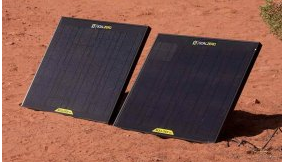
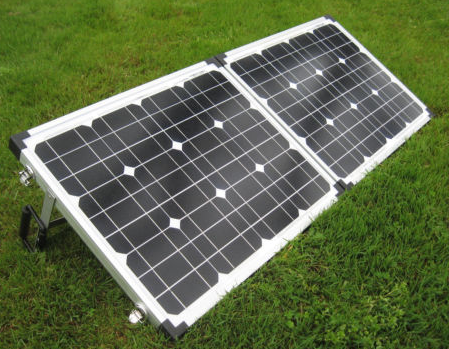
Options #2 – A Glow Tech dual panel, portable system 60 watt folding solar kit, with folding stand, and integrated charge controller. Features of the Glow Tech system:

•   High efficiency monocrystalline solar panelsGlow Tech solar Power Box 60 watt folding solar kit, w/folding stand, charge controller
•   Suited for flooded, gel, AGM, or calcium batteries
•   Low iron tempered glass resists breakage
•   Durable folding frame, so you can tilt the panels toward the sun
•   Built-in PWM charge controller
•   Bonus! Includes fabric storage bag
•   Spring-loaded carrying handle
•   Solar panels are weatherproof and sealed to withstand the elements
•   Includes cables pre-wired for easy hookup
•   25 years warranty on the solar panels

Technical Info:

•   Rated Power Output:   60WGlow Tech solar Power Box 60 watt folding solar kit, w/folding stand, charge controller
•   Optimum Operating Voltage [Vmp]:   17.5V
•   Optimum Operating Current [Imp]:  3.43A
•   Open Circuit Voltage [Voc]:  21.7V
•   Short Circuit Current [Isc]:   3.82A
•   Normal Operating Cell Temp [NOCT]:  47±2°C
•   Maximum System Voltage:  1000 vDC
•   Series Fuse Rating:   10A
•   Operating Temperature:  -40°C to +85°C
•   Application Class:  Class A
•   Cell Technology:   Monocrystalline Silicon
•   Folded Dimensions (approx.):   22¼” x 17¾” x 3″
•   Unfolded Dimensions (approx.):  43″ x 18″
•   Total Weight (approx.):   19lb 7oz


2009 - 2019 Copyright © AHTrimble.com ~ All rights reserved
No reproduction or other use of this content 
without expressed written permission from AHTrimble.com
See Content Use Policy for more information.

Yaesu FT-8900r antenna stand and ground plane

Diamond CR8900A Quad-band antenna for a Yaesu FT-8900rnote: first appeared in March 2015

I have one of the best Ham radios on the market today, a Yaesu FT-8900r. It is a quad-band mobile radio that is simply the top of the line for its mission. To maximize its capabilities I purchased a Diamond CR8900A Quad-Band FM Mobile Antenna. I already have a NMO (New Motorola) mount on my truck’s roof. FYI – NMO is the defacto standard for professional antenna mounting. So, I have this really high quality radio, a matching high quality antenna and no real Yaesu FT-8900r Quad-Band Ham Radioway to use both in a ground-based application. Yes, I believe I am far more likely to use the radio outside of my truck during times of need.

So what antenna would I use?

The question is valid since the CR8900A requires a ground plane that is provided by the truck roof. A ground-based use would have no such metal roof as a ground plane. So I purchased a ground plane kit.

TRAM 1465 Land Mobile Base Ground Plane KitTRAM 1465 Land Mobile Base Ground Plane Kit. Cost was $22 through Amazon. The kit solved that issue but I was still undecided on how to set-up the antenna itself. So I went back to basics and defined the “mission” I was trying to accomplish.

Mission –

A highly portable and versatile quad-band antenna supporting my Yaesu FT-8900r which was capable of operating in almost any environment.

Solution –

Then it dawned on me, I had already built a support structure for dual UHF/VHF antennas that mounts to a camera tripod so why not do the same here. And so it was done.TRAM 1465 Land Mobile Base Ground Plane Kit

I put an additional bend in the bracket, drilled the appropriate sized hole in the “foot” of the bracket, and then went to Lowes to buy a wingnut to match the threaded post on the camera tripod. The camera tripod has a hook in between the legs in the center that I can attach a weight to hold the tripod steady to the ground. Because the tripod is adjustable I can have significant flexibility with the height of the antenna.

TRAM 1465 Land Mobile Base Ground Plane KitTotal time to build: less than 1 hour
Cost to build: Less than $25 (includes tripod bought at Goodwill)

Now when I set-up my Yaesu FT-8900r for ground based, non-vehicle, operations I have a great antenna stand to use complete with ground plane.


2009 - 2019 Copyright © AHTrimble.com ~ All rights reserved
No reproduction or other use of this content 
without expressed written permission from AHTrimble.com
See Content Use Policy for more information.

Yaesu FT-8900R Ham Radio : Storing and Case

Yaesu FT-8900r Quad-Band Ham Radionote: first appeared in March of 2015

In this post I will go over how I store my 8900R and what I store with it.

In two previous articles I went over the Yaesu FT-8900R radio and accessories. Both articles are worth the read:

Yaesu FT-8900R Ham Radio – Part #1
Yaesu FT-8900R Ham Radio – Part #2

So let’s go over my standard format, what is the mission for all of this?

Mission –

To safely store the radio and all components with which to operate the radio.

Requirements & Restrictions –
  1. Case must be sturdy, at least to military specifications.
  2. Case musty protect against dust, dirt, and water impingement.
  3. Case should protect the contents against damage due to reasonable heights and rough handling.
  4. Case should be low profile and not draw attention to them.
  5. Case should be light enough for one person to easily carry.

SKB i-series 3I-1711--68-C.The case I chose was the SKB i-series 3I-1711–68-C. These cases are waterproof and as sturdy, if not more so, that Pelican cases. And they are cheaper that Pelican cases. They come with “cubed” foam ready to be cut to size for your equipment.


SKB i-series 3I-1711--68-C for the Yaesu FT-8900R


So this is what my case looks like for my Yaesu FT-8900R.  The case is clearly labeled for easy identification.

SKB i-series 3I-1711--68-C for the Yaesu FT-8900RYaesu FT-8900R Radio Case –

Bottom Level:

  • 1 x Power supply, AC, 19amp
  • 1 x Mounting bracket, radio
  • 1 x Microphone, MH-48
  • 1 x Radio, Yaesu FT-8900R


SKB i-series 3I-1711--68-C for the Yaesu FT-8900RMiddle Level:

  • 1 x Power cord, AC


SKB i-series 3I-1711--68-C for the Yaesu FT-8900RTop Level:

  • 1 x 5′ Power extension cable, Anderson Power Poles on both ends
  • 3 x packages various mounting screws.
  • 1 x Mounting bracket, remote head
  • 1 x RT Systems Programming CD
  • 1 x RT Systems Programming cable
  • 1 x Power cable, Anderson Power Poles to hard soldier connection (AC power supply)
  • 1 x Cable, radio head to radio body
  • 2 x Fuses, 15amp

On top of the radio I place a 8900 user’s manual in a 1-gallon Ziplock bag with the latest copy of the US Amateur Radio Bands chart.

I have given you a list of the equipment needed to run the Yaesu FT-8900R Ham radio. Is it everything you might need?  This was meant strictly for the radio equipment itself and the essential equipment to get it going.

Take this list and use it as a starting point for your specific need and mission.


2009 - 2019 Copyright © AHTrimble.com ~ All rights reserved
No reproduction or other use of this content 
without expressed written permission from AHTrimble.com
See Content Use Policy for more information.

Yaesu FT-8900R Mobile Ham Radio – Part #2

Yaesu FT-8900r Quad-Band Ham Radionote: first appeared in February 2015

As mentioned in Part #1 of this series, I really love this mobile unit!  The Yaesu FT-8900r is an amazing piece of Ham radio technology wrapped up in a very compact and sturdy package.  This thing does it all and matches my mission requirements and then exceeds my expectations.

In the last post (Yaesu FT-8900R Mobile Ham Radio – Part #1) I covered the specifics of the Yaesu FT-8900R itself.  In this post I will go over the accessories, installation info and some other tidbits.


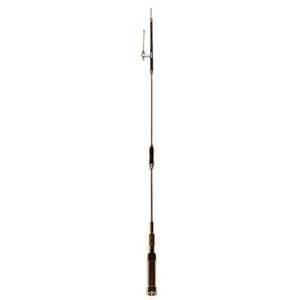
RadioAntennaCarVehicle external antenna for temporary dual band (2m & 70cm) operations : This antenna is a must have for temporary vehicle operations.  It is not a permanent antenna, it is a magnetic mount antenna.  You can move the antenna to other vehicles if needed.  You can also use it in a non-vehicle setting as well by placing the antenna higher than the radio would normally be located.  The drawback to this antenna is its design for dual-band operations (2m & 70cm) not all the bands that the 8900 is capable of using.  Great option where portability is needed and only dual-band operations are needed..

Diamond CR8900A Quad-band antenna for a Yaesu FT-8900r

Diamond CR8900A Quad-band antenna for a Yaesu FT-8900r

Diamond CR8900A

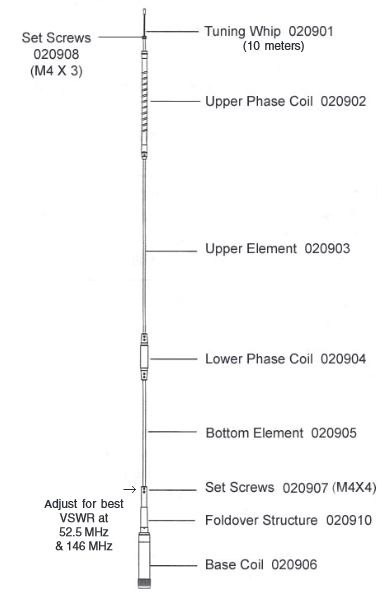
Vehicle permanent (or semi-permanent) mount external antenna : Diamond CR8900A Quad Band FM Mobile Antenna.  I love this antenna!  It took almost no tuning out of the box.  Probably really didn’t need to tune it all if truth be told.  The CR8900A is pretuned to give best bandwidth and VSWR over the FM portions of 10m, 6m, 2m, and 70cm Ham bands.  Designed specifically for the Yaesu FT8900.
Specifications:
Bands:        10m/6m/2m/70cm
Gain dBi:     2.15 (10m/6m/2m); 5.5 (70cm)
Watts:         60
Height:        50″
Connector:  UHF
Element Phasing:     1/4l-10/6; 1/2l-2m;2-5/8l-70cm

Note:  Not recommended for use with magnet mounts. Diamond CR8900A Quad-band antenna for a Yaesu FT-8900rGrounding required.  I would not run down the interstate at 75mph with this puppy mounted on your roof.  I feel this is a great antenna but better used when the vehicle is stationary.  It has a “fold-over” joint for storing when moving or going under low hanging branches…or through the McDonalds drive-thru.

Mobile Antenna Band    Frequency Coverage Range    Vertical Antenna Gain    Element Phasing (wavelength)
10 meters                              28-29.7 MHz                                2.1 dBi                                     1/4
6 meters                                50-54 MHz                                   2.1 dBi                                     1/4
2 meters                               144-148 MHz                                2.1 dBi                                     1/2
70 centimeters                     440-450 MHz                                5.5 dBi                                    2 x 5/8

Pull in the signals with Diamond Antenna CR8900A Quad-Band FM Mobile Antennas. Designed specifically for the Yaesu FT-8900 or FT-8900R radio, these antennas are pre-tuned to give the best SWR bandwidth over the FM portions of the 10m, 6m, 2m, and 70cm ham bands when mounted on the side of your vehicle. Plus, Diamond mobile antennas offer a “one-touch,” fold-over hinge that allows for easy access into low-overhead buildings.

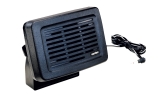
Yaesu MLS100 external speakerExternal Speaker :  I had to go with a Yaesu MLS-100.  You can buy other speakers but I like the idea of a speaker that is matched to the radio by the manufacturer. The Yaesu Vertex MLS-100 external loudspeaker is a high performance communications speaker matching the impedance and output requirements of most Yaesu transceivers. It mounts on a swivel stand that is supplied along with mounting screws and bolts. A 6.5 foot (2m) audio cable that terminates in a 3.5 mm mono mini plug is also supplied. Black plastic cased speaker and black metal mount. Impedance is 4 ohms and the maximum power input is 12 watts. Yes, the FT-8900r has an internal speaker, but for vehicle operations and the associated noise I think an external speaker is really needed.  Dimensions: Height: 3.75 in., Width: 5.5 in., Depth 1.75 in.

Heil Sound - PMS-6 & Headset Adapter for YaesuHeadset with Boom Mic :  Heil Sound – PMS-6 & Headset Adapter.  Why?  Because I believe that there are times when you want, or need, more privacy or the ability to hear/speak under adverse conditions.  A headset with boom mic is the right answer.  The Pro Micro Single Side is a very unique high performance single sided headset.  This headset is outfitted with the HC-6 element and is designed for commercial broadcast applications, the -3dB points are fixed at 100 Hz and 12 kHz with sensitivity of -57 dB at 600 ohms output impedance (centered at 1 kHz.).  The microphone audio for the Pro Micro series terminates into a 1/8” male plug while the head phone terminates into a 1/8” stereo with adaptor. To adjust the headset simply bend the stainless steel piece that is inside the black padded headband.

Mic Gain
Adjust the mic gain while watching the ALC meter. Adjust so that the audio peaks just fill out the ALC scale and do not go beyond the ALC scale.

Speaker
The 706 speaker works all the time. To turn that off simply plug an empty 1/8” plug into the front headphone jack.

Vox  (voice activated transmission)
Set the Vox gain controls for proper activation.

Carrier Balance
If your rig has carrier balance it acts as a type of mic tone control. It is best to listen to yourself in another receiver as you transmit into a dummy load. You are actually moving the carrier + or – 200 Hz above or below the center of the filter network, which causes your microphone audio to change its tonal quality.  The use of the AD-1 series mic adapters allow simple interface with popular transceiver inputs. The adapter is 6” long and has a 1/8” female input jack for the boomset microphone and a 1/4” female that is for the PTT (push to talk) line for the Heil foot switch or hand switch. The 1/4” stereo plug goes into the headphone jack on the transceiver front panel.  All Heil Pro Micro Boomsets are shipped with foam windscreen that fits over the microphone. The windscreen does not change the frequency response, just the breath blasts directly into the microphone.

RT Systems ham radio programming softwareProgramming Software w/cable :  RT Systems FT-8900r Radio Software.  While the radio is fully programmable from the front panel that is not the way you want to try and program this radio. I tried several different “free” programming software program; had problems with all of them.  RT Systems puts out a superb product that can’t be beat in my opinion. FYI – You can use the files from any of the RT Systems software to transfer to any other radio that you are programming.  So I can use all programming I did for my FT-60r for my Yaesu 8900 radio with a simple click of a software button.


NOTE: I will be posting programming files for different parts of the country as well as different repeater systems.

MFJ-4230MV COMPACT SWITCHAC Power Supply : MFJ Enterprises Inc. MFJ-4230MV COMPACT SWITCH (COMPACT SWITCH PS, METER, 4-16V ADJ. 110/220VAC).  This is a great AC power transformer, high quality and very reliable.

This is the world’s most compact switching power supply that also has a meter and adjustable voltage control. Just 5″ W x 2 ½” H x 6″ D, it weighs only 3 lbs. — it is the perfect pack-n-go power supply for field day, DXpeditions, camping, hiking or to pack for your next business trip or vacation to some far away place. MFJ-4230MV gives you 25 Amps continuously or 30 Amps surge at 13.8 VDC. The voltage is front-panel adjustable from 4 to 16 Volts. MFJ-4230MV also has a selectable input voltage: choose from 120 or 240 VAC at 47 – 63 Hz.

A simple front-panel push-button switch lets you choose either Ampmeter or Voltmeter — allows you to select Amps or Volts as you wish to read them. MFJ-4230MV has an excellent 75% efficiency and extra low ripple and noise, < 100 mV. Awhisper-quiet fan cools by convection and forced air cooling. Normal air-flow around the power supply is continuous and a heat sensor increases the fan speed when the temperature rises above 70 degrees Celsius. DC output is five way binding posts on the back of the MFJ-4230MV so you can power your dedicated HF, VHF or UHF transceiver with ease.

Charge Guard CG-MP

TIP – Battery protection when installed in a vehicle :  I also use Charge Guard CG-MP timer for my truck’s power installation.  This ensures that I won’t inadvertently run my battery dead using my Ham radio without the engine running.  Well worth the $’s.


Anderson Power PolesTIP – Power connectors :  I use Anderson Power Poles for all my power connections.  This makes hooking up my power “brainless” and quick.  Plus it gives me the added advantage of using power cables, fuses, etc. for more than one radio.  Basically allows for flexibility.  I chose Anderson Power Poles because there are essentially the standard for Ham radio operators.


So this concludes my review of the Yaesu FT-8900r quad-band radio.  It is a solid “Buy!”  You will not be disappointed and it will serve you for a very long time.
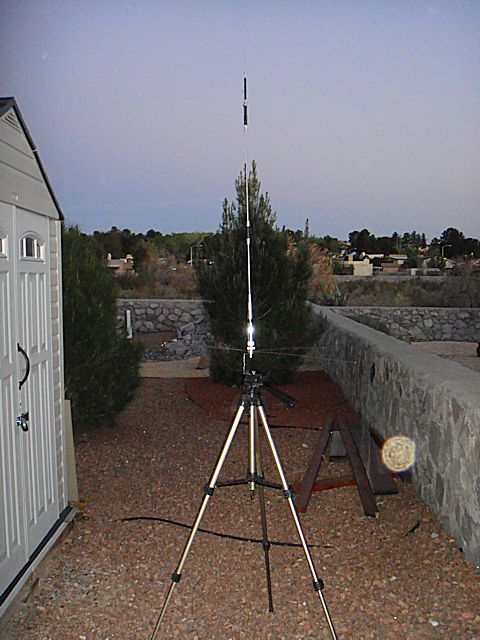
2009 - 2019 Copyright © AHTrimble.com ~ All rights reserved
No reproduction or other use of this content 
without expressed written permission from AHTrimble.com
See Content Use Policy for more information.