Feedback & Comments: 4/11/2020

AH Trimble Feedback and CommentsC writes…

“Good Morning:

My husband and I are past 80;…..we are still living here on Terra Firma so are continually trying to be informed about options for the future.

I have forever been a “prepper”……While hubby loves his horses, taking grand-kidlets into the mountains on horses, fishing, teaching them how to live off the land, etc., etc.!

Admittedly, what lies ahead for everyone is a HUGE Unknown …..at least to a lesser or a larger degree.   BUT, after death THERE ARE NO questions!

Thus, I enjoy learning and reading about THE  “What IF” THAT becomes a reality….Then I say to myself….”Hey, I read an article by a guy I never met named AH Timble, and he suggested this IDEA might be a “life saver” at just such a time as this!!!!   : )

Thanks,  AH Trimble!!


Send Me Your Feedback & Comments…

← Back

Thank you for your response. ✨


2009 - 2020 Copyright © AHTrimble.com ~ All rights reserved
No reproduction or other use of this content
without expressed written permission from AHTrimble.com
See Content Use Policy for more information.

Initiative ’17 – Part #5: Flipping the Switch

note: This article was originally published in May 2017, then lost in the site crash. I thought it appropriate and timely to reconstruct it for re-publication now. I took the liberty of some limited editing to improve grammar, readability, spelling, and content.

What the heck does “flipping the switch” mean?

Some of you probably already know, some may not. But let me give you my take on what it means. I will do it somewhat long-winded but for a reason. Hang in there with me.

Most people don’t grow up and live their life having to flip the switch. If you played athletics you got a small taste of it when you trotted onto the field. I on the other hand, had to learn switch flipping when I was a young teenager. Why? Because I spent my early teenage years in a military school. But, it didn’t end there, I spent the next four+ years in the military…flipping the switch.

Can you image at the age of 13 hearing a bugle sounding “reveille”…and you better be jumping out of bed, dressed, and standing by your bed for your company commander to come walking by. You learn to wake up very quickly, alert, and to move quickly.

Then comes my time in the US Navy. The same style of waking-up, etc., so not much changed. Then came along “general quarters”…life changed again. General quarters is a call for everyone on the ship to go to their battle stations. You have to drop whatever you are doing and get to a specific place in the ship and prepare to go into battle. And you have precious little time to do it. Should you be only a couple of seconds late hatches are slammed shut and you are caught where you are…not at your battle station and not ready to do your job.

When in-port I was also part of the damage control team. When a fire broke out onboard ship we had to react quickly to fight the fire. And as you guessed it by now…another flip the switch moment. And then when I became a structure firefighter it was all about flipping the switch. Sometimes it was a house fire, sometimes a bad wreck on the Interstate, maybe a baby choking, sometimes a big brush fire, but the “alarms” going off during our shift made us get into high-gear quickly. And that meant our minds had to be entirely focused on the job at hand once the alarm bell sounded.

So, is there a difference in emergency preparedness when it comes to emergencies, disasters, or especially in the case of a grid-down event?

Look, I’ve come up on an accident scene and observed people just standing there looking at what is happening…instead of helping. It just never entered their mind to actually roll up their sleeves and help people that were injured or put out a small car fire with a fire extinguisher. They simply froze, unable to take action.

I remember one time a hurricane was expected to hit near our area and the flooding was expected to be intense. And we drove by a house where the homeowner was mowing his yard. What!?! Yup, he was in denial that the flooding would be bad from the impending hurricane…and engaged in Normalcy Bias.

What does any of that have to do with switch flipping?

Simple, you have to be ready to be in a state of mind to deal with the myriad problems that will come along in emergencies, disasters, and grid-down events. You have to forget mowing your grass and start filling sandbags.

It would be a legitimate question right about now if you asked, “How do I learn to do that?”

Well, go to military school, join the Navy, become a firefighter, etc. But, for most folks all that isn’t possible or practical. So, how does the average person learn that skill? Drill.

Yeah, pretty simple really…you drill. “Drill” means practice for those of you that might not clearly understand what I mean.

Here is how I would go about it if I was just learning this concept:

  1. Hold a day time fire drill with your family.
  2. Hold a night time fire drill with your family. Yeah, that means when your family is asleep.
  3. Set your alarm to go off 1am. When it goes off you must accomplish –
    1. You must get fully dressed.
    2. You must be in your car with the car running and out of the garage.
    3. Do that in less than 2 minutes.
  4. Have your spouse set your alarm for you at whatever time they choose. Accomplish everything in #3.
  5. During the day have your alarm set for a random time. When it goes off –
    1. You must change into your tactical gear, including vest.
    2. You must have your pistol and long gun on you in battle configuration.
    3. You must have all of your other battle rattle on you as if you are going to war.
    4. Yeah, don’t go running outside and stand in the driveway for this one.
  6. Go to your favorite shooting location with a couple of your buddies. Explain to them what you are trying to accomplish. Here’s how I would like it to go –
    1. You set up a series of targets that you have to move to and in between. A couple are long gun targets, a couple are pistol targets. Each one takes a different position (i.e. prone, lying down, hide behind a barrier, etc.). And one movement between targets must involve a transition from long gun to pistol.
    2. You are in full battle rattle, ready for war.
    3. You sit around, or stand around, with your buddies just enjoying the friendship time.
    4. Any one of your buddies at any time can sound the alarm. That is your cue to flip your switch.
    5. You proceed to each target in an expeditious manner. While you are engaging your targets your buddies are yelling at you, they have an air horn that they are sounding…anything for distraction.

By now you get the idea. You are learning to go from 0 to 60mph as fast as possible. You change your state of mind from the everyday life mode to the “I’m fully engaged” mode as quickly and completely as possible.

Here’s what you accomplish by learning to flip the switch:

  1. You learn to become instantly engaged in situations that are potentially dangerous.
  2. You learn to hyper-mode your Situational Awareness very quickly.
  3. You learn to overcome cognitive dissonance.
  4. You gain confidence in your ability to handle potentially bad situations.
  5. You greatly increase your ability to survive and protect your family.

Over the years I’ve seen so many people simply freeze when facing a bad situation. Their brains simply become overloaded with their circumstances and they become mentally and physically immobilized. That may well kill you when facing emergency preparedness situations.

On the other side of the coin I’ve seen folks do some amazing things because they’ve learn to act quickly. They don’t wait for events to overwhelm them, they control the situation, and they take action. You can be one of those people.

A couple of years ago during a class I was taking to be mentally prepared to survive deadly situations they had people stand about three feet apart. Then when the instructor said “go!” they had to raise their paintball guns and start shooting. Why? True, it was only paintball but they still hurt. And it was amazing to see that it was only a small fraction of a second between the first person getting off their shot…and the other person getting off their first shot. So, who would win in a real life gun battle? Almost always it is the person who lands the first shot…like 98% of the time.

It was who flipped their switch the quickest.

Don’t be the dolt that freezes up. Don’t be that person who doesn’t take action quickly enough…and their family falls in the victim category. Your family deserves more.


2009 - 2020 Copyright © AHTrimble.com ~ All rights reserved
No reproduction or other use of this content
without expressed written permission from AHTrimble.com
See Content Use Policy for more information.

SitRep – 4/11/2020

Well, it’s struck close to home…and now we will see where it ends up…won’t we.

For a month now I’ve been laying out what is happening, what will happen, the fraud, the fake, the hoaxes, the cowardliness, the turncoats, the hustlers, warnings, etc. Well, has any of it struck close to you yet? It has us.

US Government & Medical Community Fraud –

Last week I began investigating the actual COVID-19 death count, its reliability, any possible fraud in it, and why the reaction to it. Well, before I could complete my investigation and write an article on it my wife sent me a Youtube video. They were looking into much the same thing and produced a great video that really hit it. But, let me tell you what I found before I embed the video for you to watch.

Let’s say you had an uncle that was in a car accident, he was thrown through the windshield, and died as a result. What would the cause of death be? Probably listed on the death certificate as “massive head trauma” or something similar. Now, let’s say that during the autopsy they found he had a somewhat low iron deficiency in his blood. Would you expect to see the cause of death changed to “iron deficiency” on his death certificate and the county coroner now claim in news reports he died due to “iron deficiency”?

Yeah, I didn’t think so. But, that is exactly what the government is doing with COVID-19!!

So, a person dies last week from a heart condition (i.e. heart attack). And while performing the autopsy the coroner tests for COVID-19 (post-mortem). And the patient tests positive for COVID-19. Would it accurate to say the dead person died from COVID-19? No idea, right?!?! Maybe, maybe not…who knows at this point? Did they have an iron deficiency too? How about a cold? How about an ingrown toenail?

So here are some of the stats regarding folks  who’ve died recently classified as COVID-19 deaths… with underlying health condition (most patients had more than one underlying condition), percentage of deceased with the condition:

  •     Diabetes, 41%
  •     Chronic kidney disease, 31%
  •     Obesity, 28%
  •     Cardiac, 23%
  •     Pulmonary, 18%
  •     Neurological, 5%
  •     No underlying conditions, 5%
  •     Immuno-compromised, 4%
  •     Chronic liver disease, 1%

It was Dr. Deborah Birx, the response coordinator for the White House coronavirus task force, that first officially revealed this information earlier this week. And it should be noted…almost every other country in the world doesn’t do this! So why does the US do it?

Money and power.  The more scared we are of COVID-19…the more power we willingly give up to all levels of government to restrict and control us. The more scared we are of COVID-19…the more money the federal government can spend. It is a vicious cycle of evil…and we’ve fallen victim to it…once again.

What we know for sure…the government is purposely providing false numbers of COVID-19 deaths, that is undeniable. And we know they are taking rights, liberties, and freedoms from us. We also know that the actions taken by government is killing the economy. And We The Sheeple….are allowing that to happen. Sad.

Economy –

Experts are now predicting record number of corporate and personal bankruptcies in the coming 12 months, breaking all previous records by substantial amounts. The primary reason will be record debt loads. How many bankruptcies? It could easily hit 1,000,000…probably far more.

Now, in 2010 the number of bankruptcies hit 1,500,000 due to the Great Recession. But, this time the dollar amount of bankruptcies would exceed the 2010 numbers. And in 2010 we didn’t have the huge unemployment numbers we have now. It could be another economic blood bath. Record bankrupcies on top of record unemployment on top of record debt on top of record GDP drop. Not good, not good at all.

Jobless claims just hit nearly 17,000,000…representing 10% of the US workforce. And it all happened in just a month’s time! Think about those repercussions.

Hits Close To Home –

I reported earlier about increases in crime…and more increases to come. Weird statistics are coming out…overall there is a decrease in crime reports (call volume), decrease in traffic violations, decrease in drunk driving, etc. But, other areas of crime are increasing…vehicle theft, commercial burglaries, home burglaries, looting, domestic violence, etc. And virtually all crime experts are saying the longer the COVID-19 crisis continues the more crime will increase. And that makes sense considering all of the newly unemployed, close living conditions, stress/tension, economic problems, and large releases of prison populations taking place.

One of the areas that is seeing a very large spikes are home burglaries. And now it has struck close to home. I live in a very rural area between two small towns, 7 miles to one town, 15 to the other. I live almost two miles off a paved road on an unmaintained county road. Our acreage is located at nearly the end of a dirt road…two neighbors past me, then only a wash on the end. Our neighbors are about 400 – 800 yards away from our house depending on the direction you look. To our east…well, I could easily say we don’t have any neighbors.

A couple days ago a few of us folks got together to talk about life under COVID-19 and what we might do for the future. I related that I had foot prints show up near the dirt road, came across my fence, walked around some old sheds still standing, walked about 80 yards looking around, then crossed back over the fence back to a waiting vehicle.

One of my neighbors talked about two instances in the previous 2 days of unknown folks on the road at his place. One drove by in an older model pick-up that is not from our area. Slowed down to look his place over, then drove on. Another stopped at his gate, called him over, and asked him a number of questions. Questions that they should not have been asking.

And now…last night I got a text message from him saying another neighbor had a break in. The victim has a farm in the bottom land, about 1/3 of a mile from me, and 1/4 mile from the closest neighbor. The criminals broke into the house and stole stuff, did a little damage, details unknown. I will know more later today.

Now, add that to a Facebook group that has started chatter over the last 10 days about a lot of outside folks coming into our general area (not just our small rural corner). Lots of folks that aren’t normally around, some never before seen. The concern is palatable…making locals nervous.

Later today we are getting together to discuss options and start a plan implementation. I will go check on neighbors places to see if there are problems there this morning, before the meeting. About half of the property owners are not residents here and live somewhere else, coming here on weekends, short vacations, holidays, etc. We will make sure their places haven’t been broken into.

Summary –

Bottom line…keep your eyes open folks! It is happening…and getting worse. No one knows where this will all end up…but it isn’t looking good. No, not at all.


2009 - 2020 Copyright © AHTrimble.com ~ All rights reserved
No reproduction or other use of this content
without expressed written permission from AHTrimble.com
See Content Use Policy for more information.

Interesting Events in US History – Part #4 (1942-1963)


YEAR
EVENT DESCRIPTION
1942 US Citizens locked up in concentration camps during WWIIThousands of German and Japanese American citizens were interned into prison camps on the order of Democrat President Franklin D. Roosevelt, a socialist, Progressive extremist and war monger. Internees were denied Constitutionally required due process on order of President Roosevelt.   Hundreds of thousands of others were forcibly relocated on FDR’s orders. J. Edgar Hoover, head of the infamous FBI, played a major role in identifying people to be interned. Hoover was the lead on the same interment under Progressive President Wilson during WWI.
1944 Second Bill Of RightsPresident Roosevelt, socialist and Progressive extremist, advocates for the “Second Bill of Rights” which is directly related to, and based on, the Communist Manifesto.
1945 The United Nations was founded. The UN advocates for a global government, radical environmentalism, socialism, and the UN is used as a tool against capitalism and the US. The UN was widely endorsed by United States Progressives, Democrats, socialists, and communists.
1947 The Central Intelligence Agency (CIA) was established by order of President Truman, a Progressive and globalist. The CIA’s mandate was international spying, overthrowing foreign governments, and assassination.
1947 In the Supreme Court decision (Everson v. Board of Education) the phrase and judicial precedent of “separation of church and state” was established by radically Progressive Supreme Court Justices.   Persecution of religion by atheists and government was begun via this Supreme Court decision. The concept of “separation of church and state” was never, and still isn’t, a Constitutional provision. Actually, the Constitution, in the Bill of Rights 1st Amendment, protects against this kind of government intrusion and guarantees freedom of religion not freedom from religion.
1950 Democrat President Truman, globalist and Progressive, enters the United States into the Korean War.
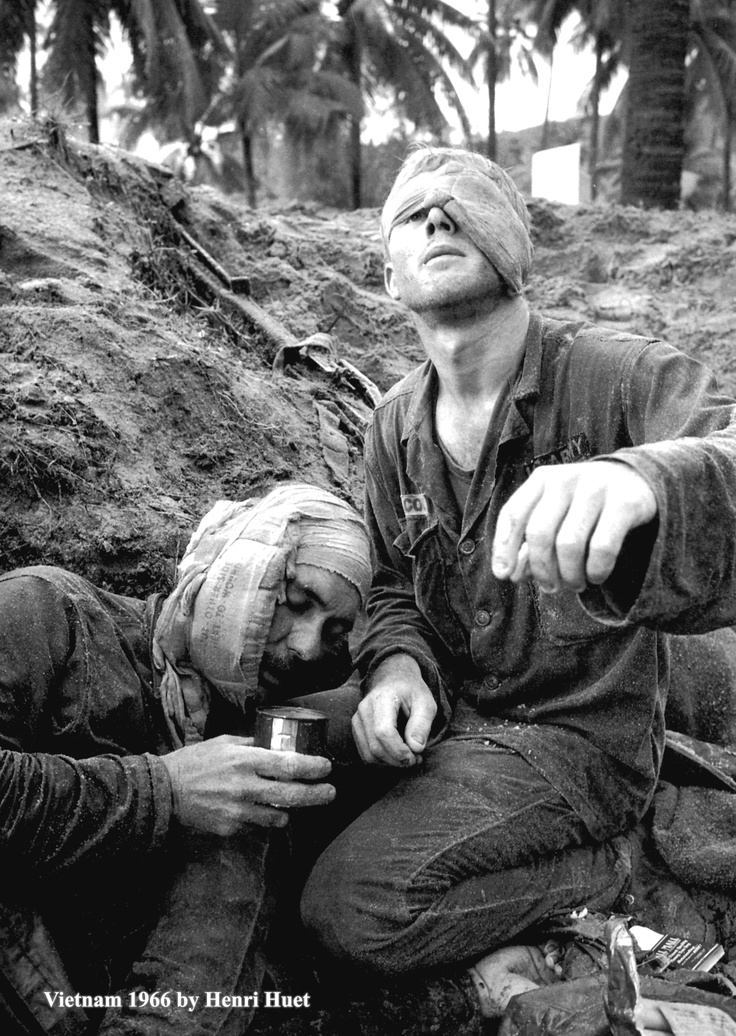
1950 Vietnam WarDemocrat President Truman, globalist and Progressive, sends military into the Vietnam War.
1951 The National Security Agency (NSA) was established by order of Democrat President Truman, a Democrat, Progressive, and globalist. Truman was also a staunch advocate of the United Nations.
1953 The CIA overthrew the Iranian government at the direction of Republican President Eisenhower, Progressive and Neo-Con.
1954 The CIA overthrew the Guatemalan government at the direction of Republican President Eisenhower, Progressive and Neo-Con.
1954 The CIA begins US involvement in the Vietnam War at the direction of Republican President Eisenhower, Progressive and Neo-Con.
1954 South Dakota was the last state to require that drivers have a license.
1960 Democrat President Kennedy, Progressive/globalist and war monger, deployed massive numbers of American soldiers to join the on-going Vietnam War.
1961 Democrat President Kennedy, Progressive/globalist and war monger, triples the number of American troops in Vietnam.
1961 At the encouragement of the CIA, Democrat President Kennedy orders the invasion of Cuba to overthrow the Cuban government; the overthrow fails miserably. The United States quickly abandons the Cuban freedom fighters to be slaughtered by Cuba’s President Castro.
1961 Democrat President Kennedy states he was stupid to listen to the CIA and he will “break the CIA into a thousand pieces and scatter them to the wind.
1961 Barack Hussein Obama II is born. His mother was Stanley Ann Dunham raised by Communist parents. His father, Barack Hussein Obama I, was a Communist revolutionary born in Kenya. Barack is raised by his Communist grandparents. His grandparents were members of the CPUSA communist party.
1962 Democrat President Kennedy, Progressive/globalist and war monger, again triples the number of American troops in Vietnam.
1962 Further eroding freedom of religion, the Supreme Court decision (Engel v. Vitale) eliminates prayer in school. The Supreme Court was headed by and stacked with extremist Progressive justices.
1963 Democrat President Kennedy, Progressive/globalist and war monger, is assassinated. The CIA is implicated for a number of reasons, including Kennedy’s goal to break up the CIA. The CIA is cleared of all wrongdoing by Congressional investigators.
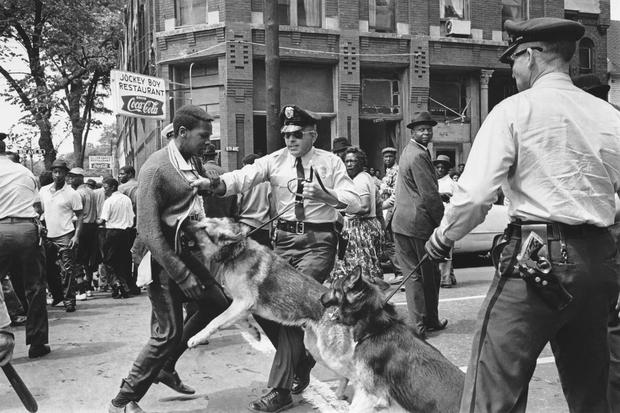
1963 CivilRightsPeaceful Civil Rights demonstrators, high school students in Birmingham, are savagely attacked by police using high-pressure water hoses and attack dogs.

Related Articles –


2009 - 2020 Copyright © AHTrimble.com ~ All rights reserved
No reproduction or other use of this content 
without expressed written permission from AHTrimble.com
See Content Use Policy for more information.

Initiative ’17 – Part #4: Leader’s Intent

note: This article was originally published in May 2017, then lost in the site crash. I thought it appropriate and timely to reconstruct it for re-publication now. I took the liberty of some limited editing to improve grammar, readability, spelling, and content.

In the previous article in this series I finally defined the “mission” and was really pleased…I think it is very appropriate and applicable to you…my loyal website supporters.

First off…yes, I know I didn’t define “Prepared to Lead” until the third article and I apologize for that. It just wasn’t clear to me till that point. When it hit me I realized that a lot of people have water and food storage, some folks have plenty of guns and ammo, some people even have seeds and other more rare preparedness items and gear. But, I honestly believe that the biggest shortage after any grid-down will be leadership.

I have seen it a hundred times right after emergencies and disasters…disorganization, lack of direction, low initiative, and disbelief. All of that stems from absence of leadership. Let’s change that!

In addition to all of the other great emergency preparedness steps you are taking we are going to add one more…albeit vital…trait to the mix. And that trait will be the ability to step up and lead. That will be you!


Background –

In high-stress, high-risk environments someone has to lead. However, in today’s new-age world, the definition of “someone” can vary widely. Over 15 years ago I held a computer job on days that I was not at the fire station. I was hired to run all aspect of operations. The corporate management prided themselves on being progressive thinkers. The president of the company even had a personal “life coach.”

When I started there their productivity was very low and their profitability was dwindling. During my orientation I was briefed on their organizational structure. They shared with me that they were using what was called a “flat organizational structure.” On the white board it looked something like this…
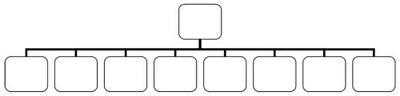
As you can assume, I asked them about my position and role in the organization…my duties, responsibilities, and who I supervised. I was reassured that I was responsible for operations but the company ran a “flat organizational structure” and we operated as a team through mass meetings to resolve issues. Yeah…OK…right… We had a discussion for several hours regarding the structure and my role…and the changes I proposed. They finally acquiesced that it would change slightly to this…

This environment was decidedly different than my leadership role and organizational structure in the firefighting world. I lasted about a year as the COO with the company before I resigned out of frustration. The company folded about a year later for the very reasons I warned them about in my resignation letter. They failed to act on even a single point a raised. Why? They got caught up in a “new” way to manage…untested, unproven, and entirely not applicable.

The point of this example was not to gloat about my being right and the company going out of business. The point is about organization, vision, and most importantly…leadership. Without the right organization any entity is doomed to failure. And, any entity without good leadership is assured of it.

In the structure firefighting world organizational structures vary slightly from department to department. But the one thing they have in common is a clear organizational chart. Everyone knows who their boss is and who they supervise. A clear organizational structure can be seen in the military world as well.

When I started firefighting life was clear – you showed up for your shift, you were given orders, and you carried out orders. Failure to do any of the above and the best you could hope for was getting a royal chewing out. The downside was being shown the door if the infraction was severe enough. Obviously there were clear boundaries, and that actually allowed the department to operate effectively and efficiently. However, it also killed initiative and innovation. But, there was a new wind blowing.

New Way to Lead Organizations –

This “new wind” started showing up in mid-1990’s with the folks getting hired possessing more education, and those individuals thought more highly of themselves, and offered their input on everything…even when not asked for it. About that same time the fire department merged with EMS (emergency medical services). The new people wanted more say-so in what they were told to do. It was a major cultural transition challenge to say the least.

Then came another life-changing shift…in 1998 I began taking a lot of wildland fire training that was developed by the federal government. That exposed me to a new style of operations and leadership. Basically, operational responsibility was more centered on a person’s knowledge, skills, and ability vs. position title. The leadership model was also more open with far more communication up and down the chain of command. It was refreshing, albeit a bit daunting to absorb after so many years of a very rigid chain of command in the fire department and my military time.

About 2007 I had the opportunity to take upper-level leadership training with some Special Forces folks. It was an eye opener to say the least. They presented a true “team concept” with very little rigidity in the command structure when it came to operations. The group of people responsible for the mission worked together, without barriers, to formulate the plan. It was common that subject matter experts (SMEs) were used in a specific area where their expertise was most appropriate, regardless of rank. However, that doesn’t mean there wasn’t a leader.

The role of the leader in this new environment was vastly different than my previous training and experience. In this new model the leader was responsible for delivering the mission parameters and making higher level decisions in the field. Other than that, the team worked together to create and execute the plan. At first I was fairly resistant to this new model. However, that soon changed once I began to see the true value in this new “team concept.”

After a couple of days I could clearly see it was obvious that this new model provided many advantages to mission success, especially at the smaller group level. As I absorbed the material I realized the success was based on two basic principles; 1) everyone in the group had “buy-in” to the plan because everyone had “input” into the plan, 2) dependence on expertise of the individual group members to resolve issues. However, I also soon realized the glue that held it all together was trust…which began with and emanated from the leader. Group/team members had to trust each other’s knowledge, skills, and abilities. But, they had to trust their leader implicitly.

Those principles of group/team dynamics is no different than what we find ourselves in here in the prepper world…especially when it comes to leadership. Without a good leader, any group/team is almost assured of failure.

So what is the key to being a good leader?

Being a Good Leader & Leader’s Intent –

There are many attributes that make up a good leader, but that subject isn’t the purpose of this article. You can read about that in my last article. < Click here to read the last article > what I want to share with you is how a good leader handles planning with his team. There are two principles of success for a good leader when it comes to planning; 1) ability to communicate clearly within the group, 2) the ability of the group to envision the “leader’s intent.”
“Leaders intent” is an in-depth subject in its own right. Many articles and research papers have been written about it and many courses for corporate and military leaders exist to train in it. It is not my intention to pontificate in great scholarly detail, it would bore you to death. However, it is absolutely necessary to understand the basic concept of leader’s intent in order to successfully plan in an effective group/team setting. It is even more critical in the execution of a mission in the prepper world.

It is pretty widely accepted across the scholarly spectrum that leader’s intent consists of –

  1. Task:  What it is to be accomplished.
  2. Purpose:  Why it is to be done.
  3. End State:  What it should look like when done.

However, I find that to be far too much content when conveying leader’s intent. I believe is should simply be defined as, “What success looks like when we are done…and why.”

My definition looks more like the last item on the list. But, I have been in far too many briefings where the “task” over shadows everything else. And, when that over-briefing rears its ugly head, then the group bogs down in tactics and loses track of the big picture.

I have given hundreds, probably thousands of briefings in my career and I think I have learned what works and what doesn’t work. I base my judgements on the success or failure of the mission itself. I found that the more I got into the details in the planning phase as the leader the higher the likelihood of failure. When I was clear on what I wanted success to look like, touched on strategy, and then stayed out of the tactics, the probability of success increased significantly.

Now, in my defense, it is not that I suck at tactics in the field, quite the contrary (IMHO). It’s when I moved into upper management and leadership positions that I had a hard time letting go of operations. The key to letting go was knowing my subordinates knowledge, skills, and ability…and letting them do their jobs. All they needed from me was a clear statement of my intent, an overview of strategy, and then turn them loose. However, I always made it clear what success would look like when we were done.

Going through this transition of “old school” leadership and planning to the more “team-oriented” model I also realized the while leader’s intent applied at every level of operational leadership. However, it applied even more so at an organization’s higher leadership levels. What I mean by that is fairly straight forward…with the increase of knowledge, skills, and abilities of personnel, there was less direct hands-on leadership required.

It is not that much different in a family setting. A parent has to give a lot of direction to a 5-year old, including what clothes to wear. To a 17-year old a parent might only have to deliver the “intent” of being home by 10pm…“or else.”

My version of “what does success look like when we’re done” doesn’t exclude “purpose.” I just find it secondary to the end-state vision. But, purpose is also critical to the team’s planning to ensure “buy in.” If your team doesn’t understand what the purpose of what they are doing, then don’t count on much team enthusiasm.

Examples of Leaders Intent –

Going back to the family analogy you say to your teenage daughter, “Be home by 10pm Kim.” That gives her your intent as the parent (i.e. leader). Your daughter Kim now clearly understands what you expect (i.e. what success looks like). But now the follow-up with the purpose, “I want you to be safe.” Now your daughter understands that you care about her safety, you love her, and want to ensure her safety. This is best accomplished by her being home by 10pm. If she trusts you, and you her, there should be little, if any, conflict over the successful outcome.

OK, maybe with one exception…she is 17 years old…teenagers know everything! But, you get my point about intent and purpose.

Maybe a more realistic example would be this…you are standing in front of a pile of sand, there are 100 sand bags and 6 shovels up against the tree, it is raining, and you have 15 people standing around. You are the leader and it goes like this:

“Thank you guys for coming out, I really appreciate it. We have to fill these 100 sandbags and get them in place by noon. If we can do that we can keep the church building from flooding.”

Did the statement clearly answer the following?

  • What is to be accomplished?
  • Why it is to be done?
  • What does success look like?

If it was easy to answer those question, then the leader delivered “leader’s intent” successfully. Which then makes it easier to accomplish the task

In my role on Incident Management Teams over the years I have been responsible for saving homes from burning down in the path of large wildfires. I have been very fortunate and I haven’t lost a single house that I have been responsible for. Let’s use that as a study in proper leader’s intent.

  1. If my responsibility is to prevent houses from burning down, and;
  2. I am about to provide direction to the firefighting resources assigned to me…

…would this be appropriate leader’s intent to a group of fire engines, “Go to Happy Hills subdivision and don’t let any houses burn down.”

What would be in the firefighters’ minds? Yup, probably…I better do everything I can to not let a house burn down or my butt is in big trouble!

Do you agree with that?

What would be better wording to deliver my leader’s intent? Maybe something like this…

“At the end of the day I want you guys to be safe and I need you to do everything reasonable to save as many homes from burning down as possible.”

At this point do you think the firefighters have a slightly clearer picture of what their responsibility is? How about how they interpret my vision of safety? Is the vision of their task clear enough for all of the firefighters? How about their engine captains?

So here is what goes on in my mind –

  1. Their Captains are in charge of each of the fire engines, they have already proven to be competent or they wouldn’t hold that position. Therefore, I trust those leaders to do their job.
  2. I value their safety over the value of saving houses.
  3. When I said “…do everything reasonable…” gave them the authorization to do what he needed to as long as it was within industry norms (i.e. reasonable).

So here is what should be going on in their minds –

  1. They have a specific responsibility, keep houses from burning down.
  2. They have authorization to do so within reason.
  3. They also know not to take unnecessary risks because people are valued more than the homes.

That is in a perfect world. And we all know that we seldom work in a perfect world. However, there are options for dealing with that. It is called “Q&A”…for both sides’ benefit. Both the firefighters and I have the ability, and responsibility, to ask questions to ensure that the assignment is clear and understood.

After stating my leader’s intent I can ask a simple question such as, “Do you have any questions, thoughts, concerns, issues, or suggestions about the assignment I have given you?”

Or, a firefighter can ask, “Can you define reasonable a little better for me?”

By the time we are done with the complete back-and-forth exchange they know what is expected, what the authorization parameters are, and that I will support them in their decisions if they stays within those parameters.

That paints a pretty good picture of success if you ask me. So what are the two key elements in this successful delivery of leader’s intent?

For me I would say; 1) good communications, 2) trust.

So far we now understand that leader’s intent is a leader conveying to their subordinates what he wants done. He also does it with a clearly defined picture of what success looks like. Because the leader trusts his subordinates, those folks can now plan their individual actions to accomplish the picture of success.

Why vs. What = Motivation –

There is one more integral part to completing the delivery of leader’s intent, “why” it needs to be successful. Without the “why” the subordinates are only being told what to do, not why it is so important. So you could say, the motivation is lacking. Anyone who has suffered in an organization where motivation is absent can attest to the likelihood of success in some new project.

But, motivation doesn’t exist in a vacuum. Motivation will only exist where values are shared.

Trust –

Without trust, motivation is usually very superficial and mostly ineffective. Conversely when there is significant or complete trust between leadership and subordinates, motivation is a given.

Tying “trust” back to leader’s intent is rather simple, but absolutely imperative. For a leader to develop and deliver an appropriate and clear leader’s intent statement, he must know and trust his subordinates. He must be realistic and trust them that they can carry out what he is asking them to do. From the subordinate’s perspective, they must trust their leader that what he is asking them to do is realistic. Yes, it may contain risk, but risk is something that can be mitigated.

Hands-Off Leadership (No Micro-Managing!) –

Once the leader’s intent has been delivered, understood, and agreed upon, it is best for the leader to back away from the team. Let the team develop the plan of action. He must trust their knowledge skills and abilities to do the planning to make it all happen.

Be SMART –

Remember the SMART system for setting objectives? The same outline can be used with leader’s intent. After all, isn’t leader simply a top-level objective? < Click here to read more about SMART >

Leader’s intent follows suit, it must be; specific, measurable, action oriented, realistic, and time-sensitive. Using that format let’s look at a bad example of leader’s intent –

“Go plant a garden so we can eat.”

Now let’s analyze why it is bad. Is it –?

  1. Specific?
  2. Measurable?
  3. Action oriented?
  4. Realistic?
  5. Time-sensitive?

Let’s try again this time using another example of leader’s intent but reformulated to meet the SMART criteria.

“We don’t have enough food for a full year. We need to grow 50% of the food we eat. We need to be eating 1/4 our food out of a garden within the next three months, 50% within 6 months. If we can do that we will not starve.”

Now let’s analyze it. Is it –?

  1. Specific?
  2. Measurable?
  3. Action oriented?
  4. Realistic?
  5. Time-sensitive?

Can you clearly notice the difference between the two leader’s intent statements?

Summary –

Wow, when talking about leader’s intent I could go on forever…but you are probably already bored. Another word or two won’t hurt you…so read on!

You are already a good prepper or you wouldn’t be visiting this website. You already understand the need for leadership during emergencies, disasters, or grid-down events or you wouldn’t be reading this article. What I am asking of you now…prepare to be a leader…a good leader.

I have noticed over the years that when there is a vacuum of leadership nature takes over, someone will become the leader. What worries me is who will step up. A couple of years ago I did some serious research on post-disaster personalities. As a result I wrote a 4-part series of personalities that will attempt to be leaders. As you might guess, there will be some very sketchy folks who will attempt to become leaders…or dictators…or wolves. Don’t let that happen!! (click here to read that series of articles)

You have the ability to become a great leader. You have already taken steps to do so. You have it inside of you the ability to be the leader people need. You already have vision! You know what is coming, you are preparing for it. That makes you a step or two ahead of 99% of the population wherever you might live.

To be that leader you must take vision and turn it into a mission statement…leader’s intent. Make it easy for others to see what you see…success. Give them a reason to move forward, to be successful, and to work together.

Let your folks know:

  1. Task:  What it is to be accomplished.
  2. Purpose:  Why it is to be done.
  3. End State:  What it should look like when done.

I have every confidence in you.


Related Articles:

2009 - 2020 Copyright © AHTrimble.com ~ All rights reserved
No reproduction or other use of this content
without expressed written permission from AHTrimble.com
See Content Use Policy for more information.

Interesting Events in US History – Part #3 (1934-1942)


YEAR EVENT DESCRIPTION
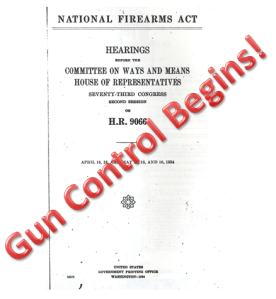
1934 Gun Control Begins with the passage of The National Firearms Act of 1934US citizen rights under the 2nd Amendment (right to bear arms) began eroding via The National Firearms Act of 1934. The act was passed by a very liberal, almost socialist, Democrat run Congress and signed into law by Democrat President Franklin D. Roosevelt, a socialist and Progressive extremist.the NRA supported Gun Control Begins with the passage of The National Firearms Act of 1934
1934 The Federal Communications Commission (FCC) was created to control all forms of wire and wireless communication. This brought the US half-way into compliance with the Communist Manifesto’s 6th plank; “Centralisation of the means of CensorshipBeginscommunication and transport in the hands of the State.”
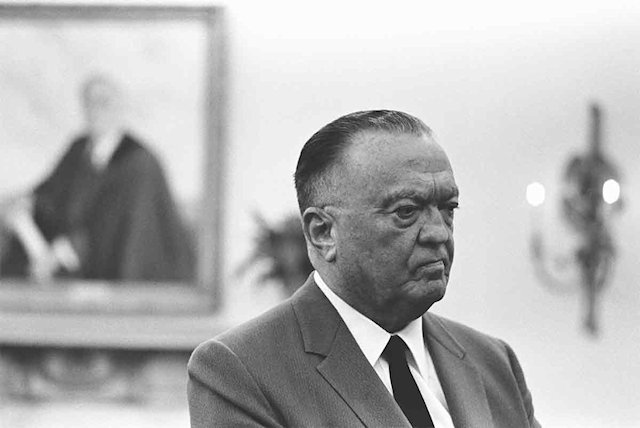
1935 The FBI was created by Democrat President Franklin D. Roosevelt (socialist and Progressive extremist) and J. Edgar Hoover was placed in charge of this newly formed, all powerful, law enforcement agency.   The FBI was well known for its outright murdering of opponents and criminals. They are most notoriously known their assault on the Davidian religious group that resulted in 78 men, women and child burning to death when their compound was attacked by the FBI. The FBI is well-known to be a tool of Presidents against political opponents and Hoover blackmailed many politicians himself from material he illegally gathered with FBI personnel. Hoover was also known as a sexual pervert and deviant, and a black cloud of suspicion and fear has lingered over the FBI from its very beginning.
1935 The beginning of the system now known as Social Security. This program was implemented by Democrat President Franklin D. Roosevelt, a socialist and Progressive extremist. The design of the SS program matches perfectly with a criminal enterprise call a Ponzi Scheme. In 2010 the SS program began paying out more than it was taking in. All funds are expected to be expended by 2035 and the program will be completely broke. SS has at least $15,000,000,000,000 of unfunded liabilities as of 2011. The SS payments were never kept in trust as the law required. The federal government spent the money on other purposes as the monies came in. In other words it was used as general operating funds with government IOUs placed in the SS Trust Fund. The US Government is now directly in debt by $22trillion with unfunded liabilities well over $120trillion dollars.

1935 H.G. Wells comment on The New DealThe second New Deal wave of programs were adopted including the government endorsement of socialist and Communist backed unions. This brought the US into partial compliance with the Communist Manifesto’s 8th plank; “Equal liability of all to labour. Establishment of industrial armies, especially for agriculture.”
1937 The Progressive/socialist stacked Supreme Court gives the federal government virtually 100% control of all commerce in the US under the Commerce Clause. This is done in direct opposition to the original intent of the Constitution of limited federal authority in such matters. But the Constitution and the Founding Father’s intent is ignored by the radical leftist Supreme Court Justices.
1939 Police departments, under Democrat President Franklin D. Roosevelt, a socialist and Progressive extremist, begin purchasing armored vehicles.
1941 The War Powers Act of 1941 was passed at the demand of Democrat President Franklin D. Roosevelt, a socialist and Progressive extremist. This act gave the President vast authority to act without the approval of Congress. This newly assumed authority by President Roosevelt had been, and still is, limited by the Constitution but ignored by presidents since FDR, especially Democrat Presidents.
1942 Democrat President Franklin D. Roosevelt, a socialist and Progressive extremist Peral Harborenters the United States into World War II.
1942 The Supreme Court (stacked with radical Progressives) under the direction of Democrat President Franklin D. Roosevelt, a socialist and Progressive extremist, ruled that the federal government could dictate to farmers what crops they could grow and how much. This move was made by Democrat President Franklin D. Roosevelt, to control the price of wheat, driving the price up and making food products more expensive while removing money from the farmers who grew it.   This brought the US into full compliance with the Communist Manifesto’s 9th plank; “Combination of agriculture with manufacturing industries”

Related Articles –


2009 - 2020 Copyright © AHTrimble.com ~ All rights reserved
No reproduction or other use of this content 
without expressed written permission from AHTrimble.com
See Content Use Policy for more information.

Hoax Alert: “National Guard Arrived in Baltimore, Bank run Followed.”

Hoax AlertArticle Headline – “National Guard Arrived in Baltimore, Bank run Followed.”

And then the tag line – “They Want Their Monies Out” – Baltimore Residents ‘Storm Bank’ Amid Fears Of Social Unrest

Total BS !  Nothing more than ‘clickbait’…from an unscrupulous, non-credible author who wants attention and trying to be relevant during the current crisis. And I dare say…wanting to stir up panic, fear, and hysteria for his own purposes to create racial tensions in Baltimore.

So why would other websites reprint this kind of reprehensible crap?

I looked the article over and:

  • The National Guard was mobilized but to assist relief efforts not for martial law, etc.
  • There was NO bank run…people were simply lined up like any other day at the drive thru and ATM. Even the folks at the walk-up ATM were orderly and maintaining social-distancing.
  • The picture of a National Guard “tent city” was simply a picture of a couple National Guard tents with a NG soldier standing there in his uniform…nothing else in the picture. A Couple tents, one soldier, and one Hummer doesn’t constitute a National Guard Tent City!
  • The original article came from a Zero Hedge user, not one of their authors. No info on the person was available. So, no credibility!!
  • The main pictures used in the article came from a person with the following info on Instagram …Author “Dope Dick”, Ghetto Misery Uncut, “Hysterectomy of the Hood”, Director of Da Yr.   OK, seriously…that = credibility????

Please, please…don’t fall for this crap. And don’t fall for those reprehensible people who reprint these kinds of articles trying to make them look legitimate!!  This COVID-19 crisis is bringing out the very worst in people…people who are proving themselves to have no morals, character, or ethics. They simply want to sensationalize whatever they can for their own personal gain…and to buildup more fear, hysteria, and panic. Reject them and the crap they are spewing!


2009 - 2020 Copyright © AHTrimble.com ~ All rights reserved
No reproduction or other use of this content 
without expressed written permission from AHTrimble.com
See Content Use Policy for more information.

ComSec – What is it and how do I use it?

What does “ComSec” mean?

“ComSec” is the term used meaning communications security. Communications security is a system of protocols that protects your communications from interception and being used against you.

.How does ComSec apply to radio signals?

Radio signal interception can be used against you in two primary ways:

  1. If personnel are trained well they can use basic radio gear to “triangulate” your position. Yeah, that means they can find you.
  2. Once intercepted, they can use the information in your radio transmission against you. It is called “intelligence gathering” and can be quite effective as a tool.

The dual threat can be used with devastating results. But, there are some methods to defeat both:

  • Use as low a power setting for transmission as possible. That keeps the radio signals from traveling any further than they absolutely have to. The signal can also be reduced by using smaller/shorter antennas.
  • During very dire times transmit while moving and never from your area of operations (AO) unless it is an emergency.
  • Transmit for only a very short time. I am talking in terms of seconds, the shorter the better. That will make it more difficult for them to pick up your signal.
  • Randomly change the frequency that you are transmitting on.
  • If you are using a dual-band capable radio like the Baofeng UV-5RA split your radio traffic between both bands.
  • Use different radio operators so the voice doesn’t sound the same each time…or in the same transmission.
  • Use coded messages.
  • Substitute letters and numbers for locations. Example: the town of Salem is referred to as “Sierra Tango” meaning “Salem town”.
  • Use numbers as replacements for words. The most simple would be a two-number code for each letter. Example: “no” would be “1415” But that is easy to figure out. So come up with your own.
  • There are other coding systems but this posting is not an article for that subject. However, one method is Communications-Electronics Operating Instructions (CEOI). You might want to look into it.

Always assume the worst…assume someone is always listening to you and what you are saying. And always assume they can figure out the location that you are transmitting from. You should always act accordingly when circumstances require or demand it…especially in dire times.

There is always a cardinal rule, one that should never, ever be broken in terms of ComSec. You never, ever use a name…especially a person’s name, first or last, not even a nickname when talking on the radio.

Also, understanding all the above means you can turn it around and use it to your advantage. You can give out false or misleading information to misdirect those that might wish to do you harm. If it is a matter of life and death you could always draw them to a location through your radio traffic as well. Then deal with the risk/threat accordingly.

What I am trying to accomplish here is pretty straight forward. I want you to be aware of your radio traffic, safeguard your important information, and don’t say inappropriate or damaging things over the radio. It could be a matter of life and death…yours…or your family’s.

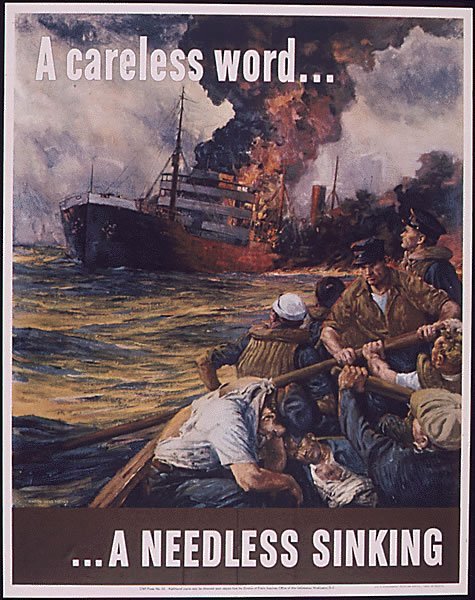
There were posters from WWII that tried to convince people not to talk too much or about the wrong subjects. Still applies today.


2009 - 2020 Copyright © AHTrimble.com ~ All rights reserved
No reproduction or other use of this content 
without expressed written permission from AHTrimble.com
See Content Use Policy for more information.

Initiative ’17 – Part #3: Prepared to Lead

note: This article was originally published in May 2017, then lost in the site crash. I thought it appropriate and timely to reconstruct it for re-publication now. I took the liberty of some limited editing to improve grammar, readability, spelling, and content.

This is the third article in this series, you might want to go read Part #1 & Part #2 before proceeding.

I just completed the rough draft of my fourth article in this series. I was sitting there thinking to myself that I didn’t really have a clearly defined “mission” to this initiative. Those of you that have been visiting the site for a while know I am a big believer in defining the mission of anything, especially when it comes to gear & equipment. But, the same mission identification should, and normally does, apply to every article I put up on this site. But, such was not the case with the Initiative ’17 series. I apologize. And, I’ve corrected that with this article, Part #3.

As I was saying…I was reviewing in my mind the two articles in this series that I had written so far and it hit me like a bolt of lightning. I was essentially writing articles that would make you a leader when there were emergencies, disasters, or a grid-down event.

There will be people who have some food storage, maybe a gun or two and some ammo, and there might even be some folks with radios and solar charging capability. But, who will know how to assign people to cover the four basic areas of organization of an incident? Who will know what the proper priorities are for any emergency, disaster, or a grid-down event? Who is going to know how to spot folks who pose as threats, or are prospective assets? Who are going to be the people who understand Situational Awareness, Tunnel Vision, Complacency, Normalcy Bias, etc.?

Well, that answer is you! Yup, plain and simple…you will be that person.

Why not someone else? Well, maybe. But, if not you, who? And why not you?

What if your church, neighborhood, or community already has leadership? Really!?! What qualifies a person to be a leader?

What does your neighborhood leader do for a living? What training, knowledge or experience does that person have that you would suddenly trust them when the world falls apart?

“Ah, my church leadership will run everything!” Really? And exactly how will they do that?

“They are called of God and I will follow Him!” Really? What if God tells them to organize their congregation to deal with whatever the calamity is? Will you be prepared to lead one of those areas of effort if asked? What if your church leader needs to maintain his position of spiritual leadership and turn over the more temporal needs (operations) to someone else…who would that leader be? Would you be prepared to be that leader?

I remember a pretty good leader, a man of God, led by God…and he still used a lot of folks around him to help. We know him as Moses.

So my point is, I want to make sure I am providing tools for you, to enable you to step up and be a leader at any level regardless of your situation.

What makes me qualified to do that? Well, my professional background of well over 30 years providing emergency services and leadership all over the US and even internationally. Or, my 1000’s upon 1000’s of hours of formal training during that same 30+ years. Or my 1000’s of hours of research in these subjects outside of all of that training. Then again…maybe it is just my desire to sound like a know-it-all…my own personal delusion of grandeur.

Whatever the case is, you may well find some valuable information that will help you be that leader that people will need with it hits the fan.

What is Leadership?

Ah, there is a problem here. If you look online you will find hundreds of different definitions of leadership. And then you will find 1000’s of articles about what makes a good leader. And, for the most part all of it sucks. Yup, they aren’t good enough. So now what?

Have you ever experienced a good leader? How about dealing with a bad leader?

So after contemplating that for a minute are you starting to see a picture of what makes a good leader and what makes a bad leader?

So, now define “leadership” if you please…

I worked on that task for quite a while…and for the most part I came up empty handed. But, then I started thinking…what if people don’t see a need for a leader? Wow! That hadn’t dawned on me, that there wasn’t an actual need for a leader. So imagine this, a group of 20 people standing around knowing that something needs to be done. OK, now imagine that picture with no one stepping up and making something happen..to lead the effort..

Yeah, pretty ugly picture. So, for this part of the conversation we will imagine an emergency, disaster, or a grid-down event has taken place and there is a group of 20 folks meeting in the neighborhood. And someone says, “Well, what do we do now?” That establishes the need for a leader.

Back to defining “leadership”, have you come up with anything yet?

Mine was simple, overly simple actually, but spot on if you ask me…

The act of leading a group of people.

Notice I didn’t define a leader, just the term (verb) leadership.

But, now that we have the foundation of what leadership is, we can move on to defining the traits of a good leader. However, I want to work backwards. What are the traits of a bad leader? Of course we are working in the context of emergencies, disasters, or a grid-down event.

Here are some of the traits of a bad leader that I have personally seen in my military and firefighting careers:

  • Someone who doesn’t know what they are talking about; either stupid or ignorant.
  • A person who is disengaged. They show up, tell you to do something, and then disappears until the next visitation and order.
  • A person who makes decisions in a vacuum, or from the top, and doesn’t understand conditions on the ground.
  • A person who won’t actually listen to or take advice from peers or subordinates.
  • A “pretty boy”, “politician”, or a “good talker”.
  • A person that always “one-ups” you in a conversation or always has to have the last word.
  • A micro-manager.
  • Almost worst of all…someone who won’t make a decision.
  • Worst of all…someone who won’t back their people, even when those people make a mistake.

Now, what I have seen in good leaders:

  • Someone who listens to his people and takes their advice.
  • A person who trusts his subordinates and empowers them to make decisions and then act.
  • A person who always passes the credit to his people.
  • A person who accepts the blame when things goes wrong.
  • Someone who looks out for the benefit and welfare of the people they lead.
  • Someone who is willing to make a decision and stand by it.
  • A person who knows what they are doing and what they are talking about…”been there, done that” experience.

What does your list look like when you are posed with the questions; 1) What does a bad leader look like? 2) What does a good leader look like?

I was having a discussion with my peer at work the other day, we were talking about our boss. We are amazingly together in our view of our boss. Basically…he sucks as a leader. Nice guy, but he is a terrible leader. What makes him so?

  1. He is disengaged with our department and the people in it.
  2. He is all about himself and his advancement, he just wants us to do our job.
  3. He is gone most of the time.
  4. He doesn’t ever (or very rarely) express appreciation to his folks for what they do, even when it is above and beyond what is normally expected of them.
  5. He is a “black hole” of communication…communications go to him, and nothing rarely comes out. He sees information as power…and doesn’t like to share it until it is needed.
  6. Anytime a suggestion or solution is offered by one of the guys, he then relates that is exactly what he was thinking, or that is what he was going to suggest but was waiting to see if anyone else would come up with it.

And so, what exactly is the end result of such poor leadership on his part?

The folks in our department don’t respect him. They don’t trust him. They see him as someone only out for themselves. And how do you think that affects the people and morale in the department?

Are you a leader? Might you be called to be a leader? Might you be the only logical choice to be a leader when an emergency, disaster, or grid-down event hits?

Personally, I think you would be the logical leader, the most qualified leader, the most prepared to lead. Why? Because you are taking the time to learn, to become informed, engaged, you care.

Summary –

Initiative ’17 now has a mission…Preparing you to lead when an emergency, disaster, or grid-down event hits.

Here is what I will ask of you…do not judge yourself at this point. Let’s get through these articles and absorb the information that I will present. Learn whatever you can from each article. Let each one sink in to your mind and allow your mind to form pictures of what may happen and how you would react to it…if you were the leader.

YOU can do this! When the world falls apart, and I’ve seen that happen hundreds of times, people are capable of amazing acts of courage and bravery. I have seen people do almost unbelievable things to help each other out. I have seen the absolute best of people committing acts of amazing compassion and service. What I have also seen every single time…people wanting, even begging, for leadership. People are willing to march into hell itself with buckets of water if the right person will lead them.

Now, let me go religious on you for just a short minute. I thought of a man, a simple man, plainly dressed, humble family origins, little education, no worldly means, no fancy job or profession. That person established the largest religious organization the world has ever seen. And it has lasted, actually grown and flourished, for 2000 years. His name was Jesus Christ. And how did he do it?

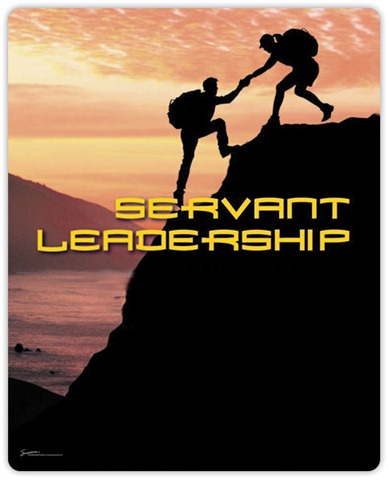
You could give many answers to that question, but I think one reason that rates right up at the top is His desire and ability to serve others. He healed people. He fed people. He taught people, He listened to people. He washed people’s feet. He comforted people when they needed it. He served.

Sure, a cynical man might say…Yeah, but they killed him and his 11 best friends. Yes, that they did. But, I ask you this, would you say Christ succeeded as a leader, or failed?

For me, I say He was/is an unqualified success. And He did it by serving. And the more I think of it, the more I realize a great leader is one who serves his people with sincerity. Is that the only attribute a person needs? Of course not! A good leader has many attributes that we listed earlier. A great leader has all those traits…and then serves his people through humility, love, and sincerity.

Let’s work together over the coming weeks to develop in ourselves…Prepared to Lead.


Related Articles:
2009 - 2020 Copyright © AHTrimble.com ~ All rights reserved
No reproduction or other use of this content
without expressed written permission from AHTrimble.com
See Content Use Policy for more information.

Interesting Events in US History – Part #2 (1913-1934)

YEAR
EVENT DESCRIPTION
1913 – The Federal Reserve takes over the us currency and economy.The Federal Reserve was created by Progressive President Wilson. The control of the country’s currency no longer was with the US Treasury Department; the country’s currency was now controlled by a cartel of private banks with no direct oversight, auditing, or control by the US government. Their booking keeping was secret, not even US government personnel had the right to see the books. This brought the banking and currency system into strict compliance with the Communist Manifesto’s 5th plank“Centralization of credit in the hands of the State, by means of a national bank with State capital and an exclusive monopoly.”

1913 – The 17th Amendment to the Constitution was ratified placing the election of Senators in the hands of the populace. This removed the last check and balance of power of the federal government by the states. The federal government could now grow to mammoth proportions with no safeguards to stop it. William Jennings Bryan (Leftist, Progressive, fiat money advocate) led the push for the 17th Amendment. States are now, virtually, powerless against the overwhelming dictatorial power of the federal government.
1914 – President Wilson pushes us into world war 1 WWIProgressive President Wilson pushes the United States into World War I.
1916 – The modern day Estate Tax was established.   This tax was put into pace by President Wilson, a staunch radical Progressive. This brought the US tax system more into compliance with the Communist Manifesto’s 3rd plank; “Abolition of all right of inheritance.”
1917 – The Council of Foreign Relations (CFR) is informally established by President Council on Foreign Relations CFRWilson, radical Progressive, to influence foreign policy decisions of the US government. The CFR is a private organization of ruling elites that now direct and influence all United States foreign policy decisions.
1917 – President Woodrow Wilson, Democrat and radical leftist, has thousands of German born US citizens arrested and interned at prison camps. Wilson was a radical Progressive and war monger, as well as a racist. J. Edger Hoover headed the internment project for Wilson. It was J. Edger Hoover that later became the first director of the infamous Federal Bureau of Investigation and was accused of blackmail, intimidation, and being a political hack through the mis-use of FBI resources and organization. United States citizens were denied judicial due process by J. Edger Hover at the direction of President Wilson.
1921 – The Council of Foreign Relations (CFR) is formally founded, to influence foreign policy decisions of the US government.   The CFR endorsed the predecessor to the United Nations, the League of Nations. Many constitutional experts refer to the League of Nations and the United nations as the beginnings of a “one-world government.” The CFR was supportive of liberalism, Progressivism and globalism.   However, President Harding a conservative and Wilson’s successor, spurned the League of Nations going against the CFR and the Progressive movement. Shortly thereafter President Harding died unexpectedly in 1923 of poisoning.
1931 – Democrat President Franklin D. Roosevelt, Progressive and socialist, issues an Executive order outlawing the owning of gold and silver. He further, without rule of law or Constitutional due process, orders gold and silver confiscated from US Citizens at 1/6th of its true value.
1933 – Democrat President Franklin D. Roosevelt, Progressive and socialist, takes the US dollar off the gold standard and declares a bank holiday to prevent a run on banks. The move effectively places zero value on the US dollar and allows the Federal Reserve, a private banking entity, the ability to create and print money with no backing of any tangible value. The US dollar becomes a fiat currency manipulated by private banking interests.
1933 – Democrat President Franklin D. Roosevelt, Progressive and socialist, creates The New Deal welfare programs, and establishes a permanent welfare class in the US.
1933 – Democrat President Franklin D. Roosevelt, Progressive and socialist, created the Works Progress Administration (WPA) and the Civilian Conservation Corp (CCC). These federal gov’t work programs created a huge army of federal workers. This brought the US into further compliance with the Communist Manifesto’s 8th plank; “Equal liability of all to labour. Establishment of industrial armies, especially for agriculture.”
1934 – Democrat President Franklin D. Roosevelt, Progressive and socialist, forces the passage of The Gold Reserve Act outlawing the private ownership of gold.


2009 - 2020 Copyright © AHTrimble.com ~ All rights reserved
No reproduction or other use of this content 
without expressed written permission from AHTrimble.com
See Content Use Policy for more information.