LED Lenser V2 Flashlight

LED Lenser Flashlight V2note: article first appeared January 2015

Let me start this review of the LED Lenser V2 by describing what I was looking for in a flashlight.

The mission was:

“A single flashlight that was compact, lightweight and bright enough to standardize on a single brand & model.”

Here were the flashlight requirements:

  1. Metal & tough enough to handle any field or tactical handling.
  2. Lightweight & compact enough for pocket use.
  3. AAA or AA batteries.
  4. Water resistant/proof enough to handle any rain and momentary submersion.
  5. Bright enough for any tactical weapon usage. Minimum beam distance 100 yards. Narrow beam.
  6. Fit any 1” light mount.

To sum it all up – This flashlight does the job in every aspect, excels at each requirement.

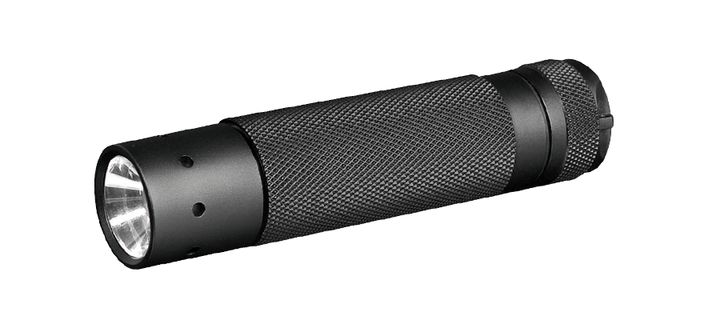
So here are the technical details –LED Lenser Flashlight V2

  • Length: 4-1/2”
  • Diameter: 1”
  • Weight: 3.6oz
  • Tough aluminum housing with checker boarding for sure non-slip grip.
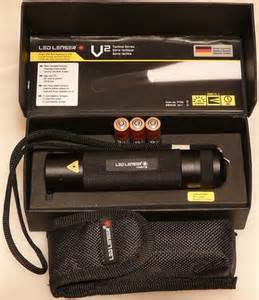
  • Uses 3 AAA batteries.
  • IPX4 water resistant rating (it’s not designed as a submersible light but is water resistant under pressure).
  • 94 – 104 lumens (brightness) in a narrow beam that can reach nearly 180+ yards.
  • 4 hour constant burn time with medium quality batteries.
  • Finish: Black matte

I first started using this brand/model of flashlight over 10 years ago and I’ve never been disappointed. Actually, I’ve been CAA Comand Arms foregrip flashlightthrilled with it! It is a great size for my pants pocket and fits any flashlight holder or belt mounted light/magazine holster that I use. I use a Command Arms Accessories Flashlight Holder Grip Adapter on my AR and this light fits it perfectly. The light shines a very bright narrow beam of light that exceeds my expectations of a tactical light. The light is not so bright that it will washout my vision in the dark but plenty bright enough for me to do whatever I need to with it. The distance the beam goes is amazing for such a little unit running on AAA batteries.

My Duracell batteries will last well over two years in the light depending on how much I use it. The battery carrier/cartridge is absolutely high quality, as is the entire housing. I felt the quality and close tolerances as soon as I began to unscrew the battery cartridge. This flashlight is a top-quality piece of equipment.

The checker boarding on the body is substantial but not uncomfortable, they struck a happy medium. It has never slipped in my hand under any conditions, wet or dry. The newer models have a thumb switch that has ‘nubs’ on it as well to ensure that your thumb won’t slip off. And speaking of the switch, it does have the momentary-on capability or the ‘click-on’ for a constant light.

This flashlight has replaced all my other flashlights except my big 4 x D-cell Mag light that I keep under the front seat of the truck. You won’t need another flashlight (other than a ‘tire checker’) once you’ve tried out this keeper.

LED Lenser Flashlight V2You’ll love it!

Use with absolute confidence.

The price on this can vary from about $28 – $40 out on the Internet so shop around. I’ve bought mine (6 of them now) off of eBay.

Note: If you are going to submerse your tactical light for any length of time you might not want to search elsewhere or waterproof the Lenser yourself. I don’t think it would hold up too long underwater but I haven’t done any conclusive testing on it for that particular mission. Why? I don’t swim underwater with my flashlight.

2019 NOTE: This flashlight is no longer retail available. However, I’ve seen them on eBay. I would not hesitate to buy a sued one as long as it worked and the insides were clear of corrosion.


2009 - 2019 Copyright © AHTrimble.com ~ All rights reserved
No reproduction or other use of this content 
without expressed written permission from AHTrimble.com
See Content Use Policy for more information.

Radio Antenna Storage Case

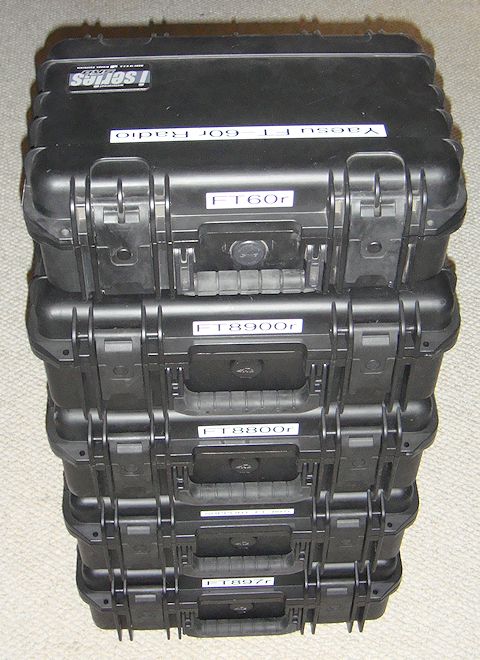
Radios stored in Hard Casenote: article first appeared in November 2015

Earlier this year I did a series of posts that showed how I store my radios long-term for safekeeping. I put them in military grade SKB iSeries hardcases. I really like those cases, very sturdy and less expensive than Pelican cases. But what I neglected to show you was how I store my radio antennas. So here you go…

The stated mission for this is –

“The ability to safely store and transport ‘stick’ antennas that match the radio storage and transportation system.”

First thing I did was put all the antennas in one location so I could see what I have. Then I measured each antenna to assess what was the length of the tallest antenna that would be stored in the case. That measurement was over 50″. Next I had to figure out where to find a reasonably priced hardcase solution that would work.

The first place I looked was the SKB cases, then Pelican cases; both of which were out of the question. I kept looking for other conventional options and either couldn’t find the “right” option or they were far too expensive to be realistic. I gave up…or rather took a break of several months.

One day I was working in my storage shed and low and behold, what did I see? Yup, an old plastic gun case. I had picked it up at a garage sale a long time ago and put in the shed for storage. It was in great shape, padded, Antenna hard Case - gun caselockable, and ready to be used.

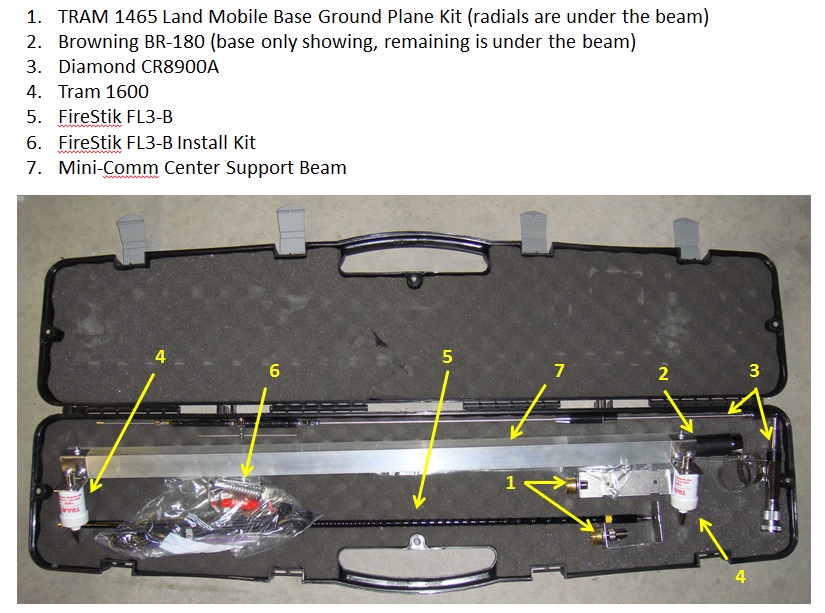
Its interior usable space was 9” x 48” so it was plenty big enough. Too short for the longest antenna, the Diamond CR8900A. But then I remembered that the Diamond CR8900A “breaks” at the base so it can folder over while attached to a vehicle for clearance issues.

Once I folded the Diamond CR8900A at its base…BINGO! It fits just fine. The case is padded to keep everything from being damaged. The padding also kept all the antennas getting jumbled around. Looked like the perfect option. Into the shop it went.

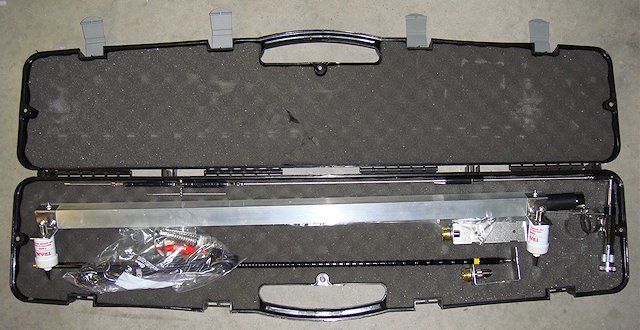
I got all the antennas back out and started arranging them in the gun case. It only took about 15 minutes to get Ham radio Antenna Case hardcase gun caseeverything in the right place, the lid closed without any binding, and it locked up tight. A perfect solution!

So here is the picture of the gun case with all of the antennas in it. I hope it gets you thinking of a solution for you radio antenna storage and transportation needs. For me, this option will allow me to grab my radio cases and my antenna case and know that I can transport them safely and securely wherever I might be headed.

Antenna Case legend


2009 - 2019 Copyright © AHTrimble.com ~ All rights reserved
No reproduction or other use of this content 
without expressed written permission from AHTrimble.com
See Content Use Policy for more information.

Camouflage Clothing…to stay alive! : Part #3

note: article first appeared in October 2015

In the first article of this series I explained how humans “see” things, talked about what stands out, and where humans naturally don’t look. I also went into a couple examples of “narrative” and how that factors into humans’ ability to spot other humans.

If you haven’t read that first article that was posted day before yesterday I would suggest that you do. It will make reading this article easier for you.

In the second article of this series I began to show how different camo clothing really make a man harder to see. No, not invisible or some movie set fantasy land stuff, but real-life staying alive stuff. I ended that article with a picture of the guy from the back. And I pointed out how even a plain strap could draw the eye in to “seeing” something outside of the “narrative.”

If you haven’t read that second article that appeared yesterday I would suggest that you do. It will make reading this article with the continuation of the adding different gear easier to understand.

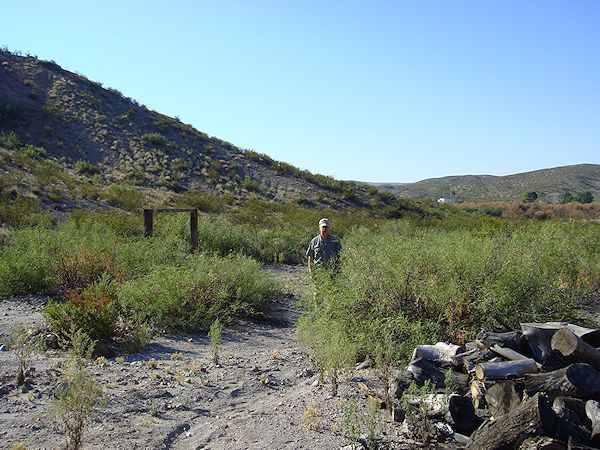
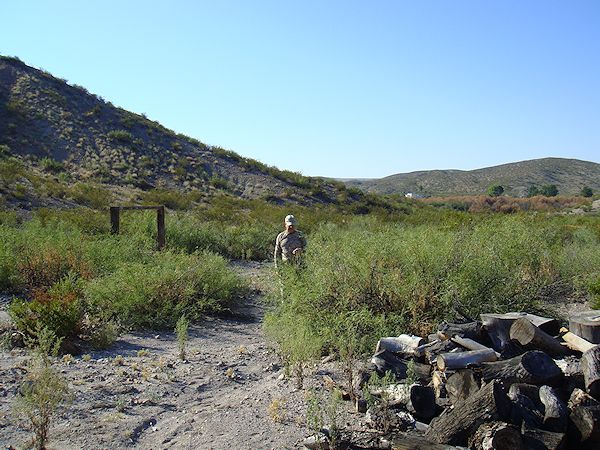
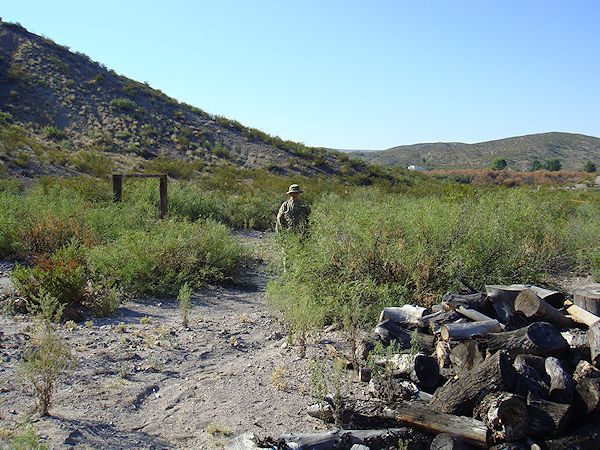
I am a big fan of the 5.11 Tactical Multicam TDU Rapid Assault Shirt. I will be doing a review on the shirt in the coming weeks so I won’t go into the details here. But I want to show the difference between that shirt and a regular BDU shirt.

Example #1 –
DSC02786Example #2 –

DSC02790Did you eye pick up on anything? Did your mind say something is different, more noticeable?
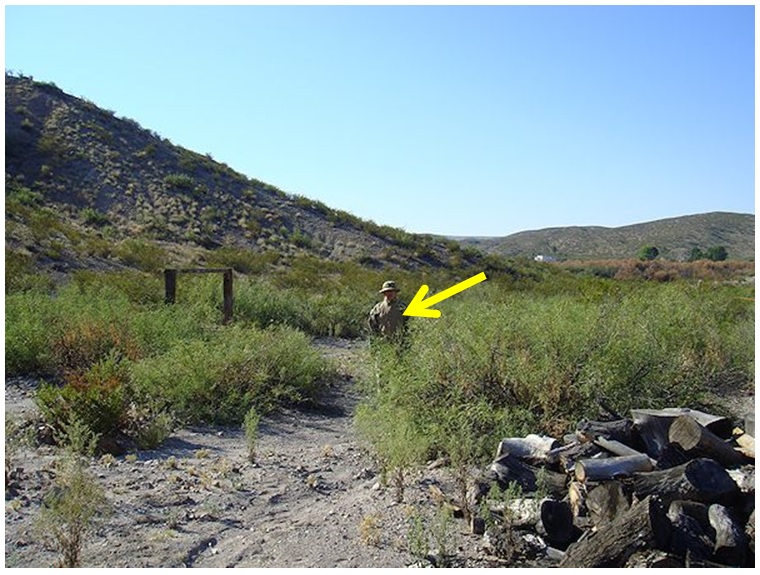
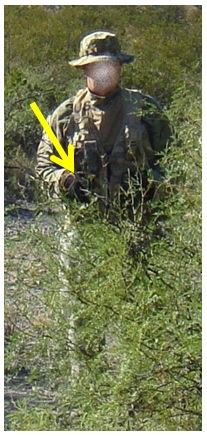
Camo104The guy is wearing a 5.11 Tactical Multicam TDU Rapid Assault Shirt. The shirt has a material that helps the torso stay cooler. But there is no camo pattern in that part of the shirt, just a plain dark earth colored material. While it may make the person marginally easier to see, don’t worry about it. That area of the shirt is normally covered up with the tactical vest as seen in the picture below.
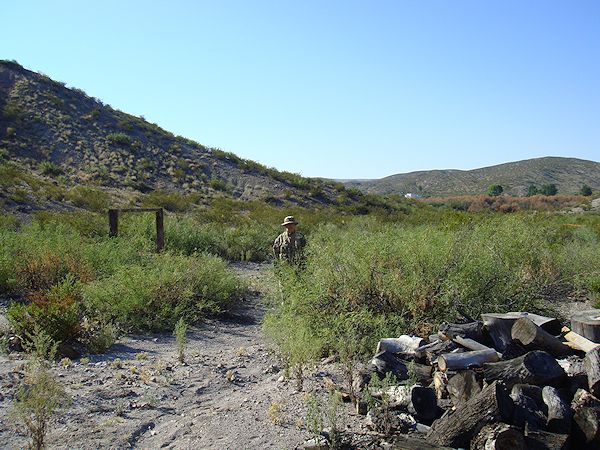
DSC02791In the next set of pictures there is another very subtle change that took place. Can you spot it? Don’t look too closely. Look away for a second and then look back and allow your eye to quickly assess what it is.
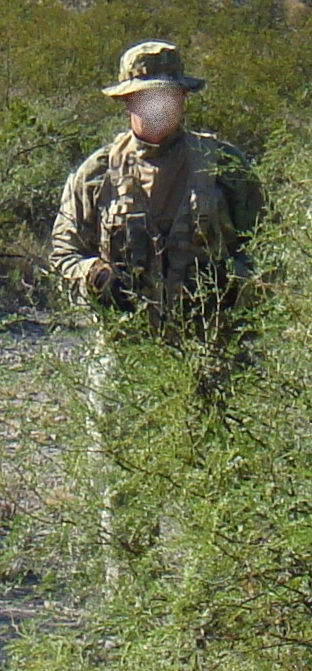
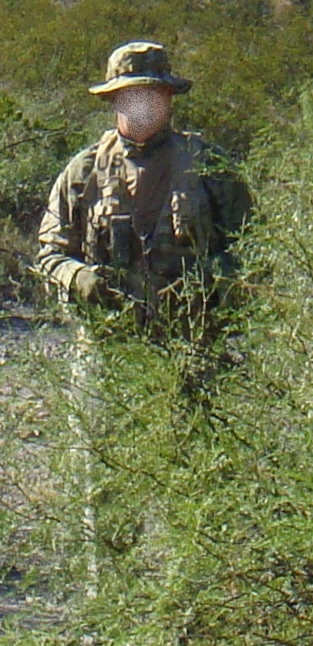
camouflage clothing includes gloves tooCamo105b


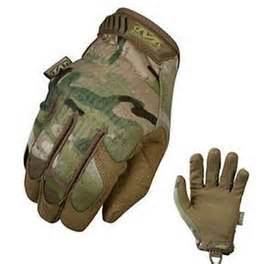
Did your eye pick up on anything?Camo105cHow about the man’s gloves? In the first picture (left) he is wearing black gloves with tan trim. In the second picture (right) he is wearing the same brand of gloves but in a multicam pattern. Every little bit helps.

In the next picture the guy now has an AR-15 slung on his front. I won’t show you a “before” vs. an “after” picture of this. Why? I want you to really understand all the details as to “why.” But first, why do you think it is very hard to see his “black gun” (AR-15) with his camo on?
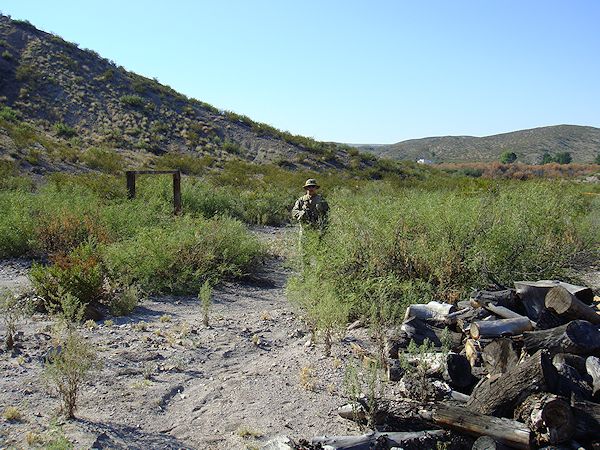
DSC02798Well, you would know the answer if you had read my article titled “Looks Do Matter” that appeared about a week ago. The article goes into great detail why you don’t want your gun “black.” Take the time to read the article and you will then understand why you don’t see this guys AR-15.

Clothing Details –A-tacs UR Organic camo clothing
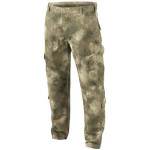
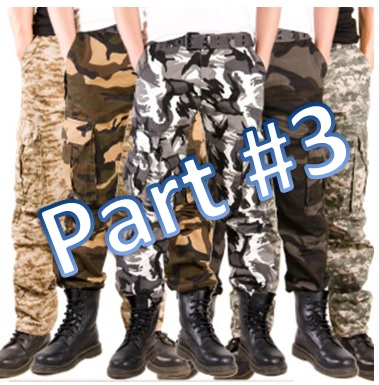
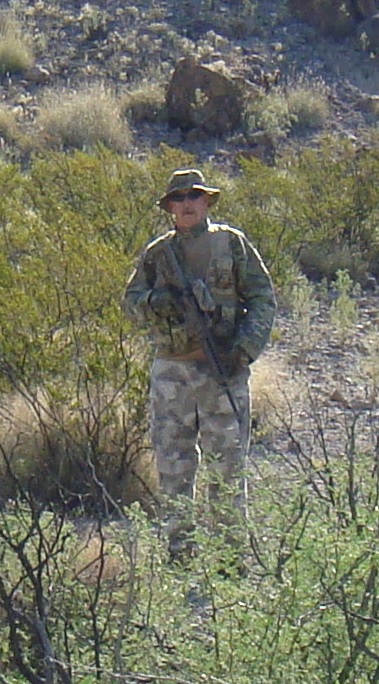
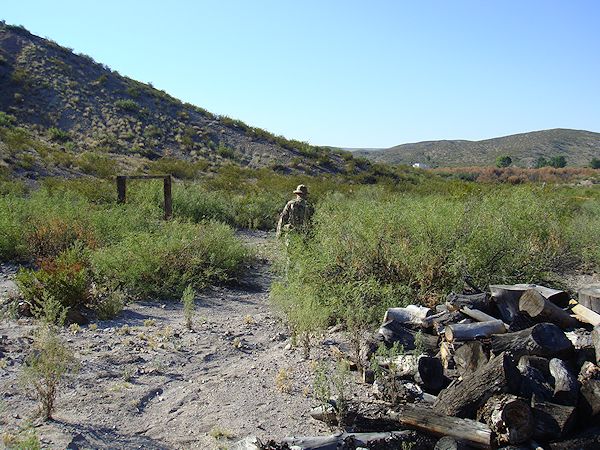
First – The pants. They are A-Tacs (UR). They show no distinct pattern, are lighter colored with plenty of slight variations. They look much like the rocky, sandy ground in the desert.
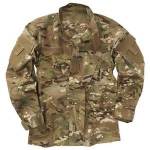
 

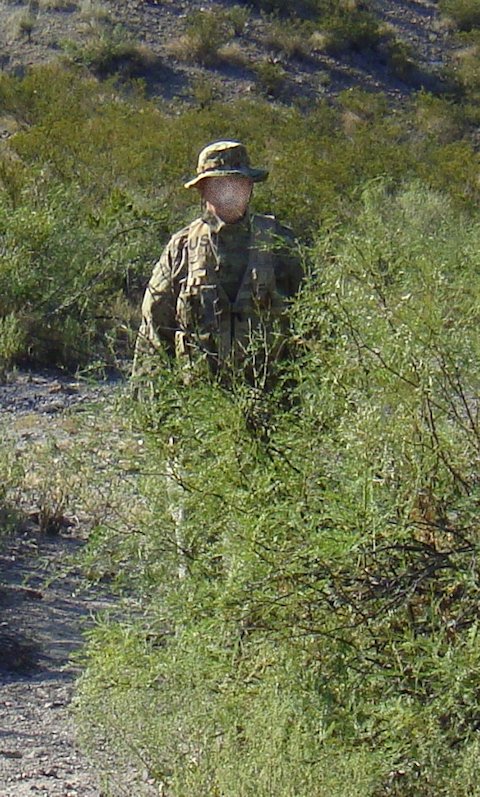
Camo ACU multicam military surplusSecond – The shirt. It is a multicam pattern. Look at the bushes that populate the various pictures. Notice the colors and the shapes of those colors? Does the multicam pattern mimic the environment?
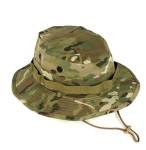


Hat Boonie MulticamThird – The hat. It is mutlicam as well. Does it look like the tops of the bushes? Do the colors match the bushes? The shapes of the colors match the bushes as well? Does the shape of the hat change the shape, or profile, of the head?


Gloves Multicam

Fourth – The Gloves. Also multicam. In all the cop shows and movies when a cop is trying to arrest a bad guy what do they most often yell? “Show me your hands!” We naturally want to see a person’s hands; it is in a person’s hands that weapons reside.
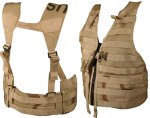


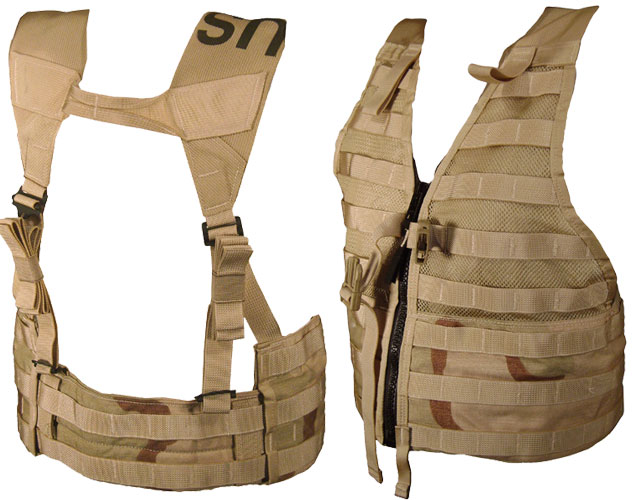
TactilcalVests-07Fifth – Tactical vest. What color do you think it is? If you guessed that it has multiple colors you are right. The basic vest is a 3-color desert pattern. The pouches are varies patterns but mostly multicam. What does that add to the overall situation?

 

Gun Cammo

Sixth – The weapon. read more about that…


All the camo clothing you wear and the camo weapon you carry won’t make a bit of difference if you are stupid. And part of being stupid is not knowing how to not be seen. So far we’ve only talked about clothing, then just a little bit on weapon color. In the fist article I did mention shadows. And in the second article I talk about bushes, etc. So let me touch on that just as we are closing out this series of articles so you can see it all coming together.

But let me make it really clear, this is for the grid-down, non-special forces, ordinary guy. If you have any kind of advanced training you will chuckle at this next section. But I am including it to give the average person a potential advantage over the untrained guy.

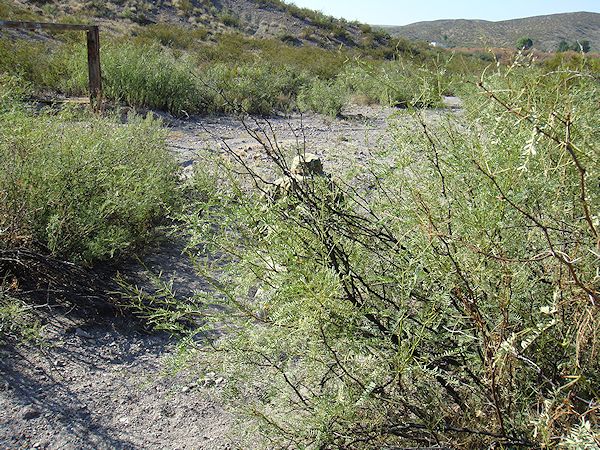
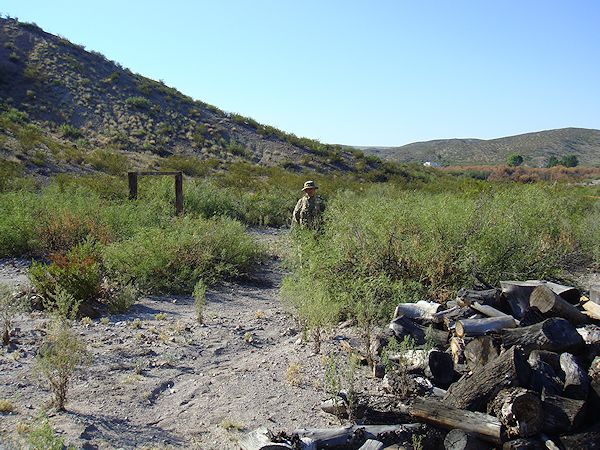
Where is the man in the picture below?

DSC02804Here he is. All he did was kneel down for the previous picture.

DSC02803The idea is to blend in with the environment. The mind’s narrative is seeing a desert environment with sand, rocks, cactus, brush, etc. Great! Your job is to not interrupt that narrative, play into it. You want to give nothing for his “Foveal vision” to pick up on. So you must learn to use your camo clothing and gear combined with the environment.

Even with your mind trying to pick out the bad guy it is hard to do. You are trying to force your mind to spot bad guys. But what is your mind subconsciously trying to do? Your mind is trying its best to create the narrative that you are in the desert southwest, there is sandy soil with occasional rocks present, along with bushes that have green leaves on them.

That being said, quite naturally, anything that blends into the narrative, the mind will try and accept as normal and not a threat.

That is where you want to be if you are the guy in camo clothing trying your hardest to not be seen.

If you are the guy trying to not get ambushed you are trying to force your mind to spot anything, anything at all, that might be out of place that could pose a threat. Even the smallest thing such as shoes.

This is the same guy, same location, but from only 10′ feet away…

DSC02805Now, only 5 feet away…

DSC02806Now, here is a 15′ view but from different angle, only 45 degrees different.
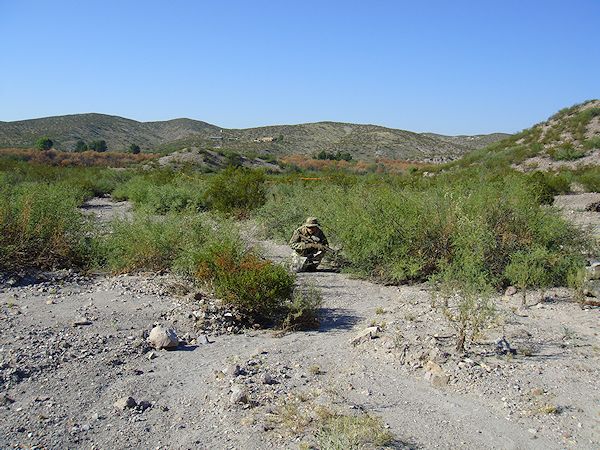
DSC02807Huge difference! But, why?

Now continue to add another 45 degree change in viewing angle…

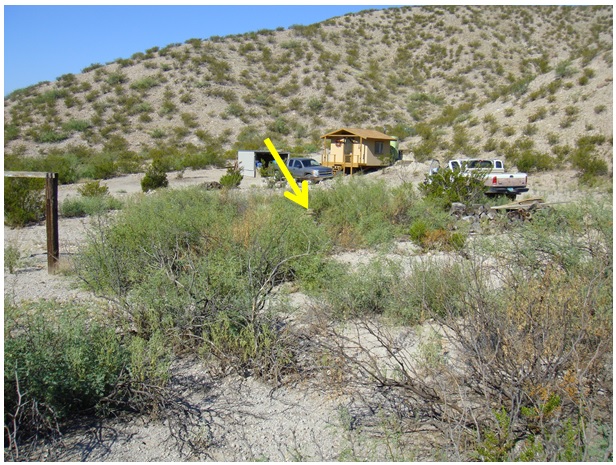
DSC02808Would the people in the cabin in the background be able to spot him?

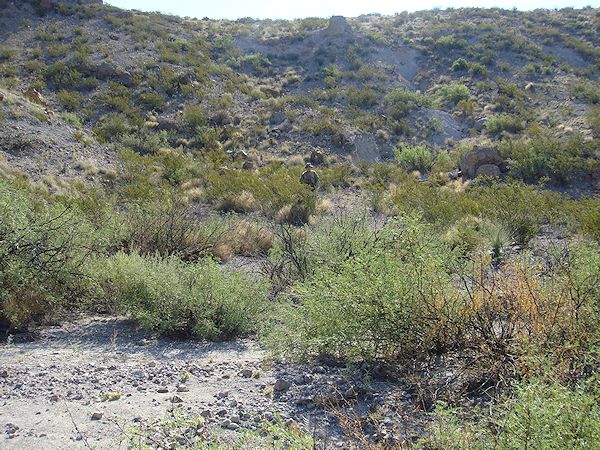
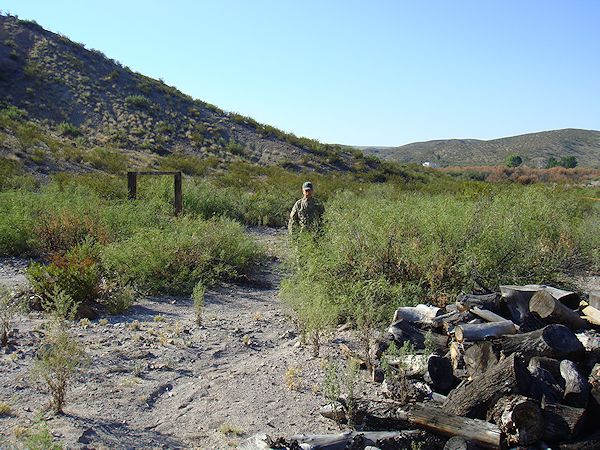
How about now? Same guy, same location see from about 50 yards away.  Can you see the guy at all? He is in the same exact location as the picture above.
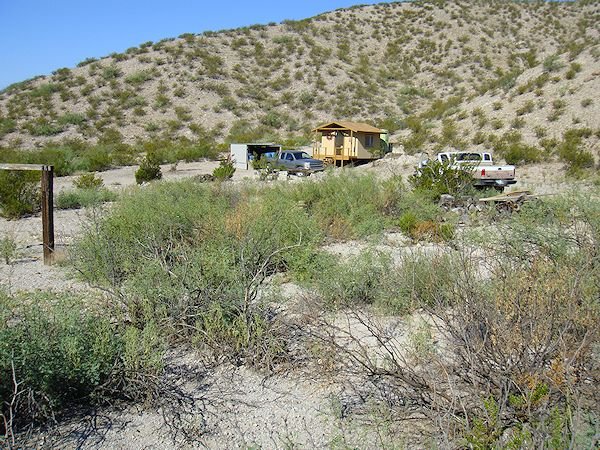
DSC02809Let me point him out to you…

Camo106Here is another before and after view

DSC02814DSC02813

Avoid becoming prey –

Let’s go back to the original mission of camouflage clothing…

“To stay alive.”

And you stay alive in one of two ways…

  1. Defensive – To remain undetected so animals can’t kill you while avoiding contact with said animals.
  2. Offensive – To remain undetected so you can render said animals lifeless.

OK, now I really want to shift directions on you for a moment. Let’s put you into the position of not wanting to be ambushed by the guy above. Here is a little info that might well save your life.

But I do want to touch on “instinct” as it applies to overcoming camo clothing and ambushes.

Ask anyone who has walked “point” in combat. Ask anyone who has stalked game in the wild. Even ask those that have played airsoft or paintball outdoors. Ask women who had been “hit on” in nightclubs. Ask them about instinct.

Your senses are on full alert, you are walking along watching for an ambush (or game) and you just “feel” something isn’t right. You know that you are being watched, or there is danger nearby. That can be your instinct as work; a “sixth sense” if you will.

Now, I won’t dispute that people can have a sixth sense. I also won’t argue against the existence of that “still small voice.” What I will refer to in this case is your subconscious.

Your subconscious can process information approximately 500,000 times faster than the conscious part of your mind. As you are moving along trying to avoid that ambush the ability of your subconscious mind to gather and process subtle clues can be the most valuable part of SA in a situation like that.

But, since it is the subconscious and you aren’t actually thinking it through, the danger impulse will come through as a “feeling” vs. “knowing”. The feeling will come through much faster than you trying to consciously process visual clues. Your brain won’t tell you, “Hey, there are five guys over there dressed in camo clothing all holding an M4 or AR-15 with 30round mags. And they are all pointing their weapons at you. And if you don’t avoid them they will click off their safeties, apply pressure to the triggers till their weapons fire, and then bullets will enter your body creating sufficient wound channels to terminate your life.”

Instead, you will simply get that prompting, that feeling, that life threatening danger is close by. You will feel like prey. Then it is up to your training as to what comes next. Hopefully your muscle memory will come into play and you will react with sufficient aggression to terminate the threat. Or, if that fails, maybe your “fight or flight” instinct will kick in sufficiently to help you survive by fleeing.

Let your instinct work for you. Train to allow your subconscious to process your incoming SA clues. An advantage by a factor of 500,000 is a pretty good benefit to have on your side.

< click here to read more about Situational Awareness >

Avoid acting like a predator –

Working against you is you “staring” at someone while trying to remain hidden, camo clothing or not.

You can have all the best camo clothing, have a great shadow to hide in, but if you are staring directly as someone you are trying to avoid, chances are they might pick up on that as well. Why?

Go back to the “instinct” advantage I mentioned just a minute ago. And now tie that back into our genetic wiring to avoid being prey. Most predators, just before they pounce, will do what? Stare at their prey to calculate how fast to run, how far to jump, where to bite to make the kill. Same thing in the field…with humans.

If you are laying in an ambush for the guys walking down the trail, you might not want to stare intently right at them. Why? Remember, they too are wired to avoid becoming prey. And, if they are well trained, their subconscious is processing all their incoming SA clues 500,000 times faster than you can think about what you are doing and what you are waiting for them to do.

Their subconscious may pick up on a subtle disturbance in the dirt on the trail. And their eyes may pick up a minor variation in the coloration of a bush, or a leaf pattern. But as they are scanning the area around them, their subconscious may allow their eye to see your eyes staring at them. And that final subconscious clue is all it takes for the red flag to go up, the warning bell to sound, and they counter your ambush. Don’t stare right at people you are trying to avoid.

Ask any woman that has been to a bar, a nightclub, or anywhere; if a guy is staring at her intently (even across a large room) does it set off her “alarm.” That is true even if it is a guy staring at her from behind. And if the guy has a “creep factor” to him, they are doubly aware.

And I am sure you have probably had that feeling as well, of being watched. Ask those that have been in a combat area, they will tell you of similar feelings of being watched.

Listen to that “feeling”, pay attention to your “instinct” and act on it. If you are the person trying to remain invisible, remember what can trip their subconscious into alerting them to your presence. Then don’t do those things!

Summary-

Under normal every-day life this information is of virtually no worth at all to you. Who is going to be camo’d out like this going around trying to avoid bad guys? And even hunting in most states require you to wear something that is blaze orange. But, when the time comes that the grid goes down and the bad guys are roaming around looking for their next victim…you don’t have to be that victim. You can be this guy..or way better!

Camo107


2009 - 2019 Copyright © AHTrimble.com ~ All rights reserved
No reproduction or other use of this content 
without expressed written permission from AHTrimble.com
See Content Use Policy for more information.

Camouflage Clothing…to stay alive! : Part #2

campuflage clothing part 1note: article first appeared in October 2015

In the first article of this series I explained how humans “see” things, talked about what stands out, and where humans naturally don’t look. I also went into a couple examples of “narrative” and how that factors into humans’ ability to spot other humans.

If you haven’t read that first article from yesterday I would suggest that you do. It will make reading this article easier for you.

I ended the first article with the following pictures and asked a couple of questions. Review time…

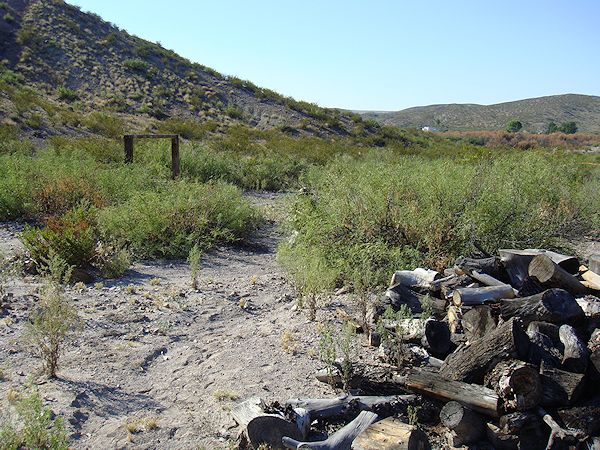
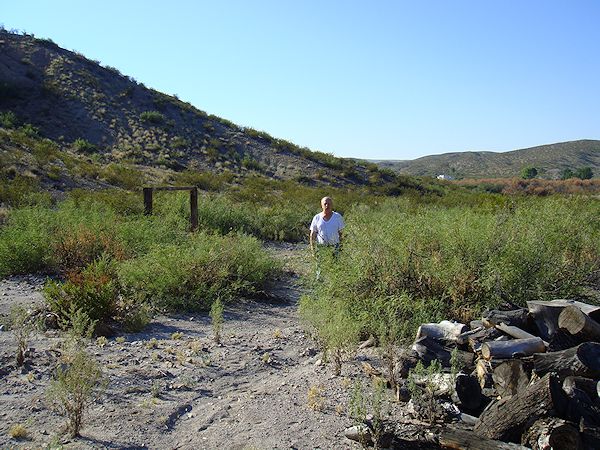
So let me use visual examples as reference. Below is an example of the environment around where I live. And there is a man standing in that environment about 30 yards away from the camera.He is wearing a typical t-shirt.

White t-shirt in the desertWhere do your eyes naturally go to? Where does your gaze come to rest almost immediately?

Based on what I talked about in the last article, why does you gaze come to rest in that location?

If you are like the vast majority of people your eyes came to rest on the white t-shirt or the glare of white spot just above and to the right of the man. What didn’t hold your gaze at all?

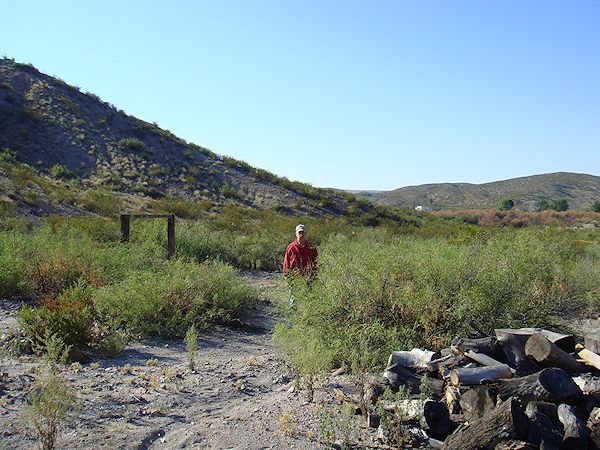
Now he is dressed in rather normal street clothes with a baseball cap. How does that work out for him?

Street clothes in the desert

Given the surrounding environment in the picture, what did you mind expect to see? In which picture was the man easier to see and why?

Remember what I said earlier about narrative and bright areas?

Your mind is trying to create a story about what the desert southwest should look like. And along comes a guy in a red shirt in the desert. Your mind immediately senses the situation and identifies him. In a grid-down this would be called “threat recognition.”

Is the guy truly a threat? Who knows. But until everyone is proven to not be a threat, anyone is considered a threat.

Now let’s put a plain neutral shade of green Columbia PFG short sleeve shirt on him…

DSC02780So why does he blend in more now with the simple addition of a green shirt?

Now, we put a CADPAT-AR long-sleeve shirt on him. And you think?

DSC02782Notice he is now looking down, does that make any difference?

What sticks out the most on him now?  Why?

Now we change the color of his hat, same style hat, just a different color…

DSC02783Any difference?

Now we put a multicam BDU shirt on him with the Mandarin collar up.

DSC02785So now what sticks out the most and catches your eye in the picture above?

Did you focus on his head…were your eyes drawn to his head? Why?

In the next picture all we did was change the style of hat. We put a multicam “boonie” hat on him. Look closely at the picture and identify what changed in your mind.

DSC02786Notice how changing the style of the hat breaks up the shape of the head? Humans are genetically predisposed to noticing the shape of a human head, eyes as well. It is a defensive response to avoid becoming prey of a human predator.

Remember what I had written in the last article about “shadows” and the affect it had on how humans see things? So what is the major problem here?

Yup, the sun is glaring on one side of the man. And that creates a shadow on one side…it is unbalanced and out of place, plus it creates definition.

So, now we are ready to put some “battle rattle” on the man. Let’s see what affect that has.

DSC02787Did all of that equipment, pouches, etc. make a big difference in how easy it is to see the man?

Let me give you a closer-up view for you to review…

Camo100If you want to know more about why his vest blends in so well you can read my article on Tactical Vests. < click here to read the tactical vest article >

How easily can you see his legs? Any thoughts to why?

They are A-TACS pants in the AU “Organic” pattern.

A-tacs UR Organic camo clothingSo why not use the same camo pattern for shirt and pants? Well, look at the pants in the environment that they were designed for. Now, look at the shirt. Pretty impressive, yes?Camo102But, does the environment in the above picture look like the same as the environment that I am using for my example? No. The desert environment that I am using has brush, some trees, cactus with green foliage on it. That foliage is more conducive to multicam. However, there is still the various shades of tan for the desert floor. That is conducive to the A-TACS AU Organic pattern. One camo pattern might be best for pants, another pattern for the shirt. It all depends on the environment you expect to operate in.

We’ve seen the front of our camo’d man, how does he look from the back?

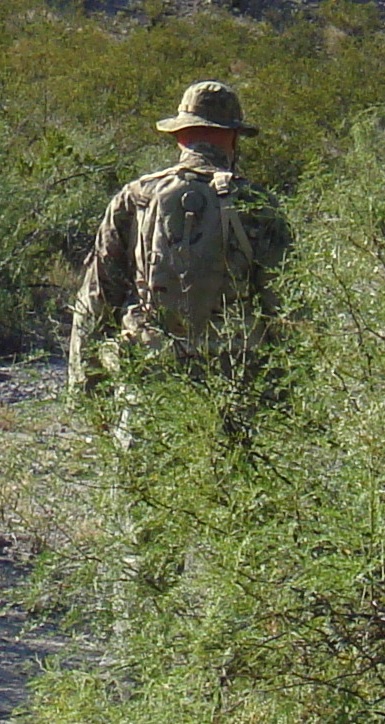
DSC02788Still appears to be blending it quite well. But, let’s take a closer look at his gear…

Camo desert 3-colorThe man is now wearing a hydration back with his tactical vest. The hydration pack is a Desert 3-color pattern. Does it work as camo? Does it blend in?

So why did I go with a Desert 3-color and not multicam for a hydration pack? Practicality is the only answer I have for you. The surplus 3-color hydration pack costs less than half of a new multicam hydration pack. The 3-color works just fine…for less money

Note: Look at the picture above again. What stands out the most? Don’t look too long, don’t over analyze it. Most people says the plan khaki colored straps stick out the most. If that is the case, what could you do to reduce the prominence of those straps?

In the next post I will continue working on this guy’s camouflage clothing to see just how effective it can be. Patience…tomorrow will come soon enough.


2009 - 2019 Copyright © AHTrimble.com ~ All rights reserved
No reproduction or other use of this content 
without expressed written permission from AHTrimble.com
See Content Use Policy for more information.

Camouflage Clothing…to stay alive! : Part #1

camouflage clothing article for preppersnote: article first appeared in October 2015

I have read many purposes and definitions of camouflage, but I think they miss the mark, the “real” mission. Obviously you can tell the various explanations for camouflage were written by some very intelligent folks, a few PhDs in there for sure. And undoubtedly more than a couple generals made their contributions to the official definitions. But I don’t agree with any of them.


So here is my mission for camouflage –

“To stay alive.”

Sorry if that is a bit let down to you, but I am sincere in that mission statement. Now, in all fairness, let me explain the next part of that. There are only two functions that come out of that mission statement.

  1. Defensive – To remain undetected so animals can’t kill you while avoiding contact with said animals.
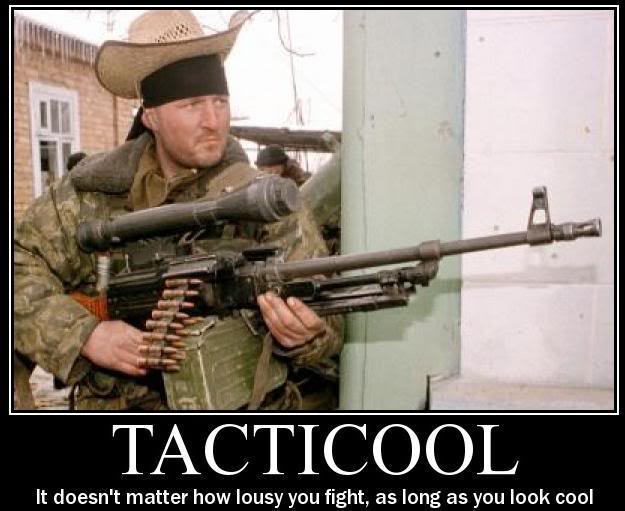
  2. Offensive – To remain undetected so you can render said animals lifeless.Tacti-Cool

Yup, no other reason or purpose for camo than that. Right?

OK, maybe one other reason…”tacti-cool.” Yeah, you want to look really cool so you wear a camo hat, t-shirt, or your truck is painted camo. Hence, now you are a cool kid if any of that applies to you…tacti-cool.

But, back to a more serious note…what is the true purpose of camouflage? It is to keep you alive. If the animals can’t see you, they probably can’t kill you.

Oh, “animals” can apply to whatever you wish to define it as. I am talking about bad guys being animals. You may wish to modify that to whatever makes you happy and your situation applicable, 2-legged or 4-legged.

Background –

There is a whole lot of information available to how camo works and how it applies to humans. But let me boil it down for you to make it a lot easier to understand.

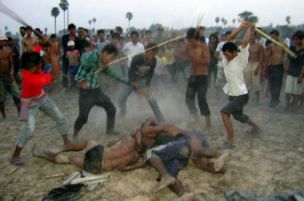
Vigilante Mob - humans are both prey and predatorHumans are both prey and predator in the animal kingdom. We both hunt and we are hunted. Over the generational history of humans we have experienced gene perfection as both prey and predator. One obvious sign is the placement of our eyes, facing forward. Simple eye placement gives us the ability to have depth perception. Don’t discount our peripheral vision though, it’s pretty dang good as well.

There have been studies done that test how our brains “look” at scenes. Basically, humans search for bright colors and movement. We also have built into our genes a predisposition to recognize certain shapes. Not surprisingly, the shapes that catch our attention the most are those associate with other predators. And at the top of that short list of predators are the shapes associated with humans. Yes, that means that humans are the most common predator of other humans.Foveal vision

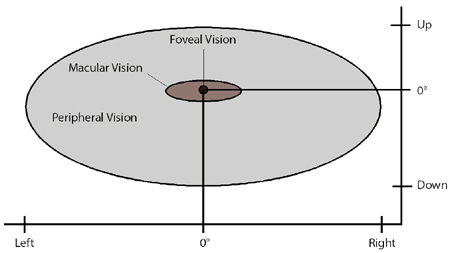
“Foveal vision” is the human eye looking for fine details. That process occurs in the center of our gaze. Details get lost in our peripheral vision the further away from the center of our gaze. Our gaze jumps around more than you think. And eventually is drawn to the most detail-rich areas within our field of vision. That occurs because it is simply the most interesting area to look at. But our eyes will scan the areas that attempt to put together a “story” of what is happening. We’re instinctively looking for a narrative.

Sound a little like Situational Awareness (SA) stuff?

Let’s put that to the test for a moment –

Example #1 – We are in downtown New York City, Wall Street to be exact. It is 8:30am on a Tuesday. What would Camo NYC people on the streetyou expect to see?

Now, you are told to look for threats. Would you be able to “see” every man and woman walking the streets around Camo004you?

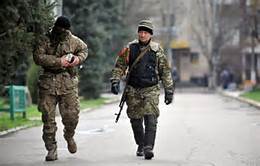
Now, what if you saw a man dressed head to toe in camouflage clothing carrying a back M-16 rifle? Would they stand out? Would your eye be drawn to him pretty quickly? What if he were standing in a crowd of say 50 people waiting to cross a street?

Why would he stand out? I mean, come on, he’s dressed in camo, right…when everyone else is dressed in civilian clothes. He would be the most “interesting” to gaze upon.Camo005

Example #2 – We are out in the forest in Colorado. It is 8:30am on a Tuesday. What would you expect to see?

Now, you are told to look for threats. Would you be able to see every hunter in the forest? Now, what if you saw a man dressed head to toe in a $1,000 suit, white shirt, yellow tie and carrying a black M-16 rifle? Would they stand out? Would your eye be drawn to him pretty quickly? What if he were standing in a crowd of say 50 people waiting to cross a stream? Why?

Think “narrative.” In NYC you expect to see people dressed for business. In the forest you expect to see people dressed for hunting. Your mind will try to create a story based on where you are and what you expect.

So how do you defeat, or more appropriately, overcome, how a person commonly Camo006“sees”?

Well, before we get to that let me mention one more thing…shadows. In testing associated with how people view pictures, art, and scenes around them, it is pretty conclusive that people look in shadows last and not for very long. Why? It is boring. Yup, it’s not very detail-rich so the human eye tends to simply skip those areas.


Defeat being spotted –

OK, so back to how we defeat being spotted. Remember, in our scenario being spotted is also dying.

Yeah, I forgot to tell you, I am talking today about the most extreme of examples…grid-down.

So, how do we avoid being spotted?

It goes back to Situational Awareness (SA) and the OODA Loop (Observer-Orient-Decide-Act). Having good SA and staying inside of your opponent’s OODA Loop is how you win (i.e. you don’t die). < click here to read more about Situational Awareness >

Here is the set-up…

  1. It is grid-down. Society is a mess, lawlessness in the rule of the day.
  2. You are out looking for places to set your snares (24-hour hunters).
  3. You are in the woods and by yourself. You are armed with standard battle-rattle, but you are alone.
  4. bad guys stalking man in forestYou hear people coming. You are sure that they haven’t seen you yet.
  5. They are heavily armed and you have no doubt they are bad guys.
  6. They are looking intensely around the area, appear to be on a recon mission.
  7. You want to avoid all contact, at all cost.

How do you do that?

You use the principles of camouflage and how people “see” what is around them.

That being the case, their narrative (their mission/task) is to:

  1. Avoid being ambushed.
  2. Find people and/or food.

You apply the principles you’ve learned so far to stay outside of their narrative. Your narrative (your mission/task) is:

  1. You don’t try to be a predator and you don’t try to ambush them. So you don’t take a predator posture.
  2. You also want to avoid looking like prey. They are predators looking for prey. So you don’t run, that creates movement, which is easy for them to spot.

So, now that you have that part under control, what are some more things to do, or not to do?

  1. You stay out of their “Foveal Vision.”
  2. Camo008As slowly as possible, meld into shadows as much as possible.
  3. You don’t have any noticeable fine details for their eyes to focus on. Yes, that means you are wearing camo clothing.
  4. You stay motionless.

And the whole no “fine details” thing is where camouflage clothing comes into play. So what does camo clothing accomplish?

  1. Breaks up any human shapes and forms by applying random non-detail patterns to your normal human form.
  2. Further breaks up your shape by introducing shadows.
  3. Continues to break up your shape by adding random applicable colors to your shape as well.

Right about now you should be thinking that wearing the appropriate camo clothing should be a pretty high priority. And you would be 100% right in thinking that. But make sure we are talking the same thing…I am talking real camo clothing.

What is “real” camo clothing? Or more entertainingly, what is “fake” camo clothing?

I am going to take the easy way out and tell you, “It is whatever camo clothing that is appropriate and applicable to your situation and environment.”

Yeah, a cop-out to be sure, right? Well, maybe not.

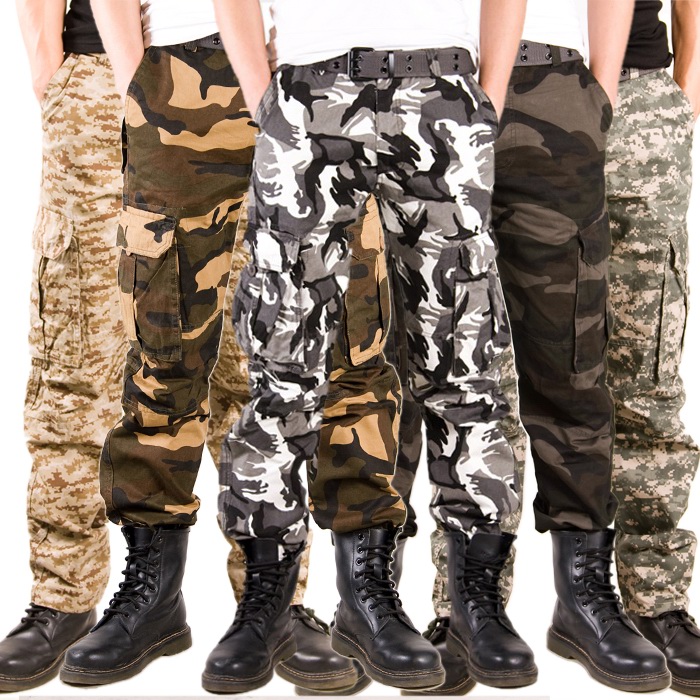
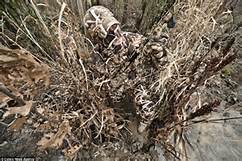
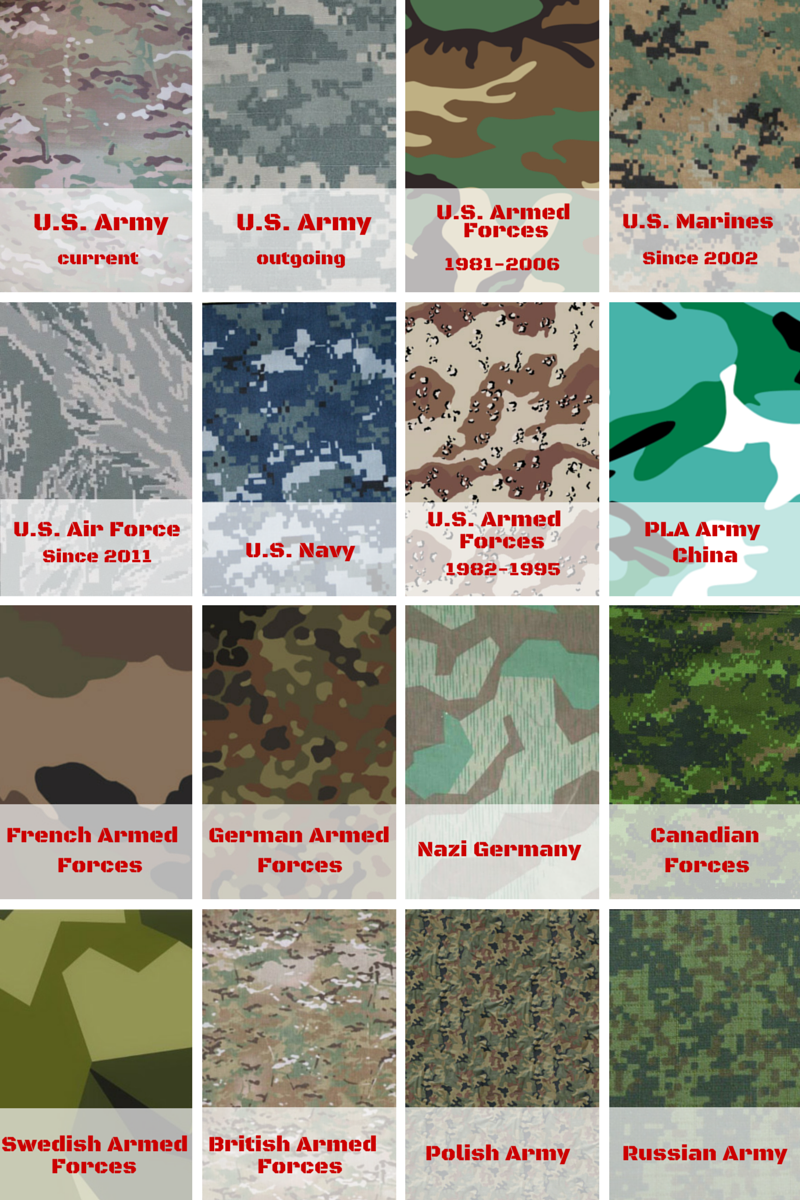
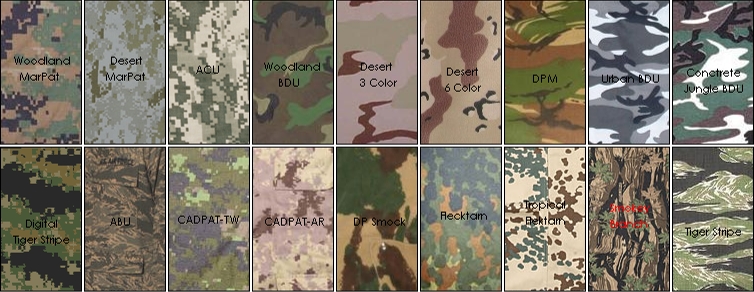
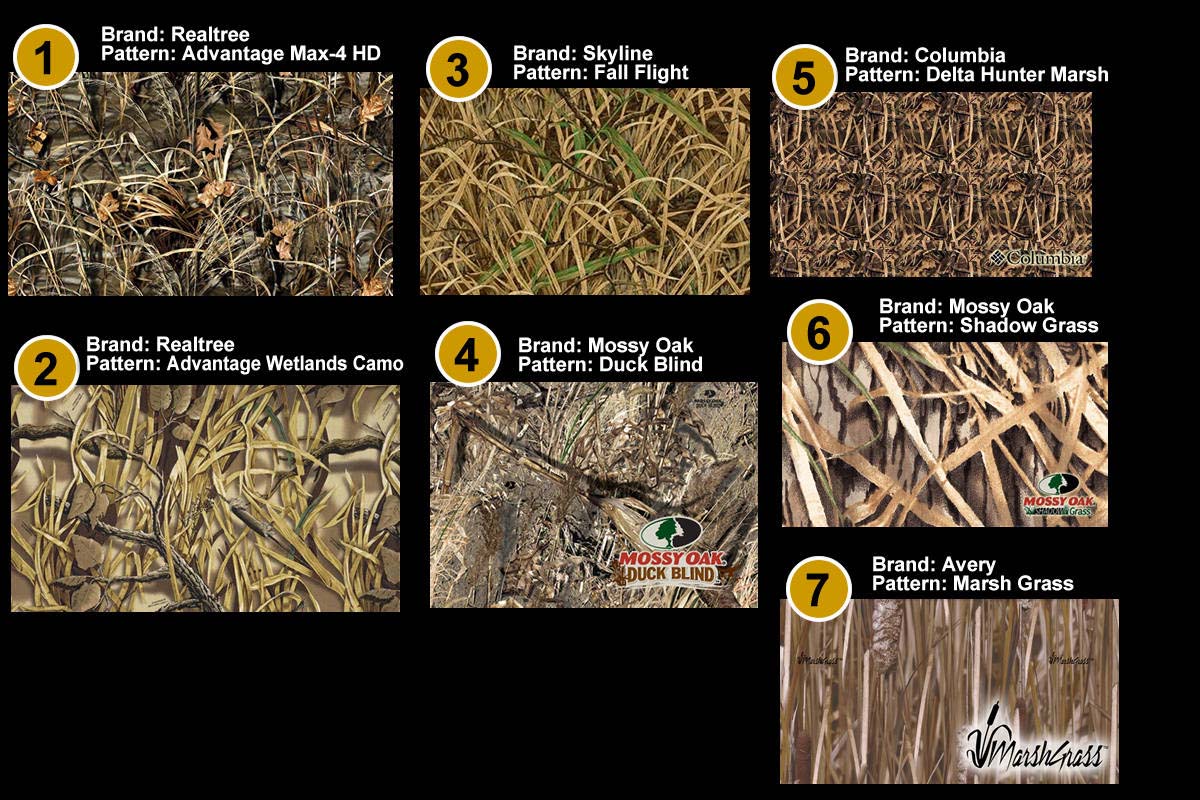
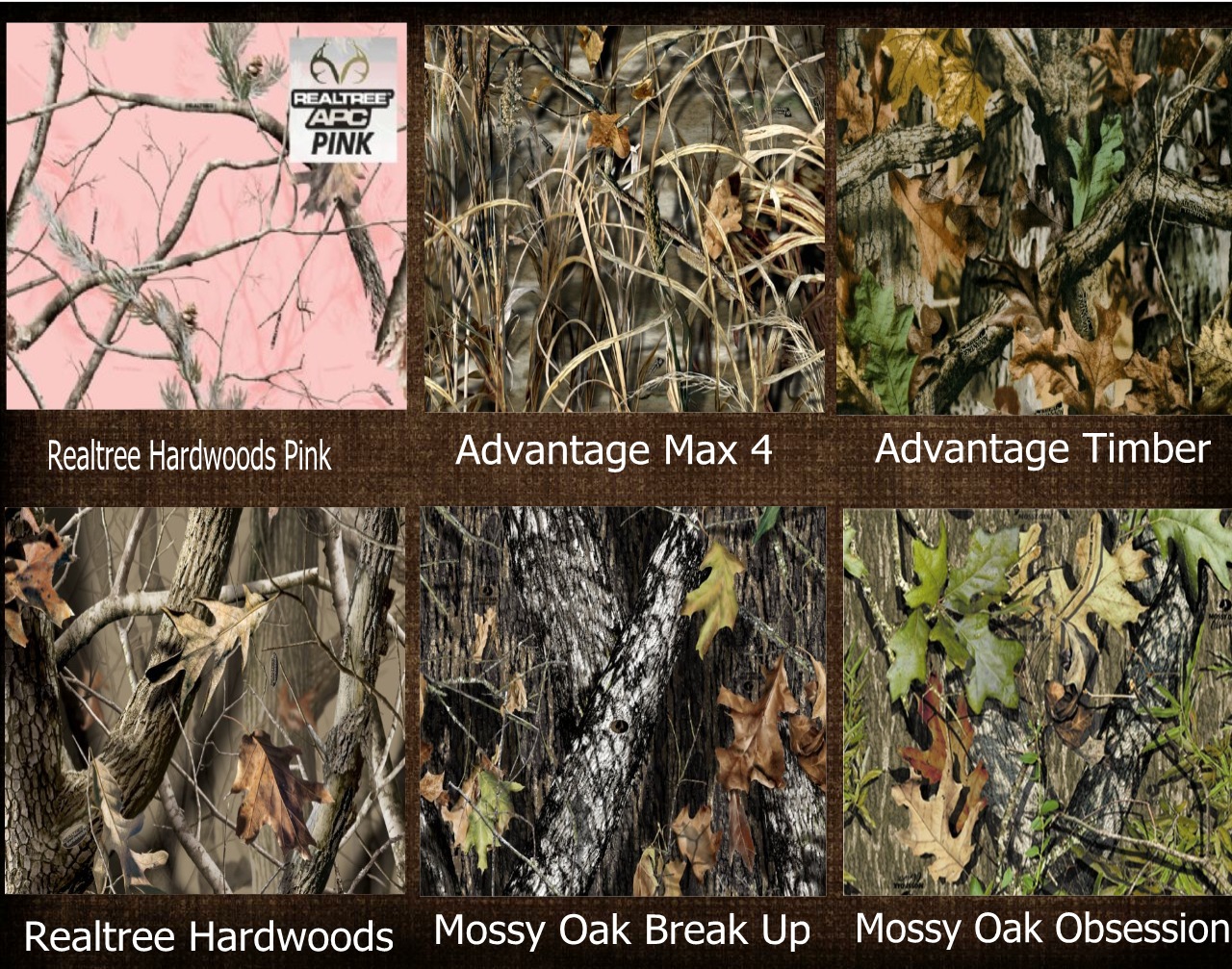
Here are some of the most popular camo patterns…

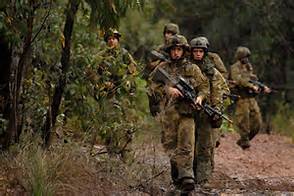
Military –

popular Military camouflage camopopular Military camouflage camoHunting patterns…

popular Civilian camouflage patterspopular hunting camouflage patters

The actual “how To” –

What I can do is go through the process that I used for choosing the right camo clothing for my situation and my environment. When you are done reading, and if I have done my job correctly, you will know how to figure out what is the right camo clothing for your situation/environment. You will have learned the assessment process.

So let me use visual examples as reference. Below is an example of the environment around where I live. And there is a man standing in that environment about 30 yards away from the camera. He is dressed in rather normal street clothes. How does that work out for him?

Street clothes in the desertHow about with the typical t-shirt?

White t-shirt in the desertGiven the surrounding environment in the picture, what did you mind expect to see?

Now, why is the man so easy to spot?

Tomorrow I will go into detail on how to turn this man from easy-to-spot prey into………


2009 - 2019 Copyright © AHTrimble.com ~ All rights reserved
No reproduction or other use of this content 
without expressed written permission from AHTrimble.com
See Content Use Policy for more information.

Looks do matter !

            vs.             

note: articel first appeared in June 2015

Yeah…try to figure this one out with the two pictures…and make the connection with prepping…

Several years ago I built my first AR. I used a BCM upper because I didn’t want to screw-up seating the barrel, shoulder BCMlogospacing, etc. Besides, BCM makes one of the, if not the, best uppers on the market today. Everything else, each individual part, that went into the build was bought for a specific reason – quality.

It was a great experience and I really learned so much during that build, it truly helped me understand my weapon better. And the end product was an amazing pair of AR’s, one for my wife and the other for me. But it didn’t stop there.

Whenever people see my AR in the field they always kinda look it over pretty closely. Most can tell that the parts and pieces are high-quality, but others look a little astonished at the mixing of colors of my carbine. I don’t own one of those “black” guns.

The colors on my carbine are black, flat dark earth and a dull flat darkish bronze kinda color. And my two-point sling is a padded BlueForce multicam. So the weapon looks a bit like a weaponized quilt.

So why no cool “back gun” look for me?

Well, look at the picture below…

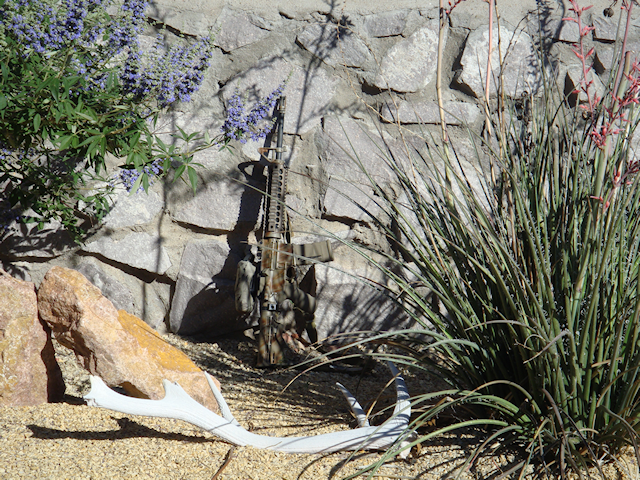
GunCammo1A black gun pretty much stands out like a sore thumb doesn’t it. There is no mistaking it for anything other than a military grade weapon. And I don’t like that. Nope, I don’t like that one little bit. So when I built our AR’s I wanted something that blended in to the background a bit more.

Why?

Oh come on now, you know why. If they can’t see you, they probably won’t shoot you. You don’t always have the safety of “cover” so I will take its ugly, distant cousin “concealment” if I have to.

The human eye is genetically trained to pick up certain shapes and such. We are wired that way to help us stay alive from lurking predators that would eat us for dinner, or shoot us to take our stuff. The key is to trick the predator’s eye into by-passing us if we happen to be exposed (i.e. not behind cover). Changing up how your carbine looks is one of the tricks.

So here is a mix-color AR in the same setting. Is it a bit harder to see?

GunCammo2But notice the black upper and the black magazine “complete” a picture for your mind to associate with a “danger” signal and you can recognize it as a gun. The black shadow also gives it away. What could you do to reduce the shadow and the black mag visually?

The next coupe of pictures show the same gun with a variety of magazines…

OD color magazine

OD color magazine

Flat dark earth color magazine.

Flat dark earth color magazine.

Cammo paint job on magazine.

Cammo paint job on magazine.

Notice how just using the right color magazine can dramatically reduce the gun’s signature profile?

Now I want you to look at this AR that I had painted (Duracoat) to match the environment it is meant to be carried in. Notice the difference?

Painted gun with black magazine.

Painted gun with black magazine.

Notice how the AR blends in but the black magazine makes it stand out again and makes the weapon recognizable. The Black magazine draws your eye to it and then your mind pulls the rest of the gun into focus to make it recognizable…complete the narrative.

But let me swap out a magazine. Now what do you think?

Cammo'd gun with flat dark earth magazine.

Cammo’d gun with flat dark earth magazine.

Notice that just swapping a magazine now allows the whole gun to fade into the background because it gives nothing for your eye to be drawn to.

A little bit of changing up can make a big difference, a difference that could save your life. But let’s take it the next step further. Here is a fully cammo pained (Duracoat) carbine. What do you think?

Cammo'd gun with cammo painted magazine.

Cammo’d gun with cammo painted magazine.

With the cammo painted magazine the gun fades even more into the background and it is hard to see the magazine at all. But slap a black magazine into the weapon and all of the sudden you can stat seeing the gun again even with the entire gun cammo painted.

GunCammo9So here is what the Duracoat painted carbine looks like with a cammo painted magazine in it and laying in the environment that is was meant to be used in. The profile is very low, with a hard to see signature. It is called an “advantage.”

GunCammo10I hope by now you can see the value in keeping your profile and signature as low possible. Remember, they won’t shoot you if they don’t see you. And when times are tough I would think you would want every possible advantage you can get.

You might be asking me about now, “What do I do if I already own a black gun?”

Great question! Several answers come to mind:

  1. Find a quality gun painter in your area that paints weapons with Duracoat or similar system. Have him show you several patterns for the area where you will be using your weapon BEFORE you decide on the paint job.
  2. Buy a couple cans of spray paint for metal in earth tone colors. Store them for when the time comes and paint your own weapon. You will have to clean your weapon thoroughly in preparation to paint it to remove not just dirt, but the oil as well. But in the meantime you still have your pretty black gun.
  3. Just don’t worry about it all, keep your black gun intact and just let luck run its course. Make sure you have a black sling as well, it make it even easier for the bad guys to see you. (yeah, not such a great option huh?)
Have a great day!!


2009 - 2019 Copyright © AHTrimble.com ~ All rights reserved
No reproduction or other use of this content 
without expressed written permission from AHTrimble.com
See Content Use Policy for more information.

Mission or Event Briefing Outline

Mission or event briefing outlinenote: article first appeared in February 2015

Why this a subject for a post?

Have you ever had to give a group of people information for an event?  How about for a mission or task?  How about just inform some folks on what is happening that day?  If you have, what format did you use?  If you haven’t done it yet, but will…what format would you use? How will you organize your briefing presentation?tool in the toolbox for leaders

This post is designed to explain exactly what you need to do to provide a high-quality and informative briefing to a group of people.  It is based on a long-standing successful model used in all major emergency/disaster incidents by emergency responders.  It is another tool in the toolbox for you to use.

This is used for a briefing. Notice the root word is “brief”. DO NOT drag this meeting out. It should cover just enough details that everyone has a clear picture of what should happen. Everyone involved doesn’t need to have every minor detail. The Leader’s Intent is the most important piece of information. Leader’s Intent let’s everyone know when it will be done and what it will look like when it is done. In other words, without Leader’s Intent, no one would ever know the mission/activity is done because no one ever told the people involved what “done” looks like.

StopwatchThe whole briefing, even on a complicated mission, should never take more than 20 minutes. Once you hit the 10-minute mark you will start losing people’s attention. Do not let people involved in providing parts of the briefing ramble on; stop them. Best way to address that is to tell them clearly ahead of time exactly what information they are responsible for sharing during the briefing and how much time they will have. Normally 1 – 4 minutes each.

Don’t let detailed questions from the audience takeover the meeting. Major, large-scale questions need to be addressed but not minor questions. Example #1: Do you expect a tornado to hit during the mission? Answer that one. Example #2: I can’t eat any gluten and I get swollen feet if I do. I need….. Stop them! Tell them to see the logistics person after the briefing to handle food and meal issues.Mission or event briefing outline

If the Operational Detail part has more hardcore information with multiple moving parts involved then consider a post-briefing “break-out” meeting for the operations folks. Example: We will have two groups; Group 1 is responsible for filling the sandbags, Group 2 is responsible for transporting and the placement of the bags. Anyone over the age of 50 is in Group 1, anyone 50 and younger is in Group 2. Tom there {finger pointing to Tom} is in-charge of Group 1, Mike over there {finger pointing to Mike} is in charge of Group 2. They will hold a break-out meeting with their respective groups right after this briefing. Group 1 will meet in the NE corner of the parking lot, Group 2 will meet in the SE corner by the tree. And you’re done…stop!

Briefing a group

  1. Briefing purpose. State why the briefing is being held. Example: We are here this morning to go over the operational details for putting sandbags at the church to protect the building from potential flooding. Joe Brandon will be in charge today.
  2. Current situation. Briefly outline what the current state of affairs is that is driving the mission. Example: We have received 4” of rain in the last 2 days. The church is threatened with flooding within the next 12 hours if we don’t place sandbags in the parking lot to divert the water that is flowing from across the street into the parking lot.
  3. Leader’s intent. The person leading the briefing then states what the mission looks like upon successful completion. Normally the intent should be stated in as little as one sentence and no more than three. Example: When we are done today we will have placed enough sandbags in the parking lot to divert all the current and expected water flow away from the building.  When we are done there there will be no threat of flooding the church building. And it is especially important that we will do that without getting anyone hurt.
  4. Operational details. The person in charge of the actual operational activities then briefly explains what will be happening and when. Example: We will be ready to depart the Walmart parking lot by 0800. We will rally at the church no later than 0845 and make individual work assignments at that point. We will place sandbags in the northwest corner of the parking lot and divert the flow of water around the west side of the parking lot away from the church building. We expect to be done no later than 1500. Everyone will be free to travel home directly from the church.  No need to meet here after the work is completed. Does anyone have any questions, thoughts, issues, or concerns about what we are doing?
  5. Logistics needs. Whoever is in charge of logistics presents pertinent information regarding expected or potential logistical issues. Example: We need to all fuel-up before departing, lunches will be provided at the church by the women’s group, and the sandbags are being delivered by the local fire department. The bags should be there by the time we arrive. The truck full of sand will wait until they get a call from me before delivering the sand. I will call them when we leave here for the church.  For lunch, if you any have special diet restrictions see me afterwards. If there are any other logistical needs see me after the briefing as well.
  6. Communications. Whoever is responsible for communications will then briefly give an overview of the communications arrangements. Example #1: We will use cell phones for communications. Operation’s cell phone number is….   My cell phone number is…. For logistics call…..  Example #2: We will use FRS channel 2 to keep in contact while traveling. Channel 3 will be for operational issues at the church. Channel 4 will reserved for logistics to use. If you don’t have the channel frequencies already programmed into your radio see me after the briefing.
  7. Safety. Quickly review any safety concerns that will be present during the mission. Example: Be careful driving, the roads are slick from all the rain. Do not drive through water running across the road that is more than 6” deep. Also, if we hear any thunder that is within 5 seconds of our location, or if we see any lightening we will get back in our vehicles and wait it out for 30 minutes.  John will give us the all-clear when it is safe to return to work.
  8. Wrap-up. The “leader” then gets back up and closes the briefing with a very brief conclusion. Example: I want to thank everyone for coming out on a rainy morning when there is plenty of college football to watch. We need to get this done or the church will be flooded and heavily damaged if we don’t. I want us to stay safe and enjoy working together. Thank you again and please come see me if you have anything that could help us today. See you at the church.

Leaders IntentThe “briefing” is an essential element of any mission. If folks don’t know what is happening, what is expected of them and what success will look like, then they are being cheated and the mission will more than likely fail.

The key is giving enough information that everyone feels comfortable to get to work, but not so overloaded with information that folks get confused. Use the breakout sessions to give the detail information.  These breakouts would be the smaller groups of folks that are assigned to different areas or functions of the overall work project.

To get an idea on how much information to provide – think about what you would like to know. That will get you started. Also, write down the general info that you want to present. Makes it easier to stay on track and not miss passing on any vital info.

Lastly, a little humor also helps. But not too much or the “tone” of the mission may be compromised.

Real “lastly”…Why do you need to know how to give a briefing?  If you don’t know how to do it right, you will probably do it it incorrectly.  And if your people don’t know what is going on, if they don’t have all of the right information, how do you expect them to be successful?  When you give your people the right information in the right format…you are giving them one of the tools they need to succeed.


2009 - 2019 Copyright © AHTrimble.com ~ All rights reserved
No reproduction or other use of this content 
without expressed written permission from AHTrimble.com
See Content Use Policy for more information.

Decision Fatigue

Decision Fatigue stress decision makingnote: first appeared in March 2015

So I came home, walked in the door, plopped down on the couch, turned on the TV and started watching a show. I have no idea what show it was, no idea who the cast was or even if it was in color or black and white. Then my wife walked in about 15 minutes later. I was quiet and barely said “hello.”

The dogs greeted her, she set her bag down, walked over and kissed me on the cheek. So far so good; then it went downhill real quickly, she started to talk to me. Oh boy, wrong move.

First she asked me how my day went, did I stop and get milk on the way home, and did I remember we had a meeting that night with some friends. Before I could really get much out of my mouth she then asked me if we would be able to do… That is when I asked her if we could talk about it later, for now I just wanted to relax. She then started asking why I needed to relax, did I have a bad day? Oh boy, wrong move…Decision Fatigue stress decision making

I finally just told her in my day-job command voice that I just wanted to relax and we could talk about all those things later. And that was a wrong move on my part. Fifteen minutes later she was still asking me questions and I was still telling her I just wanted to relax. Sound familiar?

I was suffering from “decision fatigue” in a big way and I had no idea that I was…suffering from it. I had never even heard of such a thing then, now I have.

Decision fatigue is a psychological phenomenon that has only been in the research and discovery phase for about four years now. However, its effects have been felt for many thousands of years.

Decision fatigue manifests itself in:

  • Poor quality decisions
  • Impulsive decisions
  • Paralysis in decision making
  • Reduced self-regulation

Decision Fatigue stress decision makingDecision fatigue is caused by making decisions. Yes, you read that right. If you were doing hard physical work all day, far beyond what you were used to doing, there would come a point where you would become physically exhausted and unable to continue the work. The very same thing happens in your mind when living one of those days where you find yourself having to make continuous decisions all day long. And the more stressful the decisions are, the more wear and tear on your brain. Eventually your brain starts having real problems making good-quality decisions and will ultimately completely shut down your ability to make decisions at all.

Yes, all decisions take energy whether they be simple decisions or complex decisions. Stressful decisions take more energy than easy decisions. “Do you drink the white milk or the chocolate milk with breakfast?” is an easier decision. “Do we take a chance on this firefighting tactic and increase the risk of life safety?” is a much tougher and more stressful decision and thus takes far more energy.

Decision FatigueMaking a decision at breakfast will come easier than one in the evening. Why? Because you’ve been working your brain all day making decisions and you brain is more tired in the evening. If those decisions you’ve been making all day are stressful then you will be mentally exhausted and the decision you make will make in the evening be of lesser quality. Alternatively, you may become paralyzed and unable to make any decision at all.

“What would you like for dinner sweetheart?”

“I don’t care.”

“No sweetie, really, what would you like to eat tonight?”

“I don’t care at all. Whatever sounds good to you is fine with me.”

“Well, it sounds like you had a rough day. I would like to fix you whatever you would like to make you happy.”

“I don’t a crap what you fix or even if we eat tonight!”

Ah yes, marital bliss. I would never admit that this conversation ever took place in my home or vehicle. But maybe you Decision Fatigueknow of someone that has had this experience – decision fatigue.

So how does that affect us during an incident? Every day, all day and in ways you may not have thought about it. We find ourselves having to constantly make decisions throughout the day. Some decisions are significant, other more trivial, but all are important in one way or another. Understanding the physiological issues is the first step to reduce decision fatigue.


Here are the ways to reduce decisions fatigue:

  1. Understand and accept that it is real.
  2. Reduce the number of decisions you make. You can do that in a number of ways –
    1. Make leader’s intent clear and use subordinates, allowing them to make decisions for their area of responsibility.
    2. Make it clear that if someone brings you a problem, they are also responsible for bringing you a solution (or at least an idea).
    3. Have “habits” that make a decision for you rather than going through an entire decision making process.
  3. Move important decisions to earlier in the day.
  4. Make decisions a head of time and use predetermined trigger points to implement those decisions.
  5. Water, stay hydrated, and that also includes electrolytes.
  6. Eat and keep your glucose levels up but not spiked.
  7. Rest; get good quality sleep and take breaks. Any sleep and any breaks are better than none.
  8. Don’t over analyze a problem before making a decision. Use the minimal amount of high-quality information and then choose the first “right” decision. Notice I didn’t say choose the “best” option or the “ultimate” option. Over analyzing doesn’t do anyone any good and just adds to the stress of making a decision.
  9. Know that decision fatigue happens to everyone and that includes you. You are not immune to decision fatigue so take the necessary steps to avoid it.

Failure to mitigate decision fatigue can manifest itself as:Decision Fatigue stress decision making

  1. Making a costly decision based on impulse vs. logic and reason. You might just not want to “deal with it” so you make a decision quickly, too quickly, to get the decision over with and out of the way. Few of us like inducing pain on ourselves, especially mental pain and anguish. When suffering from decision fatigue we are more likely to make any decision, even it if it is a bad decision, just to relieve ourselves from the pain associated with the decision making process.
  2. A serious manifestation of decision fatigue can occur as decision paralysis. This is where a person just won’t make a decision. The amount of incoming information is overwhelming and the decision process just becomes too much to handle. At that point a person can shut down and become incapable of making any decision at all. The ramifications of decision paralysis can be fatal if taken to the extreme; costly at a minimum.Stressful environment
  3. Lastly there is the “self-regulation” side effect to decision fatigue. This can be very ugly and personally costly. Researchers have found a direct correlation between decision fatigue and poor decision making in a person’s life. Examples would be; substance abuse (including alcohol abuse) and sex-based dalliances. In some circles individuals who were considered “high speed – low drag” leaders were at particular risk at suffering from self-regulation problems.

Prepper GroupStressful environments where decision making is demanded of you can be mentally costly to you. Understanding decision fatigue and appropriate mitigation options can go a long way towards keeping you in the game and performing at acceptable levels. And “acceptable” means safe and productive in the field where your people depend on you.

Don’t neglect (i.e. ignore) decision fatigue…it cost you too much.


2009 - 2019 Copyright © AHTrimble.com ~ All rights reserved
No reproduction or other use of this content 
without expressed written permission from AHTrimble.com
See Content Use Policy for more information.

Days of September…..

All right then….

My Days of September series of articles is over. It covered from Sept 1st through Sept 19th. The series also covered a whole lot of material and I asked you to do a lot of thinking.

So how did it turn out for you?

I ask that because I had a conversation on Friday morning with a friend I’ve had for over 40 years. They liked what they read…but…and I hate it when I hear the dreaded “but” !

They had a hard time following the articles because they couldn’t come to the website each day. Bummer!  She asked me to link each article to the next one. So, there is a “next” button now on each of the articles to guide you from the September 1st all the way through each article in the proper order. I also posted the list of articles in the “Table of Contents” page. I am also going to post a list of the articles at the end of this post as well.

There was a number of great comments on many of the articles and I appreciate each and every one. Some emails I received were stunning! They were very heartfelt and eye opening. I enjoyed reading each one and hearing what ya’ll had to say.

Now…this post is to remind you to read the articles from start to finish…if you haven’t already. There is an opportunity to make comments on each page. And this post is to give you another opportunity to make comments, ask questions, make suggests, raise concerns, etc. You can do so via the “reply” feature at the bottom of the page. Also, I am including a “comment form” as well. This will give some folks an opportunity to share with me directly concerning their thoughts about the articles.

So, what I would like to ask of you…

  • What is the top 1 or 2 things that really struck you in these articles?
  • What is the top 1 or 2 things that that you felt prompted/motivated to accomplish?


Articles in this Series –

← Back

Thank you for your response. ✨


2009 - 2019 Copyright © AHTrimble.com ~ All rights reserved
No reproduction or other use of this content 
without expressed written permission from AHTrimble.com
See Content Use Policy for more information.


Vehicle Emergency Bag/Box (VEB)

Vehicle emergency box bagnote: first appeared in July 2015

Yeah, another bag/box of emergency equipment. Go ahead…laugh at me if you want to. I probably would if I was you. But hey, my job is to provide you with information that is both practical and useful for emergencies, disasters and grid-down. And having a vehicle breakdown in the middle of nowhere is an emergency in my book.

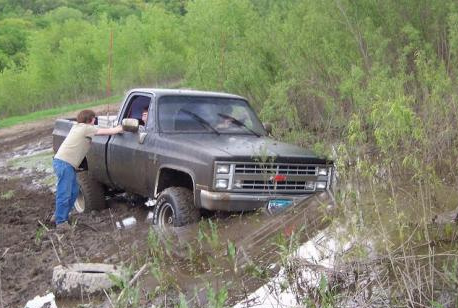
The scenario that I saw that is driving the need for a Vehicle Emergency Bag/Box (VEB) is simple. You or a family member is in a vehicle out in the middle of nowhere, no communications capability, and the vehicle breaks down. The threats remain the same for this scenario as with any other; violence, injury/sickness, etc.

So we have to meet those threats with solutions.

Having 20 years of experience responding to traffic accidents I have come to the conclusion that the number one threat to being broken down on the side of the road are idiot drivers. And I want to emphasize IDIOT drivers. I could tell you story after story of how stupid people are when it comes to driving, but I will spare you. Just understand that I believe the #1 threat to your safety if you are broken down are other drivers. They will take every opportunity to run you over or smash into your vehicle. And they can be very creative in doing so. Take nothing for granted, err on the side of caution.

The mission of the VEB is:

Ability to recover from a flat tire or stuck vehicle, or survive overnight from the stranding of vehicle in a remote location.

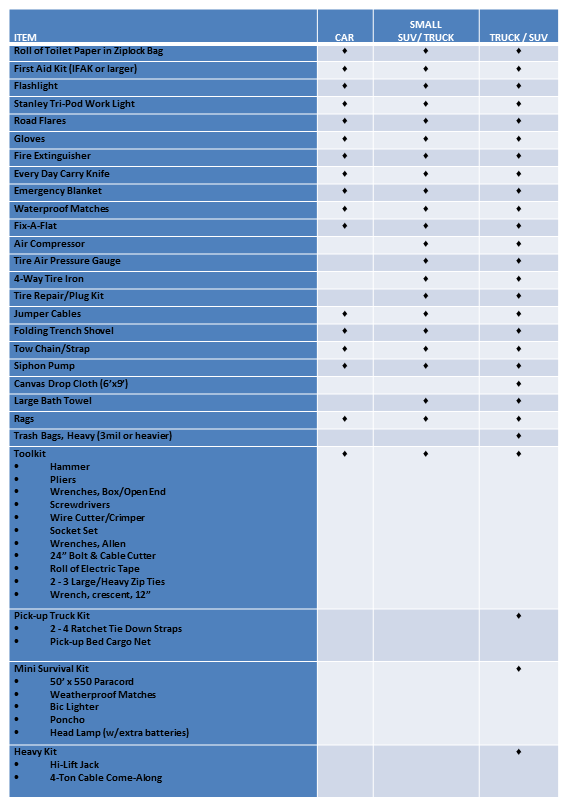
Here is a list of VEB contents. I will get into the explanation of each at the end of the list. The contents are:

{ click to enlarge and print }

{ click to enlarge and print }

Why didn’t I address the threat of violence? It is a matter of security. I can’t in good conscious recommend that you leave a firearm in the vehicle at all times. It simply wouldn’t be secure enough. Over the years I have had my personal vehicle broken into three times. It was bad enough that one of the times the low-life criminals stole the mechanics tools that my Dad had left to me after his death. But to have a gun stolen would have been even worse. Criminals have access to enough guns, I don’t want to make that worse.

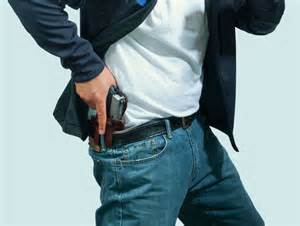
How do I address the self-defense aspect as it applies to a VEB? You bring it with each time you get in the vehicle. Man should always conceal carryI am a huge advocate of conceal carry. I believe that every prepper should conceal carry. I feel it is part of each prepper’s responsibility. However, if you don’t conceal carry that is your choice. But I would suggest that whenever you are going to be gone for any length or time or going more than just a short distance, take a firearm.

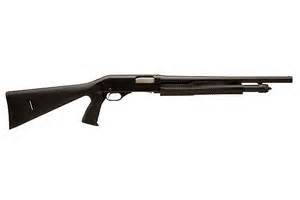
There are two options that I consider; 1) my conceal carry pistol, 2) a Stevens 12ga shotgun. Actually, I guess that technically there are three options, the two above and both Shotgun Stevens Model 320 by Savage Armscombined.

When I would consider having both would be when I am headed into territory that I consider to have the potential to be dangerous. Yes, I know that means just about anywhere today but I am thinking more along the lines of southern New Mexico, southern Arizona, southern Texas, or any longer road trip.

That about covers the threat of violence issue pretty well. I do know a person or two that have installed law enforcement grade weapon retainers to lock down a shotgun and/or an AR. I am not a big fan of those because normally the retention hardware makes the long guns easily visible. I prefer to have my guns out of sight.

Here are the details of the VEB:

  1. Toilet Paper – This is a “must have” item. Just take a roll from your supply at the house and place it in a freezer Ziplock bag.IFAK
  1. First Aid Kit – I would suggest an IFAK for most situations. If you are going on a trip as a family then I would suggest adding a TBAK.
  1. Flashlight – If you can’t see what you are doing the rest of this stuff doesn’t matter LED Lenser Flashlight V2much. I would suggest you use the same tactical light that you use for everything else. Yes, standardization is a good thing. I personally use and recommend the LED Lenser. Always have a spare set of batteries. If you store your flashlight in a “box” I would suggest that you not have batteries in the flashlight, they will corrode. Keep them in a baggie with the flashlight and the spare set of batteries. Yes, always have a spare set of batteries.
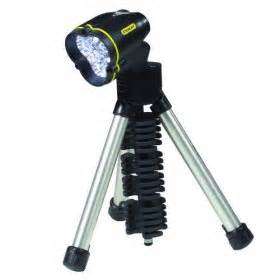
  1. Stanley Tri-Pod Work Light - Stanley MaxLife 369 Tripod LED FlashlightStanley Tri-Pod Work Light – This is a fantastic working light. It can operate off of 3, 6 or 9 AA batteries. The light is very bright, the head is adjustable and the legs make it capable of standing alone on the road berm leaving both hands free to work on whatever is needed.
  1. Road Flares – There are two reasons for road flares in my opinion; 1) visual warning to other drivers that a breakdown or accident has occurred, 2) a weapon. Yup, a weapon.
  1. Gloves – I would suggest a really decent pair of gloves, something along the lines of work gloves that can handle rough treatment. Thin cloth gloves are almost as bad as having no gloves. I like Mechanix brand gloves.
  1. Fire Extinguisher – You can use one of those small 5lb extinguishers if you want to. Something is better than nothing. But I like a 20lb myself. In my years as a firefighter I’ve seen those 5lb’ers do little more than make a mess before the vehicle burned down.Gerber paraframe knife
  1. Emergency Carry Knife – This can be a blade of your choice. I wouldn’t go with anything expensive. A Gerber “paraframe” model for $18 works just fine.
  1. The Original Space Brand Emergency BagEmergency Blanket – This can be either the “space” blanket or an actual emergency blanket, either will work. You just want something to help you stay warm wrapped around you, or reflect the heat if you build a fire.
  1. Waterproof Matches – You always gotta have a way to make fire; stay warm, signal, or defense.
  1. Fix-A-Flat – I recommend two cans of the good stuff, large cans. Don’t skimp and buy the cheap stuff it won’t work when you need it to.
  1. Air Compressor – A 12vDC model, plugs into your cigarette lighter. Sometimes the Fix-A-Flat just won’t be enough air.
  1. Tire Air Pressure Gauge – This is a no-brainer. Again, don’t get the cheapest one. Get the one that will work for you when you need it to.
  1. Tire Repair/Plug Kit – This is the little kit that has the two tools, one to clean the hole, and the other tool pushes the plug through. There is also some sealant cement to help hold the plug in place and prevent air from escaping.

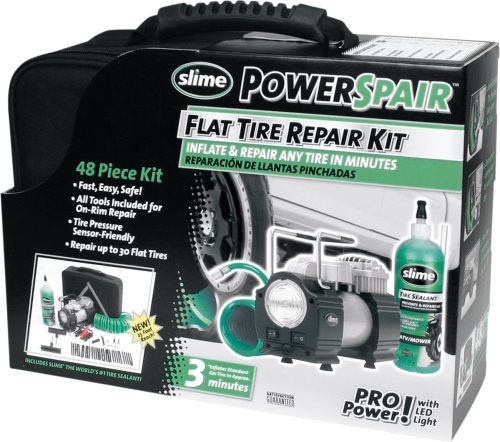
slime power spair kit slime spair kit NOTE: Slime Tire Spair Kit has all of the following –

  • 24oz. Slime Tire Sealant (TPMS safe).
  • Heavy-duty 12V tire inflator with LED light.
  • Adapters for any battery.
  • Key valve core removal tool.
  • Valve caps and valve cores.
  • Air adapters for inflatables.
  • Alligator clips.
  • Pencil tire gauge.
  • 30 tire plugs.
  • T-handle reamer and plugger tools.
  • Convenient zippered case.

It is all high-quality gear in a great carry bag. The kit will run you less than $60.00 and well worth every single penny.

  1. 4-Way Tire Iron – Your regular tire iron is probably shaped like an “L” and will work the majority of the time. But with a 4-way you will be able to get a whole lot more leverage when taking the lug nuts off. And you can spin it to get the nuts on and off a whole lot faster.
  1. Jumper Cables – Here is another area not to skimp. You can get the good 4guage cables that are 20’ long and have much more power to jump your car. Or you can get the pathetic 10gauge and get a fraction of the power coming through the cable. Go for quality!

Booster cable size application chart

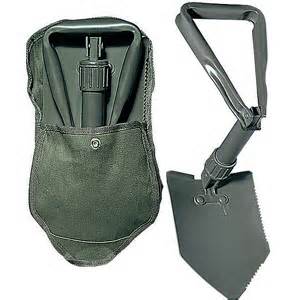
  1. Shovel Military folding militaryFolding Trench Shovel – These are hard to beat, they can get you out of a snow bank or the sand. And they can be a pretty lethal weapon as well.
  1. Tow Chain/Strap – I actually carry both a chain and a strap. Both are 20’ long. That gives me options when it comes to how close the tow vehicle is relative to the stuck vehicle. Also, if I am stuck and I have to use the come-along to get myself out I use the strap around a tree, rock, etc. and then use the chain hooked to the truck.fuel siphon pump kit
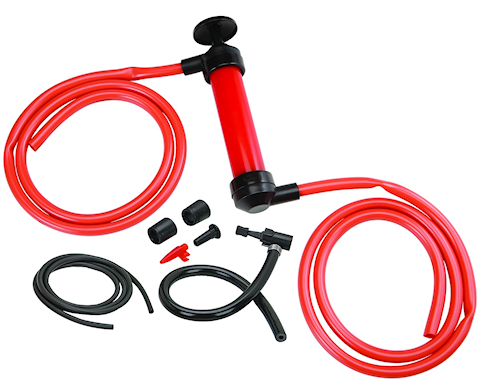
  1. Siphon Pump – This is purely to get gas from some other container (or vehicle) into my truck.
  1. Canvas Drop Cloth (6’x9’) – This has a number of uses; cover, shelter, shade, etc.
  1. Large Bath Towel – This is simply to dry myself off if I get wet.
  1. Rags – Yup, to clean my hands with.
  1. Trash Bags, Heavy (3mil or heavier) – These will be used for a couple different purposes; 1) trash, 2) makeshift ponchos for a number of folks, 3) collect water, etc. I like the Hefty SteelSak brand.
  1. Tool Kit – Check the chart above for a list of the minimum tools you should have. You are not trying to have complete repair capability, just enough to get you moving again.
  1. Pick-up Truck Kit – These are to help secure a load that you put on the truck or to improve your existing load security.
  1. Mini-Survival Kit – This is not to replace your GHB or a GOOD BOB. These items are to use instead of your GBH or GOOD BOB items. If you end up with another person with you, they can use these items if it turns into a get home situation.
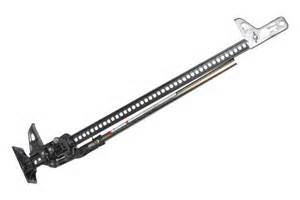
  1. High Lift Jack for emergenciesHeavy Kit – Notice the inclusion of a HighLift jack. If you haven’t been trained on how to use a HighLift jack…don’t use it! Man folks have come away with broken teeth and fractured faces because they try to use a HighLift jack and don’t know what they are doing.


2009 - 2019 Copyright © AHTrimble.com ~ All rights reserved
No reproduction or other use of this content 
without expressed written permission from AHTrimble.com
See Content Use Policy for more information.