PDF Files: Baofeng Radio Information

For you Baofeng UV-5 owners and users…here are some great information and user manuals/guides that I created.

The Baofeng radio is a great little radio and RT Systems programming software is the best. But, documentation…easy to read/understand documentation…is hard to come by. These might help.


AHTrimble – Baofeng UV-5RA RadioUserGuide – 1.31.2016

AHTrimble – Baofeng UV-5RA Radio QuickStart (New)

AHTrimble Baofeng UV-5RA General Radio Menu Settings

AH Trimble RT Systems Software – UV-5R User Guide (20160515)

Please feel free to use the form below to request a specific subject/topic to be converted into a PDF file.

Request a topic/subject…

← Back

Thank you for your response. ✨


2009 - 2020 Copyright © AHTrimble.com ~ All rights reserved
No reproduction or other use of this content 
without expressed written permission from AHTrimble.com
See Content Use Policy for more information.

PDF Files: Threats, Risk, Mitigation

This is the third post in a series where I post a PDF file that you can download and print for reference material.

The PDF file below goes into detail on threats, risks, and how to mitigate them. And do so in a professional, systematic way that is both valid and reliable.

Now, a request from me to you…at the bottom of each page in each file I have included “Courtesy of AHTrimble.com” as a gentle and subtle advertisement for my website. No, not to make money, because I make no money from my website. But, I would like more folks to visit the website…there is a lot of material on the site and I would love to see more folks taking advantage of it. All I ask of you is to not deconstruct the PDF file and remove or obscure the “Courtesy of AHTrimble.com”…thank you.

<click here to download: ThreatsRisksMitigation>

Please feel free to use the form below to request a specific subject/topic to be converted into a PDF file.

Request a topic/subject…

← Back

Thank you for your response. ✨


2009 - 2020 Copyright © AHTrimble.com ~ All rights reserved
No reproduction or other use of this content 
without expressed written permission from AHTrimble.com
See Content Use Policy for more information.

Something to think about…Why do I “prep” ?

note: article first appeared in October 2015

Well, first off, I am not crazy about the word “prep” because it sounds like a slang form of “prepper.” And in the last few weeks “prepper” has gotten some bad press. And besides, I don’t think it is truly accurate. However, the words are short, clear, and to the point…so I guess we will work with them.

Why am I a “prepper”?

Man, how much time do you have? But, realistically when I was thinking about the question this morning during my OMJ (old man jog) I had a bunch of interesting concepts floating around in my head. Or maybe it was just some great endorphin rush. Either way, it was a good time. First morning since summer that the weather was in the mid-60s. Love it!

So, back to the “why” about me being into “prepping” so much.

After creating the most obvious of lists of why I a prepper, I came up with this startling question, “Why not be a prepper?” Yes, seriously, that was the question that popped into my head. I had no answer.

But let me take the conventional, and considerably more professional, approach to answering the question.

We know for sure, 100% sure, that each person will have some kind of emergency in their life. It may be unemployment, a house fire, death in the family, a shortfall in paycheck, layoff, unexpected bill, flue outbreak, etc. We also know that many people may, at some point in their life, also face a disaster such as a hurricane, wildfire, earthquake, disabling accident/illness, etc. We know these things will occur…there is no doubt.

So how will people respond?

I think the response falls into two basic categories; 1) people who will depend on themselves to respond/recover, 2) people who will depend on the government to take care of them. I honestly don’t see any other realistic response option.
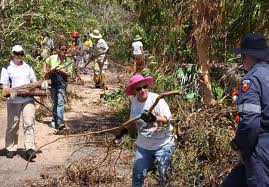
Let me start off by saying that I am not condemning people in the “#2” group. Everyone under the age of 40 have been raised to believe that the proper role of government is to take care of people. A lot of people over the age of 40 also believe that to be the case, although there are a substantial number of folks who still feel responsible for themselves. But that later category of people is shrinking with the end of every new school year.
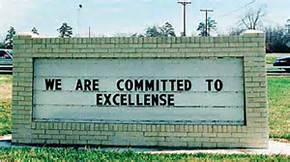
So I believe “preppers” fall most into category #1, self-reliance. They see not just an obligation to be in the position to respond and recover from life’s emergencies and disasters, but huge benefits to it as well.

I truly feel that they (we) view part of being prepared as also having an obligation to help others in this regard as well.

“Others” fall into category #2 by-in-large. And over my 30+ years in emergency services I can tell you that this is a huge demographic of people. It cuts across political, religious, age, financial status, and many more demographic groups. It is a true “cross-section” of Americans. But it wasn’t always like that, actually for most of American history it was the exact opposite…the vast majority of people were prepared to survive and recover most anything. And helping out their neighbors doing so.

But let me back up before I start getting into the “why” aspect of this. From my experience preppers don’t want to be beholden to, or wait for, the government to come wipe their noses or butts. Preppers want to be able to stand on their own two feet and take care of themselves, to be independent of being obligated to some government bureaucrat for their next meal, bottle of water, or bag of ice.

Let me put this into perspective…Remember the last time you went to the DMV for anything? How would you like to be dependent on those folks for your next meal? Or, how would you like to be obligated to the IRS folks for disaster recovery?

Well, I hate to break it to you, if you are not a prepper, you are in exactly that situation! Go talk to the survivors of Hurricane Katrina, Hurricane Andrew, Loma Prieta Earthquake, or any other number of disasters that have occurred in the last 20 years or so. What do you think their answer would be to how well the government took care of them?

I want to take a little break for just a minute and tell you about some friends that visited with my wife and I recently. We hadn’t seen them in almost 1-1/2 years because they had moved to another state. We were enjoying their company and catching up on mutual friends and family. We had made a great dinner together and we were just sitting around the table, the conversation turned to current events. After about 15 minutes or so the concept of food storage came up. Both couples got quiet for a minute. Then I asked the question, “When you think of your food storage, what single word comes to mind?”Food storage shelves

I asked that question because a word had come to my mind while we were talking. Their answer, almost simultaneously, was “security.” Yup, matched mine exactly. That was the first thing that came to my mind, and theirs, when thinking about food storage.

Why?

This is kind of like trying to tell you what salt tastes like. Salt tastes like salt. But just try to describe that flavor to someone who has never tasted salt. Telling someone about the “security feeling” that comes from food storage it similar; they won’t understand it if they never tasted it.

Security in knowing that no matters what happens, your family will not go hungry. And with that knowledge comes a certain feeling of comfort.

I saw it firsthand in Florida during hurricane season after hurricane season. The weather forecasters would start tracking a potential storm approaching Florida. No one would get worked up over it while it stayed out in the Atlantic, in the Caribbean, or in the Gulf. But once it turned into hurricane status and all the models showed it making landfall in Florida, then people would take note. About 1 – 2 days out, sometimes less, people would decide it was “real” and they would head to the grocery stores, Walmart, and gas stations.

I can’t begin to tell you the number of times I saw news footage of empty grocery store shelves and long lines at gas stations a day or two before a hurricane was going to hit. The sad part was the people…most were desperate trying to get something bought to be ready for when the storm would hit. Most had failed miserably to prepare. Desperation sometimes boiled over into violence. Sad to see…an understatement.

Those who had food and water storage, a full tank of gas, a generator, and other preparedness items felt secure in that they had done all that they could do to take care of their families.

OK, I am really dancing around here, let me get back on point.

I am a prepper because it doesn’t make sense not to be one. Seriously! Think about it for a minute, give me one good reason not to be a prepper.

There is only one response that is relatively common when that question is asked, “money.” A large number of folks respond that money is the biggest impediment to being prepared for emergencies and disasters. And I bet that most of those same people have a large flat-screen TV, a relatively new car, decent clothes, and the latest iPhone.

So it boils down to two things; 1) priorities, and, 2) willingness to place your family in the hands of the government.

I work for the government, and let me tell you…you don’t want to depend on us for your family’s well-being, safety, and future…you really don’t. Trust me on that one. Remember back to the whole “DMV” & “IRS” thing, and then you can understand what I am getting at.

Now let me make it a little more personal:

  1. I am a prepper because it makes financial sense. My food storage has gone up in value since I bought it. Actually, if I was to put it on a spreadsheet, it is probably keeping up with, if not beating, the return on my 401k. And when it comes time to retire, if we need it to, all that food storage turns into daily meals for my wife and I. The rest of our gear and equipment will be sold at a garage sale if we need the cash money, or the grand-kids will get it when we are gone.
  2. I am a prepper because I am charitable. The scriptures tell us to be charitable, preppers (true preppers) are just that. In times of emergencies and disasters preppers can be the first ones to feed their own family, their extended family, neighbors, fellow congregation members, etc. And that can take place immediately, not the days and weeks it takes for government relief efforts to kick in.
  3. I am a prepper because it makes me feel secure. Whatever life throws at me I know I can at least feed, clothe, put a roof (albeit canvas) over my family’s head, and provide them with clean/safe drinking water.
  4. I am prepper because I love to learn new things, especially useful skills. I can operate a Ham radio, I can build a solar generator, and I can reload my own ammunition, to name just a few.
  5. I am a prepper because I get to use all my cool gear and equipment when I go camping and hiking. It is a whole lot of fun that I share with family and friends.
  6. I am a prepper because I don’t trust the government to do a good job of taking care of me, my family, or anyone else. I mean, seriously, tell me something, anything that the government does well. I don’t want to be depending on some government bureaucrat to be in control of my family’s safety, comfort, and future.
  7. I am a prepper because I don’t want to depend on the media or the government for my information. I want to be able to know what is going on myself, directly. I don’t need their bias and “slant” on what I learn.
  8. I am a prepper because I want to be a contributor not a taker. I want to be an asset to my family, my friends, my congregation, my neighbors, and my community. I don’t want them to go hungry waiting on MREs to be pushed off the back of some National Guard truck.

Mostly though, I can’t tell you the most powerful and underlying reason I am a prepper. It’s not because I don’t want to tell you, but it is simply because I can’t explain it to you. I actually can’t relate it to you because it “tastes like salt.” And unless you know what being prepared feels like, I can’t get that across to you. I wish I could, I really wish I could.

But I can tell you this, I can feed my family, I can provide fresh clean water for them, I can house them, I can communicate with them, I can keep them warm, and I have the means to protect them if needed.

Can you imagine if more families could do that? How about if the vast majority of families in America could do that? What would that mean for our communities, our states and our whole country to be independent of the government? Pretty sweet in my opinion.

Now, I will touch on the dark side for just a minute. I have related numerous times my concept of “money & power.” And this principle is especially applicable to emergencies and disasters. If you are not prepared for emergencies and disasters, you have pretty much signed away your money and power. Because letting someone else take care of your family post-emergency or post-disaster will cost you plenty of both money and power.

Yes, that means it will be expensive in terms of money, and costly in terms of power. You will be giving up plenty of both. You will do whatever you are ordered to do because you will not have the means of taking care of your family. You will be at the mercy of anyone and everyone who has a little food, water, shelter, and can provide security…especially the government. If you find that appealing, then you are quite comfortable not being a prepper. Good luck to you and your family.

Grid-down event and the ICS system - Incident command system for organization of prepper groupAnd finally, “grid-down”, I bet you were wondering when I would get to that. You’ve been waiting for it. Well, here it is.

You either believe that there will be a grid-down event or not. Many Americans, actually most, absolutely do not believe that there will ever be a grid-down event in America. The vast majority of people believe we are immune to such things. They believe that the government can solve all problems and prevent any truly cataclysmic event from occurring.

They are wrong! Dead wrong!

It is coming, the “grid-down” will occur. No, I don’t know exactly when. No, I don’t know what will start it. No, I don’t know where it will start. No, I don’t know who will start it. But it will happen, that is a 100% guarantee.

And a “grid-down” will make any emergency or disaster look like a bump in the road compared to what will hit society and your family. And I don’t want you to take my word for it. And I don’t want you to believe it. I want you to think I am absolutely out of my mind about this.

But I will ask you to do one thing…think about it. And then ask yourself in a quiet contemplative moment; what do you believe will happen, what do you think is coming?

Once you ask and answer that question for yourself, then you will have a pretty good idea what to do next. And that “next” is yet another question for you to answer for yourself.

Remember way back at the beginning of this article when I talked about there being two kinds of people? 1) People who want their family to be dependent on the government, and 2) those that don’t.

Which kind of person do you want to be?


2009 - 2020 Copyright © AHTrimble.com ~ All rights reserved
No reproduction or other use of this content 
without expressed written permission from AHTrimble.com
See Content Use Policy for more information.

PDF Files: Setting Priorities – L.I.P.S.

This is the first post in a series where I post a PDF file that you can download and print for reference material.

The first topic covers understanding how to understand what are the priorities are in emergencies, disasters and during grid-down. How go about setting priorities in a competent and professional manner.

Now, a request from me to you…at the bottom of each page in each file I have included “Courtesy of AHTrimble.com” as a gentle and subtle advertisement for my website. No, not to make money, because I make no money from my website. But, I would like more folks to visit the website…there is a lot of material on the site and I would love to see more folks taking advantage of it. All I ask of you is to not deconstruct the PDF file and remove or obscure the “Courtesy of AHTrimble.com”…thank you.

<click here to download: Setting Priorities LIPS>

Please feel free to use the form below to request a specific subject/topic to be converted into a PDF file.

Request a topic/subject…

← Back

Thank you for your response. ✨


2009 - 2020 Copyright © AHTrimble.com ~ All rights reserved
No reproduction or other use of this content 
without expressed written permission from AHTrimble.com
See Content Use Policy for more information.

PDF Files: 7 Common Risks/Threats

This is the second post in a series where I post a PDF file that you can download and print for reference material.

Understanding the 7 Common Risks/Threats that exist in each and every disaster, emergency, and especially during “grid-down” are:

  1. Violence
  2. Injury or Sickness
  3. Communications (lack of or poor)
  4. Organization (lack of or poor)
  5. Dehydration
  6. Exposure
  7. Starvation

The PDF file below goes into detail on understanding the threats and resolving them in an organized and systematic way.

Now, a request from me to you…at the bottom of each page in each file I have included “Courtesy of AHTrimble.com” as a gentle and subtle advertisement for my website. No, not to make money, because I make no money from my website. But, I would like more folks to visit the website…there is a lot of material on the site and I would love to see more folks taking advantage of it. All I ask of you is to not deconstruct the PDF file and remove or obscure the “Courtesy of AHTrimble.com”…thank you.

<click here to download: 7 Common Risks/Threats>

Please feel free to use the form below to request a specific subject/topic to be converted into a PDF file.

Request a topic/subject…

← Back

Thank you for your response. ✨


2009 - 2020 Copyright © AHTrimble.com ~ All rights reserved
No reproduction or other use of this content 
without expressed written permission from AHTrimble.com
See Content Use Policy for more information.

Something new!!!!!

I’ve had a lot of conversations over the last 10 years that I needed to write a book that included all my emergency preparedness subjects. That way they would be in one single place…a single document…a single book. A ready reference resource for folks to use when it was needed most.

Yeah right…like that was going to happen!

Time just doesn’t allow it. And honestly…it is very boring writing. Yeah, that means I just couldn’t put my heart into it. About five years ago I started that book – Preparedness 101. I was about two months into it and just couldn’t do any more. It was taking far too much of my time…time I had too little of. But, a conversation last week has made me rethink my attitude.

Lately I’ve been asked to provide some of the material that means the most -or should mean the most- to those who believe in and practice emergency preparedness. And I mean on the professional level, not on a hobby level. Meaning…producing material to provide guidance to a family, neighborhood, congregation, or an entire community during times of serious stress and disaster.

No, I don’t mean 100 ways to start a fire with an oak leaf and a candy bar. I am talking about how to set priorities, how to realistically organize, knowing true situational risks/threats, etc. I will leave 1000 recipes of beans and rice to those more suited for it.

To that end I have been working at taking my previously written website articles, moving them to Word documents, editing those documents, adding new material to the subject in some cases, and then saving them as PDF files. Then post those files on the website for you to download and print…should you desire to do so.

Why? Because I simply don’t have time to put all that material in a book. But, I do have the time to put that material in a printable format…for you to make you own book out of the material you wish to have on hand. And…it doesn’t cost you the price of a book…actually, no cost at all!

I have already worked on some subjects and will post those PDF files each day. However, no matter what I think, you may have a subject or topic that you wish to have access to for printing. Please feel free to use the form below to request a specific subject/topic to be converted into a PDF file.

Now, a request from me to you…at the bottom of each page in each file I have included “Courtesy of AHTrimble.com” as a gentle and subtle advertisement for my website. No, not to make money, because I make no money from my website. But, I would like more folks to visit the website…there is a lot of material on the site and I would love to see more folks taking advantage of it. All I ask of you is to not deconstruct the PDF file and remove or obscure the “Courtesy of AHTrimble.com”…thank you.

The first subject is all about understanding and setting priorities during emergencies, disasters, and grid-down. It is a system used by professional emergency responders…a system that works for every situation, every time. I have modified it to be more suitable for preppers.

<click here to download: Setting Priorities LIPS>

Request a topic/subject…

← Back

Thank you for your response. ✨


2009 - 2020 Copyright © AHTrimble.com ~ All rights reserved
No reproduction or other use of this content 
without expressed written permission from AHTrimble.com
See Content Use Policy for more information.

Pofung/Baofeng UV-6R Handheld Radio

note: article first appeared in March 2016

I love the Baofeng UV-5RA handheld Ham radio as you well know. I think it is just the most awesome prepper piece of gear that you can find…especially at that price of about $ 25 – $27 each. But, I have been on a long search to see if any other version of that radio is a better value or performs better than the UV-5RA. The BaofengUV-6R is the target of this review.

Just to make sure you are aware of the demands I place on a radio to be used in the world of emergency preparedness, here is the mission –

“Provide reliable radio communication in a variety of emergency, disaster, and grid-down situations at the individual level.”

 Restrictions & Requirements –

  • Must be easy to use.
  • Must be programmable.
  • Must be battery powered and batteries must be easily recharged.
  • Should be capable of UHF/VHF frequencies as well as FRS/GMRS/MURS frequencies.
  • Should be lightweight and easily concealed.

First Impressions –

It looked like a toy radio as soon as I took it out of the box. The flap that protects the accessory jack was loose and rather than protect the jacks…well, it would funnel water, dirt, and dust directly into the jacks. The yellow highlights on the radio furthered the impression that it was more of a “toy” than a real radio.

The keys are different shapes and not evenly spaced. The back-lighting started out to look like a nice feature till I realized that there a lot of white light coming from around each key. That would make you a sitting duck if you were trying to keep a low profile at night. The keys are poorly laid out, poorly labeled, and some keys are not even marked with any indication of what they do.

My opinion changed a little bit when I saw the nice big volume knob that you can easily grab hold of. The knob also has a seriously high-quality feel to it.

The battery is much larger than the battery on the UV-5RA battery, but only in size, not in capacity. Both are rated at 1800mAh. The battery installs easy enough and is just as easy to remove. A serious bad note though…I had no luck finding any replacement batteries or any longer life battery such as a 3800mAh battery option for the UV-5RA. That is itself is a deal killer!

The channel scan speed is slower than the UV-5RA and I can’t figure out any way to improve the scan speed.

I had no luck programming the radio. It doesn’t come with a programming cable and CHIRP users regularly complain that the software doesn’t work with the UV-6R. RT Systems does make a programming software version but I didn’t buy it just to test and review one radio that I already didn’t like. FYI…all of RT Systems software is the best out there…period!  But, I have read where there are quite a few users having problems with their computer actually not being able to communicate with the radio.

The antenna is the standard SMA connection and all UV5 compatible antennas fit the UV6 radio. That is a nice relief knowing all the antenna options that are available out there.

So, as of now what is my overall feeling about this radio? It sucks!

I got so frustrated trying to work with this radio I had to stop and go eat lunch. When I got back I tried to figure out why I was still reviewing the stupid thing when I already didn’t like it, it was poorly designed, hard to program, software problems, and the extremely poor jack protection. So why go on when I already know the radio just isn’t worth buying…or using?

This is huge step backwards for the Pofung/Baofeng line of radios!

So, am I giving the UV-6R a HUGE do not buy recommendation!!!!

Do not buy!


2009 - 2020 Copyright © AHTrimble.com ~ All rights reserved
No reproduction or other use of this content 
without expressed written permission from AHTrimble.com
See Content Use Policy for more information.

Antenna stand and ground plane for the Baofeng UV-5RA

Browning BR-180 Amateur Dual-Band Mobile AntennaOne of the best Ham (can also handle GMRS, FRMS, MURS) radios on the market today is a Baofeng UV-5RA. It is without a doubt one of the best little Ham radios out there today. It is extremely compact, easy to use, and incredibly cost effective for any prepper, emergency response team, new Ham operator, etc. It just can’t be beat for its price and capability…and available acessories.

To improve its capabilities I purchased a Browning BR-180 Amateur Dual Band Mobile Antenna. I already have a NMO (New Motorola) mount on my truck’s roof. FYI – NMO is the defacto standard for professional vehicle antenna mounting. So, I have this really great handheld radio, a matching high quality antenna and no real way to use both in a ground-based application. Yes, I believe I am far more likely to use the radio away from my truck during times of need. So what antenna would I use?

The question is valid since the Browning BR-180 requires a ground plane that is provided by the TRAM 1465 Land Mobile Base Ground Plane Kittruck roof. A ground-based (not mounted on my truck) use would have no such metal roof as a ground plane. So I purchased a ground plane kit.

I bought the TRAM 1465 Land Mobile Base Ground Plane Kit. Cost was $32 through Amazon. The kit solved that issue but I was still undecided on how to set-up the antenna itself. So I went back to basics and defined the “mission” I was trying to accomplish.

Mission –

A highly portable and versatile dual-band antenna supporting my Baofeng UV-5RA operating in almost any environment.

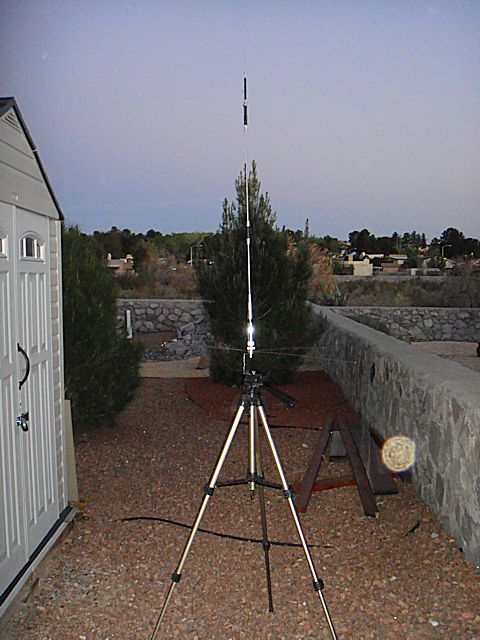
TRAM 1465 Land Mobile Base Ground Plane KitThen it dawned on me, I already had a support structure for dual UHF/VHF antenna – a camera tripod.

I put an additional bend in the bracket, drilled the appropriate sized hole in the “foot” of the bracket, and then went to Lowe’s to buy a wingnut to match the threaded post on the camera tripod. The camera tripod has a hook in between TRAM 1465 Land Mobile Base Ground Plane Kitthe legs in the center that I can attach a weight to hold the tripod steady to the ground. Because the tripod is adjustable I can have significant flexibility with the height of the antenna.

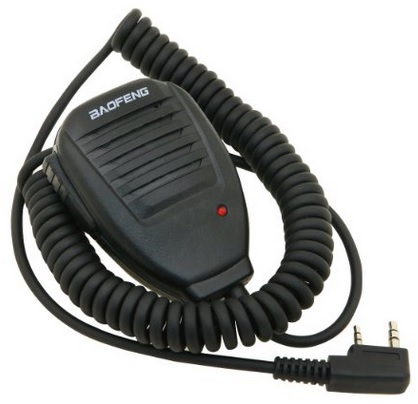
When connecting the radio to the antenna I use the MPD cable (RF coaxial RF coaxial cable SMA female to UHF SO239 PL259 female RG58cable SMA female to UHF SO239 PL259 female RG58 20inches). I also use the speaker/mic to reduce the stress on the cable/radio connection point.


Total time to build: less than 1/2 hour


2009 - 2020 Copyright © AHTrimble.com ~ All rights reserved
No reproduction or other use of this content 
without expressed written permission from AHTrimble.com
See Content Use Policy for more information.

Super PWRgate PG40S Auto-Switch

Ham In The Box - Super PWRgate PG40S by West Mountain RadioSometimes you just need that right piece of gear, that one need that is weird to fill, but you need it…you really, really need the right piece of equipment..

Well, the West Mountain Super PWRgate PG40S Auto-Switch is one of those pieces of equipment. And then some! Yeah, it’s that flipping good.

Let me share a little background first. For several years now I’ve been working on putting together radio and power equipment to keep communications going during emergencies, disasters, especially during a grid-down. Why? Other than the obvious answer, during my 30+ years of responding to emergencies and disasters I’ve learned that stable and reliable communications is a top priority. How much so? In every single incident where a firefighter was injured or killed, communications (poor or lack of) played a major role. Communication problems were the single common thread through all of these incidents.

Now, let me change to something completely different for a minute. I’ve been around long enough to remember the first personal computers. You know, the kind that didn’t even have a hard drive. I remember several times I would be working on these early computers and the power would flicker…everything lost! Yup, all the work that I had been doing was gone into some special “data zone” never to be seen again.

Finally after that happened a couple of times I learned about uninterruptible power supplies (UPS). Through pure magic it kept your computer going even when the power, not just flickered, but went out completely. It was as if the computer gods decided to smile down on us mere mortals. Yeah, I didn’t know at the time is was just a battery, auto-switch, and a battery charger built into that wonderful, magical UPS box.

Now, fast-forward to today…during times when communications are needed most I don’t want them to fail just because the power suddenly, unexpectedly flickers or goes out altogether. Because…DUH…during emergencies, disasters, and grid-down the power should be expected to go out! Yeah, no-brainer right?

Well, to meet the uninterruptible power supply needs that I foresaw, it would take a whole lot of money to buy the right UPS. And even then it wouldn’t have all the options and features that I wanted. So naturally I decided I was going to build my own solution. No, I am not a masochist, I just like to use my brain, to be challenged, and work with my hands. So, another great adventure was headed my way!

As I began to layout my first power box I had written down my “mission statement” for the box itself. Then I listed the “restrictions and requirements” that went into great detail. One of the biggest needs was the ability to automatically switch from the AC to DC power supply to the battery supplied DC power. The quest began!

Here is the mission statement for this piece of equipment –

“Provides clean DC power from an AC power source and automatically switches to battery back-up providing DC power when the AC power fails.”

I gotta tell you…it wasn’t hard to figure out. As usual I started doing some serious research into the options available out there on the market. And it became clear real quick that there was a pack leader, a unit that simply stood out among the others in terms of reliability and quality…West Mountain Radio’s Super PWRgate PG40s.

Here is the technical story from their website –

  • A Super PWRgate is a 12 volt backup power system rated at 40 amperes continuous from either a Power Supply or a Battery.
  • The Super PWRgate has a built-in four-stage battery charger with selectable current rates of 1, 4, 7 or 10 amperes.
  • Connected equipment will instantly switch to battery during a power blackout or power supply failure.
  • Uses two 80 ampere Schottky diodes as an OR-Gate to isolate the battery and power supply from each other.
  • Low loss PWRgate provides forward voltage drop of less than 0.3 volts at 20 A and 0.37 volts at 40 A.
  • Optimized for use with GELLED & AGM type batteries, but will keep flooded lead acid and marine type batteries near full charge as well.
  • Solid, durable construction in an aluminum case with heat sink. Includes mounting holes for convenient and secure use in mobile units.
  • Uses Anderson Powerpole®connectors
  • Dimensions: 1.65″ H x 5.25″ W x 3.9″ D

Specifications –

Maximum Voltage: ·                     18 Volts DC
Maximum Current: ·                     40 Amperes
Circuit: ·                     Diode OR-Gate
Diodes: ·                     Two Schottky 80 Ampere, 20 Volt
Voltage Drop: ·                     0.25 VDC at 1 Ampere

·                     0.37 VDC at 40 Ampere

Charging Circuit: ·                     Smart, linear charger

·                     Fuse switched for 1,4,7 or 10 Amperes (±5%) maximum

·                     Peak voltage limit: 13.8 (Gelled), 14.2 (AGM), (±2%)

·                     Peak voltage limit set via internal jumper to GELLED or AGM

·                     Peak voltage terminate point: 0.1 Maximum current

·                     Float Voltage: 13.5 volts (±2%)

LEDs: ·                     Green – Indicates charger is “ON”

·                     Red – Indicates peak “PK” charge voltage

·                     Yellow – Indicates Float “FL” voltage

Connectors: ·                     Anderson Powerpole, 40A
Dimensions: ·                     1.65″ H x 5.25″ W x 3.9″ D
Weight: ·                     0.9 lbs, 0.4 kg (aluminum enclosure with heat sink)
Mounting Holes: ·                     Two, 0.175 in. d, at a distance 4.875 in., for #8 hardware


Typical application –

Findings –

  1. I couldn’t get the unit to fail when switching from the power supply to the battery. No matter what I tried it performed the power switching perfectly. There wasn’t even a flicker in any of the equipment I tested it with.
  2. It really does a great job of keeping a battery charged. Technically that makes it a battery “maintainer” and not so much a charger. But, I ran my big 100Ah battery kind of low, then let the PWRgate go into charge mode. Yup, performed flawlessly; the unit didn’t even get hot.
 Summary –

This is a high-quality product that does exactly what they say it is supposed to do…and what it needs to do. For my radio set-up it is an essential piece of equipment and I am 110% satisfied with it. Awesome job West Mountain!


2009 - 2020 Copyright © AHTrimble.com ~ All rights reserved
No reproduction or other use of this content 
without expressed written permission from AHTrimble.com
See Content Use Policy for more information.

AIMS Power (PWRI60012S) 600W Pure Sine Power Inverter

note: article first appear April 2016

I hope by now you are familiar with the “power box” that I built. Some might call it a “solar generator” but it is way more than that. Since this power inverter review will tie directly into the power box, it might be a good idea to read the power box article first.

< Click here to read about the power box >

The whole concept of this “power” thing is to make sure that during emergencies, disasters, and grid-down that you have enough electrical power to accomplish your essential mission(s). For me, “essential mission” is basically recharging batteries to keep my radios operational and my tactical lights running. No, it is not to keep the air conditioning running or the freezer on. I don’t consider those two things as essential.

The mission statement –

“To provide sufficient ‘clean’ power to run, or charge batteries for, essential sensitive electronic gear that requires 120vAC power.”

Requirements & Restrictions –

  • Must be “clean power” to not damage or destroy sensitive electronic equipment.
  • Must be able to handle surges of at least 50 – 150% of the unit’s continuous rating.

As always I did considerable amount of research before I identified the units I would be testing. This Aims unit really looked good from all the details and information I could gather. I also tried something different this time. I contacted the company and told them I was doing an evaluation of power inverter units under emergency preparedness conditions. I asked them if they would like their unit included. I figured if they didn’t think their unit could handle the testing and subsequent review that they would back away. They didn’t…the unit tested showed up about two weeks later. I think that showed considerable confidence in their products.


When I pulled the unit out of the box the first thing I noticed is the unit outer housing is a giant heat sink. That is important to see that their engineers understand the necessity to move heat away from any power inverter. Then I turned it over a couple of times in my hands and saw that the unit was very well built with attention to detail. After all these years I can often tell by the “feel” of a product if it is junk or quality. The Aims unit felt like quality in every aspect. My testing proved me right.

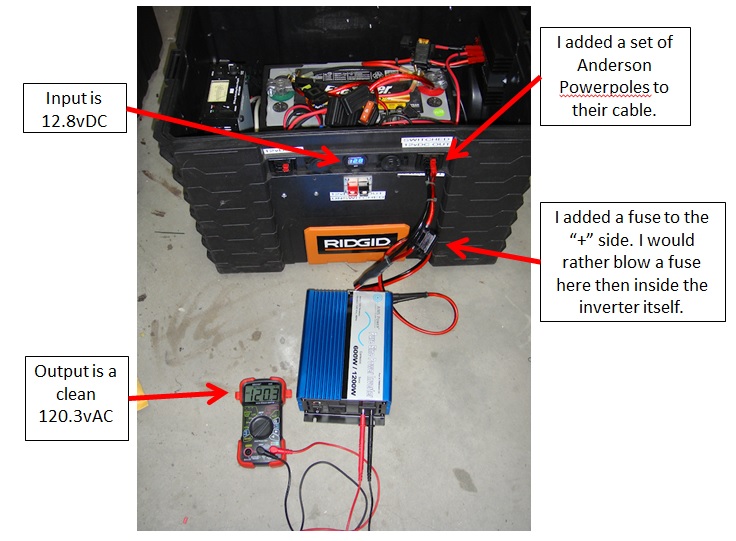
The + / – battery connections on the back of the unit weren’t Anderson Powerpoles and that was kind of a drag, but I didn’t really expect them to have Powerpoles as a connection option. The unit’s connectors were solid and the connection faces were exactly flush with each other which will ensure a good connection with the “eyes” on the power wires coming from the 12vDC power supply. The plan is I will make my own using #10 wire and high-quality ring connectors, along with in-line fuses. Yes, the unit has fuses built in, but I would rather protect the unit well before the unit’s fuses themselves.

The fan located on the rear of the unit is meant to keep the unit cool when under load. However, it isn’t always running. The fan will start up when the unit is outputting about 100w. That is a nice feature because the fan does take power to run…precious battery power. If you are using a low consumption device that doesn’t exceed 100w then you are draining additional power with the fan running. But the fan is there when you need it. Sweet! They designed this thing to be very stingy using power from the battery.

I also noticed that there is separate ground connection. No, not the negative terminal connection, but an actual ground connection. I am no electrical engineer but I know enough that grounding an inverter is a good piece of advice. Having the inverter unit itself grounded (PE) provides protection from a number of “faults” and protects your electrical devices running off the inverter.

Basic Hook-Up Diagram –

Dang…there are so many things I could talk about in regards to this unit. There are so many features and protections that I am almost overwhelmed with how much to write about. Let me give some technical details from their website about this unit first…

Features –

  • 600W continuous power, 1200w surge
  • Pure sine wave
  • USB Port, 5v, 1a
  • Dual 120vAC receptacles (3-prong)
  • On/off rocker switch
  • Over temperature indicator
  • Overload protection via fuses and automatic shutdown
  • Low battery voltage warning/shutdown
  • Alligator clips included on 28″ of heavy-duty wire
  • High input voltage protection with automatic shutdown
  • Over load indicator
  • Short circuit protection
  • Load based fan – only runs when an inverter senses a load over 100w

Technical Specifications –

  • Continuous output power: 600 Watts
  • Surge power capability (peak power): 1200 Watts
  • DC input / operating voltage: 9.7 to 15 Volts
  • Output voltage: 120 Volts AC
  • Output voltage regulation: +/- 3%
  • Output wave form: pure sine wave
  • Output frequency: 60 Hz
  • Battery low voltage shutdown: 10.0 +/- 0.5 Volts
  • Low battery voltage warning/shutdown
  • No load power consumption: < .6amps DC
  • DC amps: 50
  • AC amps: 5
  • Full load efficiency: 90%
  • 1/3 load efficiency: >85%
  • No load minimum operating temperature: 50 degrees
  • Full load maximum operating temperature: 145 degrees F (automatic shutdown)
  • AC Output Sockets: dual Type 2 -3 prong and single USB Output
  • High input voltage protection: 15V
  • Low input voltage shutdown: 10V
  • Internal blade fuse protection
  • Product size (L x W x H): 9″ x 6″ x 3″
  • Weight: Unit: 4.4

Voltage Handling –

  • When your battery drops to about 10 – 10.4vDC a low voltage alarm will sound. No, it won’t blow your ear out, it is subtle but clearly noticeable.
  • When the voltage then drops to 9.7 – 10vDC the unit will automatically shut down. This feature operates exactly as a LVD (Low Voltage Disconnect), and that saves your battery from over-discharging and being damaged. Actually, 9.7vDC is really a pretty low level to draw your battery down to. You don’t want to do it very many times.
  • The unit also has a shutdown feature for the high end as well, 17vDC. But, if you are running 17vDC into the unit you have much bigger problems with your 12vDC battery powered system. However, the transformer that I use in “My Power Box” can push out up to 16vDC (variable control). So, it is nice to see that the Aims inverter can handle up to that voltage rating. I guess the real purpose high-voltage shutdown feature is to prevent the unit being damaged by being accidentally hooked up to a 24vDC battery system.

Operating Environment –

  • This unit is not meant to run in all conditions and locations that exposes it to certain environmental elements. This unit is meant to be protected from those elements.
  • The temperature should be between 32 – 104°F. Yup, that means not below freezing and not desert SW June daytime direct sun temps. I am not understanding why the low temperature restriction and I have contacted Aims for an explanation. Aims AnswerThe reason it is rated at 32F is  there is silica and ceramic based components inside when those components run below freezing and warm up during operating they tend to crack and will cause failure.  Another point is that you lose efficiency, a lot of efficiency, at these temps, everything is working harder.  
  • The unit has to be ventilated under all circumstances. This is a piece of electronic equipment that generates heat, you have to be able to move that heat away from the unit. That just means to allow enough room around the unit to make sure air can circulate.

Uses –

Here is what Aims is listing as potential uses for this inverter –

  • Laptops,
  • YVs,
  • DVD players,
  • CPAP machines,
  • Satellite TV systems,
  • O2 concentrators and generators,
  • Mobile office set ups,
  • Fast charging power tool batteries (like my Ryobi 18v power tool chargers)
  • Other small hand held electronics

I am using the Aims power inverter for charging my handheld radios, electronic gear (computer), small appliances, etc. From DC power generated either from my truck or from my power box. For heavier AC loads (i.e. power tools) I use my Honda i2000EU generator. Aims does have much larger pure sine wave inverter units, up to 4000watts. I would love to test one of those higher wattage units but I just don’t have that requirement at this time.

NOTE: One thing I really want to point out…Customer Service. When dealing with Aims I was really impressed with their fast responses to any question I had. They appear to be very solid people, dedicated to both their products and their customers.

For my potential needs this unit exceeds all my expectations! I am giving this sweet little unit a “Buy!

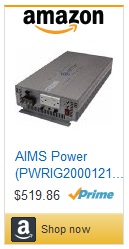
600 watt version


1000 watt version


1500 watt version


2000 watt version


3000 watt version


4000 watt version


2009 - 2020 Copyright © AHTrimble.com ~ All rights reserved
No reproduction or other use of this content 
without expressed written permission from AHTrimble.com
See Content Use Policy for more information.